Virginia home inspection report
18VAC15-40-130 sets what a Virginia home inspection report must say, down to start and finish times, how you got on the roof, and a pressed smoke alarm button.
At a glance
- Rule
- 18VAC15-40-130
- Header
- Start and finish times, weather
- Smoke alarms
- Operate the test function
- Keep for
- 3 years
Completed example
Download PDFThe details at the top
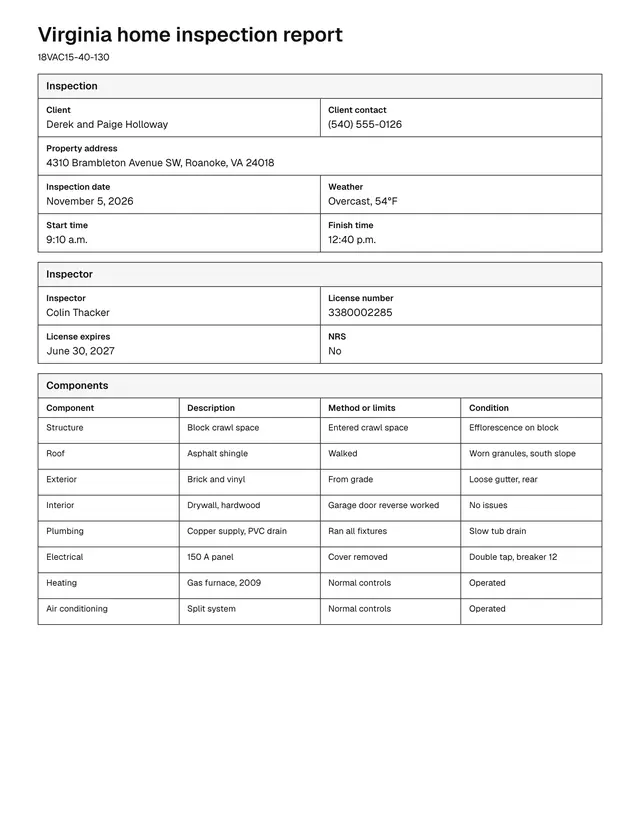
Virginia’s report rule, 18VAC15-40-130, starts with a header that’s more detailed than most states ask for. Your name, address, contact details, license number, and license expiration date, with “NRS” if it’s a new residential structure. The client’s name and contact information. The property address.
Then the date, the start and finish times, and the weather. Write real times, like 9:10 a.m. to 12:45 p.m. A blank or a “morning” makes the report look rushed, and a reviewer can tell a two-hour job on a 4,000 square foot house from the clock alone.
License expiration dates change, so pull yours from your DPOR record instead of last year’s template. On a new home that hasn’t been sold or lived in, add “NRS” by the license.
Eight systems, and how you got to them
Section C lists the components: structure, roof, exterior, interior, plumbing, electrical, heating, and air conditioning. A few have extras that are easy to miss.
Crawl space and roof methods. Under structure, note and explain how you inspected the crawl space. Under roof, note and explain how you looked at the covering: walked it, used a drone, or viewed it from a ladder. “Too steep, viewed with binoculars from the yard” is a full answer.
Methods matter for crawl spaces too. “Entered, full crawl” and “viewed from the hatch, 18 inch clearance” are different inspections, and the reader should know which one they got.
Garage door reverse. Under interior, operate the automatic reverse on the garage door opener when it’s safe to do so.
Electrical details. Note whether smoke alarms or carbon monoxide detectors are present, any solid conductor aluminum branch wiring, and whether AFCI protection is present.
What you skipped. Anything in the rule you didn’t inspect gets named with the reason. Winterized or shut-off systems don’t have to be run, but say why they weren’t.
If a parked car or boxes block the garage door path, write that you didn’t operate the reverse and why. If the owner winterized the house, note who did it and when, if you know.
Press the button
Virginia goes further on smoke alarms than looking for them. For each readily accessible alarm, you determine whether it’s in good working order, meaning it’s “securely attached, not physically damaged, and operation of the test function is successful.” Central alarm systems tied to a panel are the exception. Write any limits, like a 14-foot ceiling you couldn’t reach.
If a house has six alarms and you reach four, list all six and mark which ones you checked.
The report also has to include the substance of a set statement: smoke alarms belong on every level and in every bedroom, alarms that don’t work should be replaced, the check only shows the moment of the inspection and isn’t a guarantee, and owners should follow the maker’s instructions. Your contract can’t exclude any of this.
Yellow gas pipe in older homes
Part G comes from Va. Code § 54.1-517.2:1. In homes built before the 2006 Virginia Construction Code took effect on May 1, 2008, if you see yellow corrugated stainless steel tubing, note it and include this exact statement:
“Manufacturers believe that this product is safer if properly bonded and grounded as required by the manufacturer’s installation instructions. Proper bonding and grounding of the product should be determined by a contractor licensed to perform the work in the Commonwealth of Virginia.”
Bonding is for a licensed contractor to judge, not you. Your part is to see it, note where, and include the statement.
Copy it word for word into your template so nobody retypes it at the kitchen table. Then decide who sees the report. Under 18VAC15-40-140, you don’t share results without the client’s approval, except when there’s an imminent danger. Keep the report and your supporting notes three years under 18VAC15-40-160.
How do you make the urgent items easy to find?
A Virginia report runs long once you add methods, alarm checks, and required statements. The buyer still needs the five items to negotiate on page one.
Put the required statements, like the smoke alarm and CSST text, near the end so they don’t push findings down.
Noma specializes in the Virginia Home Inspection Report (18VAC15-40-130). Build reports with your own sections and titles, mark how serious each defect is, and the summary pulls the worst ones to the top. Inspectors fill it in on their phone during the walk. See how Noma builds inspection reports.
Frequentlyaskedquestions
Send this document in minutes, not an afternoon.
Other states
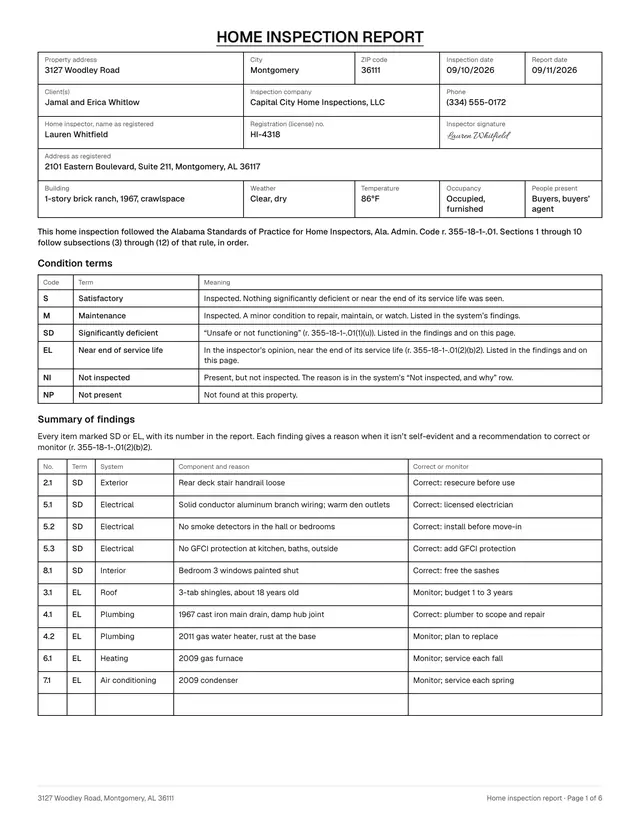
Home inspection report templates- Alabama
Home Inspection Report
Findings by system, with each defect noted. - Arizona
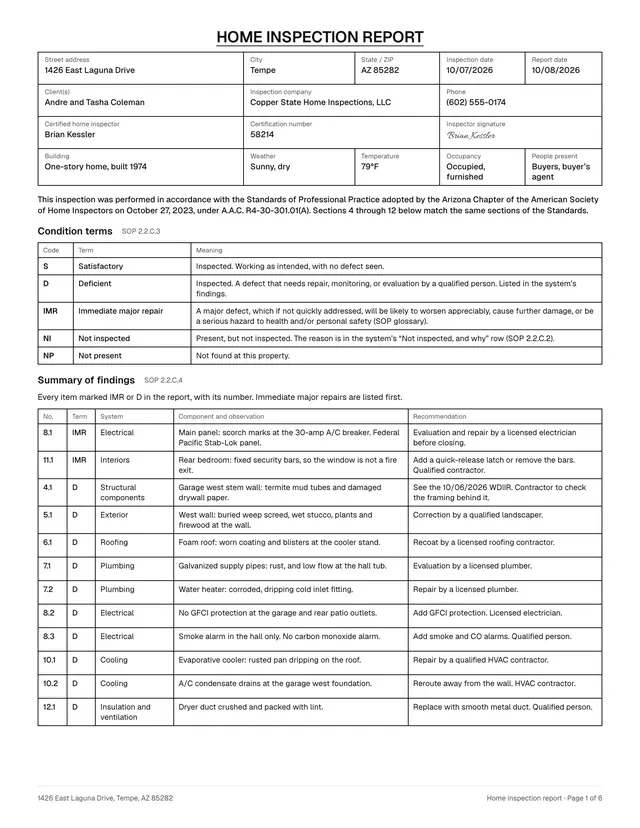
Home Inspection Report
Findings by system, with each defect noted. - Arkansas
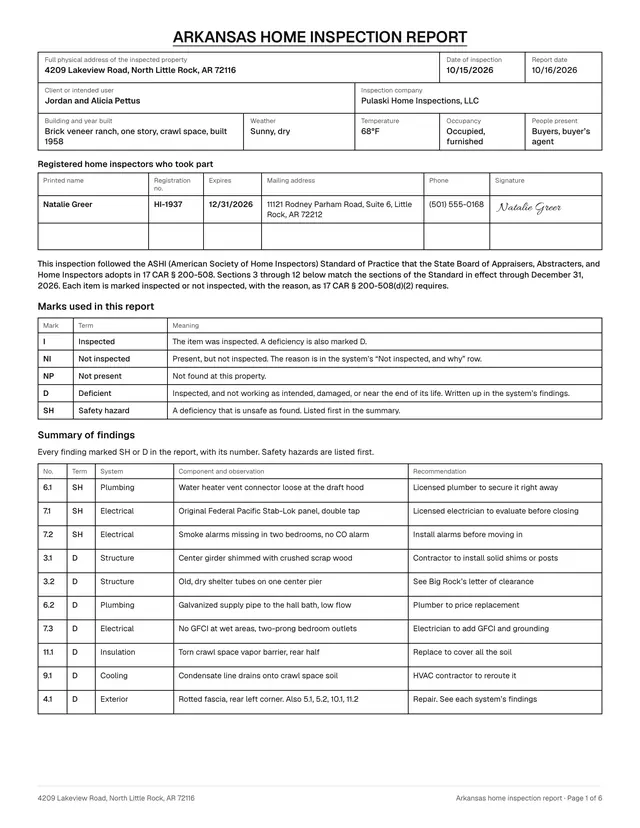
Arkansas Home Inspection Report
Findings by system, with each defect noted. - Colorado
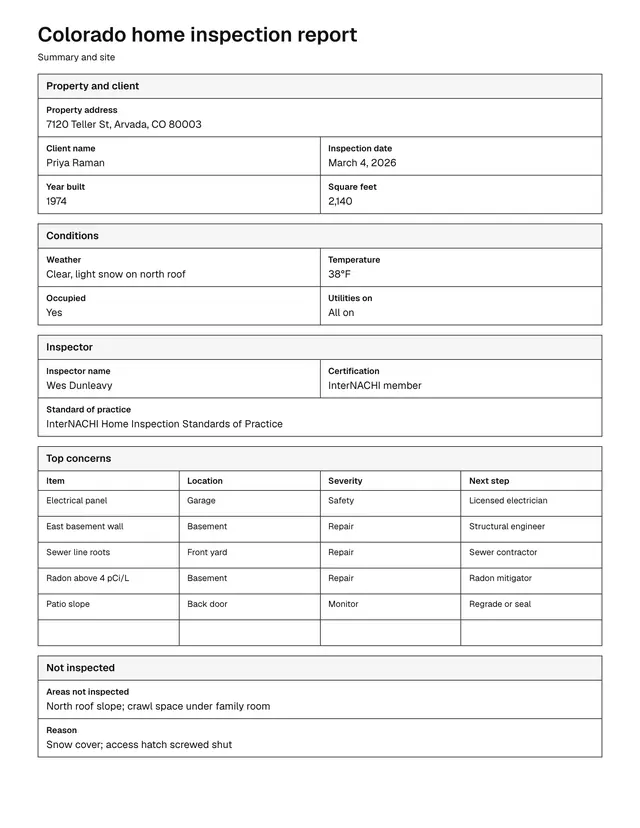
Colorado home inspection report
Findings by system, with each defect noted. - Connecticut
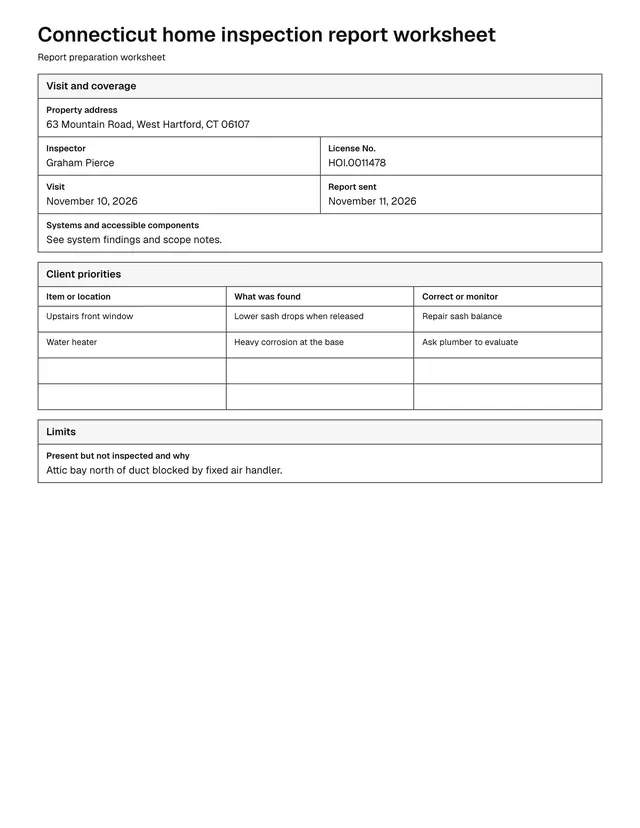
Connecticut home inspection report worksheet
Findings by system, with each defect noted. - Delaware
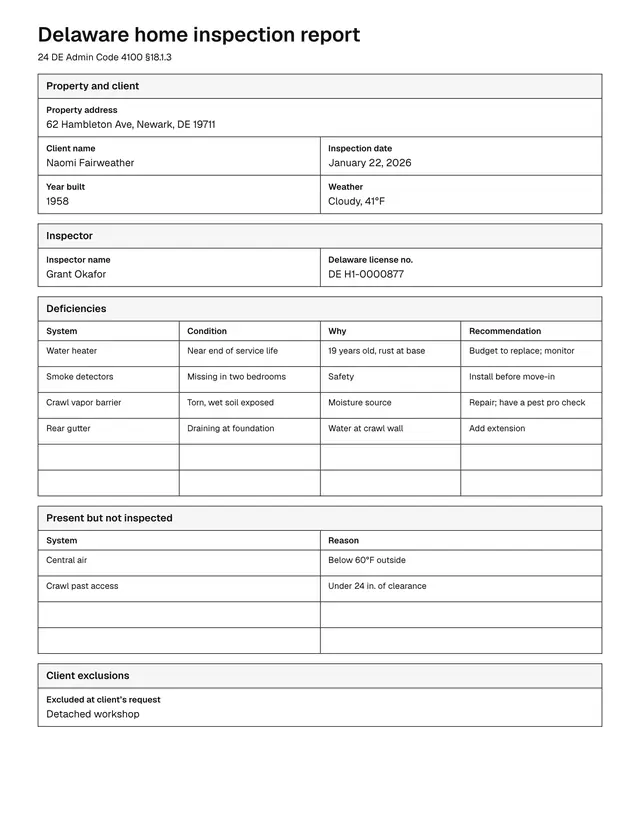
Delaware home inspection report (24 DE Admin Code 4100 §18)
Findings by system, with each defect noted. - Florida
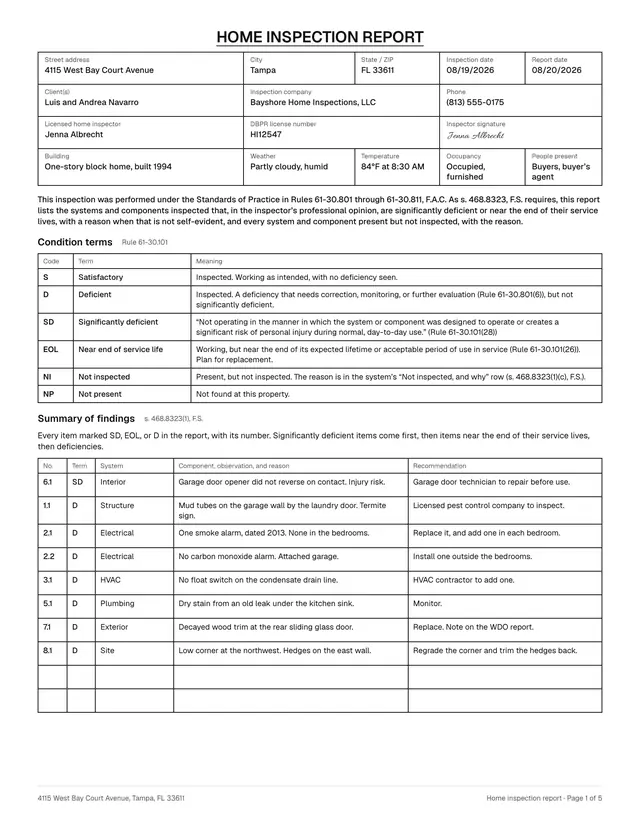
Home Inspection Report
Findings by system, with each defect noted. - Georgia
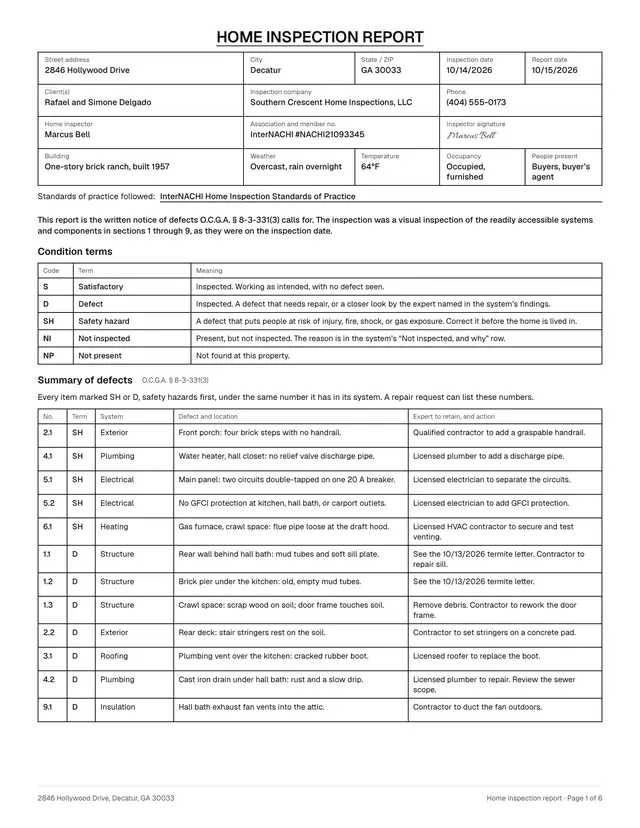
Home Inspection Report
Findings by system, with each defect noted. - Hawaii
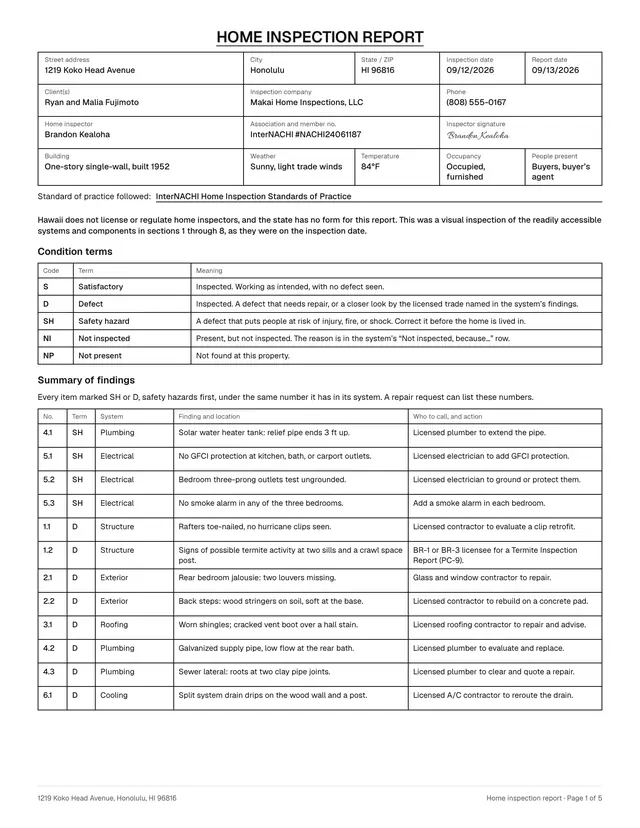
Home Inspection Report
Findings by system, with each defect noted. - Illinois
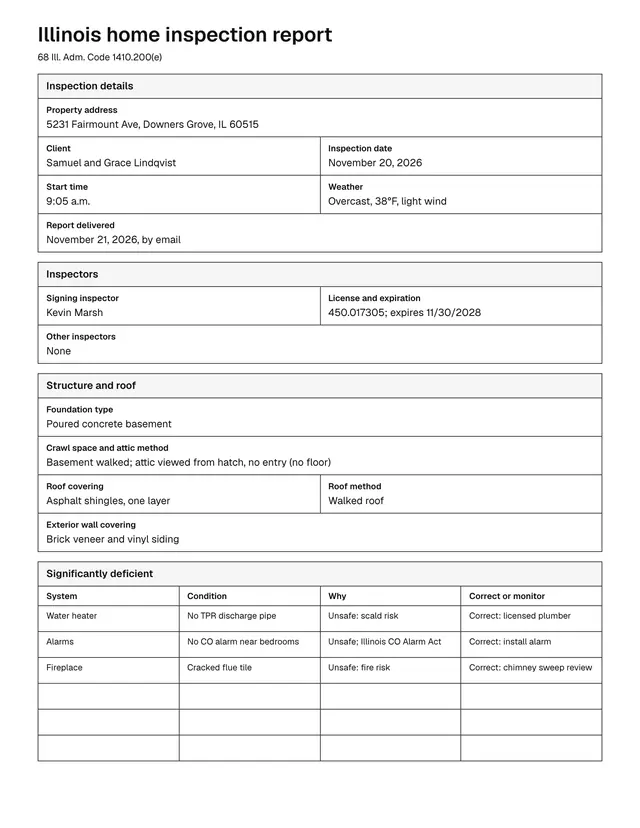
Illinois home inspection report
Findings by system, with each defect noted. - Indiana
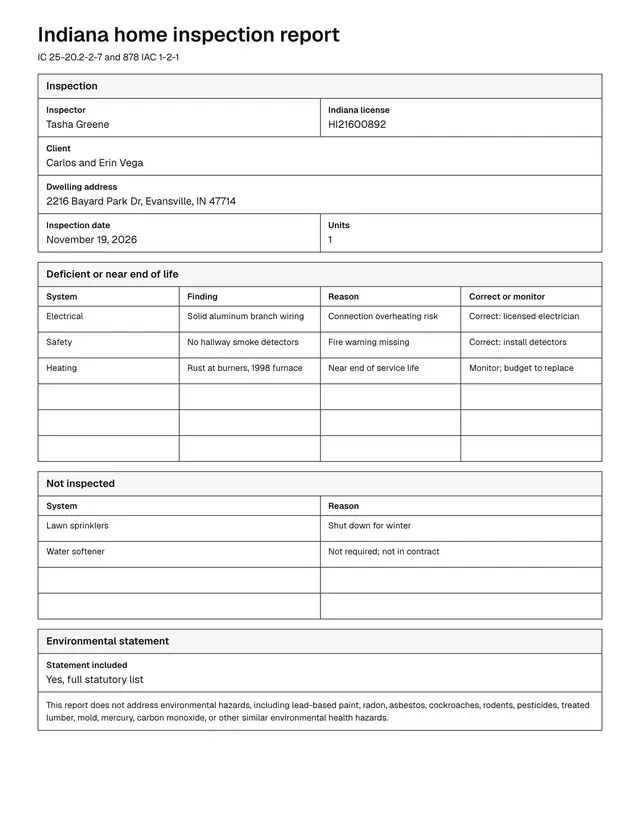
Indiana home inspection report
Findings by system, with each defect noted. - Kentucky
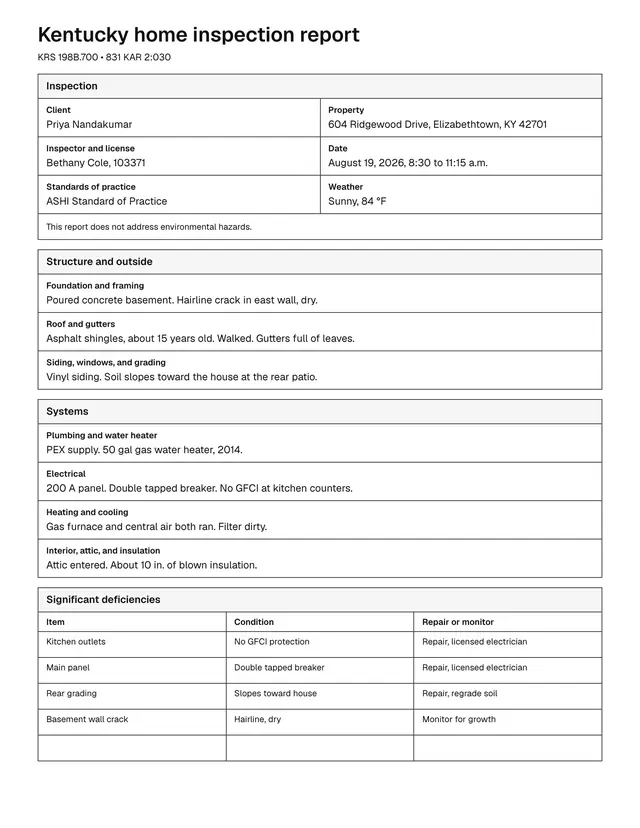
Kentucky home inspection report
Findings by system, with each defect noted. - Louisiana
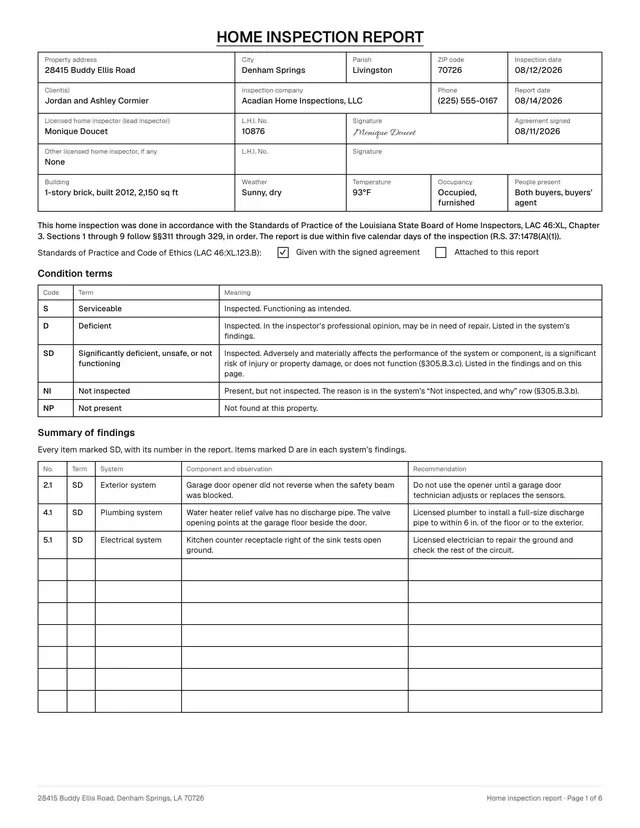
Home Inspection Report
Findings by system, with each defect noted. - Maryland
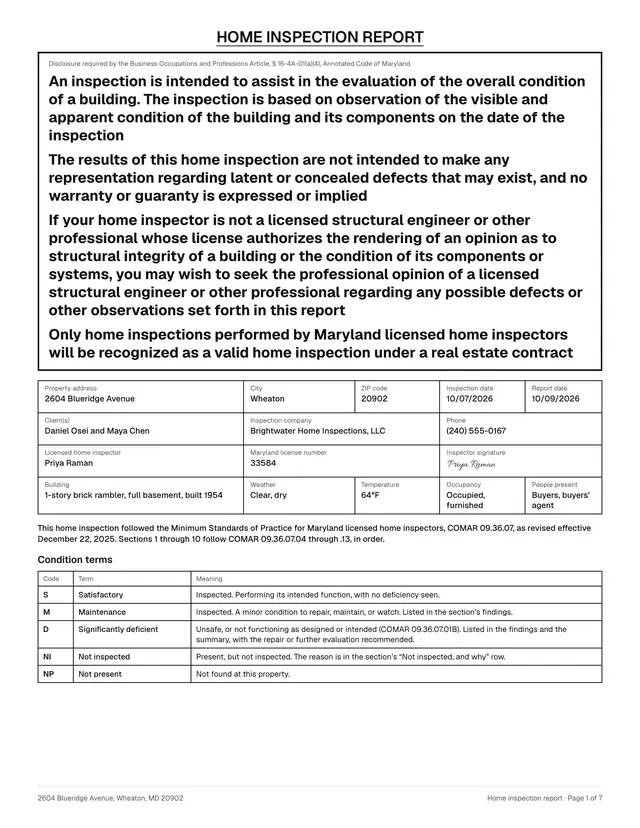
Home Inspection Report
Findings by system, with each defect noted. - Massachusetts
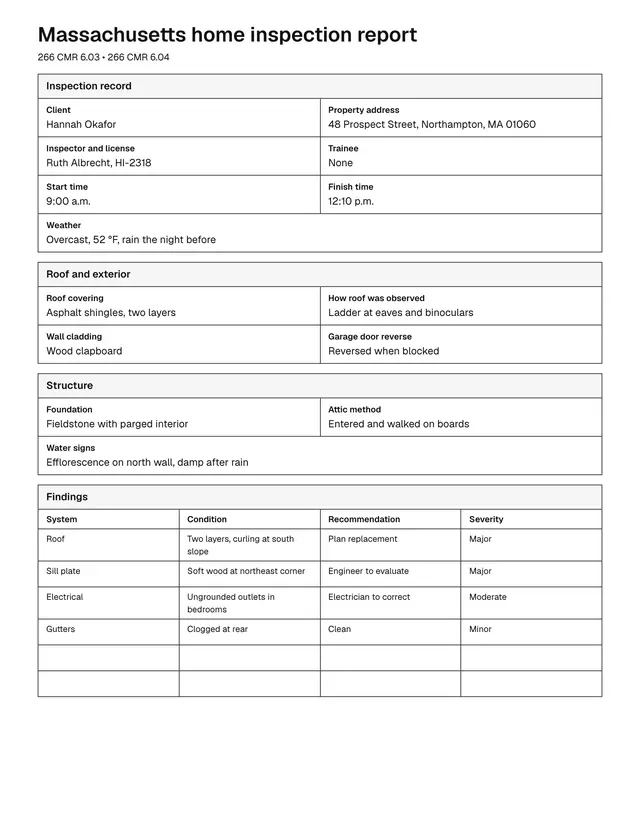
Massachusetts home inspection report (266 CMR 6.03)
Findings by system, with each defect noted. - Michigan
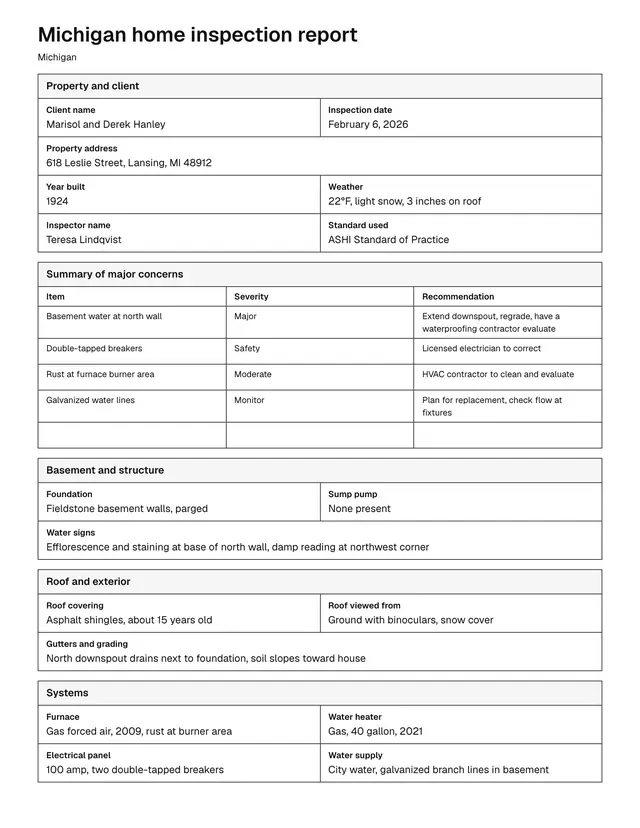
Michigan home inspection report
Findings by system, with each defect noted. - Mississippi
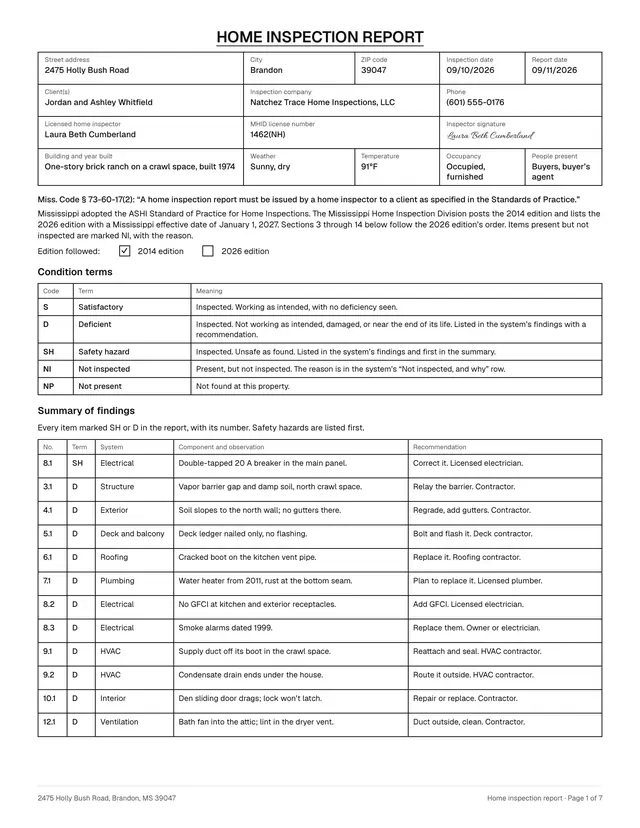
Home Inspection Report
Findings by system, with each defect noted. - Missouri
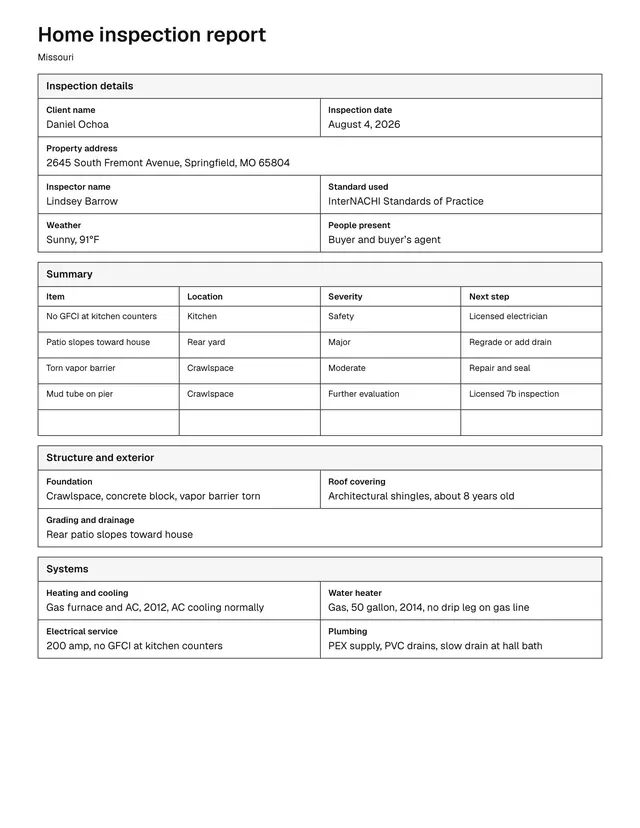
Missouri home inspection report
Findings by system, with each defect noted. - Nevada
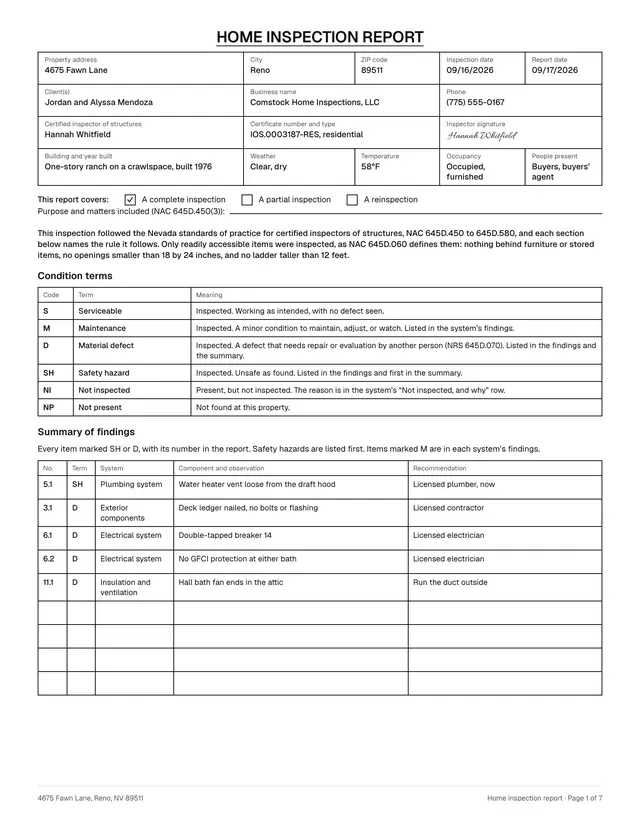
Home Inspection Report
Findings by system, with each defect noted. - New Jersey
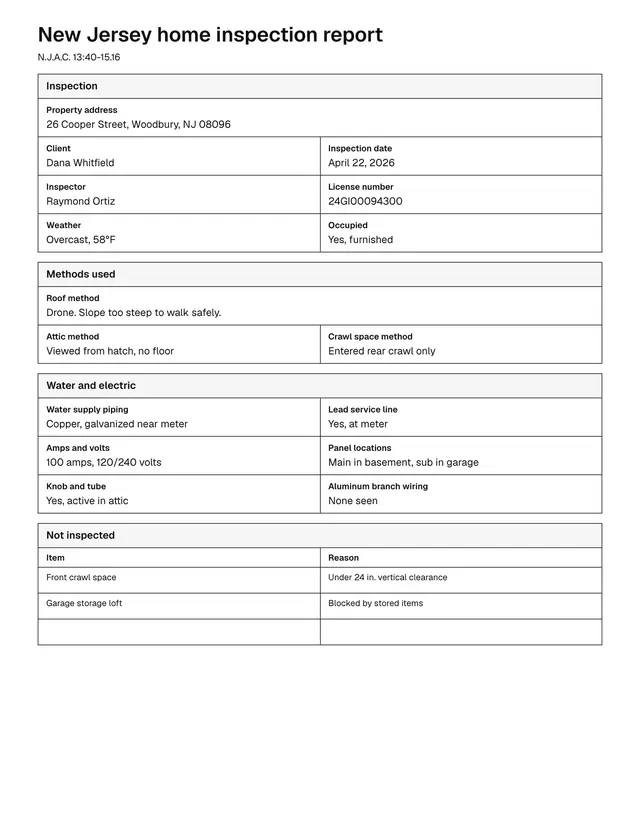
New Jersey home inspection report (N.J.A.C. 13:40-15.16)
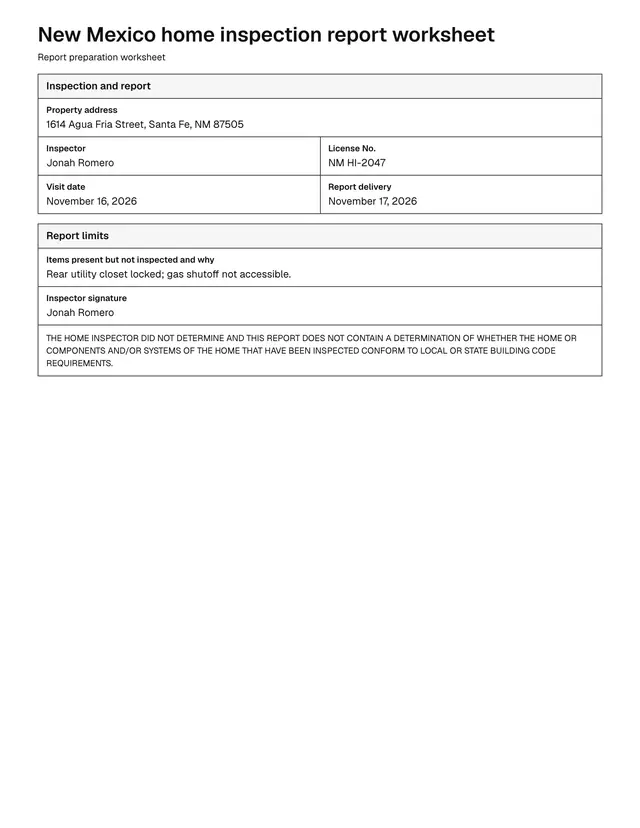
Findings by system, with each defect noted. - New Mexico
New Mexico home inspection report worksheet
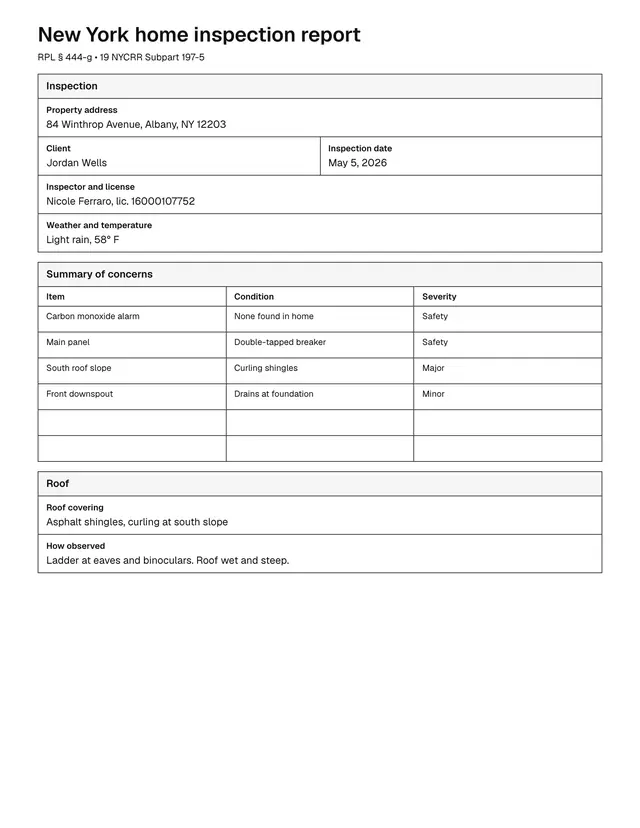
Findings by system, with each defect noted. - New York
New York home inspection report (19 NYCRR Subpart 197-5)
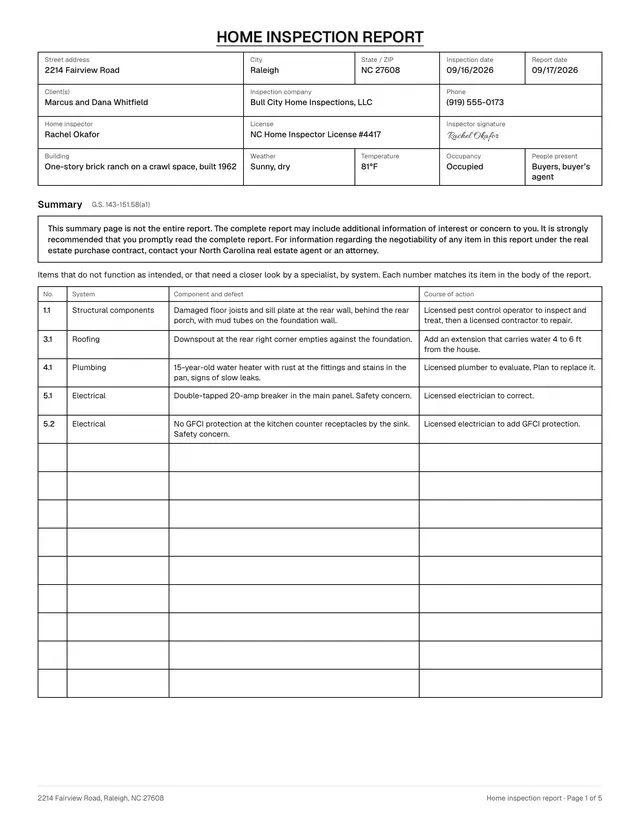
Findings by system, with each defect noted. - North Carolina
Home Inspection Report
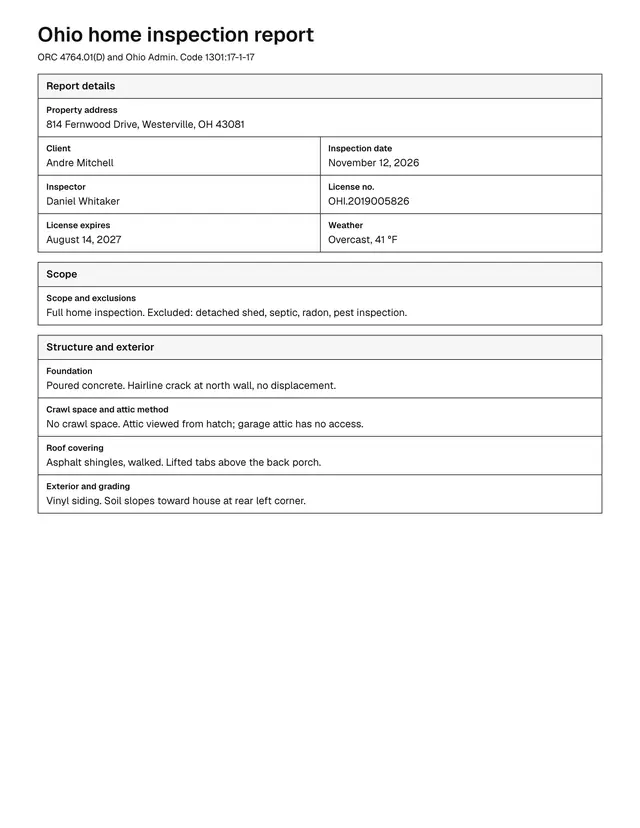
Findings by system, with each defect noted. - Ohio
Ohio home inspection report
Findings by system, with each defect noted. - Oklahoma
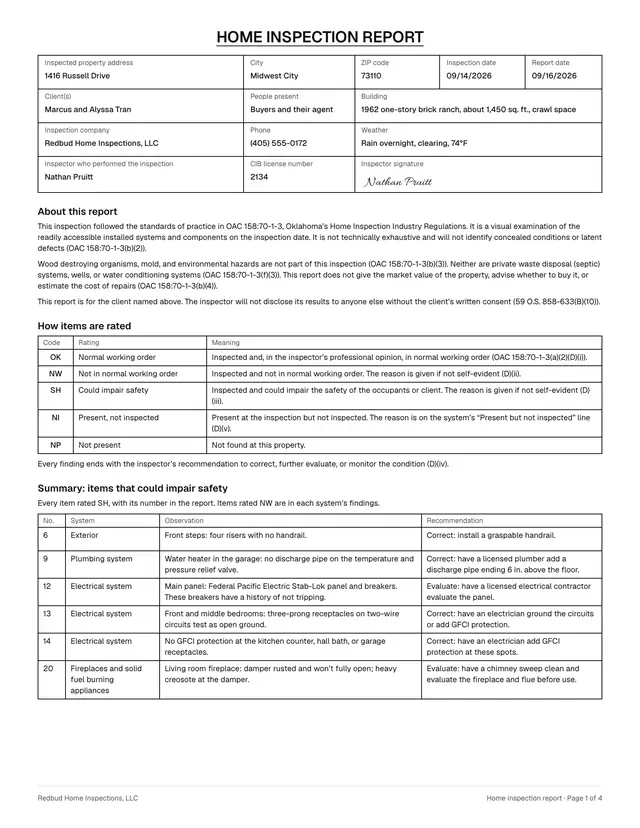
Home Inspection Report
Findings by system, with each defect noted. - Oregon
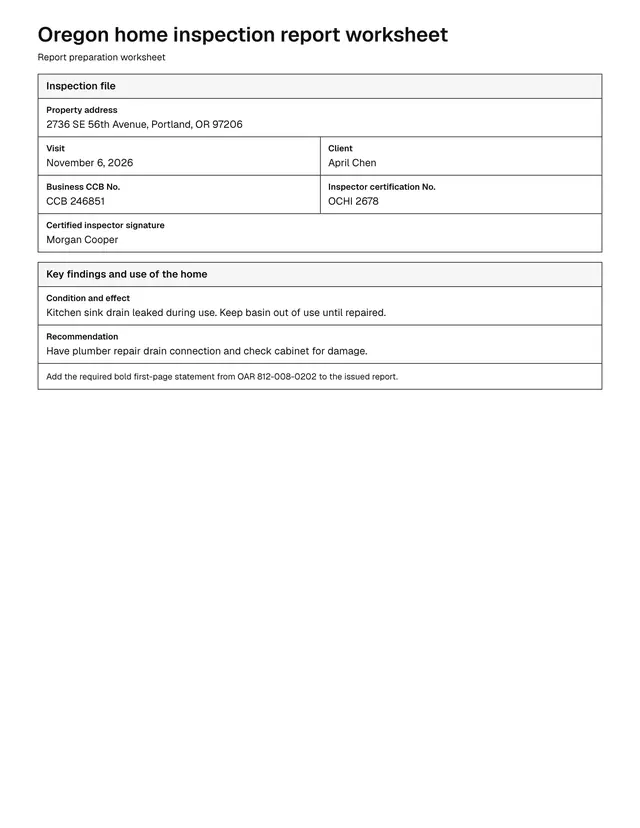
Oregon home inspection report worksheet
Findings by system, with each defect noted. - Pennsylvania
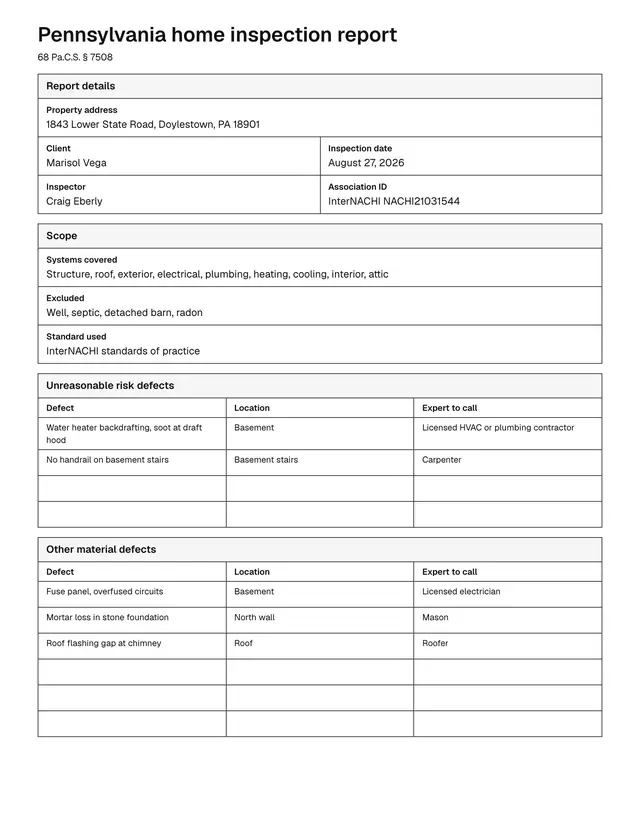
Pennsylvania home inspection report
Findings by system, with each defect noted. - South Carolina
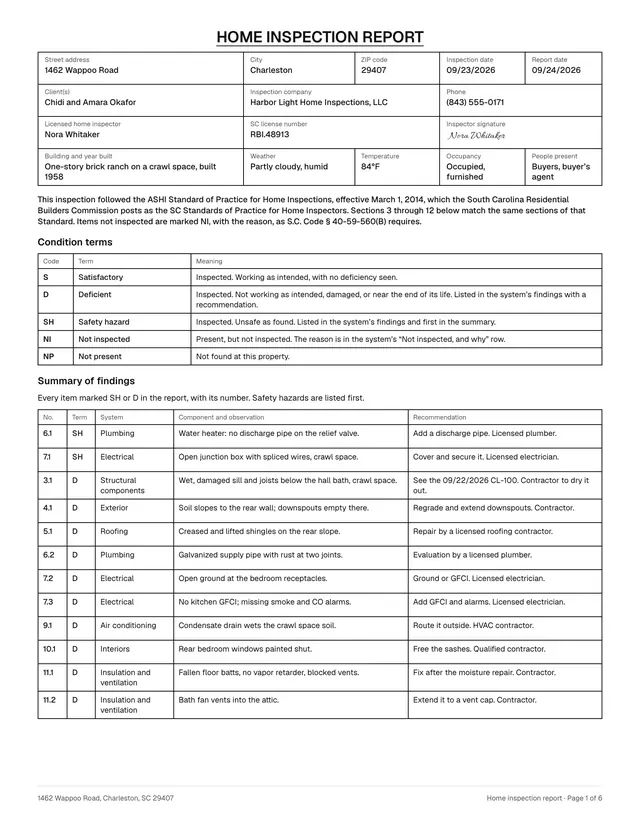
Home Inspection Report
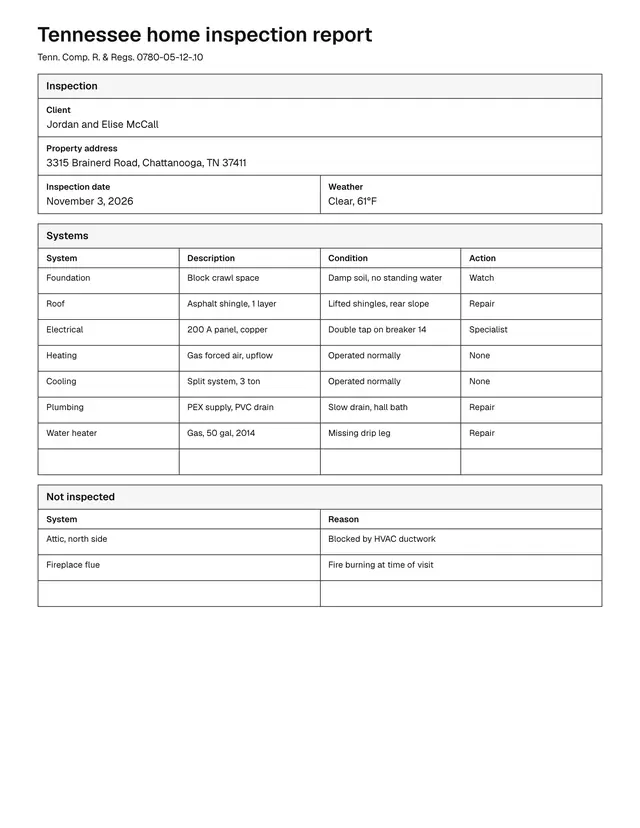
Findings by system, with each defect noted. - Tennessee
Tennessee home inspection report
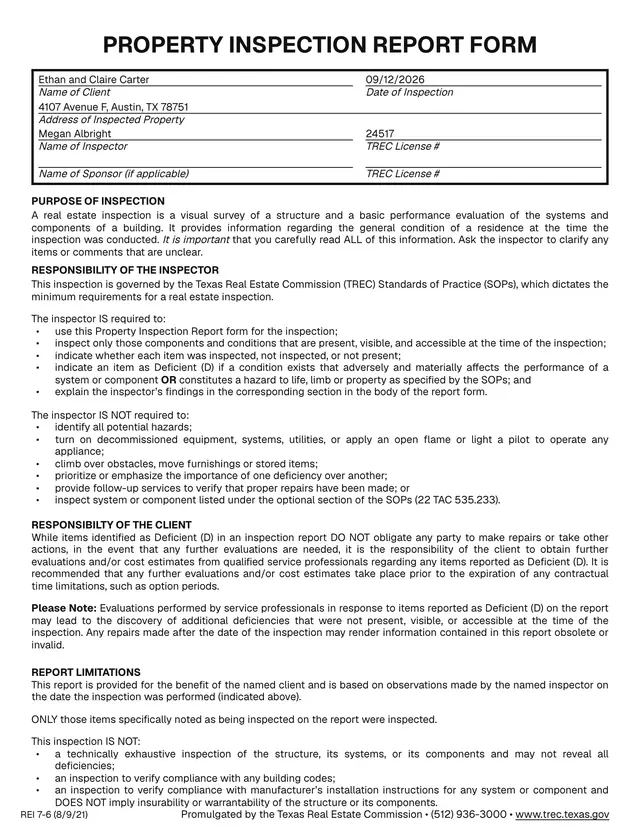
Findings by system, with each defect noted. - TexasREI 7-6
Property Inspection Report Form
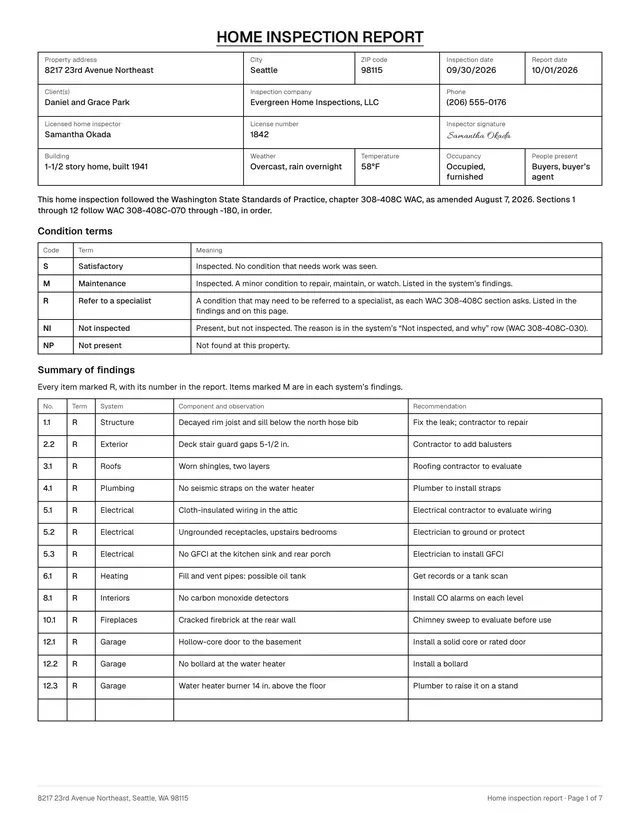
Findings by system, with each defect noted. - Washington
Home Inspection Report
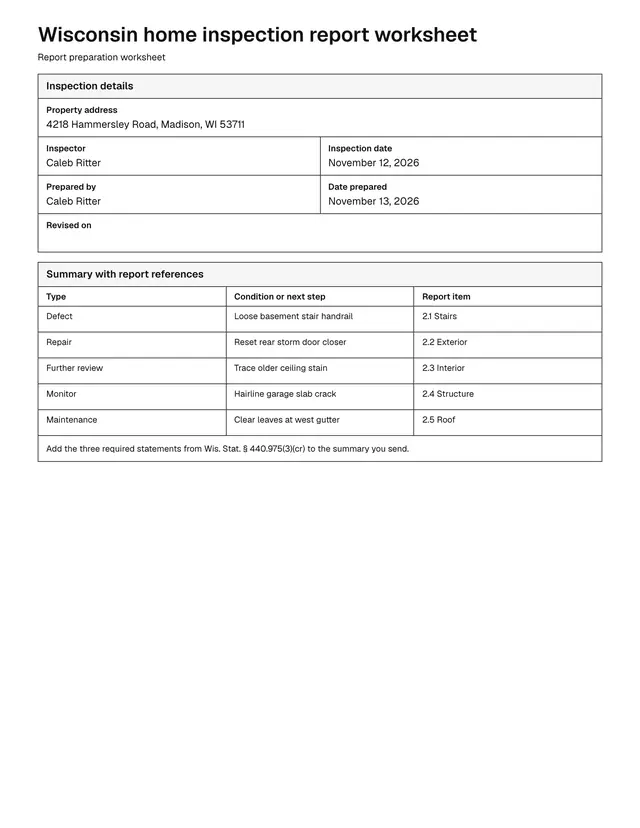
Findings by system, with each defect noted. - Wisconsin
Wisconsin home inspection report worksheet
Findings by system, with each defect noted.