Home Inspection Report
A system-by-system Hawaii home inspection report with rows for single-wall framing, post-and-pier footings, roof tie-downs, and the wastewater system type, since the state has no form.
At a glance
- Required by
- No Hawaii law or state form
- Filled out by
- Home inspector
- Given to
- The client
- Due
- No state deadline
Completed example
Download PDFWhat is a home inspection report?
It’s what the buyer paid for: a written record of each system you looked at, the condition you found it in, and who to call about the problems.
Hawaii has no home inspector license, no standard of practice, and no state form, which the State Auditor’s Auditor Report No. 19-09 left alone in 2019. Most inspectors follow a national standard of practice and name it. What makes a Hawaii report different is the house: single-wall framing, post-and-pier footings, roof tie-downs, and a wastewater system that may be a cesspool.
When is it delivered?
Inside the disclosure window. No law sets a report deadline, but HRS § 508D-5 gives the buyer “fifteen calendar days” after the seller’s disclosure statement arrives to examine it and decide whether to rescind. Your findings are what they’ll weigh against it.
Set the delivery date in your home inspection agreement and beat it. A report that lands on day 14 leaves the buyer no time to get a contractor out.
How to fill it out
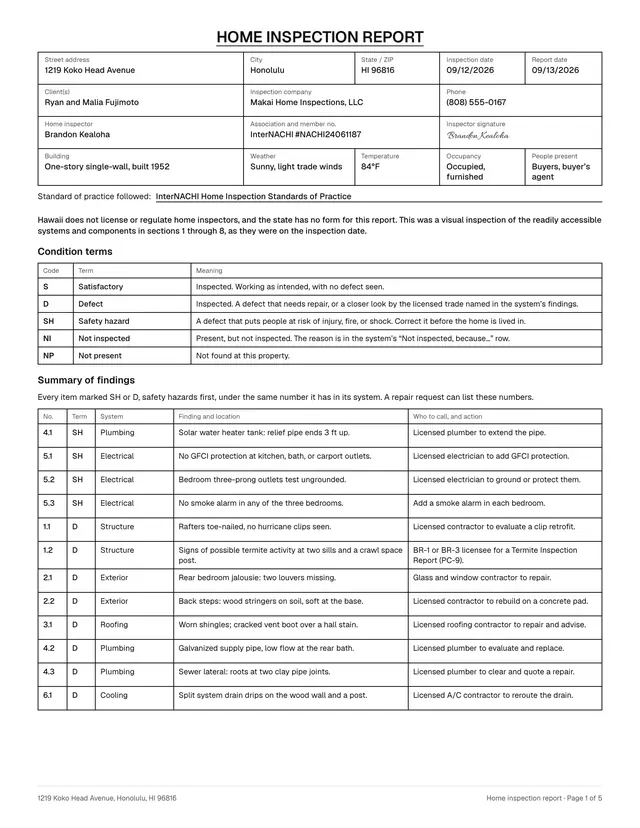
Fill in the facts box and sign. Property, dates, clients, your company, your trade group number in place of a license, and your signature. Write the standard of practice you followed on the line under the box.
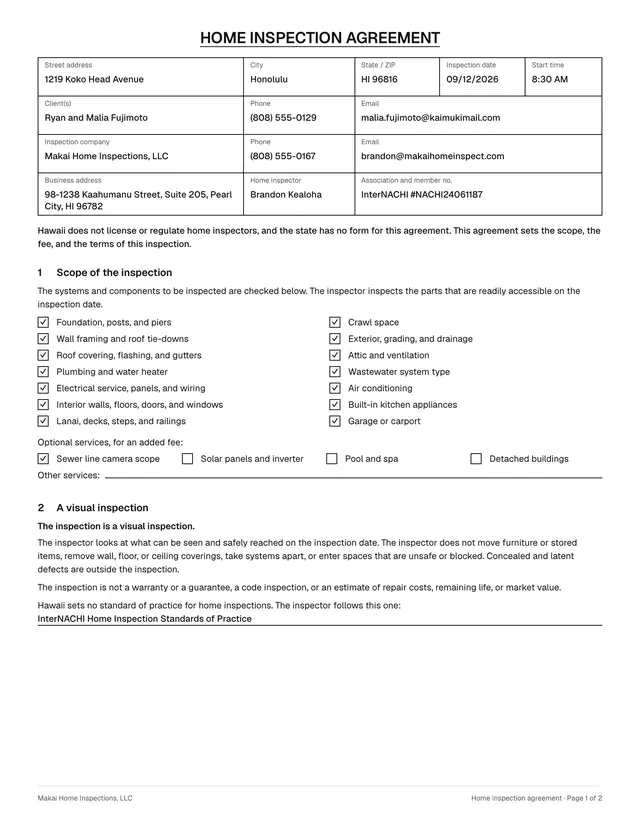
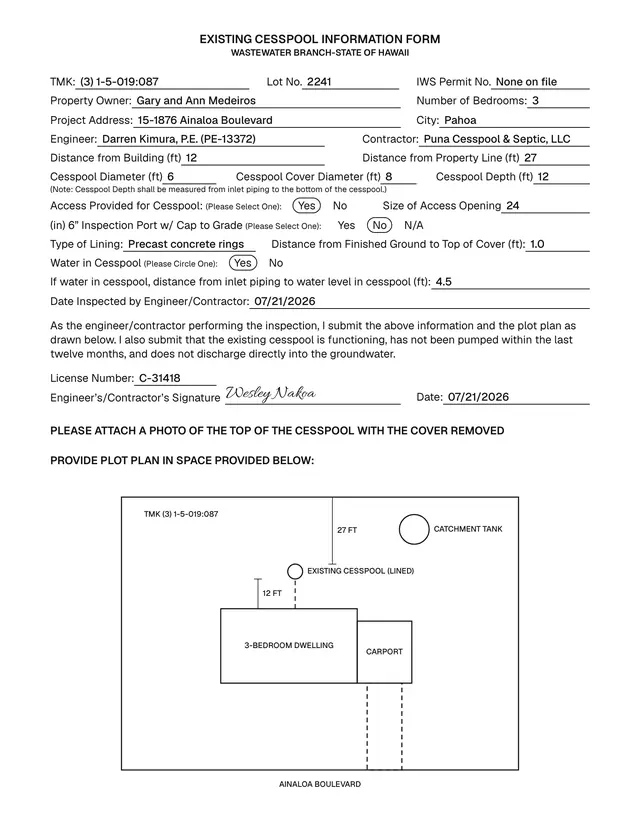
Describe the Hawaii rows. Say whether the walls are single or double, how the posts sit on their piers, and whether you saw hurricane clips. On the wastewater row, write sewer, cesspool, or septic. The Department of Health says people “will often refer to cesspools as ‘septic systems’,” and every cesspool faces the 2050 deadline in HRS § 342D-72, so send one to a cesspool inspection.
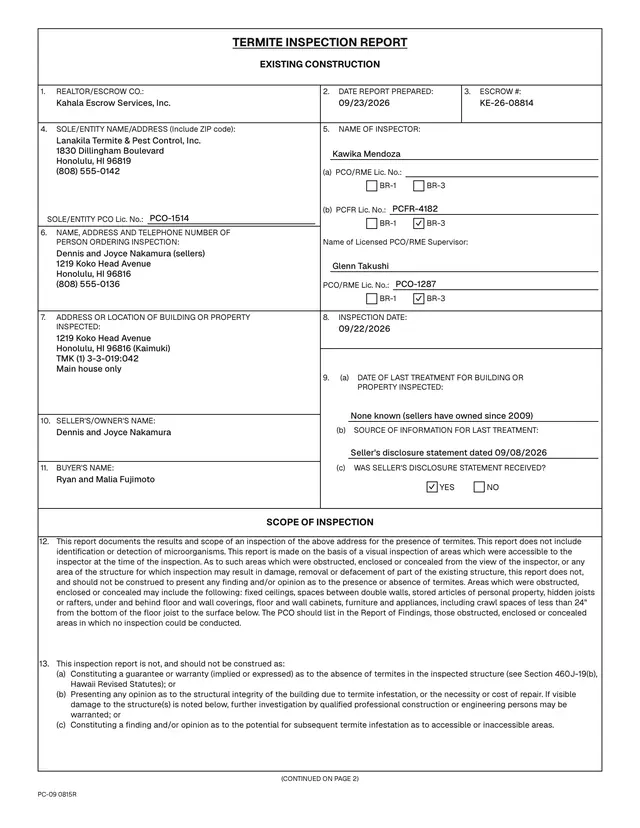
Call termite signs what they are. Pellets on a sill or a tube up a post are signs of possible termite activity, not a diagnosis. Refer the buyer to a PC-9 termite report, which HAR § 16-94-73 leaves to a BR-1 or BR-3 licensee.
Fill every “Not inspected” line, then the summary. Write what you skipped and why, like a crawl space corner under 18 inches. Then copy every SH and D item to page 1, safety hazards first, under its body number.
Can the summary build itself?
It can, once each item is marked by how serious it is. Copying a dozen findings to page 1 by hand is where a safety hazard slips off the list, a few days before the review window closes.
Noma specializes in the Home Inspection Report. Noma’s property inspection reports let you set your own sections and titles, so they can follow the eight systems here. Mark how serious each defect is, and the summary lists the most serious ones, plus the next level down if you turn it on. You can rename the levels to match your terms. See how Noma builds the summary.
Frequentlyaskedquestions
Send this document in minutes, not an afternoon.
Other states
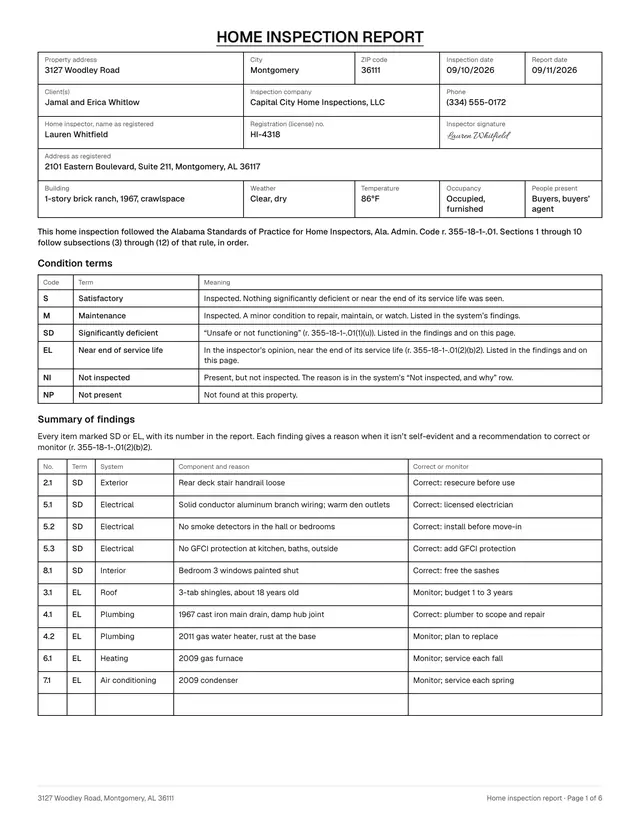
Home inspection report templates- Alabama
Home Inspection Report
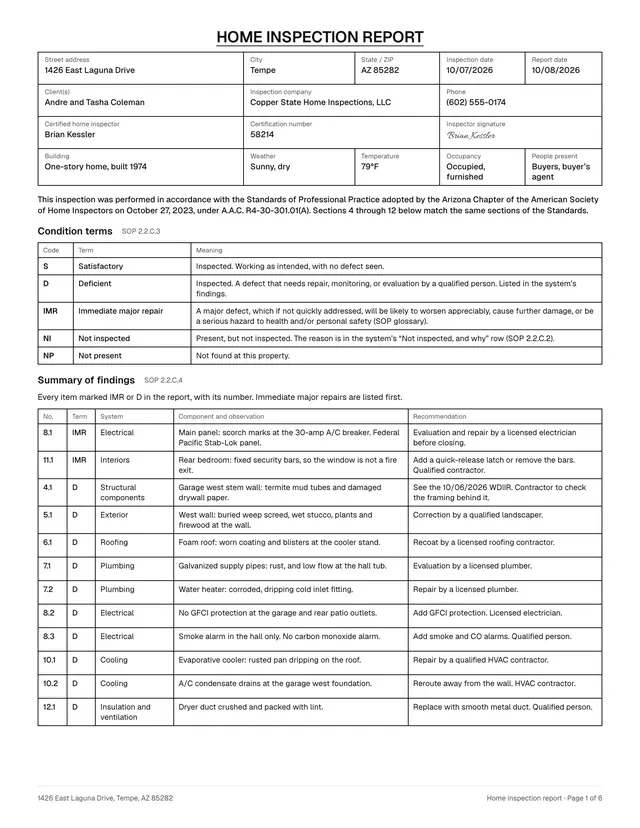
Findings by system, with each defect noted. - Arizona
Home Inspection Report
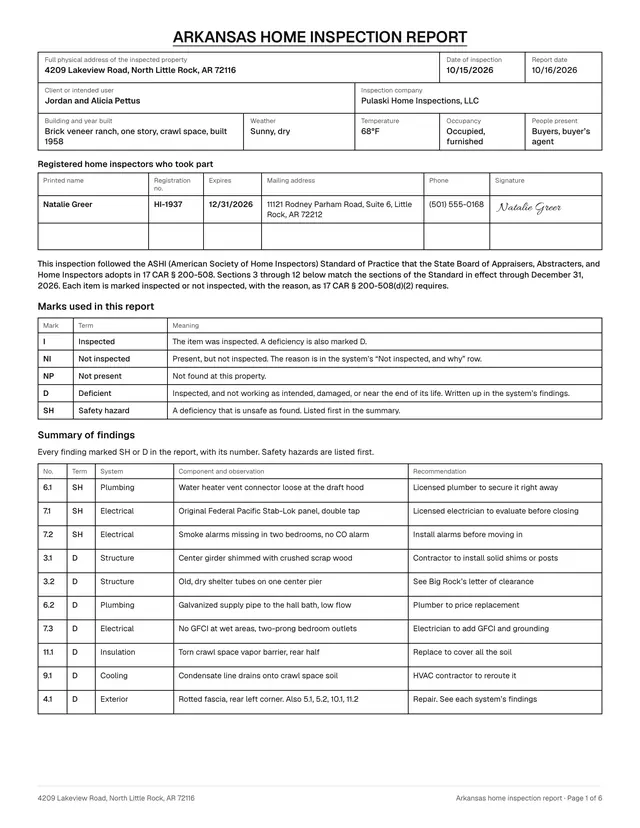
Findings by system, with each defect noted. - Arkansas
Arkansas Home Inspection Report
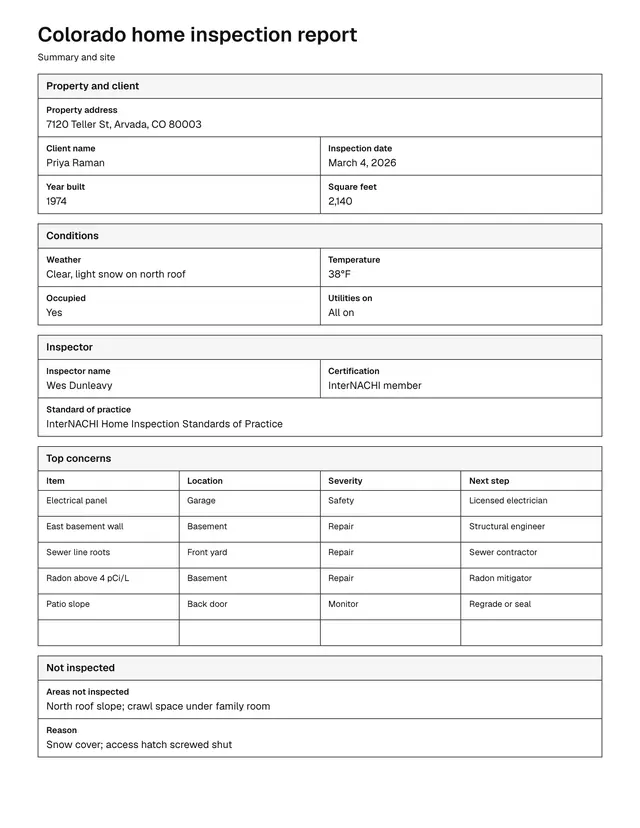
Findings by system, with each defect noted. - Colorado
Colorado home inspection report
Findings by system, with each defect noted. - Connecticut
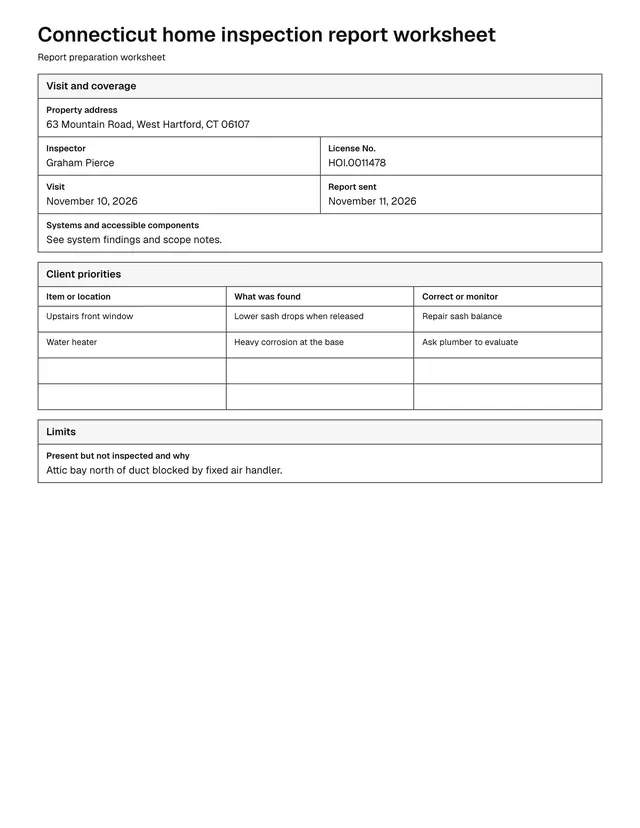
Connecticut home inspection report worksheet
Findings by system, with each defect noted. - Delaware
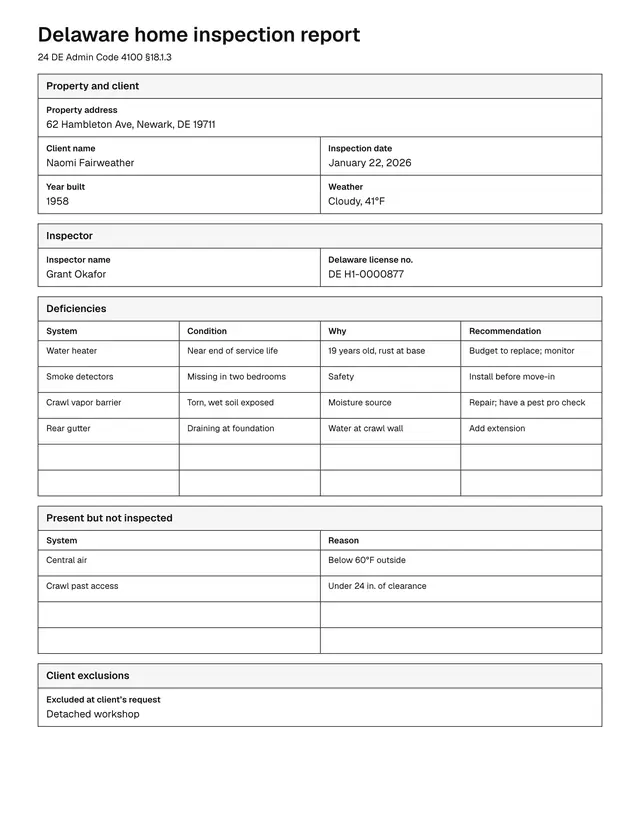
Delaware home inspection report (24 DE Admin Code 4100 §18)
Findings by system, with each defect noted. - Florida
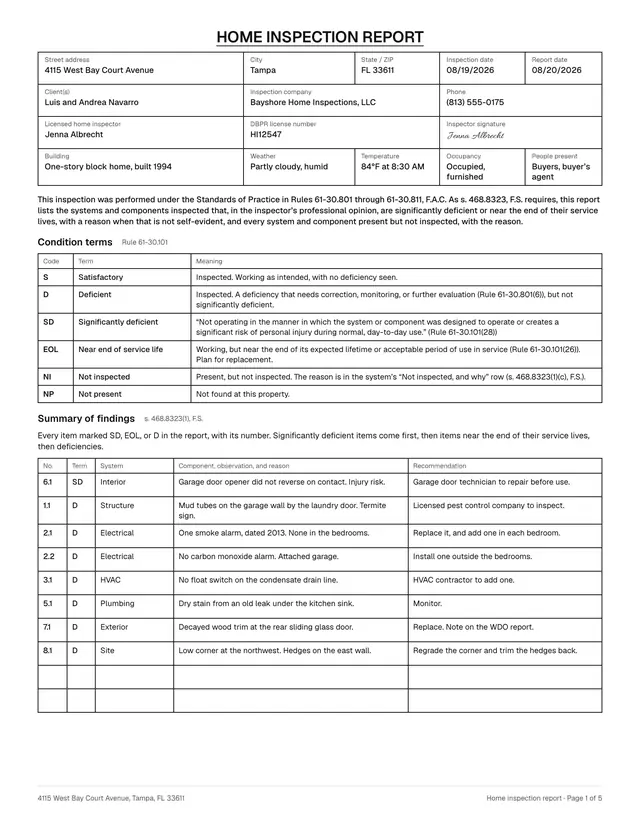
Home Inspection Report
Findings by system, with each defect noted. - Georgia
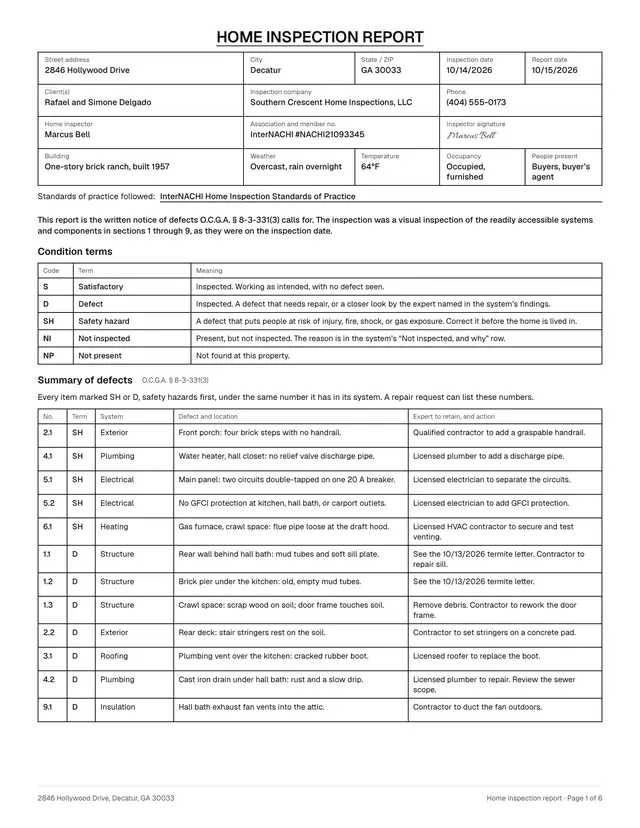
Home Inspection Report
Findings by system, with each defect noted. - Illinois
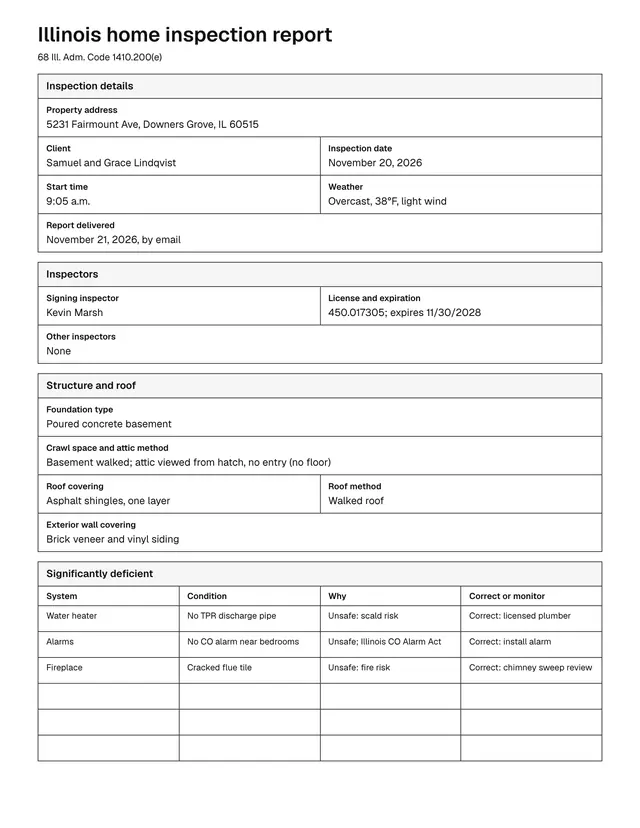
Illinois home inspection report
Findings by system, with each defect noted. - Indiana
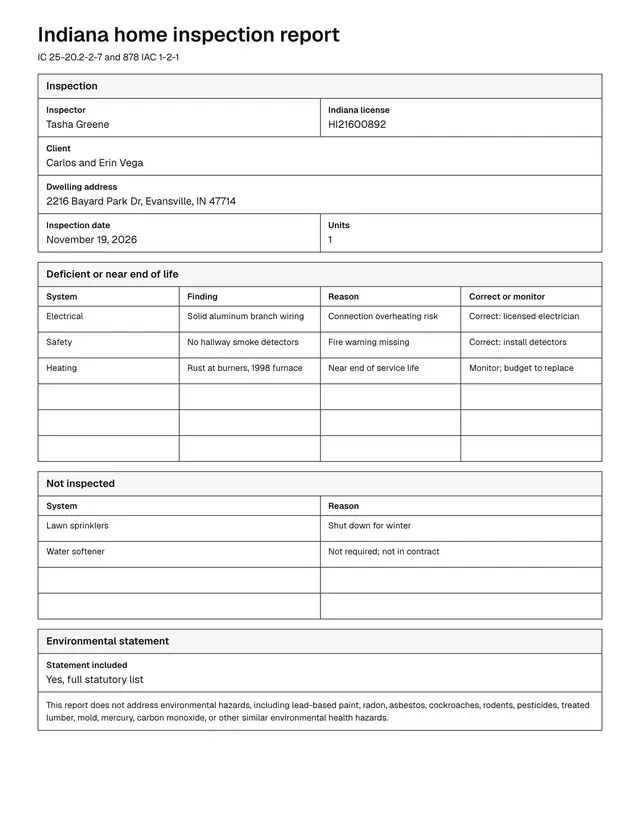
Indiana home inspection report
Findings by system, with each defect noted. - Kentucky
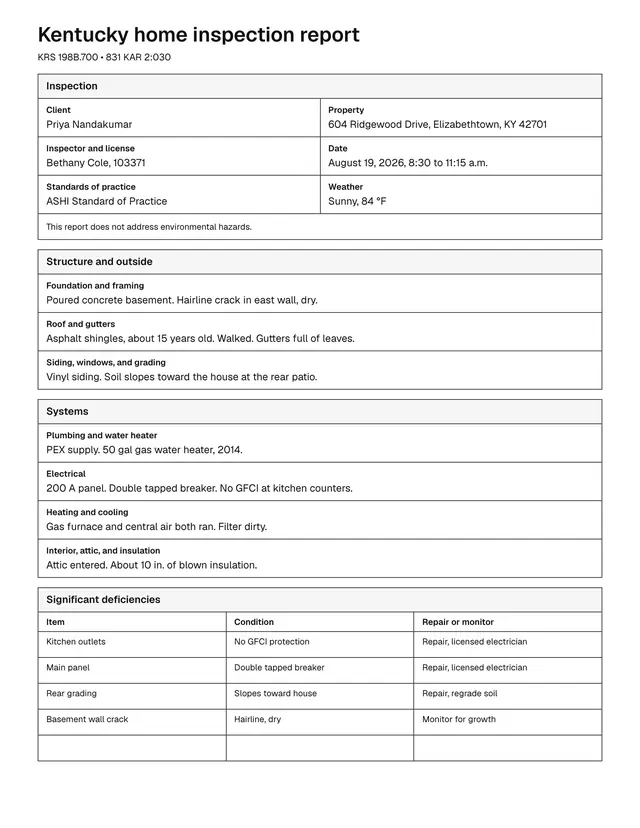
Kentucky home inspection report
Findings by system, with each defect noted. - Louisiana
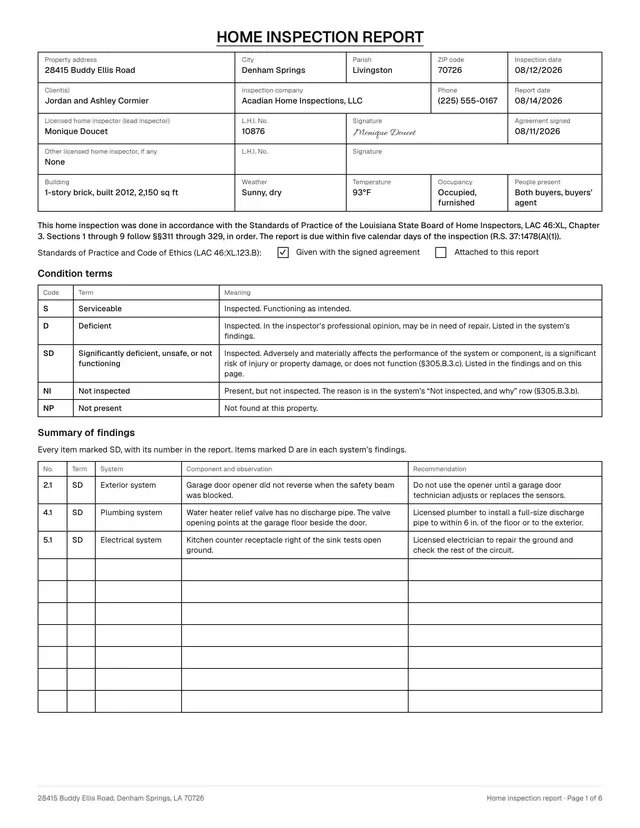
Home Inspection Report
Findings by system, with each defect noted. - Maryland
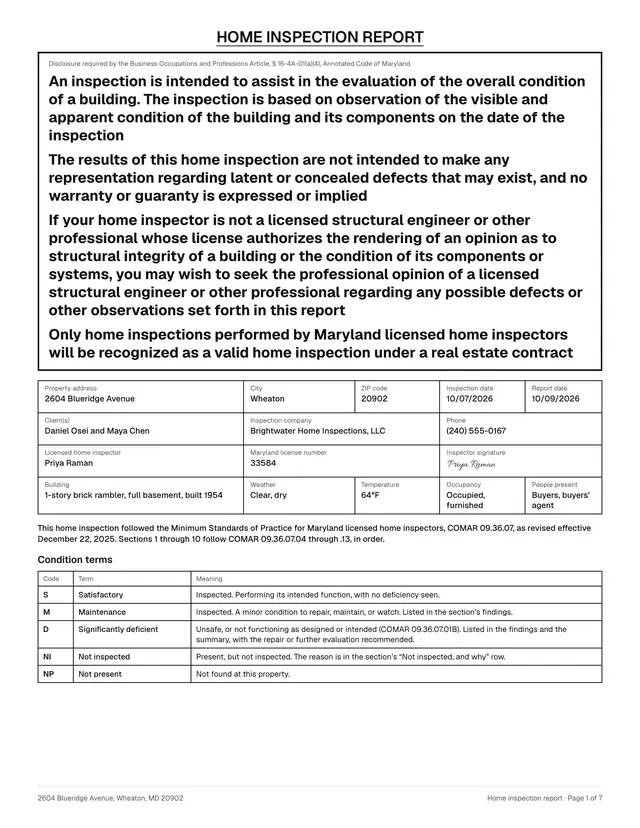
Home Inspection Report
Findings by system, with each defect noted. - Massachusetts
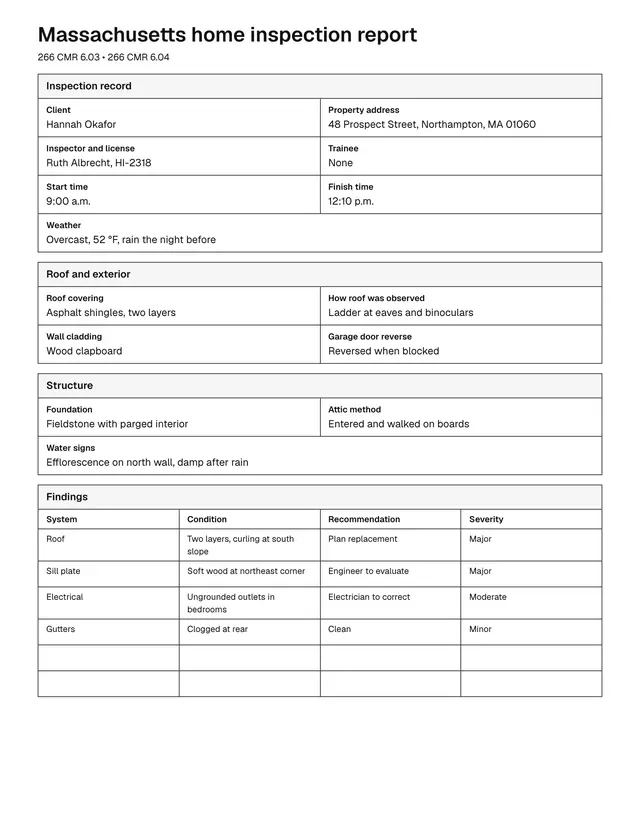
Massachusetts home inspection report (266 CMR 6.03)
Findings by system, with each defect noted. - Michigan
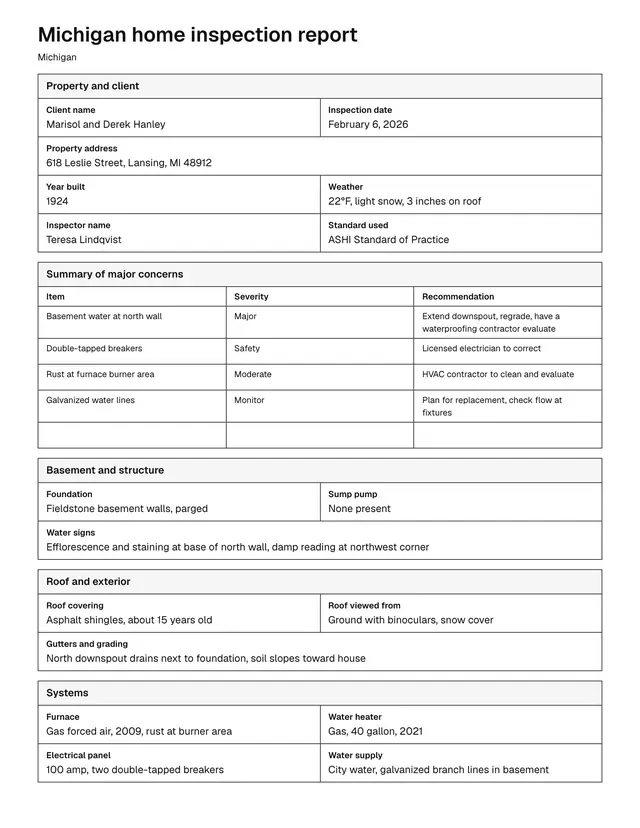
Michigan home inspection report
Findings by system, with each defect noted. - Mississippi
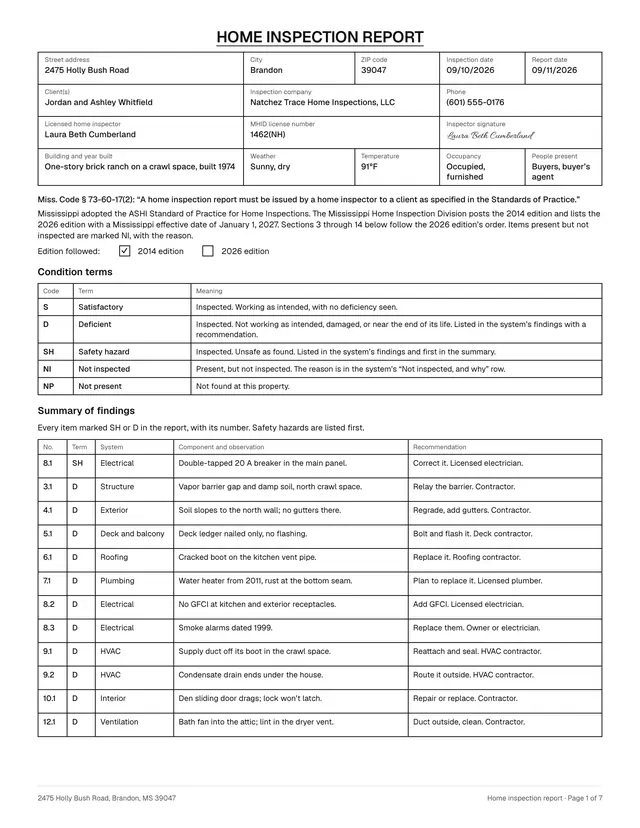
Home Inspection Report
Findings by system, with each defect noted. - Missouri
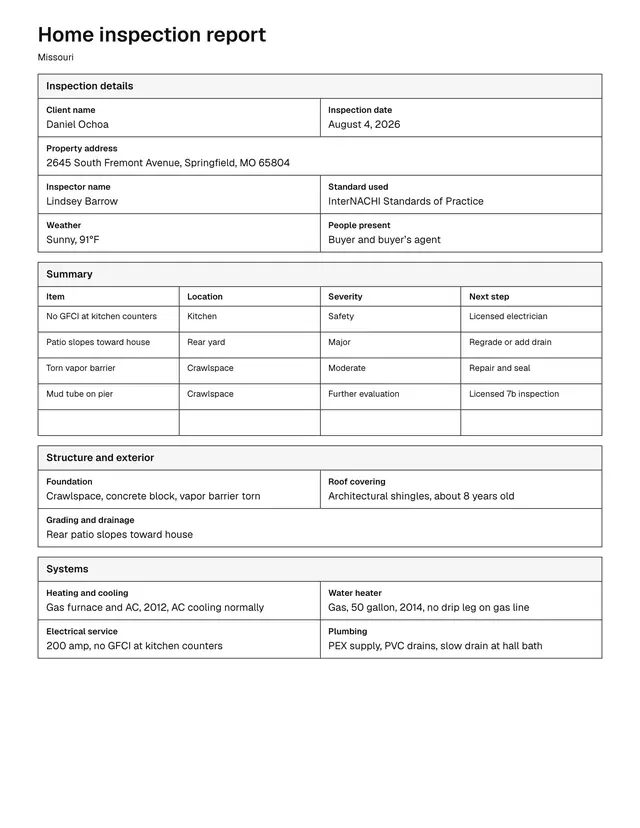
Missouri home inspection report
Findings by system, with each defect noted. - Nevada
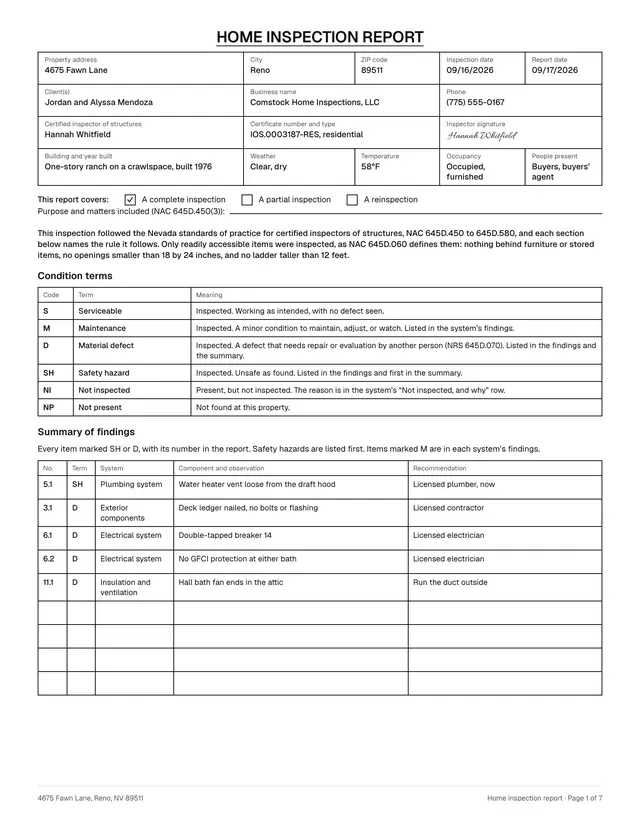
Home Inspection Report
Findings by system, with each defect noted. - New Jersey
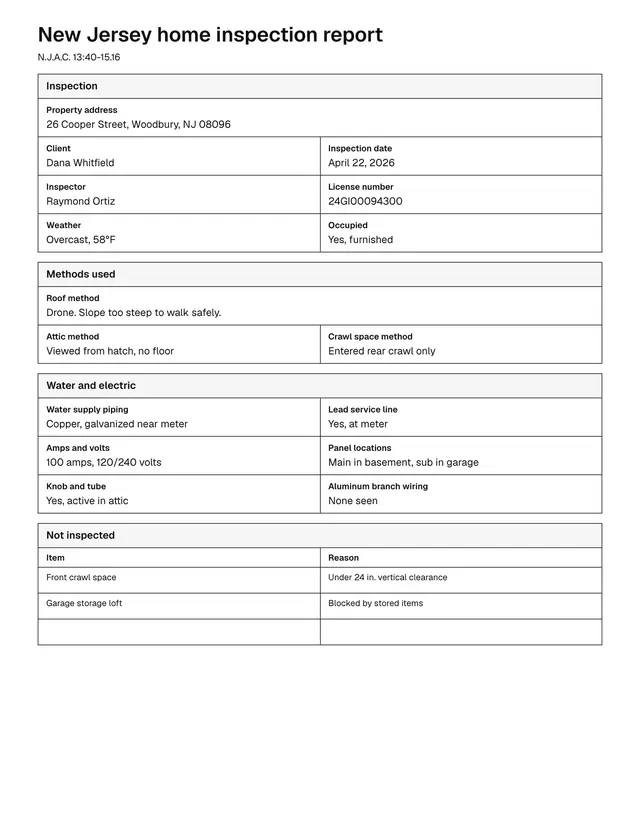
New Jersey home inspection report (N.J.A.C. 13:40-15.16)
Findings by system, with each defect noted. - New Mexico
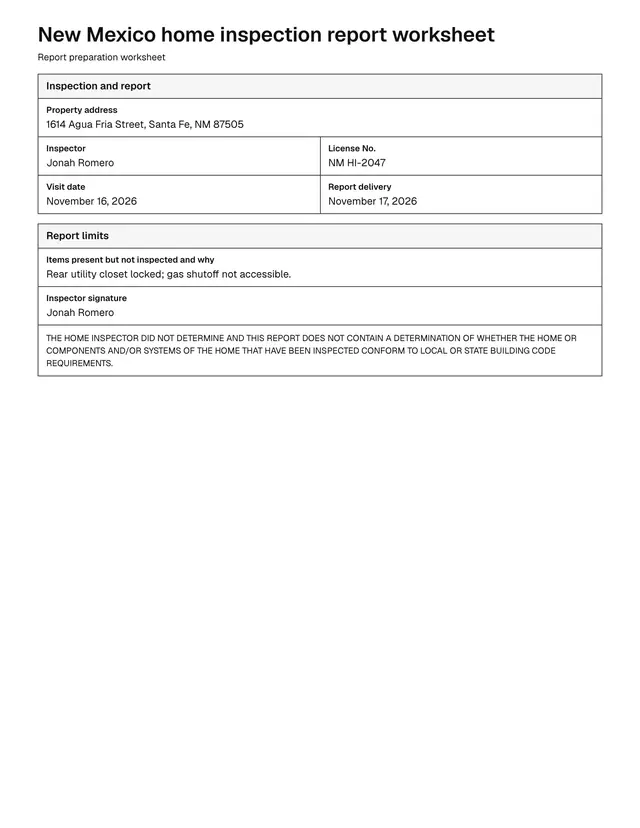
New Mexico home inspection report worksheet
Findings by system, with each defect noted. - New York
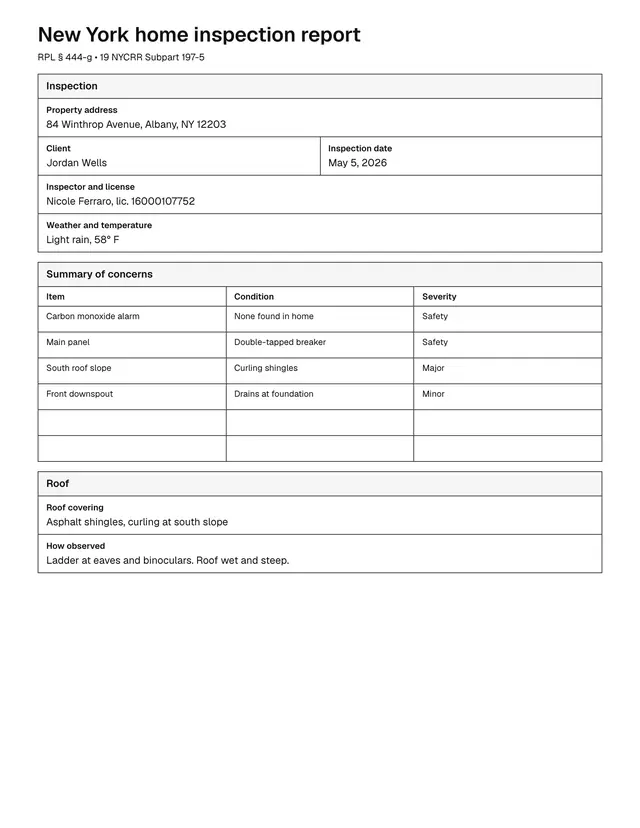
New York home inspection report (19 NYCRR Subpart 197-5)
Findings by system, with each defect noted. - North Carolina
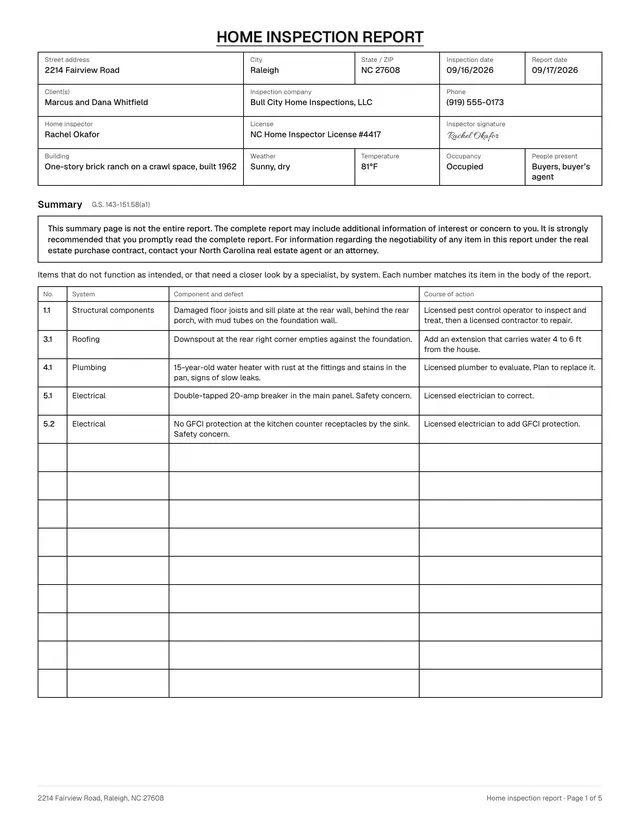
Home Inspection Report
Findings by system, with each defect noted. - Ohio
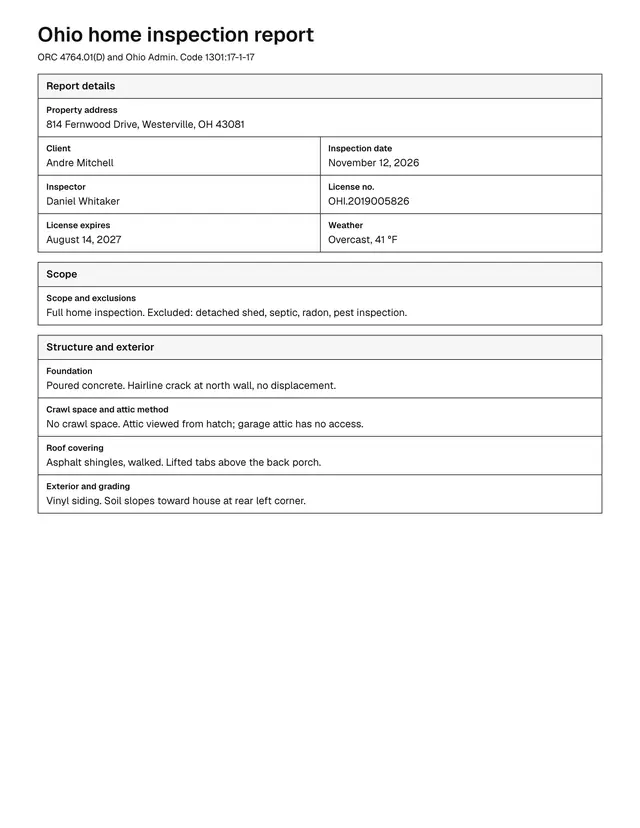
Ohio home inspection report
Findings by system, with each defect noted. - Oklahoma
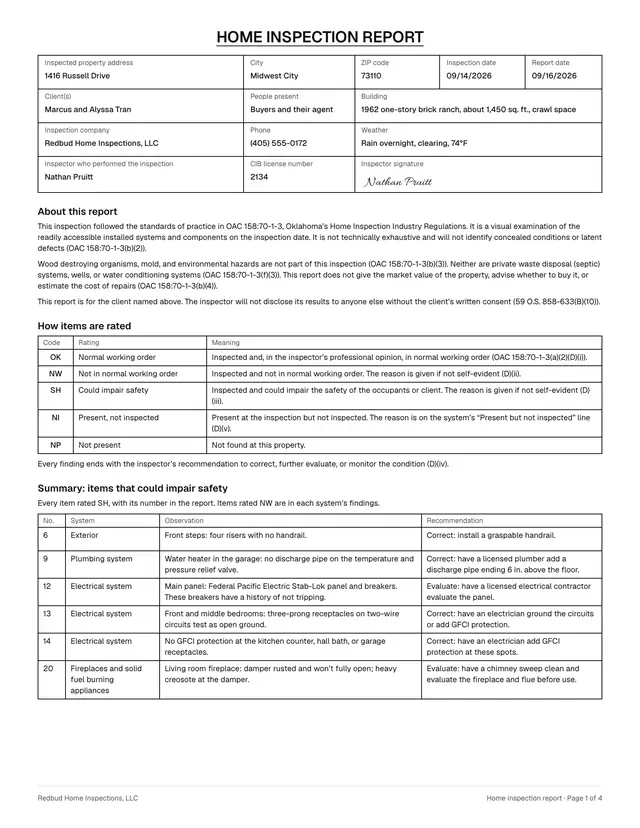
Home Inspection Report
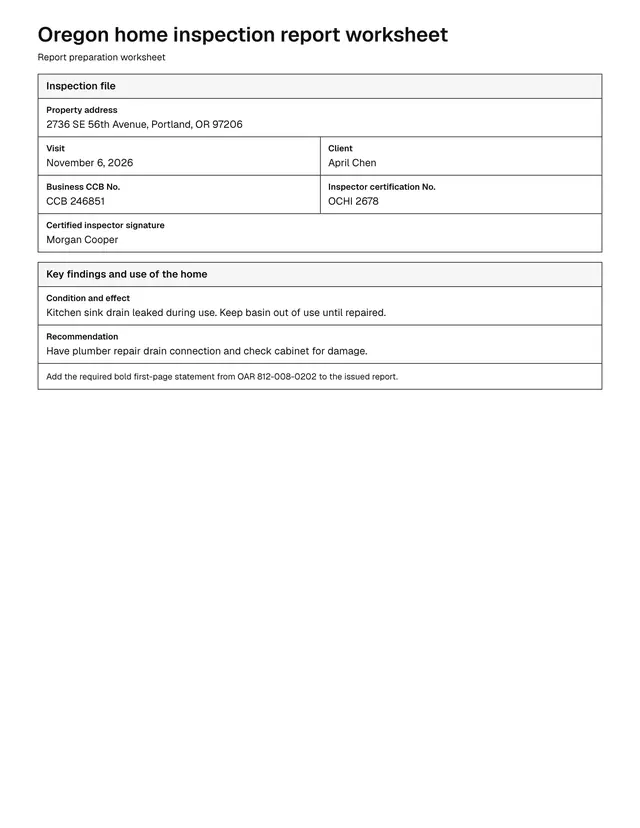
Findings by system, with each defect noted. - Oregon
Oregon home inspection report worksheet
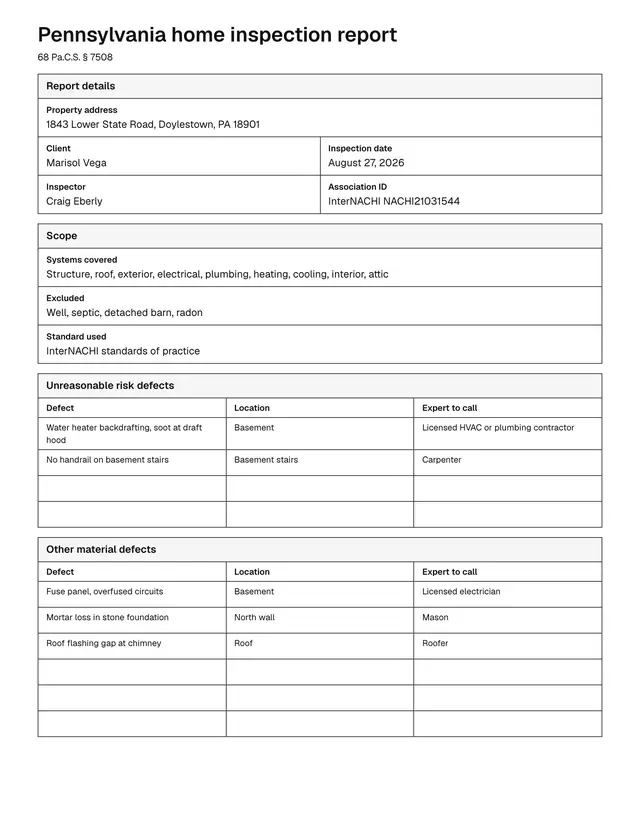
Findings by system, with each defect noted. - Pennsylvania
Pennsylvania home inspection report
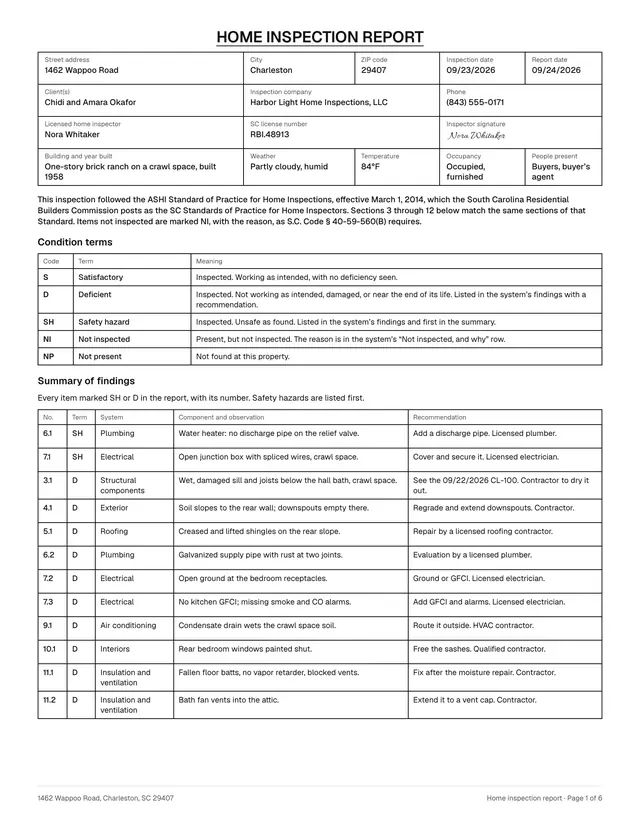
Findings by system, with each defect noted. - South Carolina
Home Inspection Report
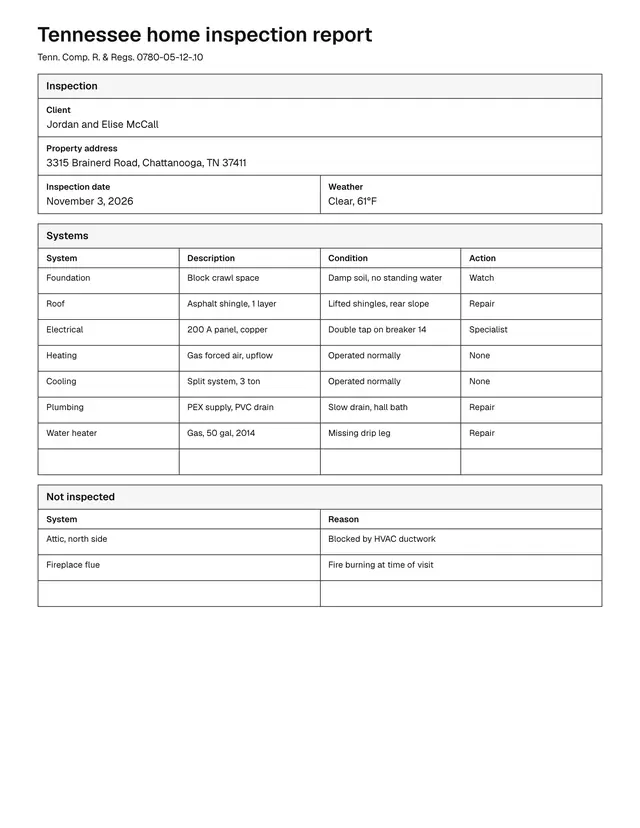
Findings by system, with each defect noted. - Tennessee
Tennessee home inspection report
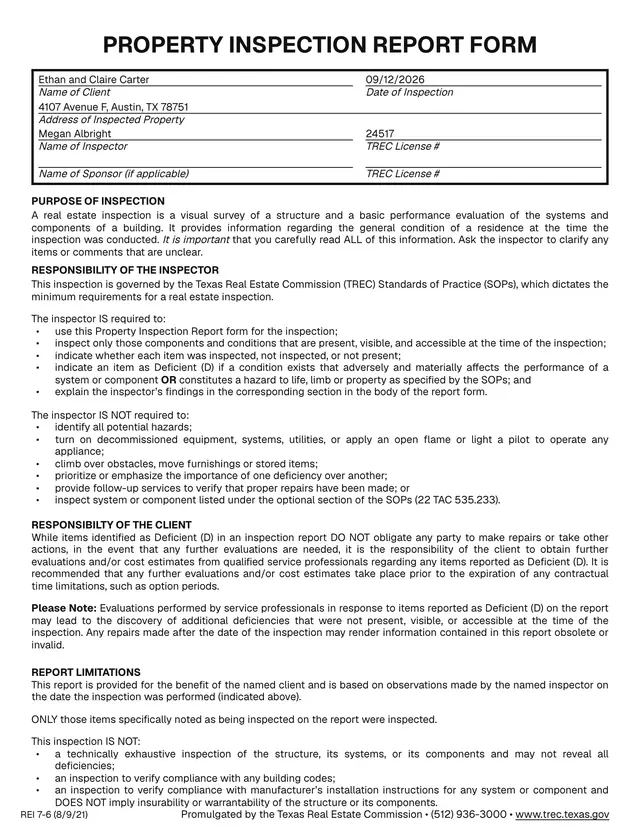
Findings by system, with each defect noted. - TexasREI 7-6
Property Inspection Report Form
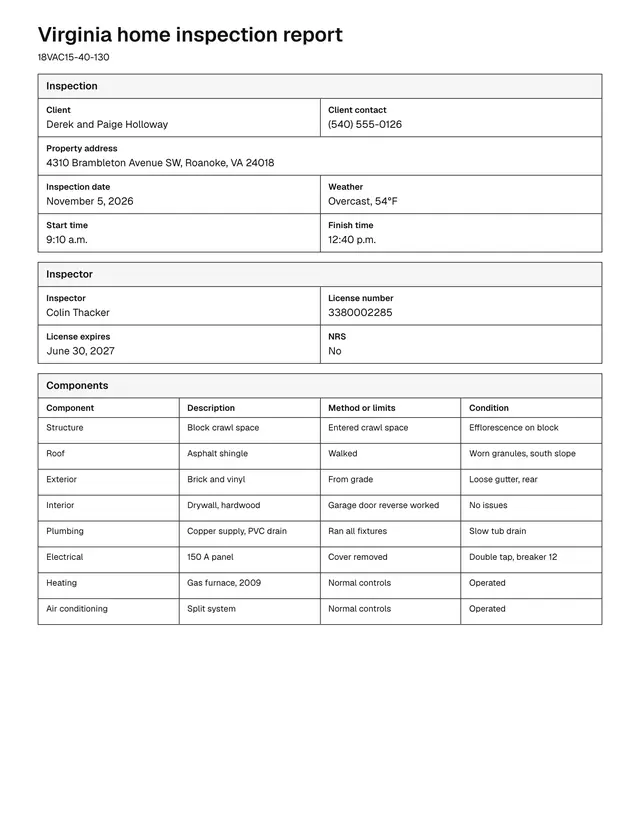
Findings by system, with each defect noted. - Virginia
Virginia home inspection report
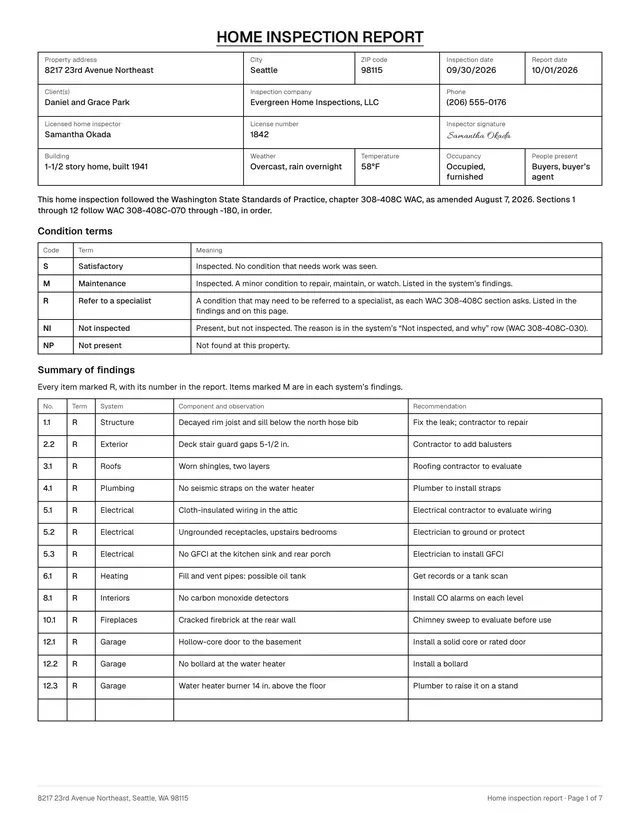
Findings by system, with each defect noted. - Washington
Home Inspection Report
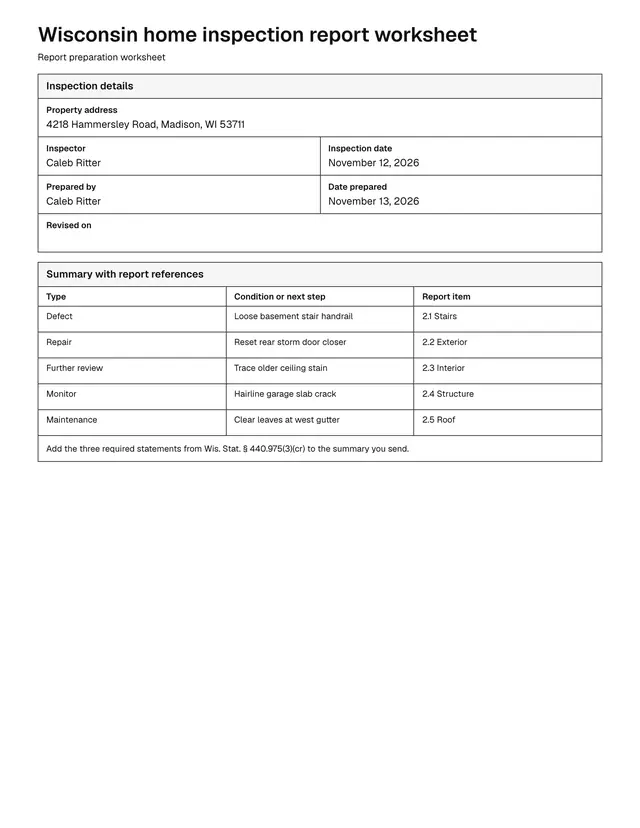
Findings by system, with each defect noted. - Wisconsin
Wisconsin home inspection report worksheet
Findings by system, with each defect noted.