Ohio home inspection report
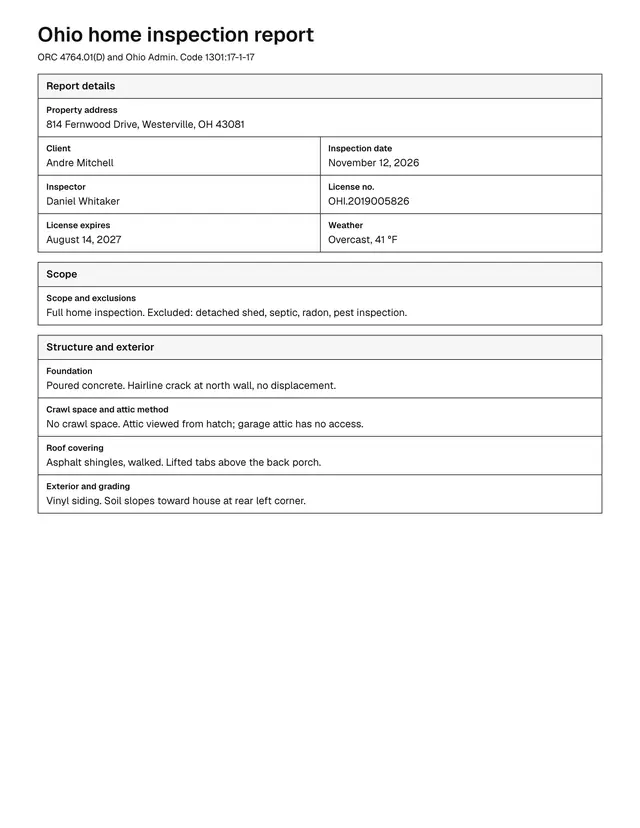
An Ohio report has to name what was deficient, say repair or monitor, and list what you skipped and why. Your license number and its expiration date go on it too.
At a glance
- Law
- ORC 4764.01(D)
- Standards
- Ohio Admin. Code 1301:17-1-17
- Format
- Written only
- Must show
- License no. and expiration
Completed example
Download PDFWhat Ohio’s law says a report must have
Ohio defines the report in the statute itself. ORC 4764.01(D) calls it a written report issued after an on-site inspection, and it lists four things every report includes.
First, any system or component that is deficient, in your professional opinion, “to the degree that it is deficient.” Second, your recommendation to repair or monitor each one. Third, a list of anything the standards of practice say to inspect that you didn’t. Fourth, the reason for each one you skipped.
The board’s ethics rule adds four more lines in 1301:17-1-16(D)(1): your Ohio license number, the date it expires, the inspection date, and the property address. Then (D)(5) asks for a statement of the scope you performed, including any services or hazards you excluded.
The Ohio standards have a few specific asks
Rule 1301:17-1-17 reads a lot like the national standards, but it has a few lines you have to report no matter what.
Electrical. Paragraph (T)(10) says to report the service amperage, the location of the main disconnect and any subpanels, “the presence or absence of any smoke or carbon monoxide alarms,” and the predominant branch circuit wiring method. You don’t have to test the alarms or figure out how old they are. Just say whether you saw them.
Crawl spaces and attics. Paragraph (N)(1) wants the method you used to look, not just the findings. “Entered crawl space” and “viewed attic from the hatch” are different reports. The rule lets you skip spaces under 24 inches of clearance or with an opening smaller than 16 by 24 inches.
Exterior. Paragraph (L) covers wall coverings, doors, decks and porches, eaves seen from the ground, grading and drainage that could hurt the building, and walkways and driveways next to the house.
Writing up what you didn’t inspect
This is where Ohio reports get flagged. Paragraph (F) says to “clearly report” every required item that wasn’t operated or inspected and “explain the reasons each was not operated or inspected.” A blanket “inaccessible areas excluded” at the end won’t do it.
Make it one line per item. In a November inspection in Westerville, that might read: central air not run, outdoor temperature 41 °F, below the unit’s safe range. Attic over the garage not entered, no access opening. Fireplace flue interior not viewed, damper rusted shut. Each line names the thing and the reason.
The standards also list what you don’t have to give an opinion on, like remaining life, repair costs, and code compliance. You also don’t have to inspect things underground, such as tanks and septic systems. If you choose to comment on any of those anyway, paragraph (D) says you can’t do it “in a careless or misleading manner.”
Safety calls without code calls
Ohio inspectors can’t tell a client a house meets code. Rule 1301:17-1-16(A)(8) bars licensees from representing “a determination of compliance with Ohio residential, mechanical, plumbing, or electrical codes.” What you can do is recommend a certified or licensed pro look at a suspected safety hazard. The rule says that recommendation goes in the report.
So write the condition and the next step, not the code section. “Double-tapped breaker at slot 14, wire insulation scorched. Have a licensed electrician evaluate and repair.” And put it in writing every time, because (A)(9) bans oral reports in place of written ones.
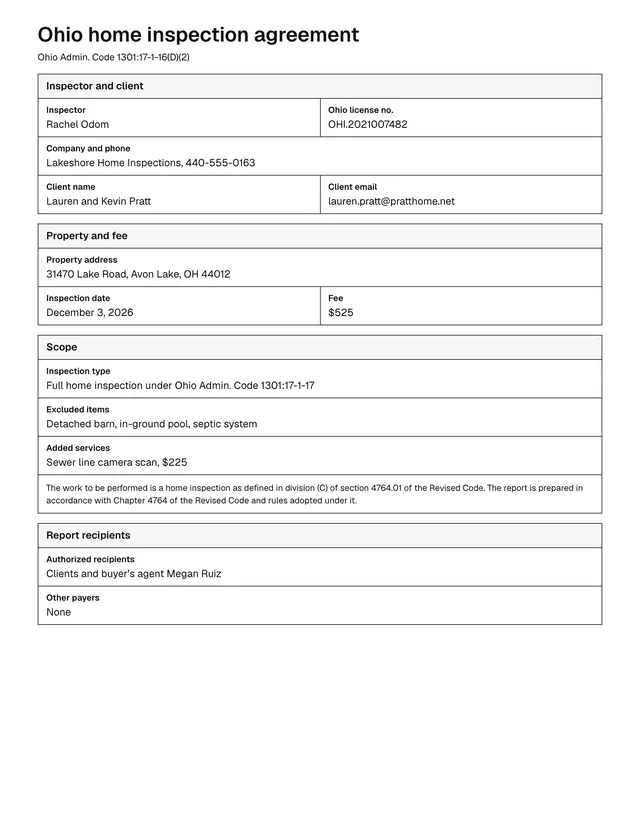
Don’t forget the scope statement. Paragraph (D)(5) of the ethics rule wants the report to say what you did and what you left out, including excluded services and hazards. If the buyer passed on radon, mold, or a sewer scope, say so in one line near the top. That line should match what the client signed, word for word if you can.
The report goes only to the people named in your signed Ohio home inspection agreement. Anyone else needs the client’s written approval first.
Can the client find the worst problems on page one?
A 40-page report with three serious items buried on page 27 is the report that gets a call from an angry buyer. Ohio’s four-part definition leans the same way. Deficient items with clear repair or monitor calls belong where people see them.
Noma specializes in the Ohio home inspection report (ORC 4764.01 and Ohio Admin. Code 1301:17-1-17). You build reports with your own sections and titles, mark how serious each defect is, and the summary lists the worst ones first, all from the phone on site. See how Noma builds home inspection reports.
Frequentlyaskedquestions
Send this document in minutes, not an afternoon.
Other states
Home inspection report templates- Alabama
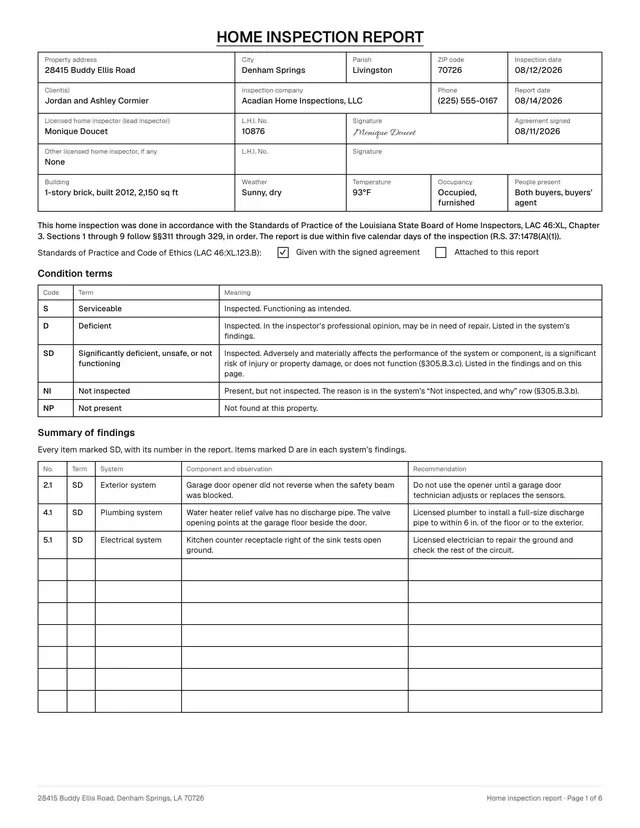
Home Inspection Report
Findings by system, with each defect noted. - Arizona
Home Inspection Report
Findings by system, with each defect noted. - Arkansas
Arkansas Home Inspection Report
Findings by system, with each defect noted. - Colorado
Colorado home inspection report
Findings by system, with each defect noted. - Connecticut
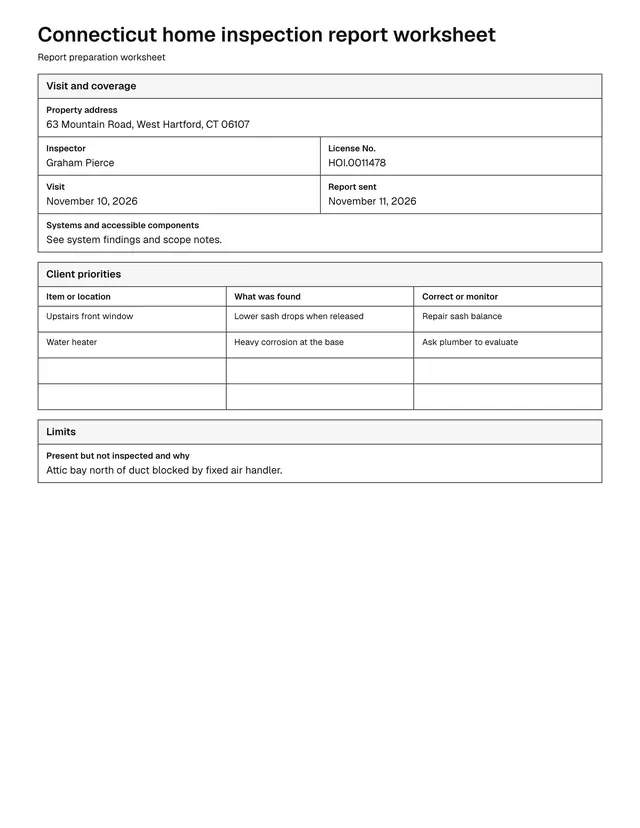
Connecticut home inspection report worksheet
Findings by system, with each defect noted. - Delaware
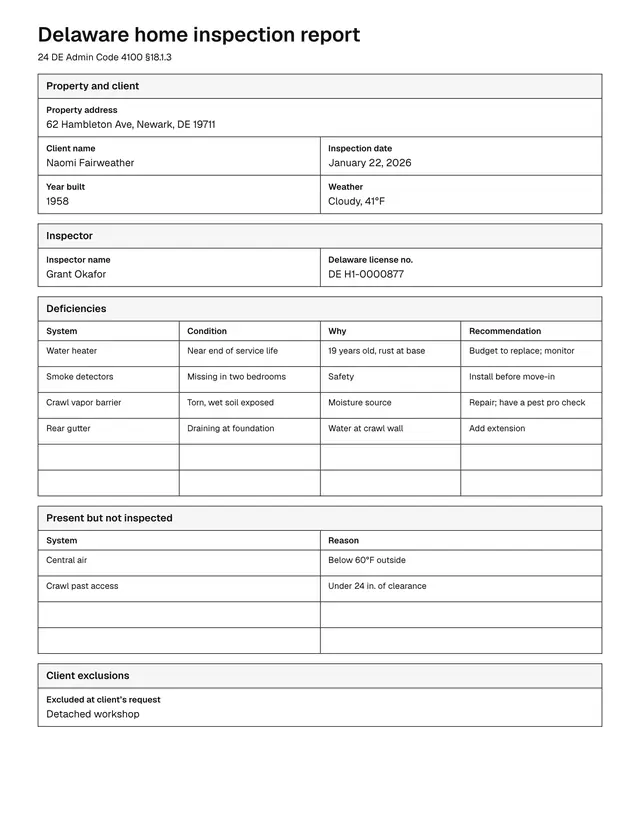
Delaware home inspection report (24 DE Admin Code 4100 §18)
Findings by system, with each defect noted. - Florida
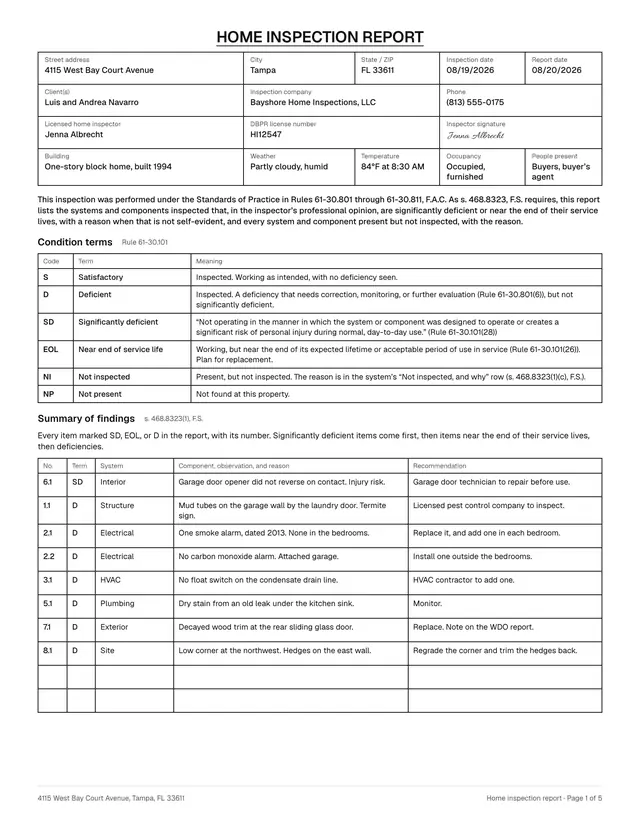
Home Inspection Report
Findings by system, with each defect noted. - Georgia
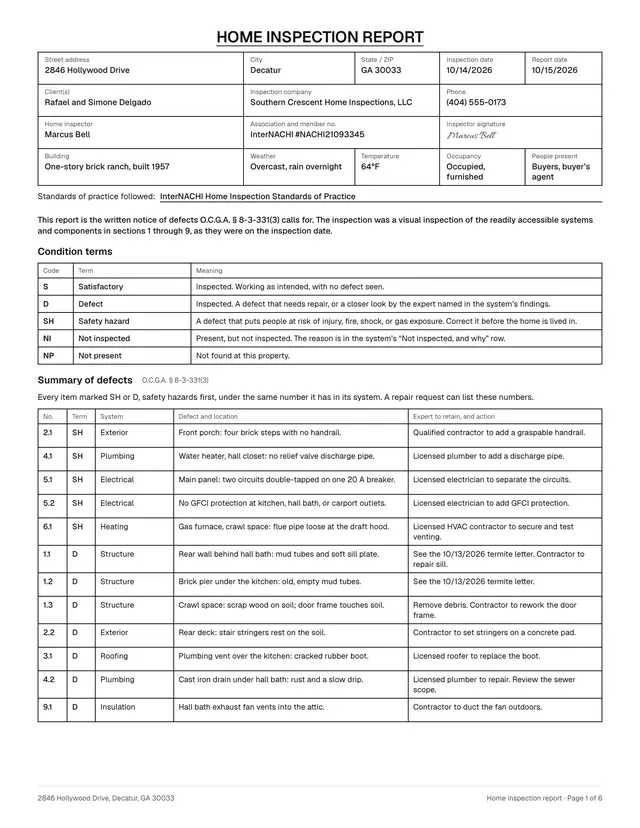
Home Inspection Report
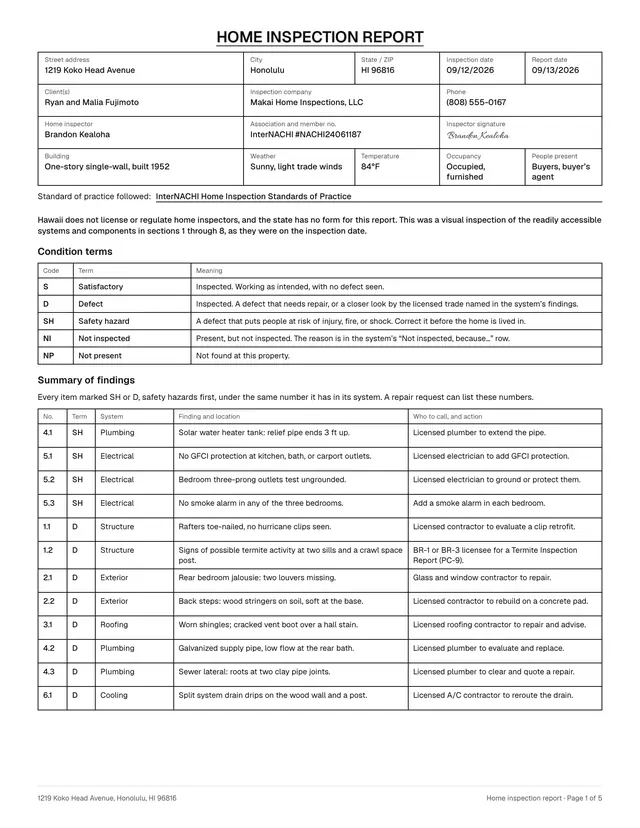
Findings by system, with each defect noted. - Hawaii
Home Inspection Report
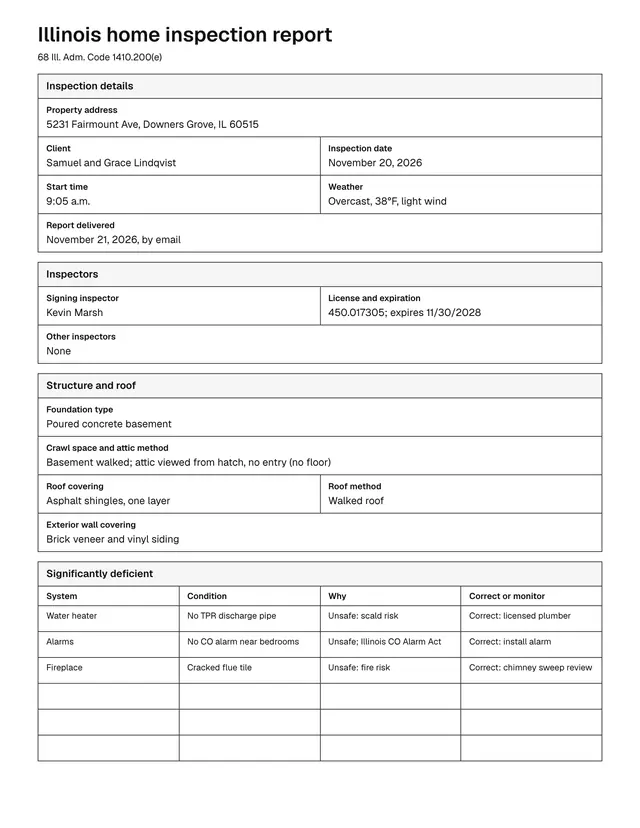
Findings by system, with each defect noted. - Illinois
Illinois home inspection report
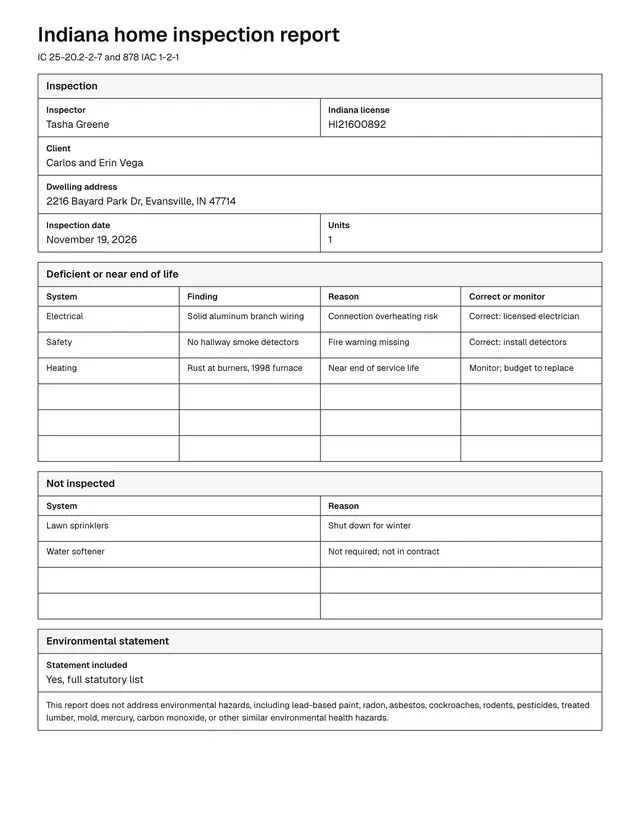
Findings by system, with each defect noted. - Indiana
Indiana home inspection report
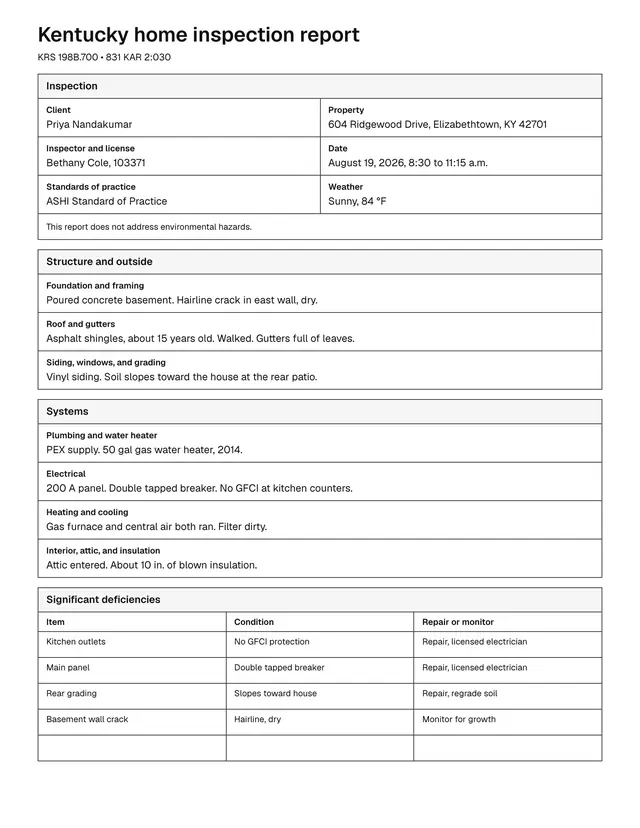
Findings by system, with each defect noted. - Kentucky
Kentucky home inspection report
Findings by system, with each defect noted. - Louisiana
Home Inspection Report
Findings by system, with each defect noted. - Maryland
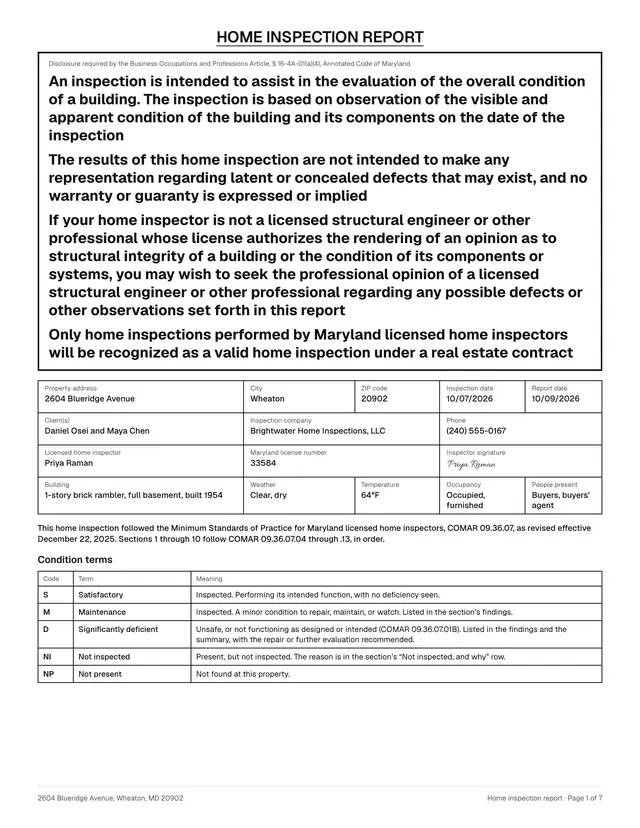
Home Inspection Report
Findings by system, with each defect noted. - Massachusetts
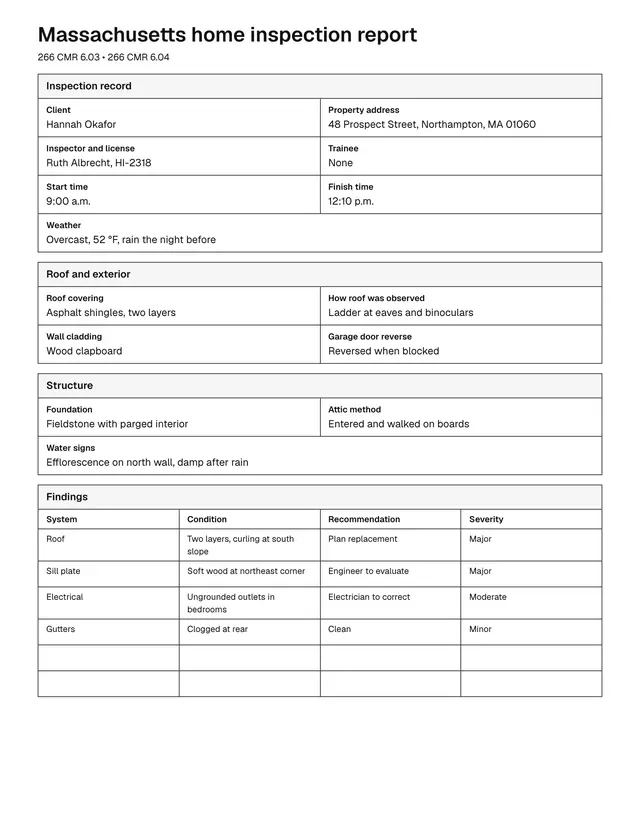
Massachusetts home inspection report (266 CMR 6.03)
Findings by system, with each defect noted. - Michigan
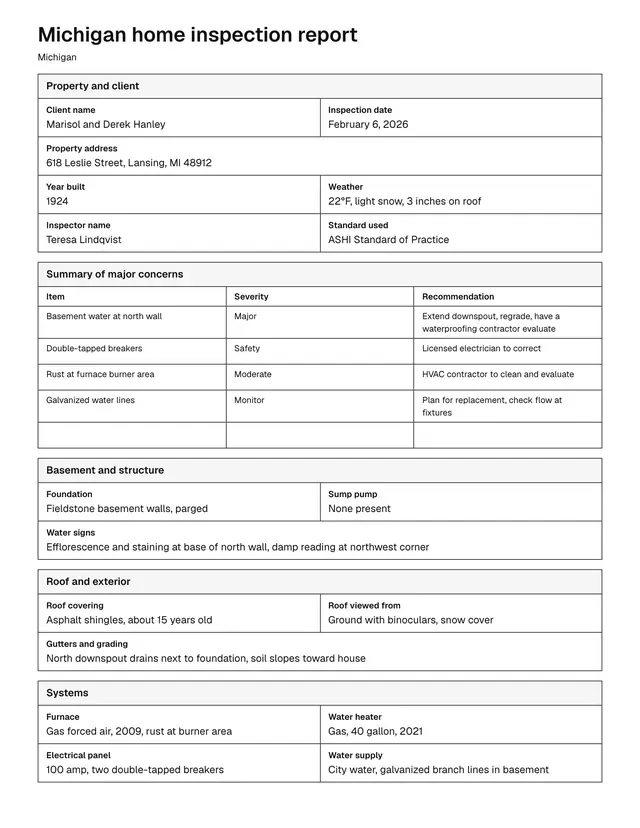
Michigan home inspection report
Findings by system, with each defect noted. - Mississippi
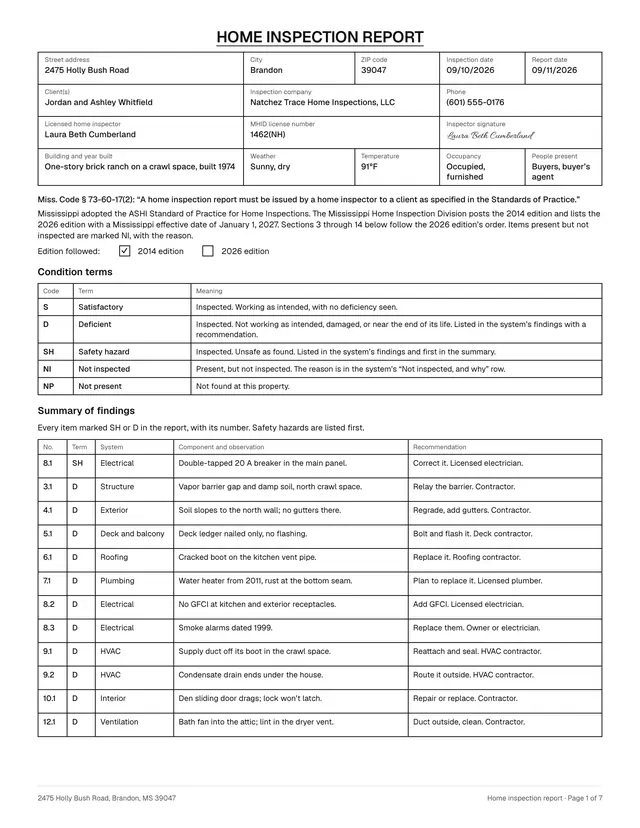
Home Inspection Report
Findings by system, with each defect noted. - Missouri
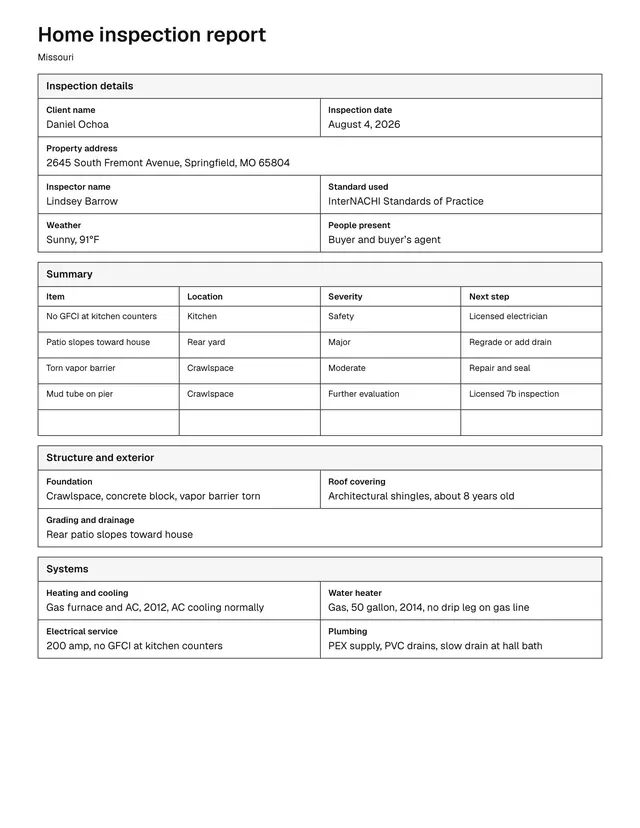
Missouri home inspection report
Findings by system, with each defect noted. - Nevada
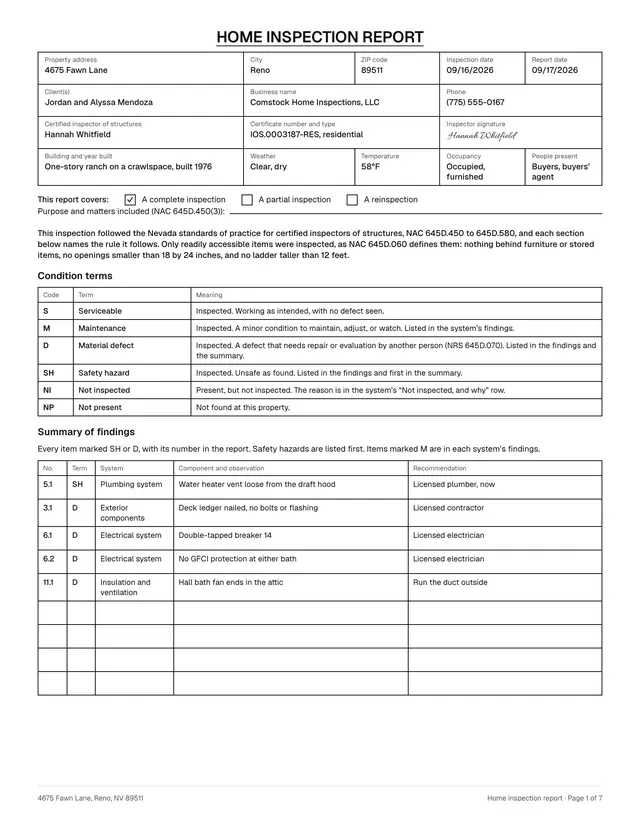
Home Inspection Report
Findings by system, with each defect noted. - New Jersey
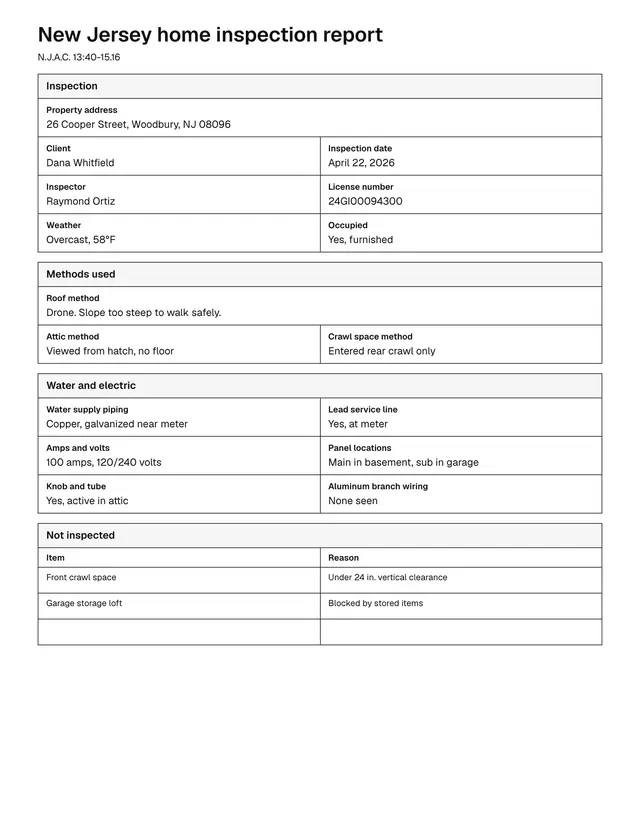
New Jersey home inspection report (N.J.A.C. 13:40-15.16)
Findings by system, with each defect noted. - New Mexico
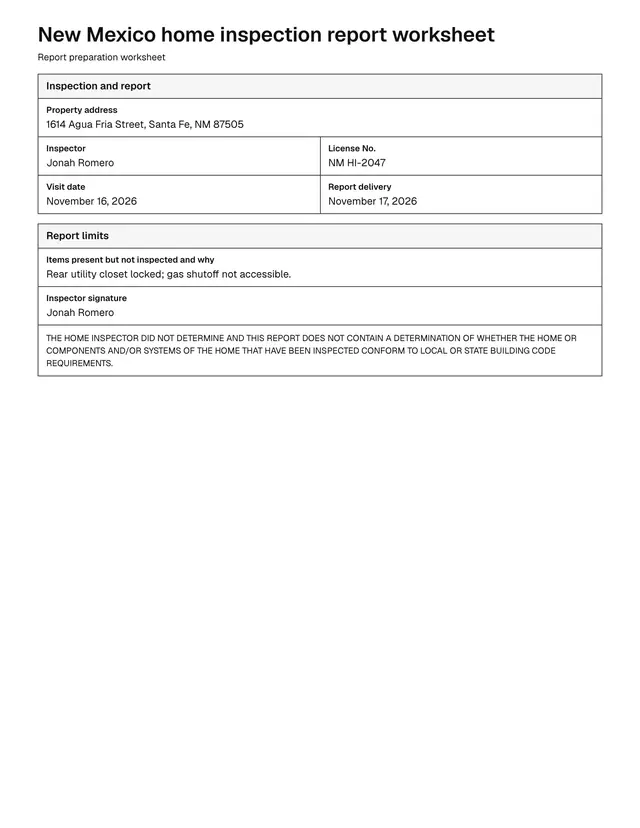
New Mexico home inspection report worksheet
Findings by system, with each defect noted. - New York
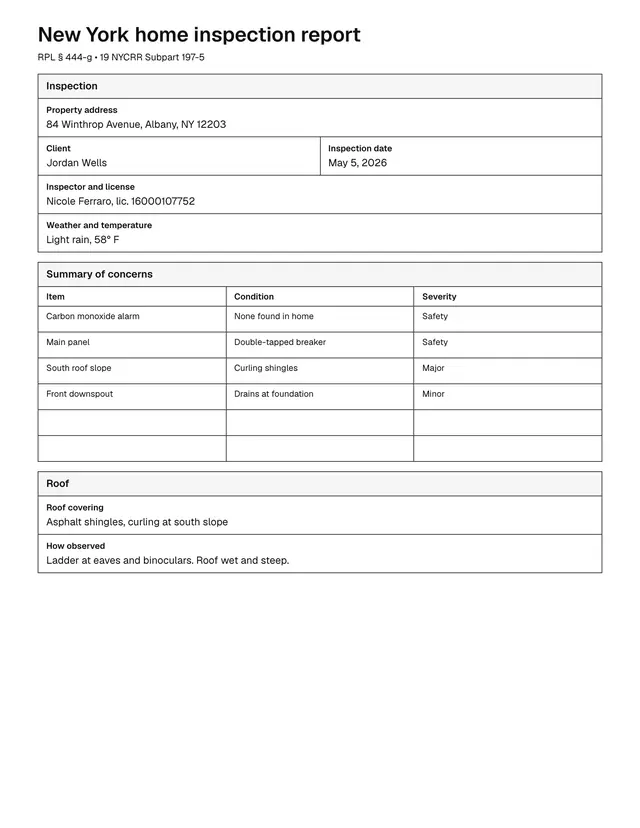
New York home inspection report (19 NYCRR Subpart 197-5)
Findings by system, with each defect noted. - North Carolina
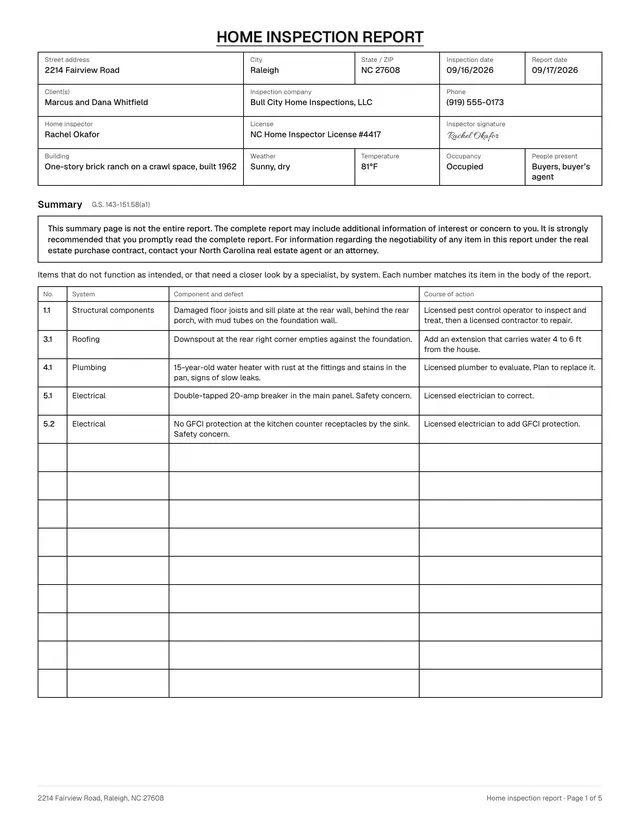
Home Inspection Report
Findings by system, with each defect noted. - Oklahoma
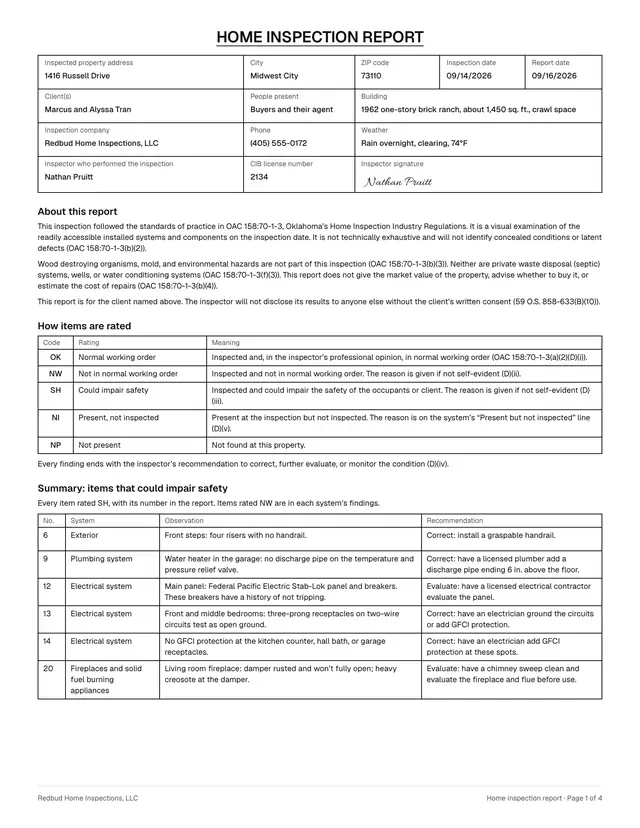
Home Inspection Report
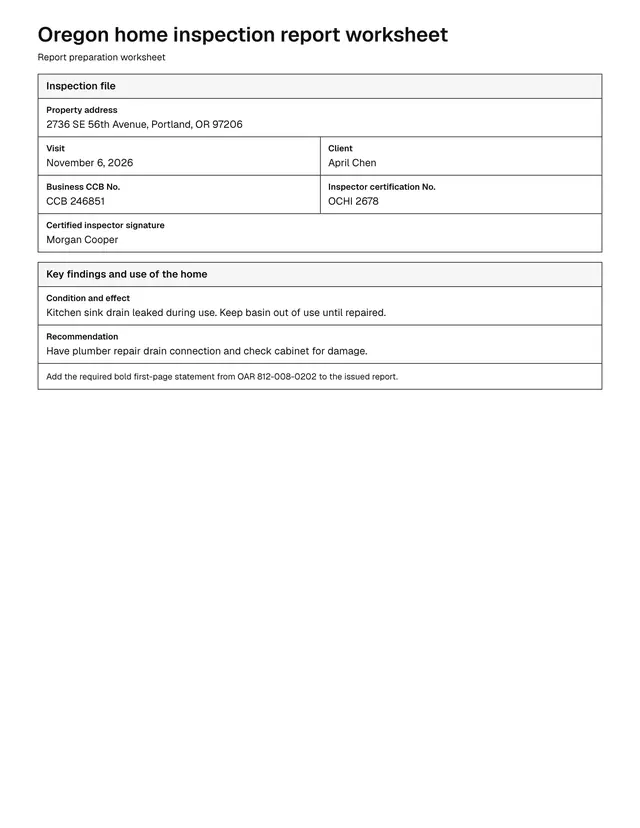
Findings by system, with each defect noted. - Oregon
Oregon home inspection report worksheet
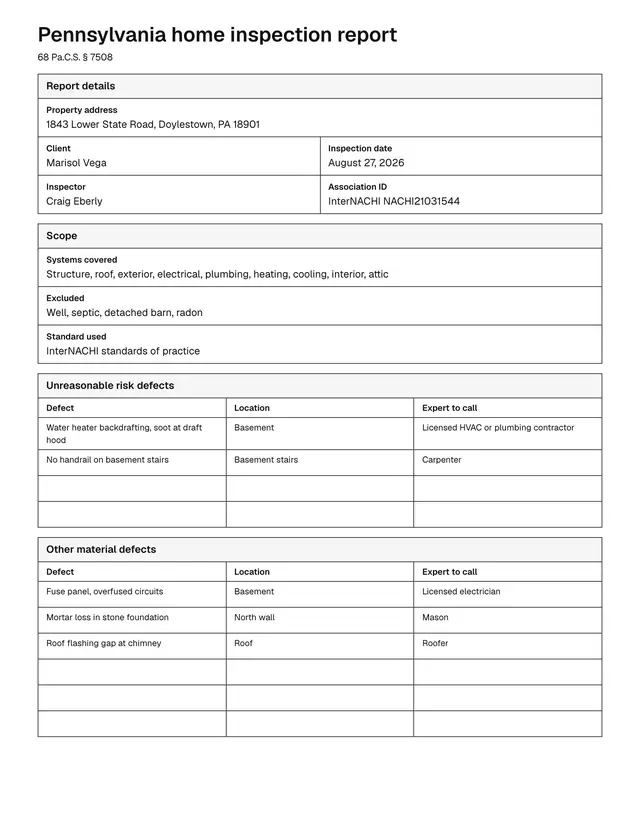
Findings by system, with each defect noted. - Pennsylvania
Pennsylvania home inspection report
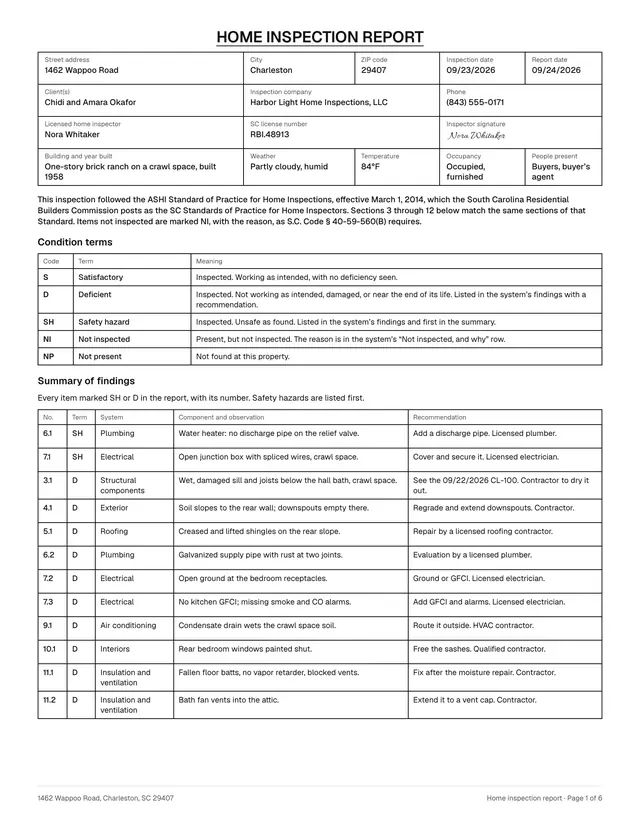
Findings by system, with each defect noted. - South Carolina
Home Inspection Report
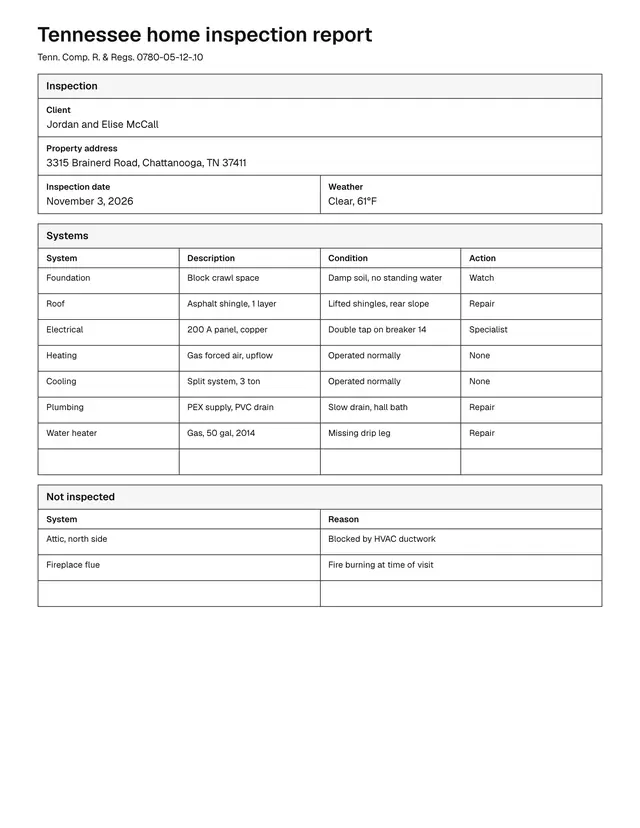
Findings by system, with each defect noted. - Tennessee
Tennessee home inspection report
Findings by system, with each defect noted. - TexasREI 7-6
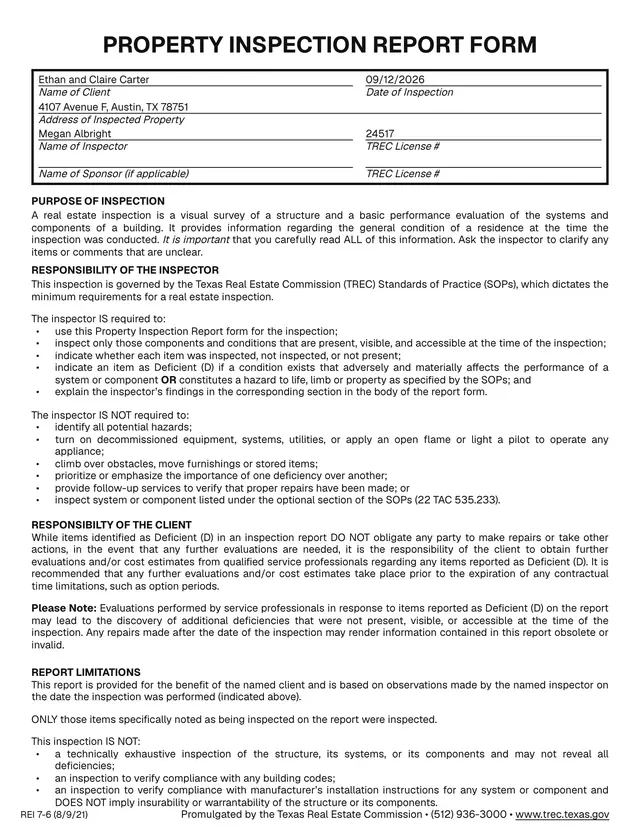
Property Inspection Report Form
Findings by system, with each defect noted. - Virginia
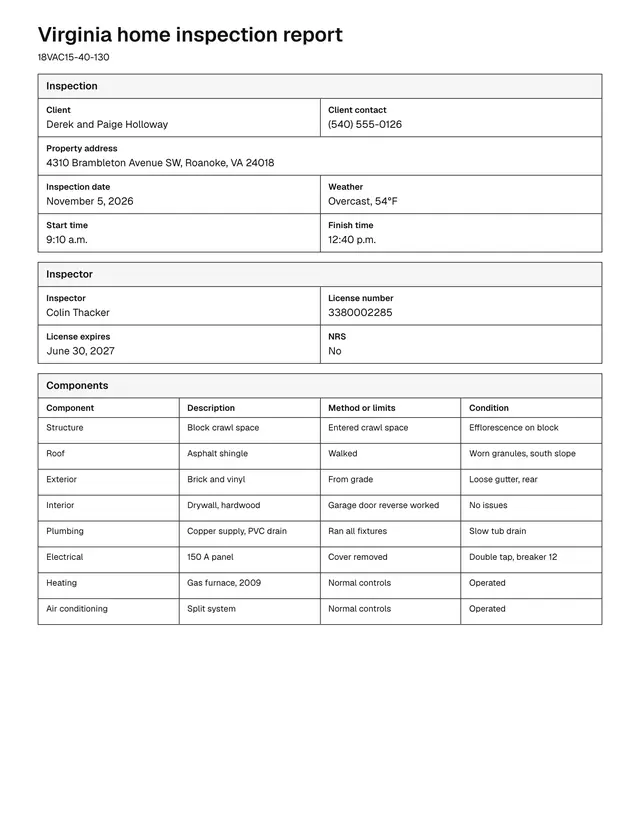
Virginia home inspection report
Findings by system, with each defect noted. - Washington
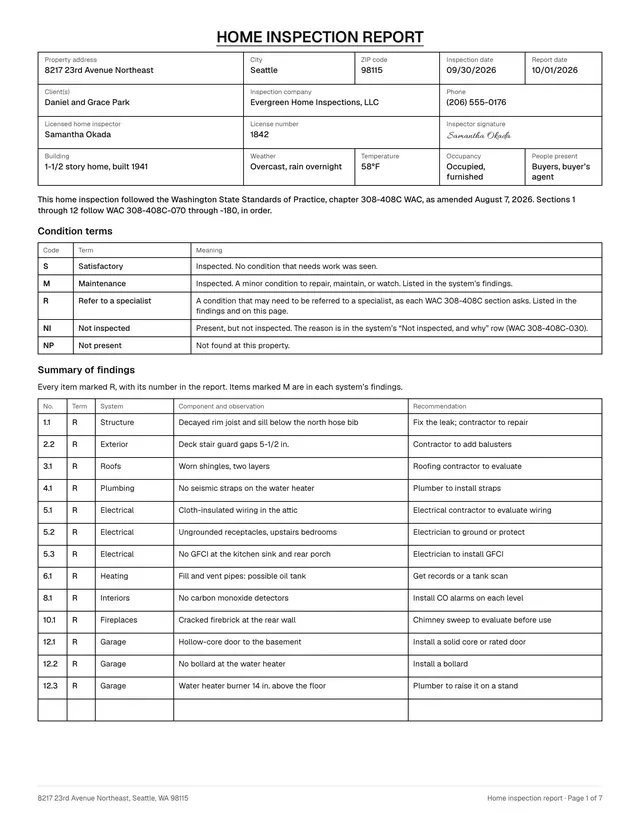
Home Inspection Report
Findings by system, with each defect noted. - Wisconsin
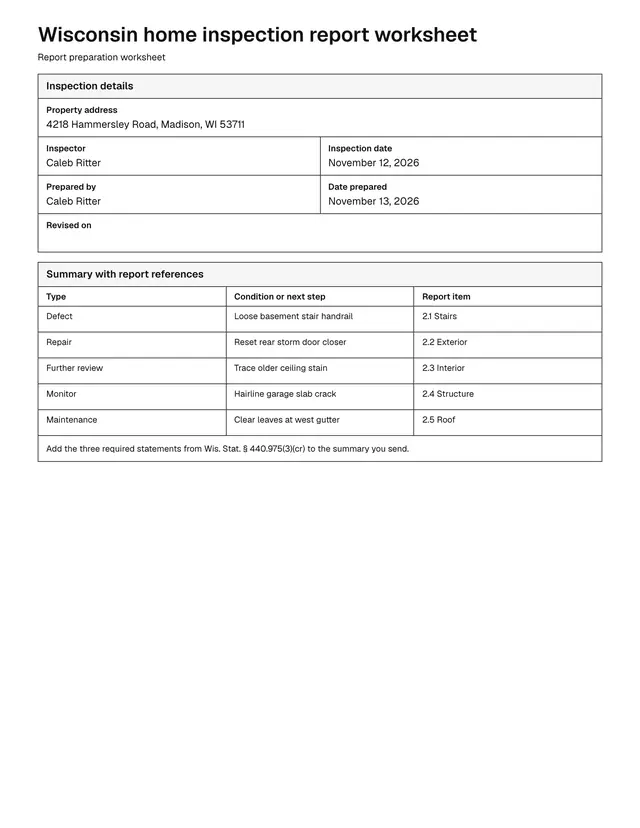
Wisconsin home inspection report worksheet
Findings by system, with each defect noted.