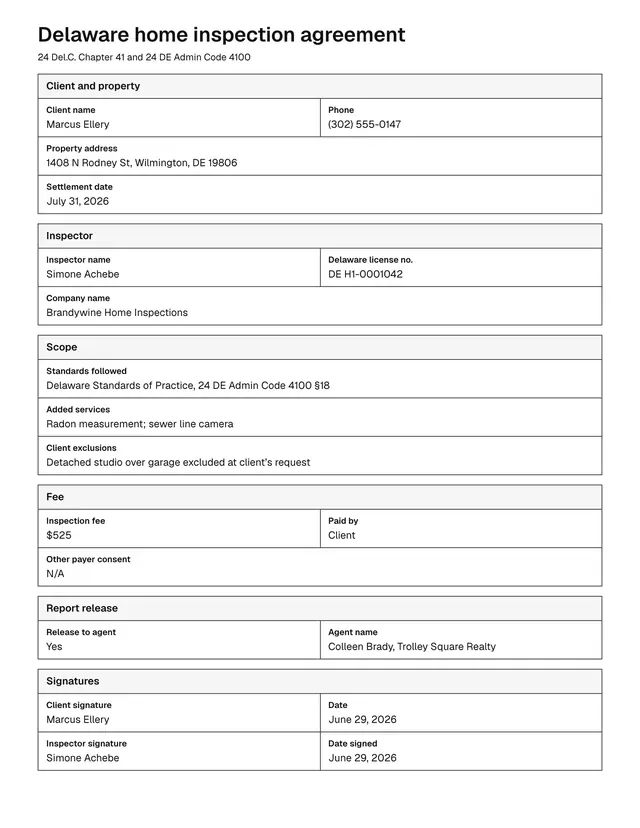
Delaware home inspection report (24 DE Admin Code 4100 §18)
Delaware spells out what every home inspection report has to contain. Four items in section 18.1.3 apply to every report, and oral reports aren’t allowed at all.
At a glance
- Rule
- 24 DE Admin Code 4100 §18.1.3
- Format
- Written and legible; no oral reports
- Crawl entry
- Not required under 24 in. of clearance
- License
- 24 Del.C. §4107
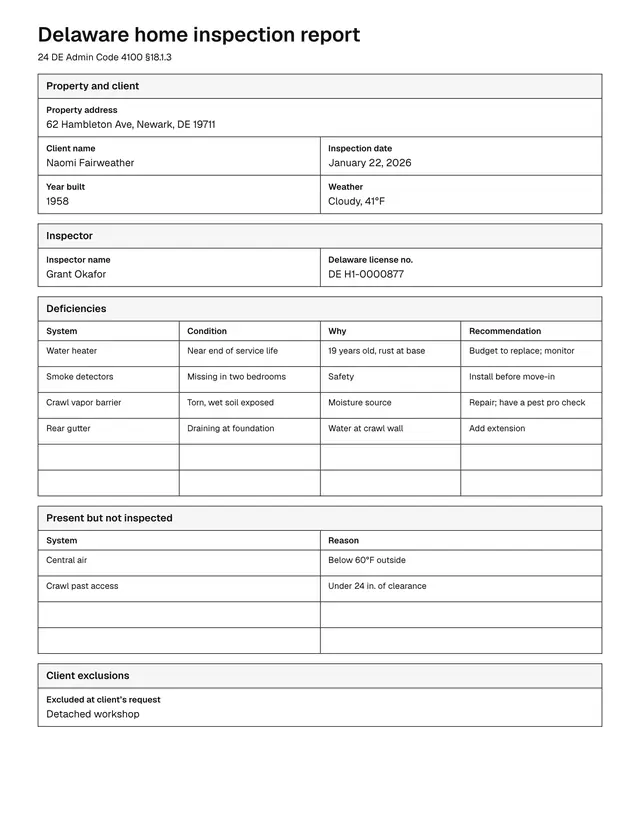
Completed example
Download PDFThe four things every report must have
Section 18.1.3 of 24 DE Admin Code 4100 opens bluntly: the report “must be in writing and legible. Oral reports are prohibited.” Then it lists four things every report must include.
The problems. Systems and components that, in your judgment, are “not functioning properly, significantly deficient, unsafe, or are near the end of their service lives.” That last part matters. A 19-year-old water heater that works fine still goes in.
What to do. A recommendation to correct each item, monitor it, or have it looked at further. You don’t have to say how to fix it or what it costs.
Why, when it isn’t obvious. A cracked window explains itself. A furnace you flagged because of the flame pattern doesn’t. Give the reason.
What you skipped, and why. Anything the standards cover that was there but not inspected, with the reason. The water was off. The attic hatch was painted shut. The client excluded the pool.
Here’s one finding that hits all four. “Water heater, gas, 50 gallons, made in 2007. Working at the time of inspection, but 19 years old with rust at the base, which puts it near the end of its service life. Budget to replace it, and have a plumber check the base for leaks in the meantime.” Problem, reason, and recommendation, in three sentences. If you couldn’t test it because the gas was off, that goes in the fourth item instead, with the reason.
Descriptions the standards call for
Beyond defects, Delaware’s standards of practice require certain descriptions in every report, even when nothing is wrong. Inspectors new to Delaware tend to miss a few of them.
Structure. Section 18.2.2 wants the methods you used to inspect crawl spaces and attics, plus the foundation, floor, wall, ceiling, and roof structure.
Roof. Section 18.4.2 wants the roofing materials and how you inspected the roof. From the ground with binoculars is a method. Say it.
Plumbing. Section 18.5.2 asks for the supply, drain, waste, and vent pipe materials, the water heater and its energy source, and the location of the main water and fuel shut-offs. Buyers love that last one.
Electrical. Section 18.6.2 asks for the amperage and voltage rating, where the main disconnect and panels are, the wiring type, and whether you saw solid conductor aluminum branch wiring or knob and tube. It also wants you to note when smoke detectors are missing.
Where the standards let you stop
Delaware also lists things you aren’t required to do. Knowing them keeps you safe and keeps the report honest.
Crawl spaces. Section 18.13.4.2 says you don’t have to enter a crawl with less than 24 inches of clearance or an access opening smaller than 16 by 24 inches. Remember, though, that 18.2.2.1 still wants you to describe your method. “Viewed from the access opening with a flashlight” works.
Cold days. Section 18.8.3.4 says you aren’t required to run air conditioning when the outdoor temperature is below 60 degrees.
Outside the house. You aren’t required to inspect detached structures other than garages and carports, or condo common areas.
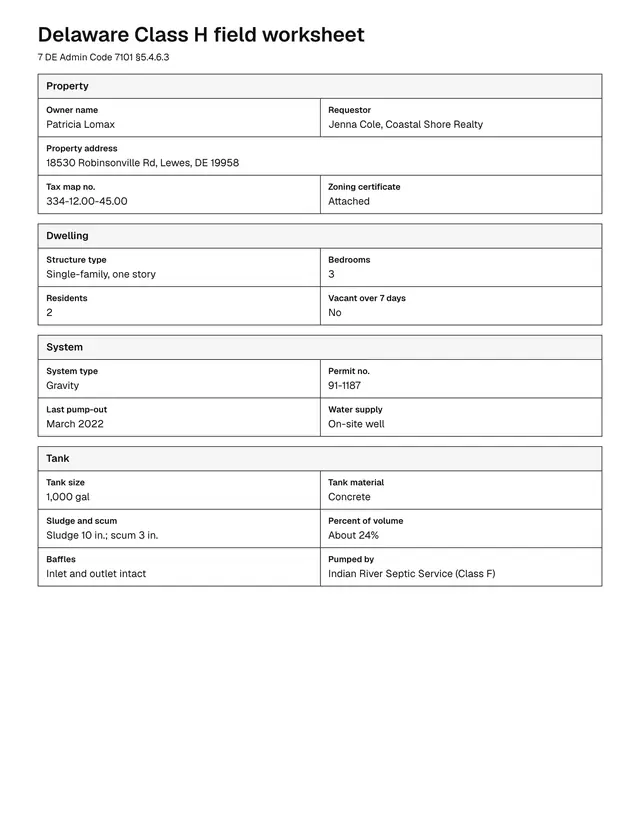
Termites and mold. Section 18.13.1.11 says you don’t have to determine wood destroying insects or mold. Termites are usually a separate NPMA-33 report. If the home is on septic, Delaware requires a Class H septic inspection before the sale.
Any time you use one of these limits, it still belongs in the report under the fourth required item: present, not inspected, and why.
How do you make a long report easy to act on?
A Delaware report that covers every required description can run long. The buyer and their agent need the section 18.1.3.1 items first: what’s broken, unsafe, or near the end of its life. Put those in a summary up front, sorted by how serious they are, with your recommendation next to each. Keep the labels honest. Section 17.2.2 of the Code of Ethics says not to “knowingly understate or overstate the significance of reported conditions,” so a loose gutter shouldn’t sit in the same tier as a gas leak.
Noma specializes in the Delaware home inspection report (24 DE Admin Code 4100 §18.1.3). Build reports with your own sections and titles, mark how serious each defect is, and the summary lists the worst ones up front. See how Noma builds inspection reports.
Frequentlyaskedquestions
Send this document in minutes, not an afternoon.
Other states
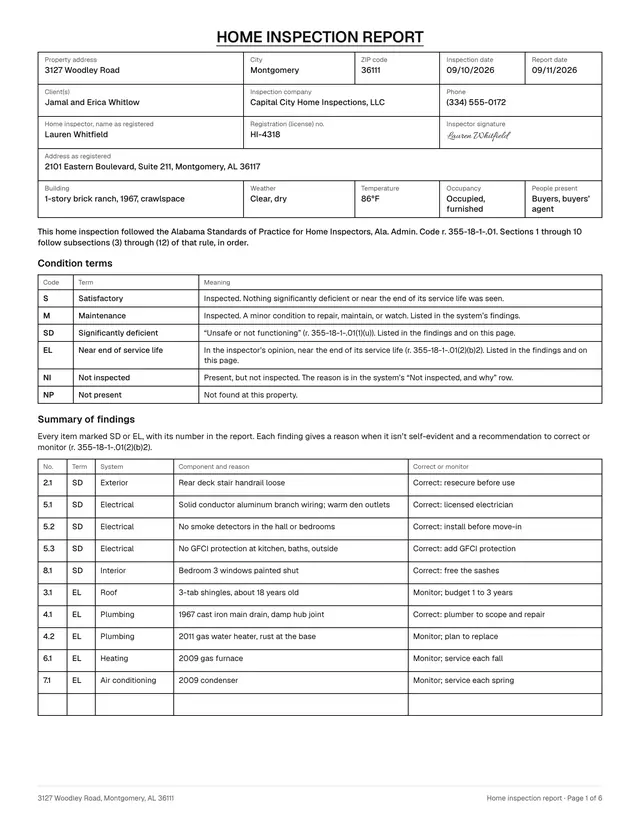
Home inspection report templates- Alabama
Home Inspection Report
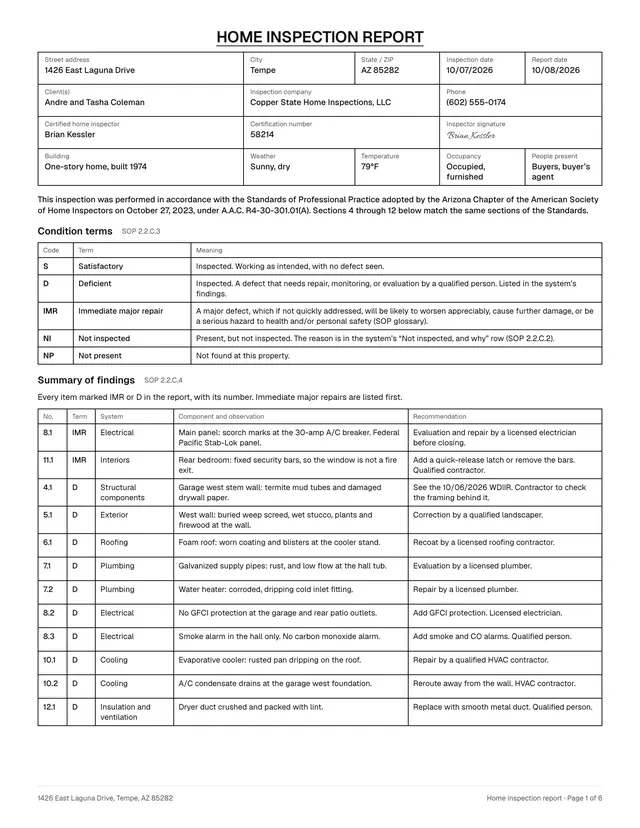
Findings by system, with each defect noted. - Arizona
Home Inspection Report
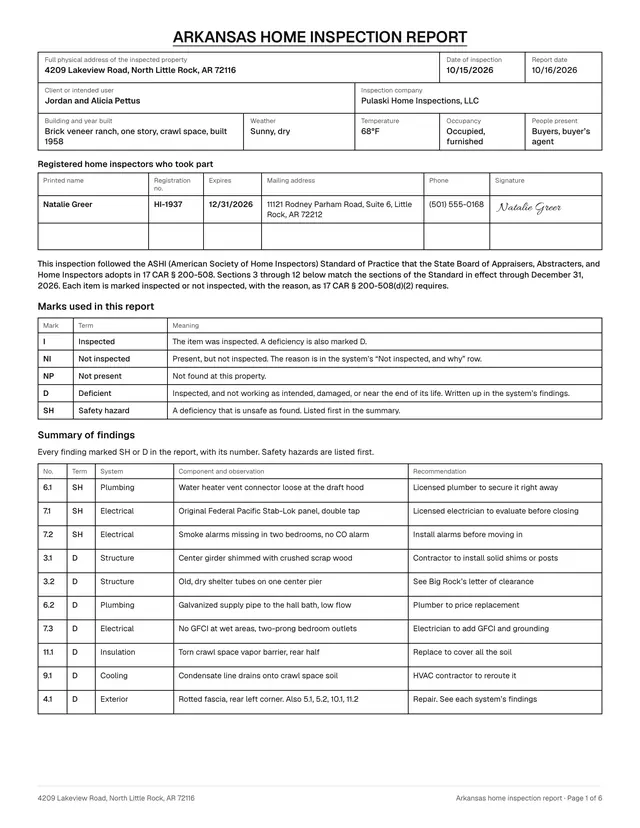
Findings by system, with each defect noted. - Arkansas
Arkansas Home Inspection Report
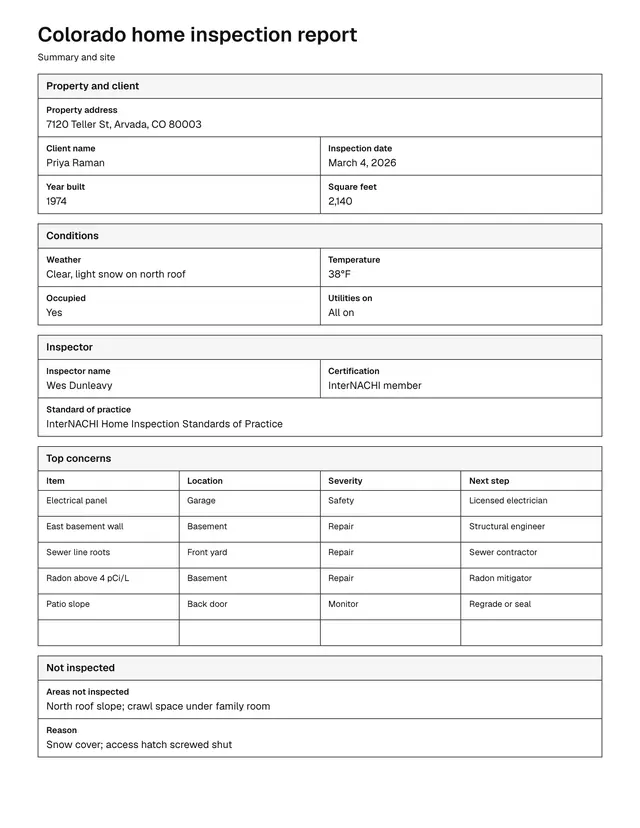
Findings by system, with each defect noted. - Colorado
Colorado home inspection report
Findings by system, with each defect noted. - Connecticut
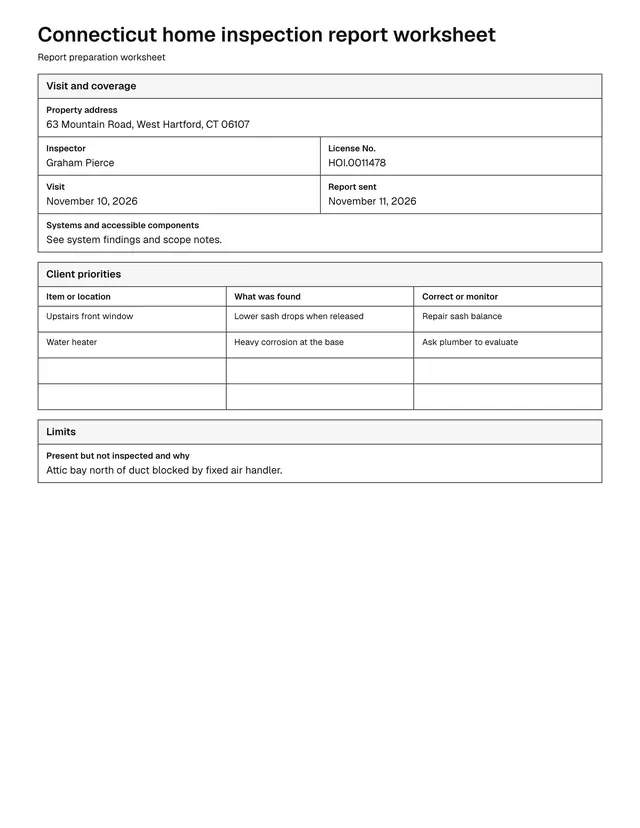
Connecticut home inspection report worksheet
Findings by system, with each defect noted. - Florida
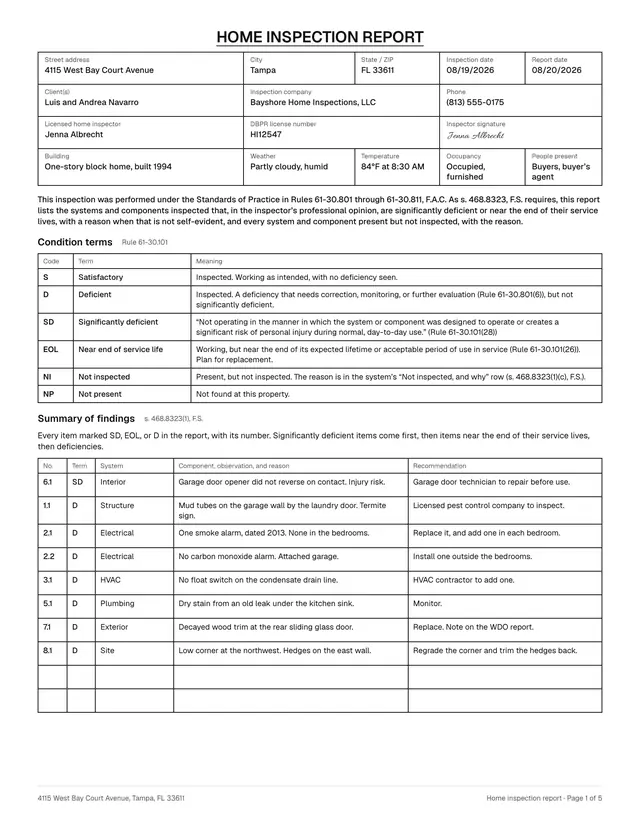
Home Inspection Report
Findings by system, with each defect noted. - Georgia
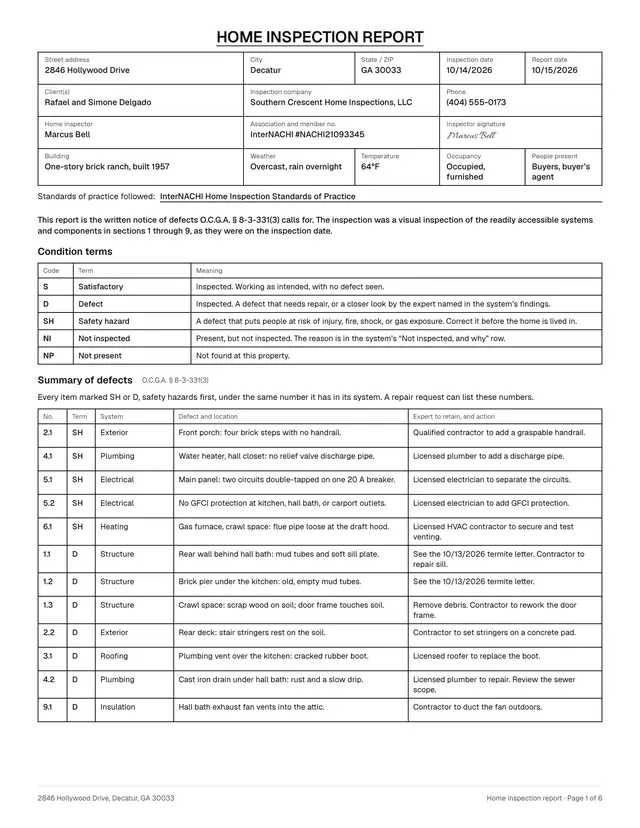
Home Inspection Report
Findings by system, with each defect noted. - Hawaii
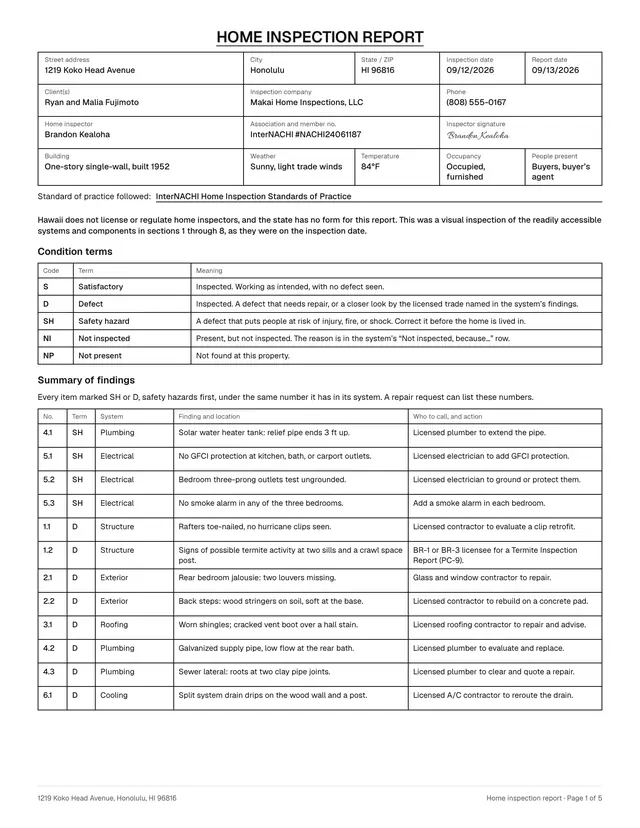
Home Inspection Report
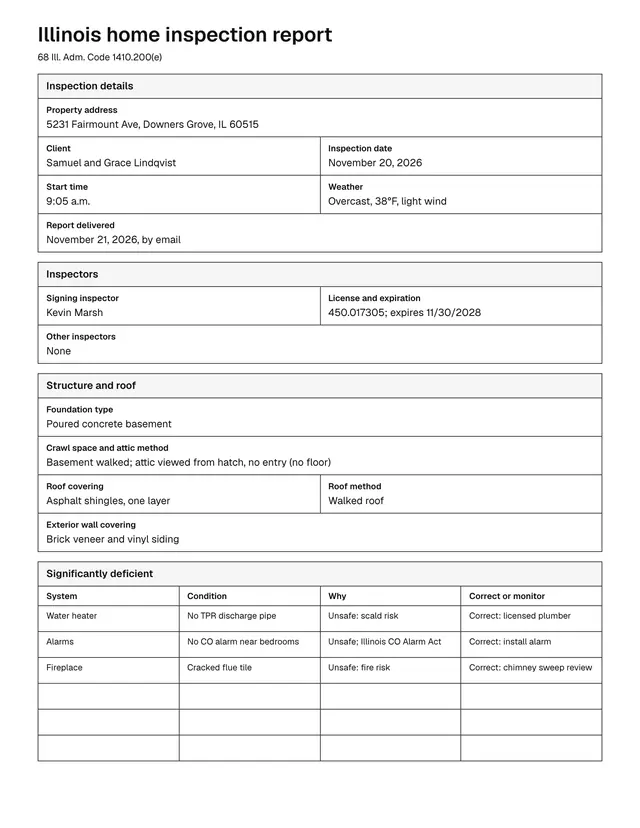
Findings by system, with each defect noted. - Illinois
Illinois home inspection report
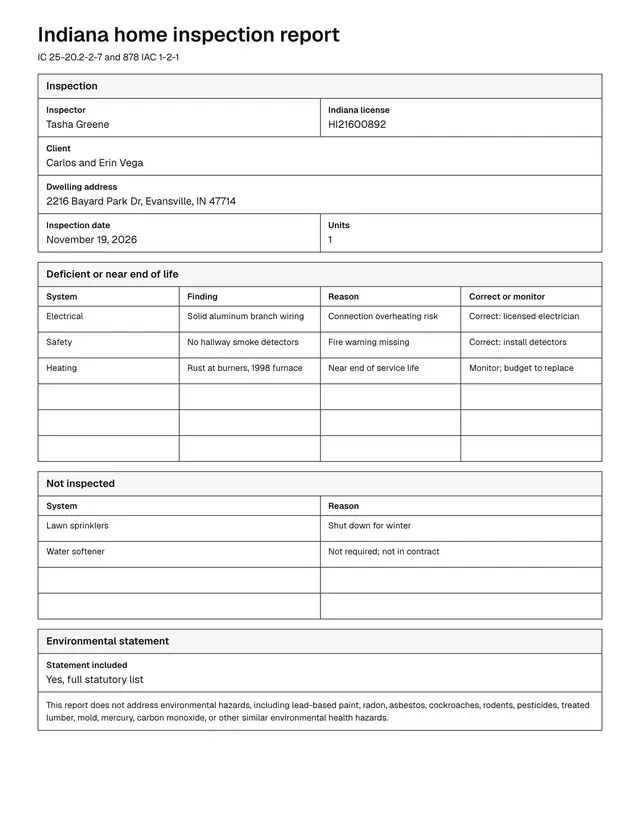
Findings by system, with each defect noted. - Indiana
Indiana home inspection report
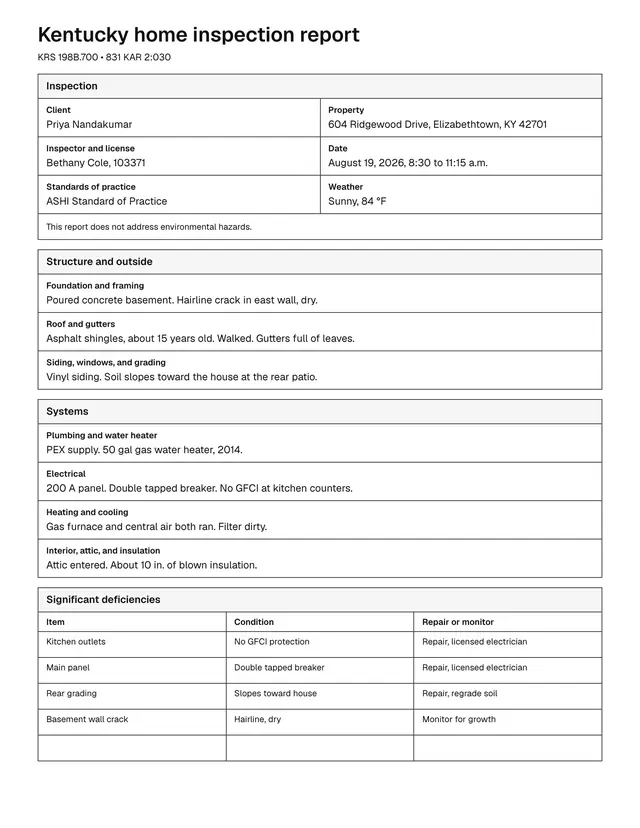
Findings by system, with each defect noted. - Kentucky
Kentucky home inspection report
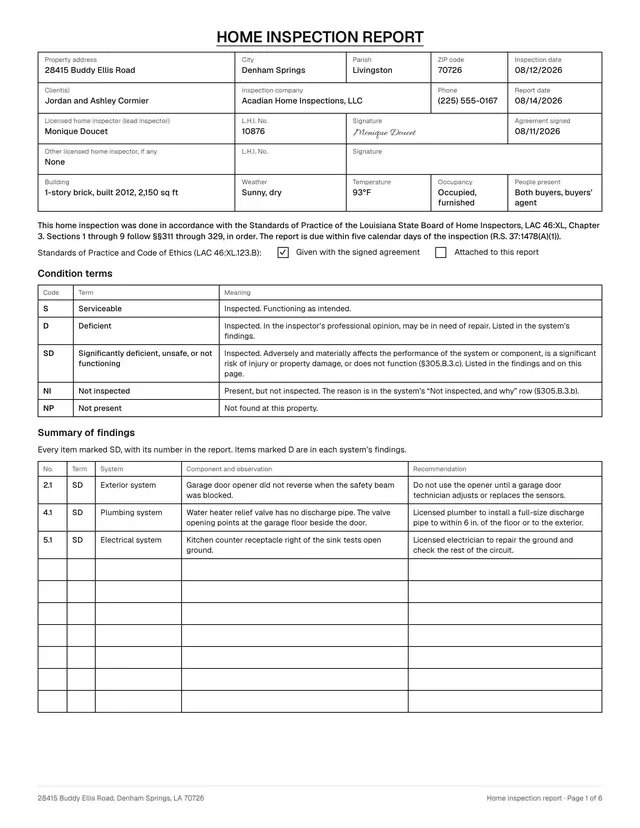
Findings by system, with each defect noted. - Louisiana
Home Inspection Report
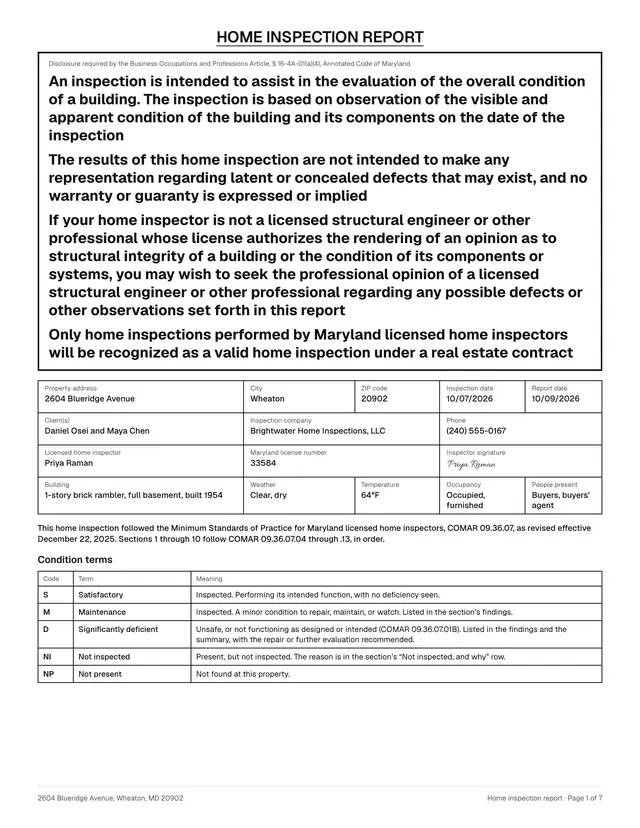
Findings by system, with each defect noted. - Maryland
Home Inspection Report
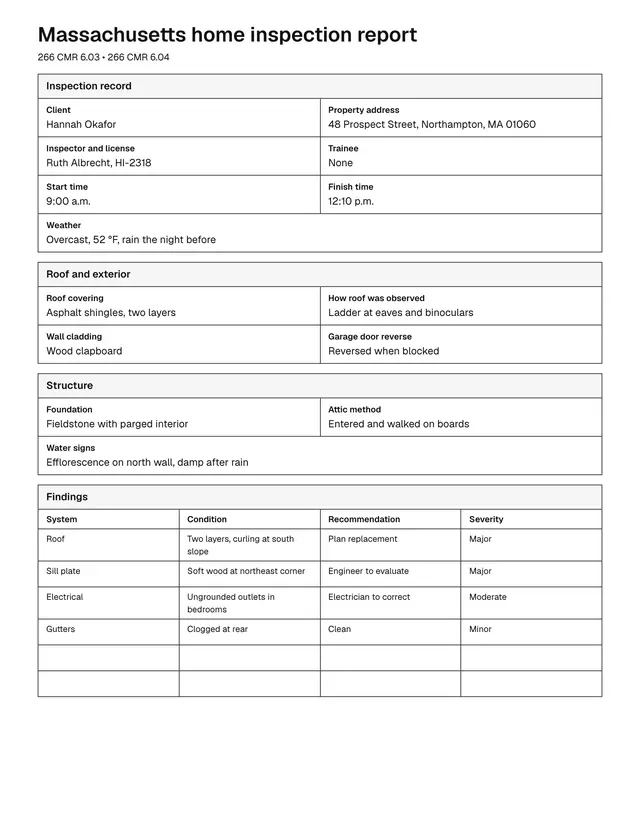
Findings by system, with each defect noted. - Massachusetts
Massachusetts home inspection report (266 CMR 6.03)
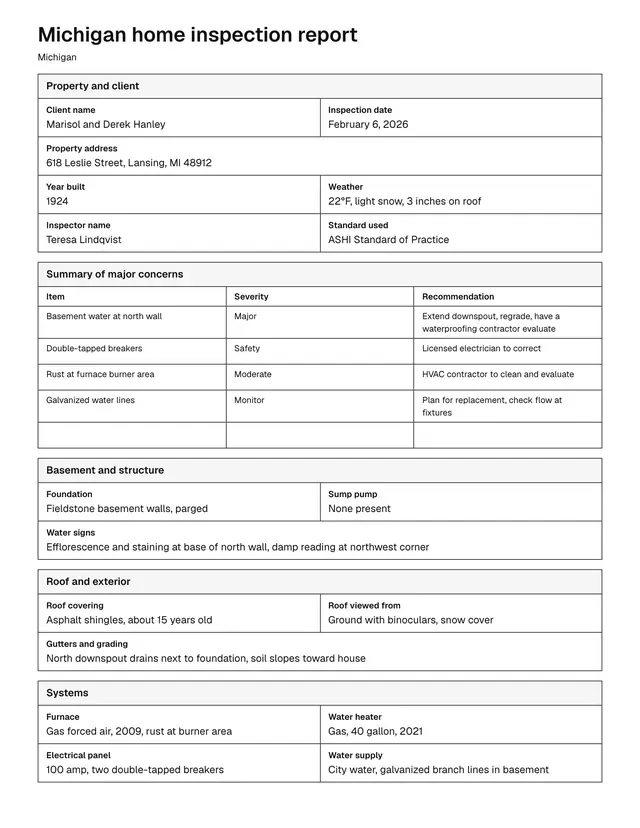
Findings by system, with each defect noted. - Michigan
Michigan home inspection report
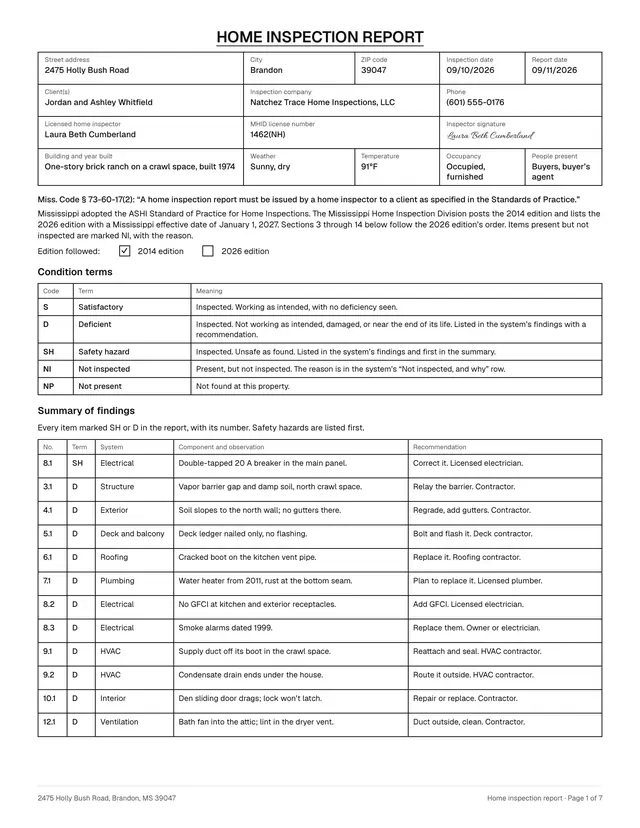
Findings by system, with each defect noted. - Mississippi
Home Inspection Report
Findings by system, with each defect noted. - Missouri
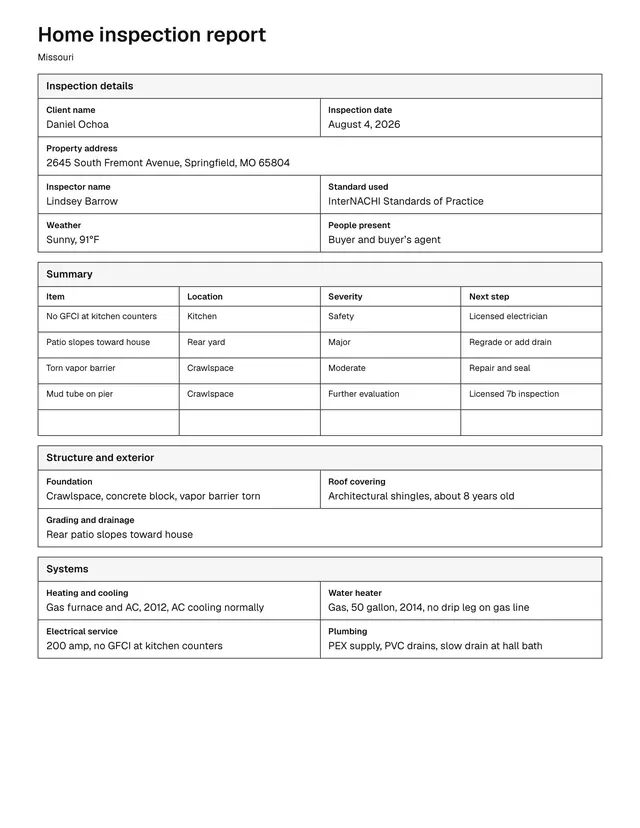
Missouri home inspection report
Findings by system, with each defect noted. - Nevada
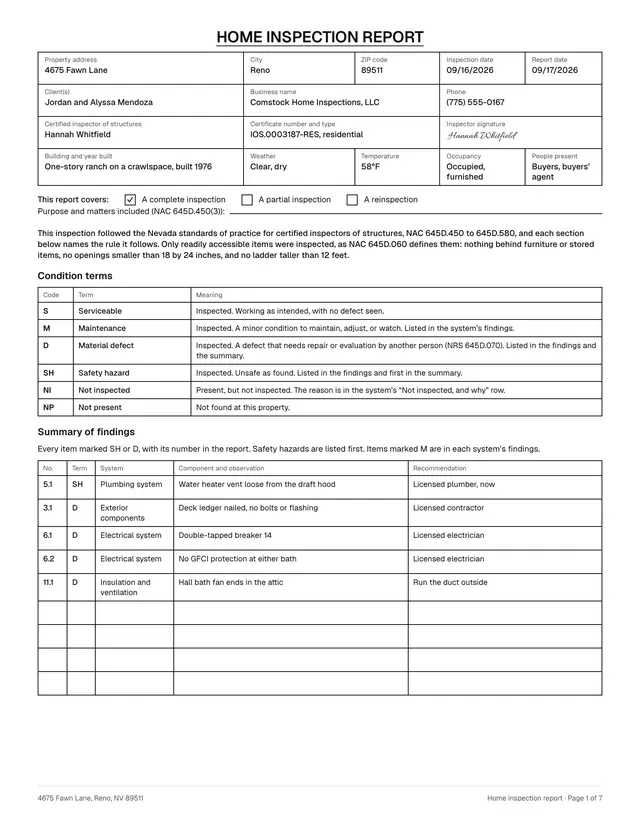
Home Inspection Report
Findings by system, with each defect noted. - New Jersey
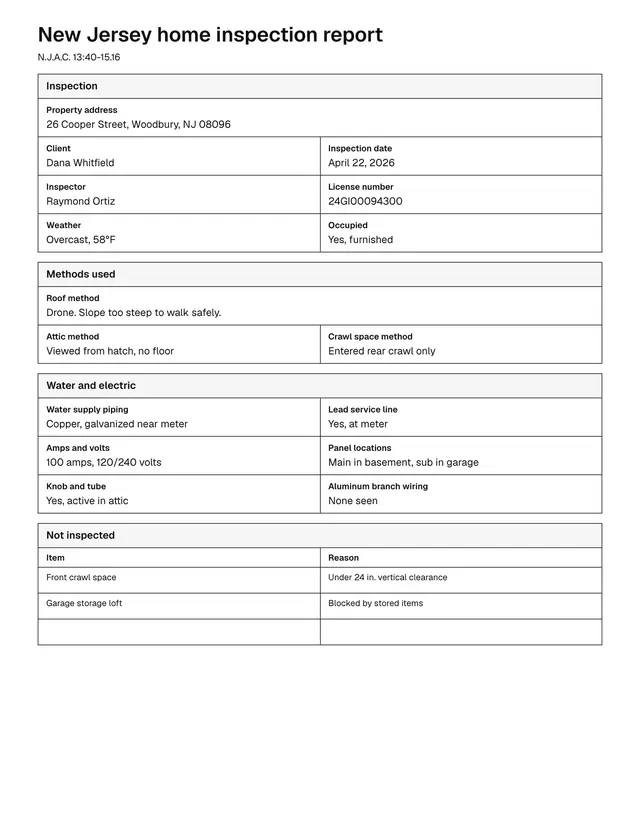
New Jersey home inspection report (N.J.A.C. 13:40-15.16)
Findings by system, with each defect noted. - New Mexico
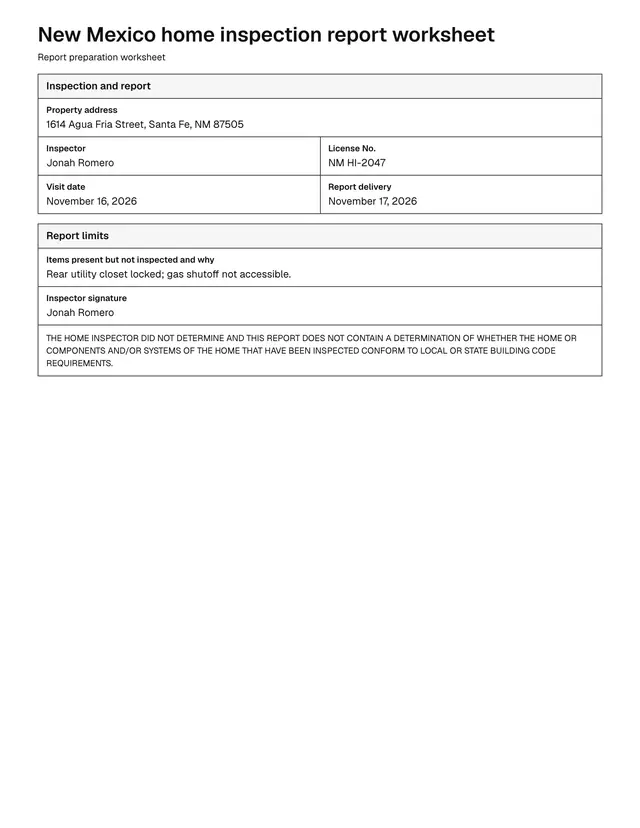
New Mexico home inspection report worksheet
Findings by system, with each defect noted. - New York
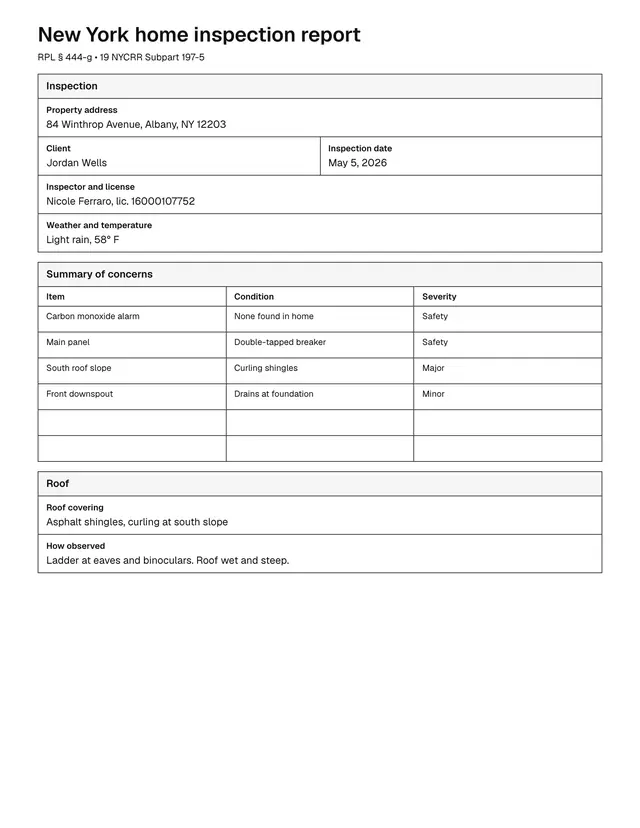
New York home inspection report (19 NYCRR Subpart 197-5)
Findings by system, with each defect noted. - North Carolina
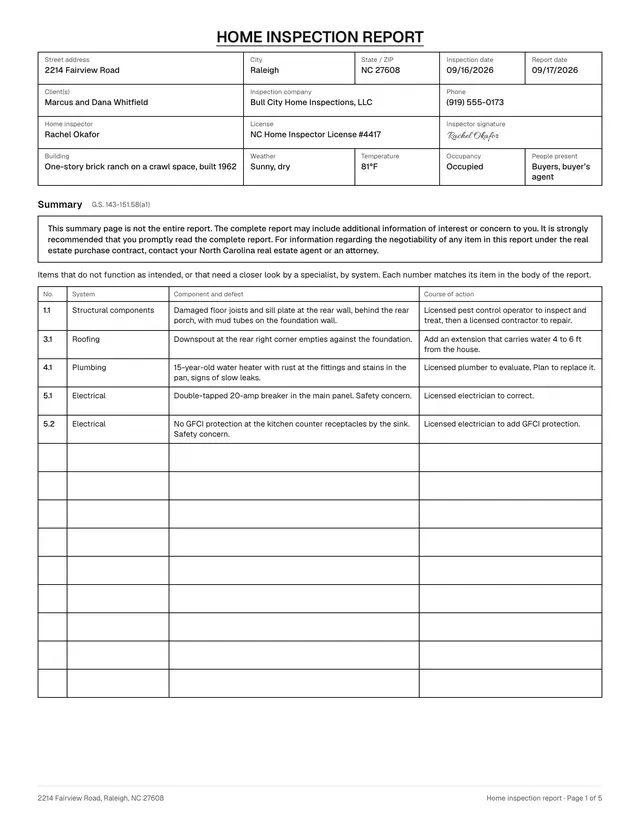
Home Inspection Report
Findings by system, with each defect noted. - Ohio
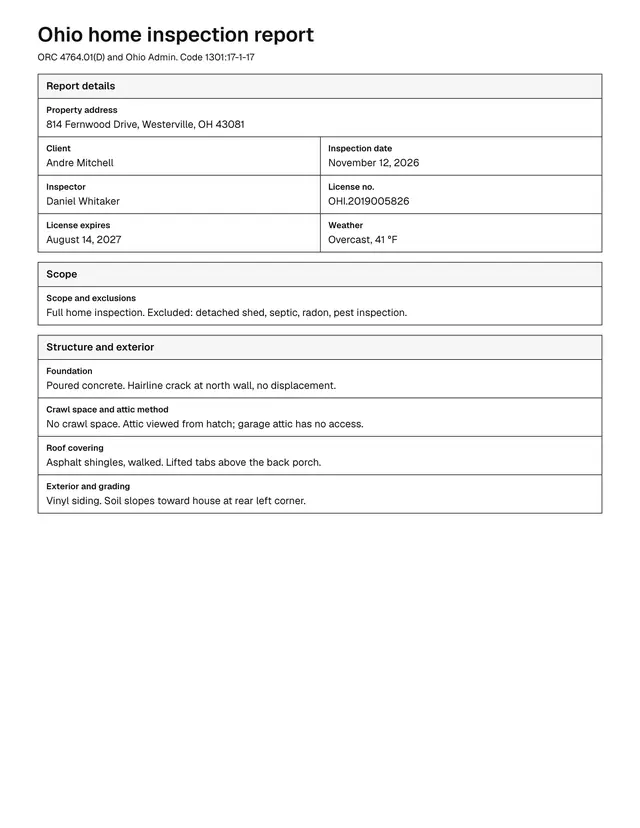
Ohio home inspection report
Findings by system, with each defect noted. - Oklahoma
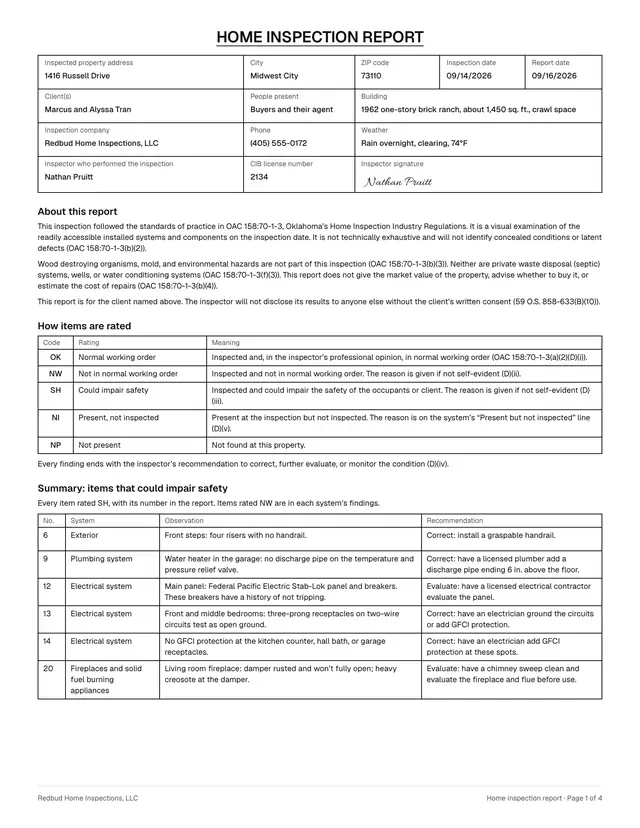
Home Inspection Report
Findings by system, with each defect noted. - Oregon
Oregon home inspection report worksheet
Findings by system, with each defect noted. - Pennsylvania
Pennsylvania home inspection report
Findings by system, with each defect noted. - South Carolina
Home Inspection Report
Findings by system, with each defect noted. - Tennessee
Tennessee home inspection report
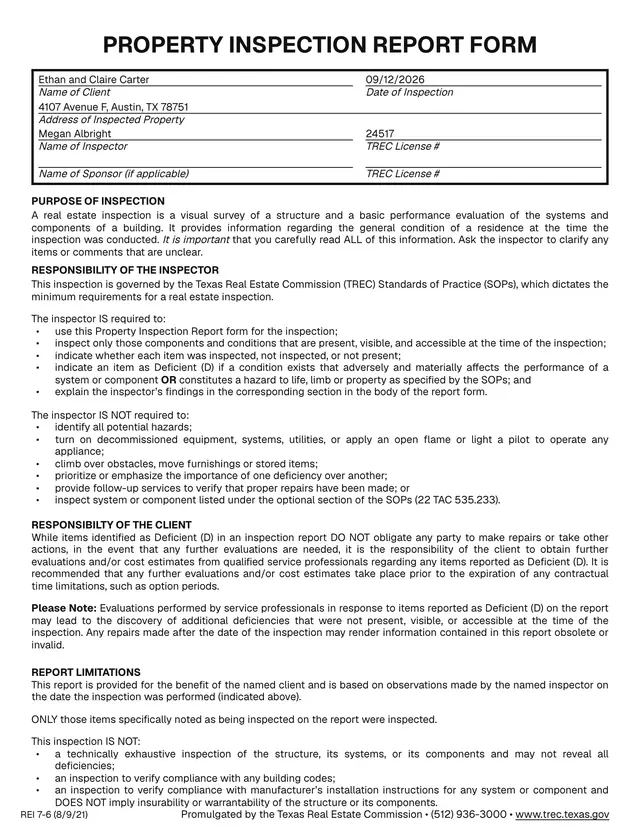
Findings by system, with each defect noted. - TexasREI 7-6
Property Inspection Report Form
Findings by system, with each defect noted. - Virginia
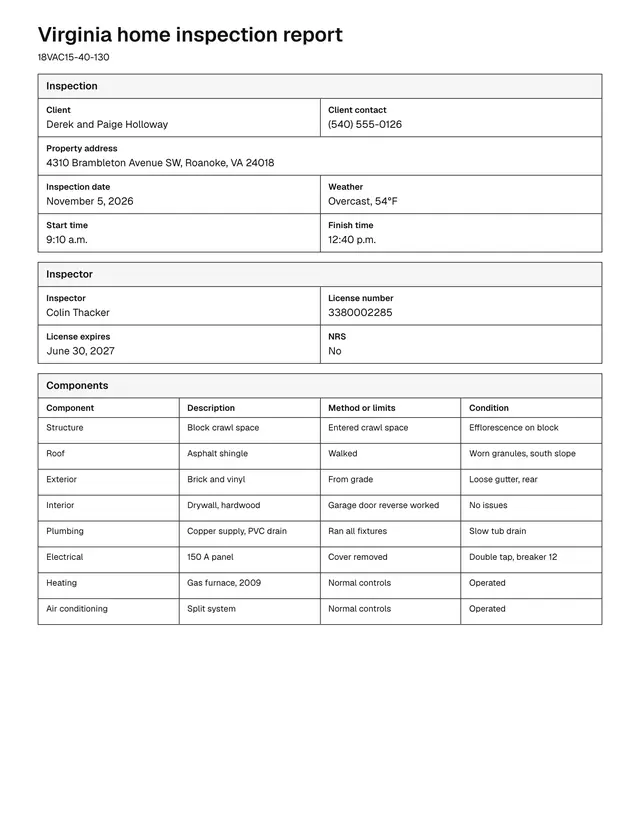
Virginia home inspection report
Findings by system, with each defect noted. - Washington
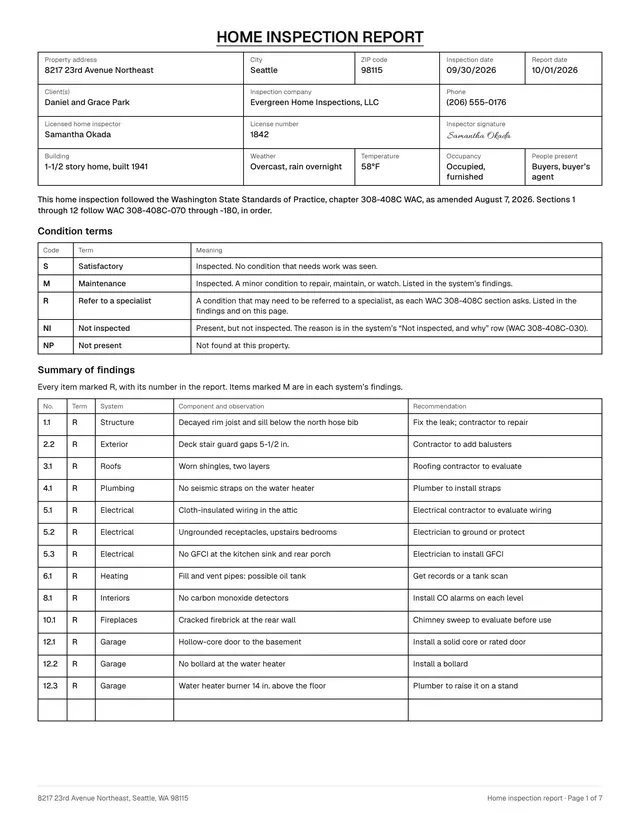
Home Inspection Report
Findings by system, with each defect noted. - Wisconsin
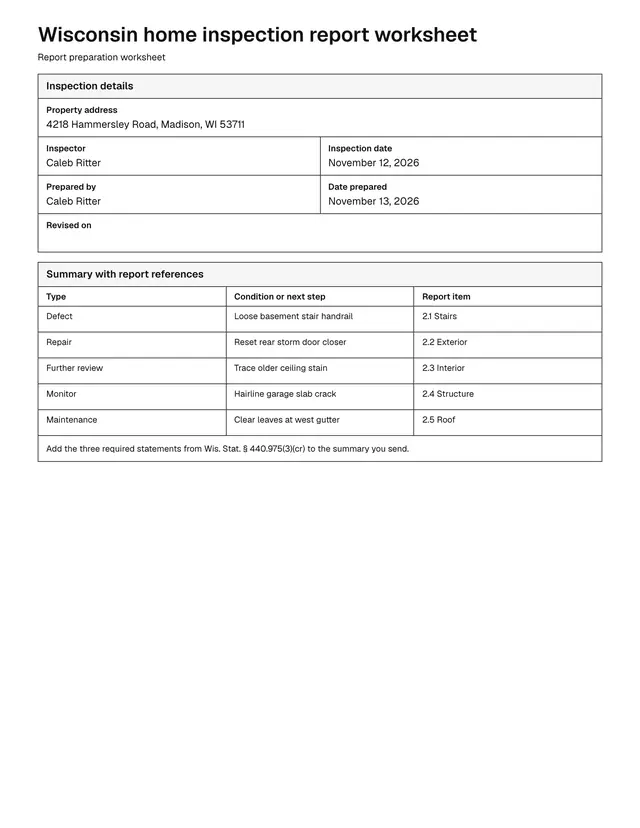
Wisconsin home inspection report worksheet
Findings by system, with each defect noted.