Delaware termite inspection report (NPMA-33)
Delaware doesn’t print its own termite inspection form, and its home inspector rules leave termites out. So the NPMA-33 from a pest control company is the report most Delaware sales use.
At a glance
- State form
- None in Delaware
- Form used
- NPMA-33 (industry form)
- Home inspectors
- Not required to check for wood destroyers
- Required for
- HUD and VA loans
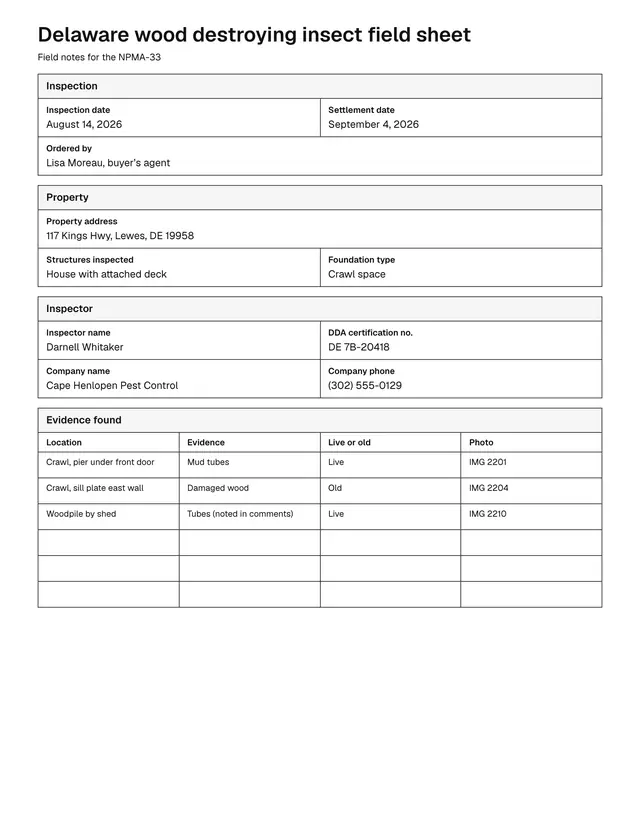
Completed example
Download PDFWho writes termite reports in Delaware?
Not the home inspector, most of the time. Delaware’s home inspector rules, 24 DE Admin Code 4100, list things a home inspector is not required to determine. Section 18.13.1.11 includes “wood destroying organisms or insects or molds or mold-like substances.” So a standard Delaware home inspection report can be silent on termites and still be complete.
That job goes to a pest control company. Delaware’s Department of Agriculture certifies pesticide applicators under 3 DE Admin Code 601, and termite work sits in subcategory 7.7.2, Wood Destroying Pest Control. Buyers or their agents order the termite report on its own, usually from the same companies that treat.
Why the NPMA-33 and not a state form
NPMA’s completion guideline says the form “MUST be used” for HUD and VA guaranteed sales, and is “typically used for conventional transactions.” It also says that if a state requires its own form, that form wins. Delaware doesn’t have one, so the NPMA-33 is the form.
The guideline is clear that the NPMA-33 “does not preempt state requirements” for how inspections are done. Delaware doesn’t set inspection steps for WDI reports, so NPMA’s guideline is the playbook. You can download the current form from NPMA’s forms page.
Details that trip up Delaware reports
The inspector line. NPMA asks for the inspector’s certification, registration, or license number from the state pest control agency. In Delaware, that’s your Department of Agriculture number. Print your full name and sign it. If the inspection took more than one day, NPMA says to list every date.
Crawl spaces. Lots of Delaware homes, from older farmhouses in Kent County to beach cottages in Sussex, sit over crawl spaces. Crawls are where tubes hide. If you couldn’t get in or couldn’t see all of it, list it in Section IV with the reason, like low clearance, standing water, or a sealed vapor barrier.
Box A or box B. Check box A only if there’s no visible evidence at all, past or present. Old tubes count. A scraped tube on a pier counts. Any of it means box B, with a description and location detailed enough that someone else could walk to it.
What’s in, on, or under the structure. An attached deck is part of the house. Mulch beds, stumps, woodpiles, and landscape timbers are not. If you see activity in a woodpile by the shed, put it in Section V as a comment, not in Section II. And settle which buildings are in the job when it’s ordered. NPMA says the person ordering should name the structures to inspect.
Carpenter bees. Round holes in fascia boards and porch rails are common across Delaware. NPMA counts carpenter bee staining as evidence, so the yellow-brown streaks under a hole are enough for box B even if no bee is flying that day.
Recommendations. NPMA says to recommend treatment when you see termite evidence and there’s no paperwork showing it was treated. If bait stations are in the yard and you can’t confirm the contract, note “unless there is a current baiting system service agreement in effect.”
It’s a snapshot. The form reports conditions on the inspection date only. It says it’s “not a structural damage report,” and there’s no warranty unless you attach one.
What if the seller wants it treated before settlement?
This happens a lot. The buyer’s lender wants a clean outcome, and the seller wants it handled fast. A soil treatment in Delaware has to follow Section 22 of the pesticide rules: a continuous barrier at label rates, with a certified 7.7.2 applicator on site.
If anything is left out, like the area around a well or a slab you can’t drill, the customer gets a written Notice of Termiticide Application within 14 days. That form and its rules are on the Delaware termiticide notice page. Give the buyer’s side a copy too, since it shows exactly what was and wasn’t treated.
Noma specializes in the Wood Destroying Insect Inspection Report (NPMA-33). Agents can book the inspection online, and you can upload the finished NPMA-33 PDF and send it to the buyer to sign online, with payment collected before settlement. See how Noma handles termite inspections.
Frequentlyaskedquestions
Send this document in minutes, not an afternoon.
Other states
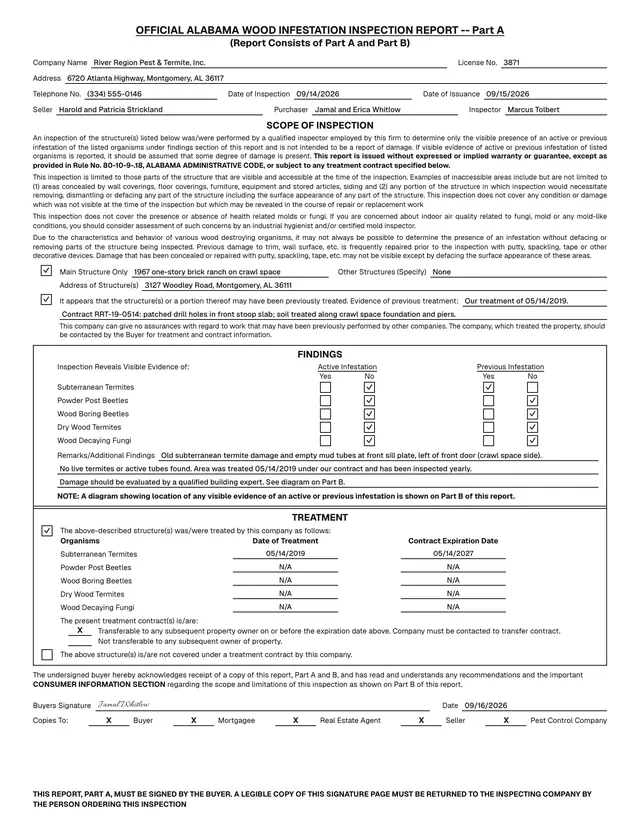
Inspection report templates- Alabama
Official Alabama Wood Infestation Inspection Report
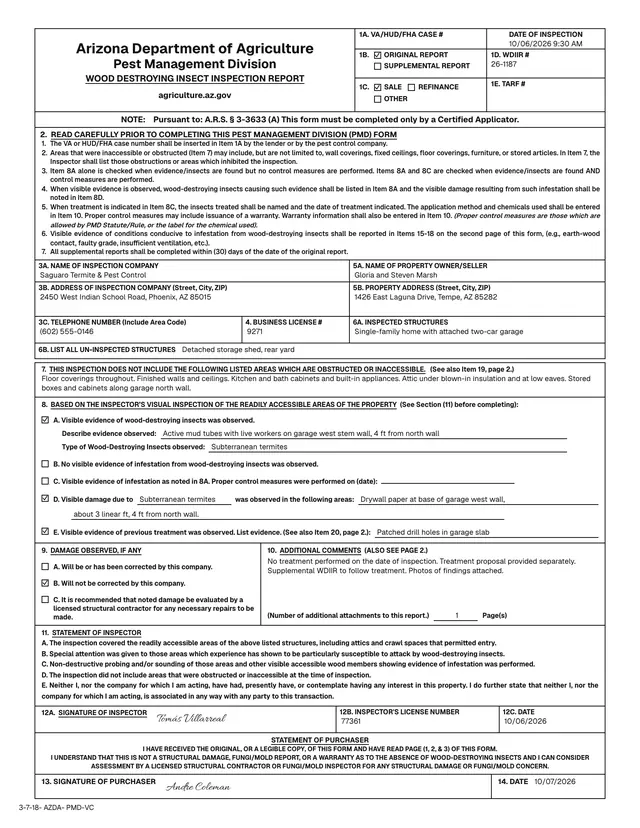
Record the termite findings from an inspection. - Arizona
Wood Destroying Insect Inspection Report
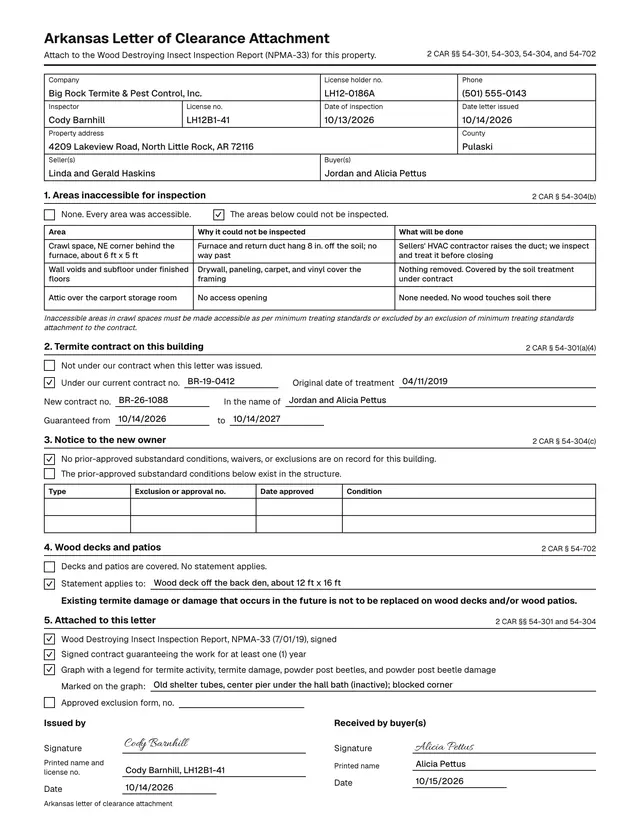
Record the termite findings from an inspection. - Arkansas
Arkansas Letter of Clearance Attachment
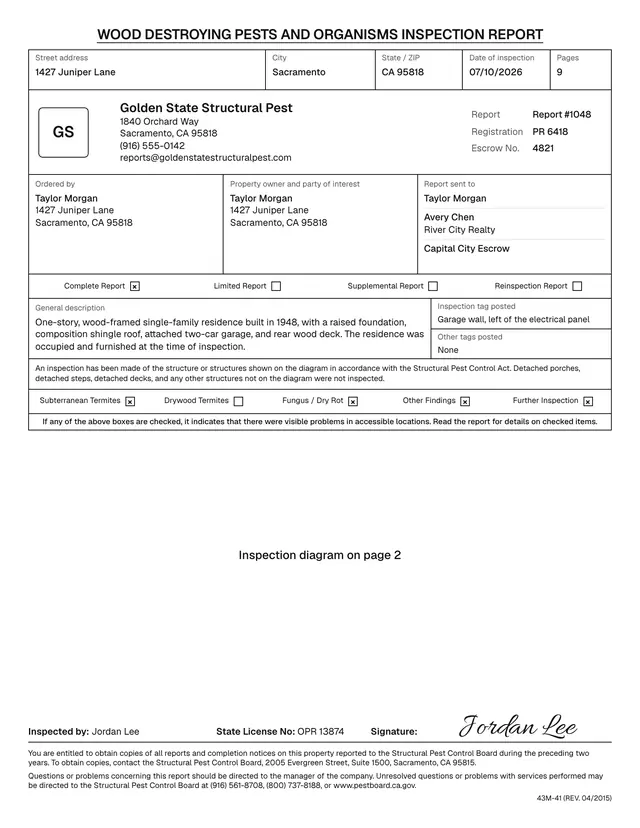
Record the termite findings from an inspection. - California43M-41
Wood Destroying Pests and Organisms Inspection Report
Record the termite findings from an inspection. - ColoradoNPMA-33
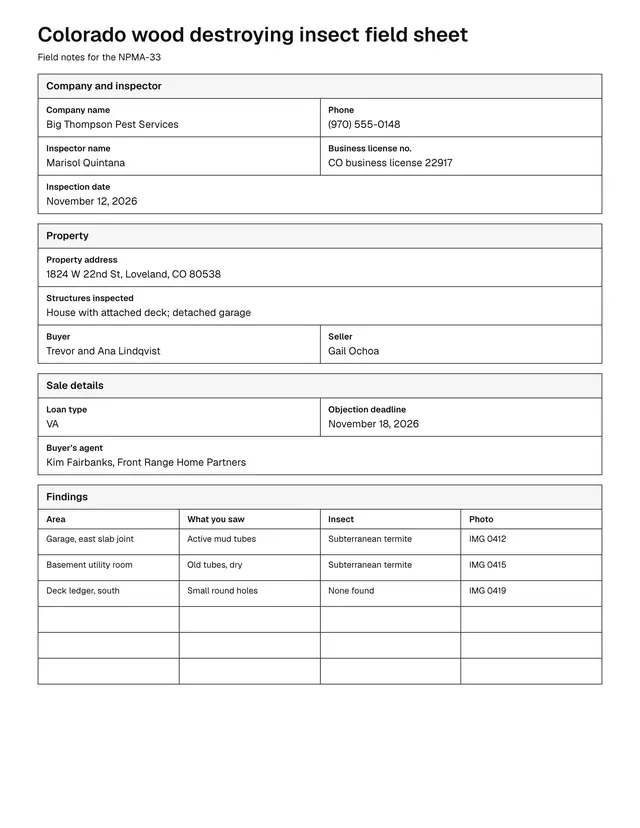
Colorado termite inspection report (NPMA-33)
Record the termite findings from an inspection. - Connecticut
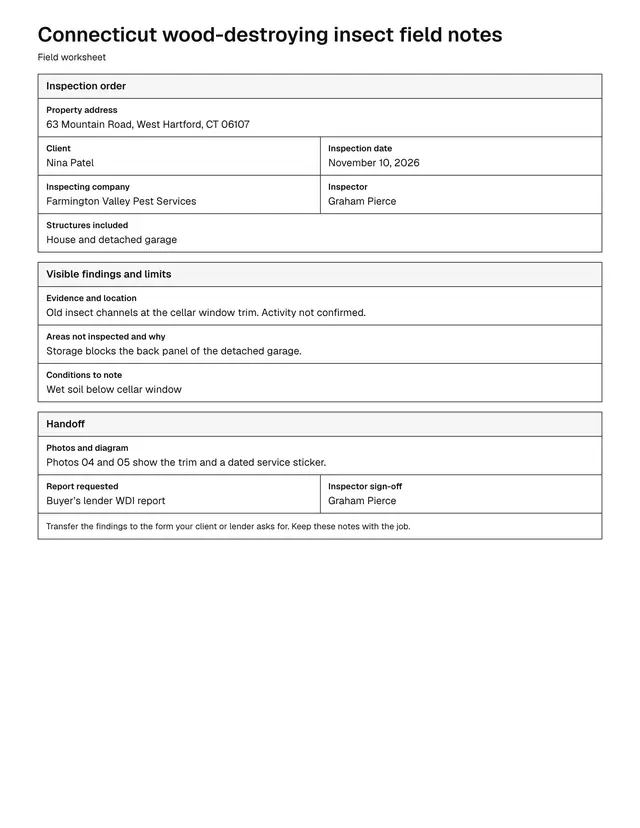
Connecticut wood-destroying insect field notes
Record the termite findings from an inspection. - FloridaFDACS-13645
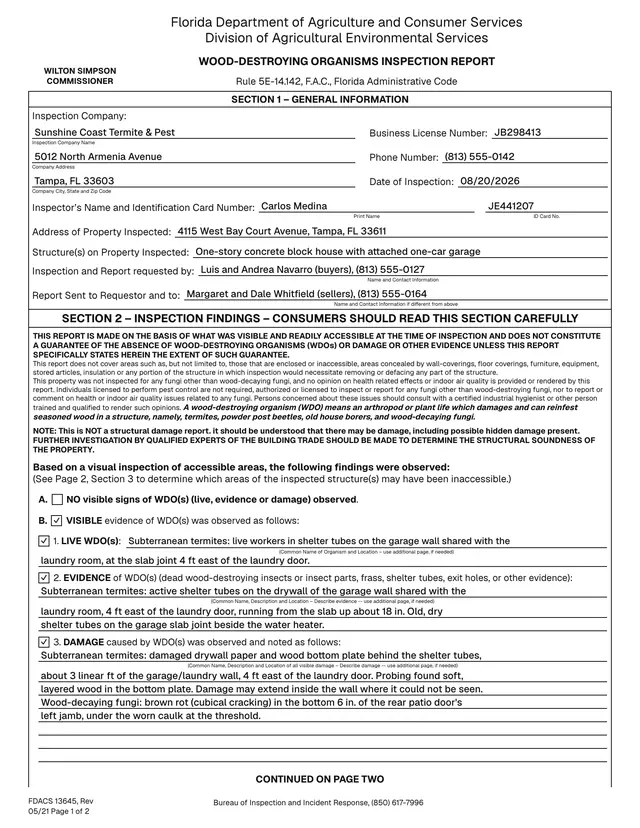
Wood-Destroying Organisms Inspection Report
Record the termite findings from an inspection. - Georgia
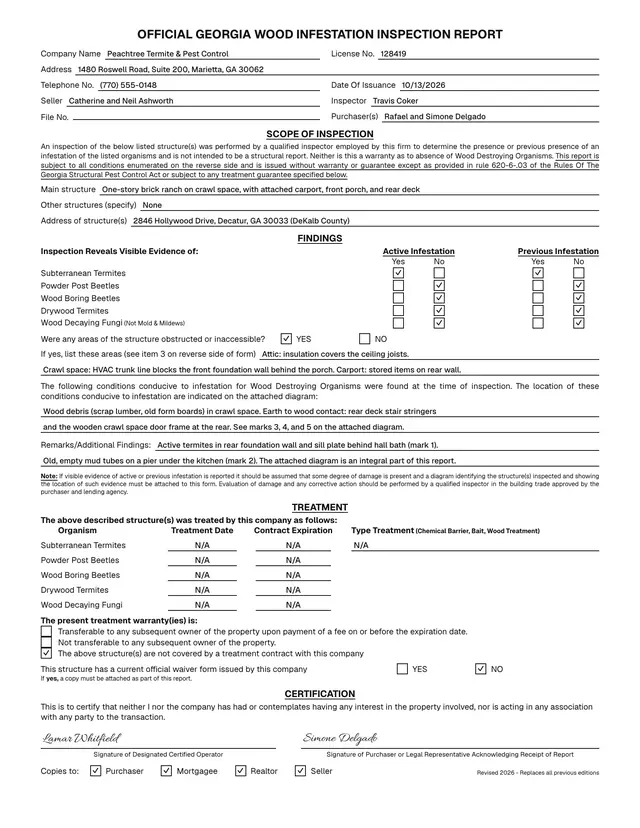
Official Georgia Wood Infestation Inspection Report
Record the termite findings from an inspection. - HawaiiPC-9
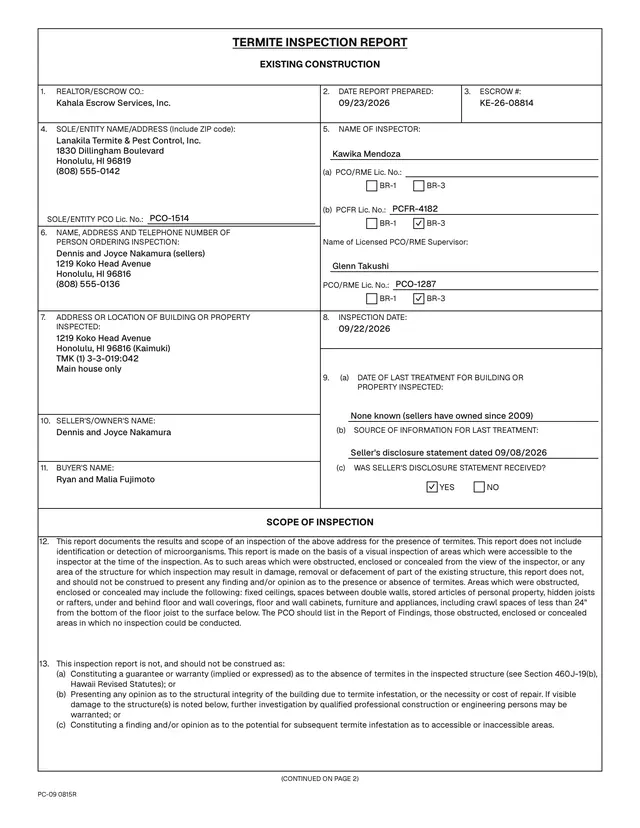
Termite Inspection Report, Existing Construction
Record the termite findings from an inspection. - IllinoisNPMA-33
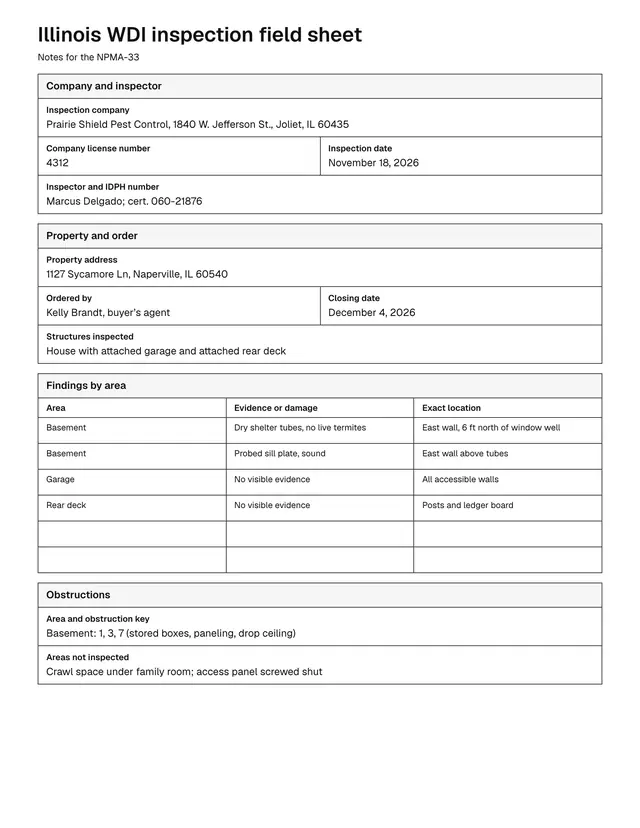
Illinois wood destroying insect inspection report (NPMA-33)
Record the termite findings from an inspection. - IndianaNPMA-33
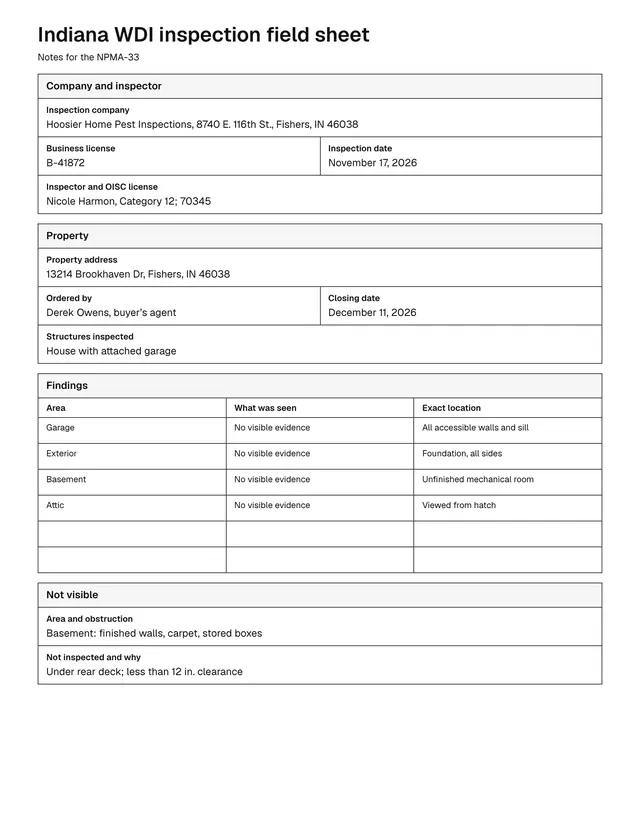
Indiana wood destroying insect inspection report (NPMA-33)
Record the termite findings from an inspection. - Iowa
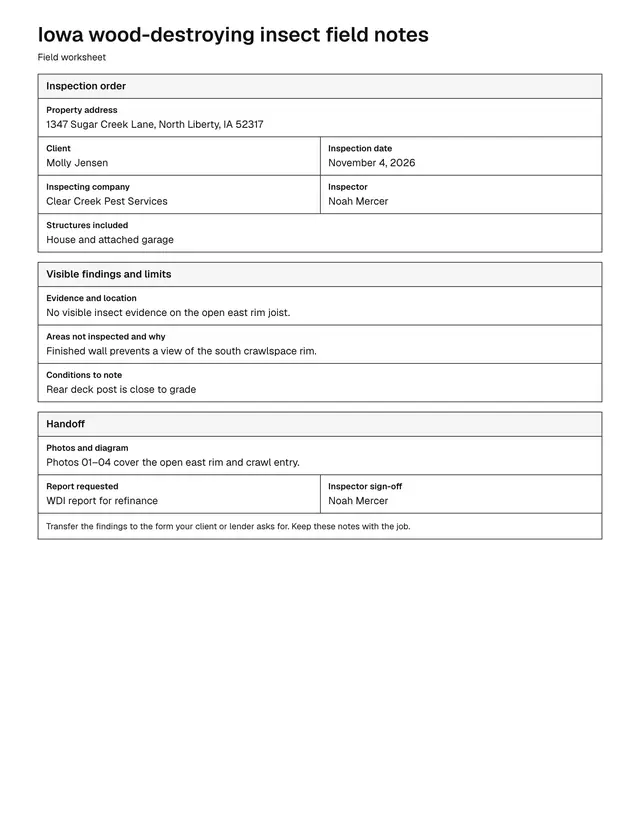
Iowa wood-destroying insect field notes
Record the termite findings from an inspection. - Kansas
Kansas wood-destroying insect field notes
Record the termite findings from an inspection. - Kentucky
Kentucky termite inspection report (NPMA-33)
Record the termite findings from an inspection. - MarylandMD-1
Wood Destroying Insect Inspection Report
Record the termite findings from an inspection. - Massachusetts
Massachusetts termite inspection report (NPMA-33)
Record the termite findings from an inspection. - MichiganNPMA-33
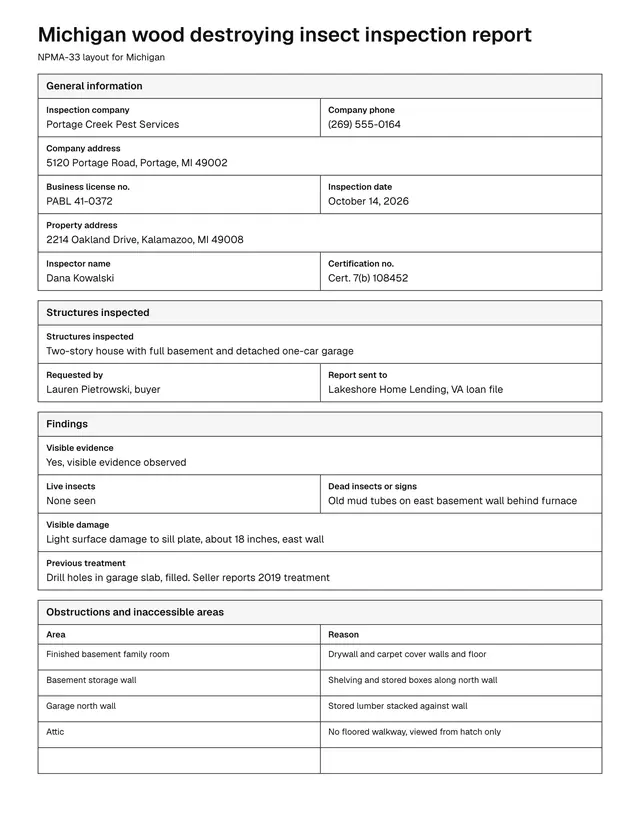
Michigan wood-destroying insect inspection report (NPMA-33)
Record the termite findings from an inspection. - Mississippi
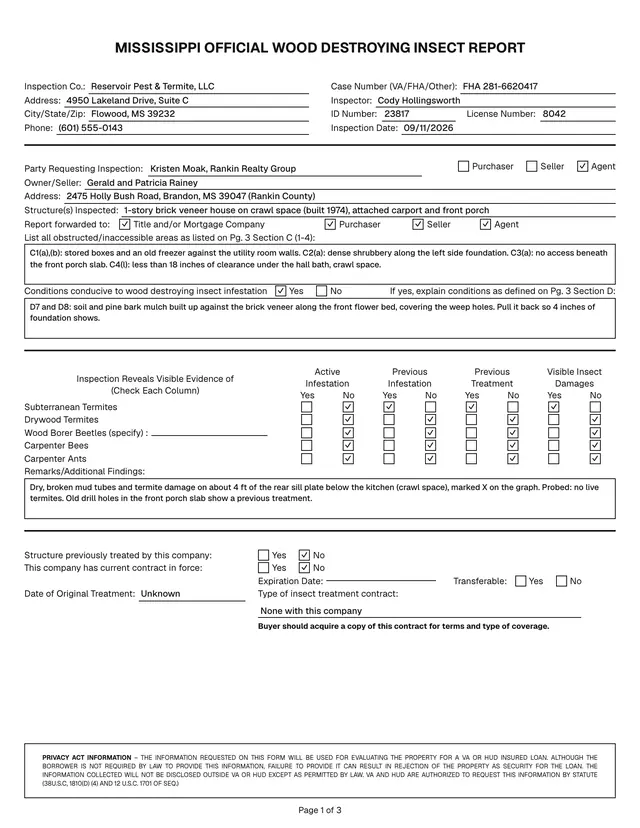
Mississippi Official Wood Destroying Insect Report
Record the termite findings from an inspection. - MissouriNPMA-33
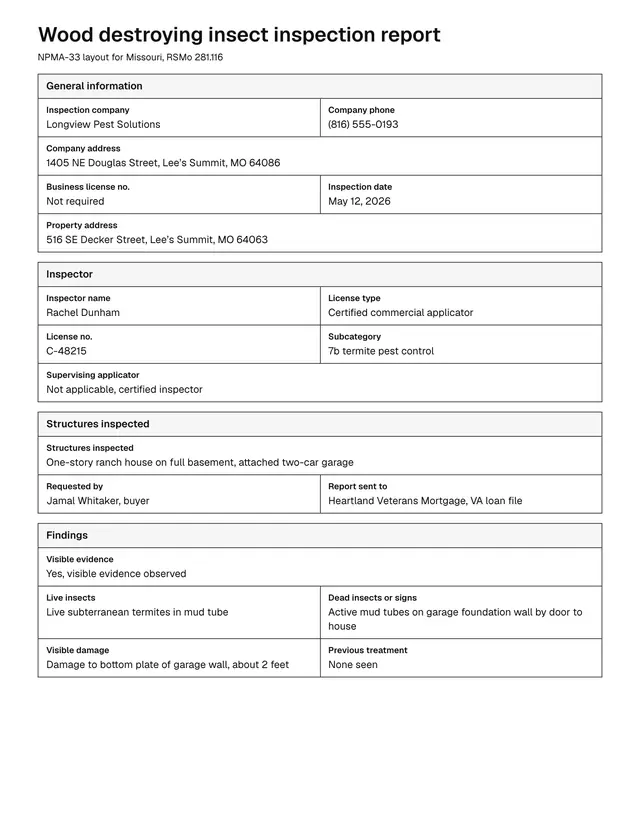
Missouri wood-destroying insect inspection report (NPMA-33)
Record the termite findings from an inspection. - Nevada
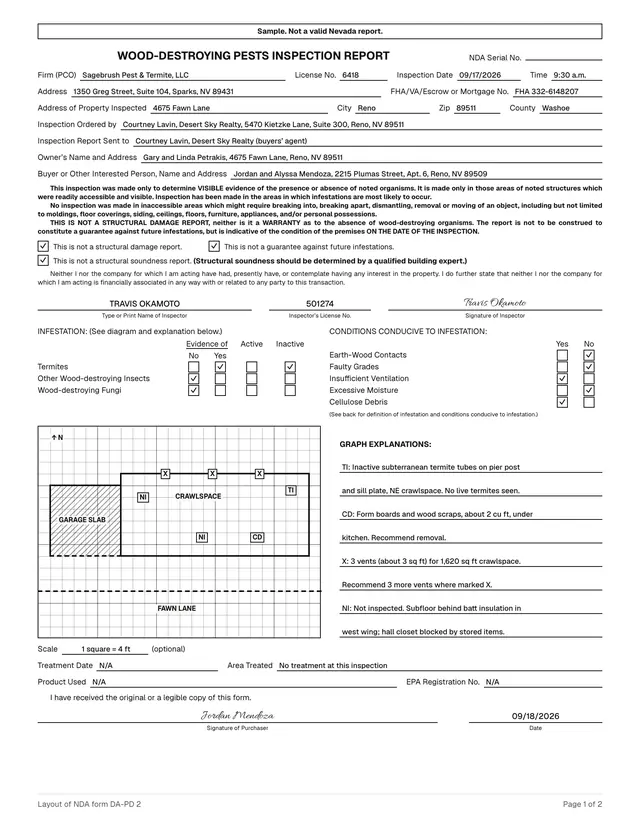
Wood-Destroying Pests Inspection Report
Record the termite findings from an inspection. - New Jersey
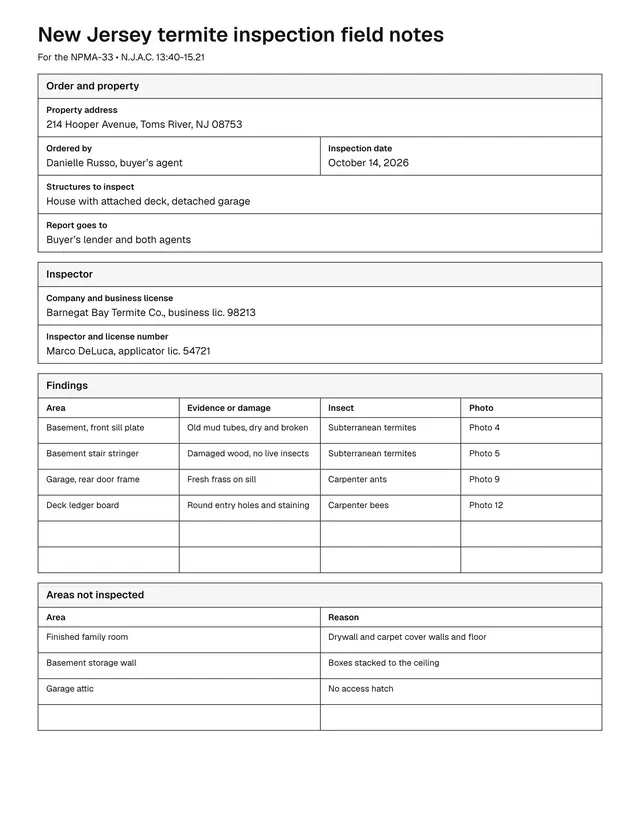
New Jersey termite inspection report (NPMA-33 field notes)
Record the termite findings from an inspection. - New Mexico
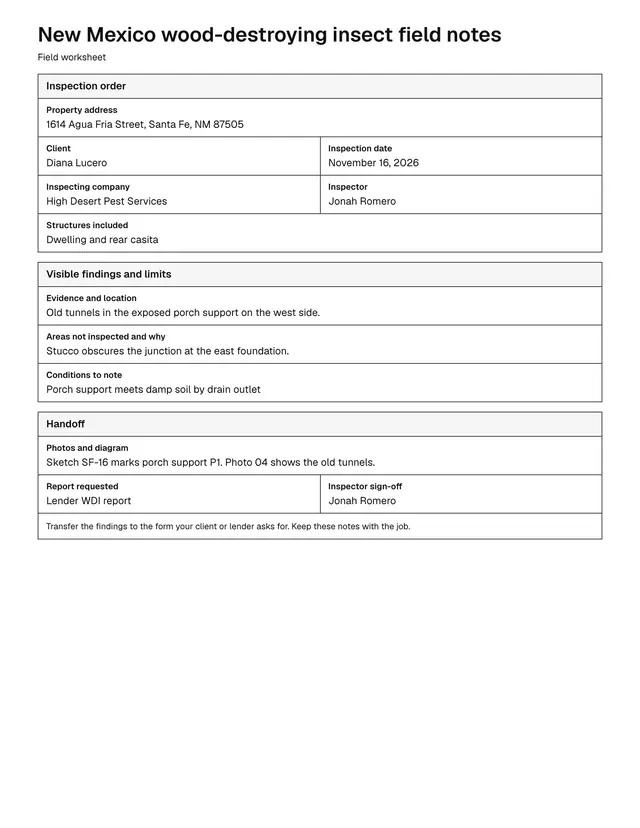
New Mexico wood-destroying insect field notes
Record the termite findings from an inspection. - New York
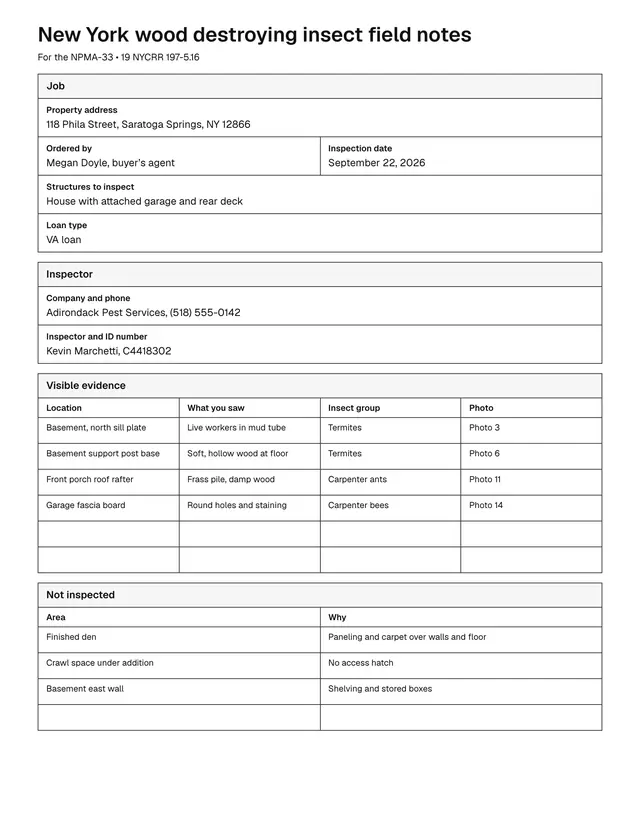
New York wood destroying insect inspection notes (NPMA-33)
Record the termite findings from an inspection. - North CarolinaWDIR 100
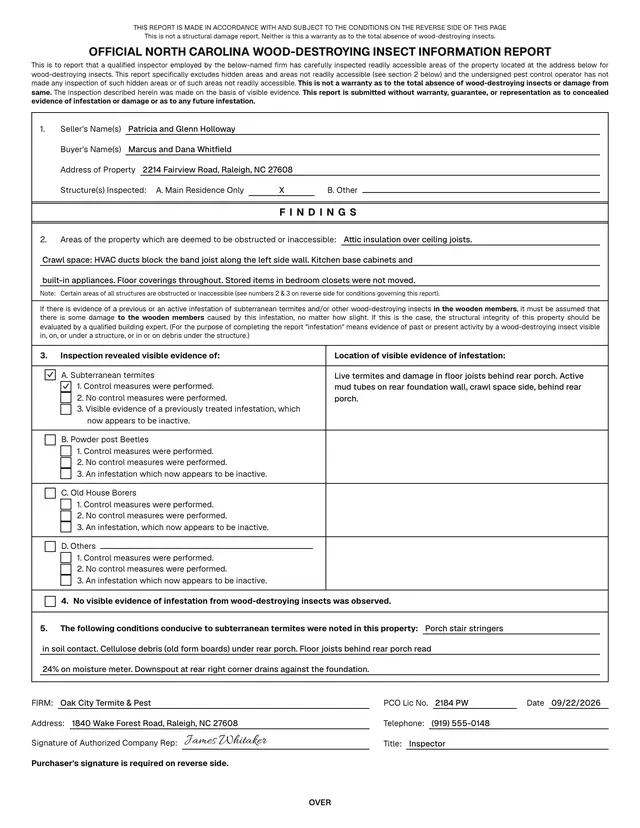
Official North Carolina Wood-Destroying Insect Information Report
Record the termite findings from an inspection. - OhioNPMA-33
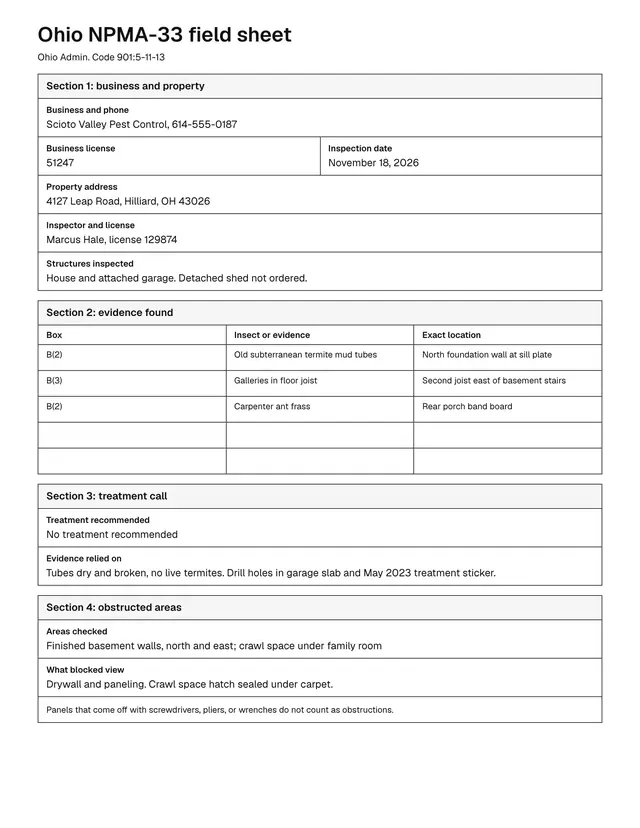
Ohio NPMA-33 wood-destroying insect inspection report
Record the termite findings from an inspection. - OklahomaForm ODAFF-1
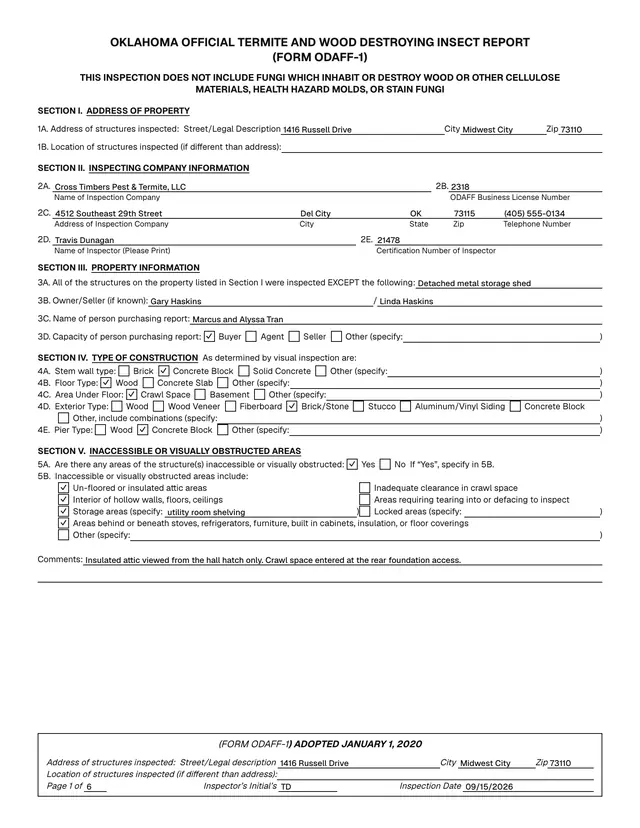
Oklahoma Official Termite and Wood Destroying Insect Report
Record the termite findings from an inspection. - Oregon
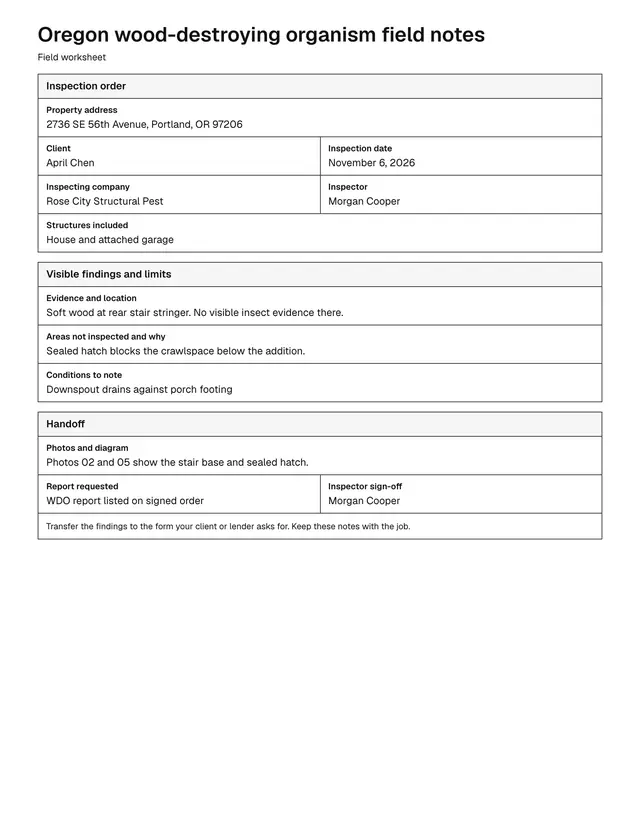
Oregon wood-destroying organism field notes
Record the termite findings from an inspection. - PennsylvaniaNPMA-33
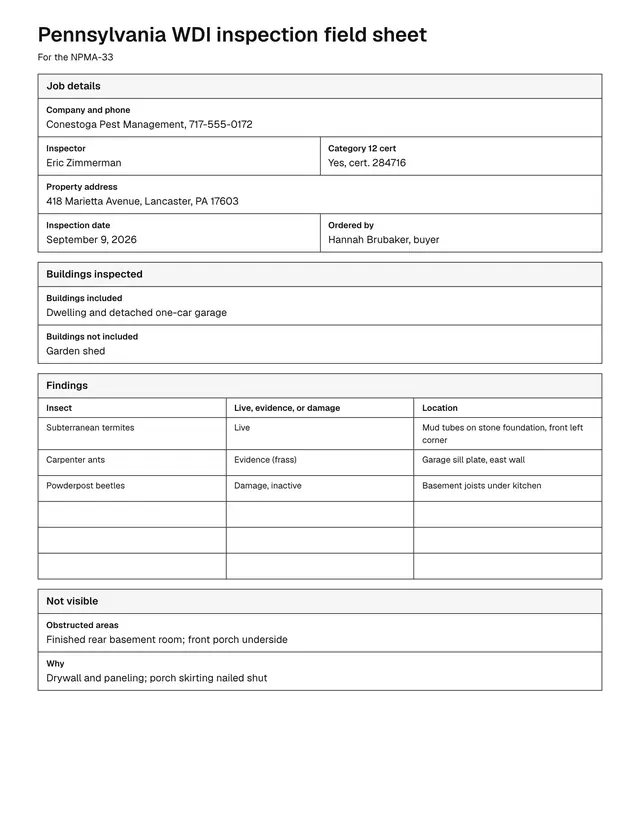
Pennsylvania wood-destroying insect inspection report (NPMA-33)
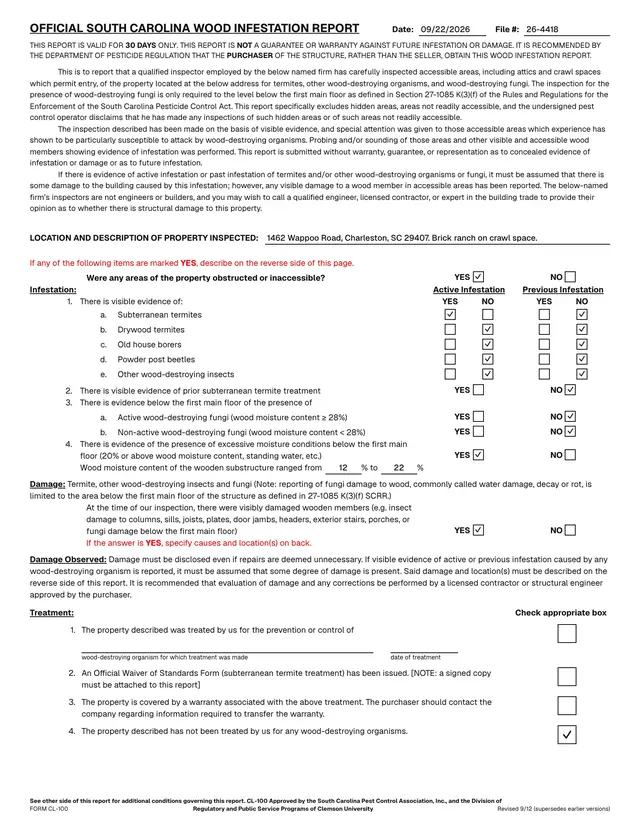
Record the termite findings from an inspection. - South CarolinaCL-100
Official South Carolina Wood Infestation Report
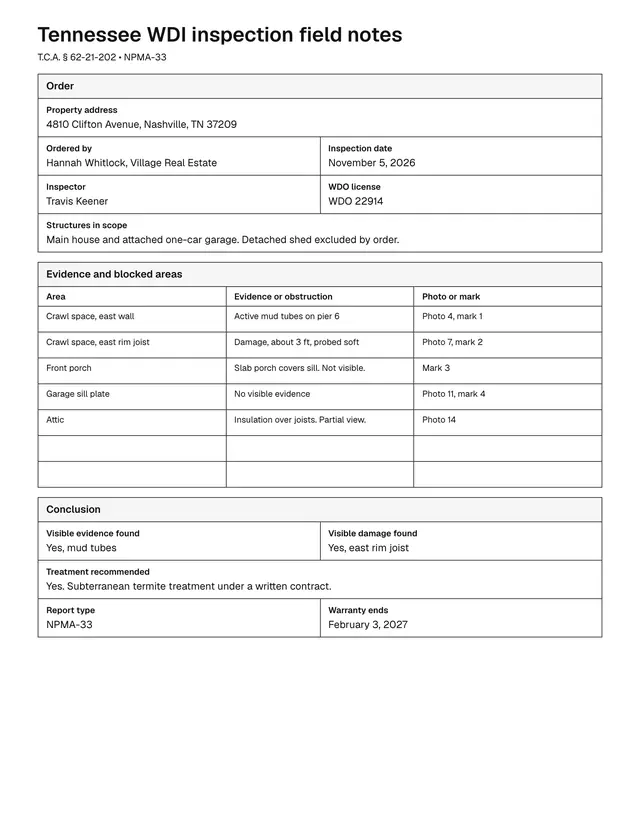
Record the termite findings from an inspection. - Tennessee
Tennessee wood destroying insect infestation inspection report
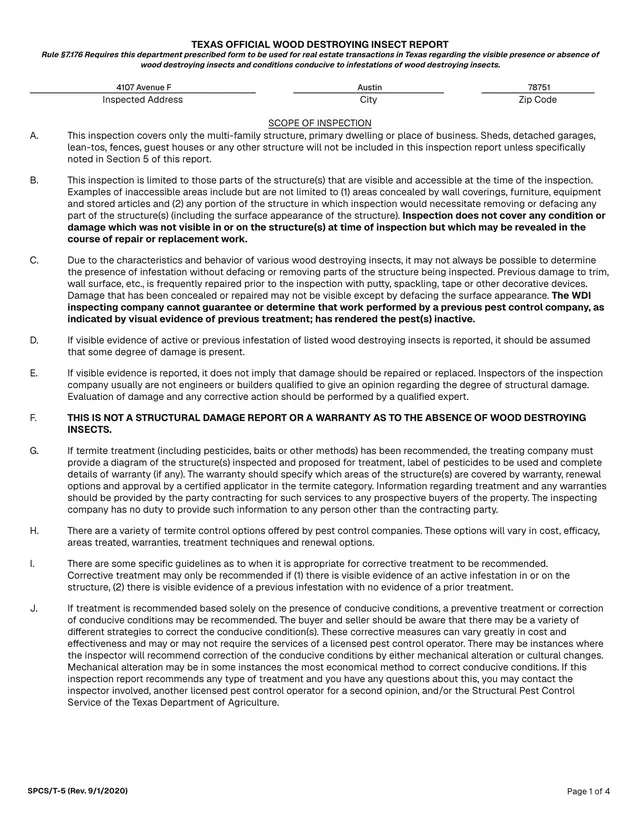
Record the termite findings from an inspection. - TexasSPCS/T-5
Texas Official Wood Destroying Insect Report
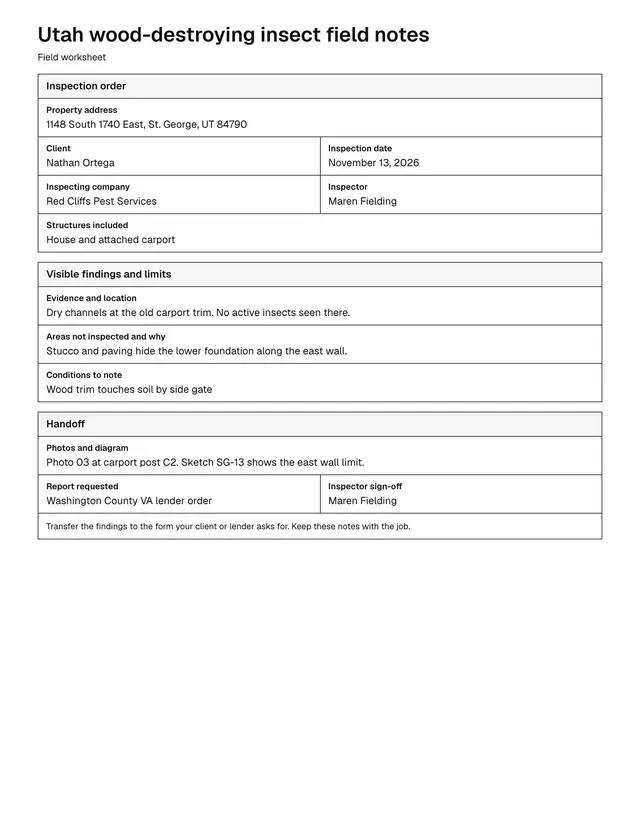
Record the termite findings from an inspection. - Utah
Utah wood-destroying insect field notes
Record the termite findings from an inspection. - Virginia
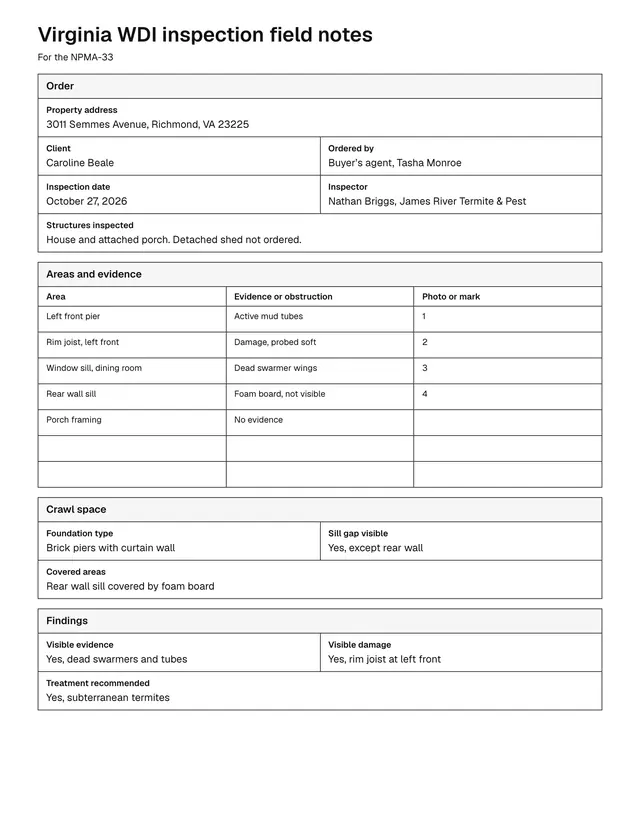
Virginia wood destroying insect inspection report
Record the termite findings from an inspection. - Washington
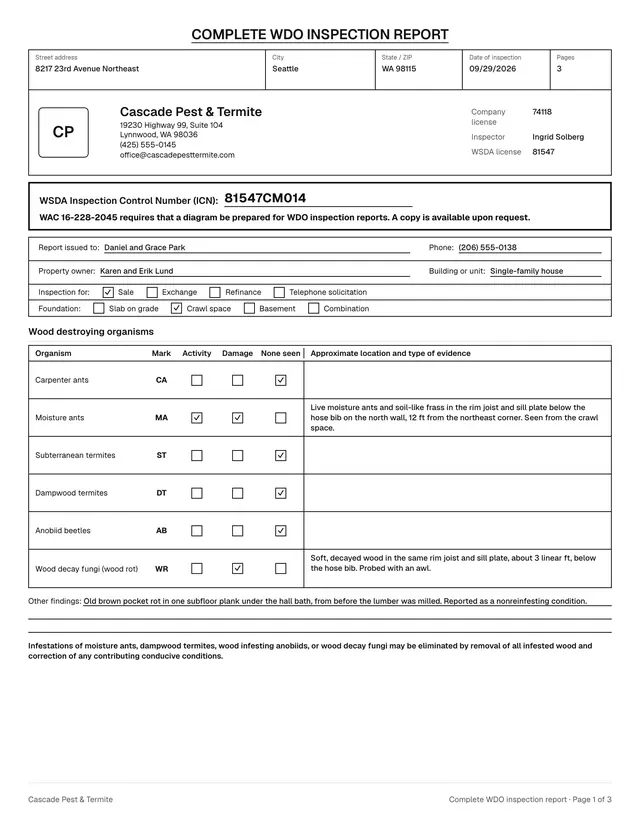
Complete WDO Inspection Report
Record the termite findings from an inspection. - Wisconsin
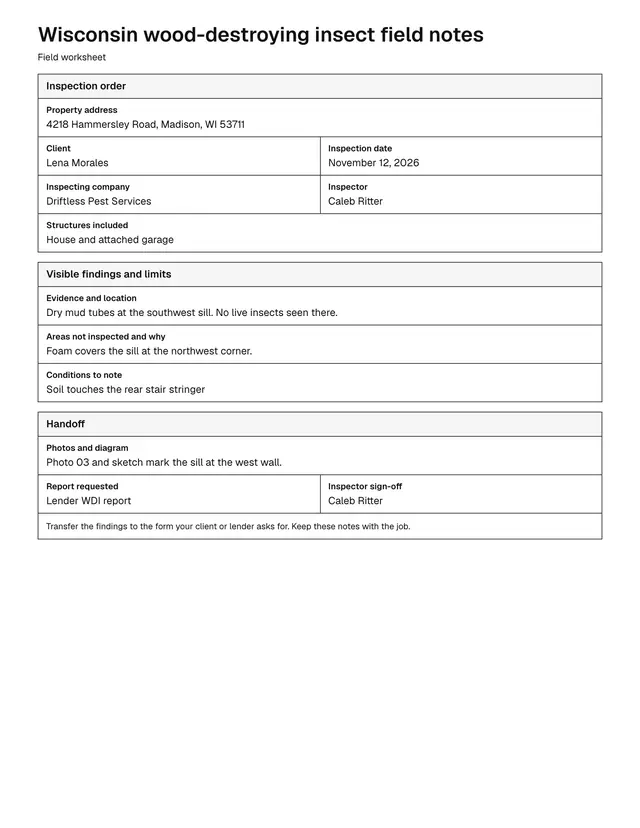
Wisconsin wood-destroying insect field notes
Record the termite findings from an inspection.