Ohio NPMA-33 wood-destroying insect inspection report
Ohio is one of the few states that makes the NPMA-33 mandatory by rule. Rule 901:5-11-13 says what goes in each of its five sections, and when it has to be signed.
At a glance
- Rule
- Ohio Admin. Code 901:5-11-13
- Form
- NPMA-33, required
- Sign by
- 5 business days after
- Kept for
- 3 years by the business
Completed example
Download PDFOhio wrote a rule around the NPMA-33
Most states leave the termite letter to the lender. Ohio doesn’t. Ohio Admin. Code 901:5-11-13 tells every commercial applicator who does a real estate WDI inspection to record the findings “on form NPMA-33.” Then it walks through the form section by section and says what has to go in each one.
That matters because the NPMA’s own instructions leave room for judgment. Ohio closes some of that room. The rule says that “in the event of conflicting instructions for completing the form, the provisions of this rule shall apply.” So if you learned the NPMA-33 in another state, read Ohio’s version before you sign one here.
The inspection itself also has a rulebook. Paragraph (A) says inspections follow the practices in the Ohio wood-destroying insect diagnostic inspection training program, and rule 901:5-11-01 makes the WDI diagnostic inspection its own commercial license category, number 12. The Department of Agriculture posts a sample NPMA-33, but the live forms come from the NPMA.
What Ohio wants in each section
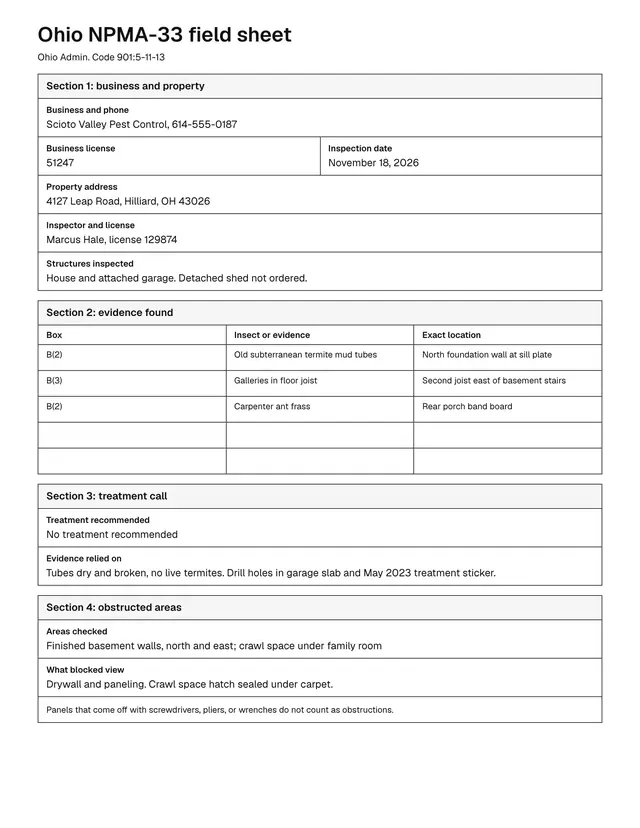
Section one is the who and where. The business name, address, and phone. The business or registered location license number. The inspection date and the property address. Your name, license number, and “original signature.” Then the specific structures you inspected, like “house and attached garage.” If you skipped the pole barn, say so here or in section five.
Section two is what you saw. Box A means no visible evidence. Box B splits three ways. B(1) is live insects, with the type and the exact spot. B(2) is dead insects, wings, frass, shelter tubes, exit holes, or staining, again with the type and spot. Box 3 is visible damage. The rule keeps using the same example of a location, “sill plates, foundations, etc.” Write it that way. “North sill plate under the dining room window” beats “basement.”
Section three is your call on treatment. If you checked A, you must check “no treatment recommended.” If you checked B, you may recommend treatment for active infestation, no sign of prior treatment, or activity after the last treatment. For subterranean termites it also covers a house with no current termite contract and no liquid soil treatment in the last five years. You can also check B and recommend nothing, but only if you believe there’s no active infestation and you write down why.
Section four is what you couldn’t see. Check every obstructed or inaccessible area. Ohio won’t let you hide behind a screwed-on panel. Coverings that come off “using commonly available tools such as screwdrivers, pliers and wrenches” don’t count as obstructions.
Section five is the catch-all. State whether you saw evidence of previous treatment, describe it, and say where you saw it. Add comments that don’t fit elsewhere, including damage on structures you weren’t asked to inspect. If section two ran out of room, attach pages and list them here.
Two deadlines and a three-year file
Under paragraph (H), you complete and sign the form within five business days of the inspection. Your signature isn’t just a name on a line. The rule calls it your “certification that the inspection was conducted and reported in accordance with” Ohio’s pesticide rules.
Under paragraph (I), a copy of the signed form goes to the pesticide business or registered location you worked from within ten days. Then rule 901:5-11-10 takes over. The business keeps those copies for three years from the inspection date and shows them to the Director on request.
Here’s a real calendar. Say you inspect a Hilliard ranch on Wednesday, November 18, 2026. Thanksgiving lands on the 26th, so count carefully. Your five business days end Wednesday the 25th. The office copy is due by November 28.
The previous treatment question trips people up
Buyers read section three first, and lenders read it second. The five-year line is where most arguments start. A Westerville house with dry, broken mud tubes and a 2023 treatment sticker on the electric panel doesn’t need a new treatment just because you found tubes. Check B(2), check no treatment, and say why: tubes are dry, no live termites, drill holes in the garage slab match a liquid job three years ago.
Flip it around and the answer changes. Same tubes, but no sticker, no drill holes, and the seller says nobody ever treated. Now the rule allows a recommendation because there’s “no evidence of previous treatment.” Either way, the evidence you relied on goes on paper. That’s the part Ohio will look for if the buyer complains after closing.
Our field sheet lines up with the five sections so the notes you take in the crawl space drop straight onto the NPMA-33 without rewriting. If you also treat the house, Ohio wants a footprint drawing first. That lives on the Ohio termite treatment and bait record.
How do you get the signed report to everyone before closing?
A real estate WDI job usually has four people waiting on one page: the buyer, both agents, and sometimes a lender. The inspection is the easy part. Chasing the signed form, the sketch, and the invoice in time for closing is where the day goes.
Noma specializes in the Ohio NPMA-33 wood-destroying insect inspection report (Ohio Admin. Code 901:5-11-13). Draw the basement diagram on the job, upload the finished NPMA-33 as a PDF and send it out to be signed online, and book and invoice the inspection in the same place. See how Noma handles termite inspections.
Frequentlyaskedquestions
Send this document in minutes, not an afternoon.
Other states
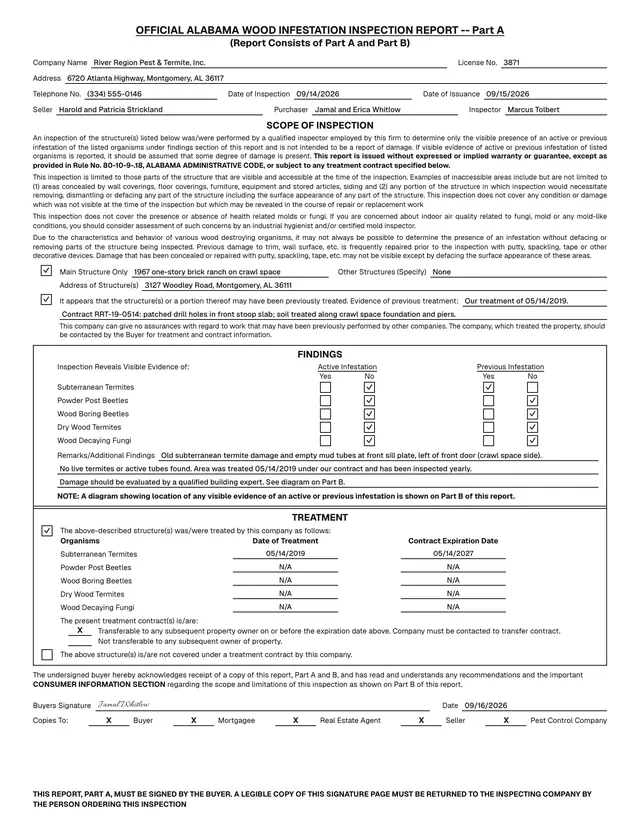
Inspection report templates- Alabama
Official Alabama Wood Infestation Inspection Report
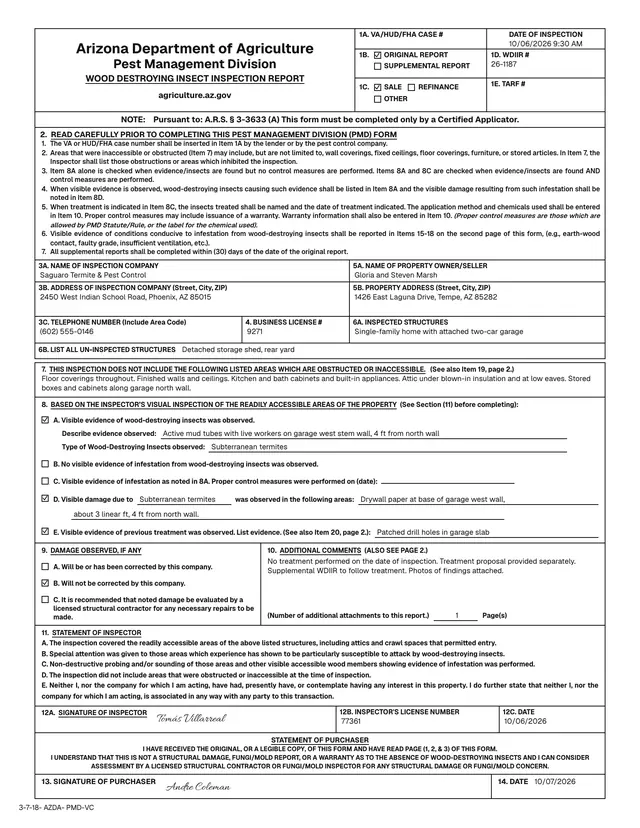
Record the termite findings from an inspection. - Arizona
Wood Destroying Insect Inspection Report
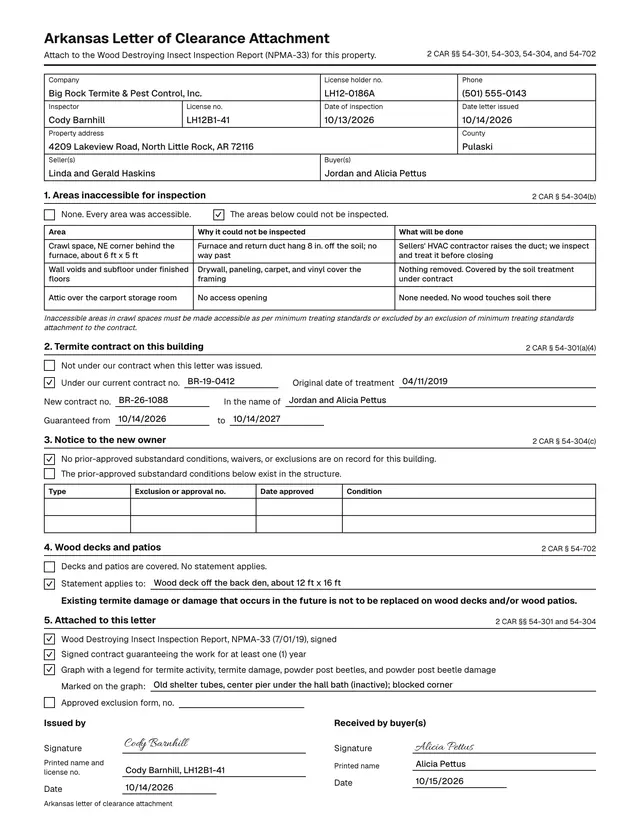
Record the termite findings from an inspection. - Arkansas
Arkansas Letter of Clearance Attachment
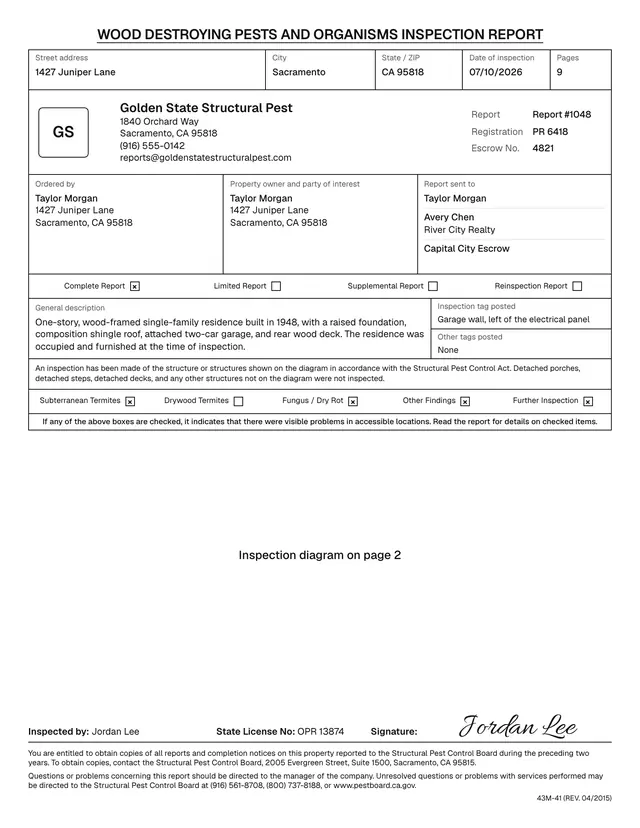
Record the termite findings from an inspection. - California43M-41
Wood Destroying Pests and Organisms Inspection Report
Record the termite findings from an inspection. - ColoradoNPMA-33
Colorado termite inspection report (NPMA-33)
Record the termite findings from an inspection. - Connecticut
Connecticut wood-destroying insect field notes
Record the termite findings from an inspection. - DelawareNPMA-33
Delaware termite inspection report (NPMA-33)
Record the termite findings from an inspection. - FloridaFDACS-13645
Wood-Destroying Organisms Inspection Report
Record the termite findings from an inspection. - Georgia
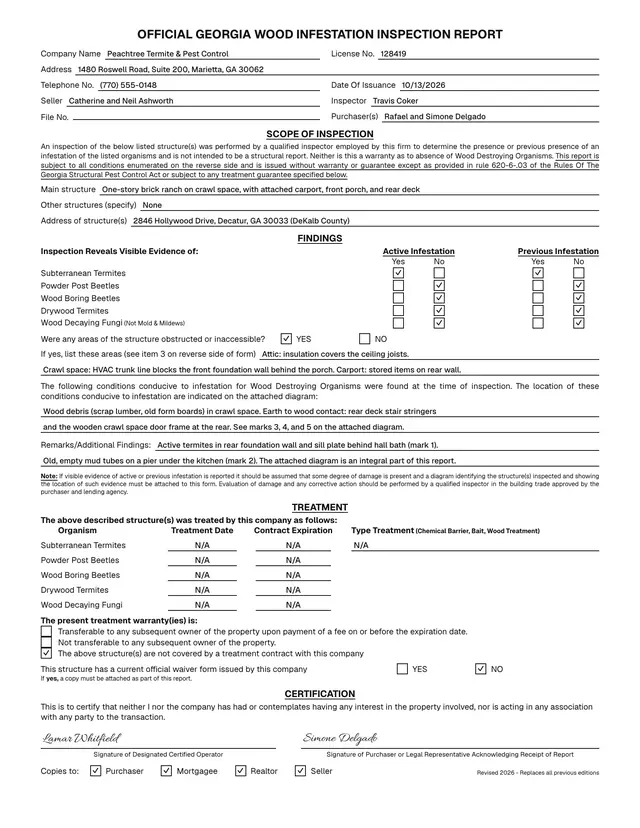
Official Georgia Wood Infestation Inspection Report
Record the termite findings from an inspection. - HawaiiPC-9
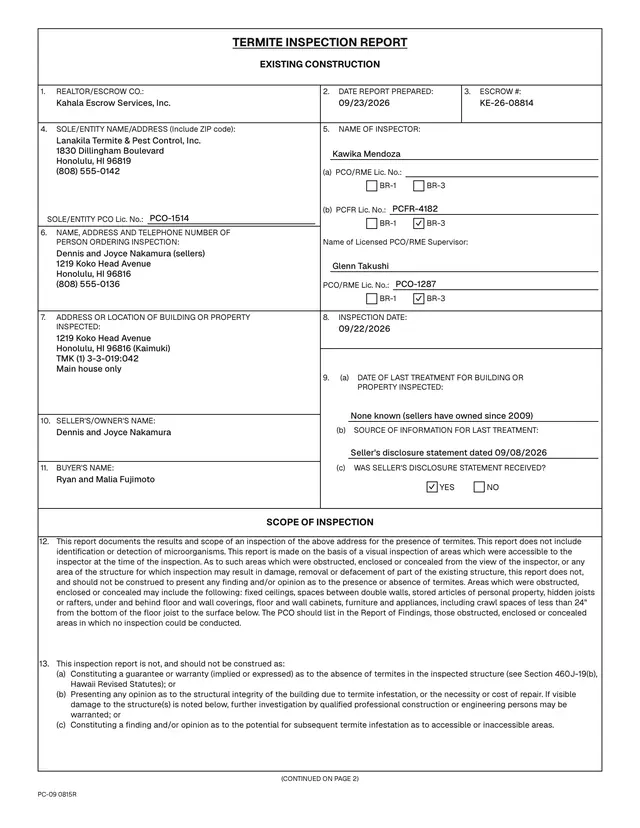
Termite Inspection Report, Existing Construction
Record the termite findings from an inspection. - IllinoisNPMA-33
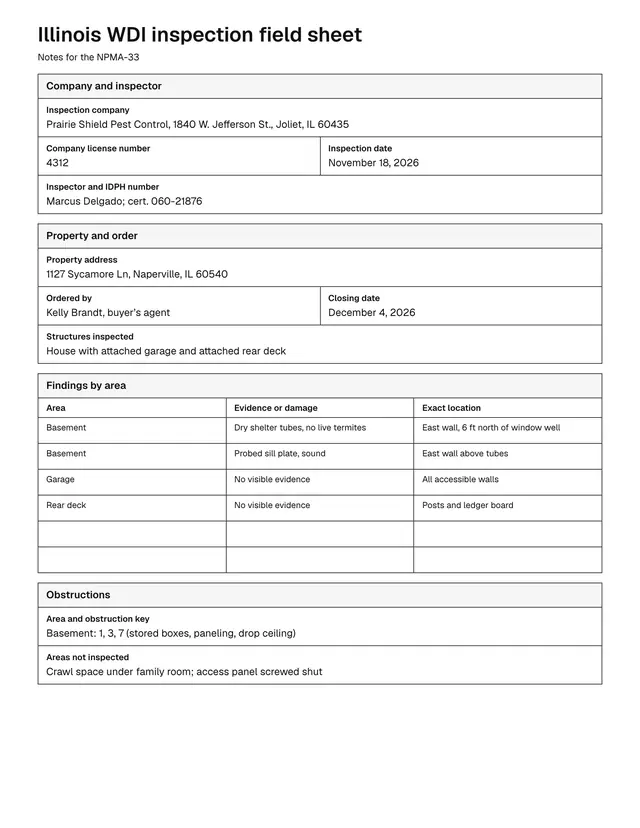
Illinois wood destroying insect inspection report (NPMA-33)
Record the termite findings from an inspection. - IndianaNPMA-33
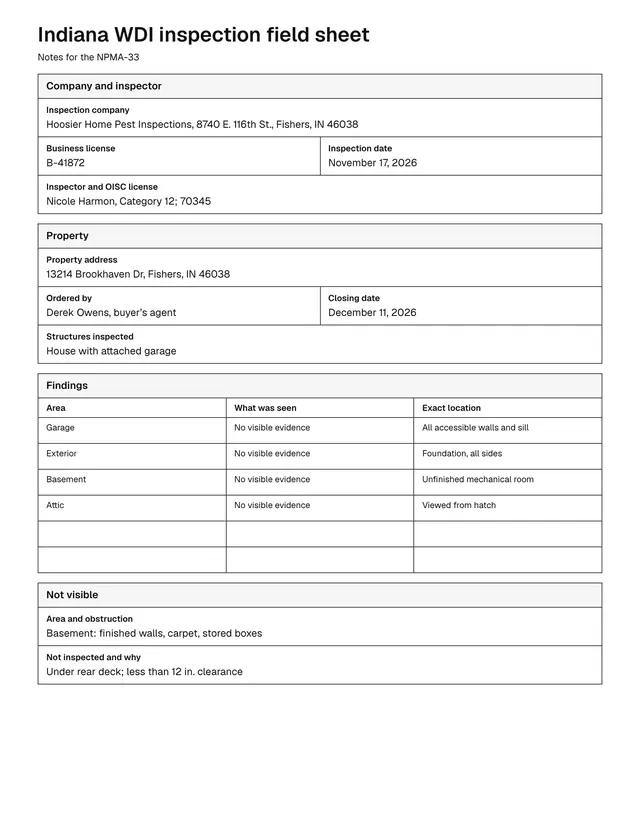
Indiana wood destroying insect inspection report (NPMA-33)
Record the termite findings from an inspection. - Iowa
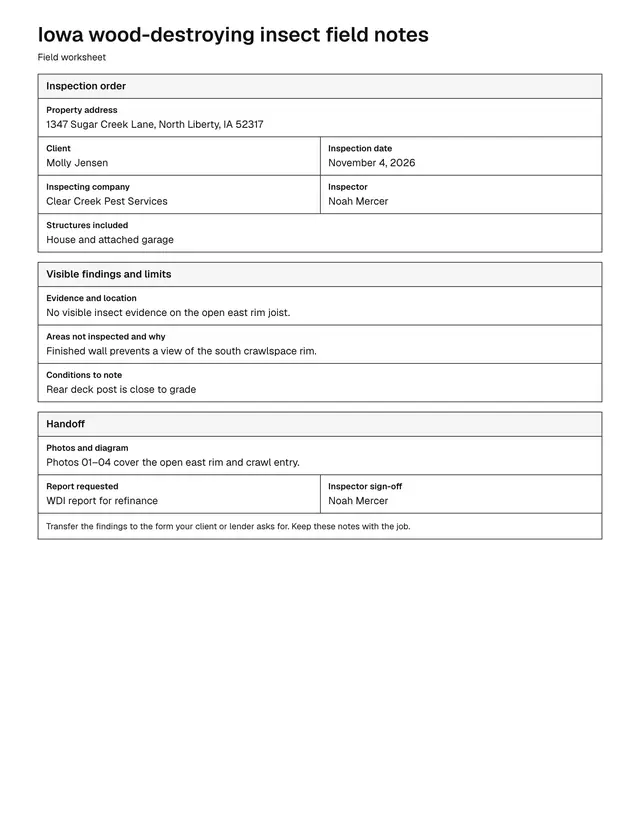
Iowa wood-destroying insect field notes
Record the termite findings from an inspection. - Kansas
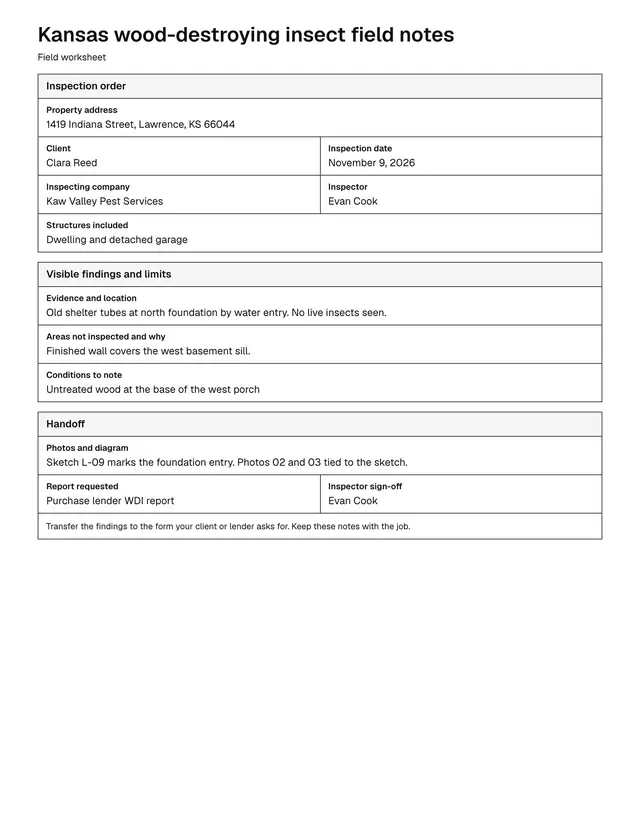
Kansas wood-destroying insect field notes
Record the termite findings from an inspection. - Kentucky
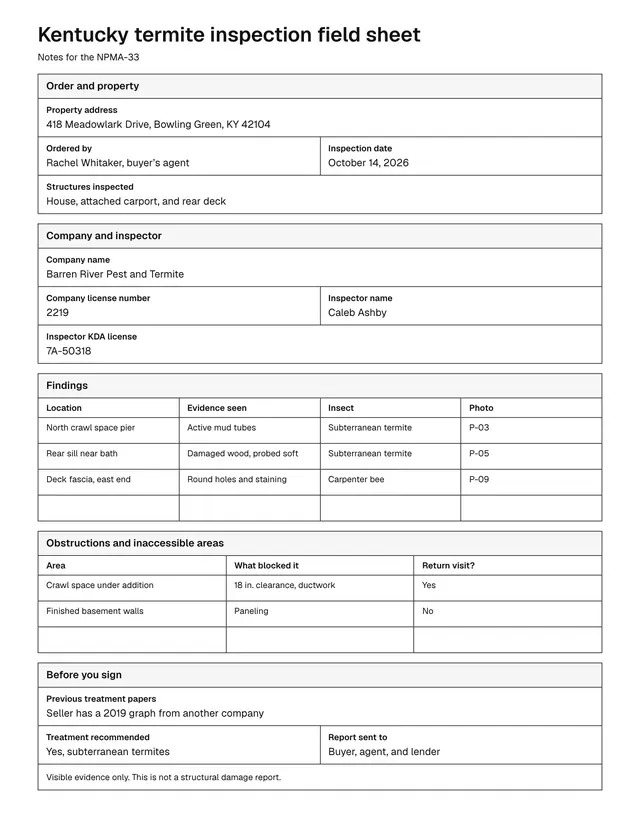
Kentucky termite inspection report (NPMA-33)
Record the termite findings from an inspection. - MarylandMD-1
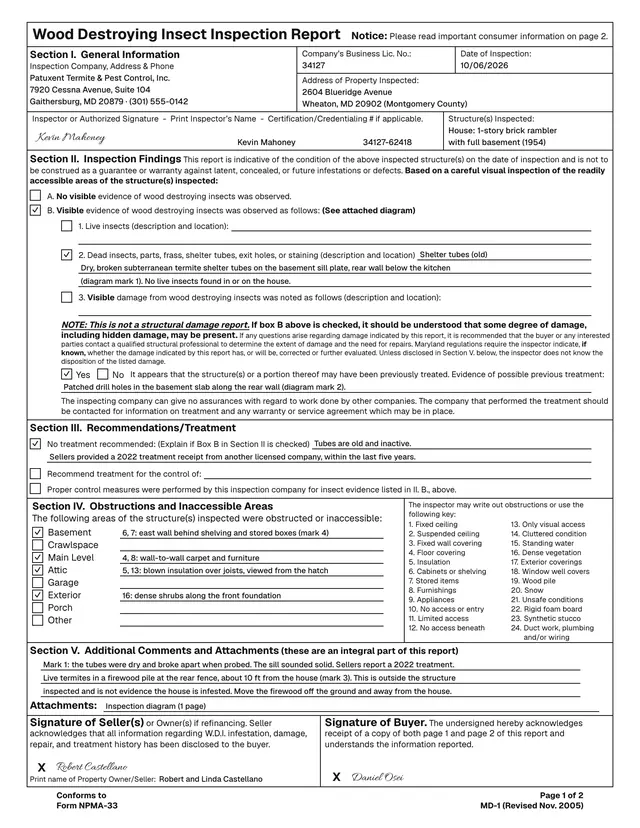
Wood Destroying Insect Inspection Report
Record the termite findings from an inspection. - Massachusetts
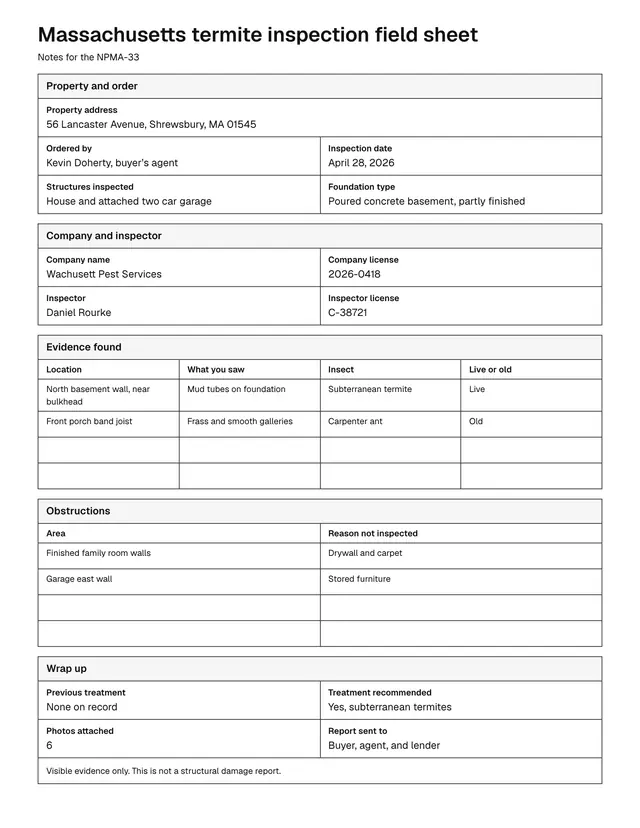
Massachusetts termite inspection report (NPMA-33)
Record the termite findings from an inspection. - MichiganNPMA-33
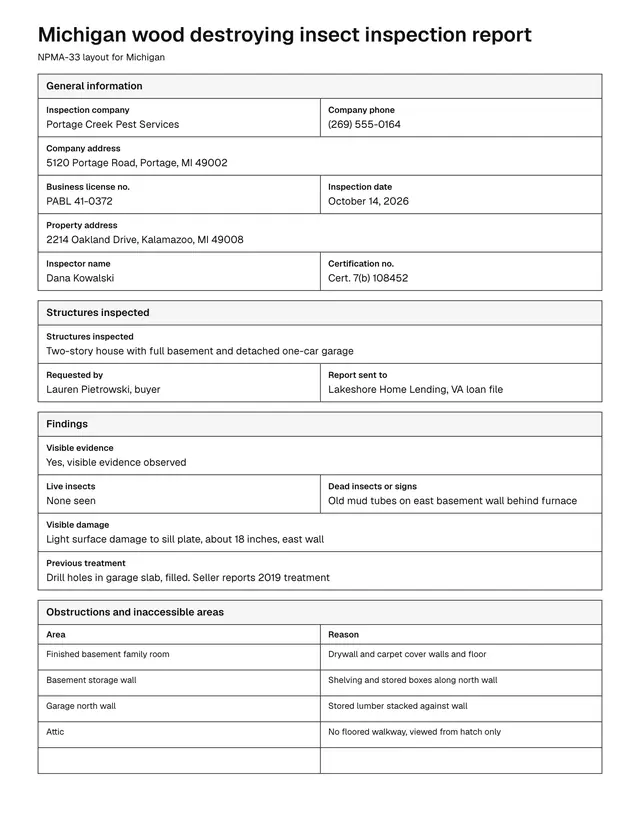
Michigan wood-destroying insect inspection report (NPMA-33)
Record the termite findings from an inspection. - Mississippi
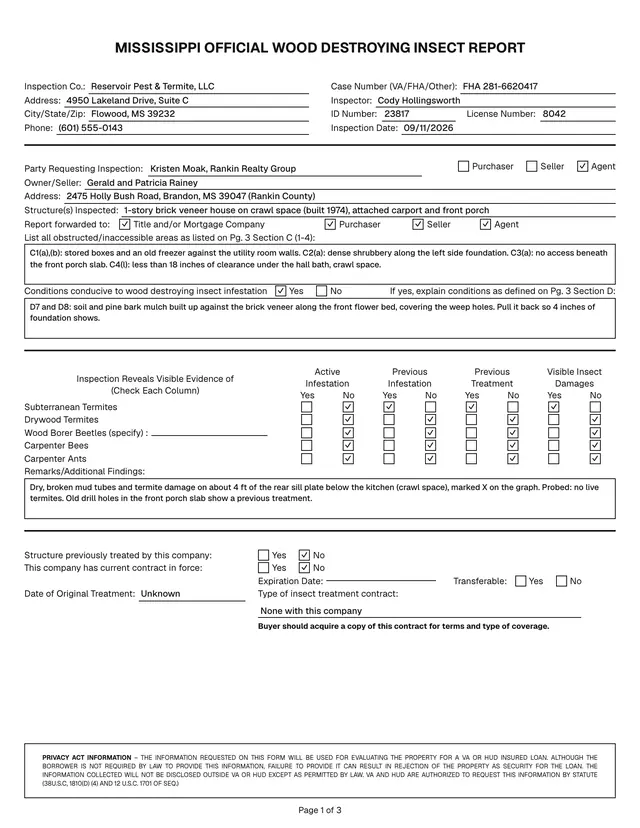
Mississippi Official Wood Destroying Insect Report
Record the termite findings from an inspection. - MissouriNPMA-33
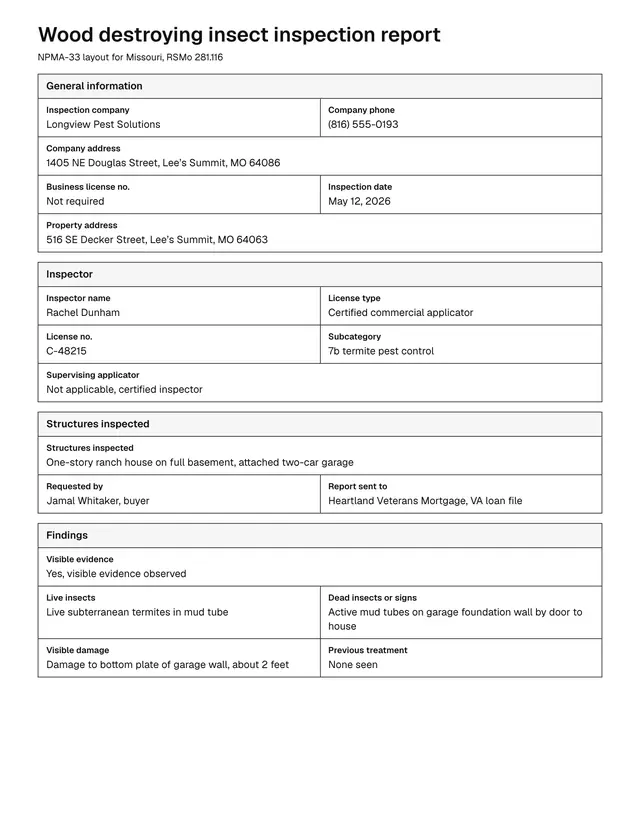
Missouri wood-destroying insect inspection report (NPMA-33)
Record the termite findings from an inspection. - Nevada
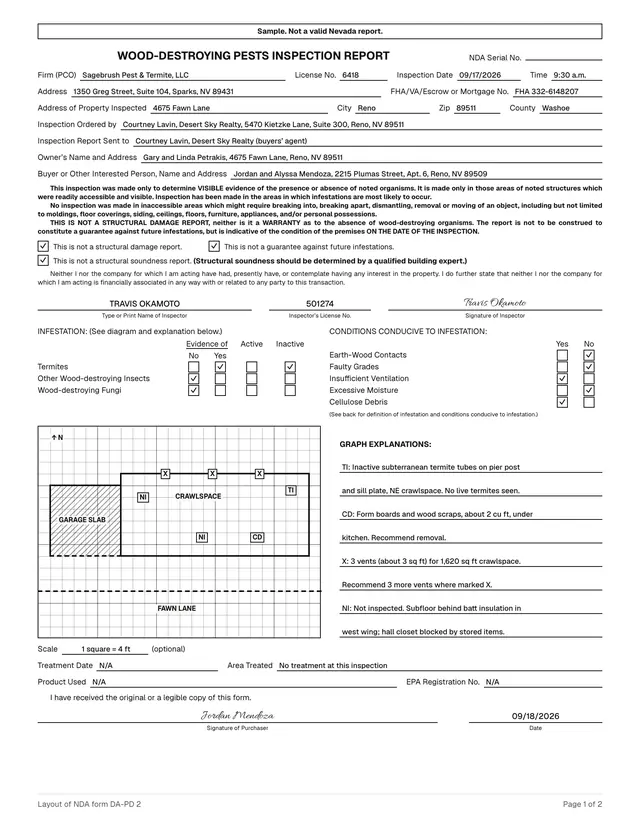
Wood-Destroying Pests Inspection Report
Record the termite findings from an inspection. - New Jersey
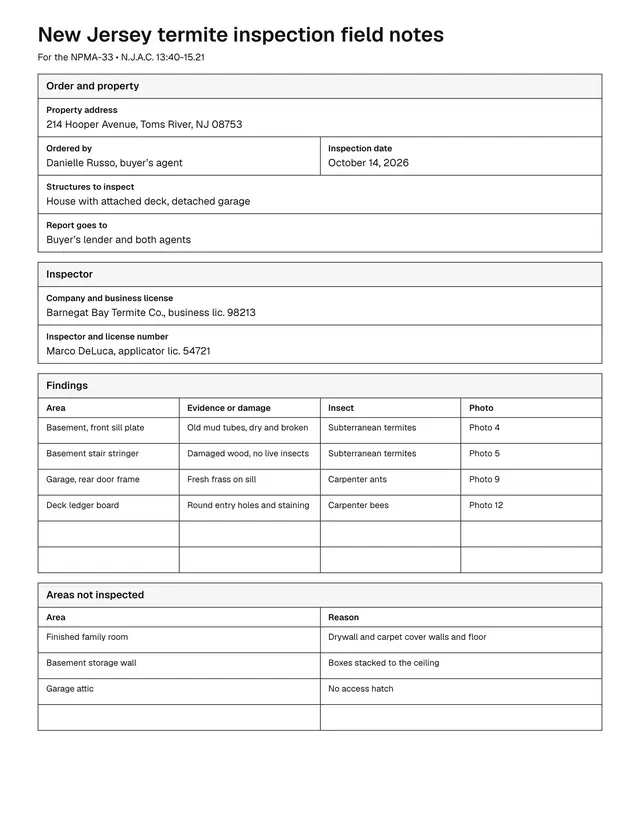
New Jersey termite inspection report (NPMA-33 field notes)
Record the termite findings from an inspection. - New Mexico
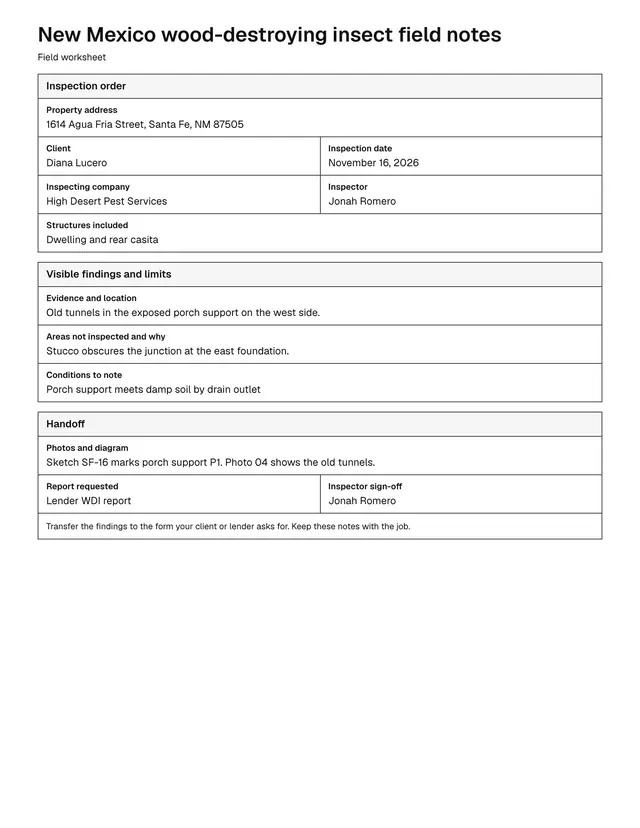
New Mexico wood-destroying insect field notes
Record the termite findings from an inspection. - New York
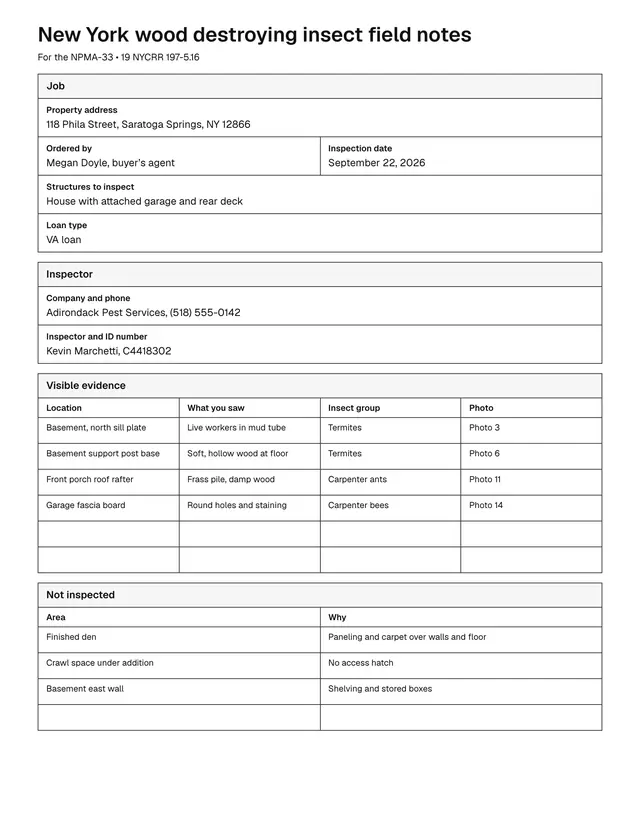
New York wood destroying insect inspection notes (NPMA-33)
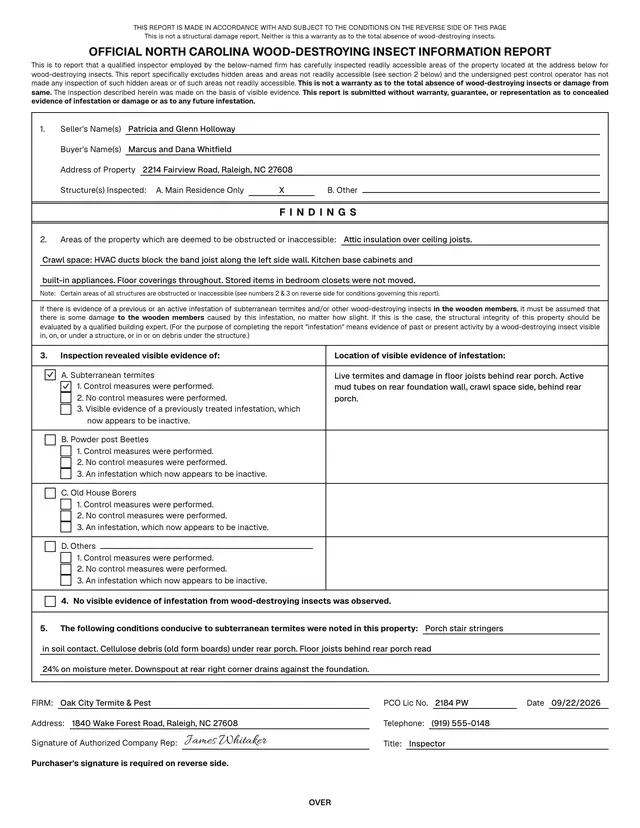
Record the termite findings from an inspection. - North CarolinaWDIR 100
Official North Carolina Wood-Destroying Insect Information Report
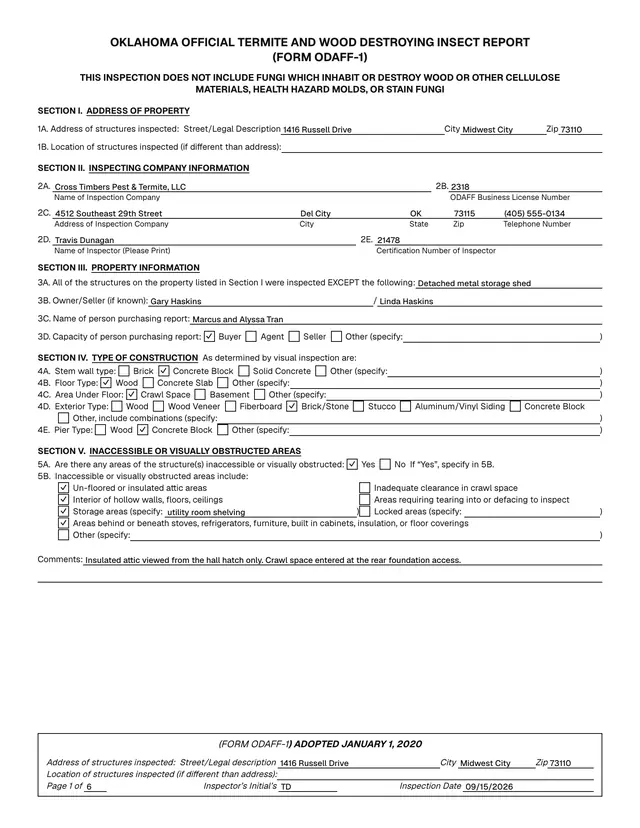
Record the termite findings from an inspection. - OklahomaForm ODAFF-1
Oklahoma Official Termite and Wood Destroying Insect Report
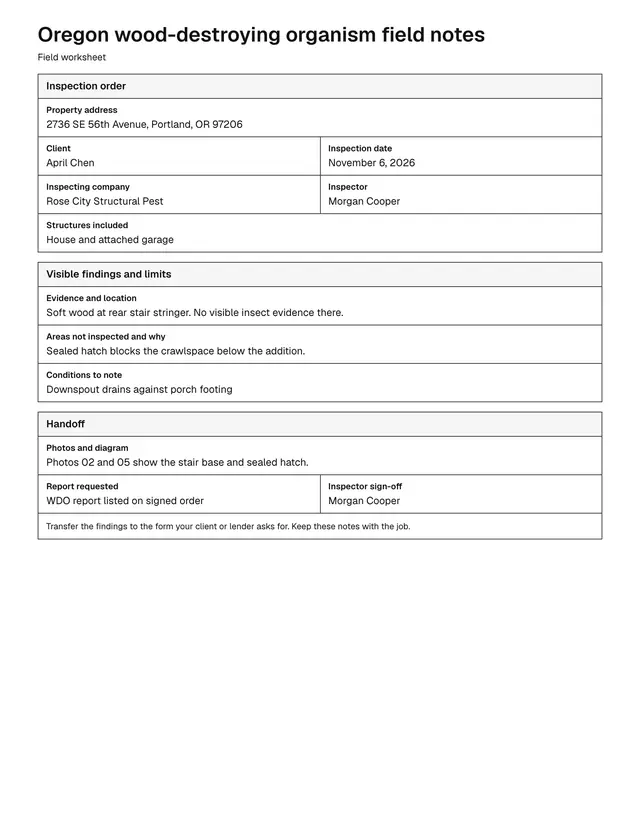
Record the termite findings from an inspection. - Oregon
Oregon wood-destroying organism field notes
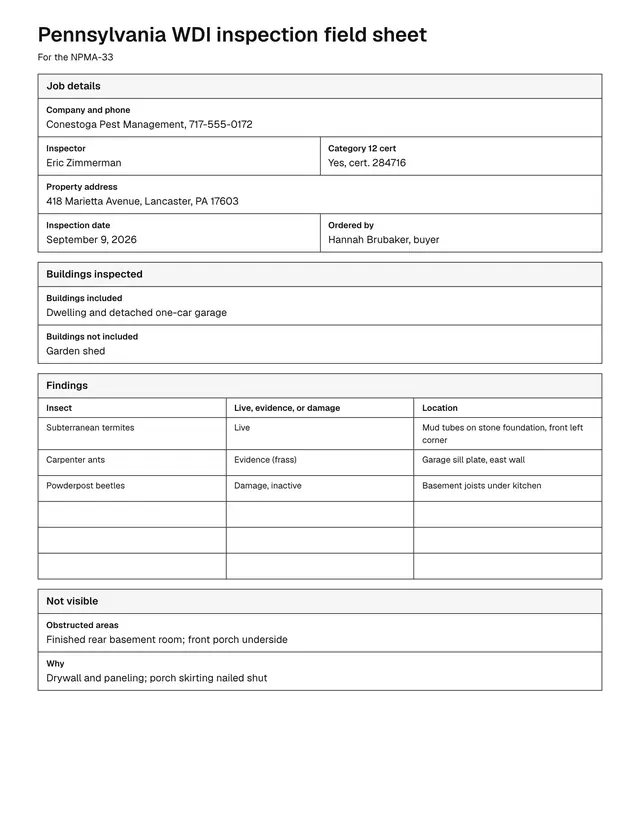
Record the termite findings from an inspection. - PennsylvaniaNPMA-33
Pennsylvania wood-destroying insect inspection report (NPMA-33)
Record the termite findings from an inspection. - South CarolinaCL-100
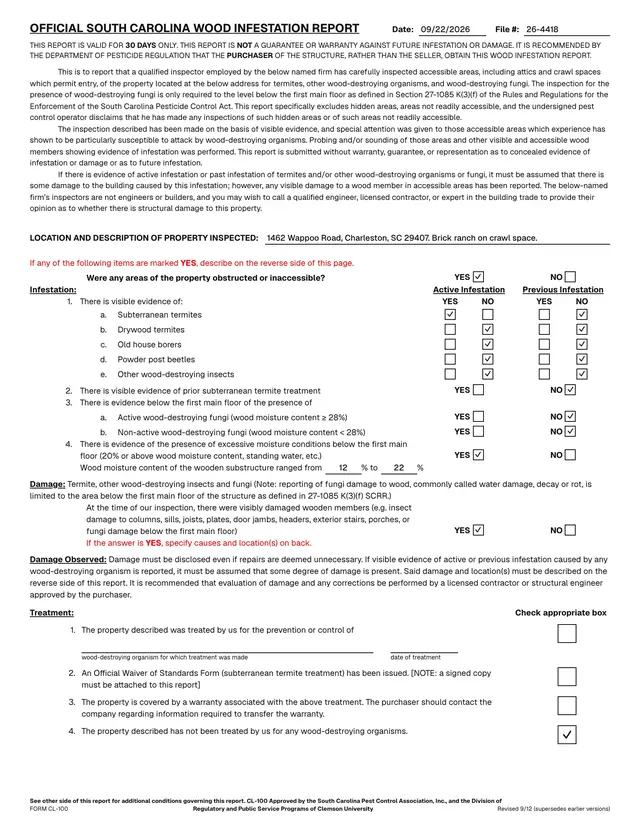
Official South Carolina Wood Infestation Report
Record the termite findings from an inspection. - Tennessee
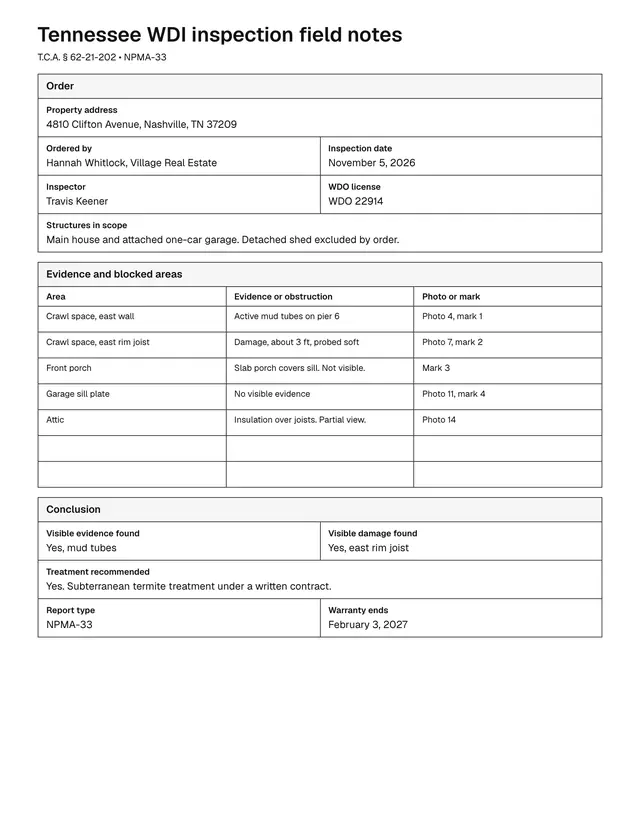
Tennessee wood destroying insect infestation inspection report
Record the termite findings from an inspection. - TexasSPCS/T-5
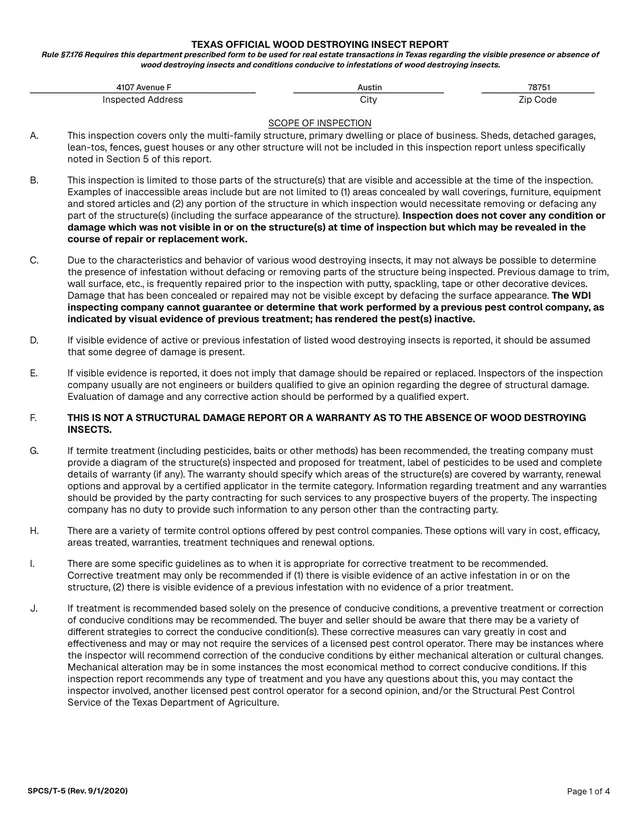
Texas Official Wood Destroying Insect Report
Record the termite findings from an inspection. - Utah
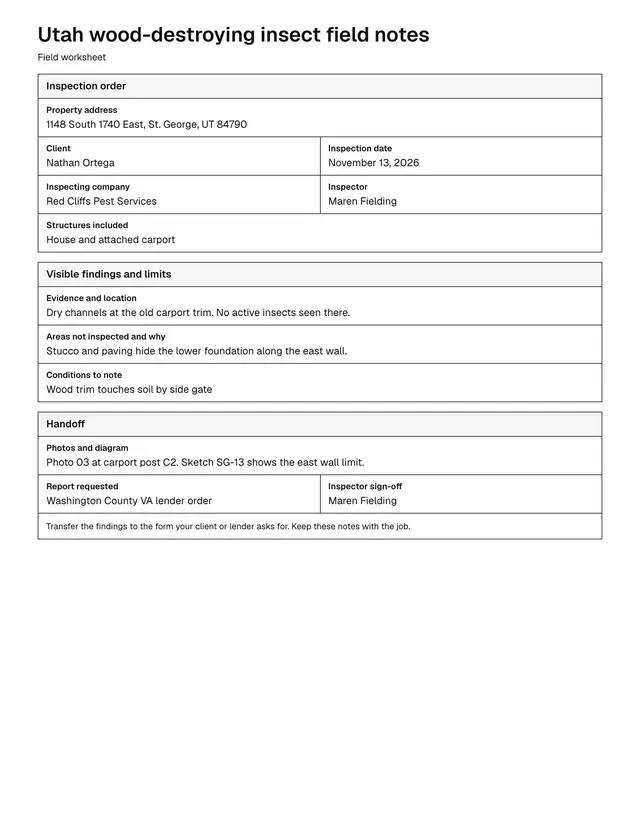
Utah wood-destroying insect field notes
Record the termite findings from an inspection. - Virginia
Virginia wood destroying insect inspection report
Record the termite findings from an inspection. - Washington
Complete WDO Inspection Report
Record the termite findings from an inspection. - Wisconsin
Wisconsin wood-destroying insect field notes
Record the termite findings from an inspection.