Colorado termite inspection report (NPMA-33)
Colorado has no state termite inspection form. Lenders and most inspectors here use the NPMA-33 Wood Destroying Insect Inspection Report, and it has to land inside the buyer’s inspection window.
At a glance
- State form
- None in Colorado
- Form used
- NPMA-33 (industry form)
- Required for
- HUD and VA loans
- Timing
- Before the Inspection Objection Deadline
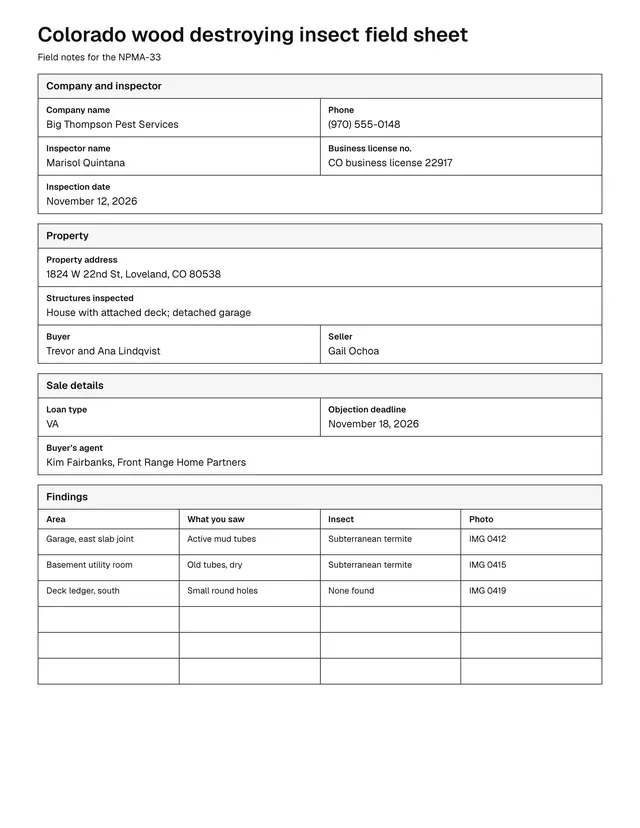
Completed example
Download PDFDoes Colorado have its own termite form?
No. Some states print their own termite inspection report. Colorado doesn’t. The state’s pesticide rules, 8 CCR 1203-2, license people who apply pesticides for hire. Termite treatment falls in Category 301, Wood Destroying Organism Pest Control.
But the rules draw a line around inspections. They say selling application services “does not include the sale of an evaluation service, inspection service” and so on. So the state sets no report format for the inspection itself.
What fills that gap is the NPMA-33, the Wood Destroying Insect Inspection Report from the National Pest Management Association. It’s a one-page form most lenders already know. You can grab the current version from NPMA’s forms page.
Who asks for one, and when is it due?
Loans drive most of these. NPMA’s completion guideline says the form “MUST be used” for any HUD or VA guaranteed sale. It adds that the form is “typically used for conventional transactions” too. If you work near Colorado Springs, expect plenty of VA buyers.
The clock comes from the sale contract. Colorado brokers use the Real Estate Commission’s Contract to Buy and Sell Real Estate (Residential), and a new version is in use for contracts on and after January 1, 2026. It sets an Inspection Objection Deadline. Before that date, the buyer sends an Inspection Objection Notice listing what they want fixed. You can see the forms on the Division of Real Estate site.
So your report needs to reach the buyer’s agent with a day or two to spare. If you find termites on day eight of a ten-day window, the agent needs your report that night, not next week.
Filling out the NPMA-33 on a Colorado job
The form has five sections. Here’s how each one plays out on a Colorado house.
Section I, general information. Fill in the company name, address, and phone, plus the inspector’s name. The license box is for the state license to do pest control or pest inspection work. List your Colorado commercial applicator business license if you hold one. NPMA says to write “not required” only in states where no business license is issued.
Structures inspected. Name each building you looked at, like “house and detached garage.” NPMA counts a deck attached to the house as part of the house. Mulch beds, stumps, and woodpiles don’t belong here. If you see tubes on a stump by the fence, put that in the comments.
Section II, findings. Check box A only if there’s no visible evidence at all, old or new. Any sign at all means box B, with at least one of three boxes under it: live insects, dead insects or tubes or frass, or visible damage. The form covers termites, carpenter ants, carpenter bees, and reinfesting wood boring beetles. In Colorado, subterranean termites are the usual find. Look for mud tubes on foundation walls, at slab joints, and behind boxes stored in the basement.
Section III, recommendations. NPMA’s guideline says to recommend treatment when you see termite evidence and nobody can show you paperwork for an earlier treatment. If bait stations are in the yard and you don’t know if the contract is current, add a line like “unless there is a current baiting system service agreement in effect.”
Section IV, what you couldn’t see. List every blocked area and why. Colorado basements are often finished, which hides the sill plate. In winter, snow piled against the foundation can hide tubes on the outside. Say so plainly so nobody assumes you saw it.
Section V, comments. Use it for anything outside the structure and for attachments. And remember the form states it is “not a structural damage report.” If you see damaged wood, note where, and send damage questions to a contractor.
What happens if you find termites before the deadline?
Now the buyer has a real objection, and the seller will want a price fast. If your company also treats, the treatment is a pesticide application for hire. It needs a licensed applicator and the extra Colorado records for existing homes. See the post-construction termite treatment record for that part.
If you only inspect, give the buyer’s agent a clean report and a short note on which areas showed activity. That makes the objection notice easy to write. If the seller digs up an old treatment receipt after you’ve sent the report, NPMA’s advice is not to change the report. Tell them to send the receipt to the lender instead.
Noma specializes in the Wood Destroying Insect Inspection Report (NPMA-33). Agents can book the inspection online, and you can upload the finished NPMA-33 PDF and send it to the buyer to sign online, with the invoice paid the same day. See how Noma sends reports for signature.
Frequentlyaskedquestions
Send this document in minutes, not an afternoon.
Other states
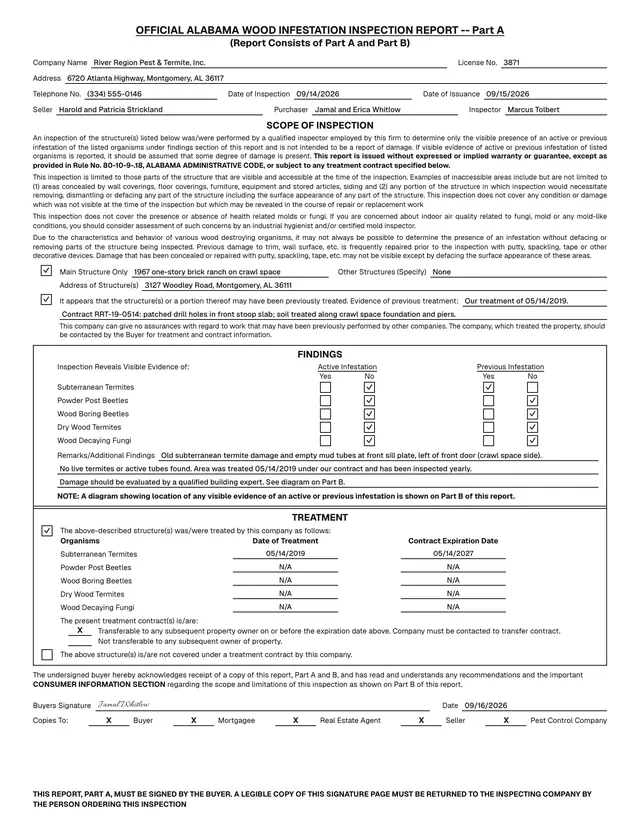
Inspection report templates- Alabama
Official Alabama Wood Infestation Inspection Report
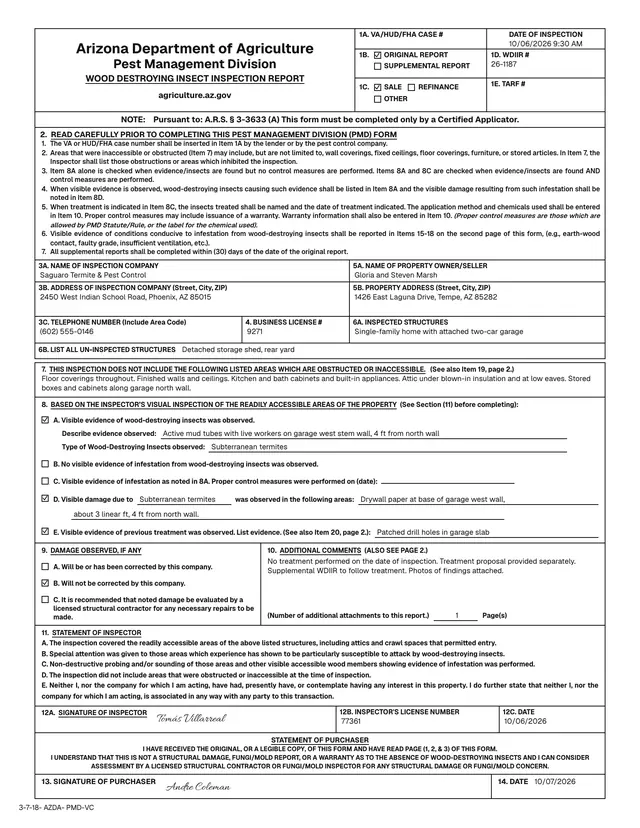
Record the termite findings from an inspection. - Arizona
Wood Destroying Insect Inspection Report
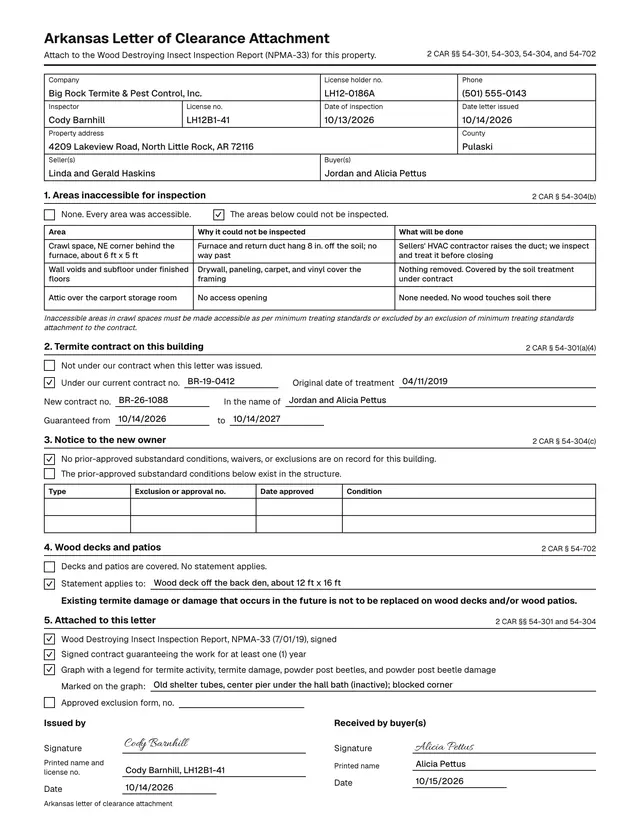
Record the termite findings from an inspection. - Arkansas
Arkansas Letter of Clearance Attachment
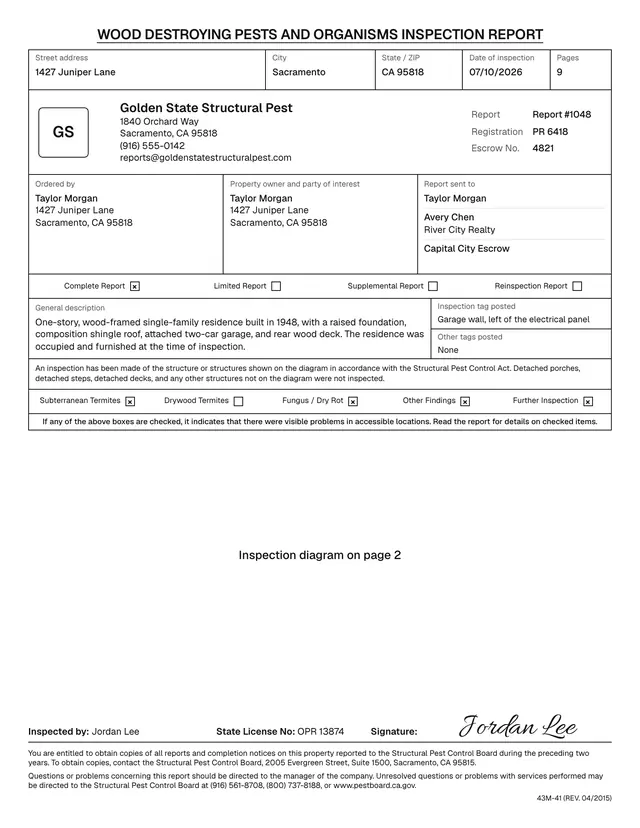
Record the termite findings from an inspection. - California43M-41
Wood Destroying Pests and Organisms Inspection Report
Record the termite findings from an inspection. - Connecticut
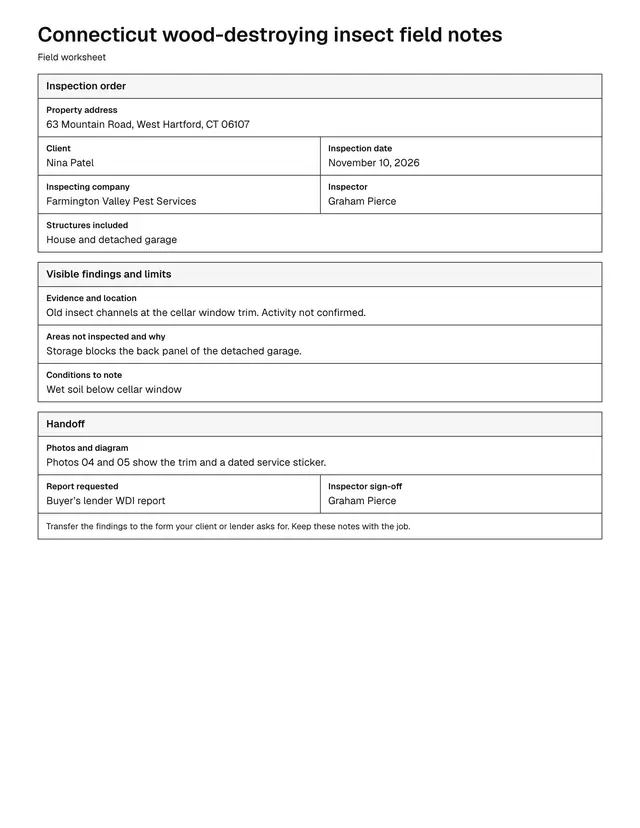
Connecticut wood-destroying insect field notes
Record the termite findings from an inspection. - DelawareNPMA-33
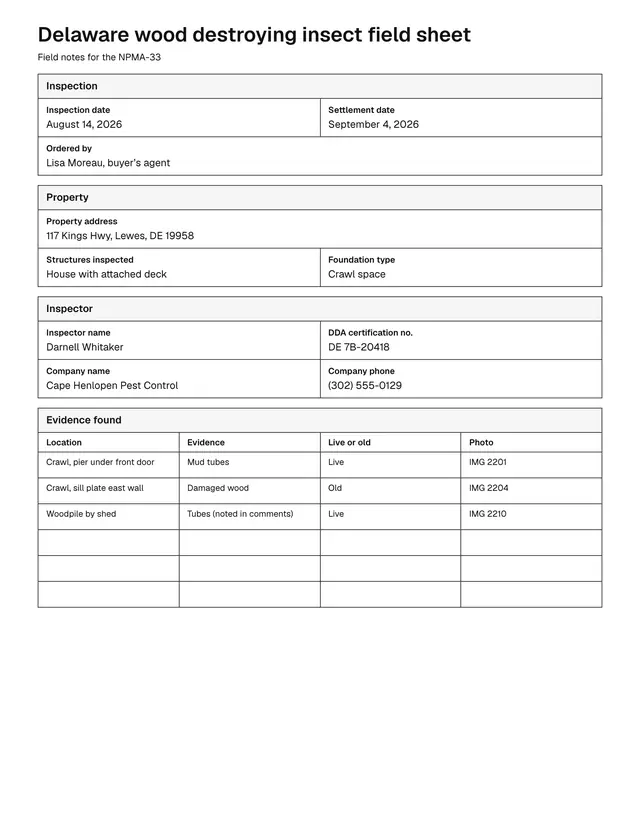
Delaware termite inspection report (NPMA-33)
Record the termite findings from an inspection. - FloridaFDACS-13645
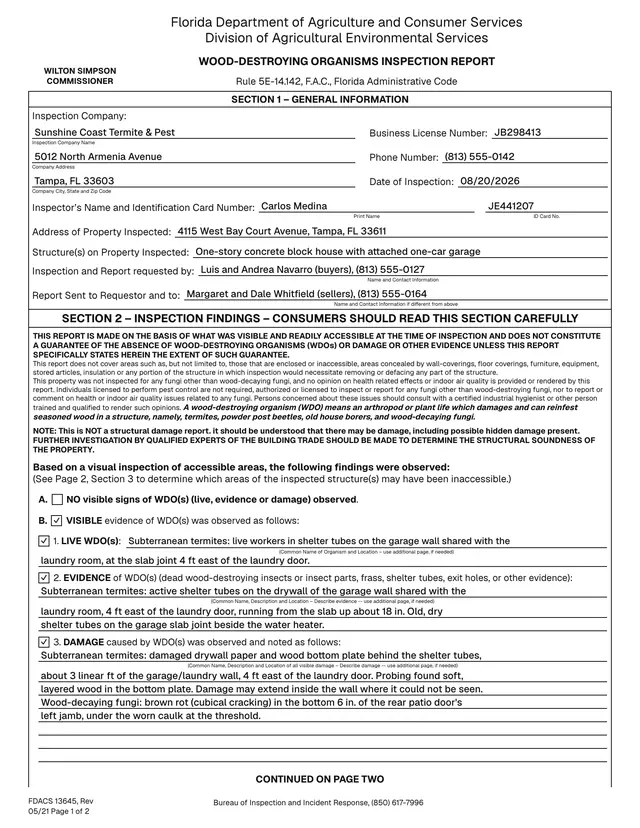
Wood-Destroying Organisms Inspection Report
Record the termite findings from an inspection. - Georgia
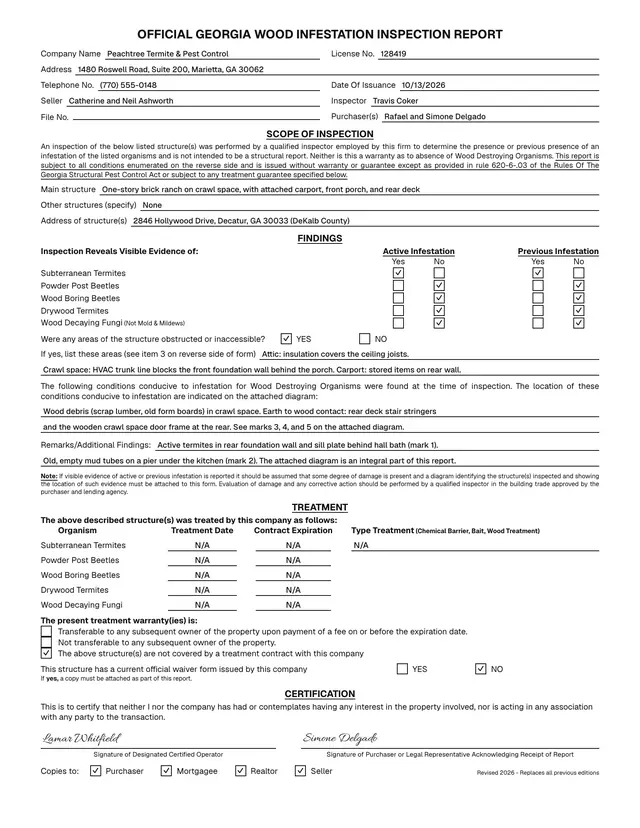
Official Georgia Wood Infestation Inspection Report
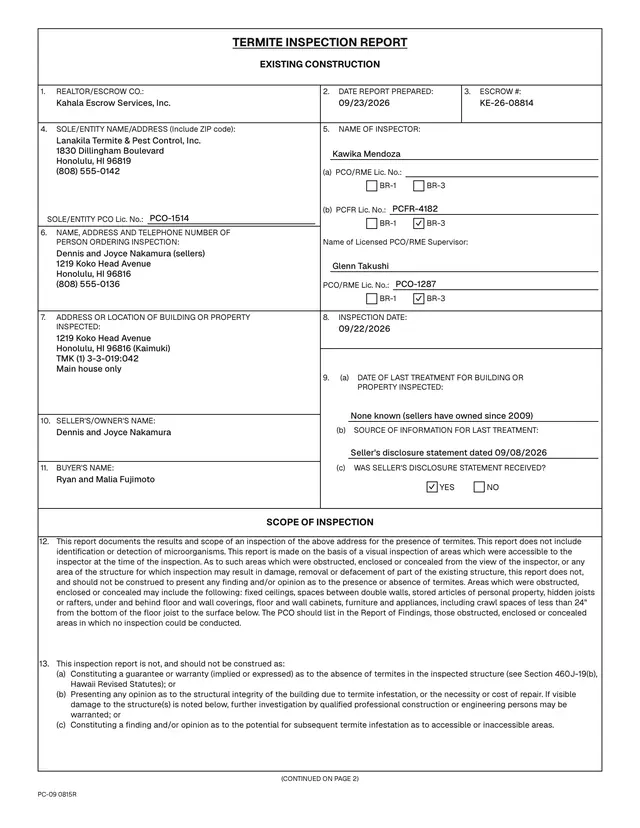
Record the termite findings from an inspection. - HawaiiPC-9
Termite Inspection Report, Existing Construction
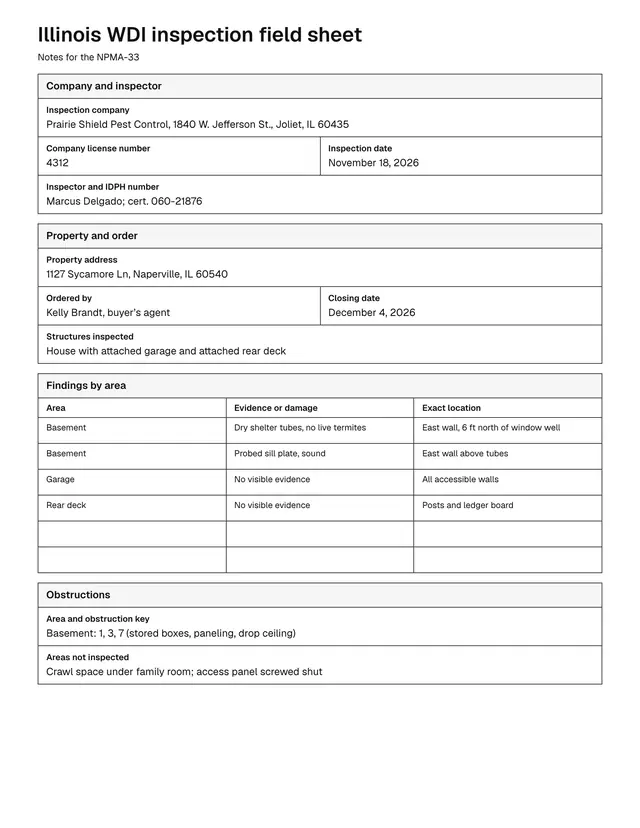
Record the termite findings from an inspection. - IllinoisNPMA-33
Illinois wood destroying insect inspection report (NPMA-33)
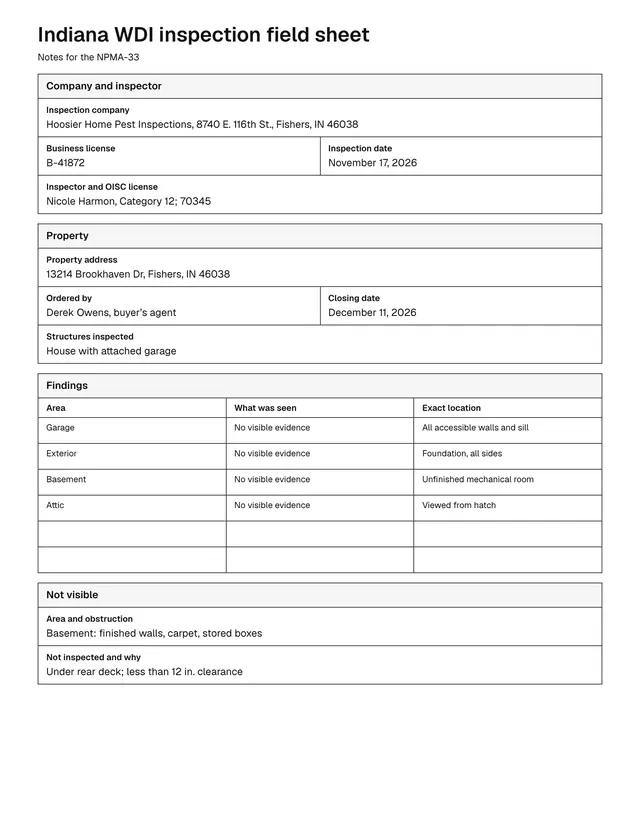
Record the termite findings from an inspection. - IndianaNPMA-33
Indiana wood destroying insect inspection report (NPMA-33)
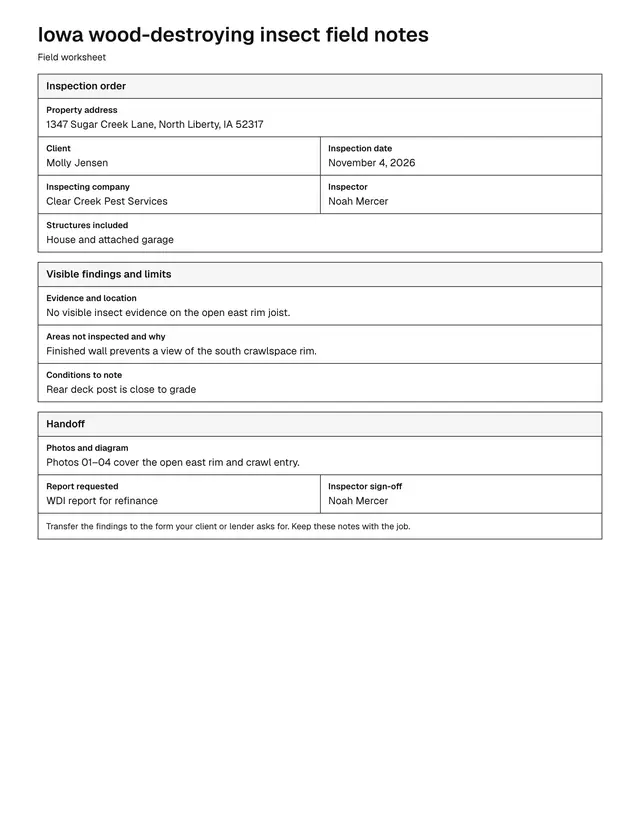
Record the termite findings from an inspection. - Iowa
Iowa wood-destroying insect field notes
Record the termite findings from an inspection. - Kansas
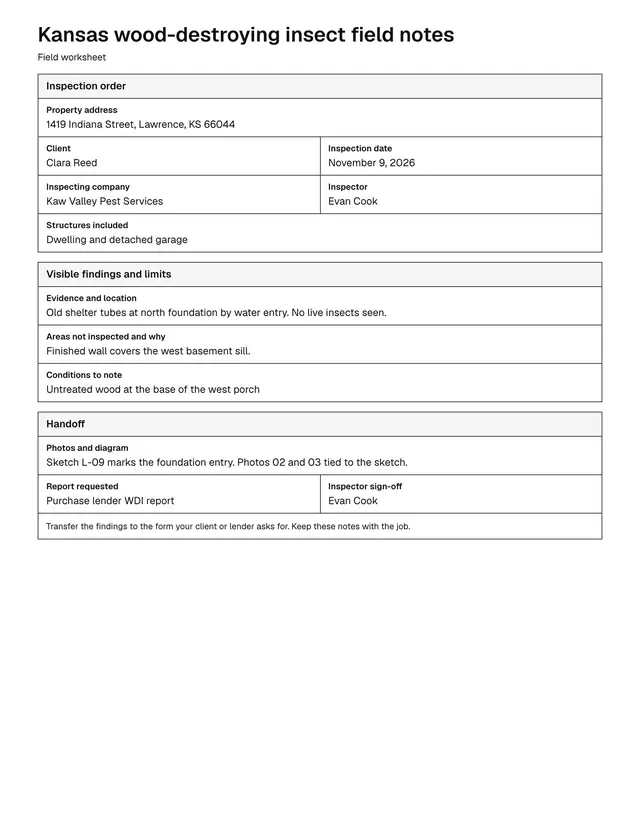
Kansas wood-destroying insect field notes
Record the termite findings from an inspection. - Kentucky
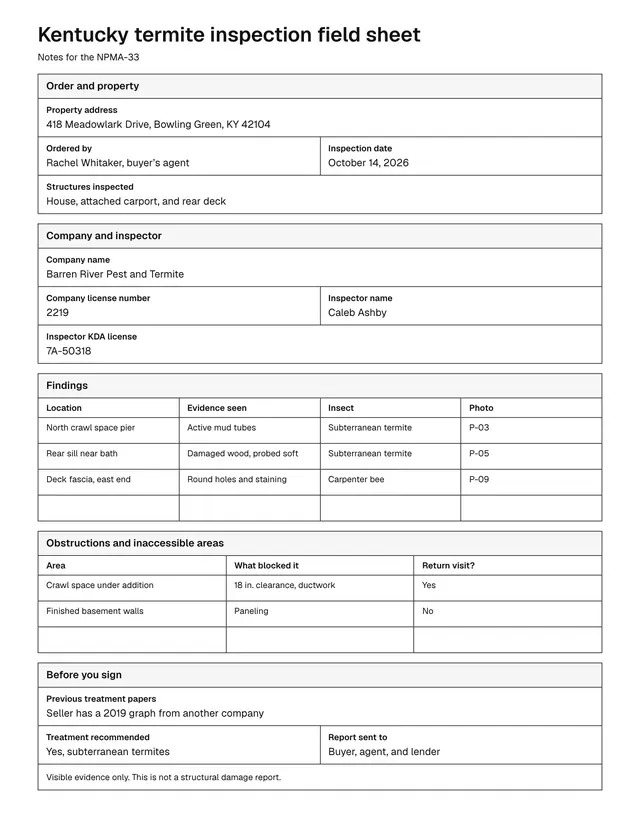
Kentucky termite inspection report (NPMA-33)
Record the termite findings from an inspection. - MarylandMD-1
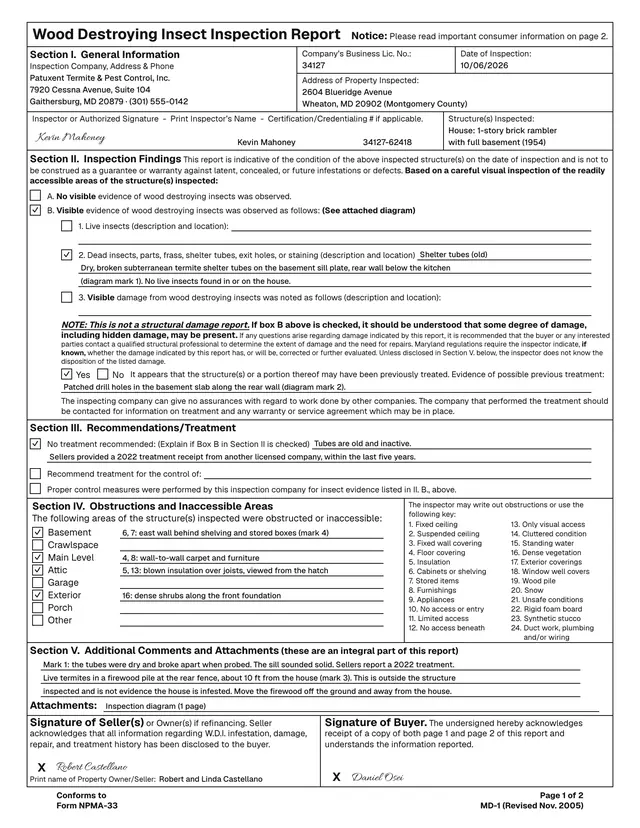
Wood Destroying Insect Inspection Report
Record the termite findings from an inspection. - Massachusetts
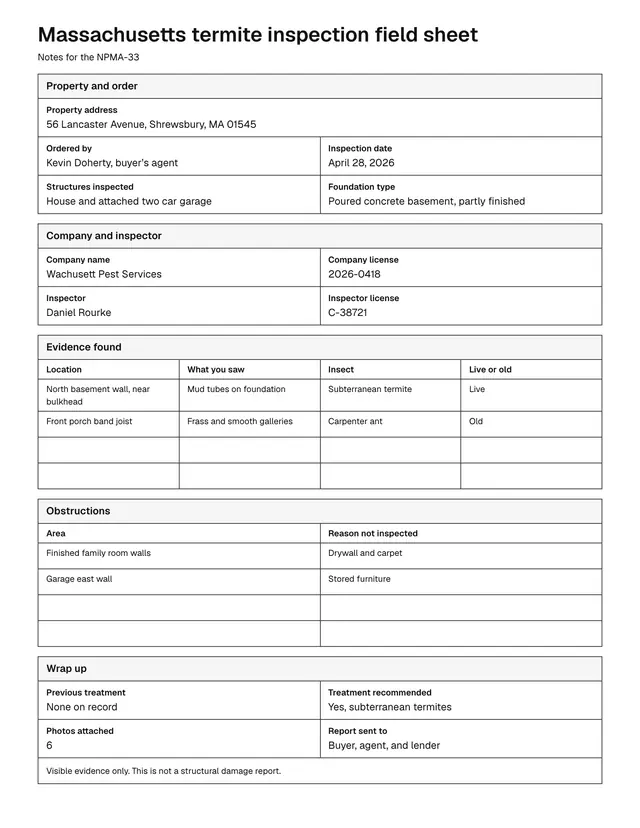
Massachusetts termite inspection report (NPMA-33)
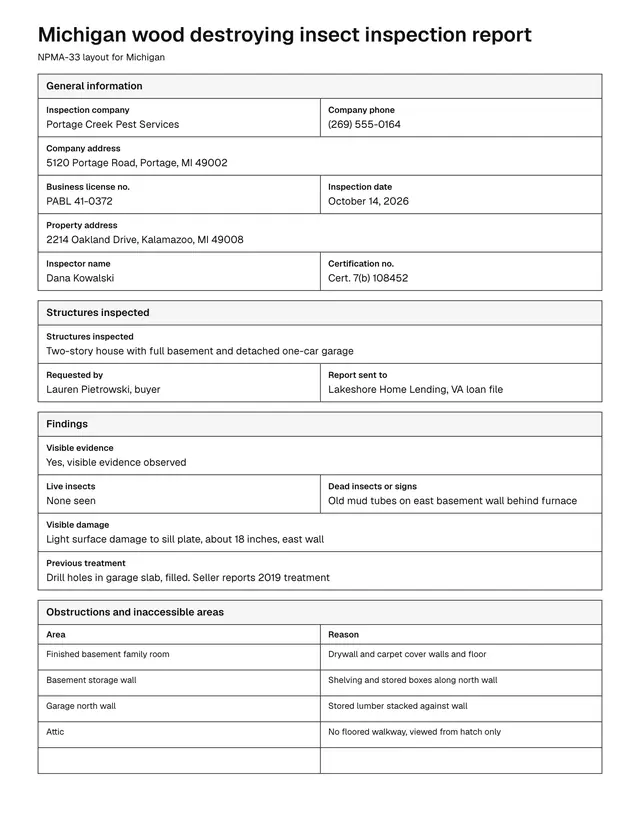
Record the termite findings from an inspection. - MichiganNPMA-33
Michigan wood-destroying insect inspection report (NPMA-33)
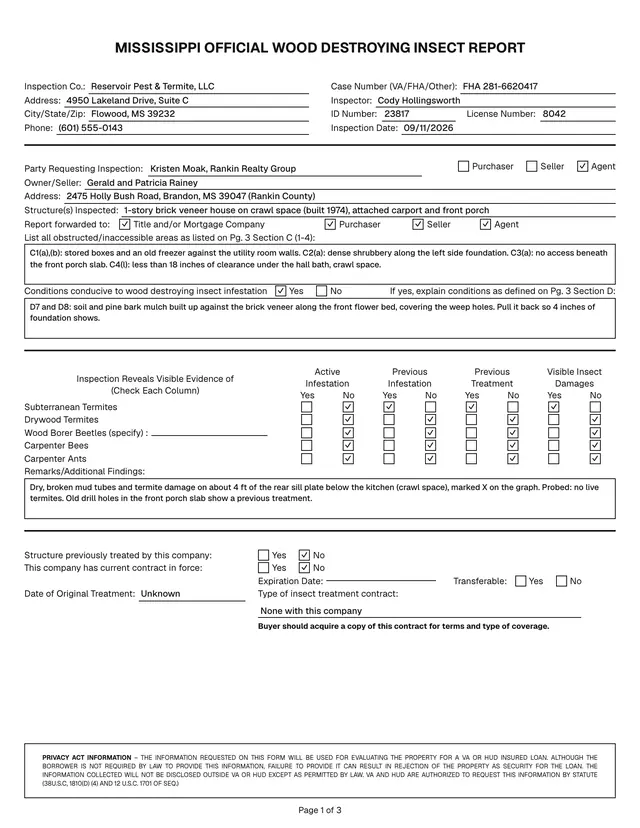
Record the termite findings from an inspection. - Mississippi
Mississippi Official Wood Destroying Insect Report
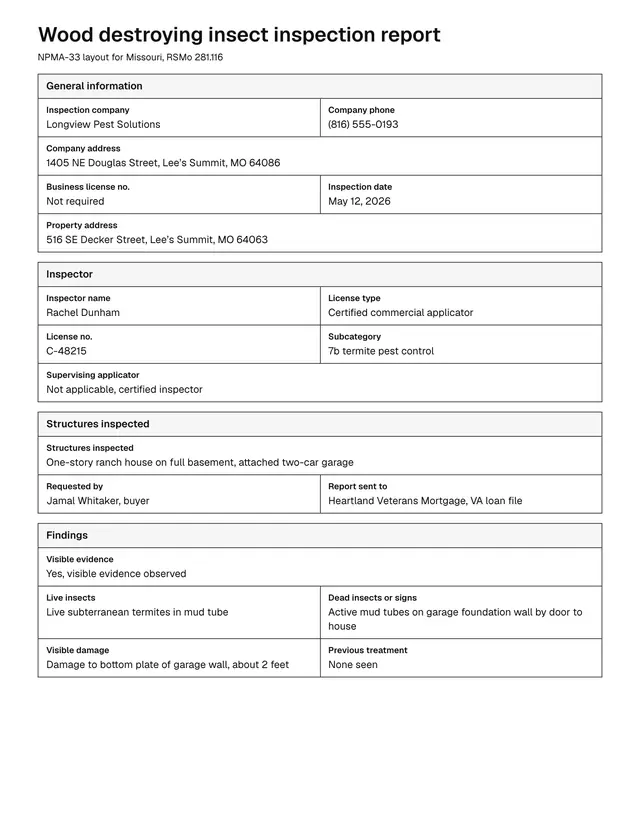
Record the termite findings from an inspection. - MissouriNPMA-33
Missouri wood-destroying insect inspection report (NPMA-33)
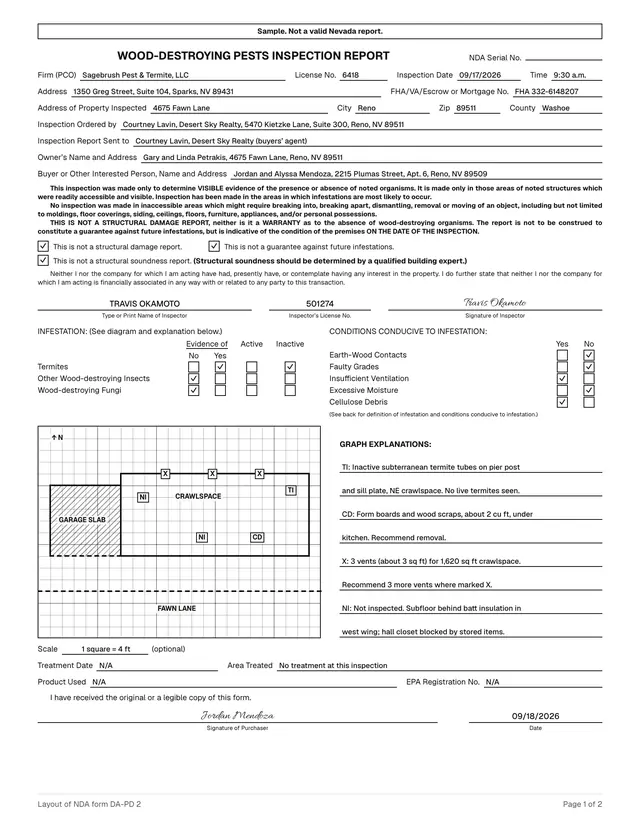
Record the termite findings from an inspection. - Nevada
Wood-Destroying Pests Inspection Report
Record the termite findings from an inspection. - New Jersey
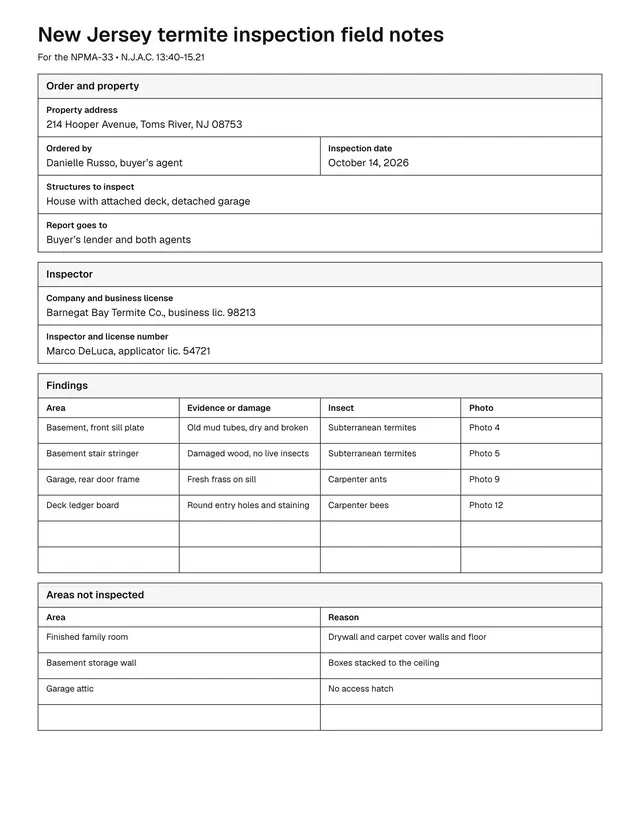
New Jersey termite inspection report (NPMA-33 field notes)
Record the termite findings from an inspection. - New Mexico
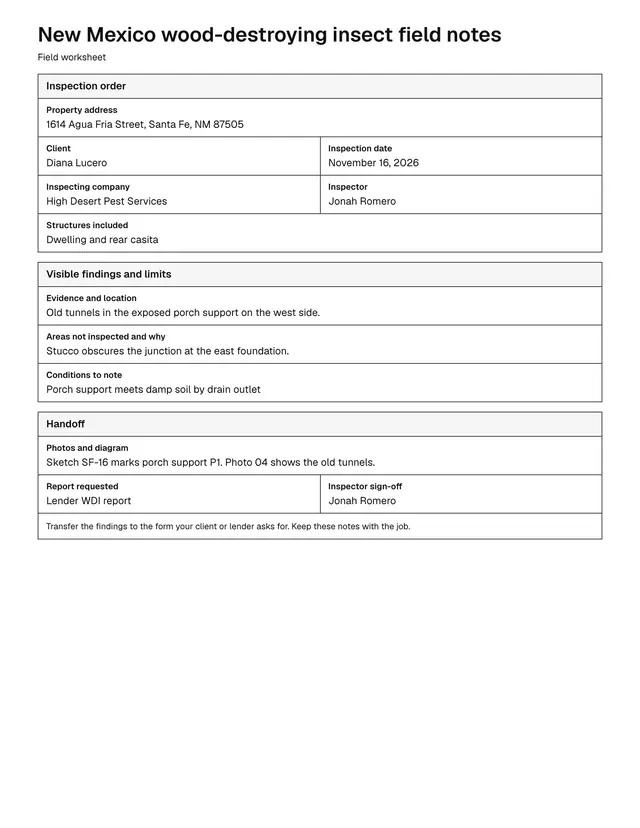
New Mexico wood-destroying insect field notes
Record the termite findings from an inspection. - New York
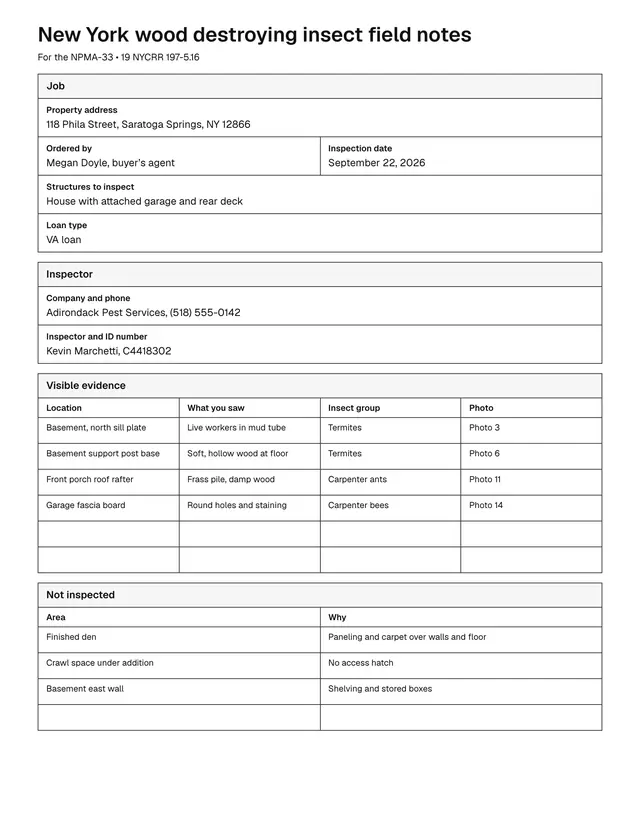
New York wood destroying insect inspection notes (NPMA-33)
Record the termite findings from an inspection. - North CarolinaWDIR 100
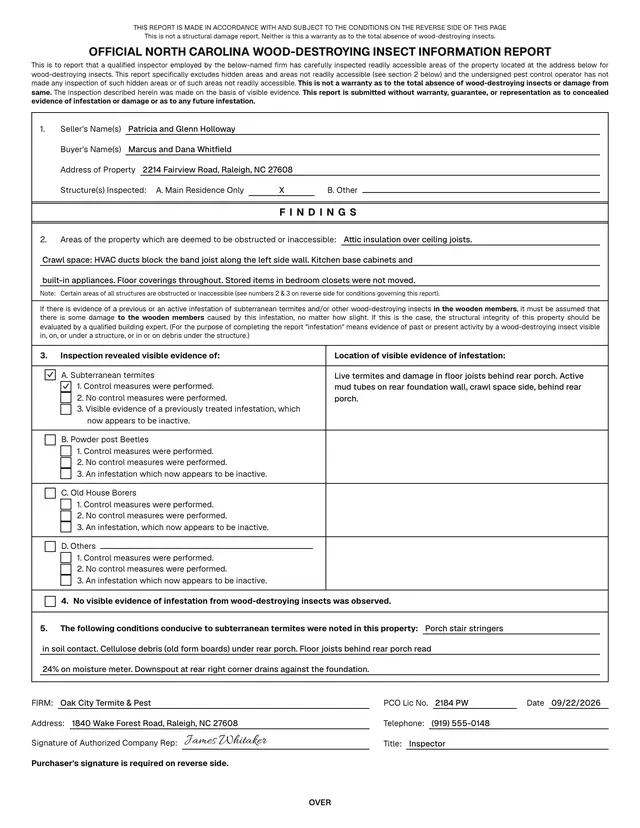
Official North Carolina Wood-Destroying Insect Information Report
Record the termite findings from an inspection. - OhioNPMA-33
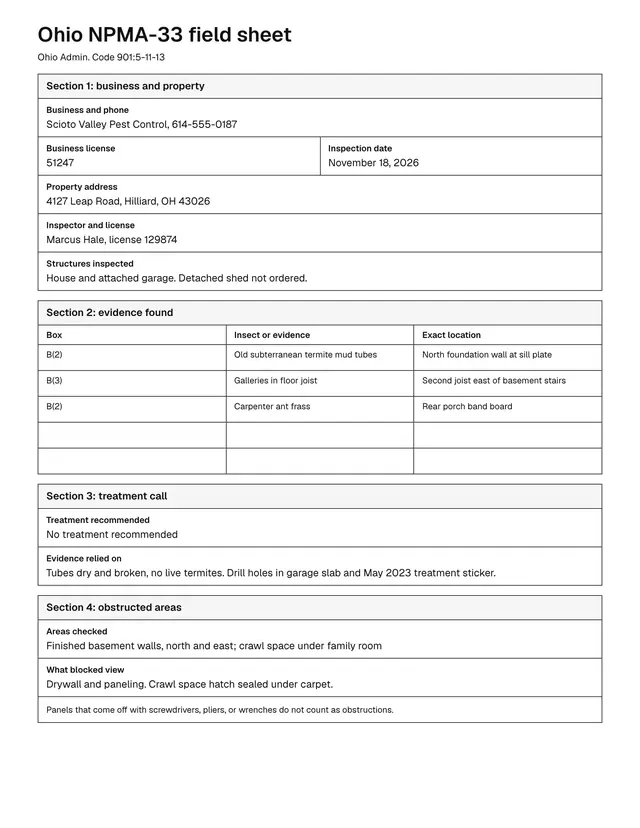
Ohio NPMA-33 wood-destroying insect inspection report
Record the termite findings from an inspection. - OklahomaForm ODAFF-1
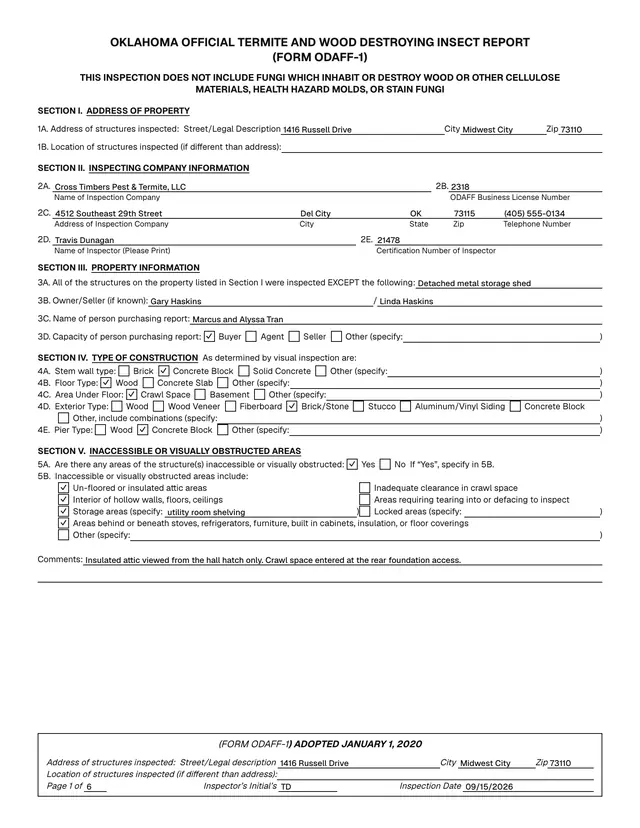
Oklahoma Official Termite and Wood Destroying Insect Report
Record the termite findings from an inspection. - Oregon
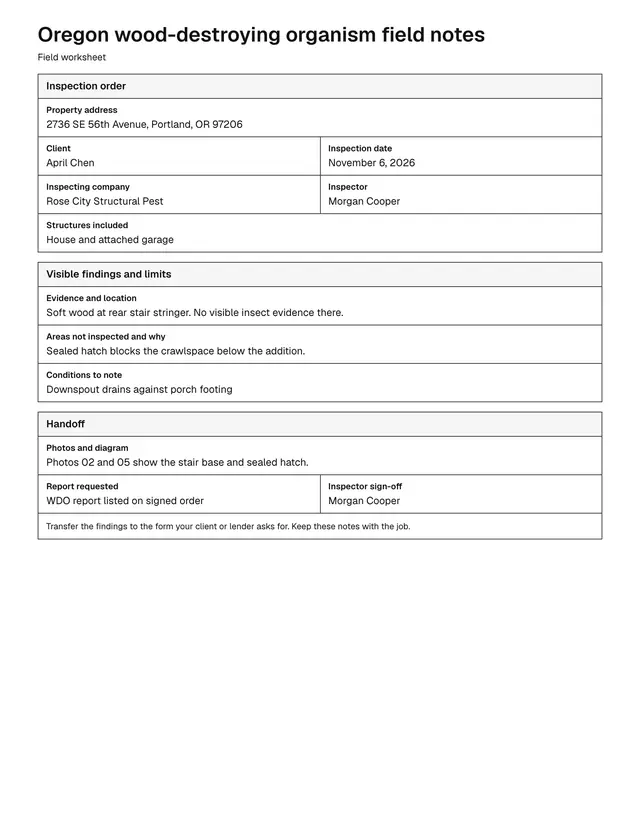
Oregon wood-destroying organism field notes
Record the termite findings from an inspection. - PennsylvaniaNPMA-33
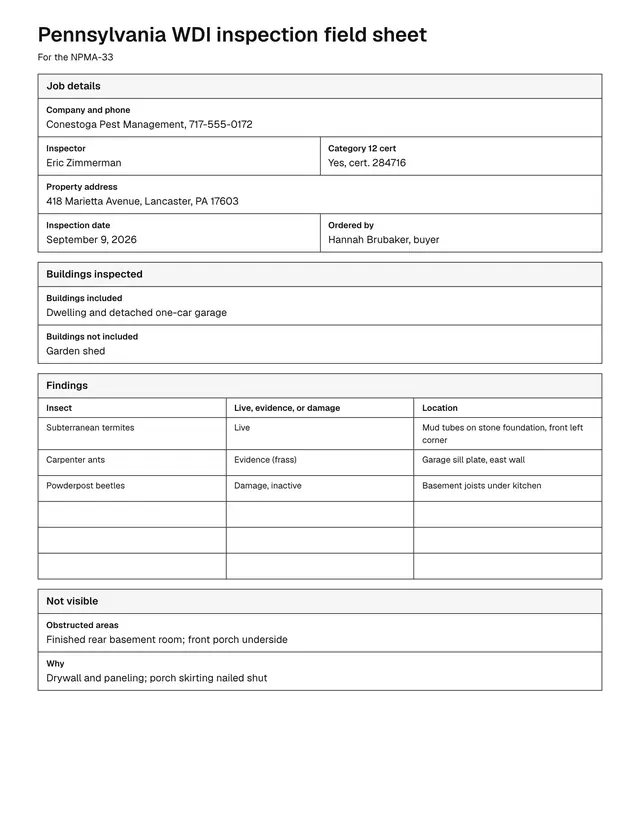
Pennsylvania wood-destroying insect inspection report (NPMA-33)
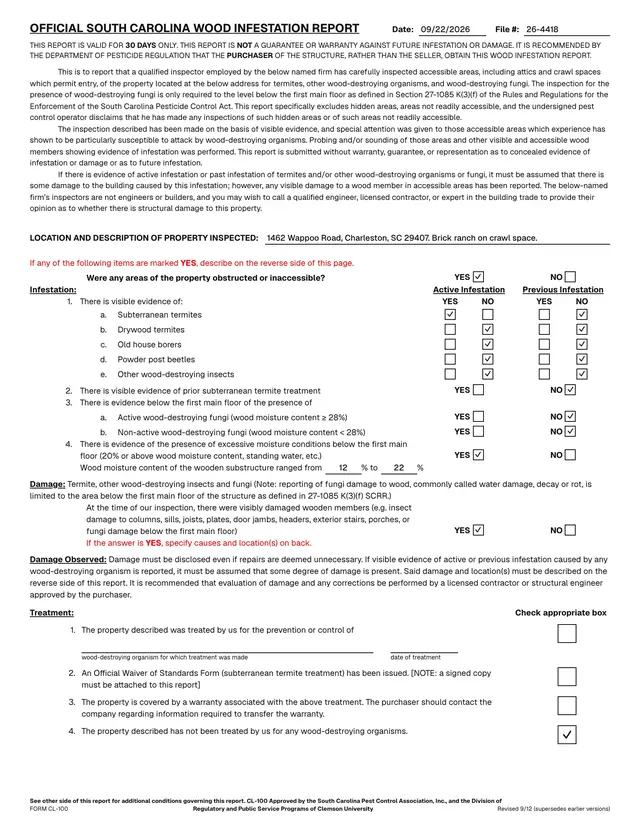
Record the termite findings from an inspection. - South CarolinaCL-100
Official South Carolina Wood Infestation Report
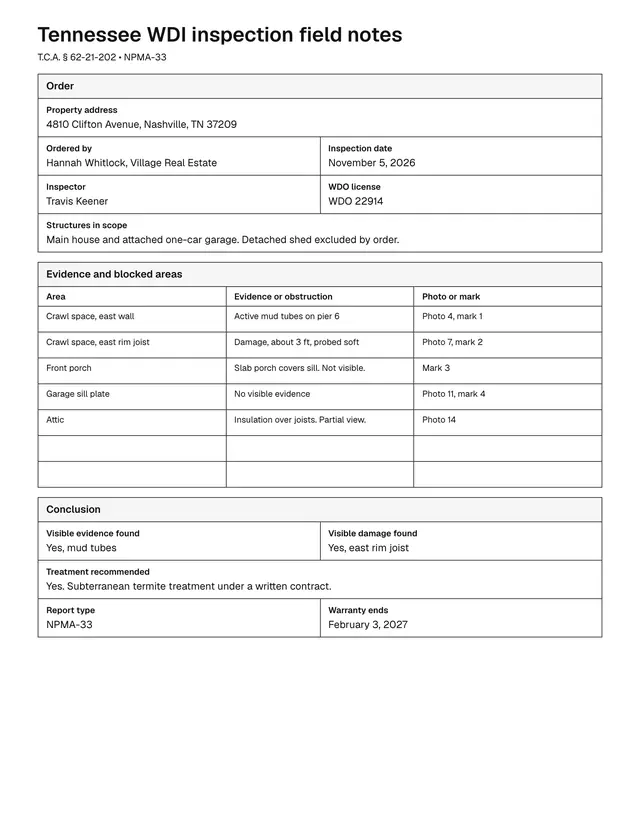
Record the termite findings from an inspection. - Tennessee
Tennessee wood destroying insect infestation inspection report
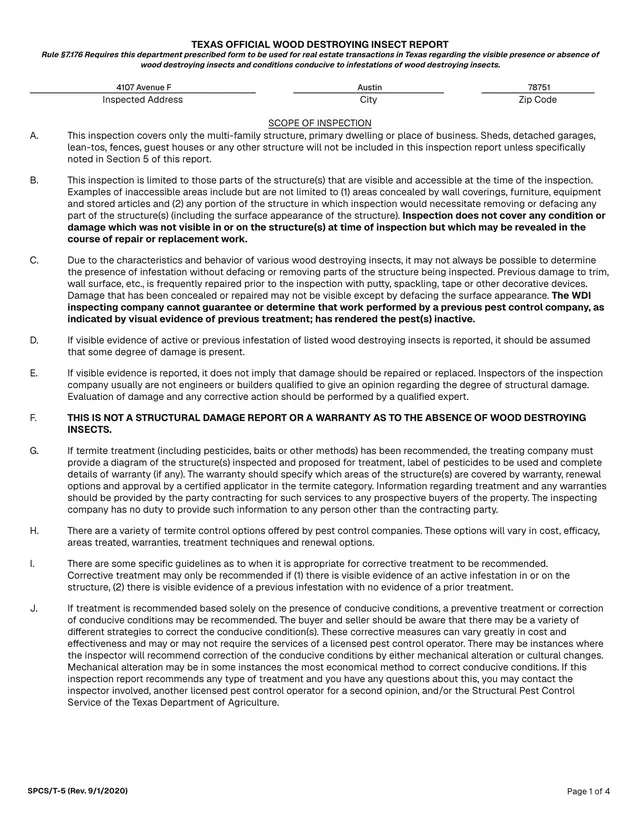
Record the termite findings from an inspection. - TexasSPCS/T-5
Texas Official Wood Destroying Insect Report
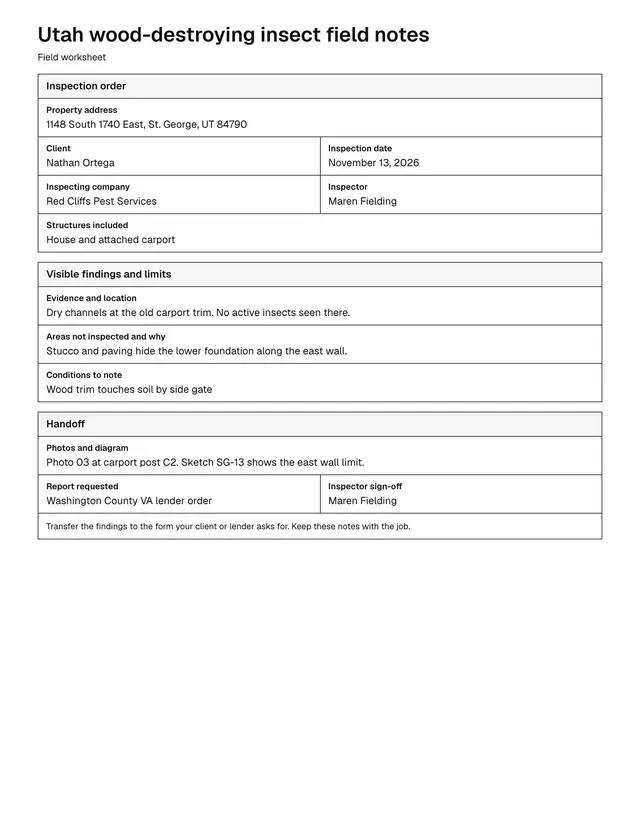
Record the termite findings from an inspection. - Utah
Utah wood-destroying insect field notes
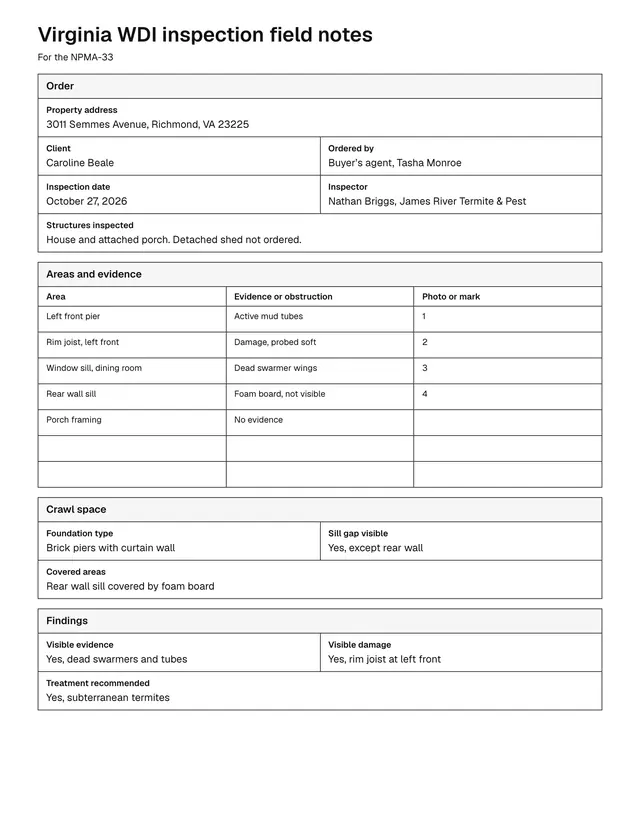
Record the termite findings from an inspection. - Virginia
Virginia wood destroying insect inspection report
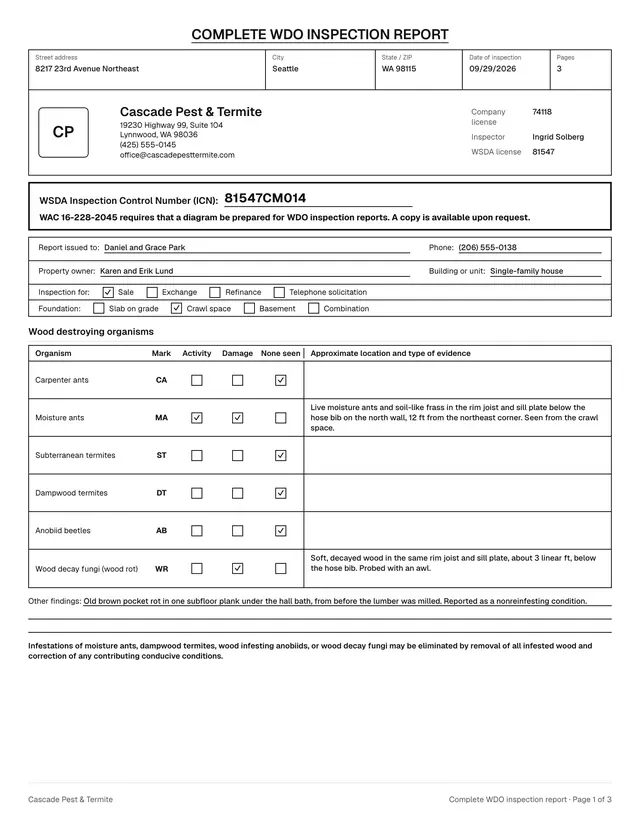
Record the termite findings from an inspection. - Washington
Complete WDO Inspection Report
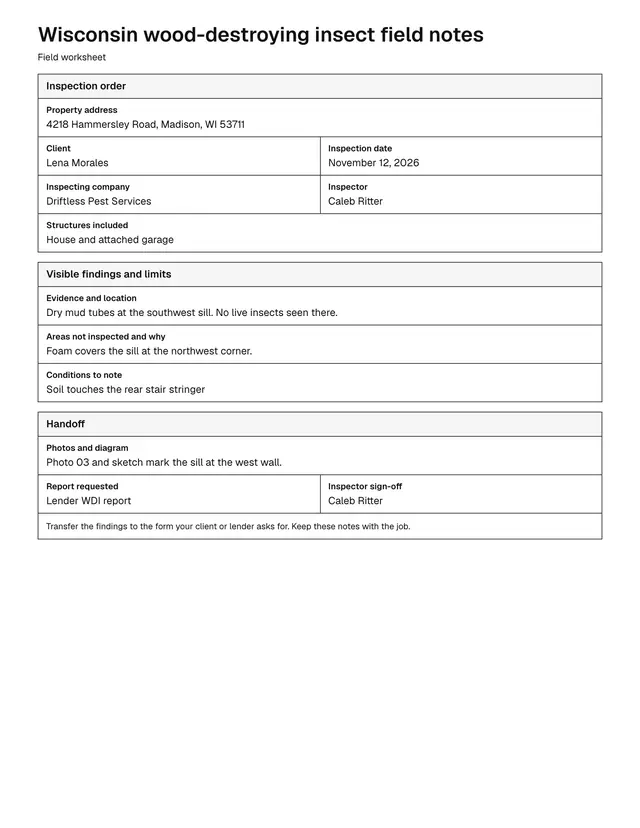
Record the termite findings from an inspection. - Wisconsin
Wisconsin wood-destroying insect field notes
Record the termite findings from an inspection.