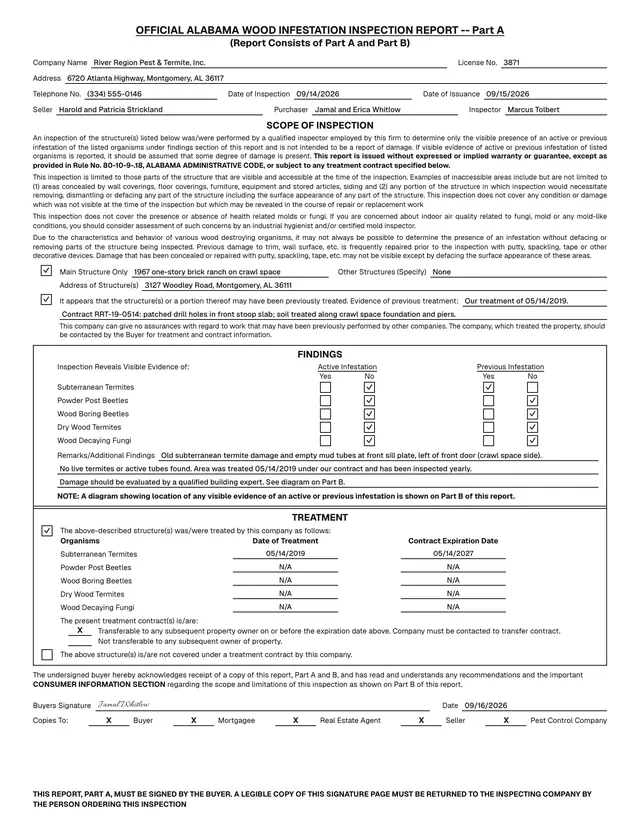
Official Alabama Wood Infestation Inspection Report
Alabama’s Official Wood Infestation Inspection Report, the “termite letter,” is the state’s own two-part form for a home sale, and it carries a 90-day free treatment guarantee from the day it’s issued.
At a glance
- Required by
- Ala. Admin. Code r. 80-10-9-.18
- Issued by
- A permittee certified for WDO work
- Guarantee
- 90 days of free treatment
- Kept
- 1 year after the inspection
Completed example
Download PDFWhat is the Alabama termite letter?
It’s the Official Alabama Wood Infestation Inspection Report, a two-part state form for home sales. Part A holds your findings and any contract. Part B is the buyer’s consumer page, your finding, and a diagram. It covers five organisms, not just termites, and it has no form number. It’s Exhibit A to Rule 80-10-9-.18, revised effective March 18, 2005.
Two things set Alabama apart. The report carries a guarantee: if an organism it cleared turns up within 90 days of the date of issuance, you treat it free. And the rule makes this form “the written instrument,” with no “equivalent format” wording, so only your company header changes. ADAI doesn’t post it as a form. The only official copy is two scanned pages in ADAI’s chapter 80-10-9 rule PDF, and that PDF is the copy of record.
When do you need one?
When a sale, loan, or refinance calls for a termite inspection. Rule 80-10-9-.18 makes this form the one for that job. A qualified inspector can do the inspection, but only a permittee certified in wood-destroying organism work can complete and issue it. VA requires wood-destroying insect information for all of Alabama, and HUD’s 2010 Atlanta guidance listed Alabama as a state where FHA used the state form, not the NPMA-33.
The rule sets no shelf life. FHA once used 90 days from the inspection, and the purchase contract or lender sets the rest. Keep Parts A and B for one year after the inspection, per Rule 80-10-9-.18(2). One bit of fine print: Rule 80-10-9-.28 requires $100,000 of errors and omissions coverage on this report, but it cites the definition as “.02(24),” which is now .02(26).
How to fill it out
Fill in both dates. The date of inspection is the day your qualified inspector was on site. The date of issuance is the day the certified operator signs it off, and the 90-day guarantee starts there.
Pick A, B, or C on Part B. Mark C when you check organisms below it, and write where you saw each one, like “front sill, left of front door.” The form says a written location such as floor joist, sill, or siding must be given.
Draw what you know. The diagram shows the infestation plus any prior infestations, retreatments, and repairs you know about through your contracts on the house. Use the form’s keys, like ST-P for previous subterranean termites, and check the construction type.
Show your contract, then get the buyer’s signature. The Treatment box lists your dates and whether the contract transfers. If an earlier job carried an Official Waiver Form, the buyer needs a copy too. The buyer signs both parts, and whoever ordered the inspection returns a legible copy to you.
Do buyers have to call you to take over the contract?
Yes. The form says the company must be contacted to transfer the contract, and plenty of buyers forget until the yearly renewal comes due. Getting the termite contract signed in the buyer’s name around closing keeps the coverage from lapsing.
Noma specializes in the Official Alabama Wood Infestation Inspection Report (Exhibit A to Ala. Admin. Code r. 80-10-9-.18). Upload your termite contract once, then send it to the new owner for e-signature, and schedule, invoice, and collect payment for the yearly visits in the same place. See how Noma sends contracts for signature.
Frequentlyaskedquestions
Send this document in minutes, not an afternoon.
Other states
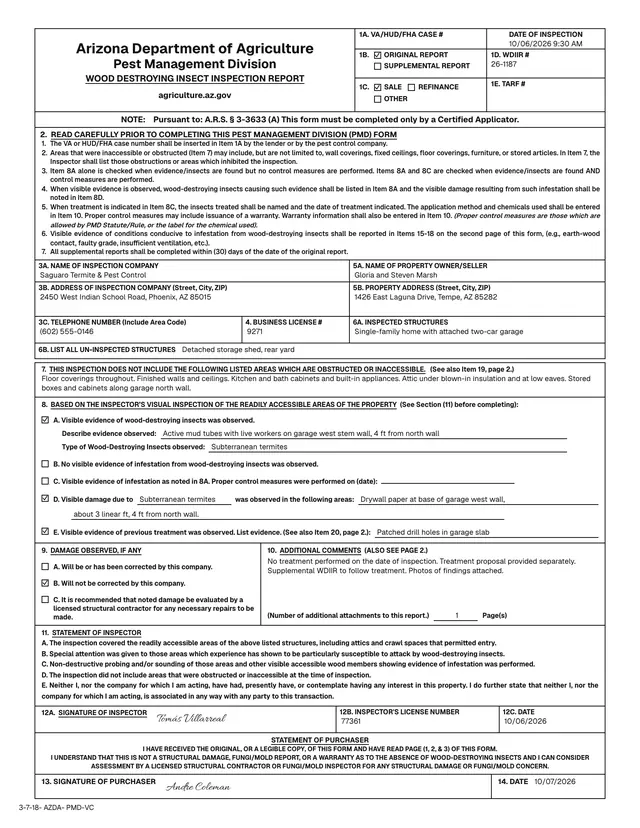
Inspection report templates- Arizona
Wood Destroying Insect Inspection Report
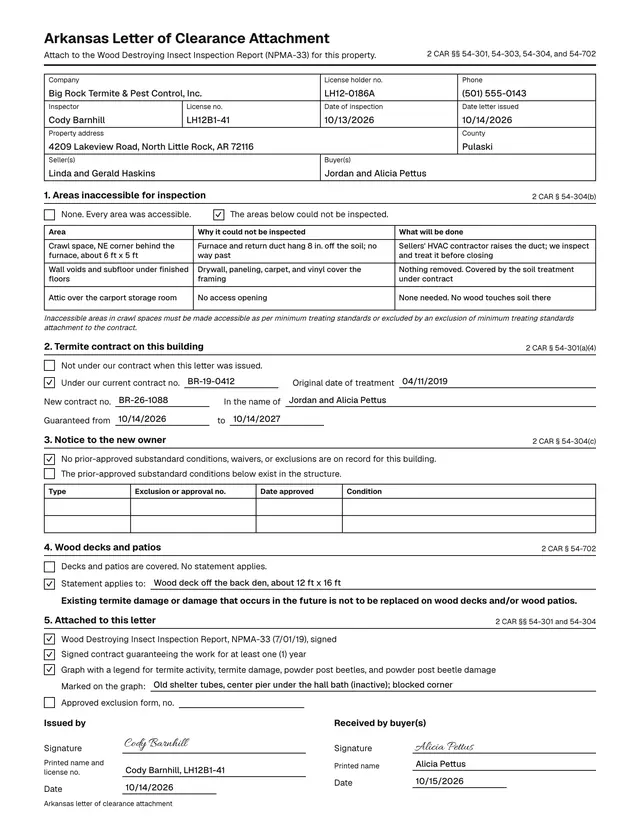
Record the termite findings from an inspection. - Arkansas
Arkansas Letter of Clearance Attachment
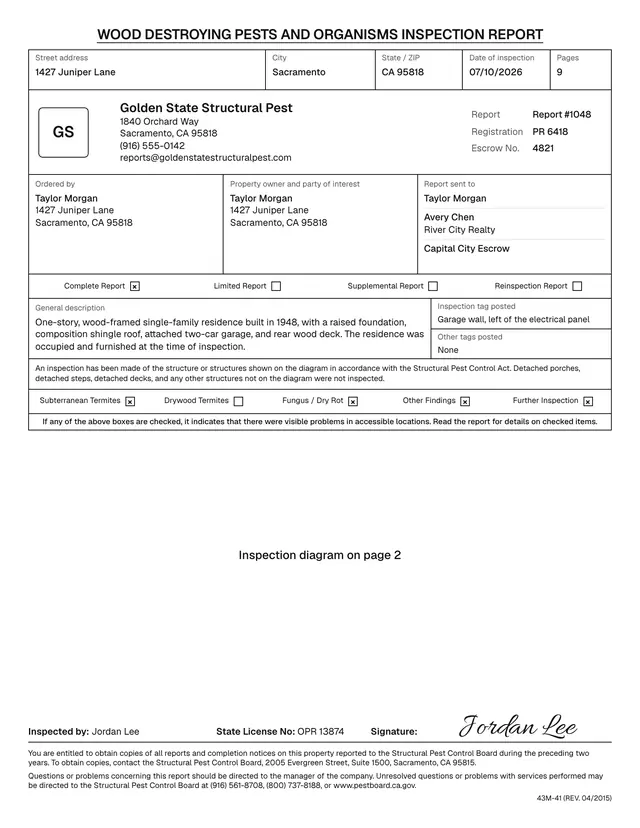
Record the termite findings from an inspection. - California43M-41
Wood Destroying Pests and Organisms Inspection Report
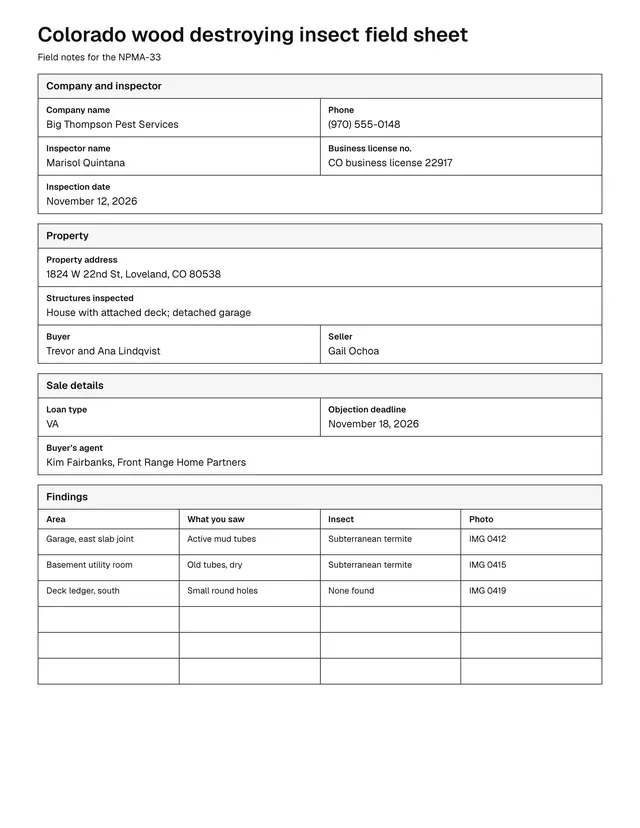
Record the termite findings from an inspection. - ColoradoNPMA-33
Colorado termite inspection report (NPMA-33)
Record the termite findings from an inspection. - Connecticut
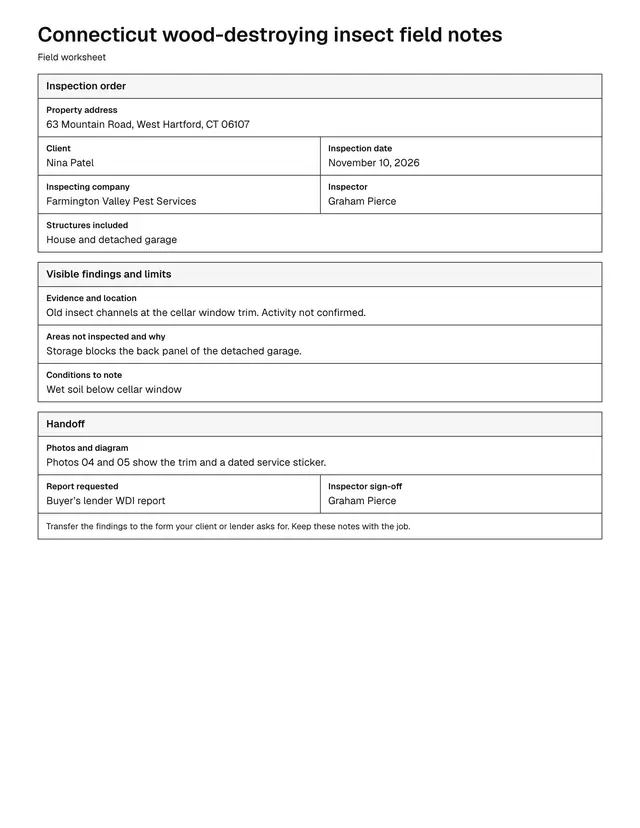
Connecticut wood-destroying insect field notes
Record the termite findings from an inspection. - DelawareNPMA-33
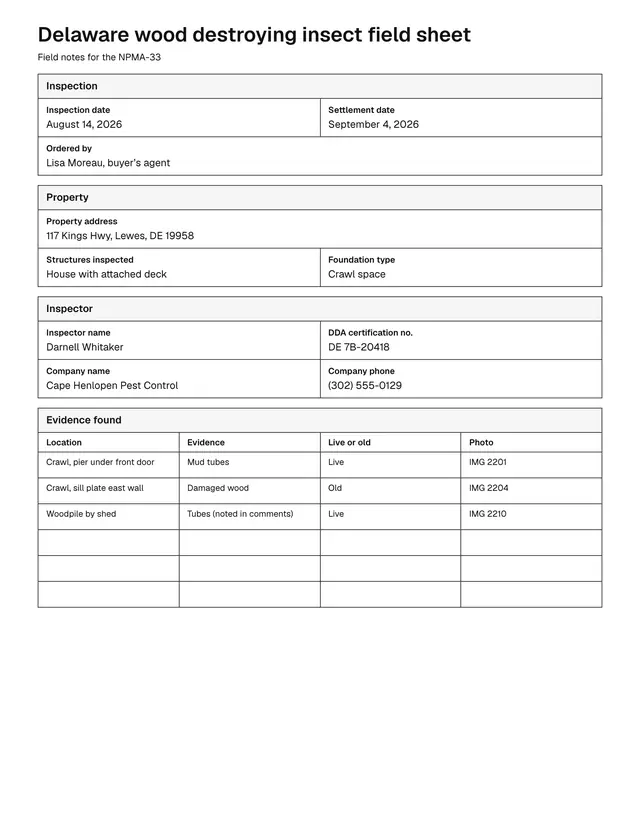
Delaware termite inspection report (NPMA-33)
Record the termite findings from an inspection. - FloridaFDACS-13645
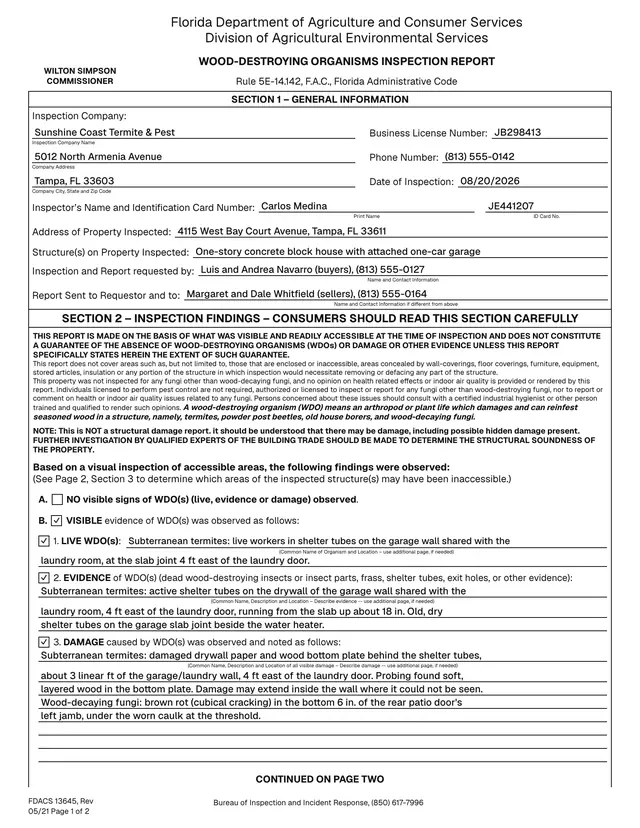
Wood-Destroying Organisms Inspection Report
Record the termite findings from an inspection. - Georgia
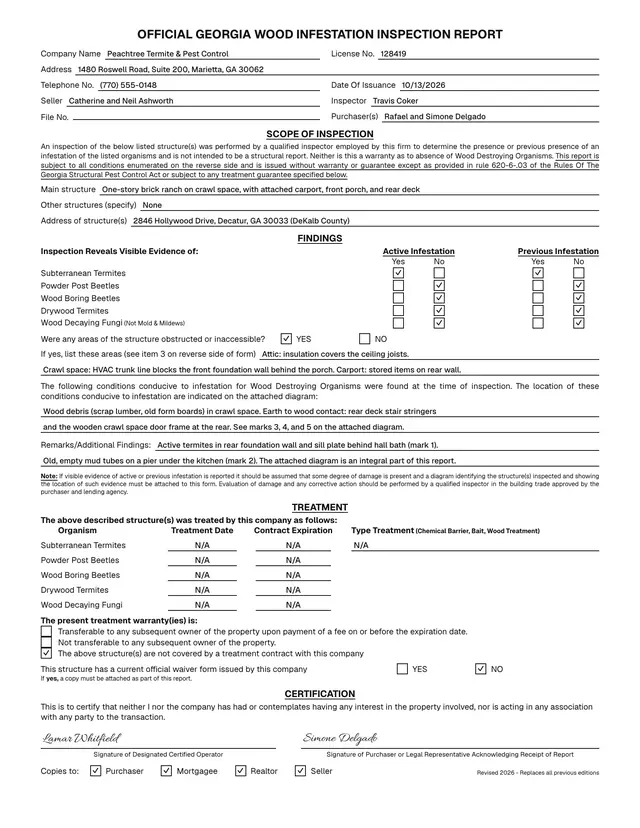
Official Georgia Wood Infestation Inspection Report
Record the termite findings from an inspection. - HawaiiPC-9
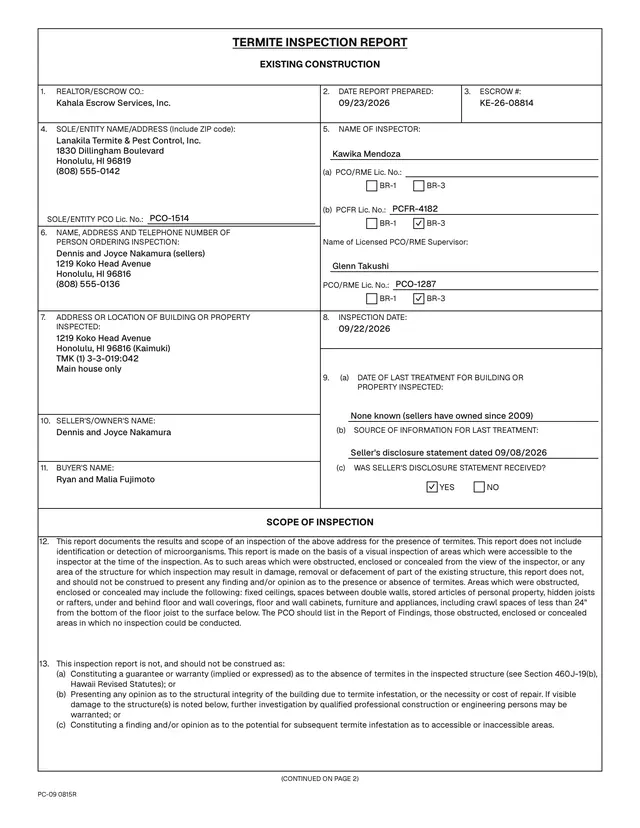
Termite Inspection Report, Existing Construction
Record the termite findings from an inspection. - IllinoisNPMA-33
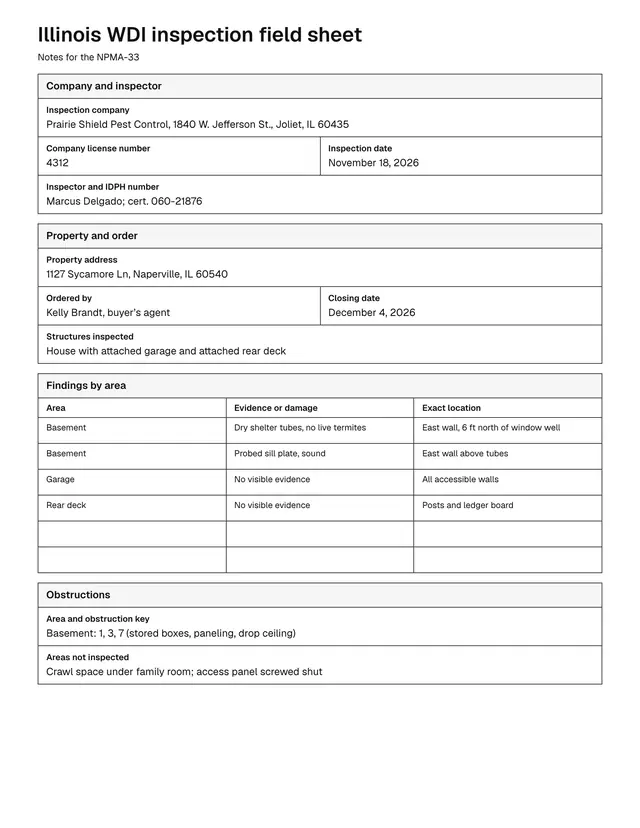
Illinois wood destroying insect inspection report (NPMA-33)
Record the termite findings from an inspection. - IndianaNPMA-33
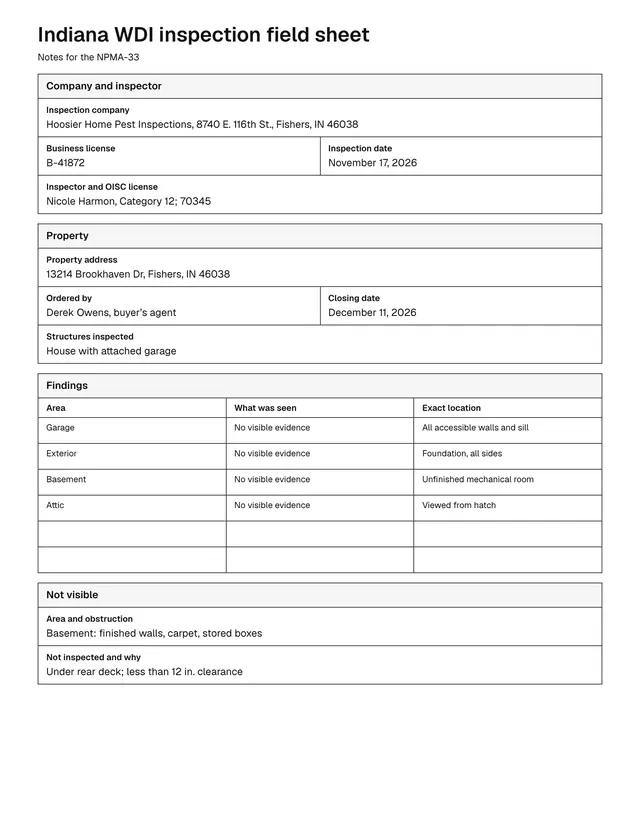
Indiana wood destroying insect inspection report (NPMA-33)
Record the termite findings from an inspection. - Iowa
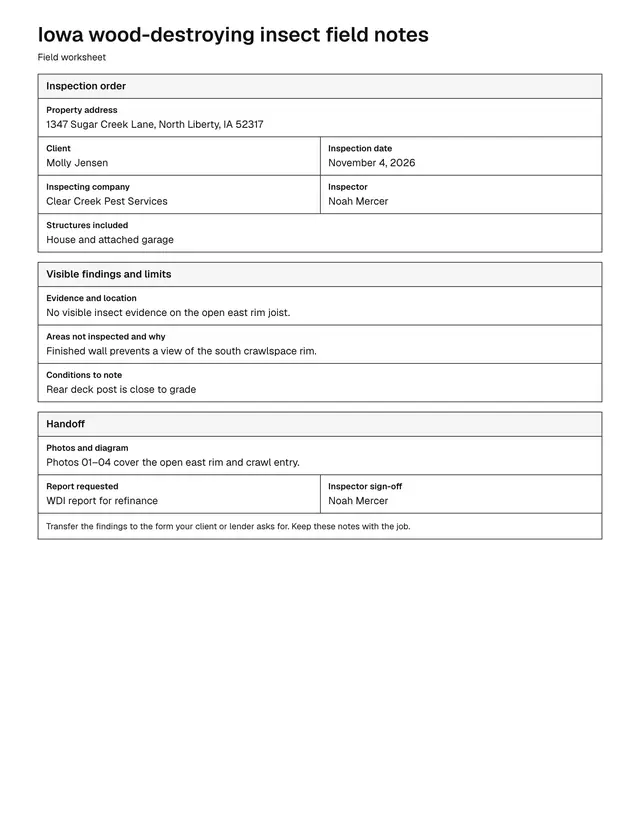
Iowa wood-destroying insect field notes
Record the termite findings from an inspection. - Kansas
Kansas wood-destroying insect field notes
Record the termite findings from an inspection. - Kentucky
Kentucky termite inspection report (NPMA-33)
Record the termite findings from an inspection. - MarylandMD-1
Wood Destroying Insect Inspection Report
Record the termite findings from an inspection. - Massachusetts
Massachusetts termite inspection report (NPMA-33)
Record the termite findings from an inspection. - MichiganNPMA-33
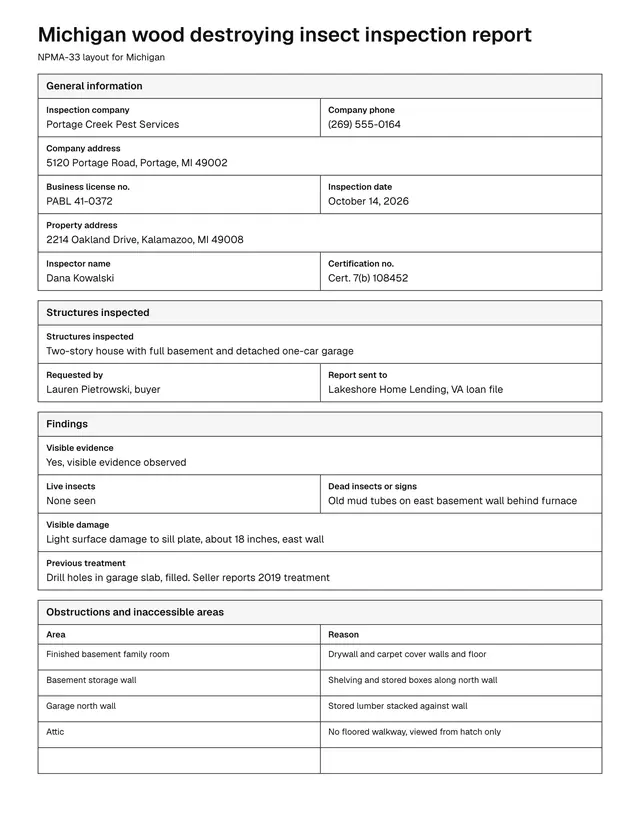
Michigan wood-destroying insect inspection report (NPMA-33)
Record the termite findings from an inspection. - Mississippi
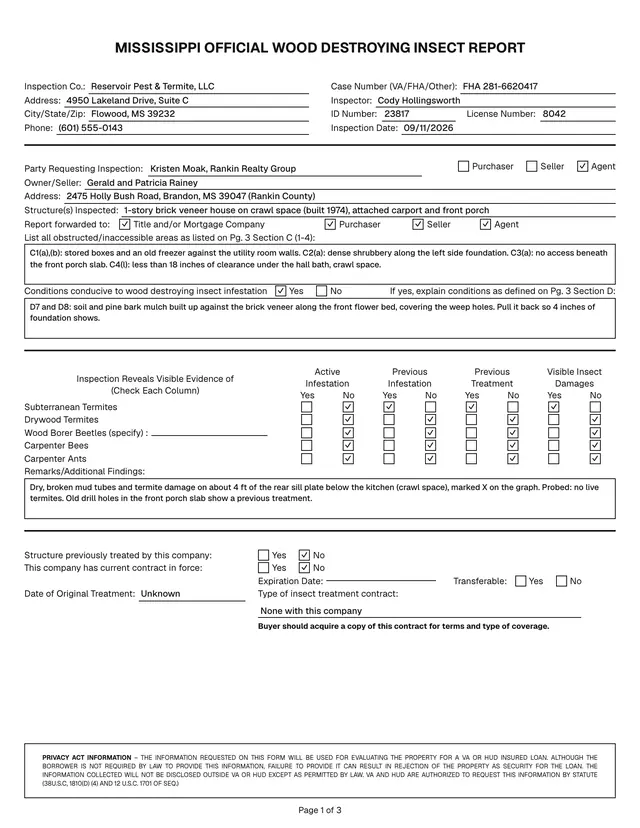
Mississippi Official Wood Destroying Insect Report
Record the termite findings from an inspection. - MissouriNPMA-33
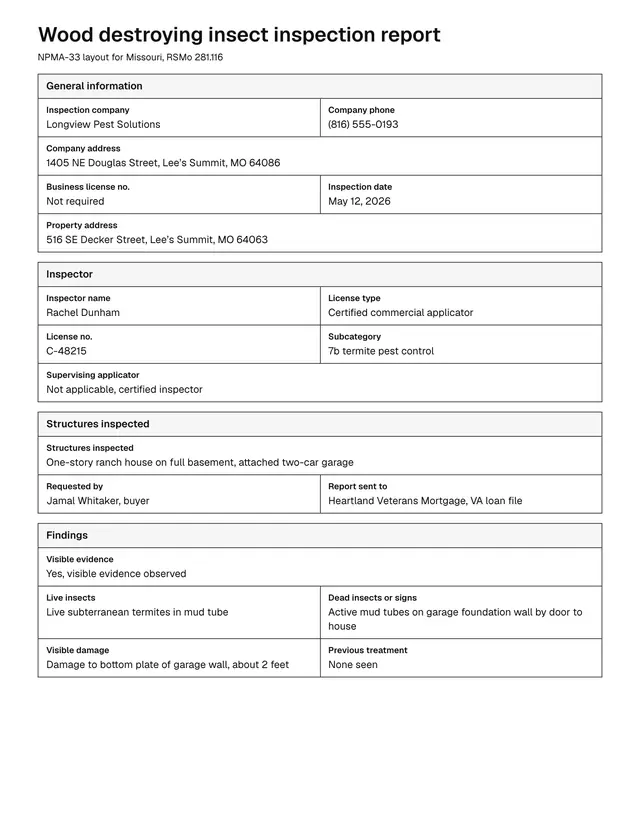
Missouri wood-destroying insect inspection report (NPMA-33)
Record the termite findings from an inspection. - Nevada
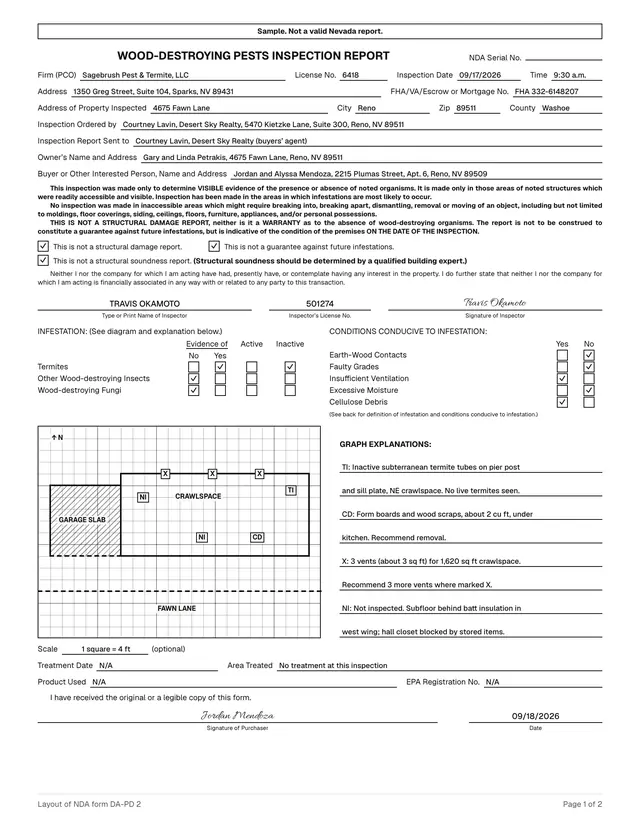
Wood-Destroying Pests Inspection Report
Record the termite findings from an inspection. - New Jersey
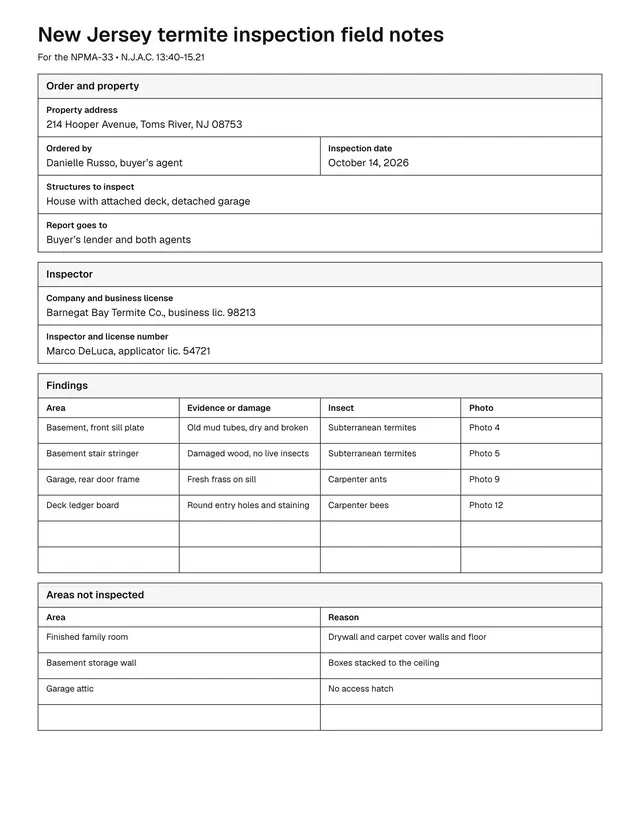
New Jersey termite inspection report (NPMA-33 field notes)
Record the termite findings from an inspection. - New Mexico
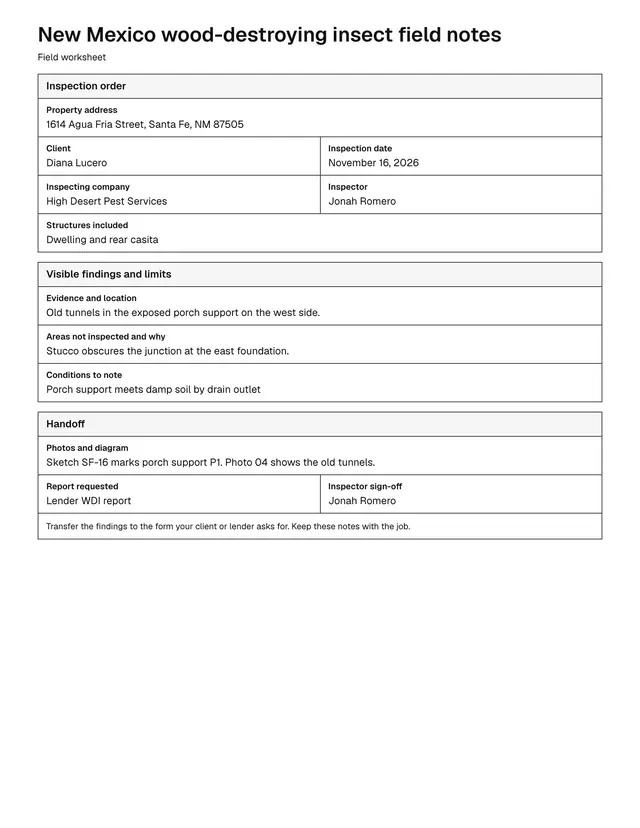
New Mexico wood-destroying insect field notes
Record the termite findings from an inspection. - New York
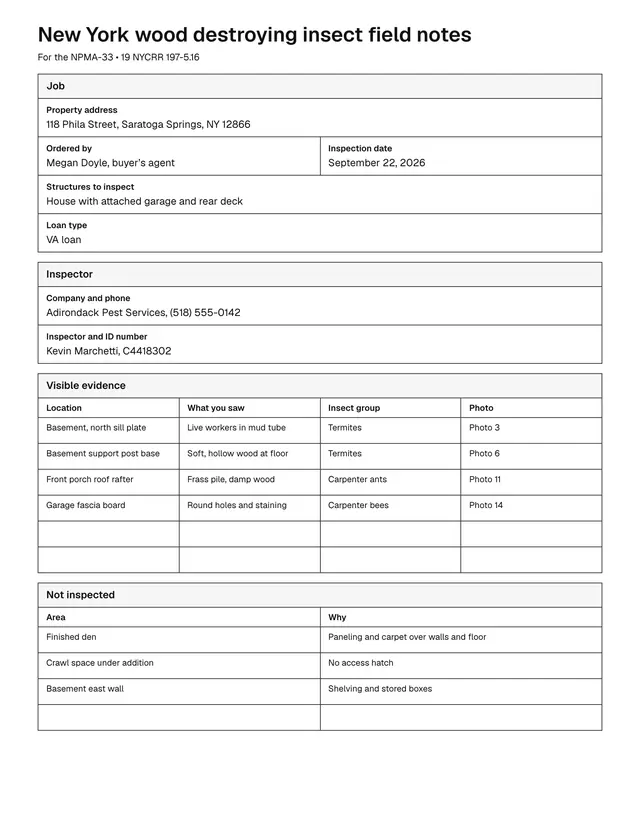
New York wood destroying insect inspection notes (NPMA-33)
Record the termite findings from an inspection. - North CarolinaWDIR 100
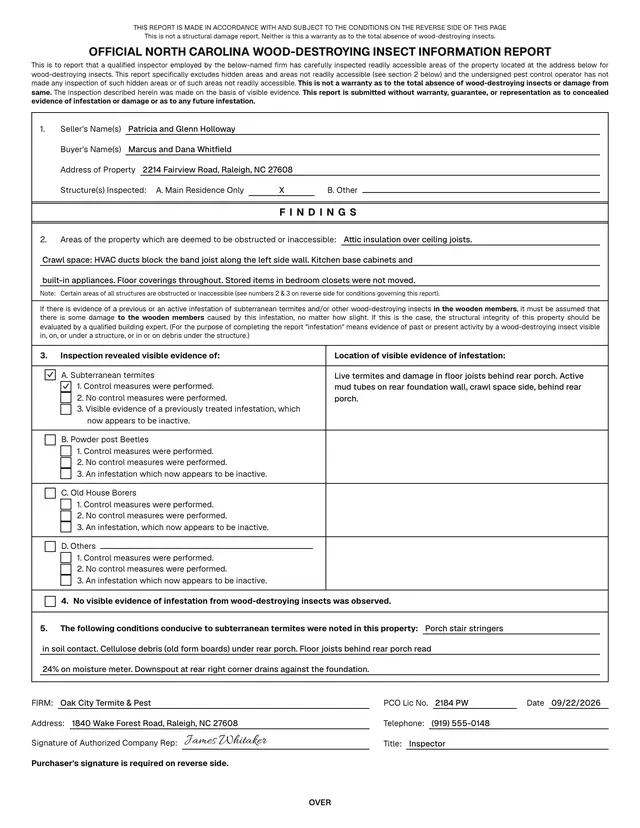
Official North Carolina Wood-Destroying Insect Information Report
Record the termite findings from an inspection. - OhioNPMA-33
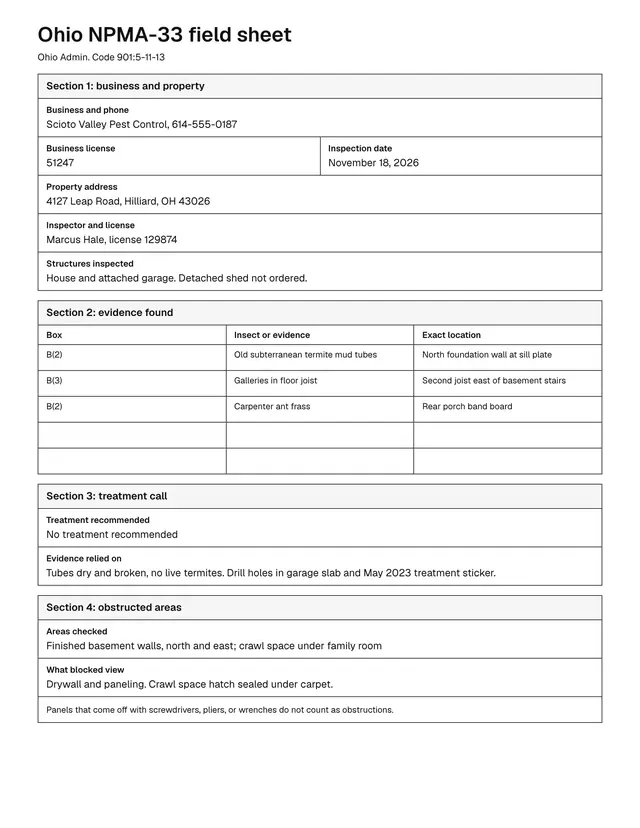
Ohio NPMA-33 wood-destroying insect inspection report
Record the termite findings from an inspection. - OklahomaForm ODAFF-1
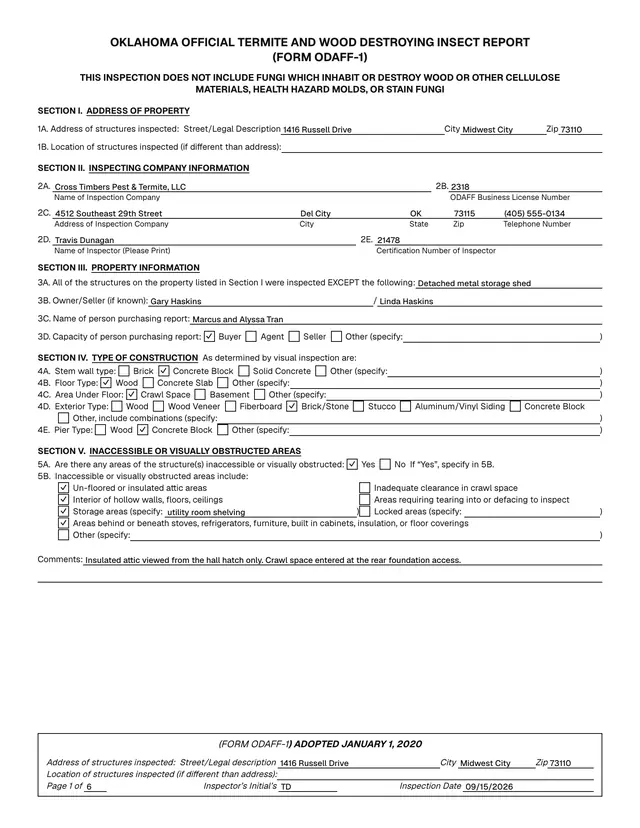
Oklahoma Official Termite and Wood Destroying Insect Report
Record the termite findings from an inspection. - Oregon
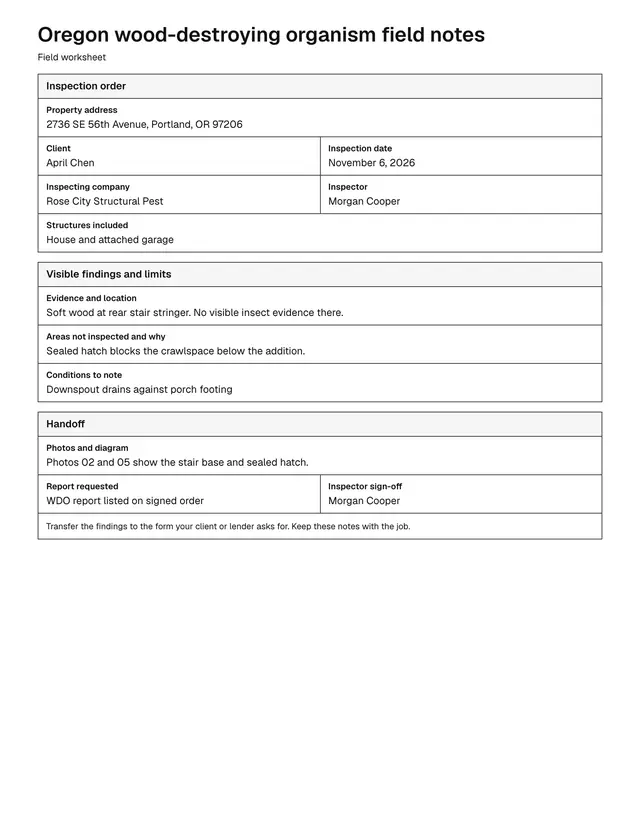
Oregon wood-destroying organism field notes
Record the termite findings from an inspection. - PennsylvaniaNPMA-33
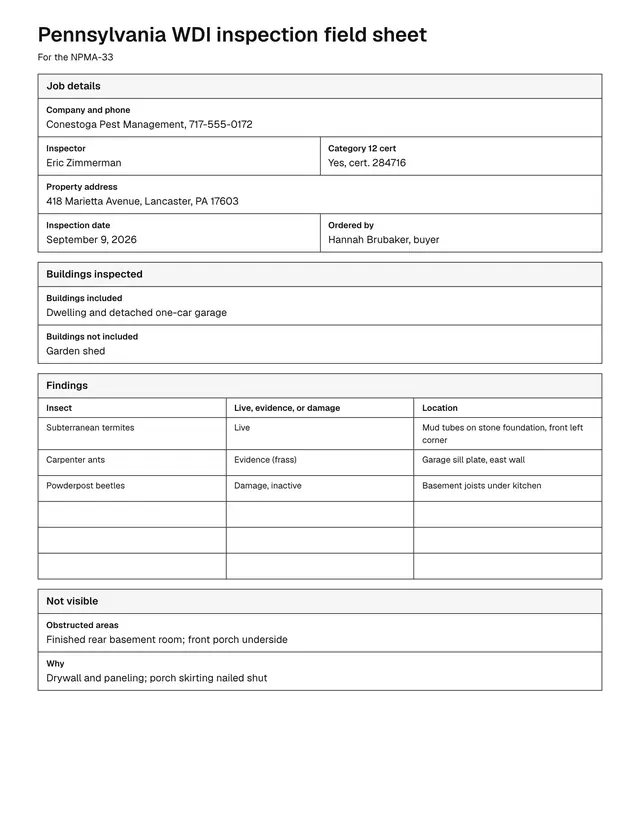
Pennsylvania wood-destroying insect inspection report (NPMA-33)
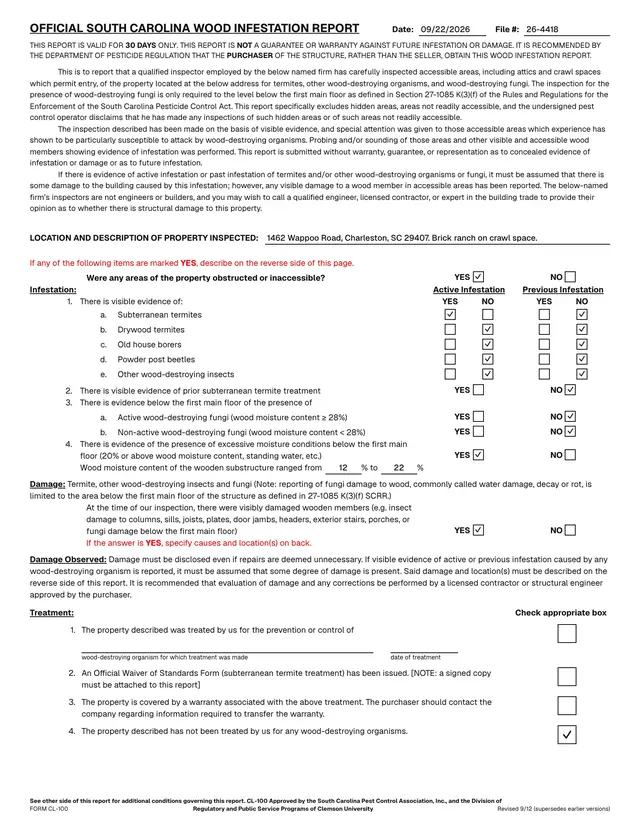
Record the termite findings from an inspection. - South CarolinaCL-100
Official South Carolina Wood Infestation Report
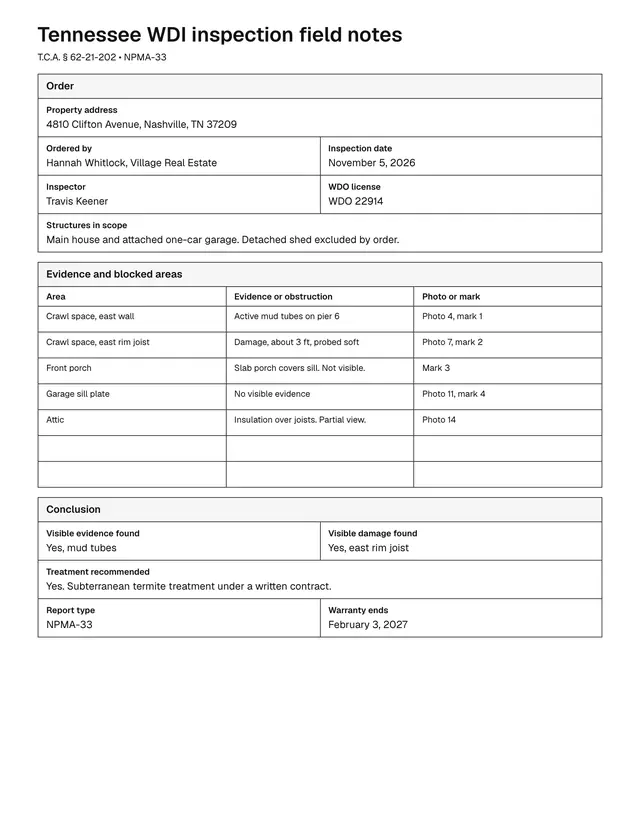
Record the termite findings from an inspection. - Tennessee
Tennessee wood destroying insect infestation inspection report
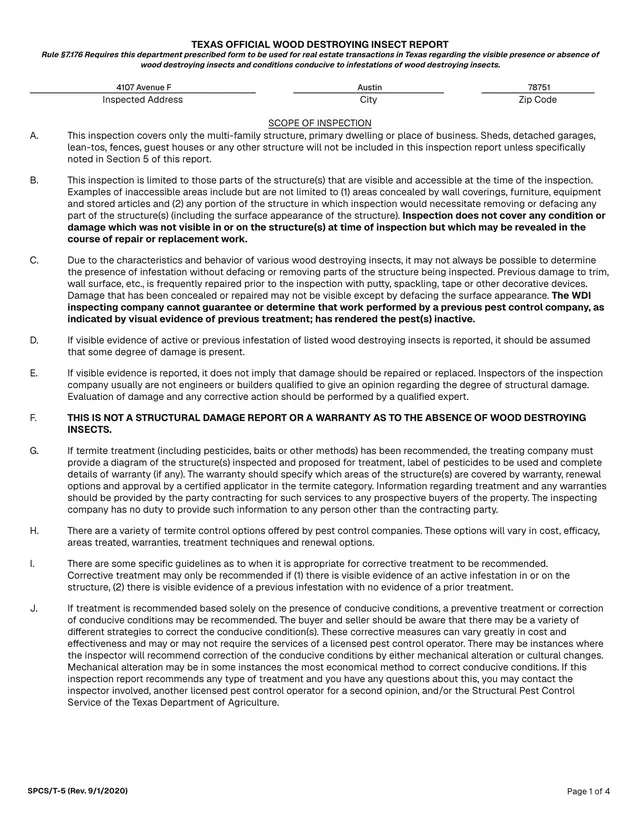
Record the termite findings from an inspection. - TexasSPCS/T-5
Texas Official Wood Destroying Insect Report
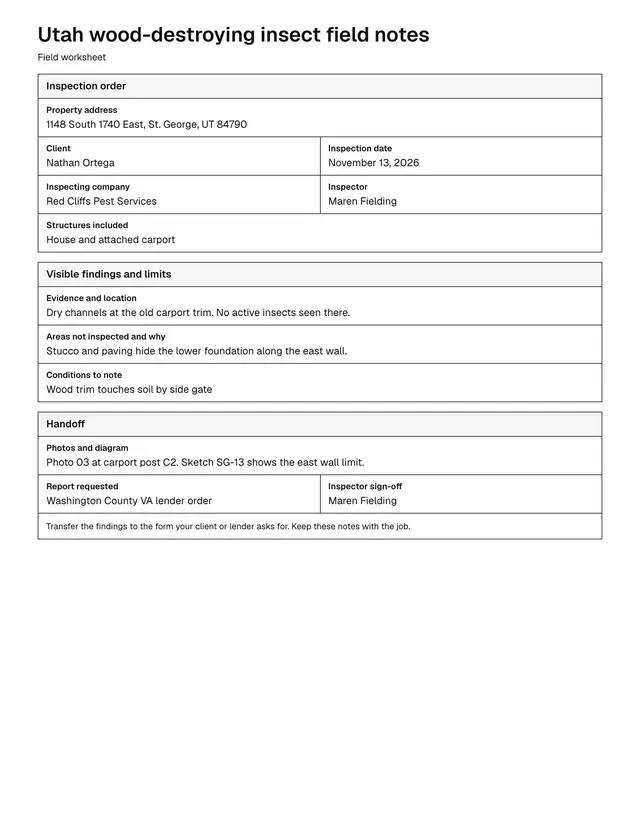
Record the termite findings from an inspection. - Utah
Utah wood-destroying insect field notes
Record the termite findings from an inspection. - Virginia
Virginia wood destroying insect inspection report
Record the termite findings from an inspection. - Washington
Complete WDO Inspection Report
Record the termite findings from an inspection. - Wisconsin
Wisconsin wood-destroying insect field notes
Record the termite findings from an inspection.