Indiana home inspection report
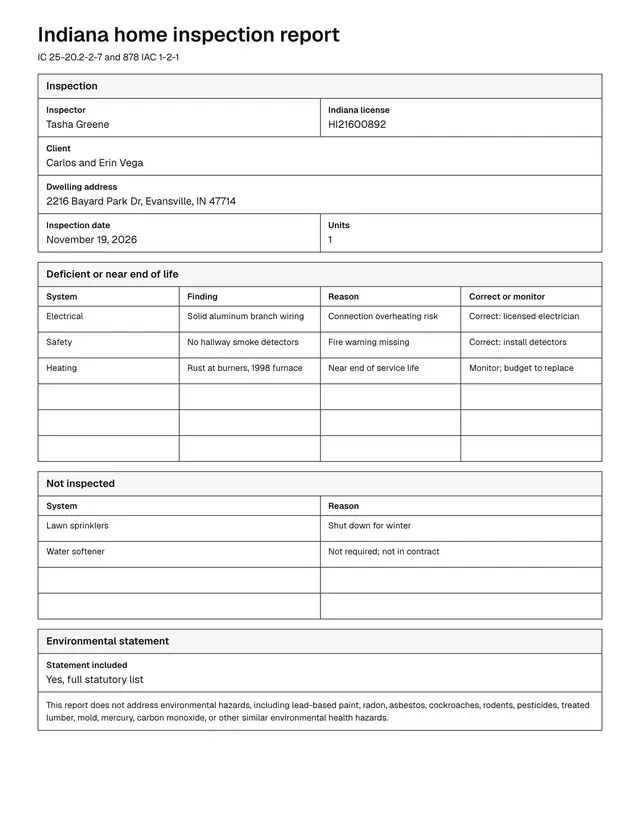
Indiana defines the home inspection report in statute. It has to cover deficient items and those near the end of their service life, and it has to say it doesn’t address environmental hazards.
At a glance
- Law
- IC 25-20.2-2-7
- Standards
- 878 IAC 1-2-1
- Applies to
- Dwellings with 5 or fewer units
- Board
- Indiana Home Inspectors Licensing Board
Completed example
Download PDFThe five parts the law asks for
Indiana put its report definition in the statute itself. IC 25-20.2-2-7 says a home inspection report is a “legibly written report” prepared for pay after an inspection. It has to include five things.
1. Deficient or worn out items. Any system or component that is significantly deficient or near the end of its service life, with the reason, unless the reason is self-evident. 2. What to do. A recommendation to correct or monitor each one. 3. What you skipped. A list of the systems or components the standards call for that you didn’t inspect. 4. Why. The reason for each one you skipped. 5. The environmental statement. A statement that the report doesn’t address environmental hazards.
Photos help, but they don’t replace the written finding. The law asks for a written report, and each deficient item needs its reason in words.
Number 5 has a set list. The statute names lead-based paint, radon, asbestos, cockroaches, rodents, pesticides, treated lumber, mold, mercury, carbon monoxide, “or other similar environmental health hazards.” Put the whole list in your report, word for word. It’s one paragraph you never have to change.
The board’s rule, 878 IAC 1-2-1, adds the basics on top: your name and Indiana license number, the dwelling’s address, the client’s name, and the date of the inspection.
Describe this, report that
Indiana’s standards use two verbs with different jobs. To describe is to say what’s there. To report is to flag a problem. A good template has a slot for each.
Structure. Describe the foundation, the floors, walls, ceilings, and roof framing. Say how you inspected the crawl space and the attic. Probe a representative number of spots where you suspect rot, but not where it would damage a finished surface.
Roof. Describe the covering and how you inspected it. “Walked” and “binoculars from the yard” are both fine. Leaving it blank isn’t.
Plumbing. Describe the supply and drain piping, the water heater and its energy source, and where the main water and fuel shut-offs are.
Electrical. Describe the amps and volts, the main disconnect and subpanel locations, and the wiring method. Report solid conductor aluminum branch wiring, and report the absence of smoke detectors. An Evansville ranch from 1972 with original aluminum circuits and no detectors in the hallway gets two lines.
Heating. You aren’t required to inspect the heat exchanger. Say so if a client asks why the report doesn’t mention it.
Interiors. You don’t have to inspect household appliances, paint, or carpet. If the client wants the range and dishwasher run, put it in the agreement and the report.
Not required. Wells, private waste disposal systems, water conditioning systems, and lawn sprinklers aren’t required. If your contract didn’t include them, you don’t owe a reason for skipping them.
Near the end of its service life
This phrase is easy to get wrong. The standards say you’re not required to determine the remaining life of anything. But the statute says the report must cover items that, in your professional opinion, are near the end of their service life.
The same goes for roofs and water heaters. A 2004 tank water heater with rust at the base is a fair candidate for that line.
Both can be true. You don’t have to say “the furnace has three years left.” You do have to flag a furnace you think is close to done. Something like: “Gas furnace, 1998, rust at the burners. Near the end of its service life. Monitor, and budget for replacement.” That’s an opinion with a reason and a recommendation, which is what the law asks for.
What you shouldn’t say is whether to buy. The standards exclude the advisability of purchase, and the ethics rule bars repair work on systems you inspected for a year. Keep the report about the house.
How do you make the worst items easy to find?
A 40-page report buries the furnace and the aluminum wiring between photos of downspouts. Agents read the summary and stop. Put the significantly deficient items and the end-of-life items up top, with what to do about each.
Keep the signed agreement with the report. If a claim comes, the two-year clock in IC 25-20.2-9-1 runs from when the cause of action accrues.
Noma specializes in the Indiana home inspection report (IC 25-20.2-2-7). Build it on your phone with your own sections and titles, rate each defect’s severity, and the summary leads with the worst items. See how Noma builds inspection reports.
Frequentlyaskedquestions
Send this document in minutes, not an afternoon.
Other states
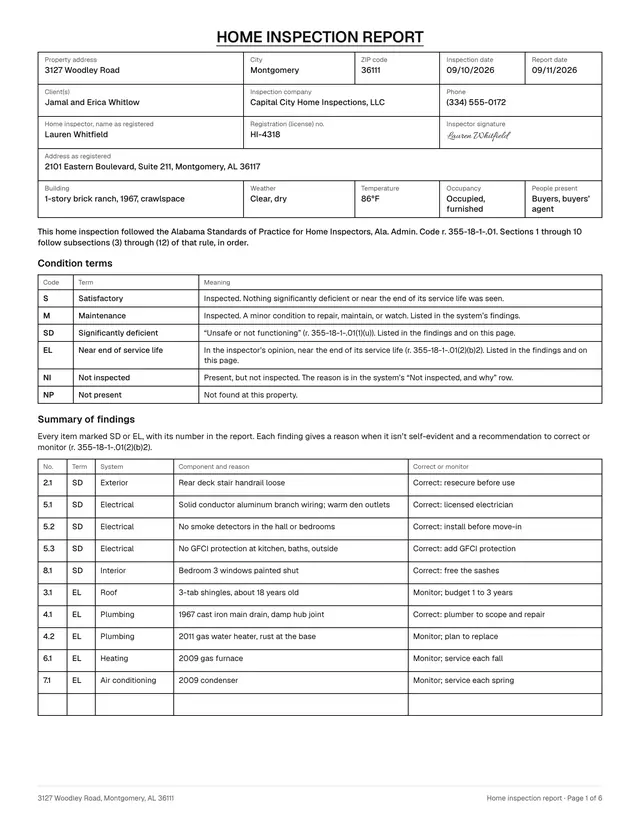
Home inspection report templates- Alabama
Home Inspection Report
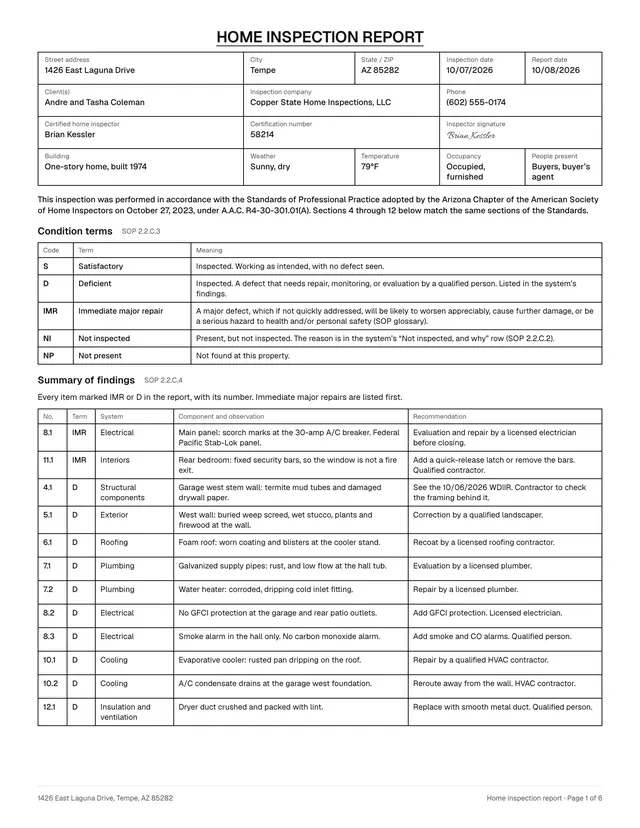
Findings by system, with each defect noted. - Arizona
Home Inspection Report
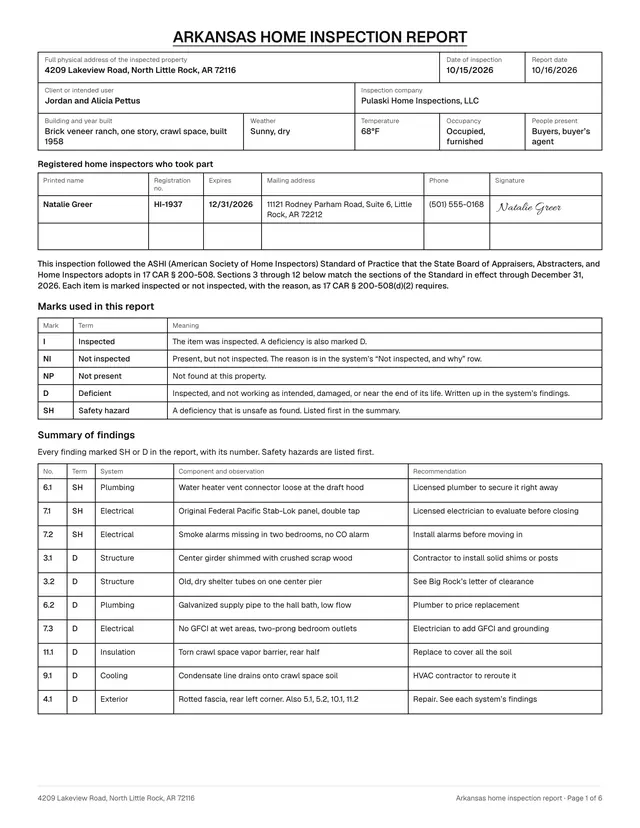
Findings by system, with each defect noted. - Arkansas
Arkansas Home Inspection Report
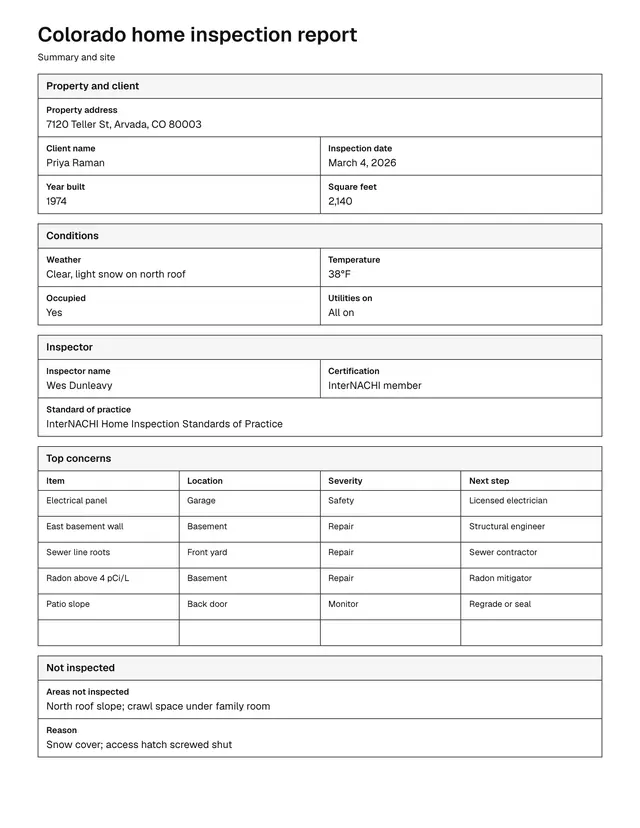
Findings by system, with each defect noted. - Colorado
Colorado home inspection report
Findings by system, with each defect noted. - Connecticut
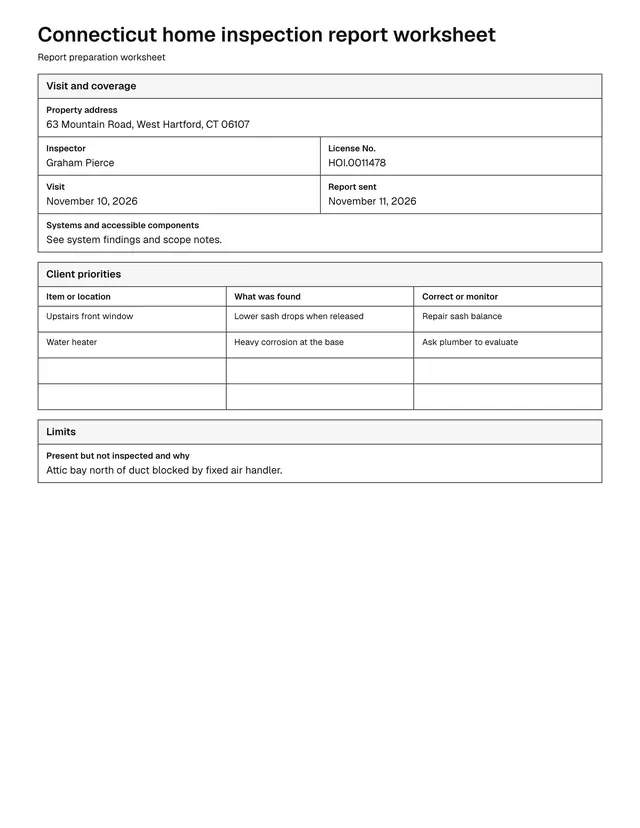
Connecticut home inspection report worksheet
Findings by system, with each defect noted. - Delaware
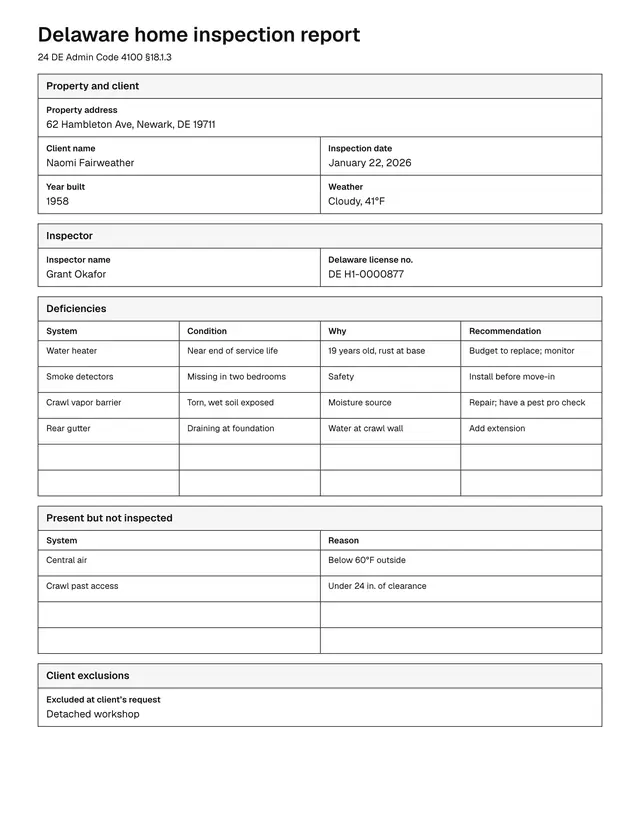
Delaware home inspection report (24 DE Admin Code 4100 §18)
Findings by system, with each defect noted. - Florida
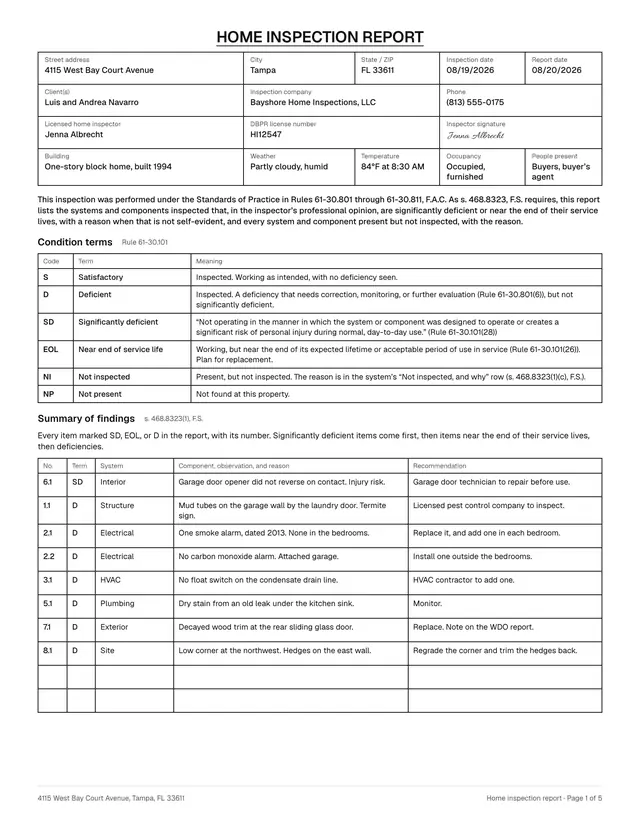
Home Inspection Report
Findings by system, with each defect noted. - Georgia
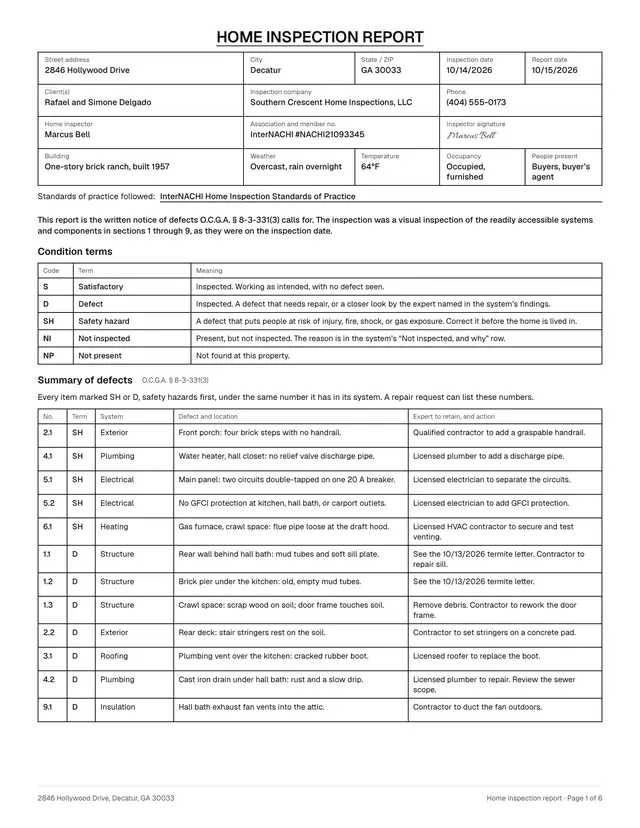
Home Inspection Report
Findings by system, with each defect noted. - Hawaii
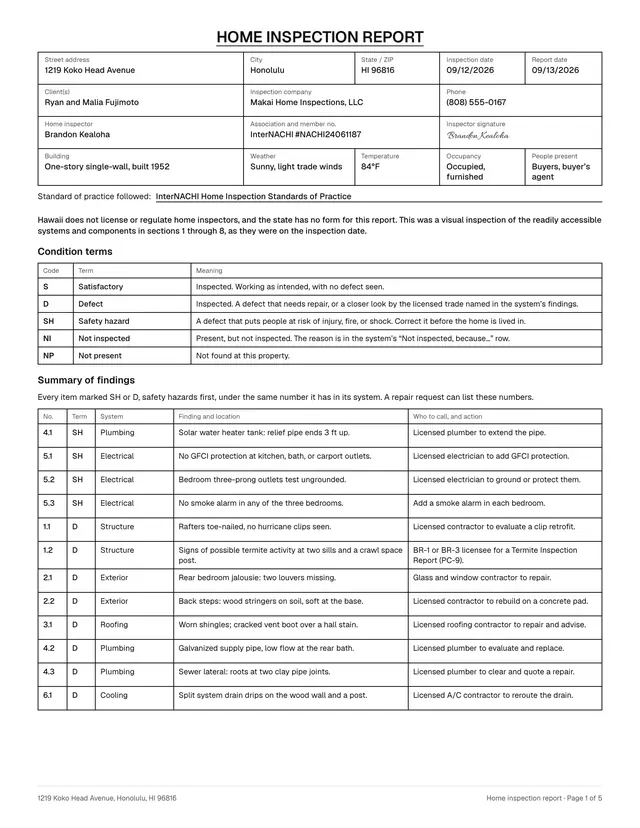
Home Inspection Report
Findings by system, with each defect noted. - Illinois
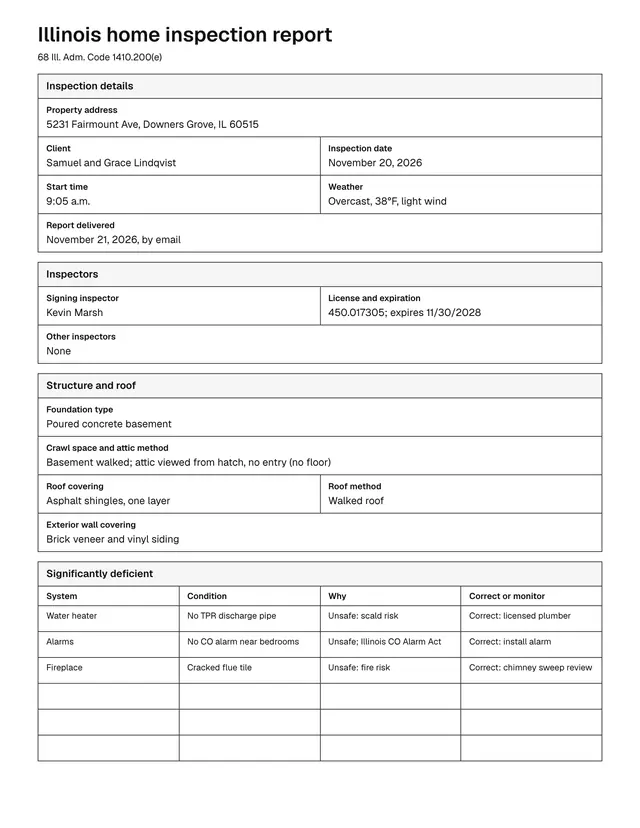
Illinois home inspection report
Findings by system, with each defect noted. - Kentucky
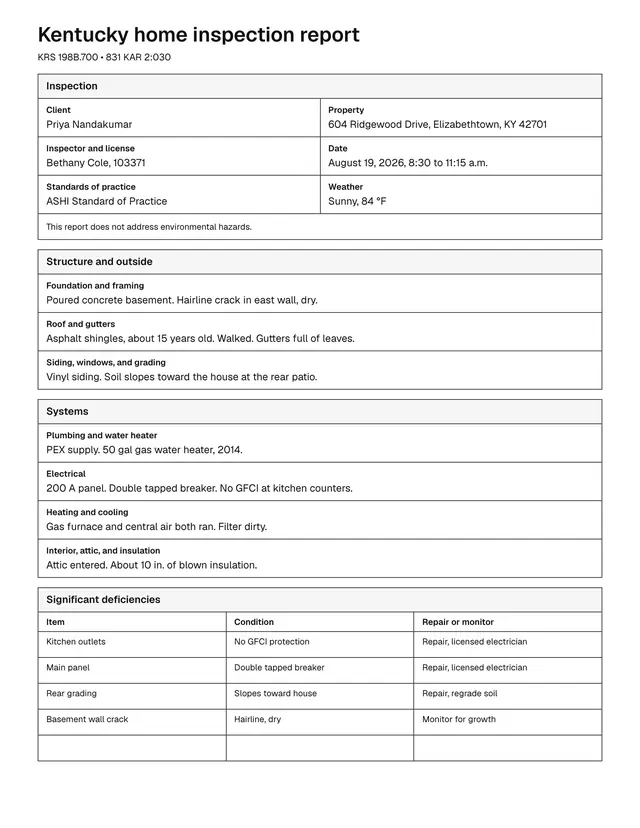
Kentucky home inspection report
Findings by system, with each defect noted. - Louisiana
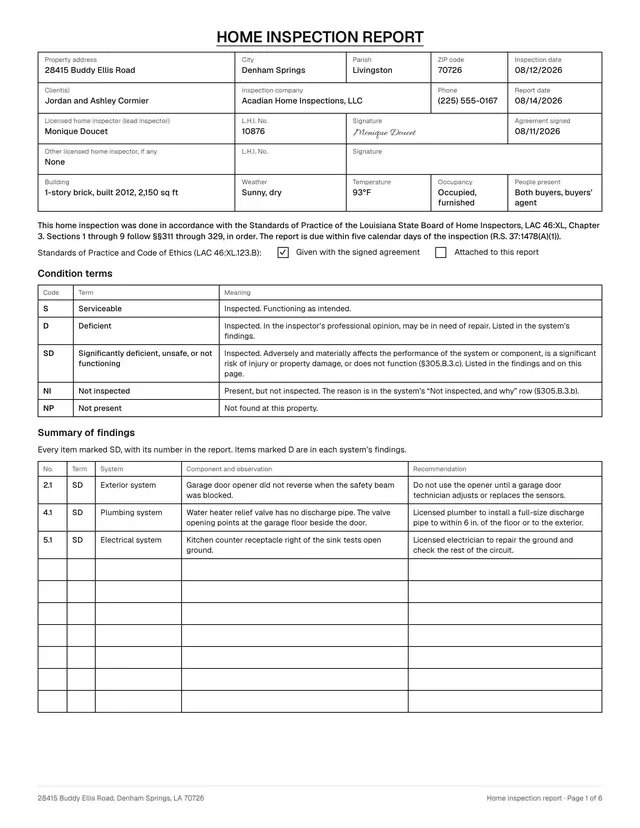
Home Inspection Report
Findings by system, with each defect noted. - Maryland
Home Inspection Report
Findings by system, with each defect noted. - Massachusetts
Massachusetts home inspection report (266 CMR 6.03)
Findings by system, with each defect noted. - Michigan
Michigan home inspection report
Findings by system, with each defect noted. - Mississippi
Home Inspection Report
Findings by system, with each defect noted. - Missouri
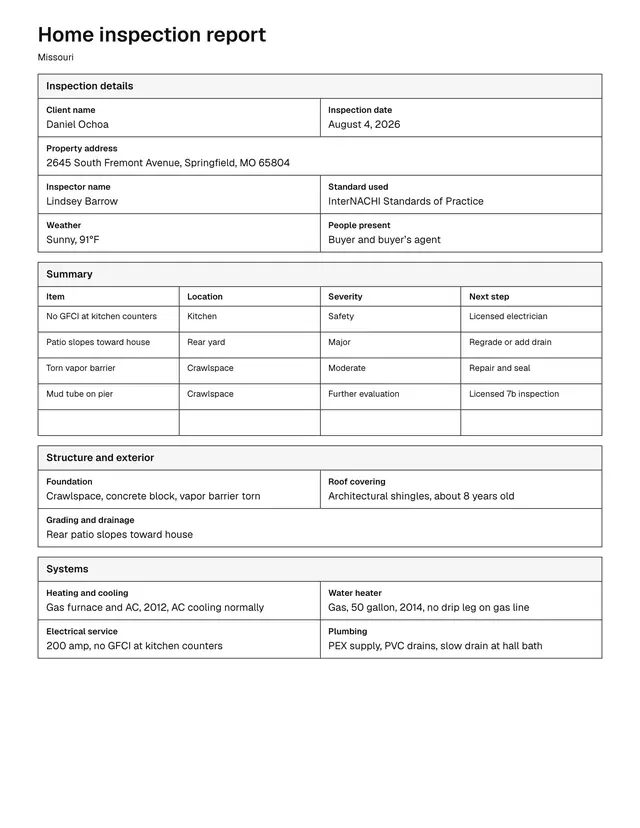
Missouri home inspection report
Findings by system, with each defect noted. - Nevada
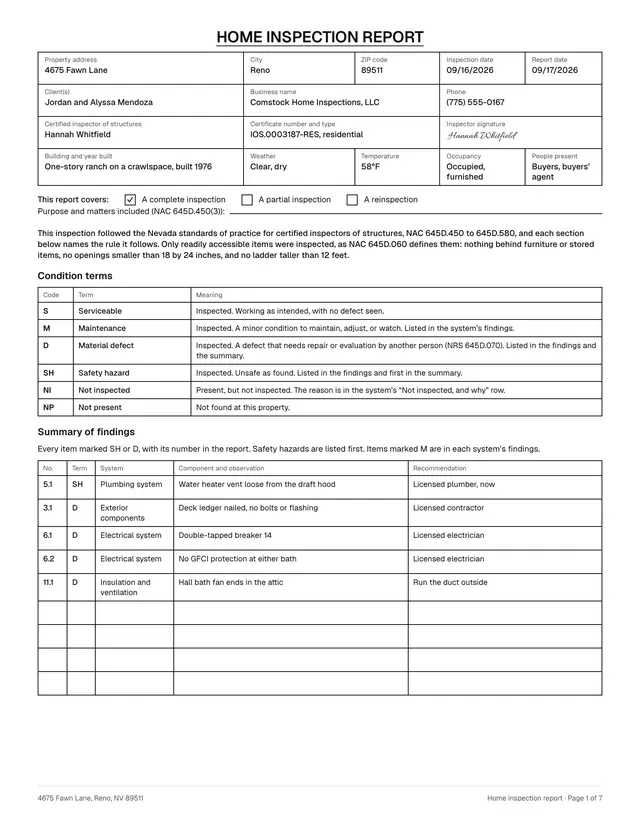
Home Inspection Report
Findings by system, with each defect noted. - New Jersey
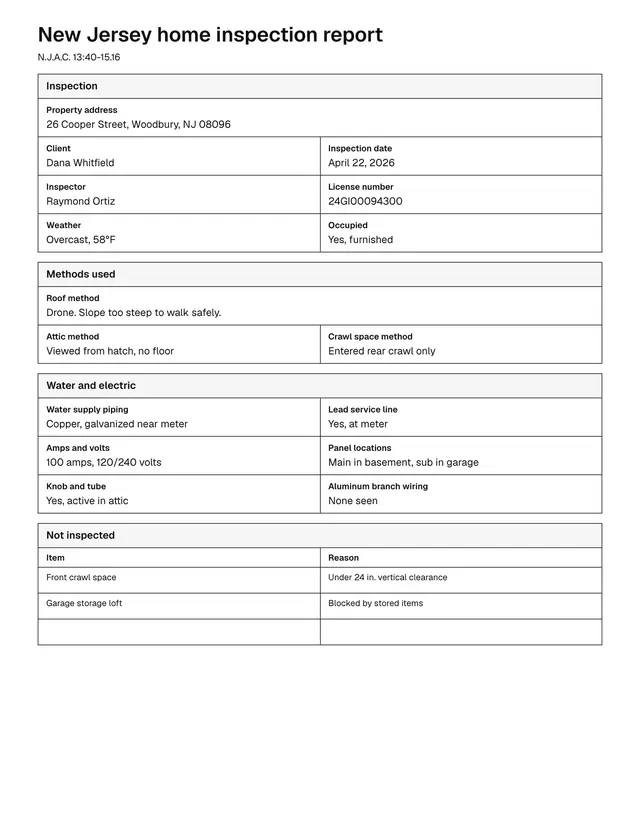
New Jersey home inspection report (N.J.A.C. 13:40-15.16)
Findings by system, with each defect noted. - New Mexico
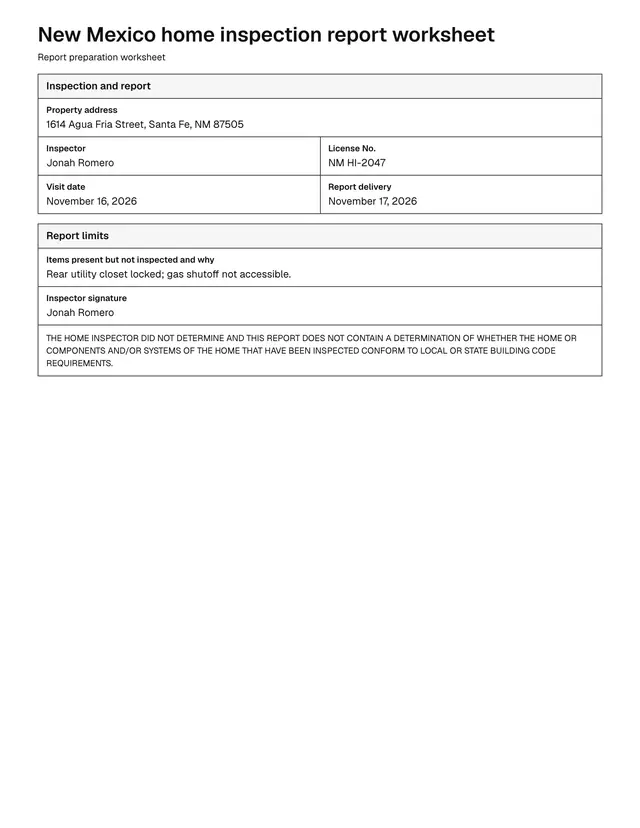
New Mexico home inspection report worksheet
Findings by system, with each defect noted. - New York
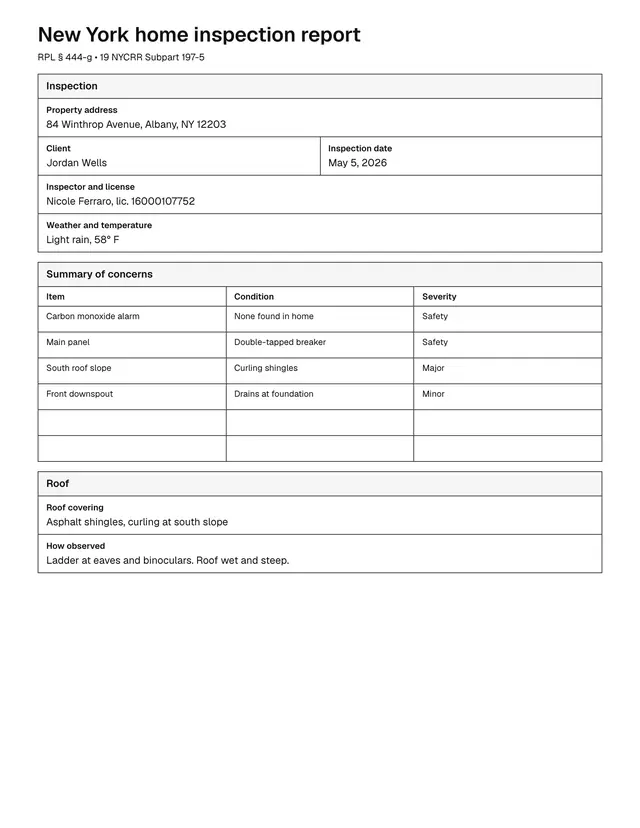
New York home inspection report (19 NYCRR Subpart 197-5)
Findings by system, with each defect noted. - North Carolina
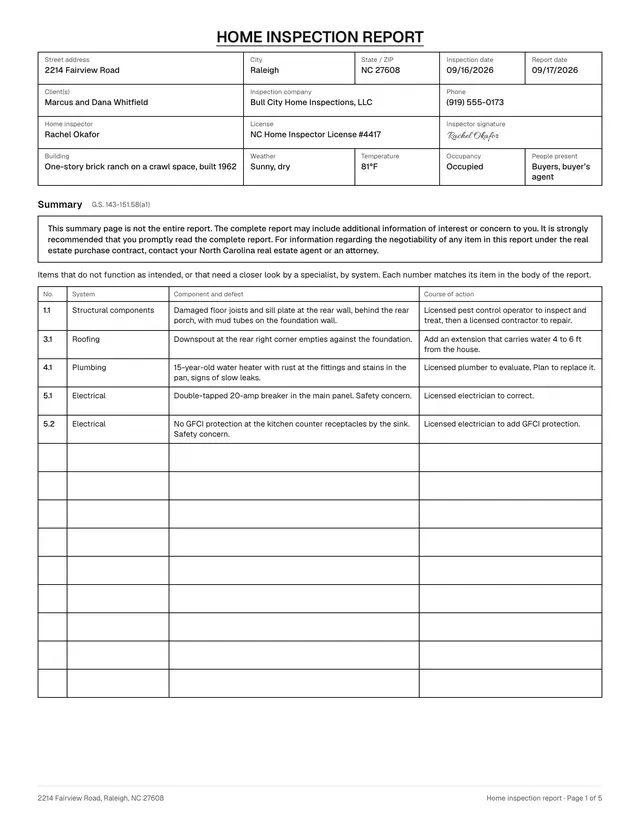
Home Inspection Report
Findings by system, with each defect noted. - Ohio
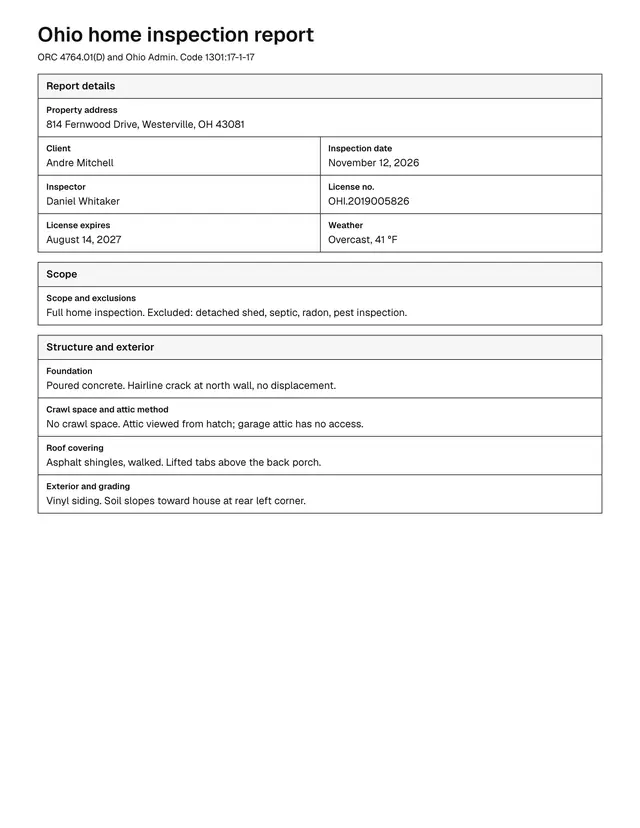
Ohio home inspection report
Findings by system, with each defect noted. - Oklahoma
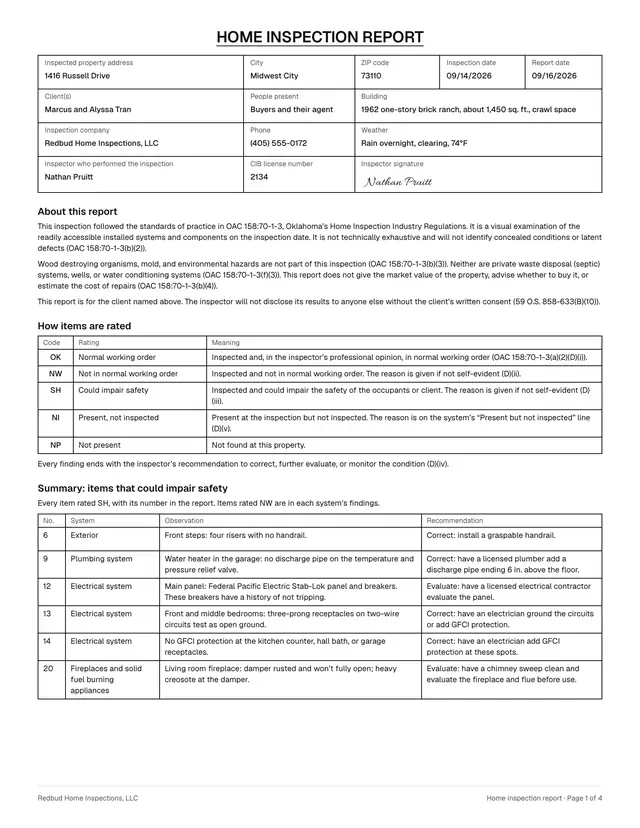
Home Inspection Report
Findings by system, with each defect noted. - Oregon
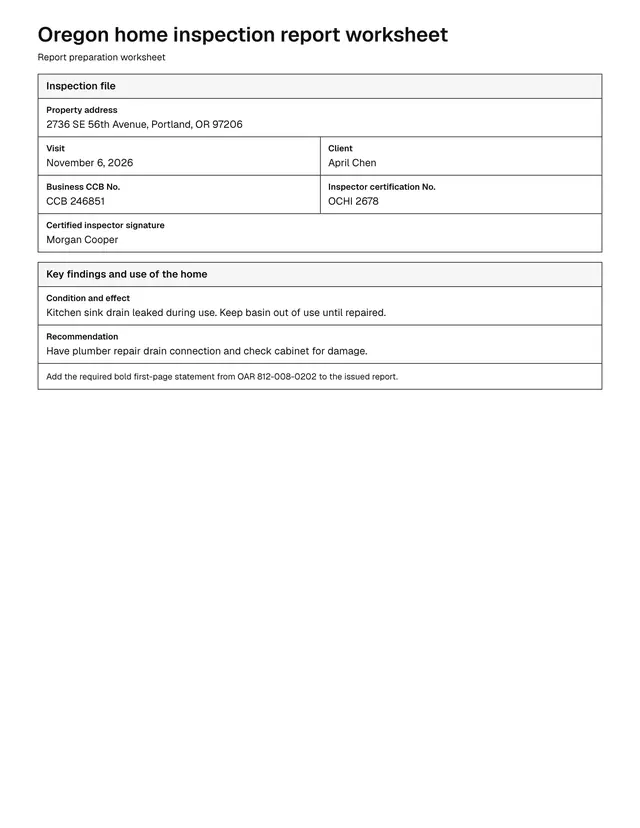
Oregon home inspection report worksheet
Findings by system, with each defect noted. - Pennsylvania
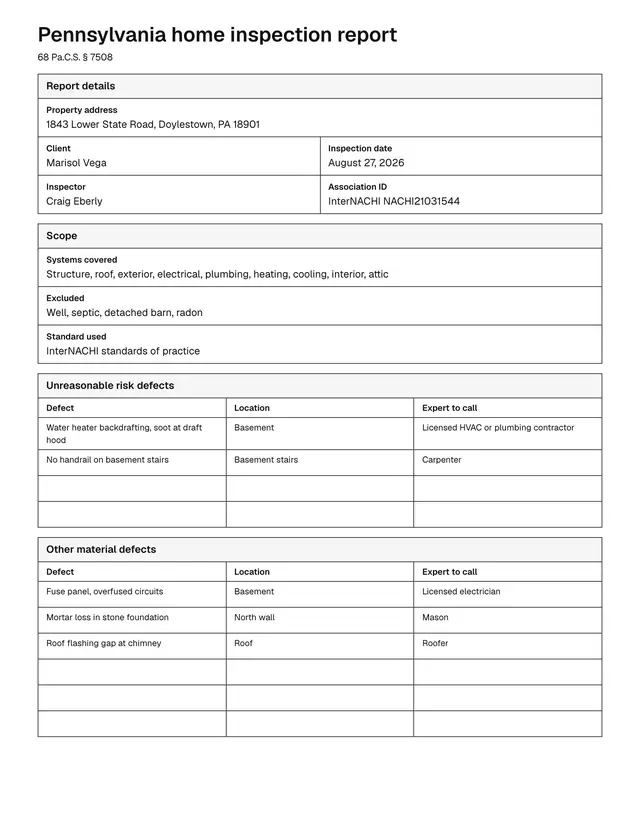
Pennsylvania home inspection report
Findings by system, with each defect noted. - South Carolina
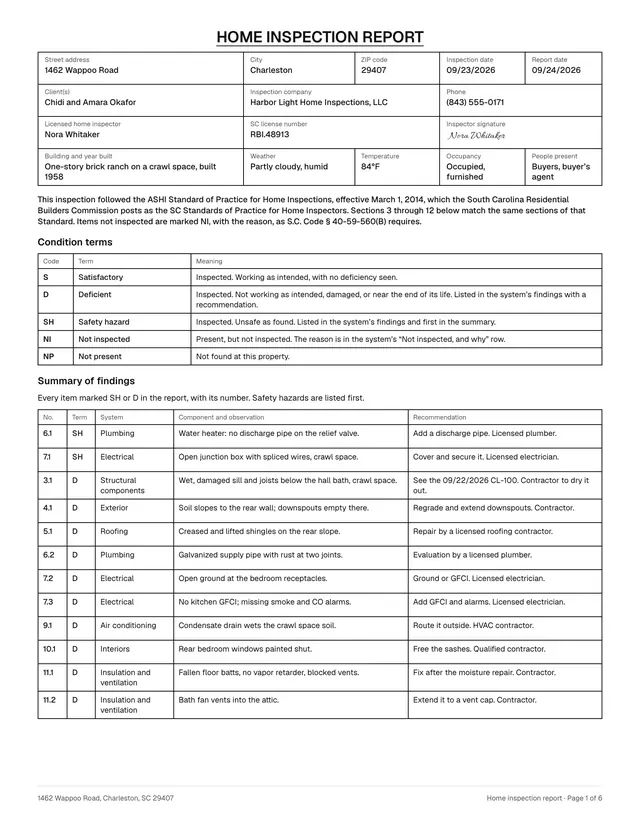
Home Inspection Report
Findings by system, with each defect noted. - Tennessee
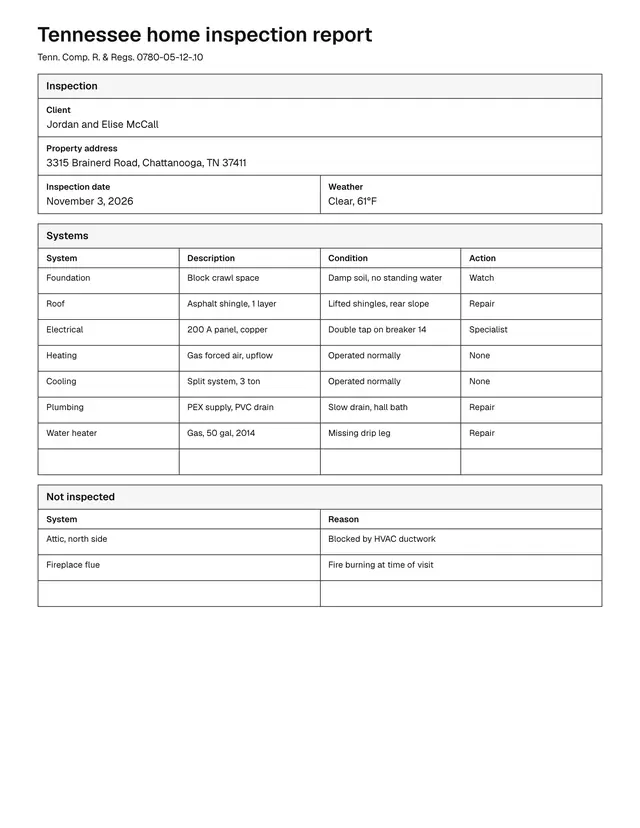
Tennessee home inspection report
Findings by system, with each defect noted. - TexasREI 7-6
Property Inspection Report Form
Findings by system, with each defect noted. - Virginia
Virginia home inspection report
Findings by system, with each defect noted. - Washington
Home Inspection Report
Findings by system, with each defect noted. - Wisconsin
Wisconsin home inspection report worksheet
Findings by system, with each defect noted.