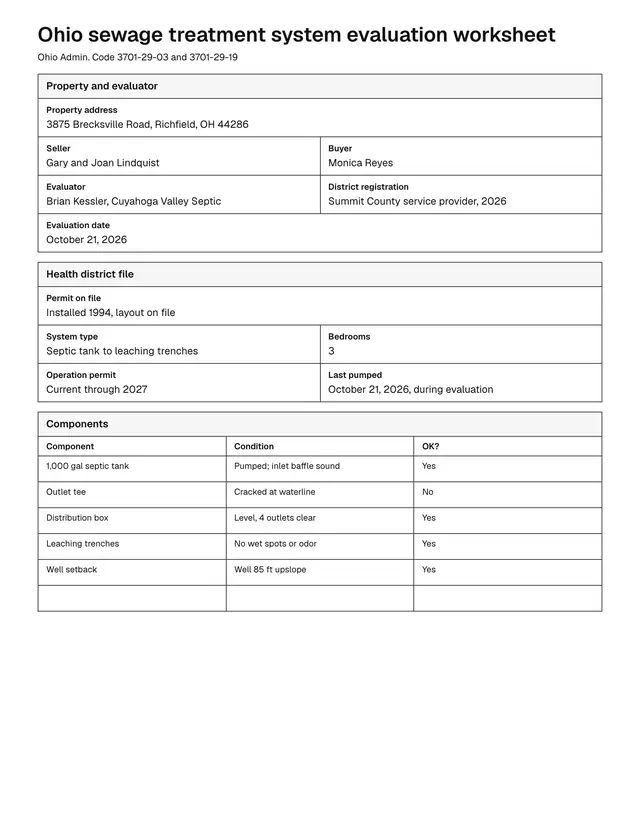
Ohio sewage treatment system evaluation for property transfer
Ohio has no statewide septic inspection at sale. Some county health districts do, and the evaluator has to be a service provider registered with that board of health.
At a glance
- State rules
- Ohio Admin. Code 3701-29
- Who evaluates
- Registered service provider
- Sale program
- Set by each health district
- Example
- Summit County, report in 3 business days
Completed example
Download PDFThere’s no single Ohio septic inspection
Ohio’s septic rules sit in Chapter 3701-29 of the Administrative Code, and the Ohio Department of Health writes them. Then local health districts run them. That’s why there’s no one state form for a septic evaluation at sale.
The rule that touches real estate is short. Rule 3701-29-19(B) says monitoring and assessment of a system “may also be performed upon request for real estate inspections or as part of locally established real estate transfer programs.” So some counties require an evaluation before a deed records, and others leave it to the buyer.
Before you quote a job, call the health district for that address. Ask three things. Is there a point of sale program? Who can do the evaluation? What form do you file?
You have to be registered with the board of health
This part is statewide. Rule 3701-29-03 says only people registered by the board of health can do service provider work, and the definition of a service provider is anyone who “services, monitors, evaluates or samples” a system without installing it. An evaluation for a sale is evaluating.
You register in each district where you work, for each category of work, and the registration “shall expire at the end of the calendar year.” You also carry a surety bond or other proof of coverage for that year. The Ohio Department of Health writes the rules, but the districts do the permits and inspections. If you’re working the Columbus suburbs and the Akron area, that’s at least two registrations.
Ask each district for its approved evaluation form before your first job there. Summit County only takes reports “on an approved form,” and other districts with transfer programs set their own. A great inspection on the wrong form still gets kicked back.
Registrants also follow each board’s reporting and record rules. When an O&M inspection happens, the system’s records go to the board within sixty days.
A real program: Summit County
Summit County Public Health’s Chapter 804 shows what a point of sale program looks like. No parcel with a private water system or sewage treatment system in the district can be sold until there’s an evaluation and a certificate of transfer.
The evaluator has to be “registered as an STS Service Provider” with the district and trained by it. After the inspection, the report goes in “on an approved form” within three business days, along with the review fee. The district reviews it, issues the certificate, and both buyer and seller get copies.
Chapter 804 also defines failure. Sewage on the ground, in a storm drain, or in a ditch. Backup into the house. Liquid in the septic tank above the outlet invert. Structural failure of the tank or other parts. If the district finds the system out of compliance, it sends written notice. The owner, buyer, or agent then has sixty days to file the repair applications, fees, and a corrective plan.
There are exemptions. A new or replacement system approved in the last 24 months skips it. So does a system with a point of sale evaluation filed in the last 24 months.
What to capture on site
Start with the file. Get the permit, the layout drawing, and any operation permit from the health district before the visit. Write the system type and the number of bedrooms it was sized for.
Open the tank. Note the liquid level against the outlet, the baffles or tees, and any cracks. A liquid level above the outlet invert is a failure in Summit County, so measure it, don’t guess.
Follow the effluent. Find the distribution box, check that it’s level and the outlets are clear, and walk the field for wet spots, odor, or surfacing. Note any discharge point if it’s a permitted discharging system.
Check for a pump, alarm, or aerobic unit. Many newer systems have a service contract with a registered provider. Ask for the last service report.
Does the buyer understand what you found?
The health district reads your form for pass or fail. The buyer wants to know if they’re about to inherit a $20,000 problem. Those are two different reports, and the second one usually needs a picture of where the tank and field are.
Noma specializes in the Ohio sewage treatment system evaluation (Ohio Admin. Code 3701-29). Build the buyer’s report with your own sections, mark how serious each finding is, and draw the tank and drain field diagram right on the job from your phone. Booking, invoices, and online payment sit in the same place. See how Noma builds septic inspection reports.
Frequentlyaskedquestions
Send this document in minutes, not an afternoon.
Other states
Septic inspection report templates- Alabama
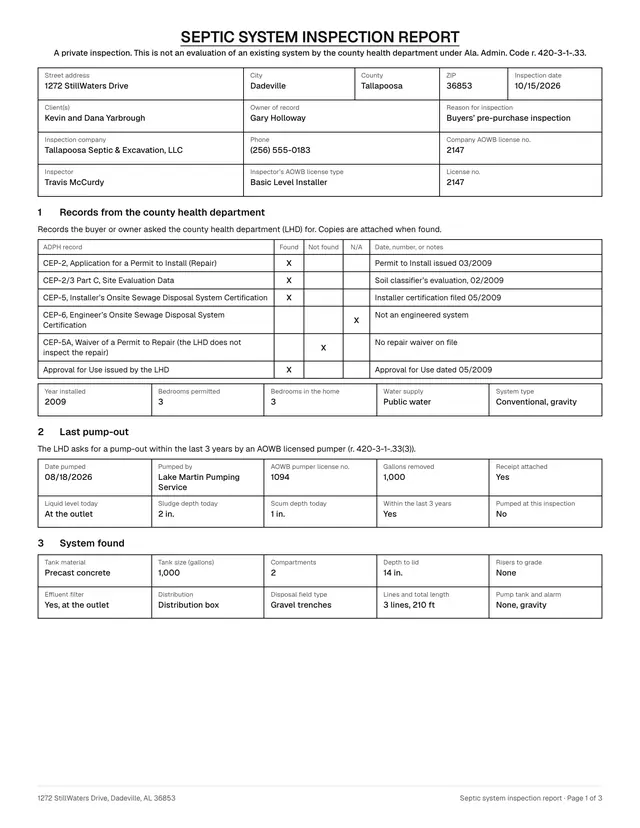
Septic System Inspection Report
Record the tank or cesspool and what was checked. - ArizonaGWS 432
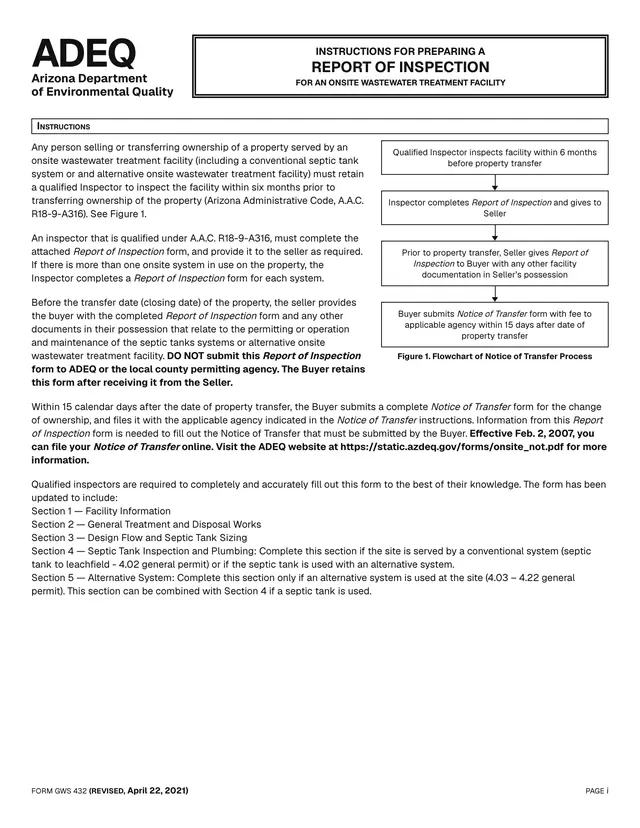
Report of Inspection for an Onsite Wastewater Treatment Facility
Record the tank or cesspool and what was checked. - Arkansas
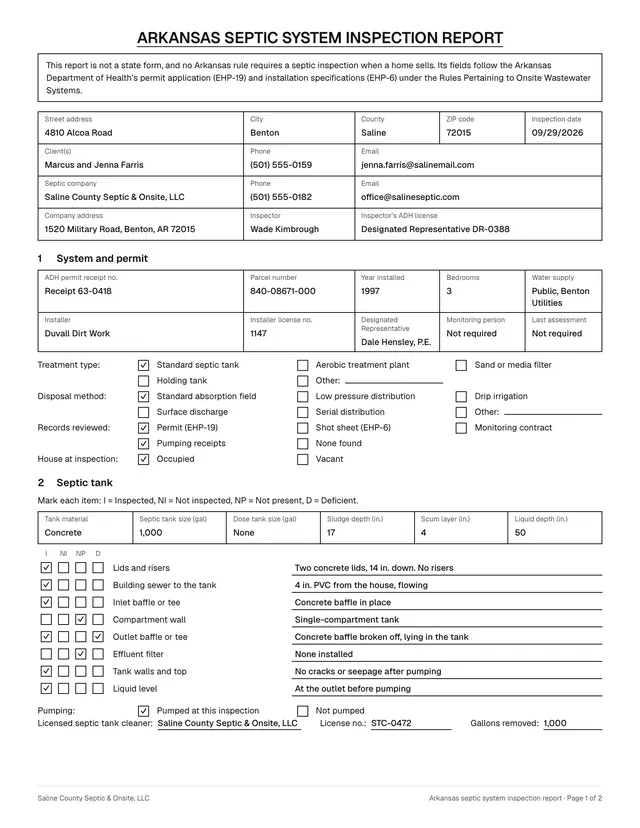
Arkansas Septic System Inspection Report
Record the tank or cesspool and what was checked. - Colorado
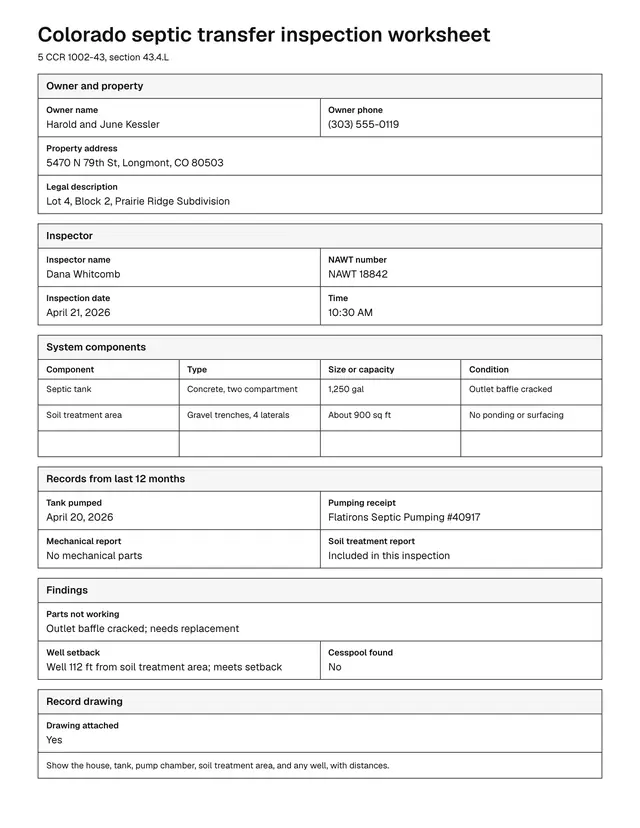
Colorado septic transfer of title inspection report (Regulation 43)
Record the tank or cesspool and what was checked. - Delaware
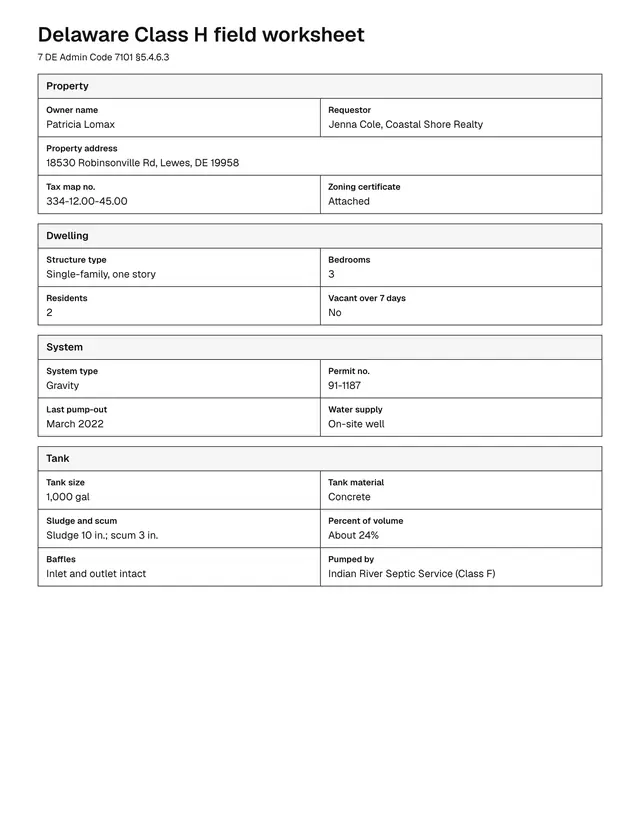
Delaware Class H septic inspection report
Record the tank or cesspool and what was checked. - Florida
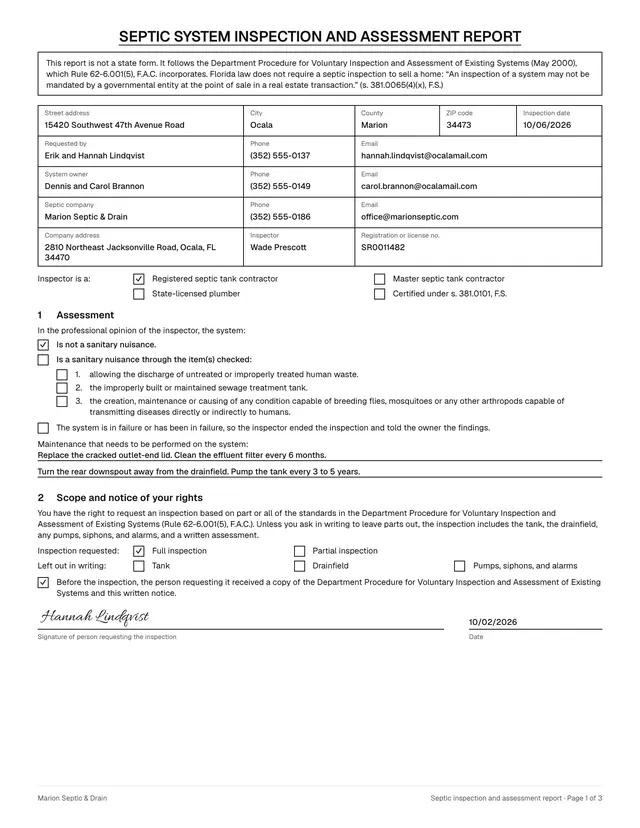
Septic System Inspection and Assessment Report
Record the tank or cesspool and what was checked. - Georgia
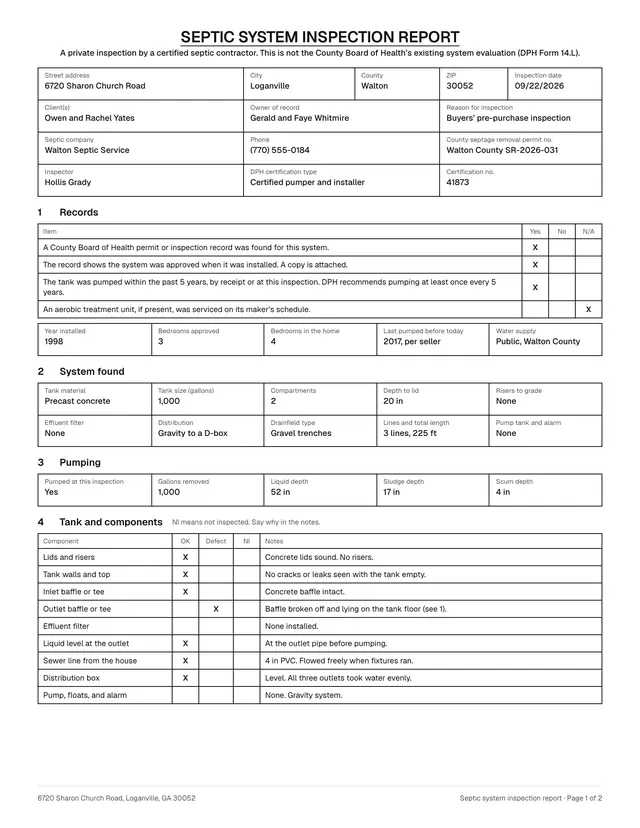
Septic System Inspection Report
Record the tank or cesspool and what was checked. - Hawaii
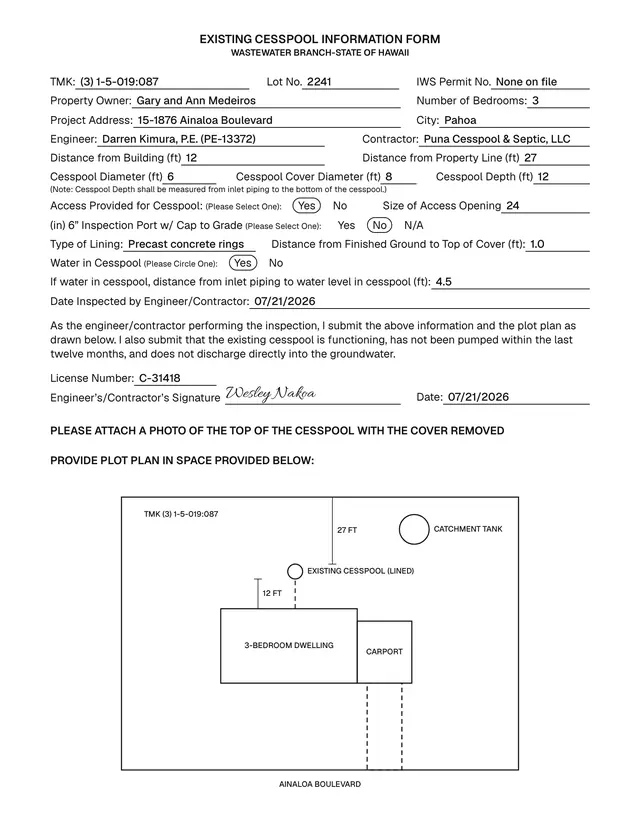
Existing Cesspool Information Form
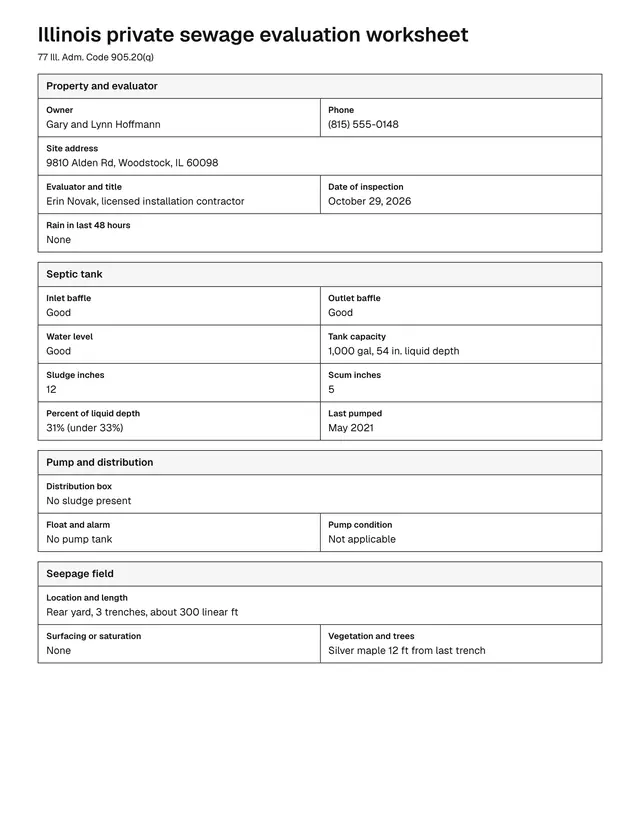
Record the tank or cesspool and what was checked. - Illinois
Illinois private sewage disposal system evaluation
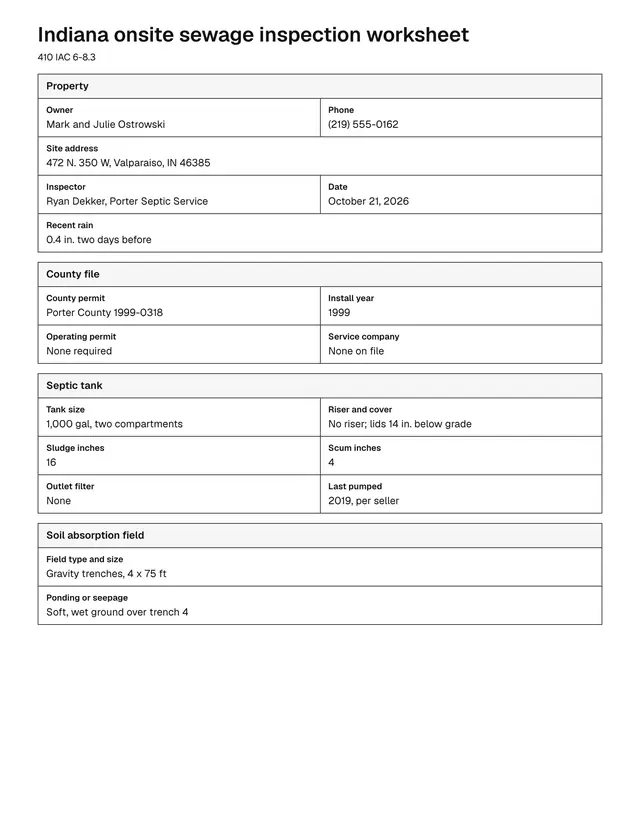
Record the tank or cesspool and what was checked. - Indiana
Indiana onsite sewage system inspection report
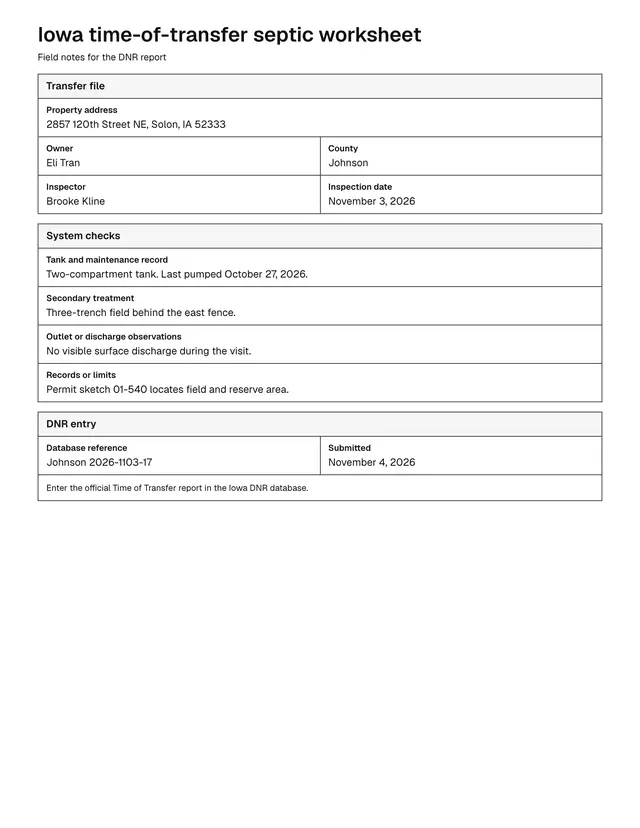
Record the tank or cesspool and what was checked. - Iowa
Iowa time-of-transfer septic worksheet
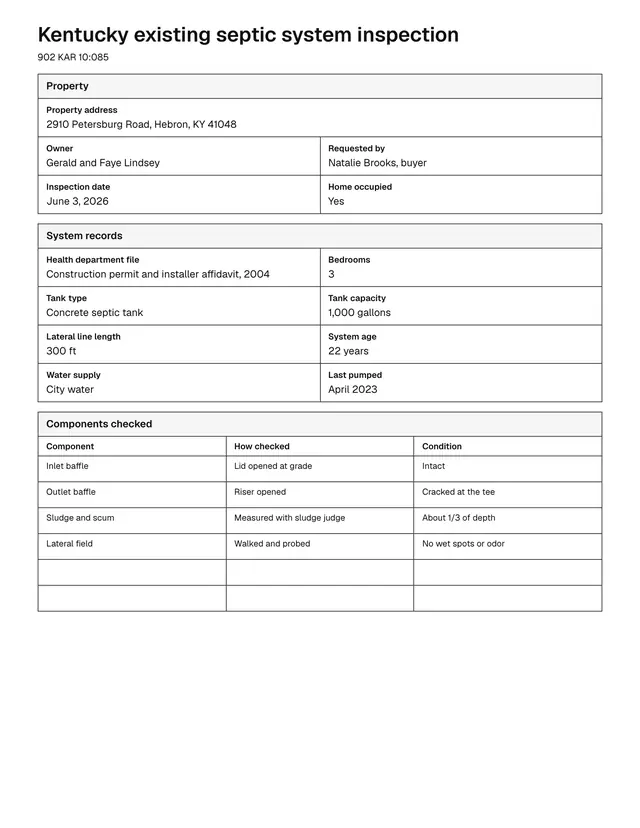
Record the tank or cesspool and what was checked. - Kentucky
Kentucky existing septic system inspection
Record the tank or cesspool and what was checked. - Louisiana
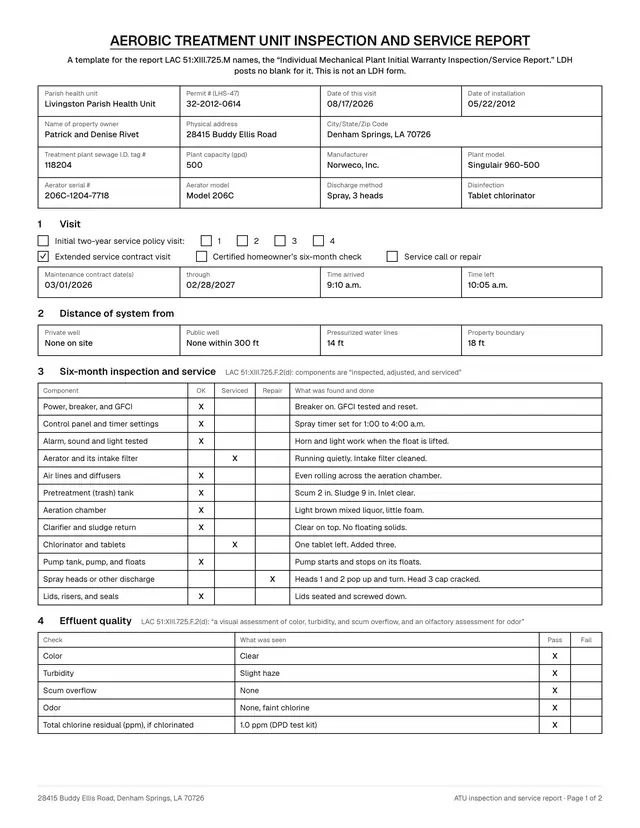
Aerobic Treatment Unit Inspection and Service Report
Record the tank or cesspool and what was checked. - Maryland
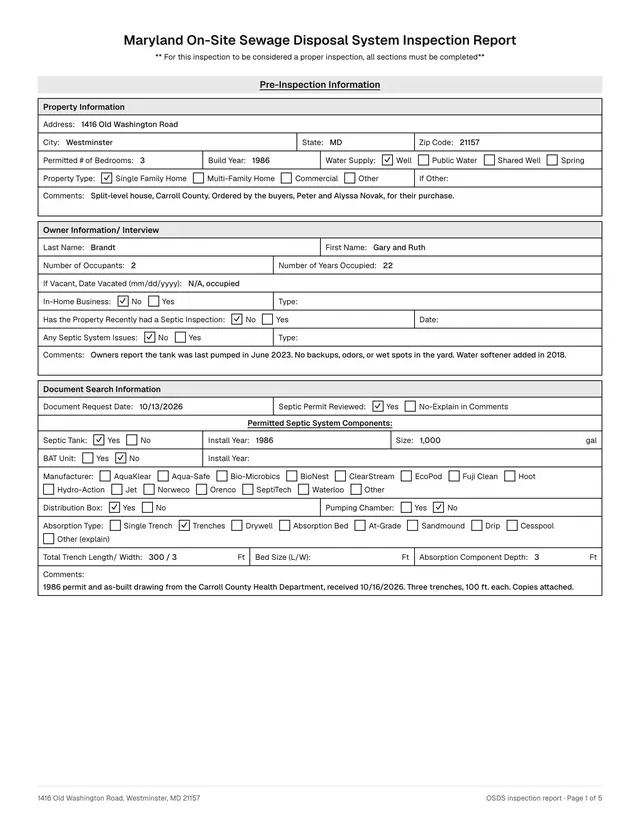
Maryland On-Site Sewage Disposal System Inspection Report
Record the tank or cesspool and what was checked. - Massachusetts
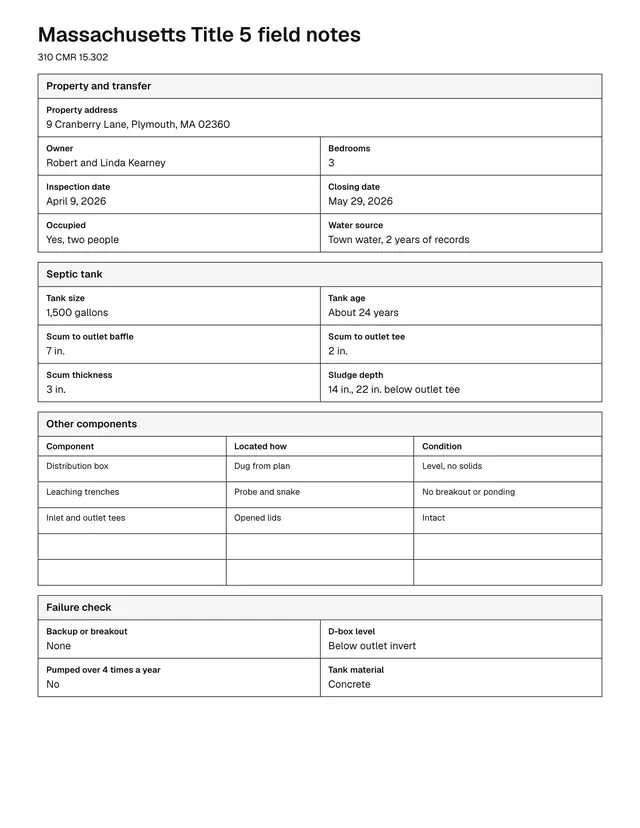
Massachusetts Title 5 inspection report (310 CMR 15.301)
Record the tank or cesspool and what was checked. - Michigan
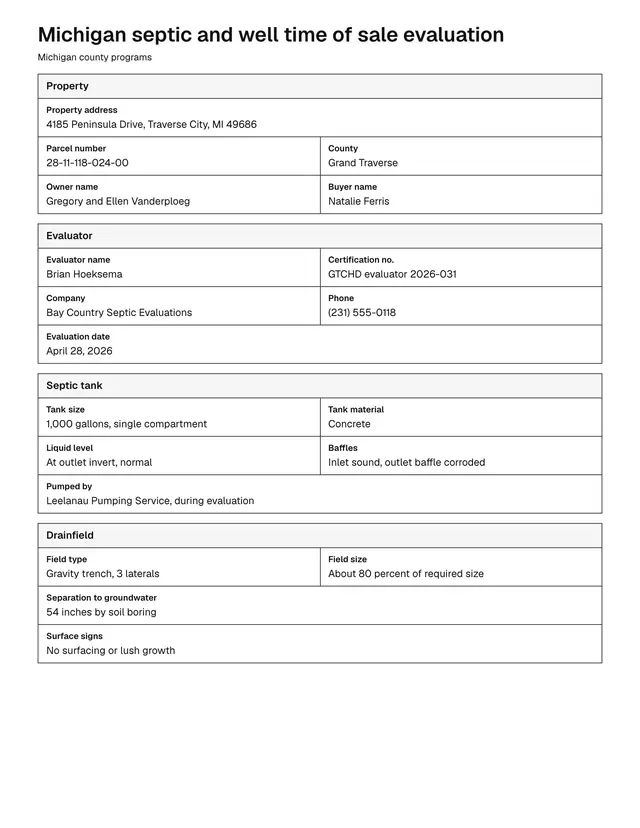
Michigan septic time of sale evaluation
Record the tank or cesspool and what was checked. - Minnesota
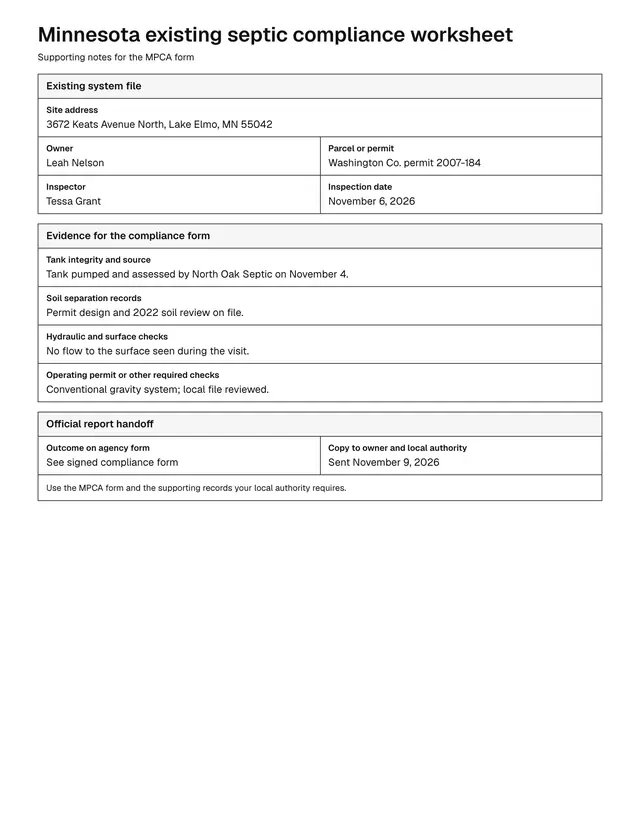
Minnesota existing septic compliance worksheet
Record the tank or cesspool and what was checked. - Mississippi
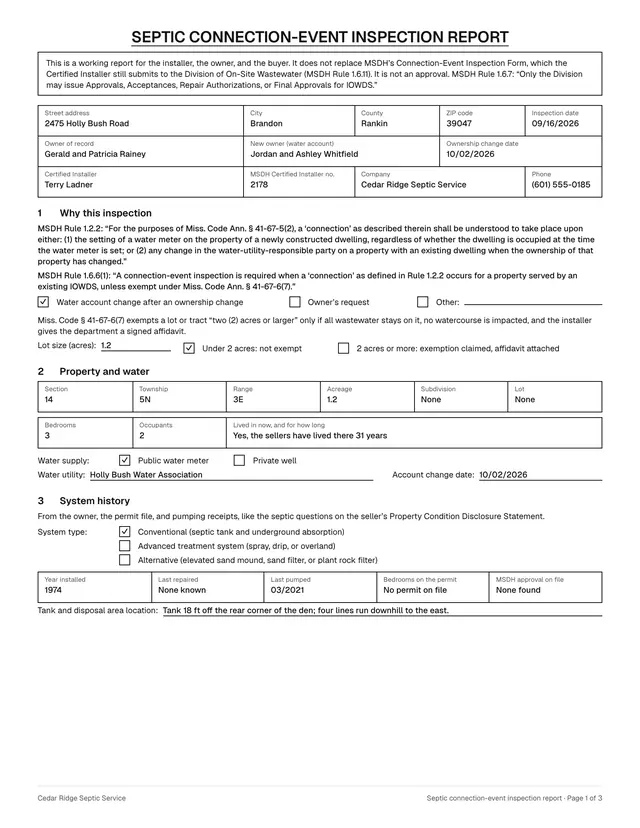
Septic Connection-Event Inspection Report
Record the tank or cesspool and what was checked. - Missouri
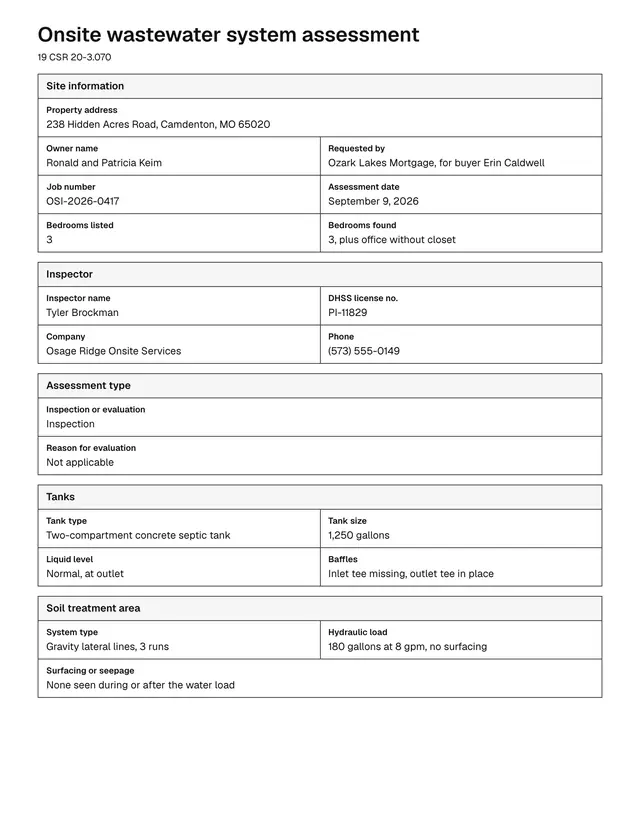
Missouri onsite wastewater inspection and evaluation report
Record the tank or cesspool and what was checked. - Nevada
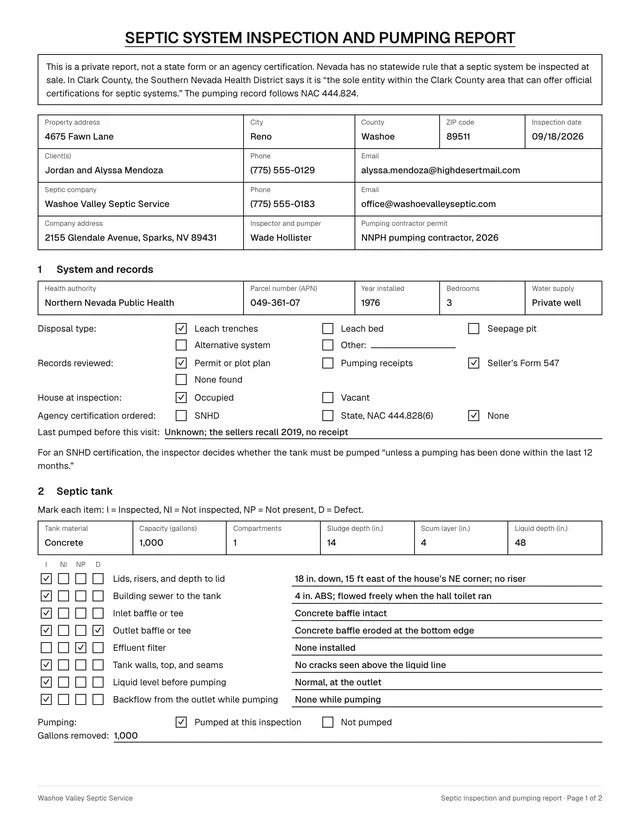
Septic System Inspection and Pumping Report
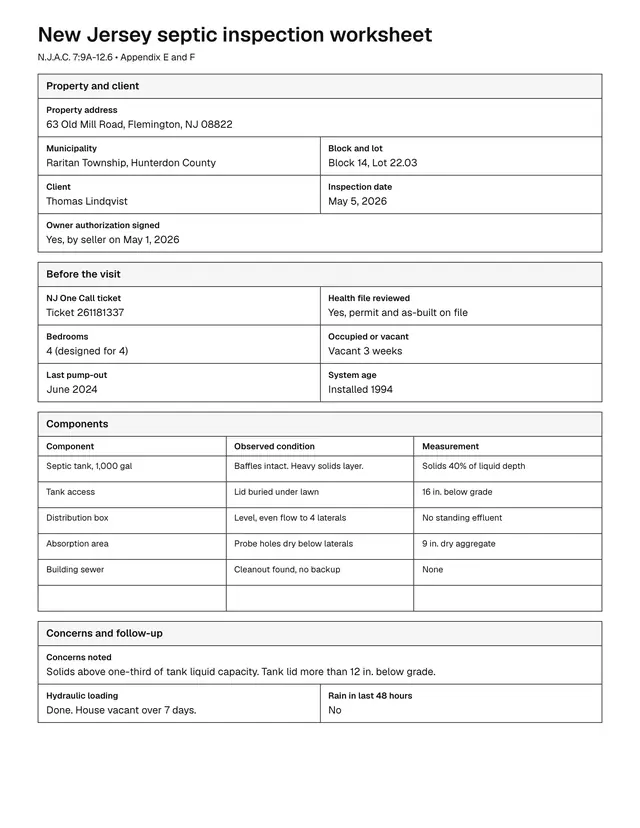
Record the tank or cesspool and what was checked. - New JerseyN.J.A.C. 7:9A Appendix F
New Jersey septic inspection report (Appendix F Onsite System Inspection Form)
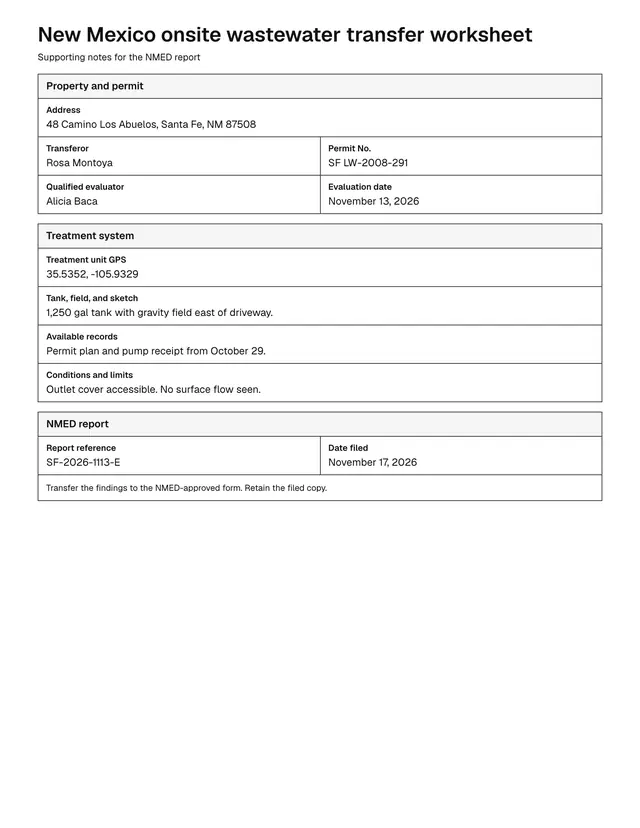
Record the tank or cesspool and what was checked. - New Mexico
New Mexico onsite wastewater transfer worksheet
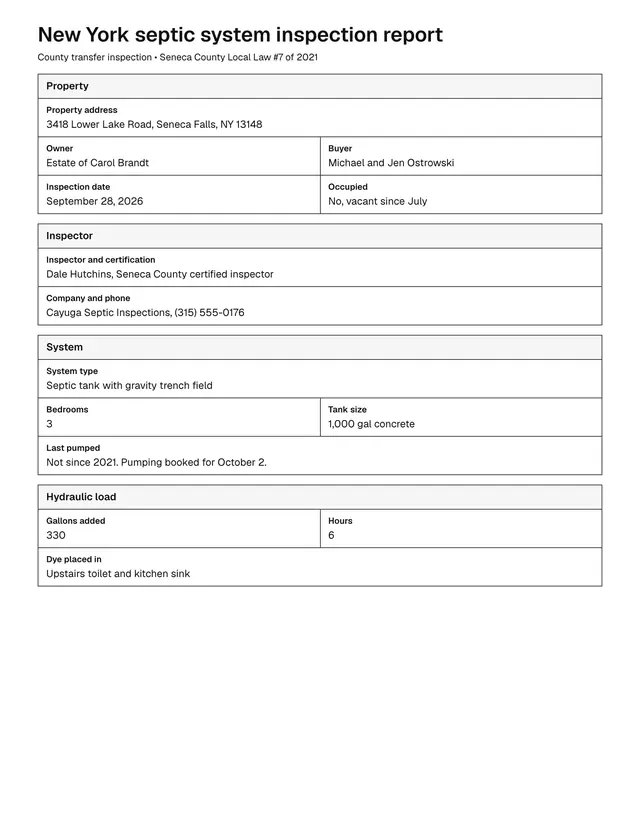
Record the tank or cesspool and what was checked. - New York
New York septic system inspection report (county transfer inspections)
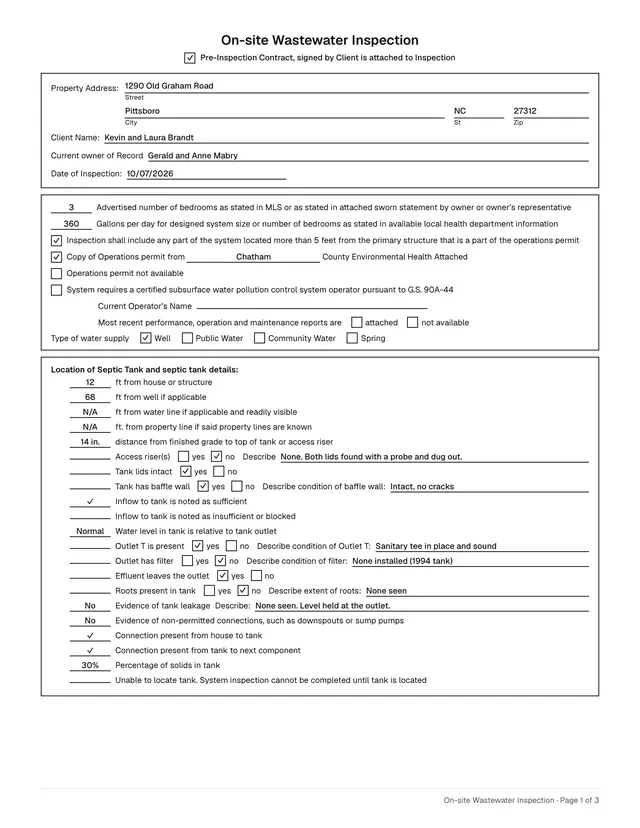
Record the tank or cesspool and what was checked. - North Carolina
On-site Wastewater Inspection
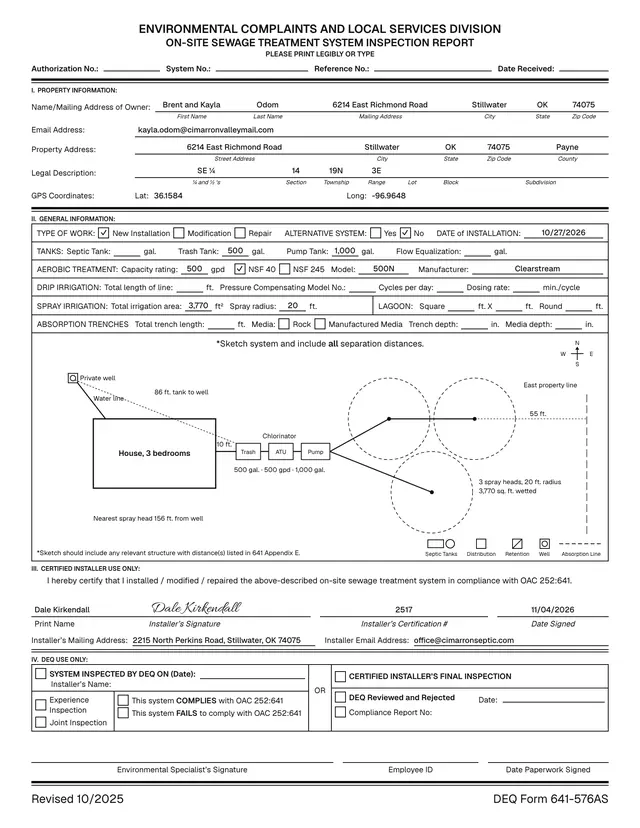
Record the tank or cesspool and what was checked. - OklahomaDEQ Form 641-576AS
On-Site Sewage Treatment System Inspection Report
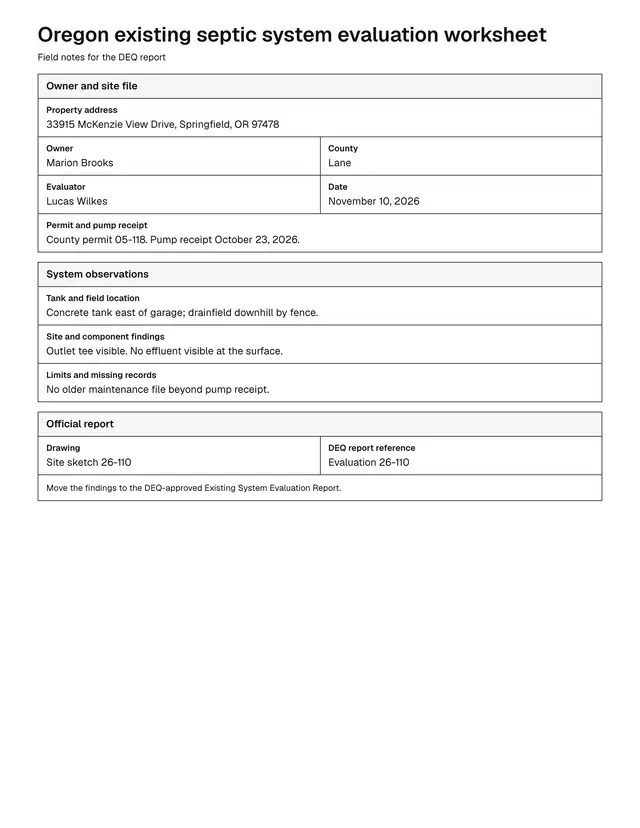
Record the tank or cesspool and what was checked. - Oregon
Oregon existing septic system evaluation worksheet
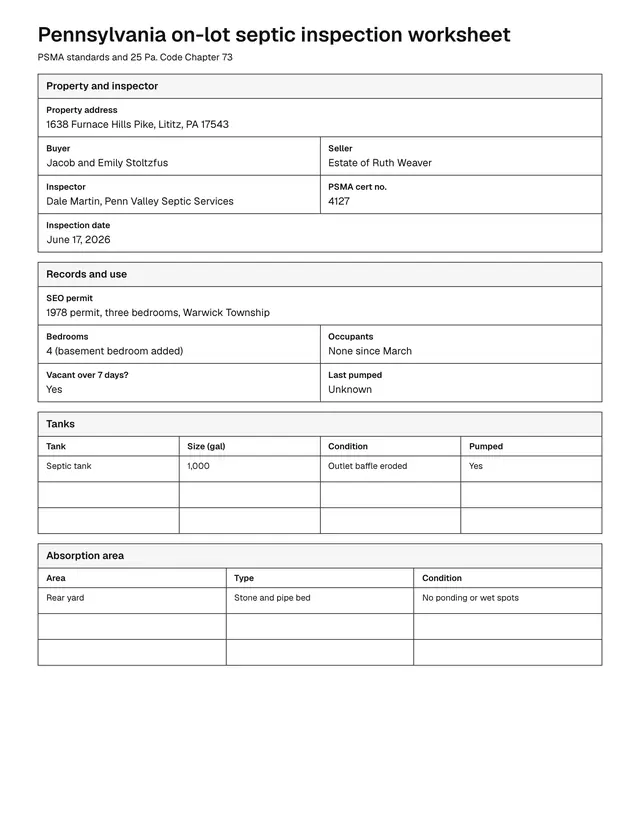
Record the tank or cesspool and what was checked. - Pennsylvania
Pennsylvania on-lot septic system inspection (PSMA)
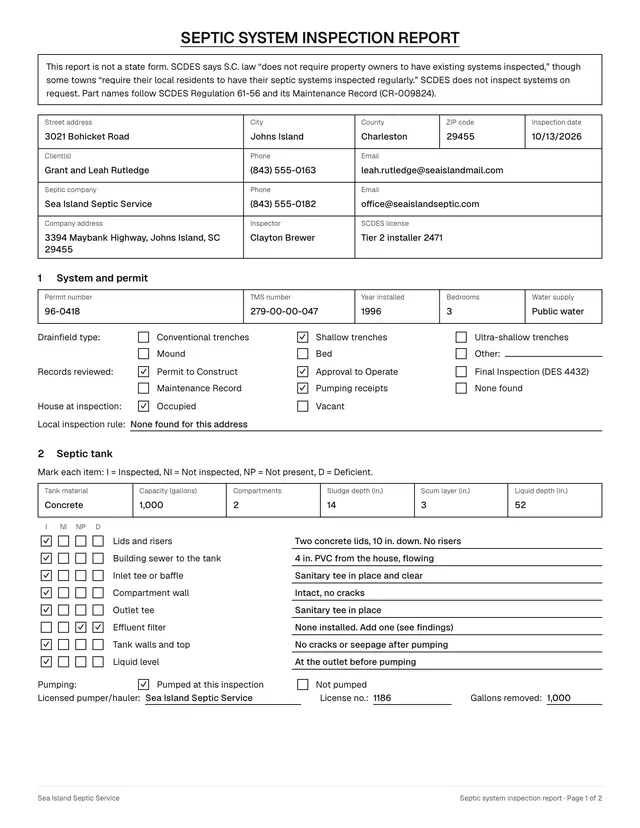
Record the tank or cesspool and what was checked. - South Carolina
Septic System Inspection Report
Record the tank or cesspool and what was checked. - Tennessee
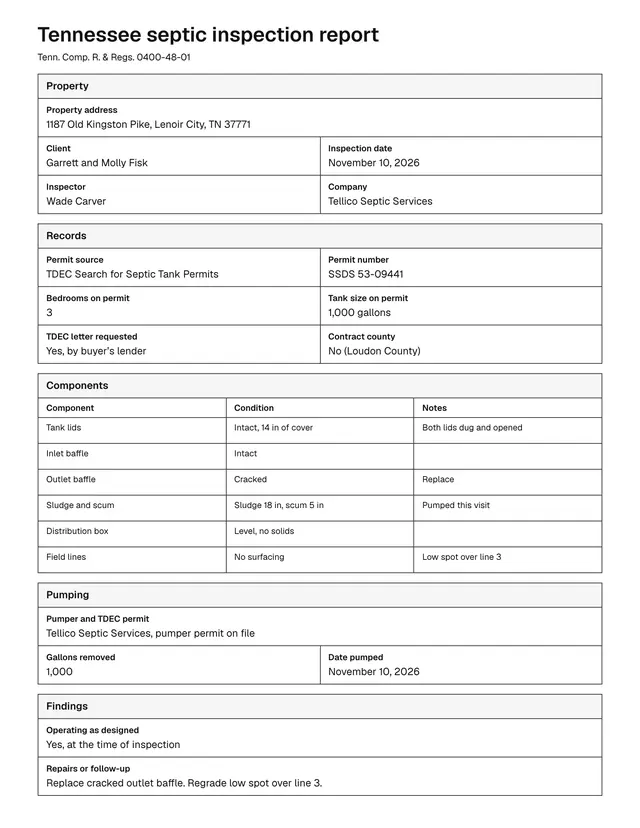
Tennessee septic inspection report
Record the tank or cesspool and what was checked. - Texas
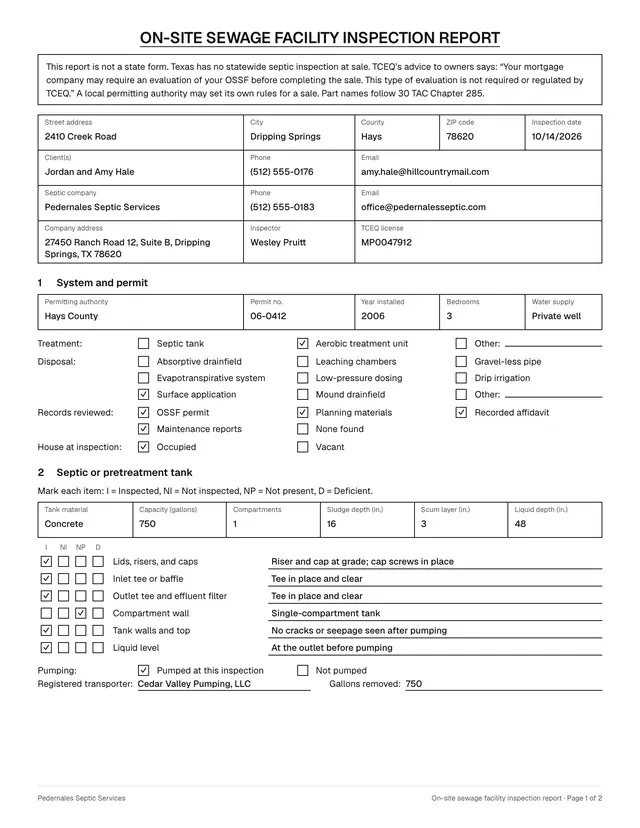
On-Site Sewage Facility Inspection Report
Record the tank or cesspool and what was checked. - Virginia
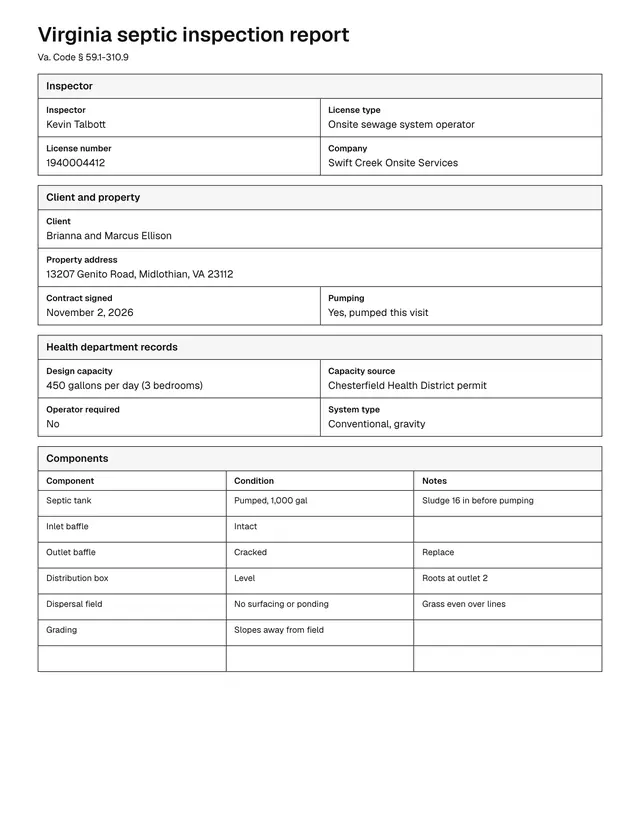
Virginia septic inspection report
Record the tank or cesspool and what was checked. - Washington
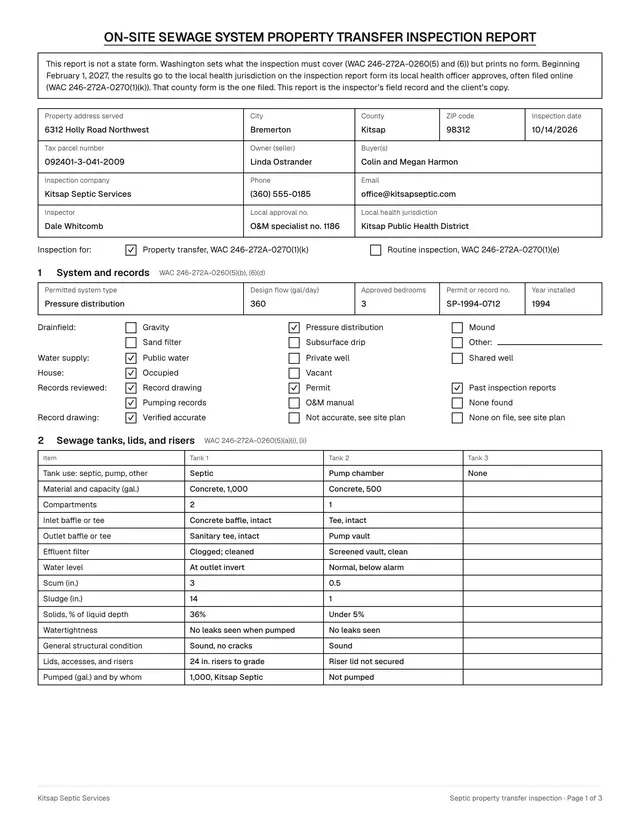
On-Site Sewage System Property Transfer Inspection Report
Record the tank or cesspool and what was checked. - Wisconsin
Wisconsin POWTS maintenance worksheet
Record the tank or cesspool and what was checked.