Arkansas Septic System Inspection Report
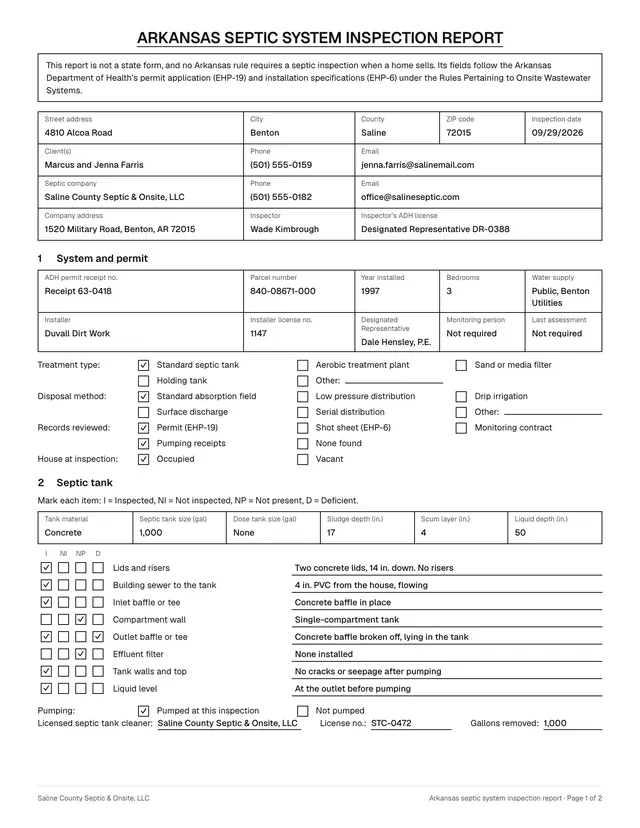
A report on an existing Arkansas septic system for a buyer, seller, or lender, built on the permit fields the Arkansas Department of Health uses.
At a glance
- Required by
- No state rule; buyer or lender asks
- Filled out by
- Septic professional
- Pumping by
- ADH-licensed septic tank cleaner
- Repairs need
- An ADH permit
Completed example
Download PDFWhat is an Arkansas septic inspection report?
It’s a written check of an existing septic system: the tank opened and pumped, the field lines walked and probed, and the permit file compared with what’s in the ground. Buyers order it, and some lenders ask for it on rural loans.
The Arkansas Department of Health has no form for it. Its forms are for permits and new installs, like the EHP-19 permit application and the EHP-6 shot sheet. This report borrows their field names, so the receipt number, parcel, bedrooms, tank sizes, and field lines match the county file.
When do you need one?
When the buyer or lender asks. ADH’s onsite wastewater rules have no point-of-sale inspection. The only sale wording in ADH’s forms is on OPT-A, where a builder promises to pass the system’s information to the buyer. A home inspection report leaves septic out, so it takes its own visit.
Two rules shape what you tell the buyer. A repair needs an ADH permit first, and an emergency repair needs one “within ten working days” (§ 4.7). An alternate system needs a monitoring contract for life, with an assessment at least every 6 months (§ 12).
Installers should also know that ADH’s October 5, 2026 notice says it will enforce the five-day shot sheet deadline starting January 1, 2027. A missing EHP-6 in the file is worth noting.
How to fill it out
Pull the permit first. The county’s local health unit keeps the EHP-19. Copy the receipt number, parcel, bedrooms, installer and license number, and Designated Representative into section 1, and check current licenses in ADH’s licensee lookup.
Open and pump the tank. Measure sludge and scum before the truck starts, then check the baffles and walls once it’s empty. The truck needs a license under ADH’s septic tank cleaner rules, so put the cleaner’s license number on the line.
Walk the field and measure. Check the D-box, probe every line, and look for wet spots. The setback table follows § 6.2: 10 feet from buildings, property lines, and water lines, and 100 feet from wells, streams, and sinkholes.
Say who fixes it, then sign. List each deficiency on its own line with the fix. The statement above your signature quotes § 2.2: an “Approved system” doesn’t mean it will work for any set time.
Do you have to write it up twice?
Often, yes. Sludge depths and setbacks go on a clipboard at the tank lid, then get typed up at night for the buyer, the agent, and the lender.
Noma specializes in the Arkansas Septic System Inspection Report. Noma’s property inspection reports let you set your own sections and titles, so yours can follow this form section by section, and the summary always lists the problems you mark most serious. Booking, invoices, and online payment come with it. See how Noma handles inspection reports.
Frequentlyaskedquestions
Send this document in minutes, not an afternoon.
Other states
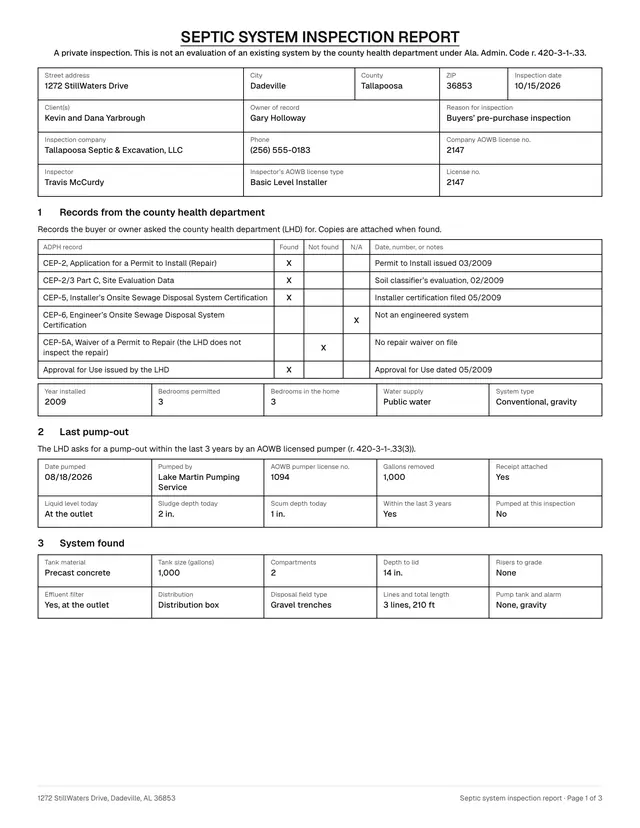
Septic inspection report templates- Alabama
Septic System Inspection Report
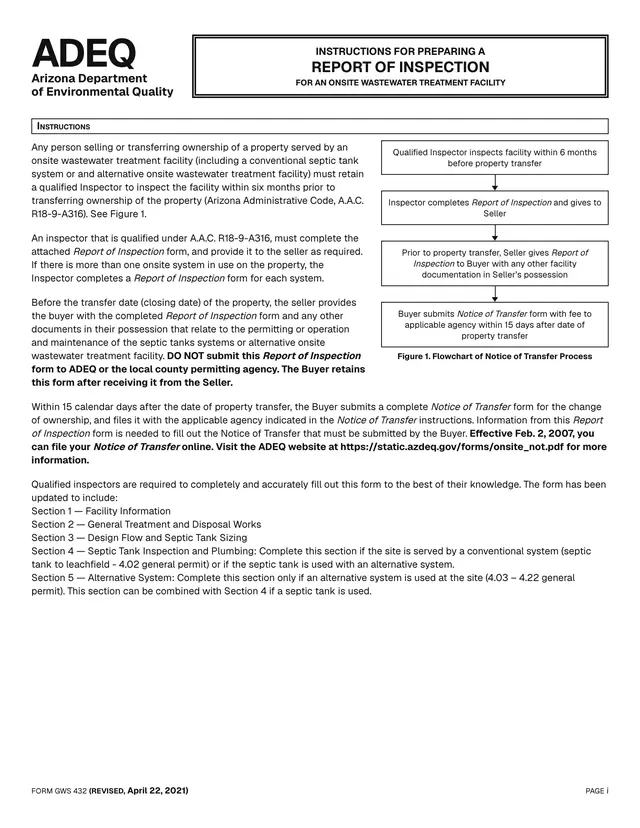
Record the tank or cesspool and what was checked. - ArizonaGWS 432
Report of Inspection for an Onsite Wastewater Treatment Facility
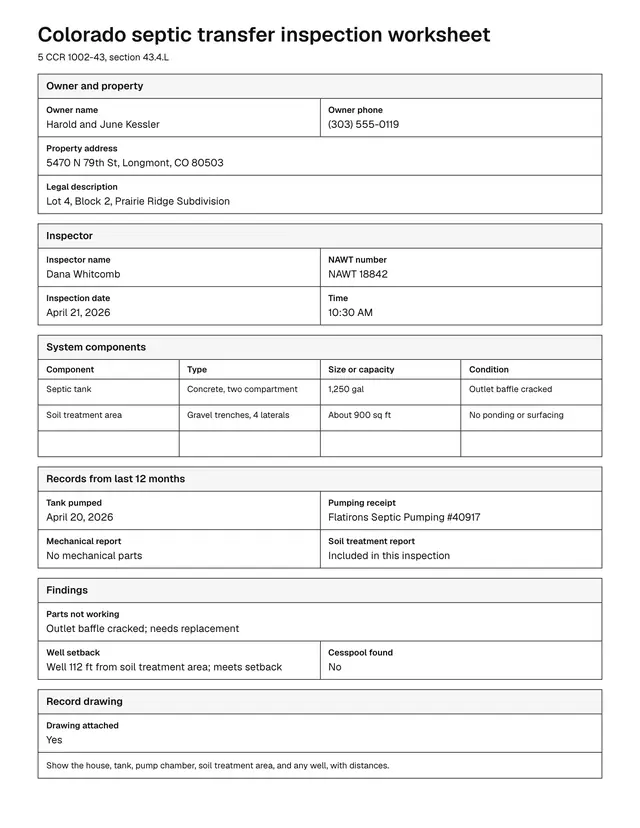
Record the tank or cesspool and what was checked. - Colorado
Colorado septic transfer of title inspection report (Regulation 43)
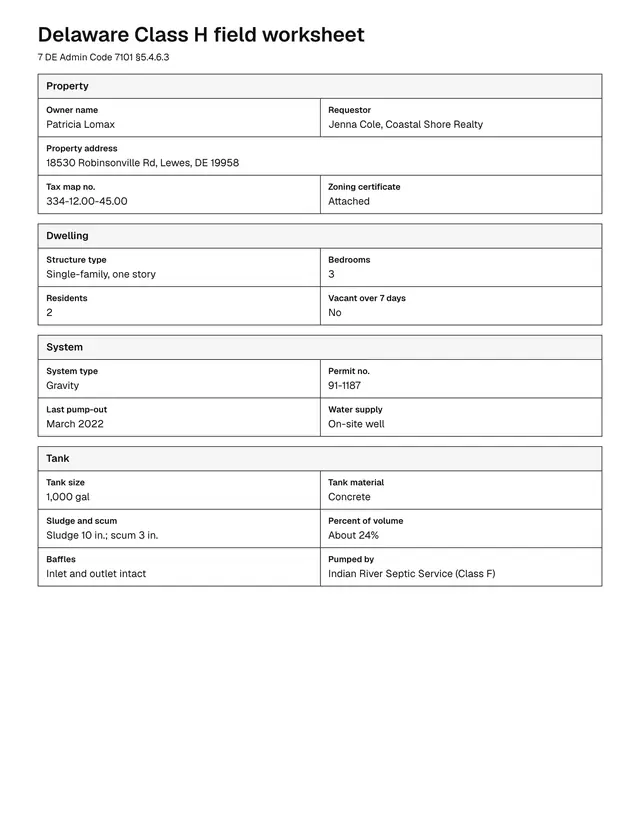
Record the tank or cesspool and what was checked. - Delaware
Delaware Class H septic inspection report
Record the tank or cesspool and what was checked. - Florida
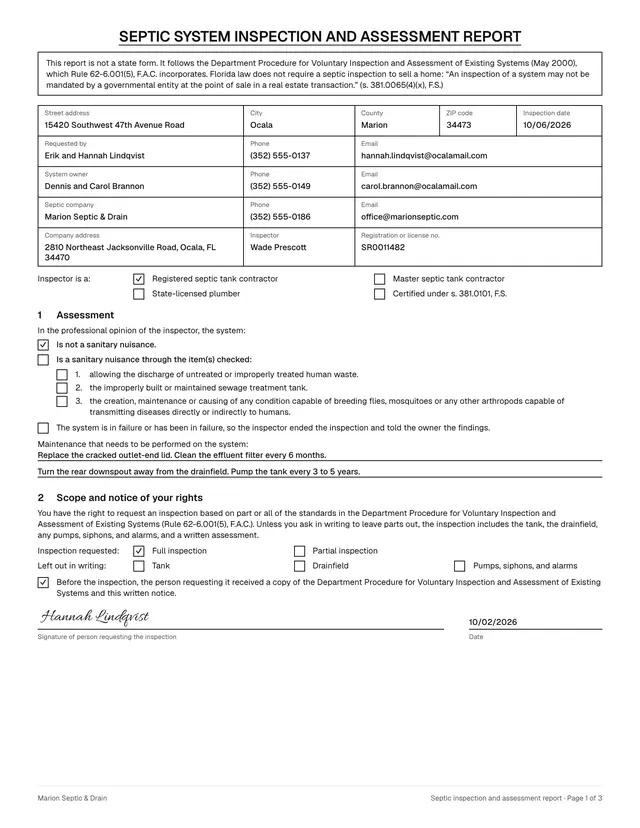
Septic System Inspection and Assessment Report
Record the tank or cesspool and what was checked. - Georgia
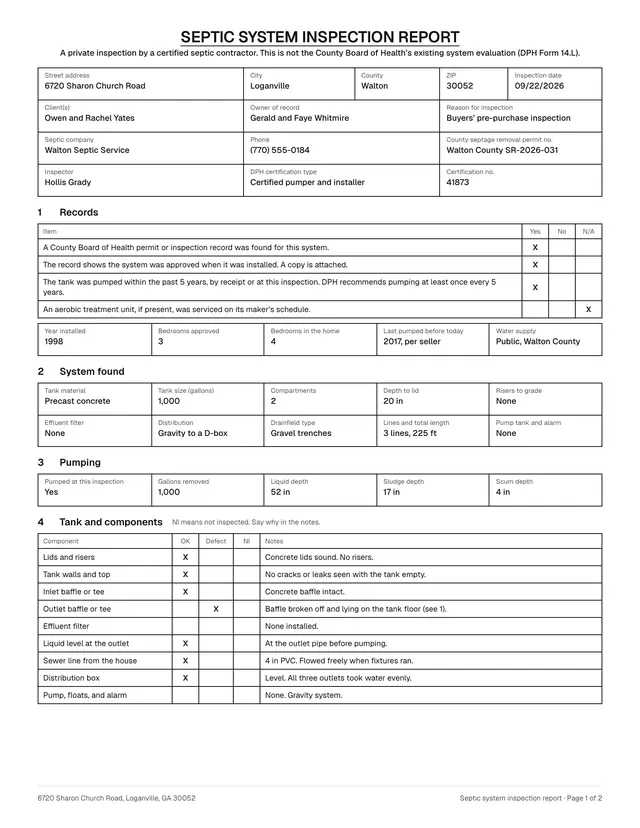
Septic System Inspection Report
Record the tank or cesspool and what was checked. - Hawaii
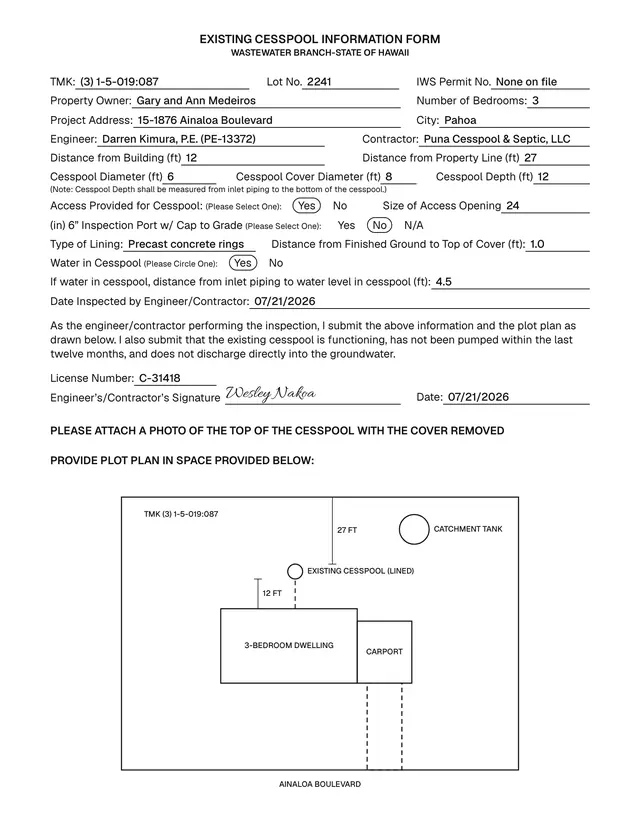
Existing Cesspool Information Form
Record the tank or cesspool and what was checked. - Illinois
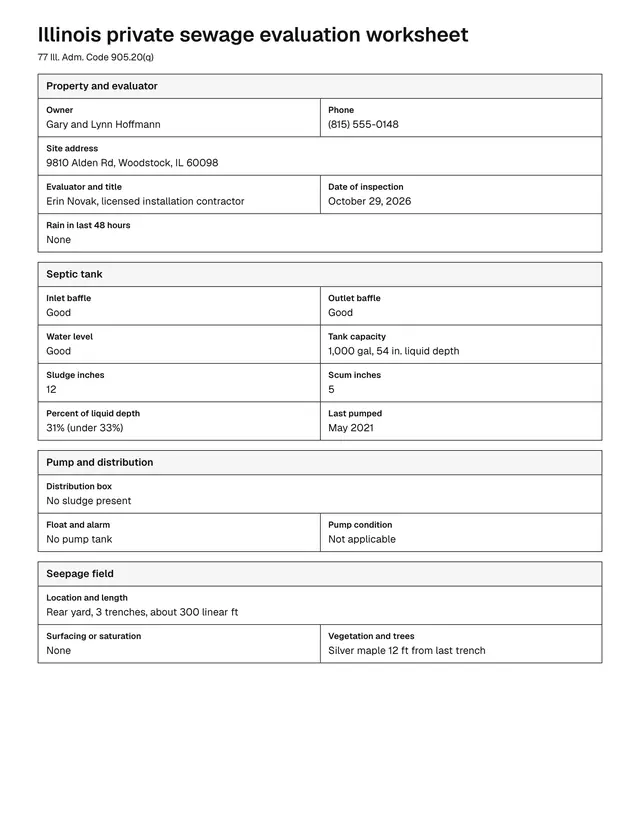
Illinois private sewage disposal system evaluation
Record the tank or cesspool and what was checked. - Indiana
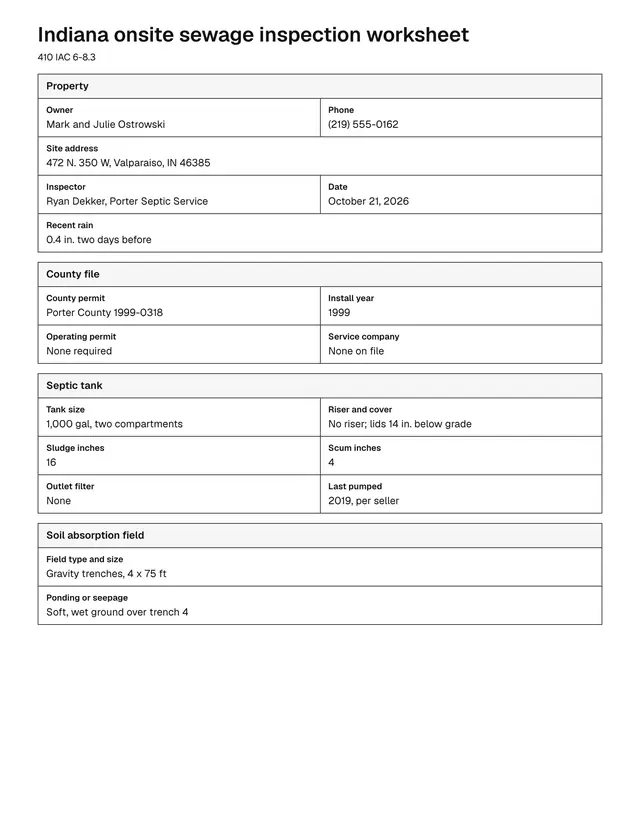
Indiana onsite sewage system inspection report
Record the tank or cesspool and what was checked. - Iowa
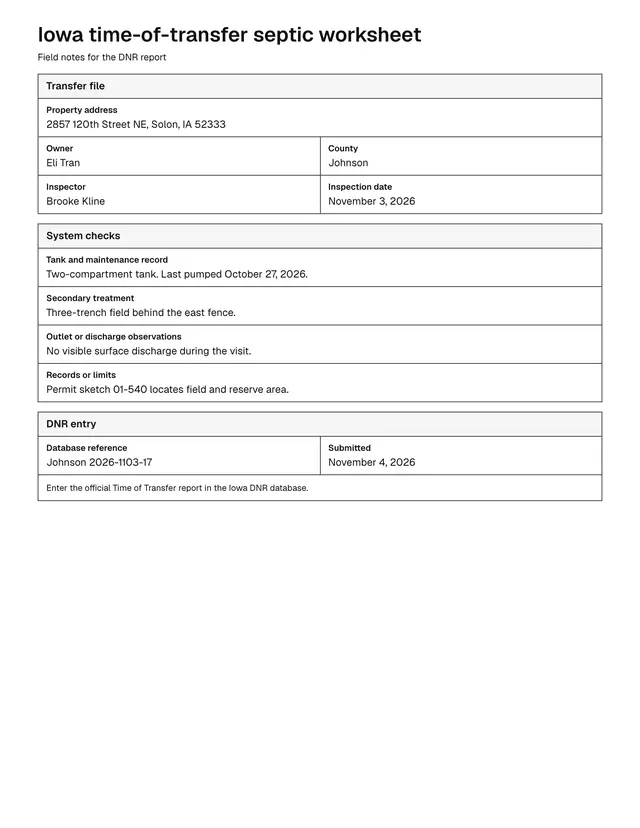
Iowa time-of-transfer septic worksheet
Record the tank or cesspool and what was checked. - Kentucky
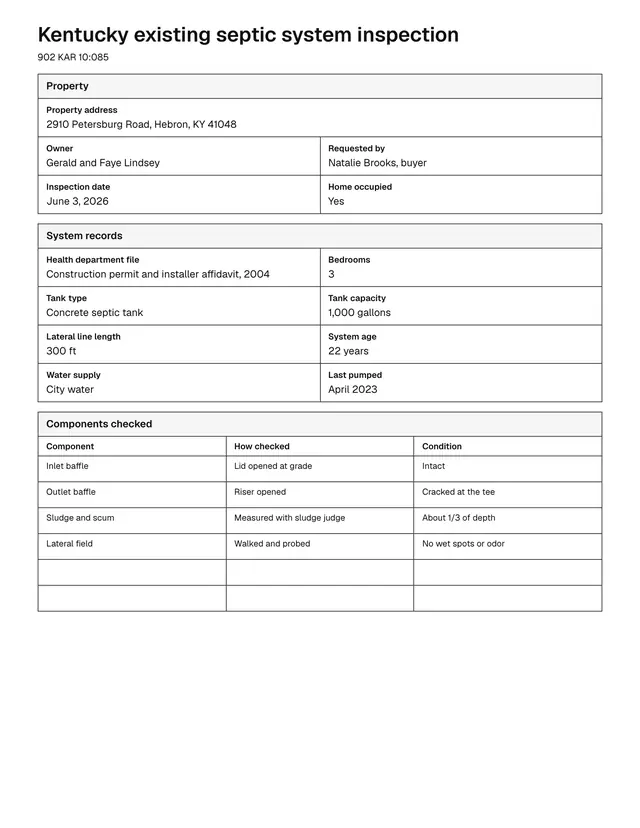
Kentucky existing septic system inspection
Record the tank or cesspool and what was checked. - Louisiana
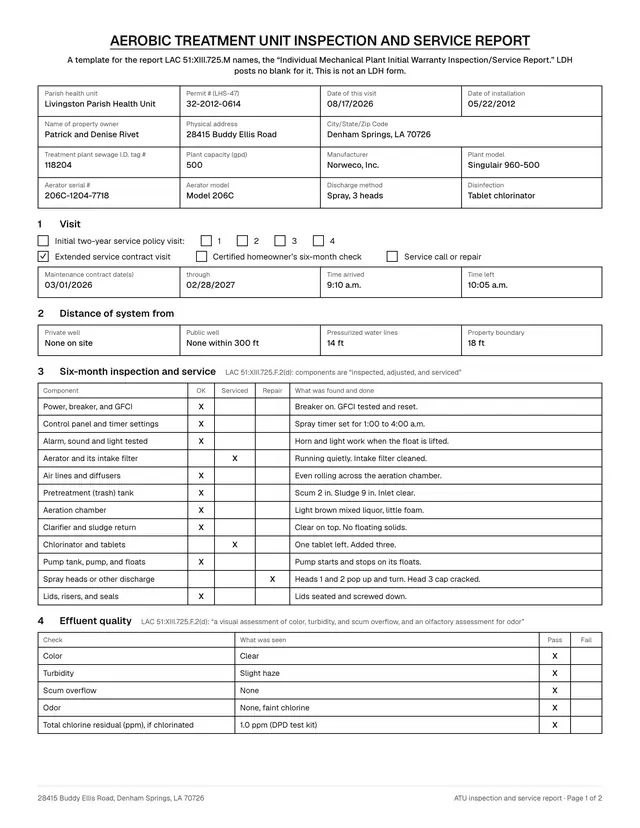
Aerobic Treatment Unit Inspection and Service Report
Record the tank or cesspool and what was checked. - Maryland
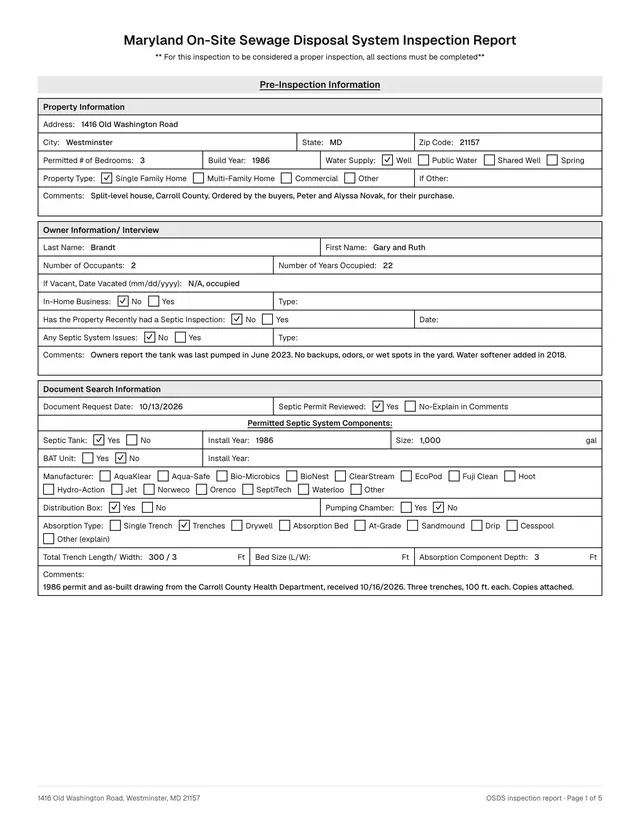
Maryland On-Site Sewage Disposal System Inspection Report
Record the tank or cesspool and what was checked. - Massachusetts
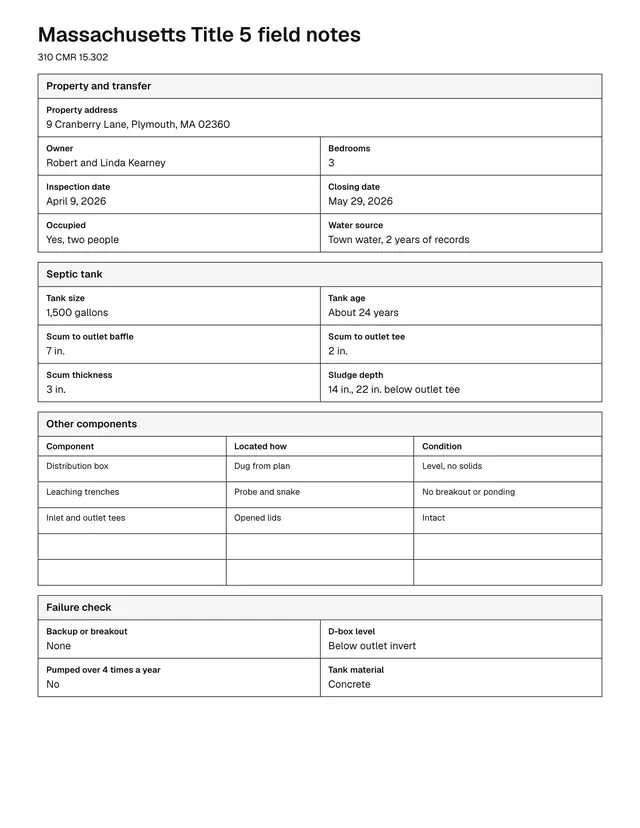
Massachusetts Title 5 inspection report (310 CMR 15.301)
Record the tank or cesspool and what was checked. - Michigan
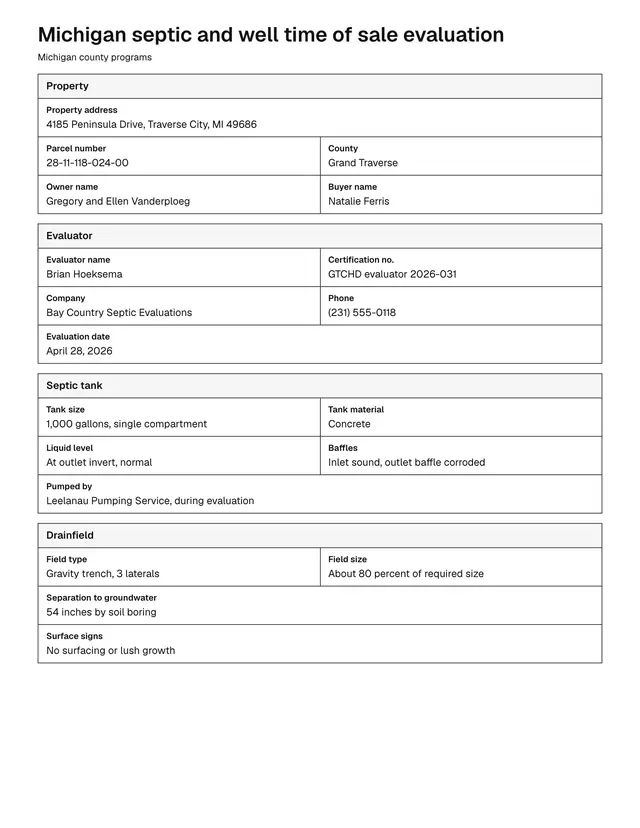
Michigan septic time of sale evaluation
Record the tank or cesspool and what was checked. - Minnesota
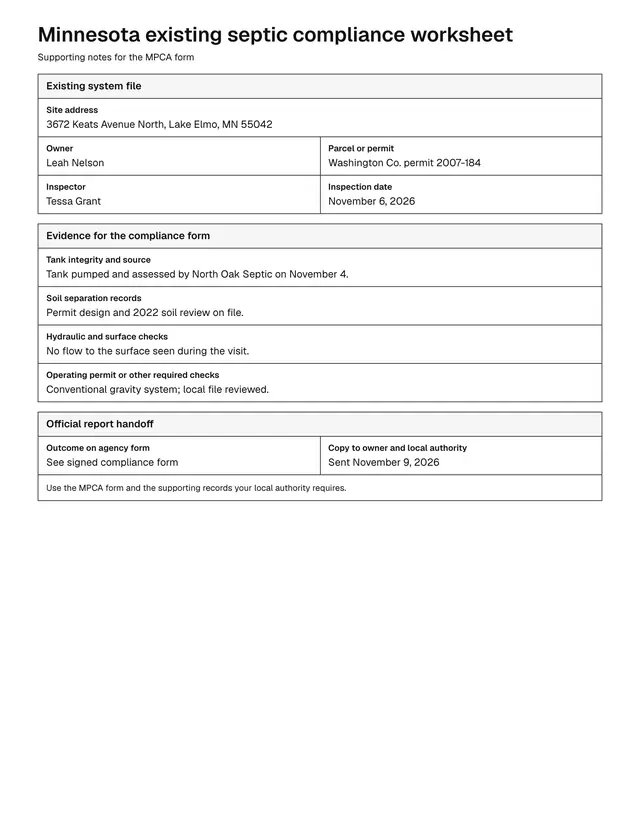
Minnesota existing septic compliance worksheet
Record the tank or cesspool and what was checked. - Mississippi
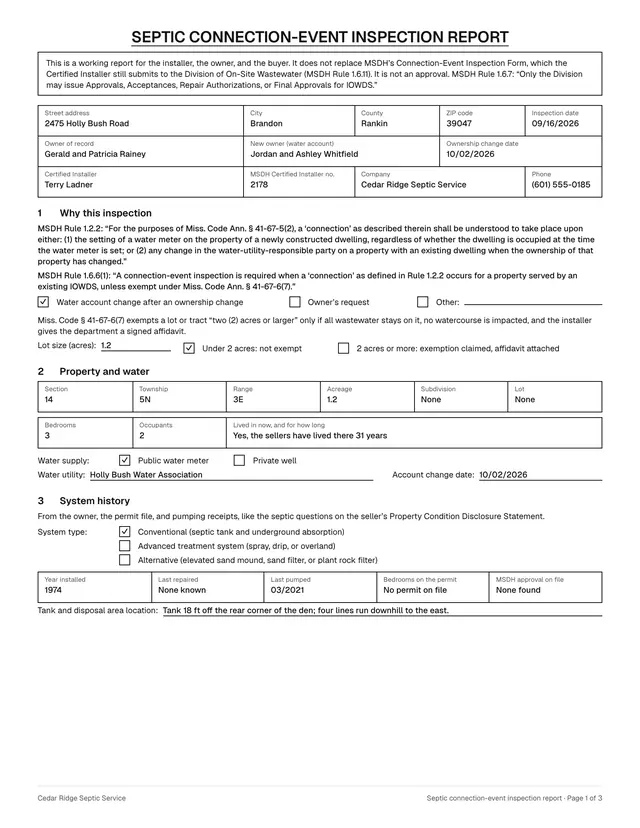
Septic Connection-Event Inspection Report
Record the tank or cesspool and what was checked. - Missouri
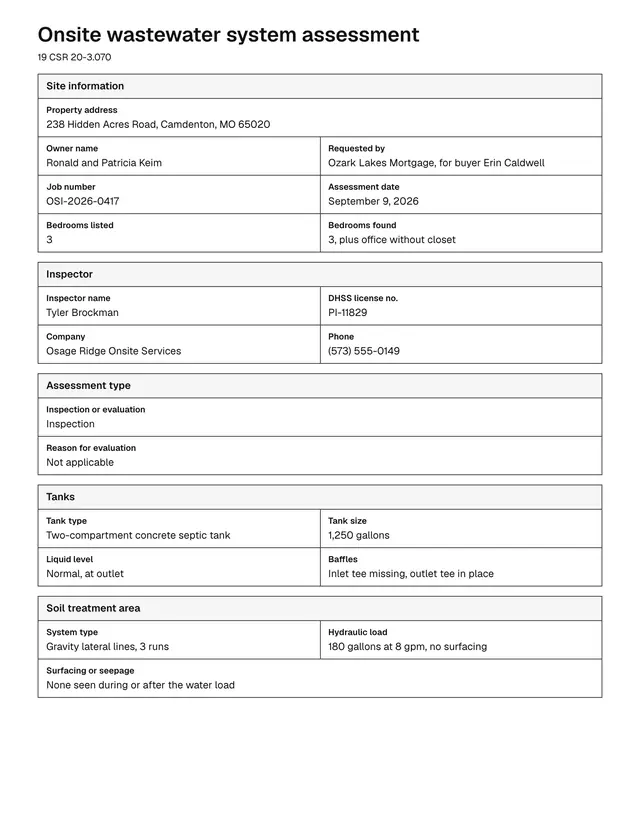
Missouri onsite wastewater inspection and evaluation report
Record the tank or cesspool and what was checked. - Nevada
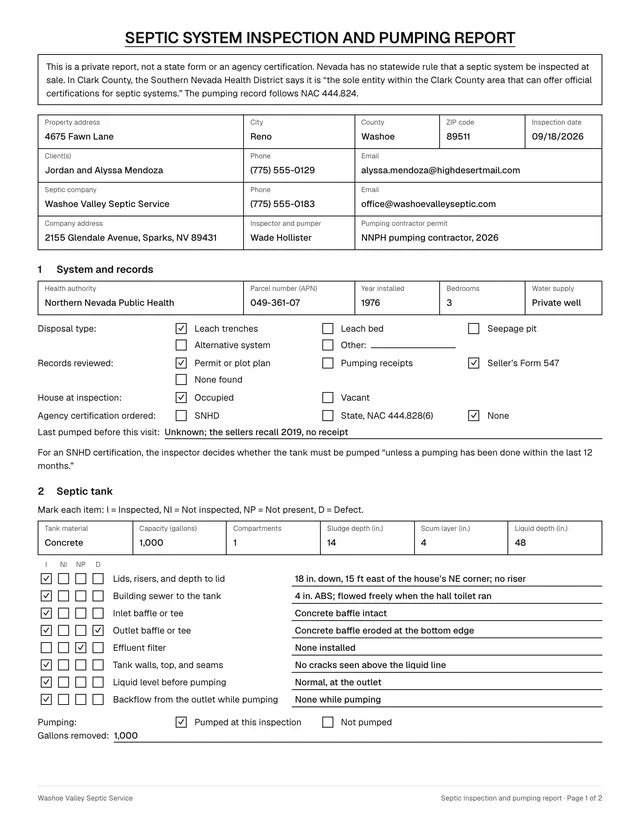
Septic System Inspection and Pumping Report
Record the tank or cesspool and what was checked. - New JerseyN.J.A.C. 7:9A Appendix F
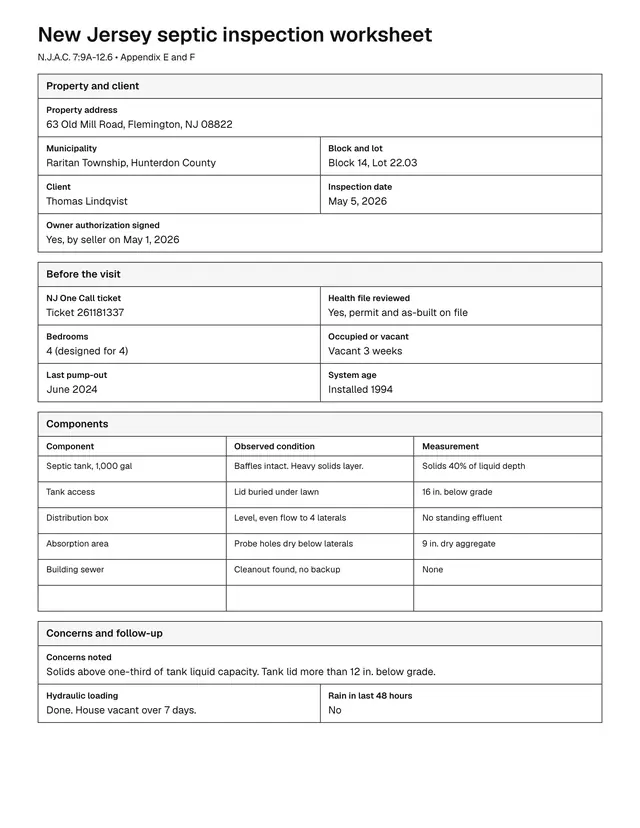
New Jersey septic inspection report (Appendix F Onsite System Inspection Form)
Record the tank or cesspool and what was checked. - New Mexico
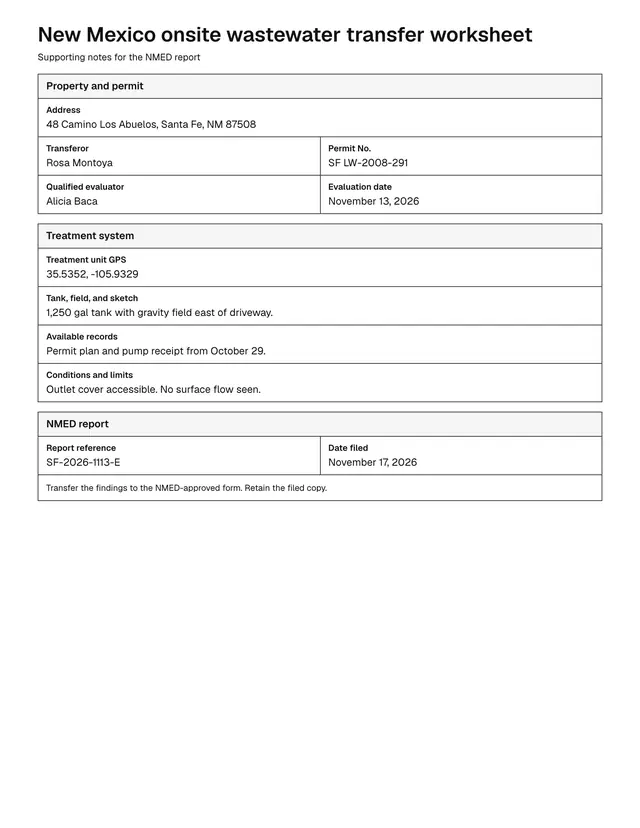
New Mexico onsite wastewater transfer worksheet
Record the tank or cesspool and what was checked. - New York
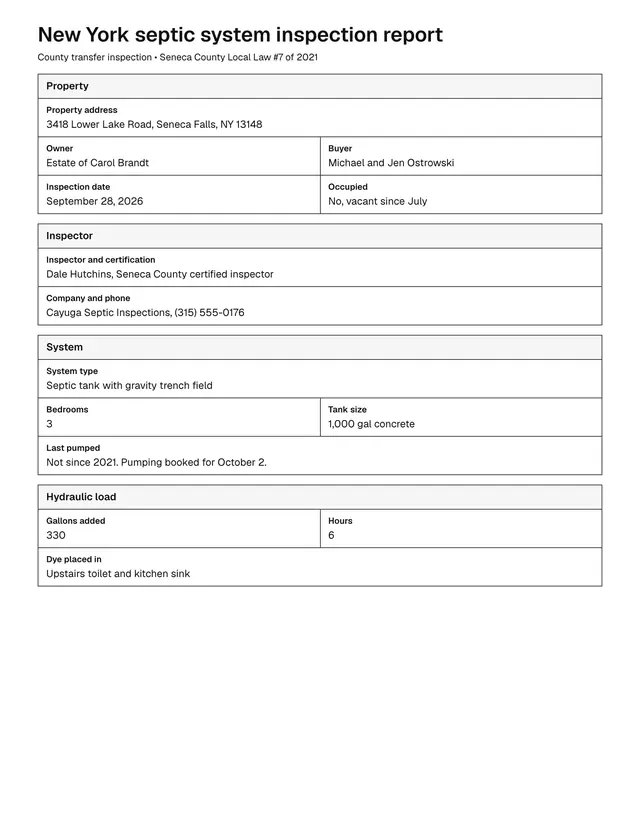
New York septic system inspection report (county transfer inspections)
Record the tank or cesspool and what was checked. - North Carolina
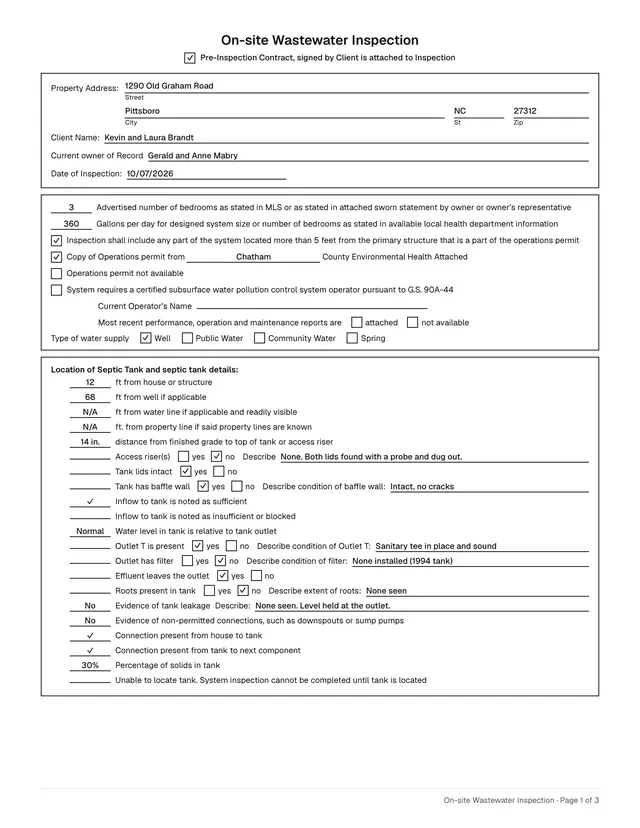
On-site Wastewater Inspection
Record the tank or cesspool and what was checked. - Ohio
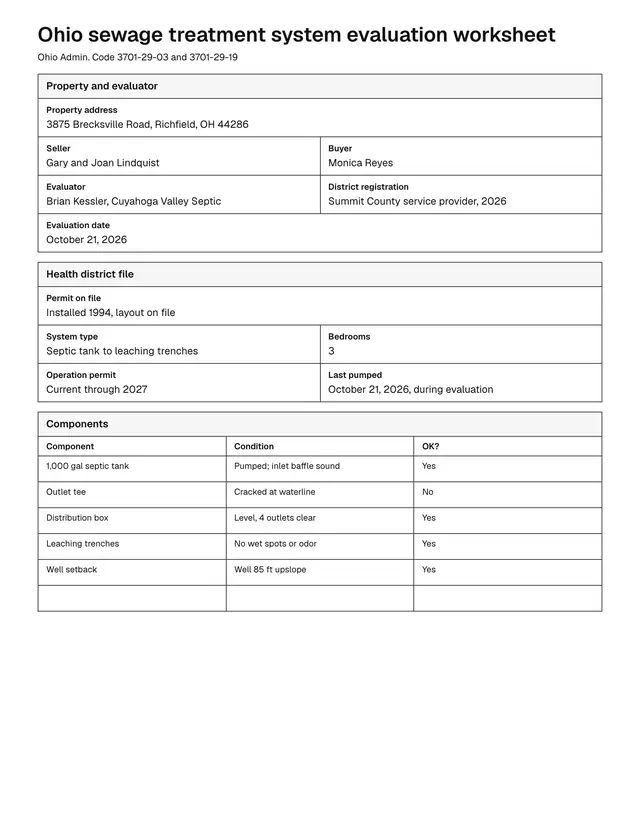
Ohio sewage treatment system evaluation for property transfer
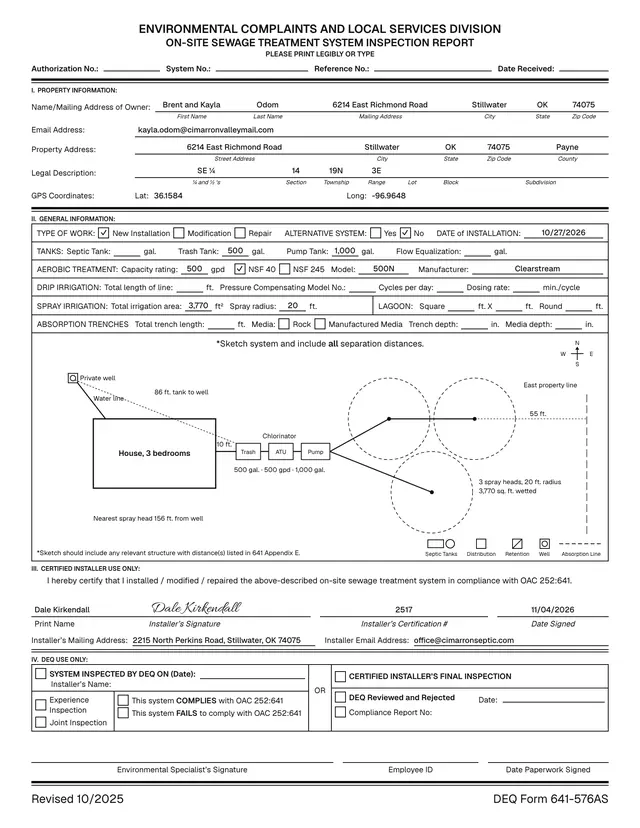
Record the tank or cesspool and what was checked. - OklahomaDEQ Form 641-576AS
On-Site Sewage Treatment System Inspection Report
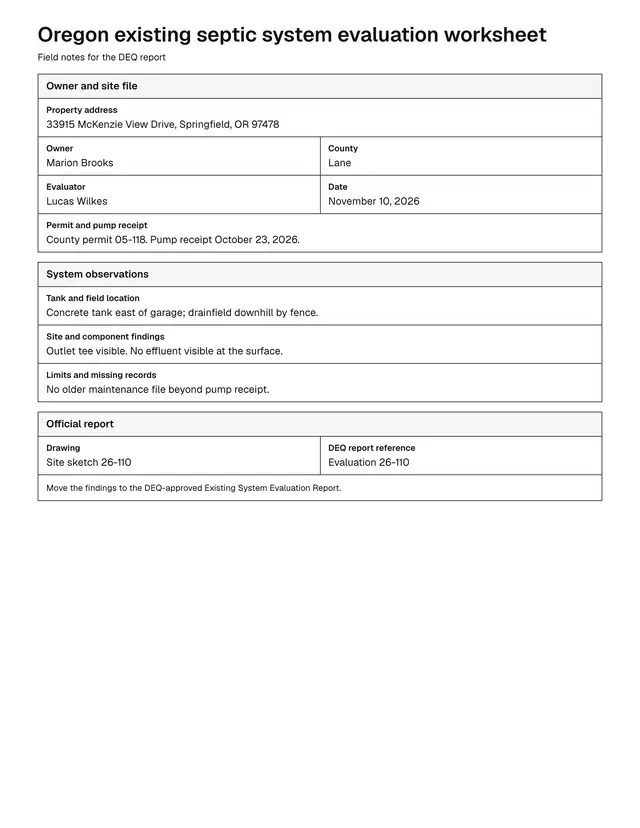
Record the tank or cesspool and what was checked. - Oregon
Oregon existing septic system evaluation worksheet
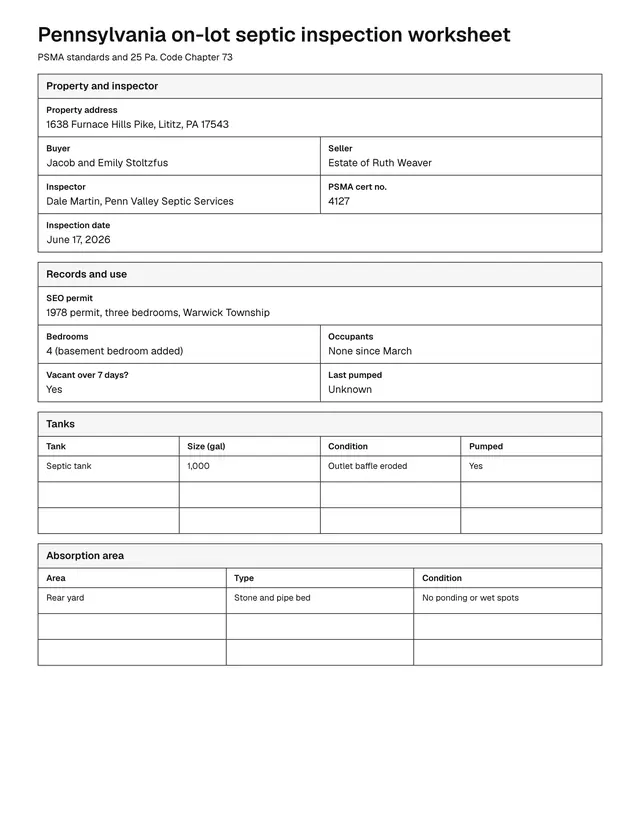
Record the tank or cesspool and what was checked. - Pennsylvania
Pennsylvania on-lot septic system inspection (PSMA)
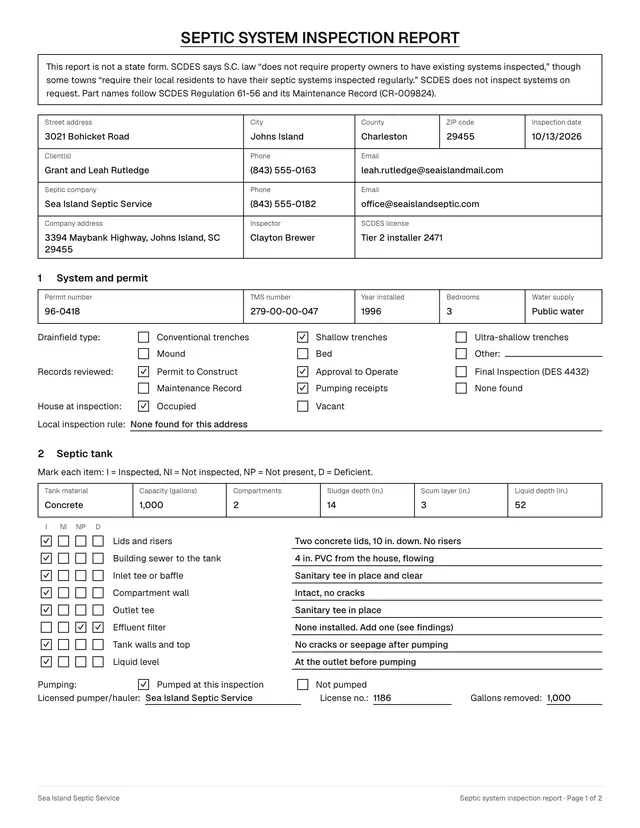
Record the tank or cesspool and what was checked. - South Carolina
Septic System Inspection Report
Record the tank or cesspool and what was checked. - Tennessee
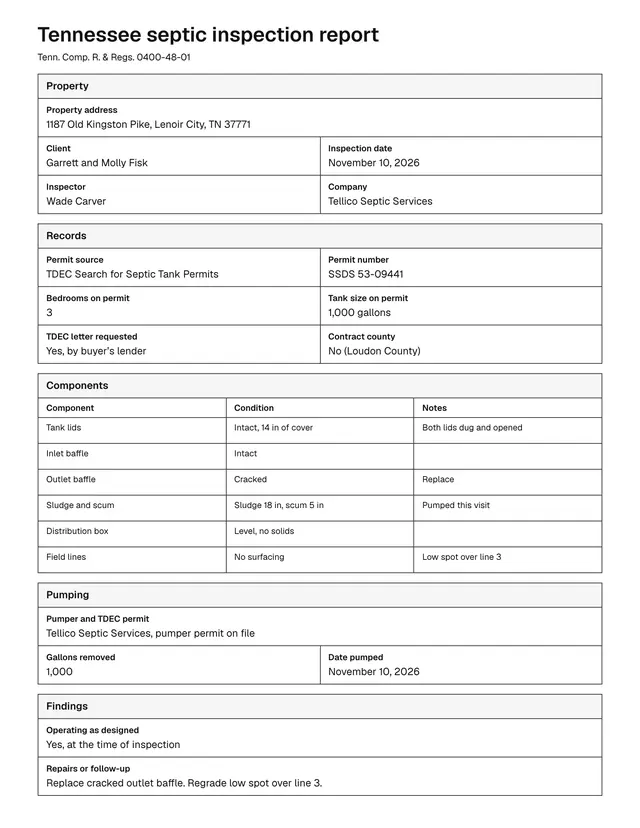
Tennessee septic inspection report
Record the tank or cesspool and what was checked. - Texas
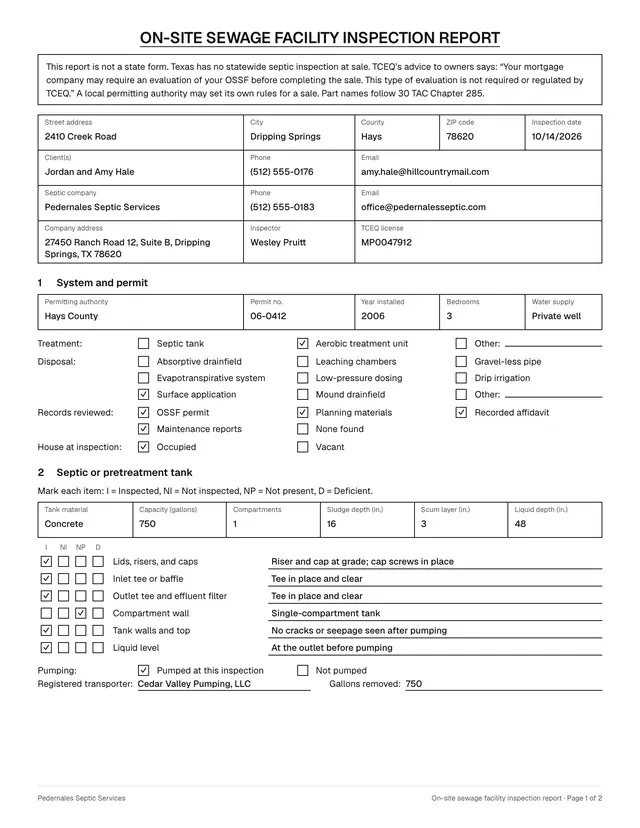
On-Site Sewage Facility Inspection Report
Record the tank or cesspool and what was checked. - Virginia
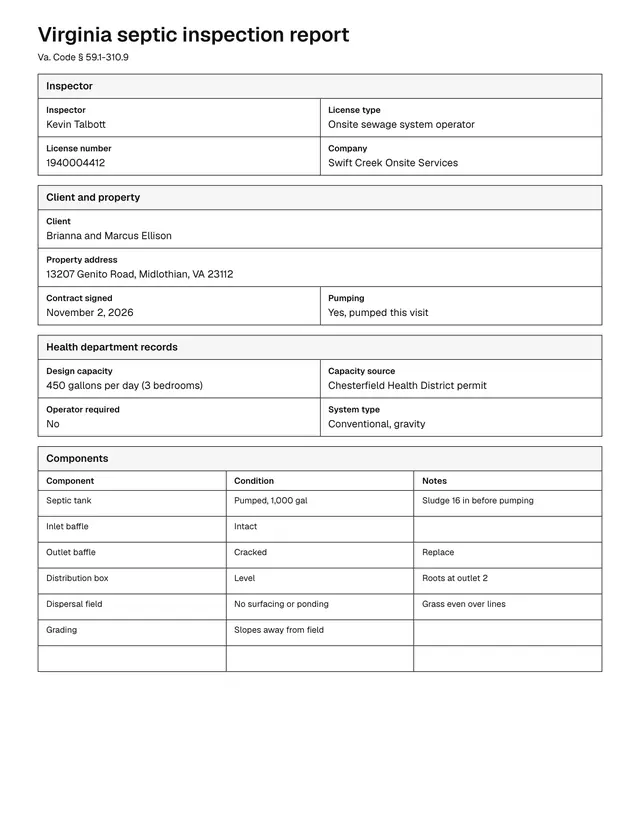
Virginia septic inspection report
Record the tank or cesspool and what was checked. - Washington
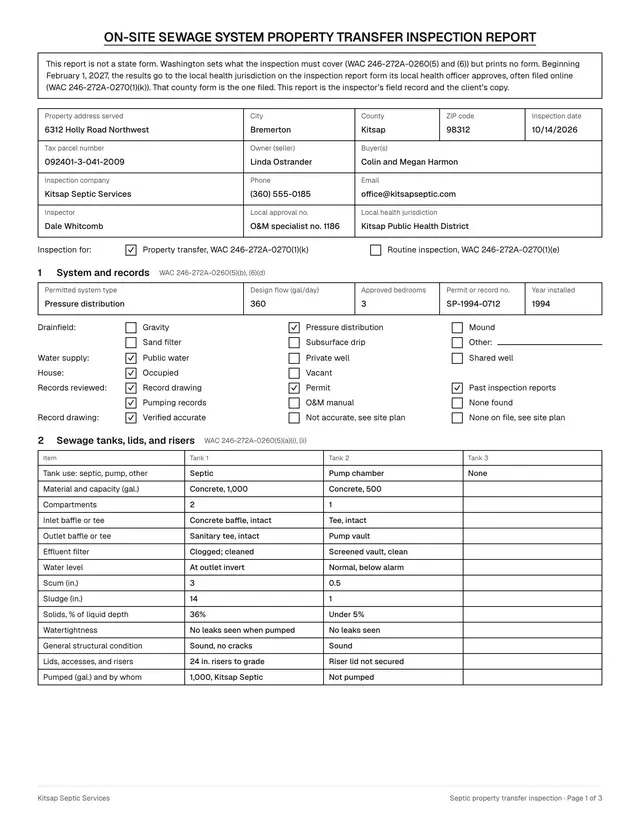
On-Site Sewage System Property Transfer Inspection Report
Record the tank or cesspool and what was checked. - Wisconsin
Wisconsin POWTS maintenance worksheet
Record the tank or cesspool and what was checked.