New Jersey consumer information waiver (N.J.A.C. 7:30-9.12(b)3)
A single-family customer can turn down New Jersey’s pre-treatment notice, but only with the state’s exact wording and a signature or email. Here’s how the waiver works and what it doesn’t excuse.
At a glance
- Rule
- N.J.A.C. 7:30-9.12(b)3
- Who signs
- Contracting party or resident, plus a buyer if there is one
- Keep
- At least 3 years
- Withdraw
- Anytime, in writing
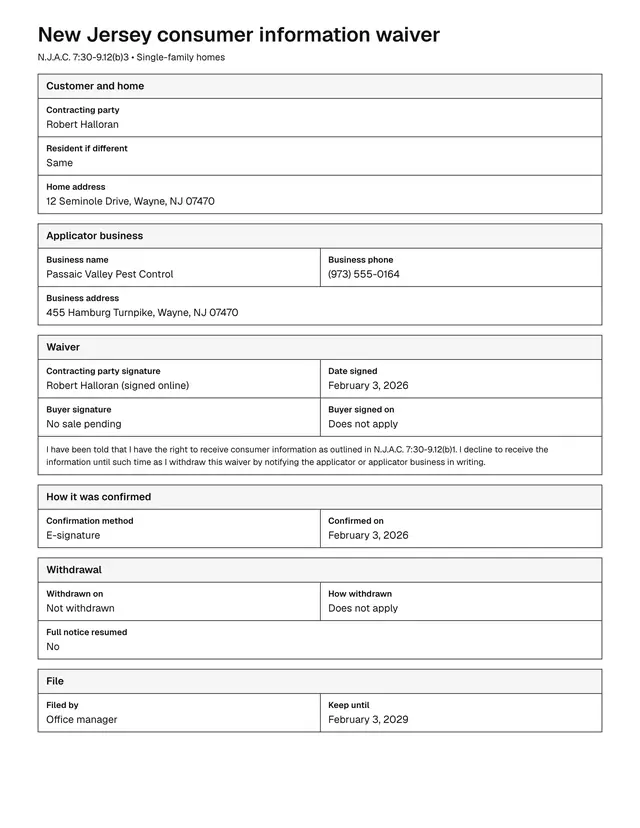
Completed example
Download PDFThe exact words
New Jersey doesn’t let you write your own waiver. N.J.A.C. 7:30-9.12(b)3 gives the wording, and you use it as written:
“I have been told that I have the right to receive consumer information as outlined in N.J.A.C. 7:30-9.12(b)1. I decline to receive the information until such time as I withdraw this waiver by notifying the applicator or applicator business in writing.” Then a signature line.
The customer can sign it or confirm it by email. A paper signature, an e-signature, or a reply email that agrees to the waiver all fit. If the house is part of a sale, the rule adds the buyer, “if applicable,” so when there’s a buyer, they sign too.
Who actually signs these?
Mostly long-time customers. Someone on a quarterly plan for ten years has read the same consumer information notice forty times, knows to pull the dog bowls in, and would rather not get another one. The waiver lets you stop sending it.
It’s only for single-family homes. Apartment buildings have a separate waiver in 9.12(c)6, tied to the apartment notice, with nearly the same wording but pointing to 9.12(c)4. Commercial buildings get no waiver at all. If you service a duplex owner who also has a small rental building, don’t mix the two forms up.
Watch out for rented houses. The landlord hires you, but the tenant lives there and is the one who has to cover the fish tank. The rule’s phrase is “contracting party/resident,” so think about who will be home on treatment day before you treat one signature as covering everyone.
Don’t push it on new customers. A brand-new customer who signs a waiver at the door hasn’t really had the chance to read what they’re turning down. It’s not against the rule, but it’s the kind of thing that looks bad if a complaint comes in later. Let them get a few notices first, then offer the waiver once they know what they’re giving up.
What a waiver doesn’t cover
A waiver turns off the written notice. It doesn’t turn off safety. The rule says waivers “do not relieve” the applicator or business “from responsibility to transmit appropriate warnings or precautions” under N.J.A.C. 7:30-10.2. If a label says to keep people and pets off treated surfaces until dry, the tech still says so.
It also doesn’t touch the customer’s right to ask for things. The waiver covers the notice in 9.12(b)1. The right to the specific date and a copy of the label, in 9.12(b)2, still stands. If they ask, give it. A waiver customer who wants to know what’s going on the baseboards next Tuesday still gets an answer.
New owners have their own right too. Under 9.12(b)4, if you treated a single-family home as part of a real estate sale, the new homeowner can ask you for the full notice and the date and label details. Give them what they ask for.
Keep each waiver on file at least three years, and hand it to DEP “immediately upon request.” The application records for the same visits show what was used while the waiver was in place.
What happens when they change their mind?
The customer can withdraw the waiver anytime by telling you in writing. It’s usually an email after a new baby, a new puppy, or a scare from a neighbor’s lawn sign. From then on, every visit needs the full notice again, and the tech has to know before they knock. A withdrawal that sits in the office inbox while the route goes out is how companies end up in violation.
The same goes for a waiver that never really happened. If the office thinks a customer signed but nobody can find the paper or the email, treat it as no waiver. DEP can ask for the waiver itself, and “we’re pretty sure they said yes” isn’t one.
Write down the date the withdrawal came in, file it next to the waiver it cancels, and switch the account back to sending the notice before the next visit.
Noma specializes in the New Jersey Consumer Information Waiver (N.J.A.C. 7:30-9.12(b)3). Upload the waiver once as a reusable document and send it for e-signature from any booked job. Booking and scheduling for the recurring visits run in the same place. See how Noma sends waivers for e-signature.
Frequentlyaskedquestions
Send this document in minutes, not an afternoon.
Other states
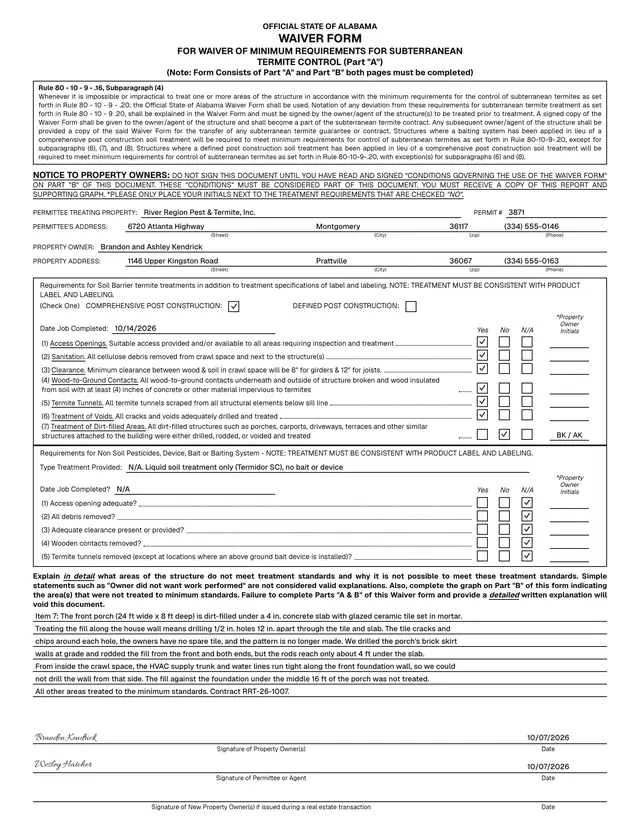
Treatment waiver templates- Alabama
Official State of Alabama Waiver Form
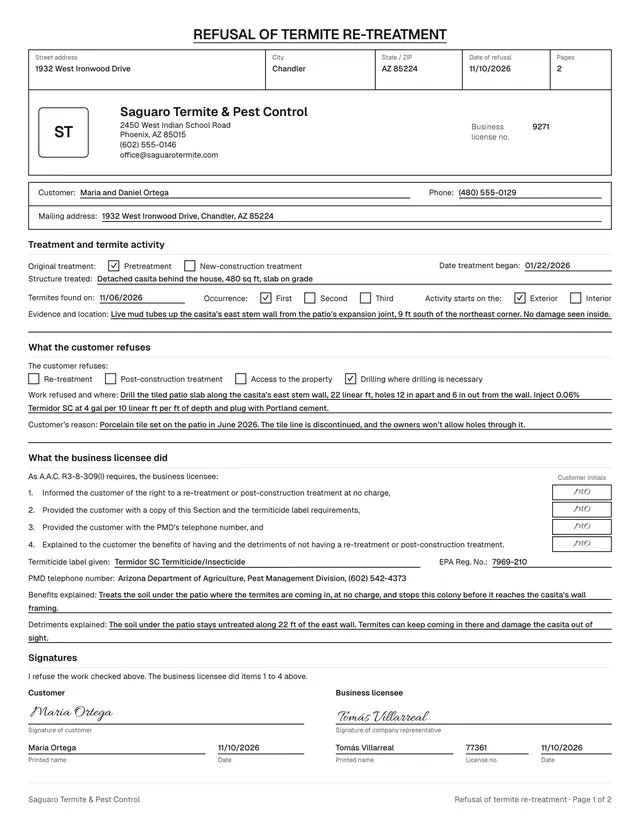
Owners sign off on termite work that won’t be done. - Arizona
Refusal of Termite Re-treatment
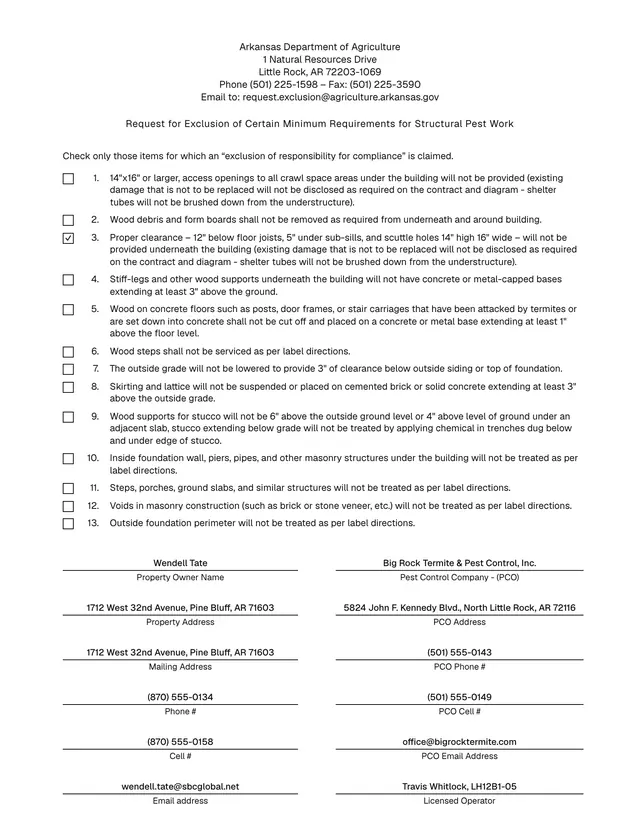
Owners sign off on termite work that won’t be done. - Arkansas
Request for Exclusion of Certain Minimum Requirements for Structural Pest Work
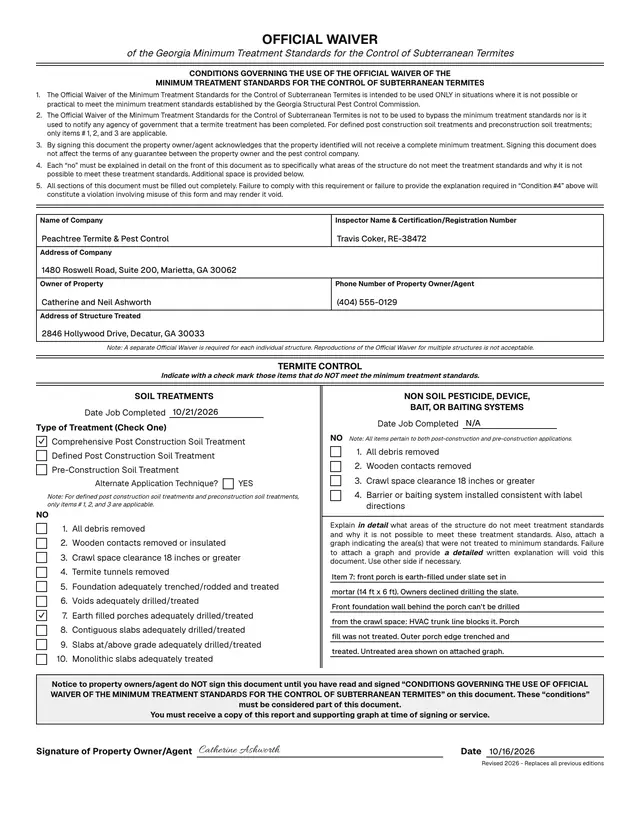
Owners sign off on termite work that won’t be done. - Georgia
Official Waiver of the Georgia Minimum Treatment Standards for the Control of Subterranean Termites
Owners sign off on termite work that won’t be done. - Indiana
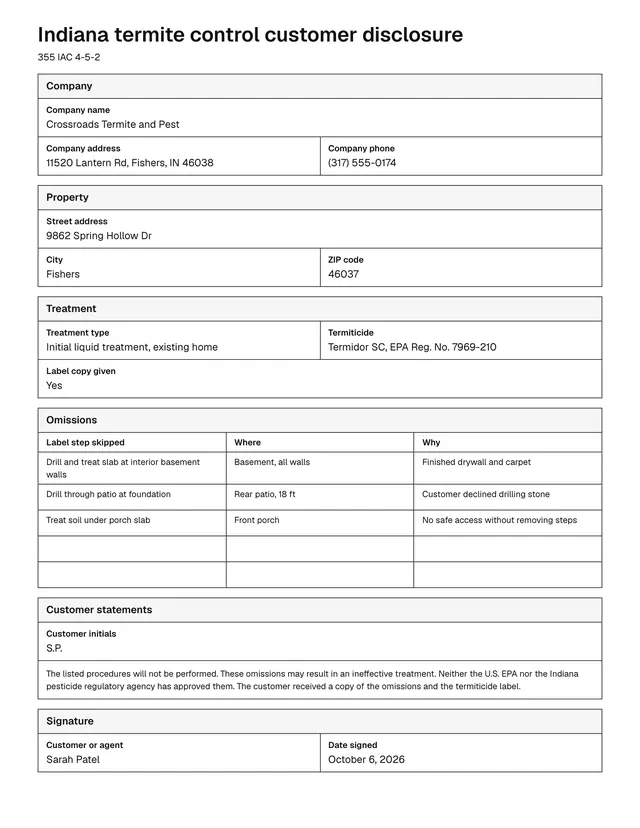
Indiana termite control customer disclosure
Owners sign off on termite work that won’t be done. - Louisiana
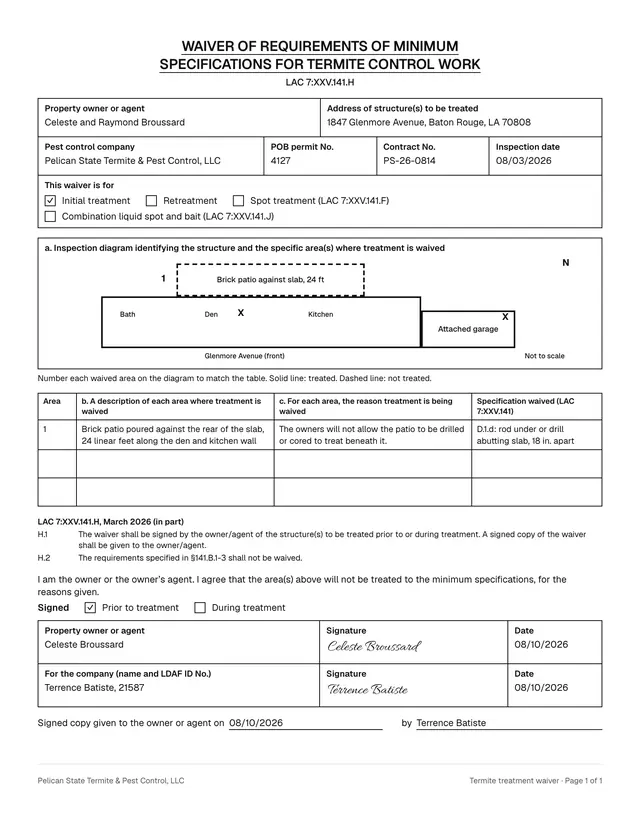
Waiver of Requirements of Minimum Specifications for Termite Control Work
Owners sign off on termite work that won’t be done. - Mississippi
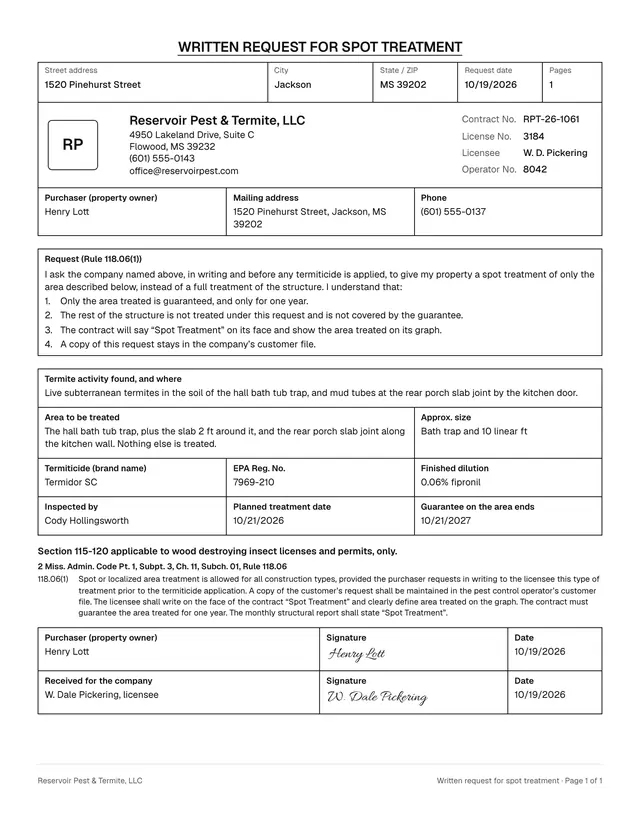
Written Request for Spot Treatment
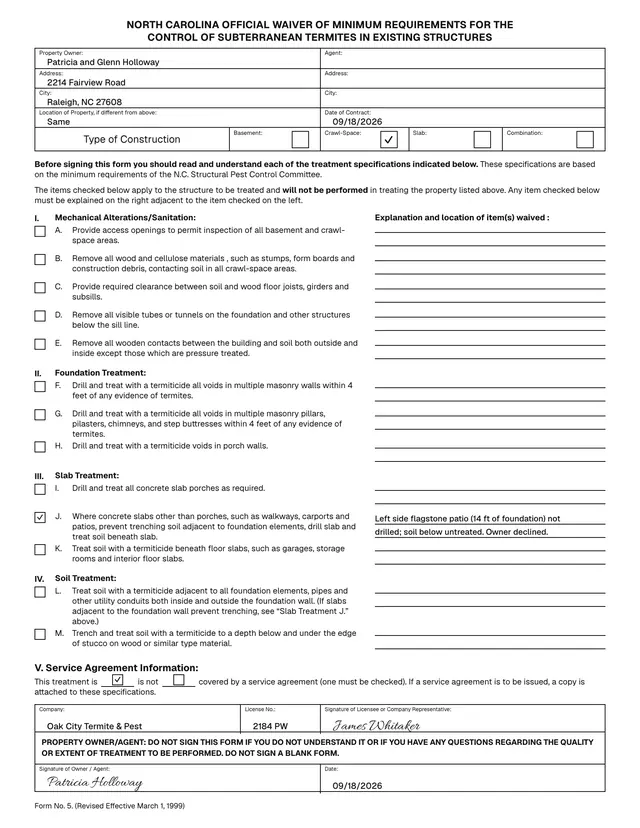
Owners sign off on termite work that won’t be done. - North CarolinaForm No. 5
North Carolina Official Waiver of Minimum Requirements
Owners sign off on termite work that won’t be done. - Oklahoma
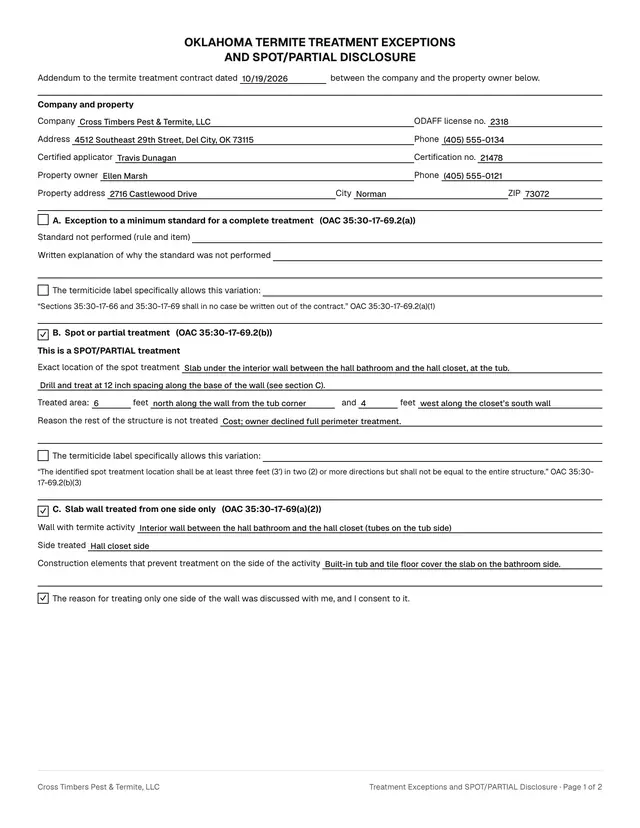
Oklahoma Termite Treatment Exceptions and SPOT/PARTIAL Disclosure
Owners sign off on termite work that won’t be done. - South Carolina
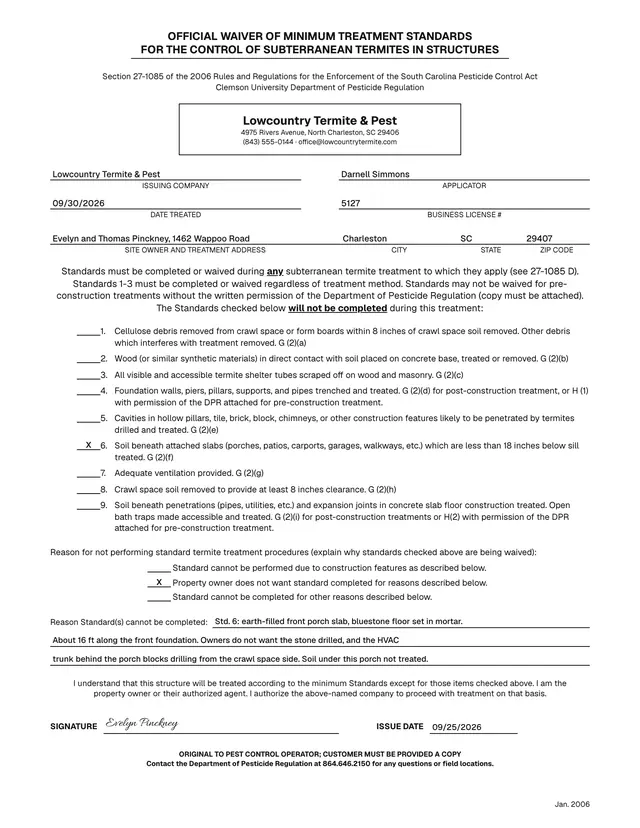
Official Waiver of Minimum Treatment Standards
Owners sign off on termite work that won’t be done. - Tennessee
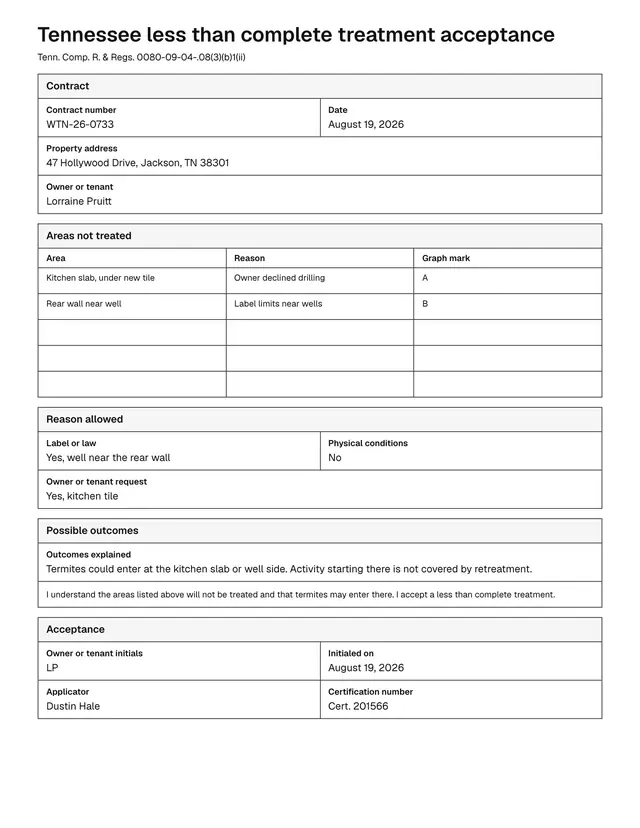
Tennessee less than complete termite treatment acceptance
Owners sign off on termite work that won’t be done.