Tennessee termite control contract
Before any termite or other WDO treatment, Rule 0080-09-04-.08(3)(a) requires a written contract in duplicate with a graph, a unique number, and a one-year retreatment warranty.
At a glance
- Rule
- 0080-09-04-.08(3)(a)
- Copies
- Duplicate, one to the customer
- Retreatment warranty
- At least 1 year
- Keep for
- 2 years after it ends
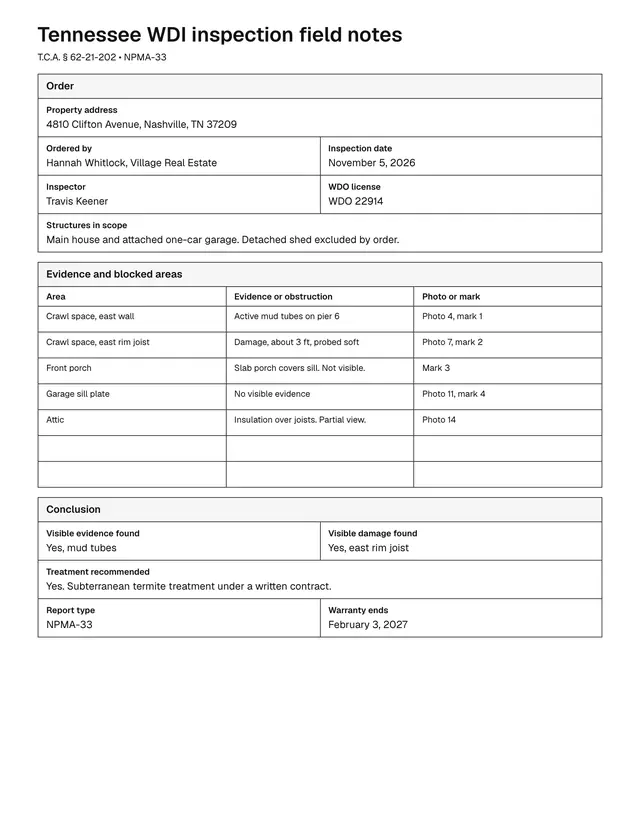
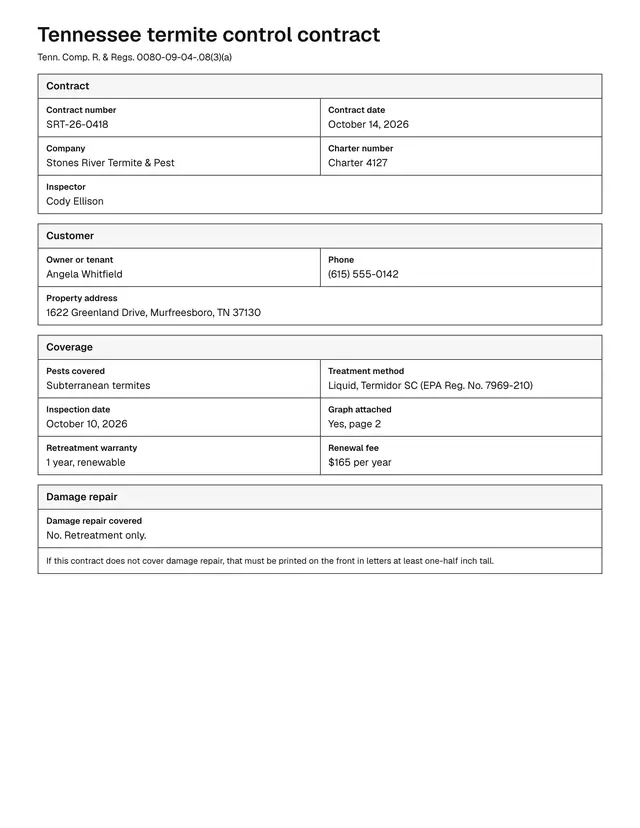
Completed example
Download PDFPaper first, then the termiticide
In Tennessee the contract isn’t an optional sales piece. Rule 0080-09-04-.08(3)(a) says WDO licensees execute a written contract “in duplicate” before any wood destroying organism pesticide application. Your company keeps one copy. The person who hired you gets the other.
That timing matters on a same-day sale. If a tech finds swarmers in a Murfreesboro garage and wants to trench the slab that afternoon, the customer signs first. Treating now and mailing the paperwork later is the exact order the rule rules out.
The Tennessee Department of Agriculture also looks at this from the customer side. Its consumer tips say TDA investigates sub-standard termite treatments under a current contract, a company’s failure to issue a contract, and failure to retreat. A missing contract turns a callback into a complaint you can’t defend.
What has to be in it
An inspection date and a graph. The contract shows the date of the inspection and includes a graph of the structure marking visible WDI activity and visible damage. That sketch is your baseline for every future visit.
A transfer provision. It has to say how the contract passes to later owners or renters. Many companies charge a small transfer fee and do a fresh inspection, but the rule only requires that the terms be there.
A unique number. Every contract gets its own number so it can be matched to graphs, renewals, and application records.
A retreatment warranty. For termite contracts, it’s at least one year. TDA’s consumer page repeats this, so customers expect it.
The damage repair answer. Repair coverage is optional. If you don’t offer it, the contract must say so on the front in letters one-half inch tall. In a typical bold font that’s roughly 50 point type, far bigger than a header. Don’t tuck it into fine print.
Use the contract number everywhere: on the graph, on each application record, and on every renewal invoice. TDA can ask for any of them, and they should point to each other.
Rules on how the job gets done
The same rule puts limits on the treatment the contract promises. You can’t vary more than 10 percent from label directions when mixing or applying termiticides. If the label calls for 0.06 percent, your tank has to land between 0.054 and 0.066 percent.
Keep the mix math on the job record. A log showing 0.8 fluid ounces of Termidor SC per gallon backs up the 0.06 percent you wrote down.
Under rule 0080-09-04-.09(1)(i), you also can’t do less than a complete treatment unless the label allows it, the house makes it impossible or unwise, or the owner asks. When that happens, the contract carries the extra steps on the less than complete treatment page.
Wood boring beetles have their own path. For an active infestation, you tell the owner the risks and the other options, like removing the wood. A preventive beetle treatment in an existing house needs moisture readings of at least 18 percent in five or more areas, with the written results in the contract.
What the warranty actually promises
The rule sets a floor, not a price. One year of retreatment is the minimum. Most Tennessee companies sell it as a yearly renewal that keeps the warranty going as long as the fee is paid and the yearly inspection happens.
Spell out what ends coverage. A room addition the company wasn’t told about, soil piled against the siding, or a new deck built over treated soil are common ones. The rule doesn’t list them, so your contract has to.
Walk the customer to the damage before they sign. TDA’s consumer tips tell homeowners to ask for exactly that, and pointing at the spot on the graph makes the signature mean something.
What happens after the first treatment?
The contract starts a yearly cycle. Each property under contract gets an annual inspection, logged on the annual inspection record. Keep the contract for two years after it expires, and keep inspection records and graphs for two years from each inspection.
Keep both copies matching. If the customer adds the detached garage later, sign a new version instead of writing on one copy.
Noma specializes in the Tennessee Termite Control Contract (Tenn. Comp. R. & Regs. 0080-09-04-.08). Upload your contract once as a reusable document and send it for e-signature on each job before you treat, draw the graph on your phone at the house, and Noma schedules the yearly reinspection. See how Noma handles termite contracts.
Frequentlyaskedquestions
Send this document in minutes, not an afternoon.
Other states
Work authorization templates- Alabama
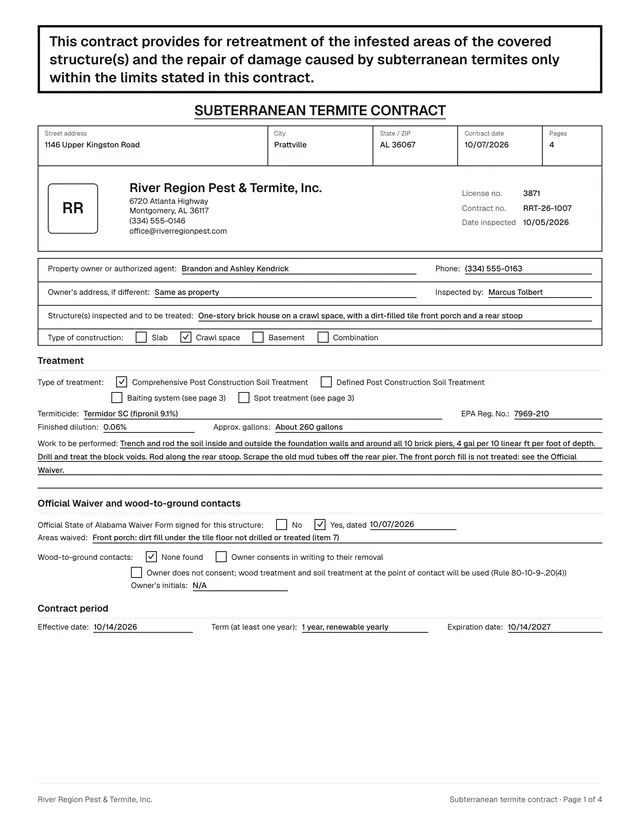
Subterranean Termite Contract
The priced contract owners sign to approve the work. - Arizona
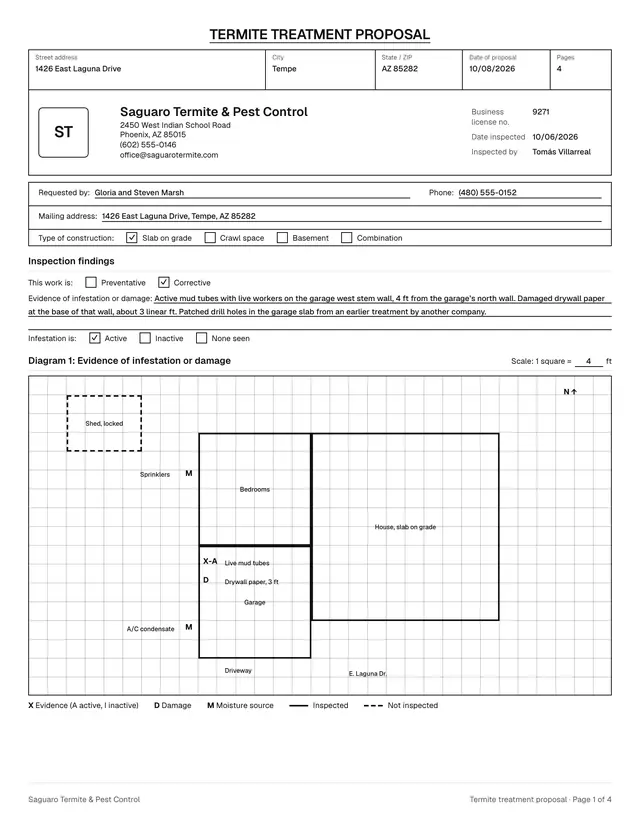
Termite Treatment Proposal
The priced contract owners sign to approve the work. - Arkansas
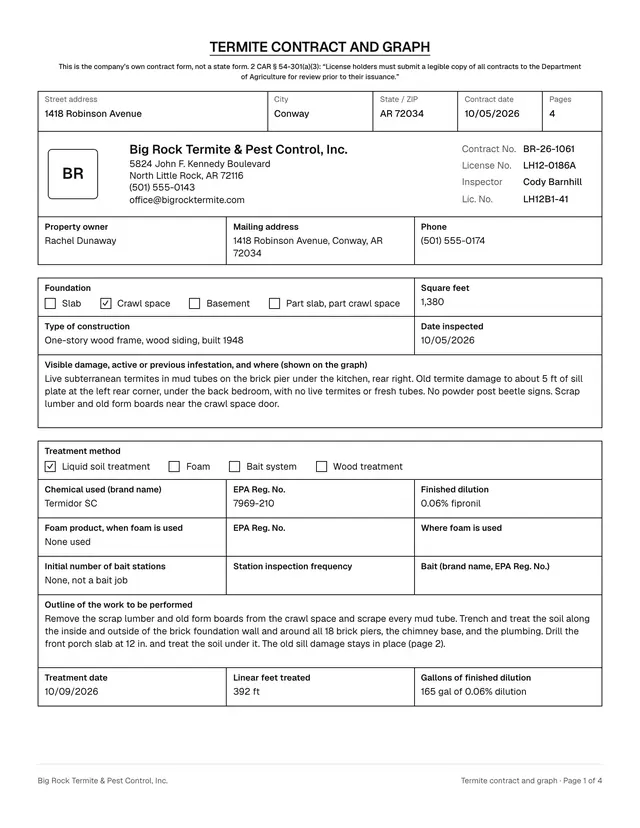
Termite Contract and Graph
The priced contract owners sign to approve the work. - California
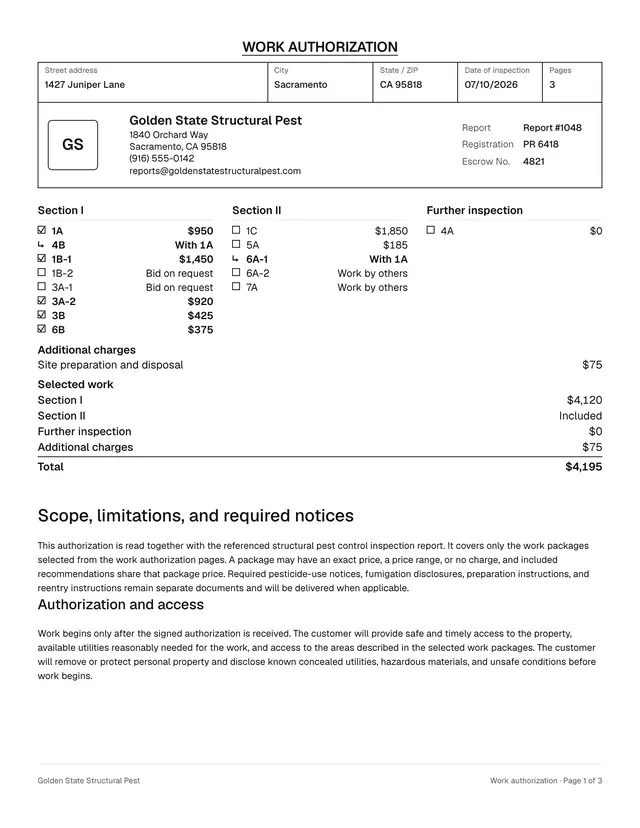
Work Authorization
The priced contract owners sign to approve the work. - Florida
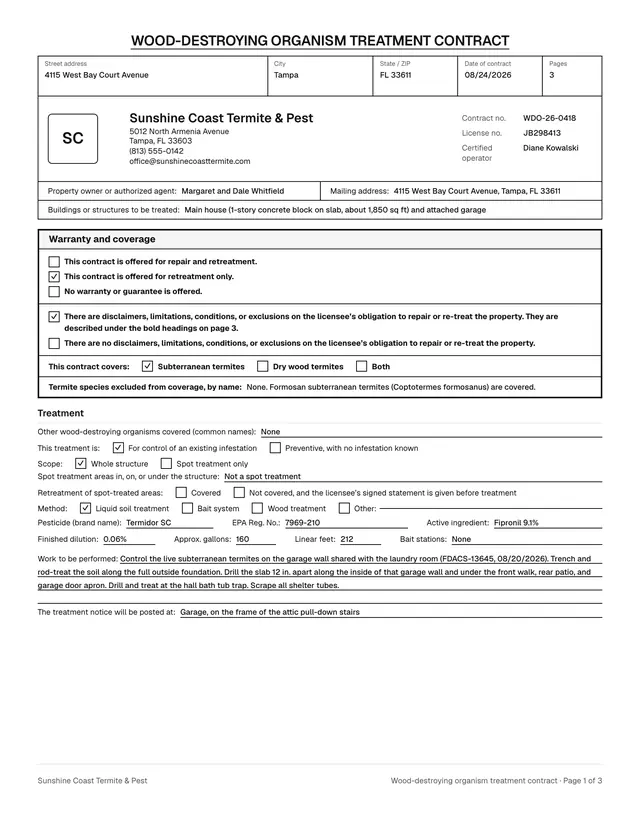
Wood-Destroying Organism Treatment Contract
The priced contract owners sign to approve the work. - Georgia
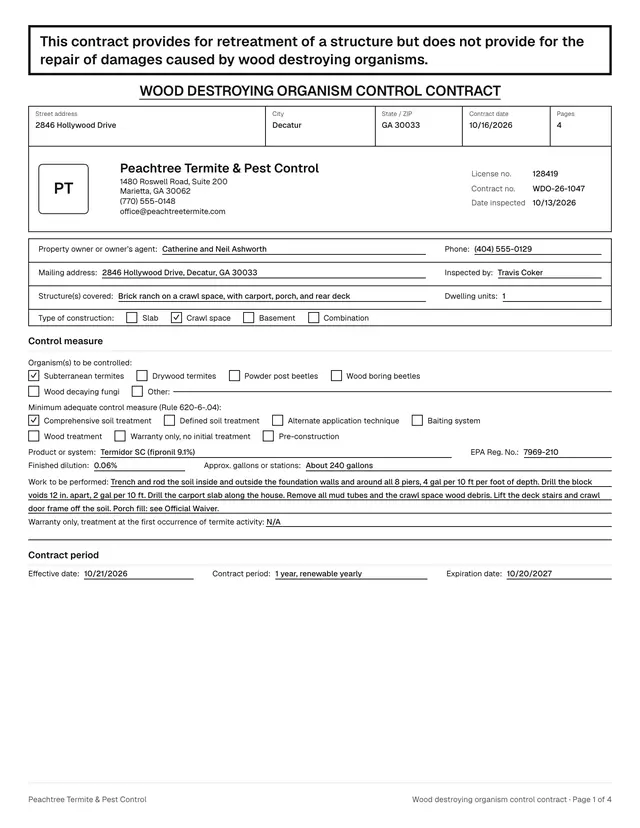
Wood Destroying Organism Control Contract
The priced contract owners sign to approve the work. - Hawaii
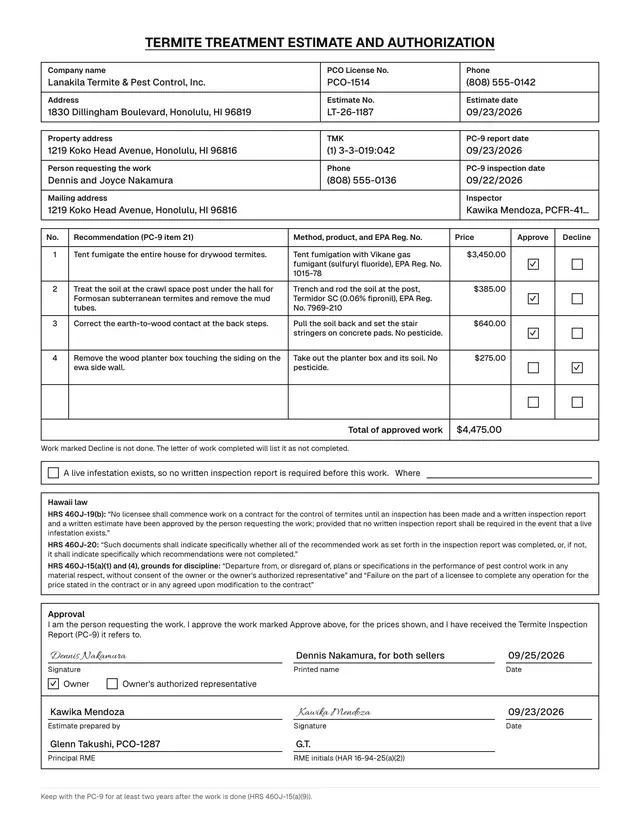
Termite Treatment Estimate and Authorization
The priced contract owners sign to approve the work. - Louisiana
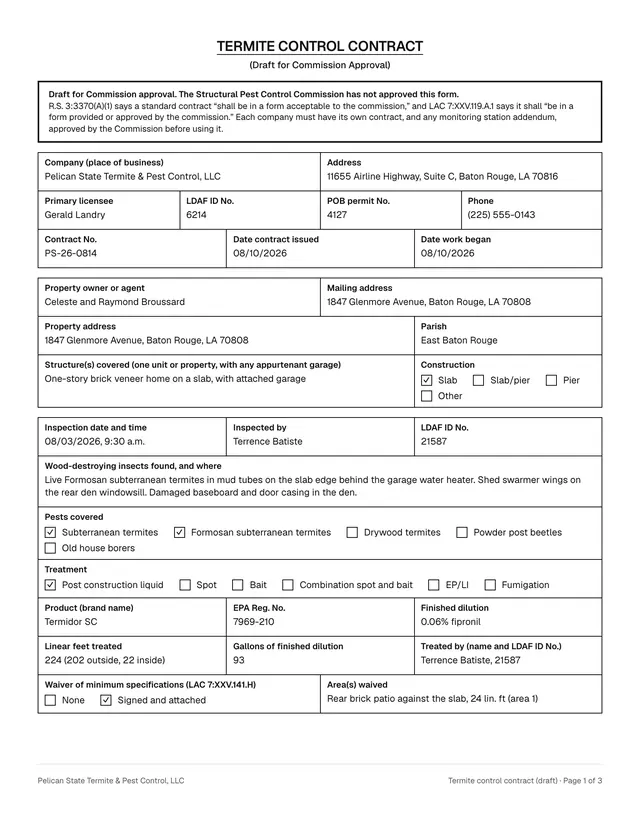
Termite Control Contract (Draft for Commission Approval)
The priced contract owners sign to approve the work. - Maryland
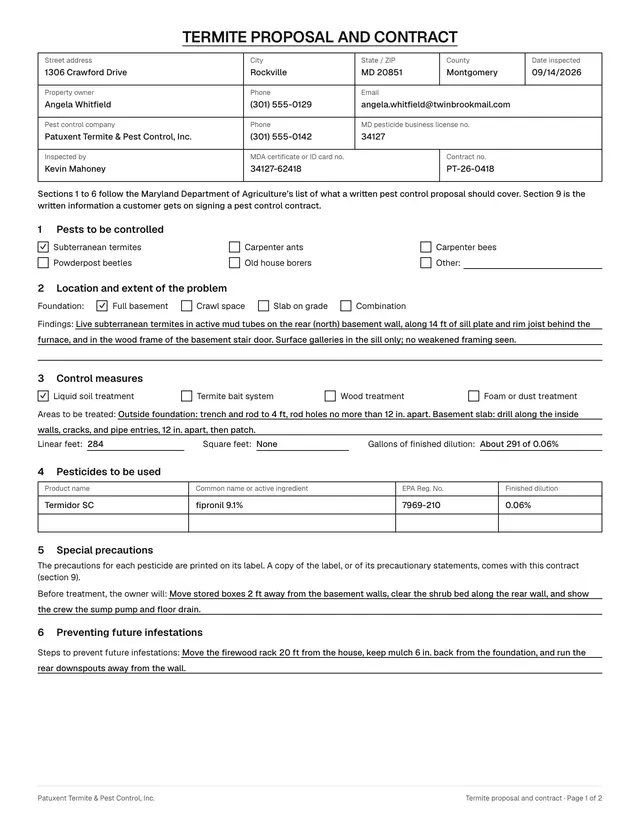
Termite Proposal and Contract
The priced contract owners sign to approve the work. - Mississippi
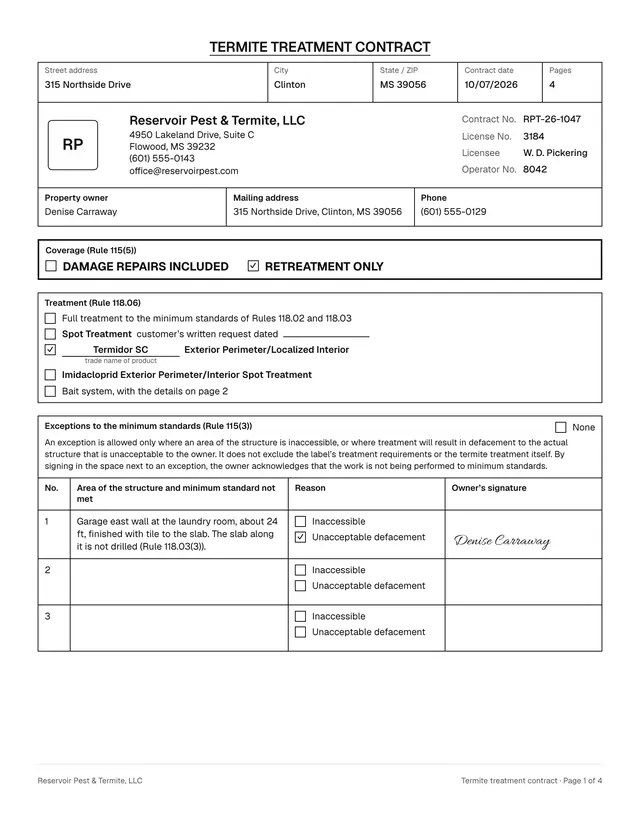
Termite Treatment Contract
The priced contract owners sign to approve the work. - North Carolina
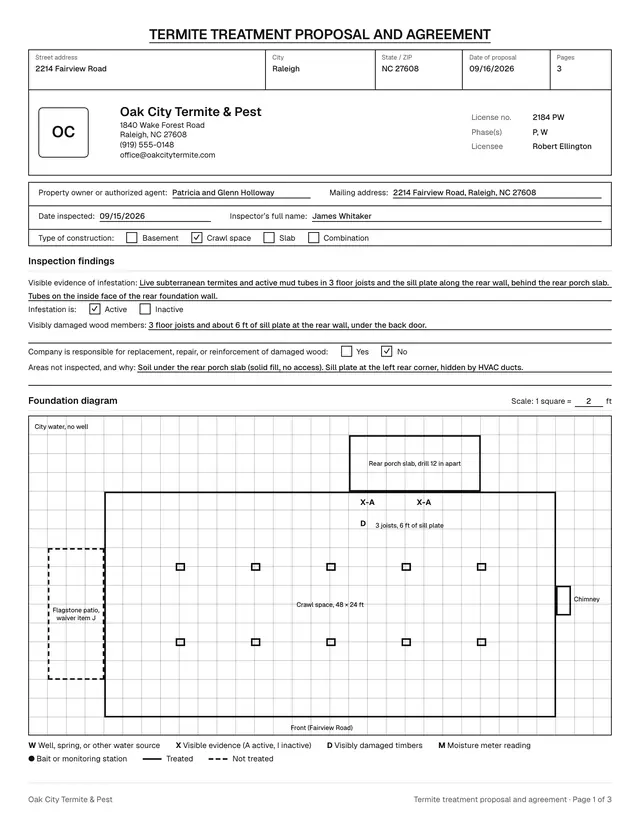
Termite Treatment Proposal and Agreement
The priced contract owners sign to approve the work. - Oklahoma
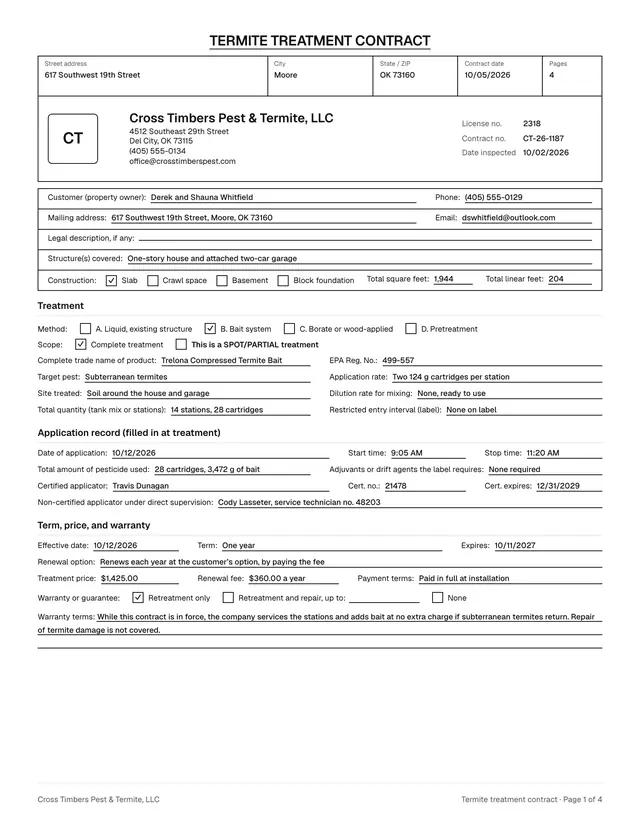
Termite Treatment Contract
The priced contract owners sign to approve the work. - South Carolina
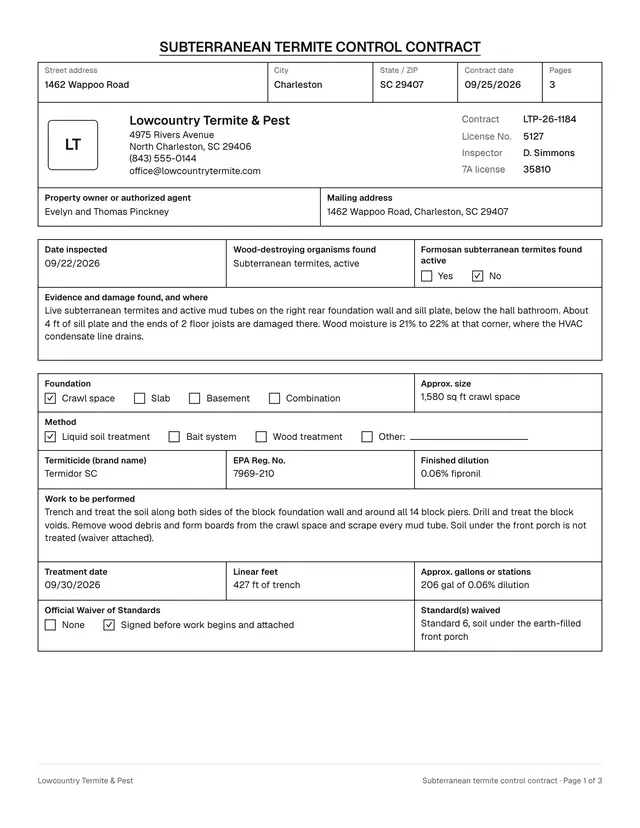
Subterranean Termite Control Contract
The priced contract owners sign to approve the work. - Texas
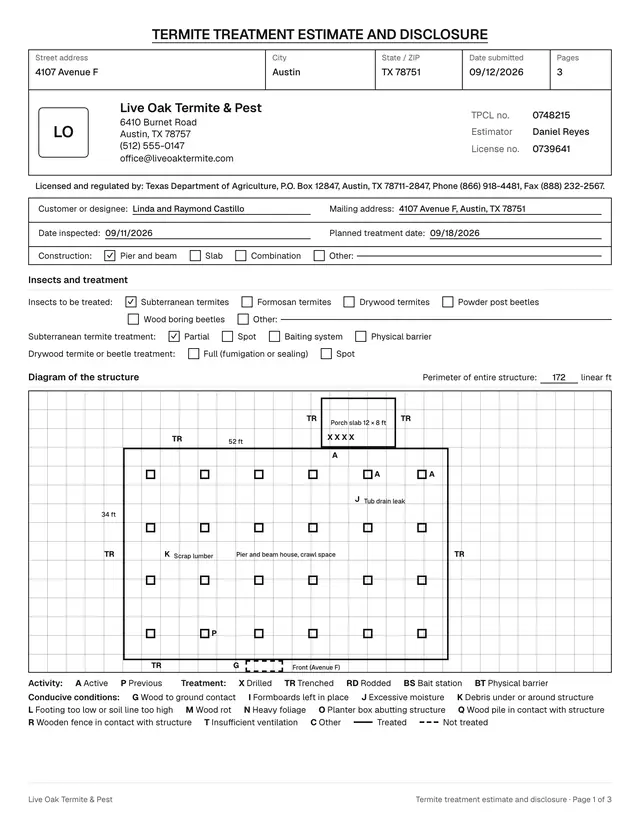
Termite Treatment Estimate and Disclosure
The priced contract owners sign to approve the work. - Washington
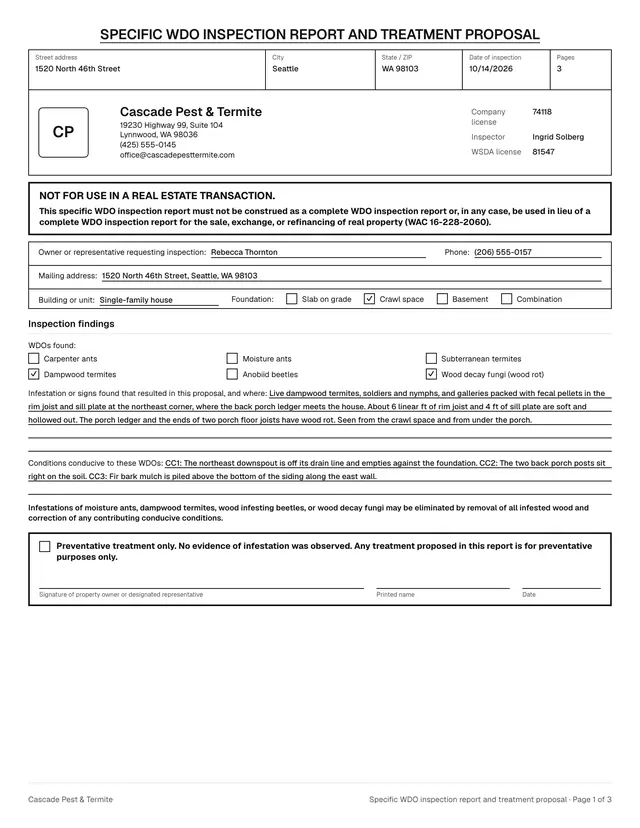
Specific WDO Inspection Report and Treatment Proposal
The priced contract owners sign to approve the work.