Official North Carolina Wood-Destroying Insect Information Report
North Carolina’s WDIR 100, the “termite letter” at almost every closing, is the only form a pest control company can use to report wood-destroying insects in a house for sale.
At a glance
- Required by
- 02 NCAC 34 .0602
- Filled out by
- Licensed pest control company
- Signed by
- Company rep, then the buyer
- Kept
- 2 years from the date issued
Completed example
Download PDFWhat is the WDIR 100?
It’s the “termite letter” every North Carolina closing asks for. A licensed pest control company inspects the house and reports any wood-destroying insects it can see. Despite the nickname, it covers more than termites: powder post beetles, old house borers, and others like carpenter ants go on it too.
You can’t swap in your own report. The state says the form can’t be altered in any way. You can preprint your company name, address, and license number, and that’s about it.
When do you need one?
Any time you put in writing whether a house for sale has wood-destroying insects. That’s 02 NCAC 34 .0602. You can’t issue one before you inspect, and an incomplete or inaccurate report is grounds for discipline.
No rule gives it an expiration date. It only speaks for what you saw on the inspection date, so the state says to get it early in the sale. Keep your copy for at least two years after you issue it, per 02 NCAC 34 .0604.
How to fill it out
List what you couldn’t see. Section 2 is for blocked spots: insulation over the attic joists, ducts in the crawl space, stored boxes, built-in appliances. The enforcement policy wants those items named.
Say exactly where. In section 3, check the insect and one of its three numbered boxes. “In crawl space” isn’t specific enough for the location. The state’s own example is “in floor joists behind front porch.”
Treat before you call it inactive. Found live termites and no sign of an earlier treatment? Treat first, then check 3.A.1 and attach the written agreement and any warranty. That’s usually your termite agreement, plus a waiver for any step you skip.
Note what invites termites. At a minimum, look for wood touching soil, wood debris, and wet wood in the crawl space. The state counts 20% moisture or more as wet, so bring a meter. Leave section 4 empty if you saw any evidence at all.
Who gets the buyer to sign the back?
The form says the closing agent does. In practice, your office emails the report to the agent, the attorney, and the buyer, then takes the calls when nobody can find the signed copy.
Noma specializes in the Official North Carolina Wood-Destroying Insect Information Report (WDIR Form 100). Upload the finished report as a PDF and send it to the buyer to sign the back online. See how Noma handles e-signatures.
Frequentlyaskedquestions
Send this document in minutes, not an afternoon.
Other states
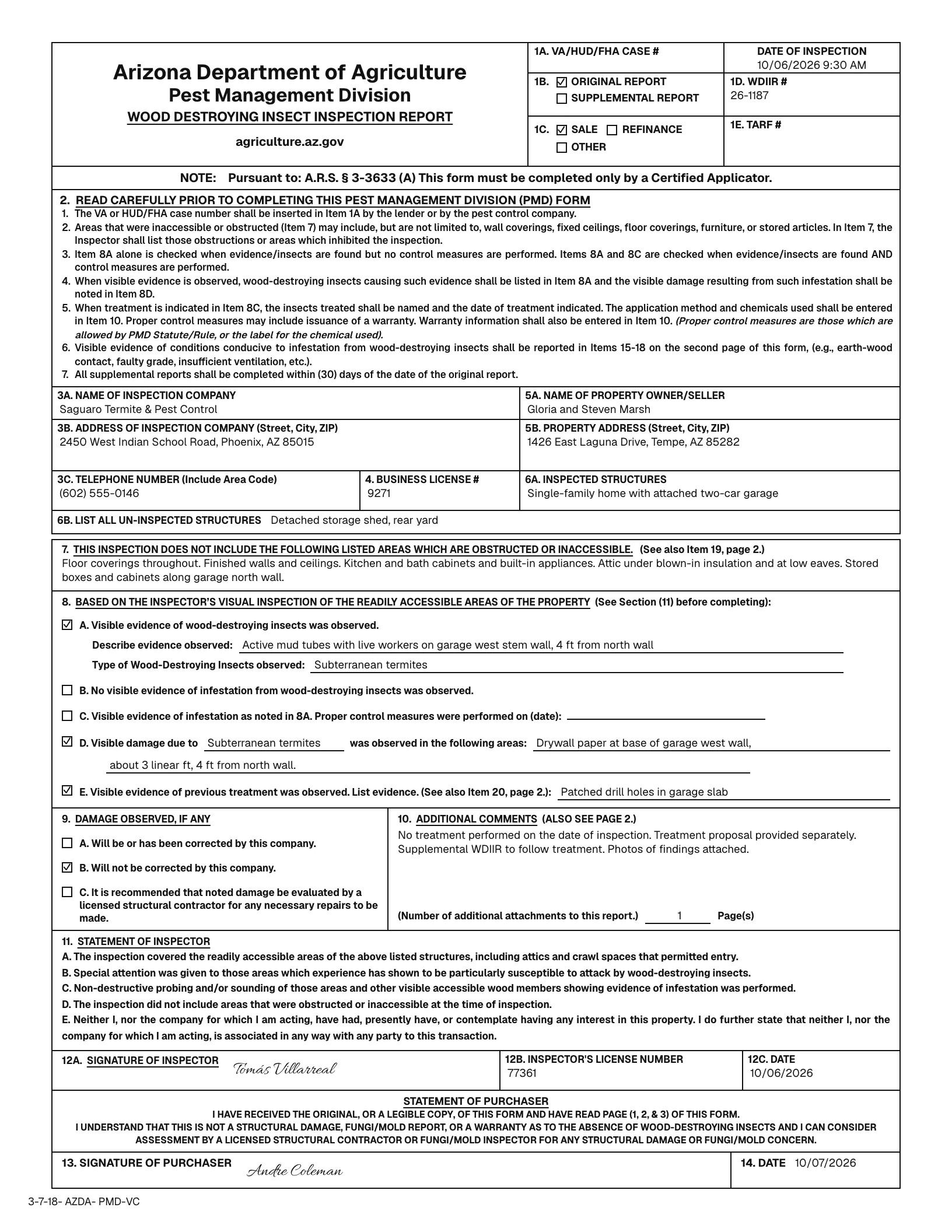
- Arizona
Wood Destroying Insect Inspection Report
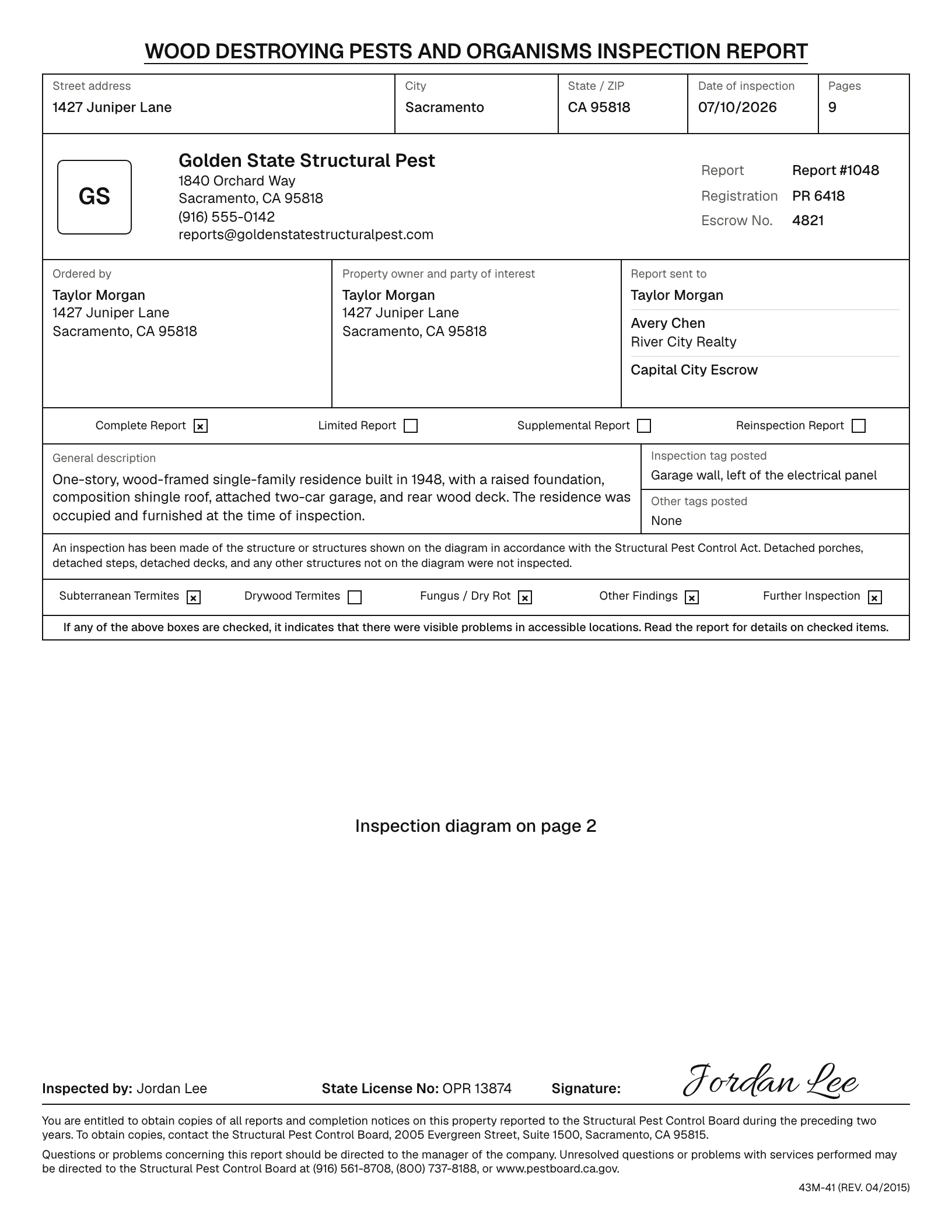
Record the termite findings from an inspection. - California43M-41
Wood Destroying Pests and Organisms Inspection Report
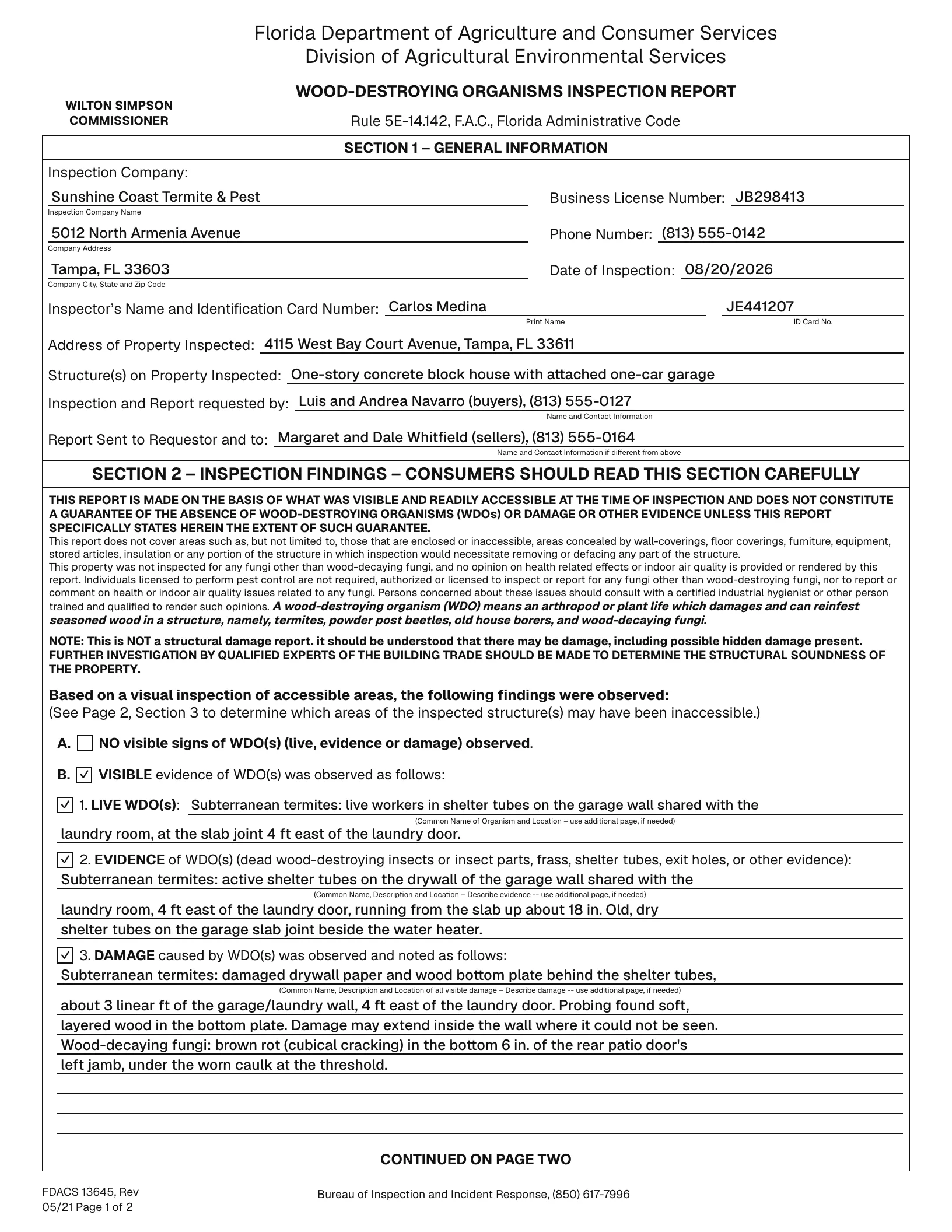
Record the termite findings from an inspection. - FloridaFDACS-13645
Wood-Destroying Organisms Inspection Report
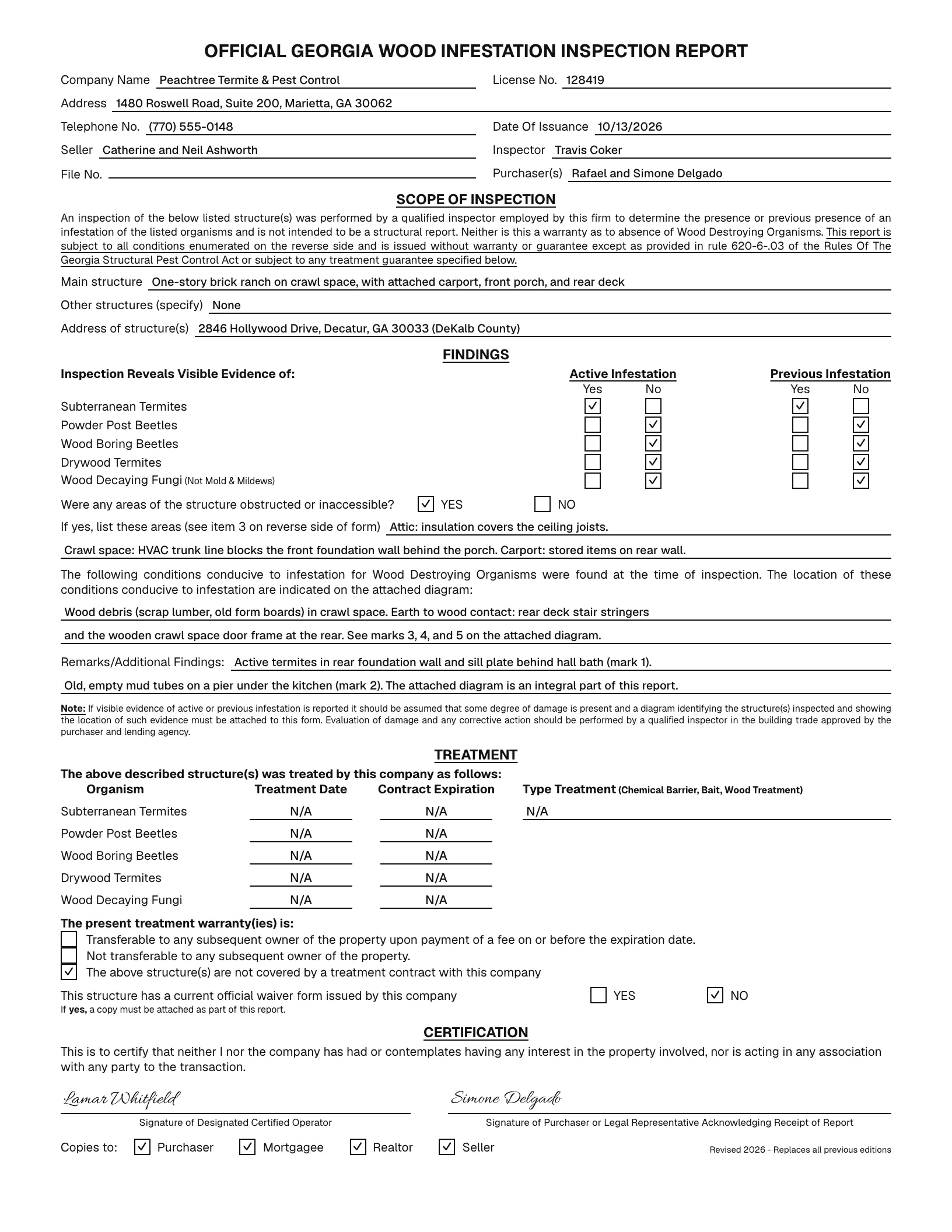
Record the termite findings from an inspection. - Georgia
Official Georgia Wood Infestation Inspection Report
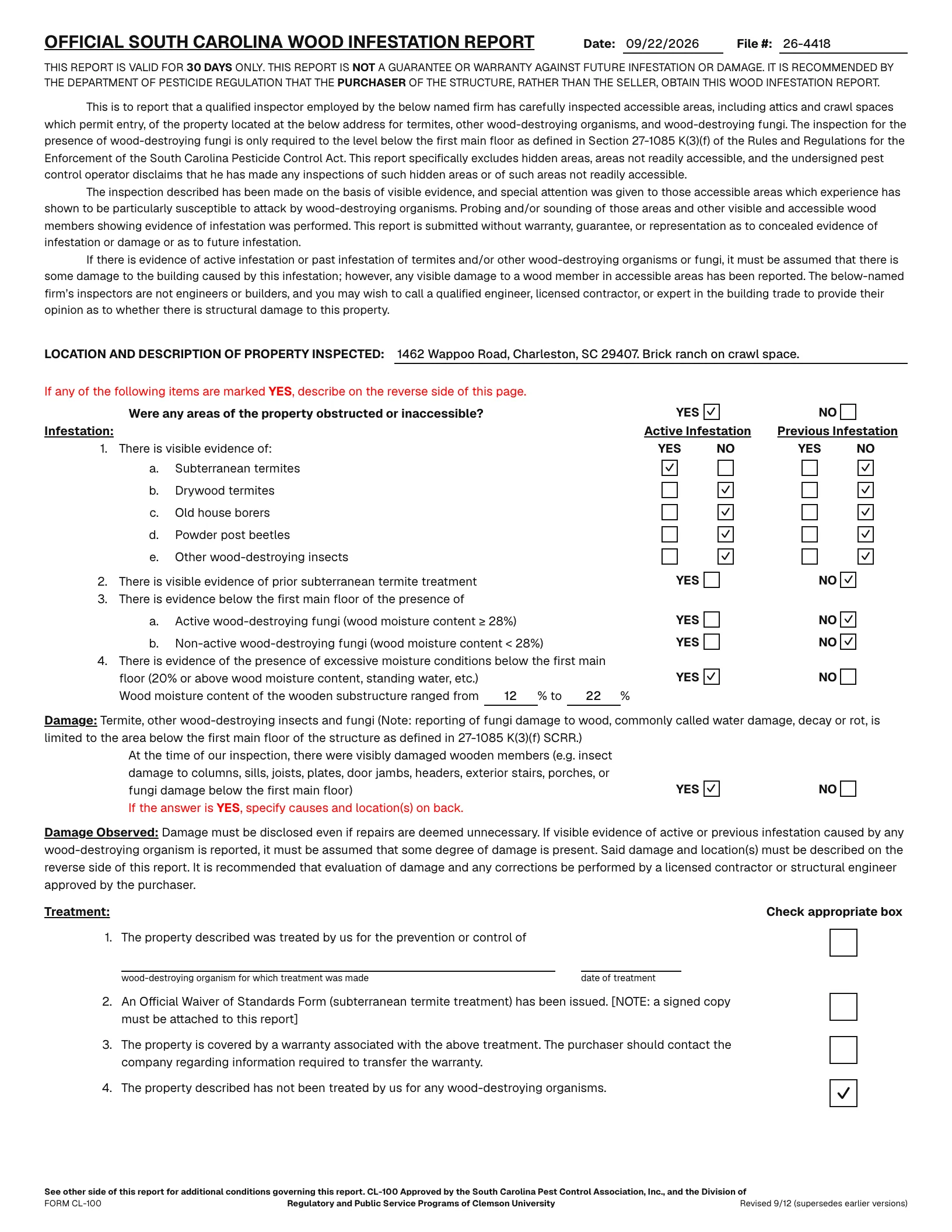
Record the termite findings from an inspection. - South CarolinaCL-100
Official South Carolina Wood Infestation Report
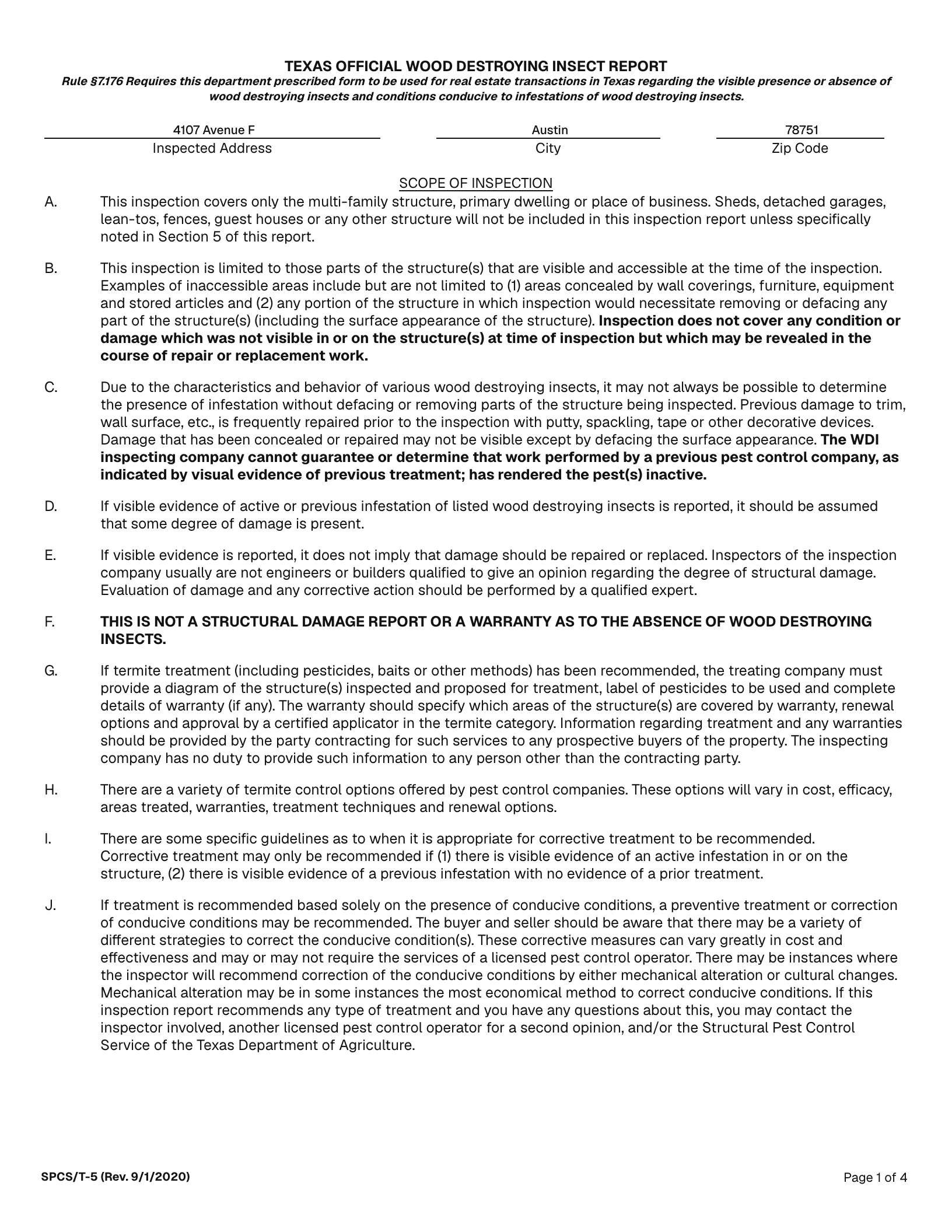
Record the termite findings from an inspection. - TexasSPCS/T-5
Texas Official Wood Destroying Insect Report
Record the termite findings from an inspection. - Washington
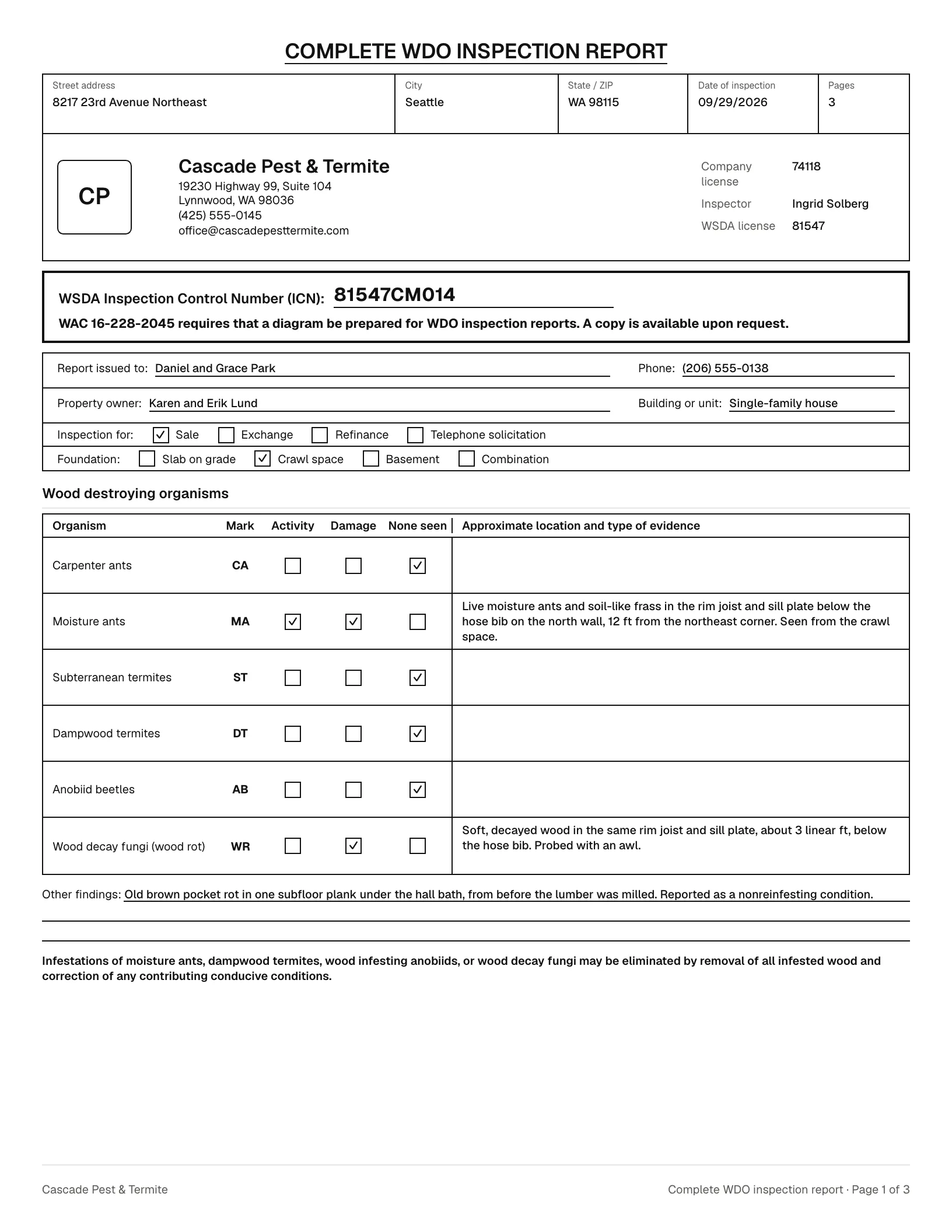
Complete WDO Inspection Report
Record the termite findings from an inspection.