Wood Destroying Insect Inspection Report
Arizona’s WDIIR is the Pest Management Division’s own three-page termite report, and every one written in the state has to be on its current version.
At a glance
- Required by
- Lenders, not state law
- Filled out by
- Certified WDO applicator
- Signed by
- Inspector, then the buyer
- Kept
- 3 years by the company
Completed example
Download PDFWhat is the WDIIR?
It’s Arizona’s termite report for a home sale or refinance. A certified applicator inspects the areas they can reach and reports wood destroying insects, damage, and the conditions that invite them. The form runs three pages: the report, a page of conducive conditions, and a graph of the structures.
You can’t write your own version. A.A.C. R3-8-501 says every WDIIR goes on the most current PMD-approved form. The only extra it allows is your logo or trademark. The PMD’s own 3-7-18 form is the copy of record. Ours matches it item for item, but use theirs if anything ever differs.
When is it due?
When a lender asks for one. The PMD says no state law requires a WDIIR to sell a house. Once you write one, though, A.R.S. 3-3633 says it’s on file at the company’s office within seven calendar days and kept for three years.
Within 30 days, the company files a TARF, the termite action report form, and writes its number in box 1E. That’s A.R.S. 3-3631. A recheck after a treatment or a fix gets a supplemental WDIIR, but only within 30 days of the original inspection, per A.A.C. R3-8-307.
How to fill it out
Start with the header. Write the time as well as the date, check original or supplemental in 1B, and give the report a number in 1D. A supplemental also carries the original report’s number. The business licensee fills in the TARF number.
Mark 8A or 8B every time. The PMD’s guidance says one of them is always checked. Name the insect and the exact spot, like “mud tubes on garage west stem wall.” Found live termites? The next paper is usually a treatment proposal.
Say what you skipped and why. Items 7 and 19 take the blocked spots: floor coverings, stored boxes, attic insulation. A building you didn’t inspect goes in 6B, with the reason in the page 2 comments. Dry rot goes there too, not in 8D.
Draw the graph. If you note anything, inaccessible areas included, page 3 needs a sketch that marks it. Use the legend’s codes, like SU for subterranean termites or DR for drywood, then check each code you used.
Who gets the buyer to sign item 13?
The PMD highly recommends that the buyer, or whoever ordered the report, signs items 13 and 14. That usually means emailing the report to the agent and the buyer, then chasing the signed copy before closing.
Noma specializes in the Wood Destroying Insect Inspection Report (WDIIR). Upload the finished report as a PDF and send it to the buyer to sign online. See how Noma handles e-signatures.
Frequentlyaskedquestions
Send this document in minutes, not an afternoon.
Other states
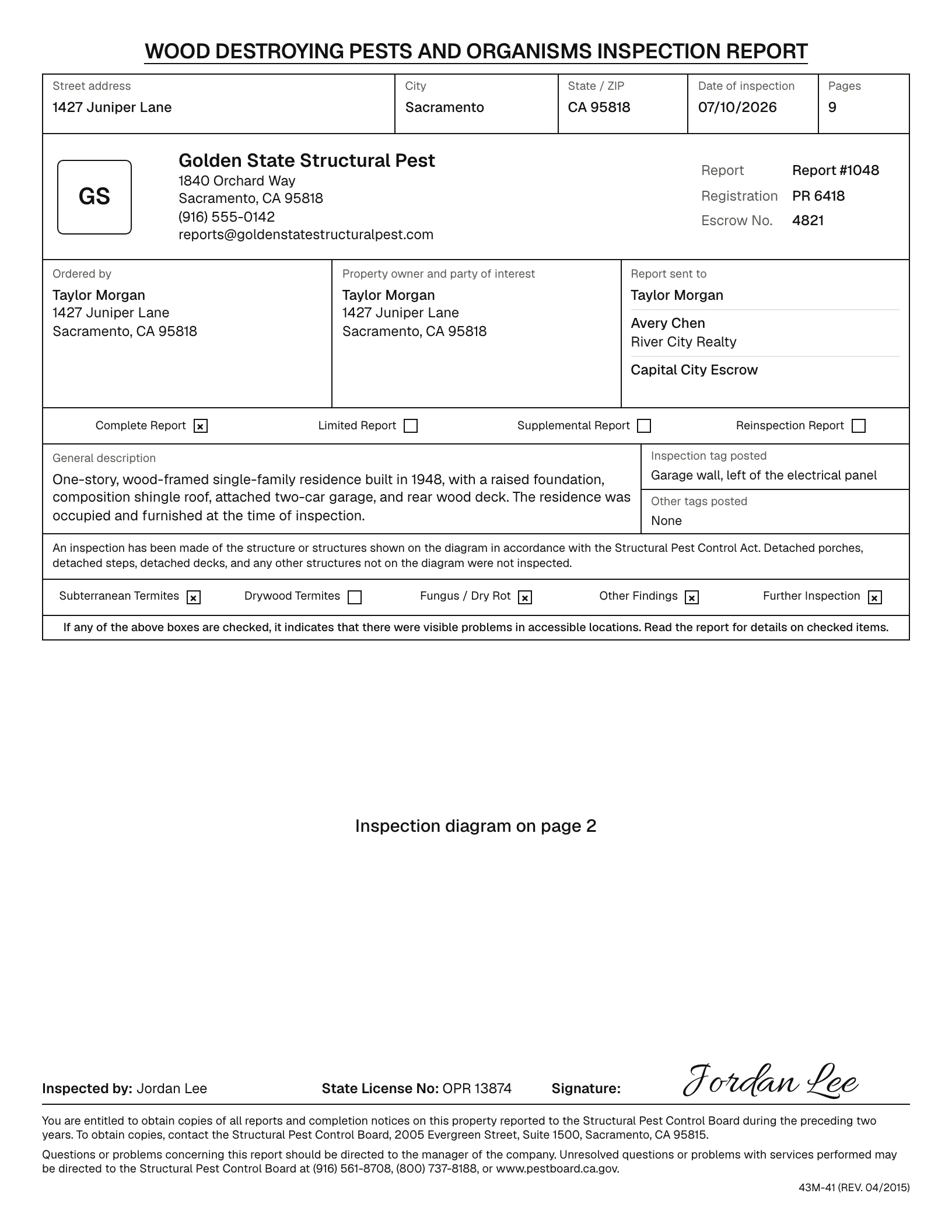
- California43M-41
Wood Destroying Pests and Organisms Inspection Report
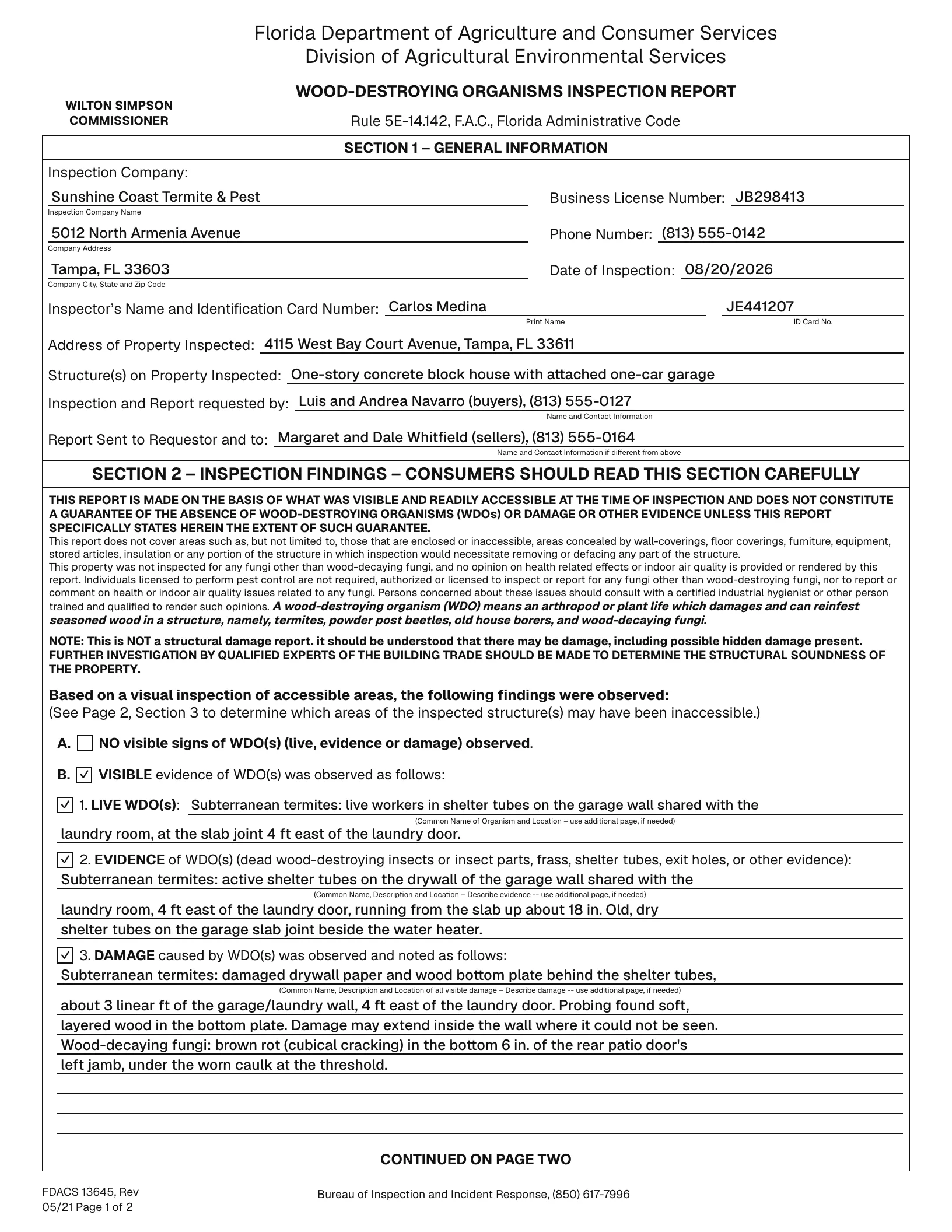
Record the termite findings from an inspection. - FloridaFDACS-13645
Wood-Destroying Organisms Inspection Report
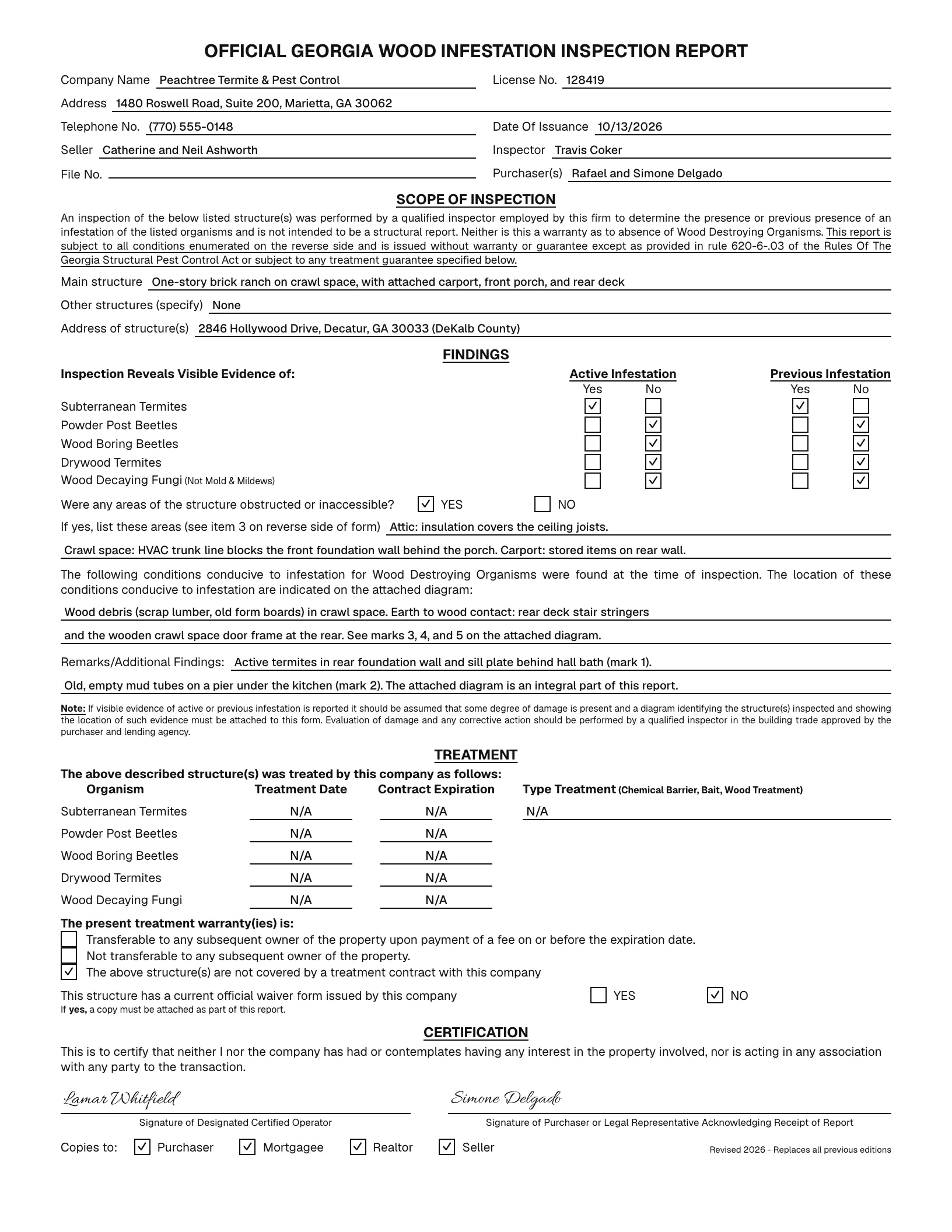
Record the termite findings from an inspection. - Georgia
Official Georgia Wood Infestation Inspection Report
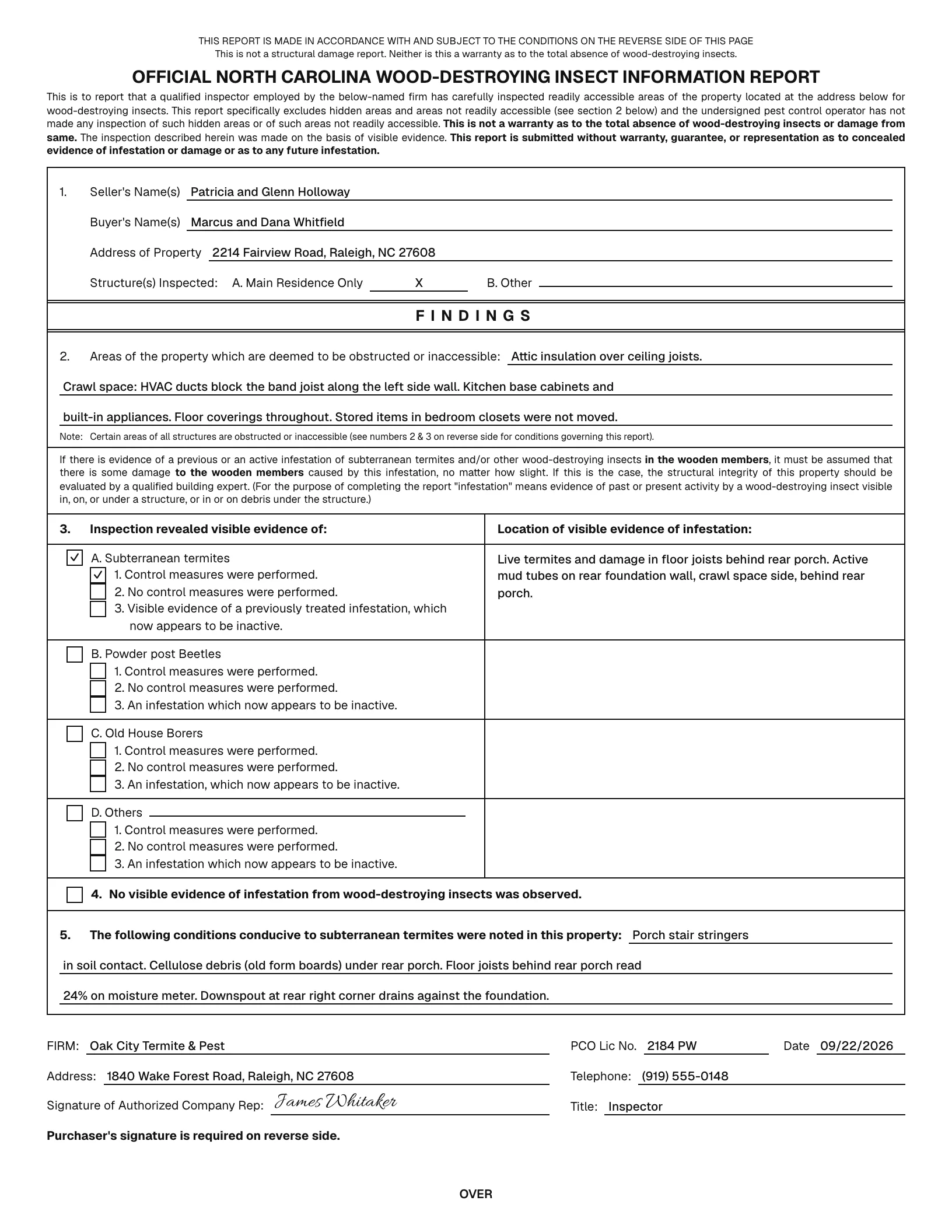
Record the termite findings from an inspection. - North CarolinaWDIR 100
Official North Carolina Wood-Destroying Insect Information Report
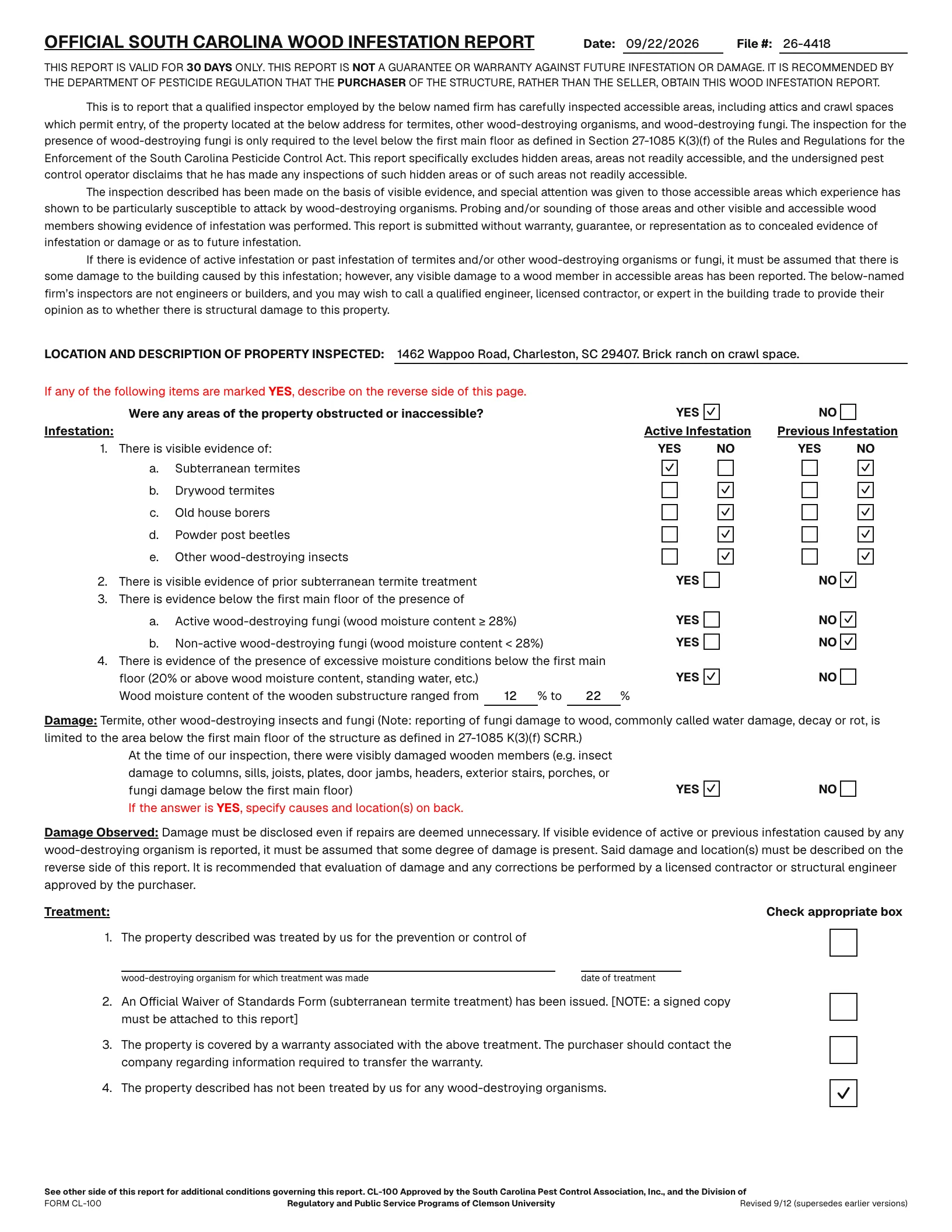
Record the termite findings from an inspection. - South CarolinaCL-100
Official South Carolina Wood Infestation Report
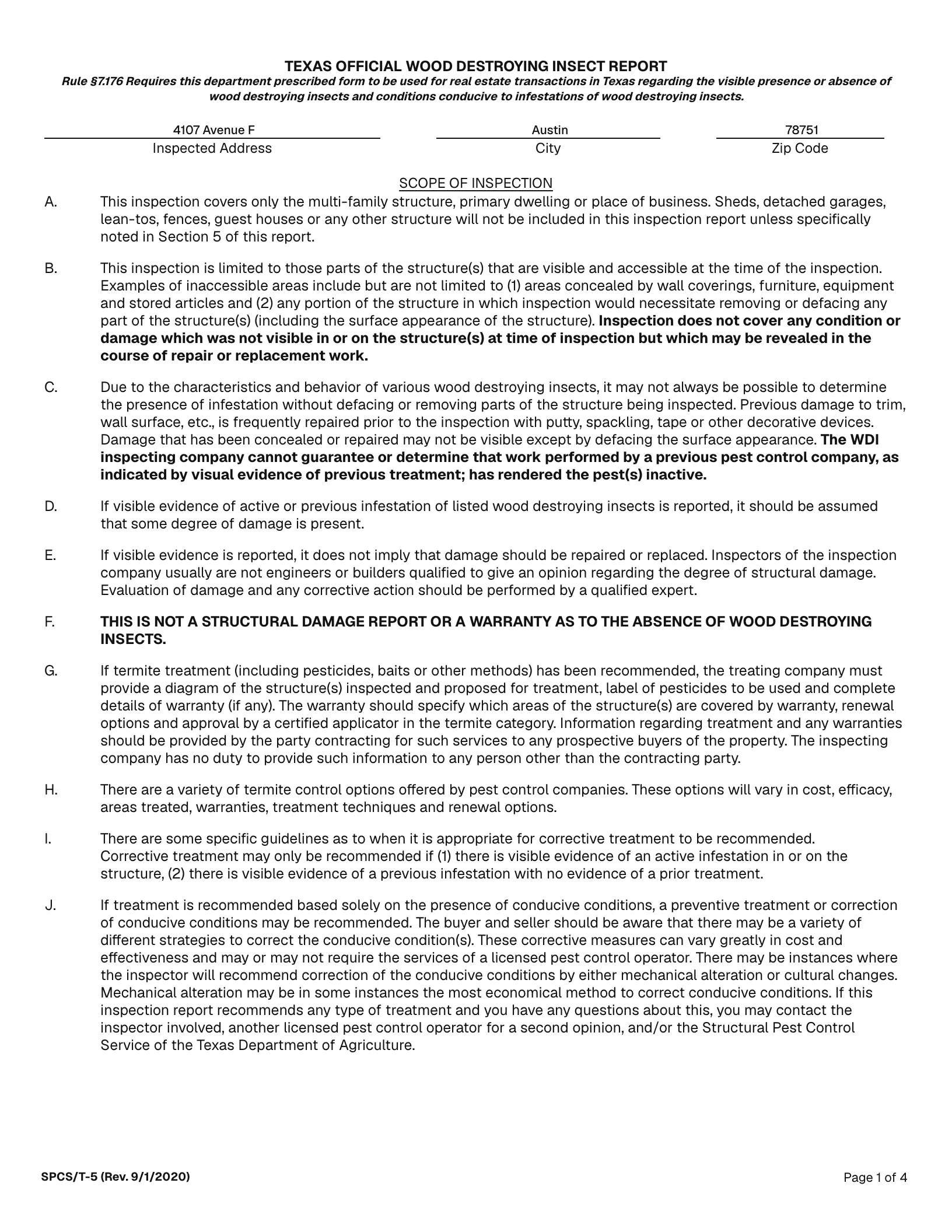
Record the termite findings from an inspection. - TexasSPCS/T-5
Texas Official Wood Destroying Insect Report
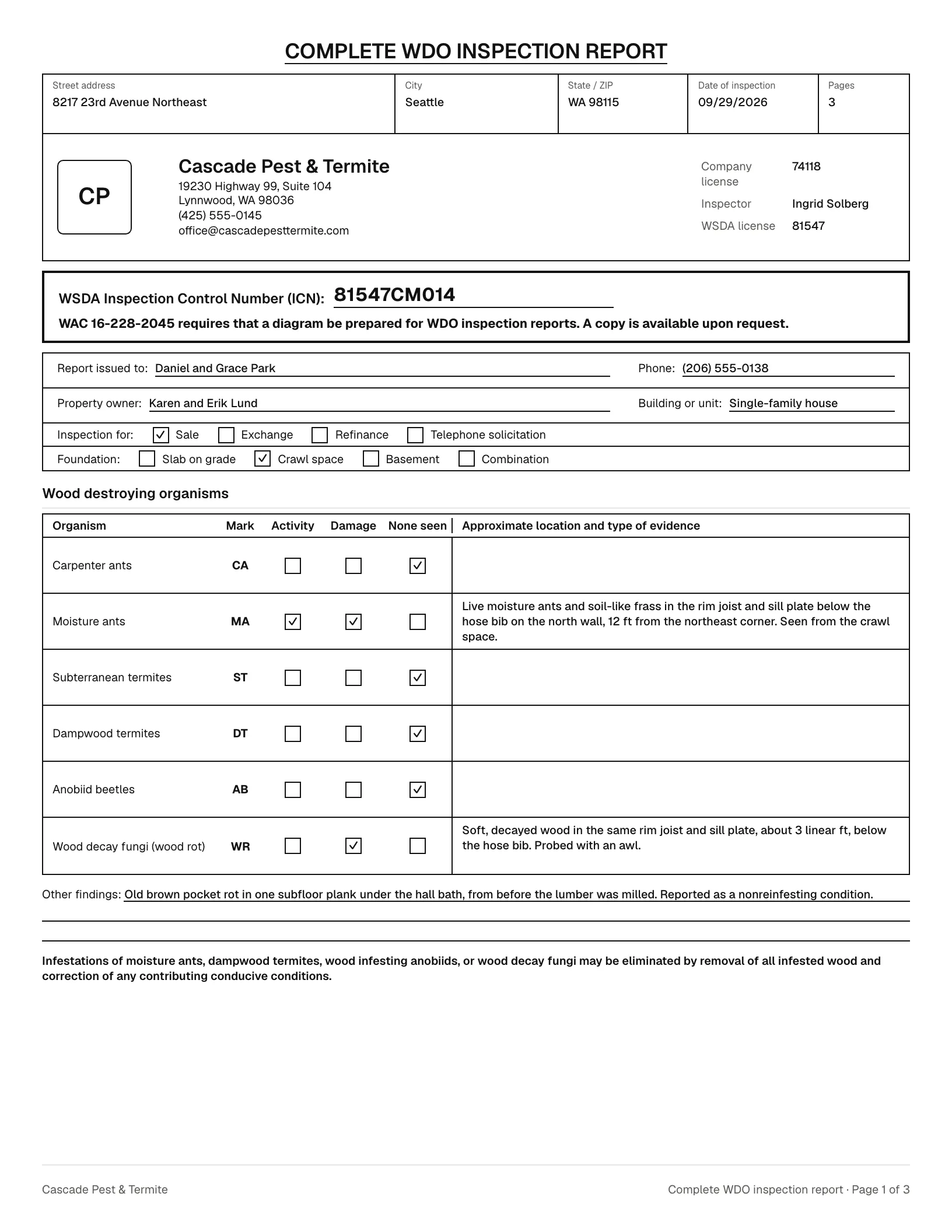
Record the termite findings from an inspection. - Washington
Complete WDO Inspection Report
Record the termite findings from an inspection.