Wood-Destroying Organisms Inspection Report
Florida’s FDACS-13645 is the state’s own two-page termite report for a home sale, and Rule 5E-14.142 bars companies from adding a single word to it.
At a glance
- Required by
- s. 482.226, F.S.
- Filled out by
- FDACS-licensed pest control company
- Signed by
- Licensee or agent
- Kept
- 3 years by the company
Completed example
Download PDFWhat is the FDACS-13645?
It’s Florida’s wood-destroying organisms report, the termite report in a home sale. A licensed pest control company inspects what it can see and reach, then reports live WDOs, evidence, damage, blocked areas, and signs of an earlier treatment. Florida counts wood-decaying fungi as WDOs, so wood rot goes on it too.
You can’t use your own report or add a word to this one. Rule 5E-14.142, F.A.C. adopts Rev. 05/21 and says the licensee “shall not place any disclaimers or additional language” on it. FDACS’s own PDF is the copy of record, so use it if ours ever differs. Page 3 is our own notice layout, since FDACS has no form for that.
When do you need one?
Any time you inspect for WDOs for a real estate deal and either charge a fee or get asked for a written report. That’s s. 482.226, F.S.. The findings go to whoever asked for the inspection, and your company keeps a copy for at least 3 years.
Post the notice of inspection before you leave. It goes right next to the attic or crawl space access, and only the owner may take it down. On a sale written on Florida Realtors’ CRSP-17, a buyer whose report shows infestation or damage has 5 days from the inspection to get it to the seller.
How to fill it out
Check A or B in Section 2. B opens items 1 to 3. Name the organism and the exact spot, like “subterranean termites, live workers in shelter tubes, garage wall, 4 ft east of the laundry door.” Rule 5E-14.142 lets you probe and sound wood once you see visual evidence.
Give every blocked area a reason. Section 3 wants the specific spot and why you couldn’t see it, such as insulation over the attic joists or boxes against a wall. The statute asks for both: areas you could reach but skipped, and areas you couldn’t reach.
Fill in Section 4 even when you don’t treat. Check yes or no for an earlier treatment, list what you saw, and write where you posted the notice. If you treated that day, add the organism, the pesticide, and the treatment’s terms. If not, the next paper is usually a treatment contract.
Print the notice on weatherproof labels. Page 3 holds two 7.5 by 4.5 inch copies, one per half sheet. The law’s minimum is 3 by 5 inches, on something that lasts 3 years, so plain paper won’t do. Fill in your company’s name and address and the inspection date.
Can the seller sign your treatment contract the same day?
A finding starts the sale contract’s clock, and the seller has days, not weeks, to line up treatment. Rule 5E-14.105, F.A.C. says they get your contract before any work is done or any payment is taken. Chasing that signature through two agents eats most of those days.
Noma specializes in the Florida Wood-Destroying Organisms Inspection Report (FDACS-13645). Book the inspection and the treatment as jobs, and turn on “Send document when booked” so your own treatment contract goes out for e-signature the moment the treatment is booked. See how Noma sends contracts for signature.
Frequentlyaskedquestions
Send this document in minutes, not an afternoon.
Other states
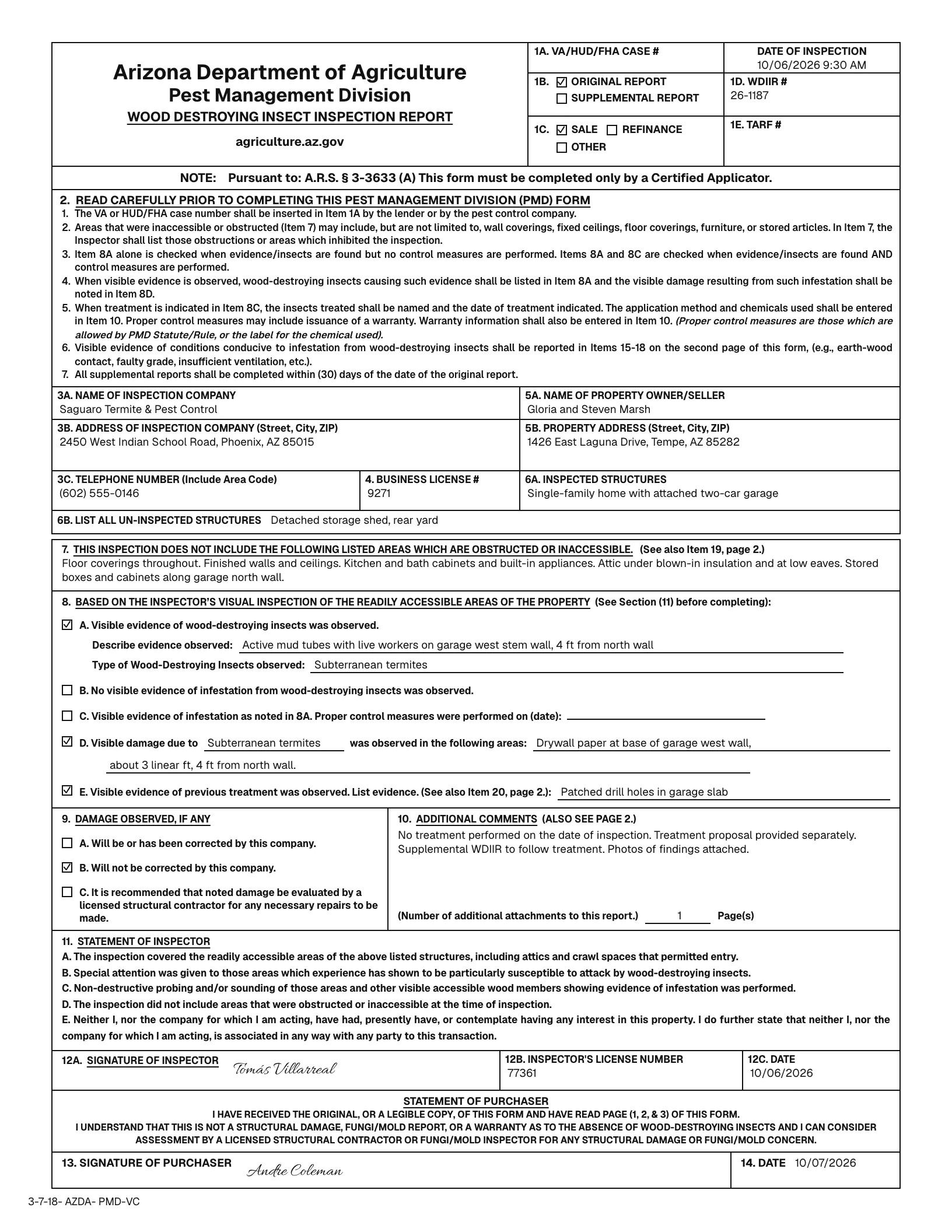
- Arizona
Wood Destroying Insect Inspection Report
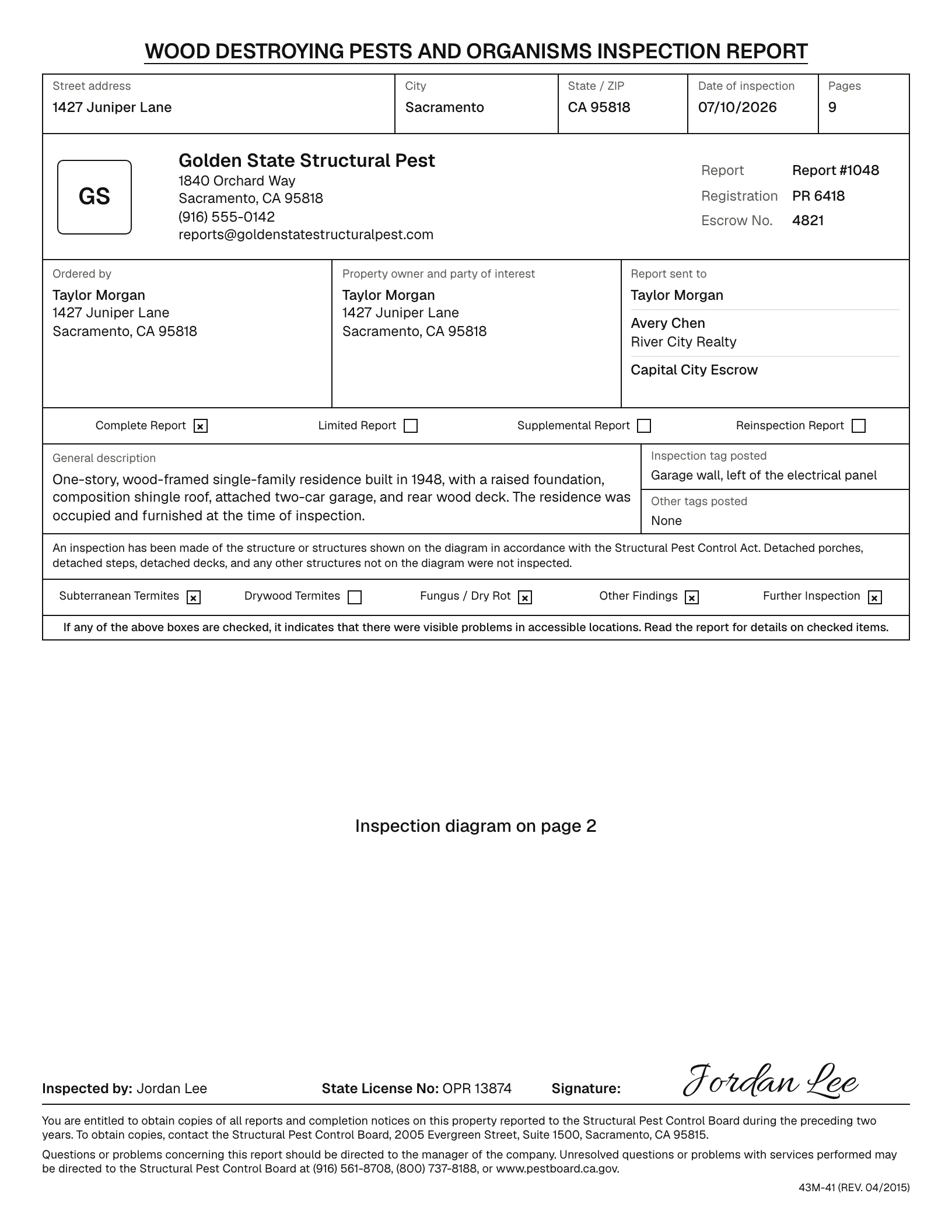
Record the termite findings from an inspection. - California43M-41
Wood Destroying Pests and Organisms Inspection Report
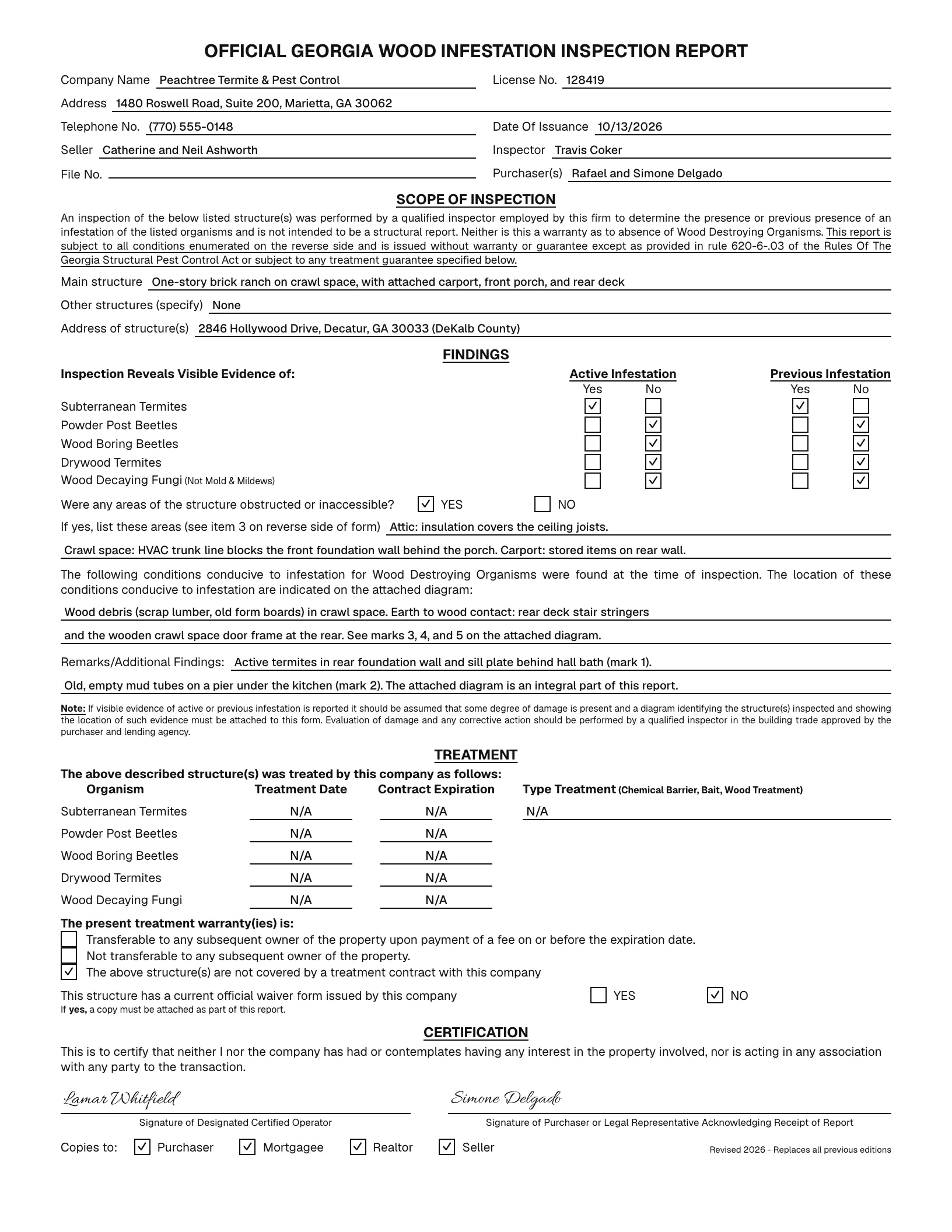
Record the termite findings from an inspection. - Georgia
Official Georgia Wood Infestation Inspection Report
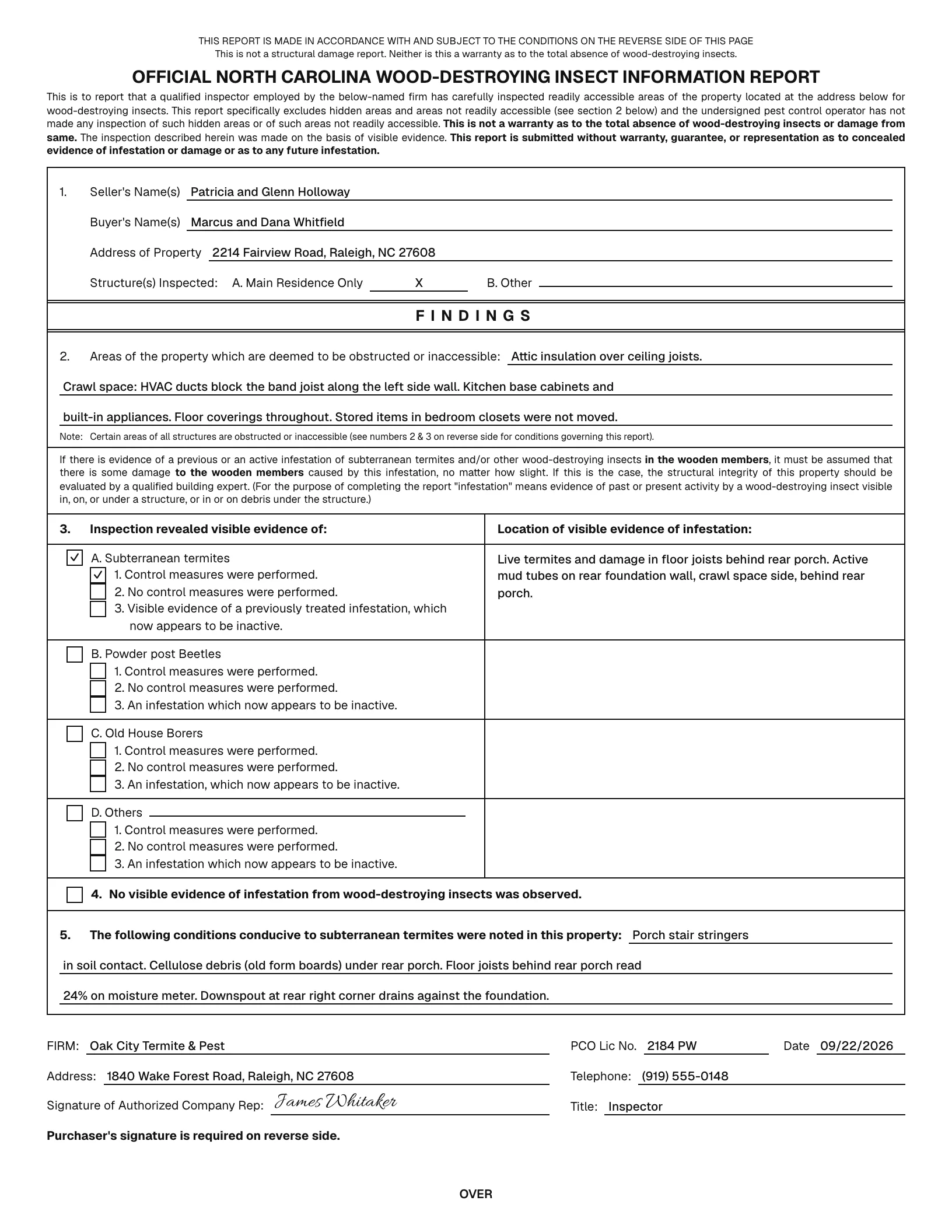
Record the termite findings from an inspection. - North CarolinaWDIR 100
Official North Carolina Wood-Destroying Insect Information Report
Record the termite findings from an inspection. - South CarolinaCL-100
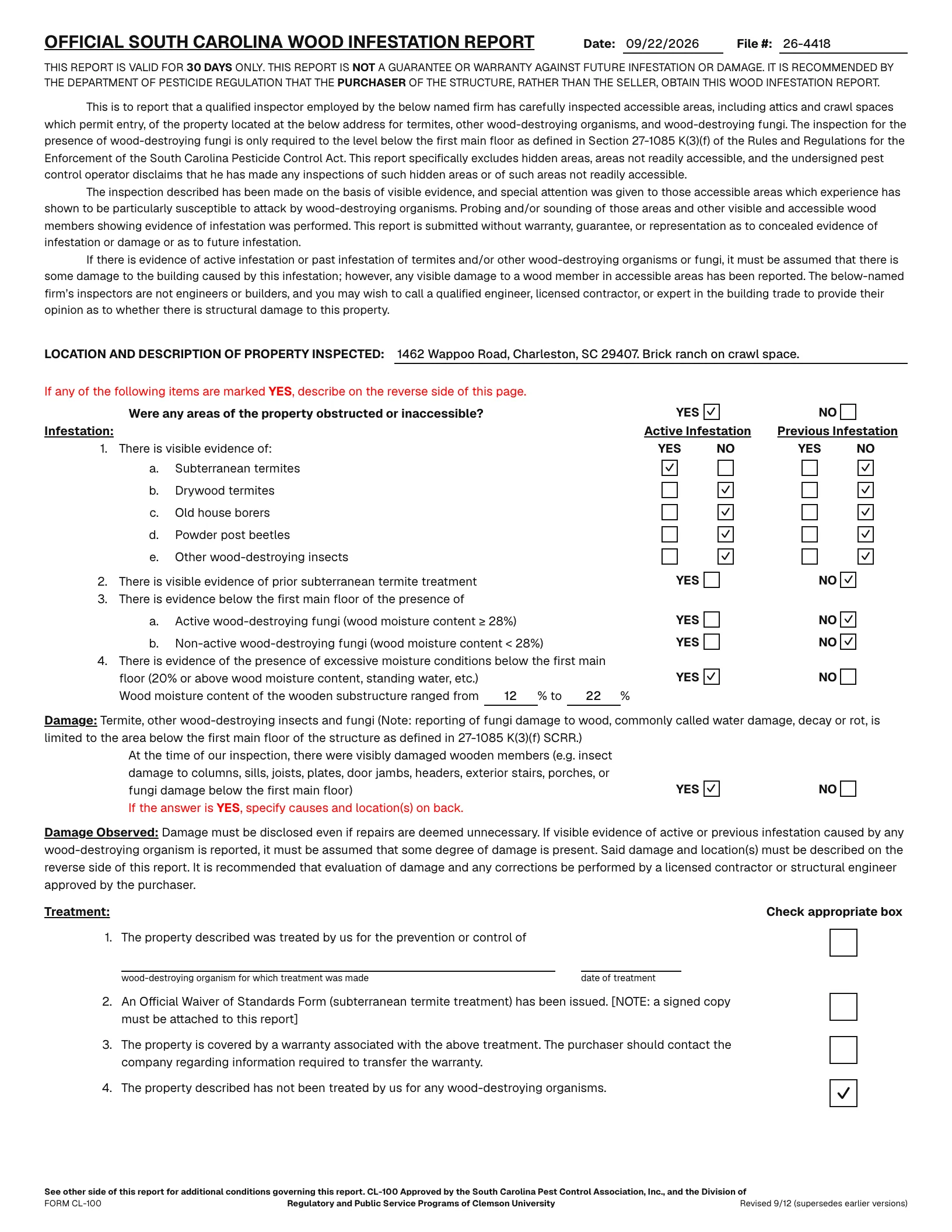
Official South Carolina Wood Infestation Report
Record the termite findings from an inspection. - TexasSPCS/T-5
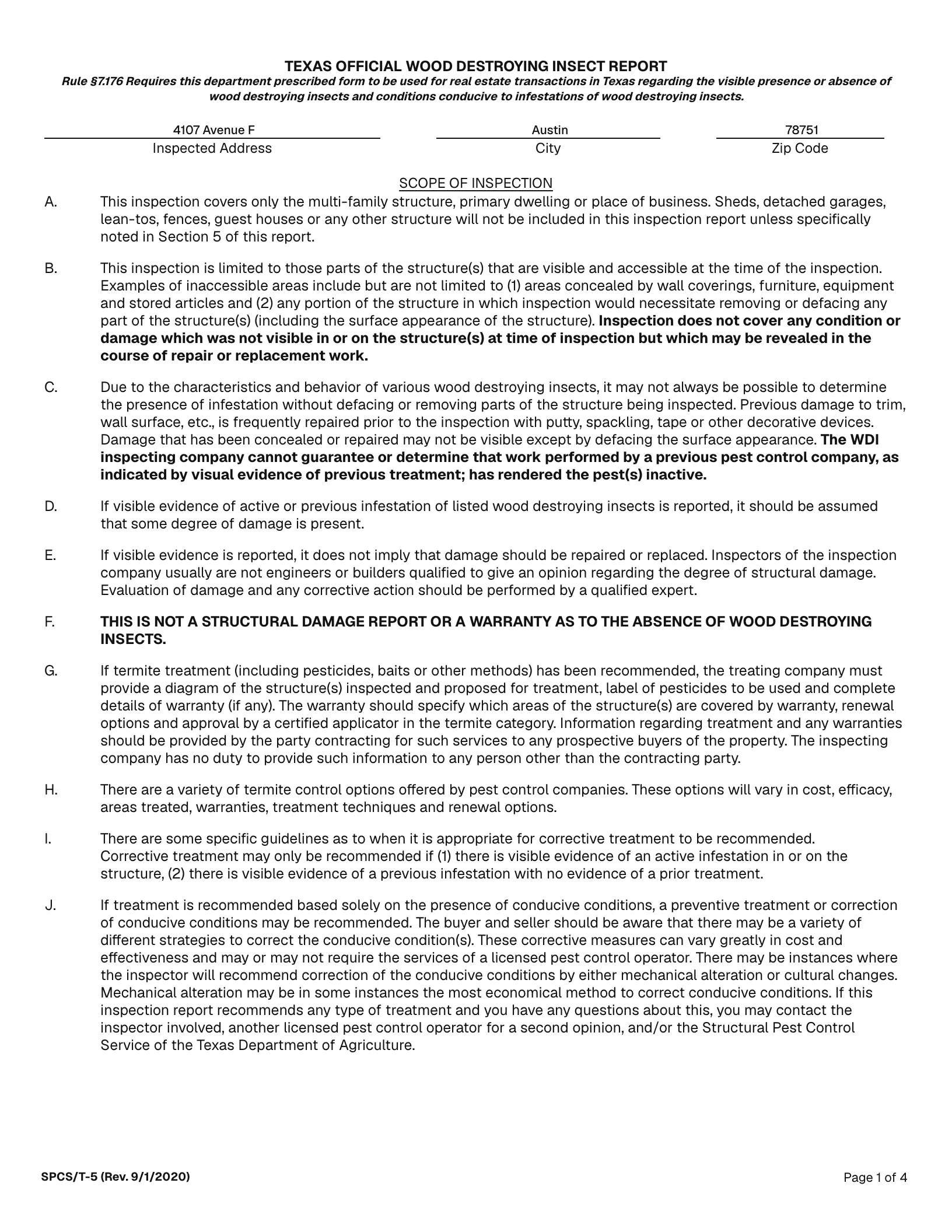
Texas Official Wood Destroying Insect Report
Record the termite findings from an inspection. - Washington
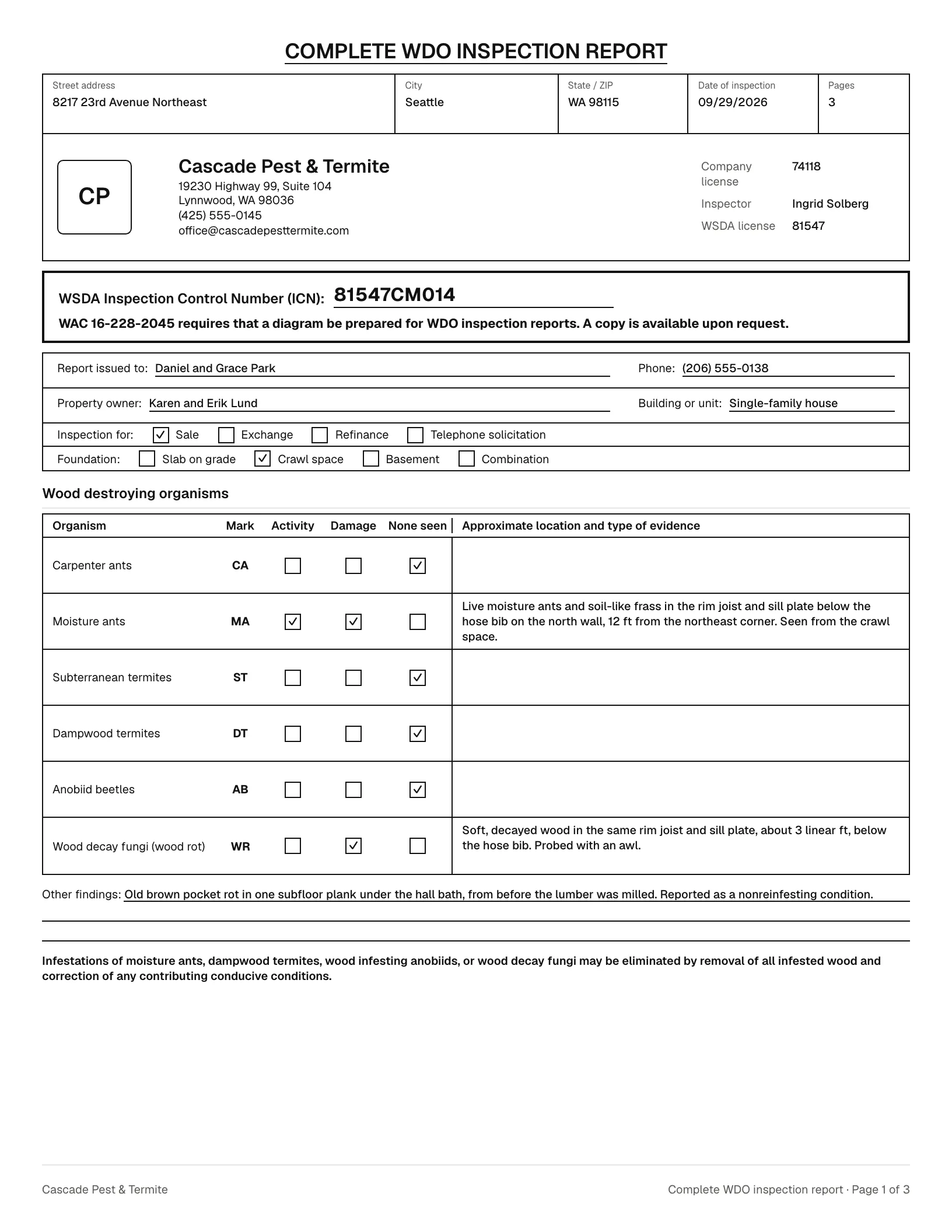
Complete WDO Inspection Report
Record the termite findings from an inspection.