Official Georgia Wood Infestation Inspection Report
Georgia’s Official Wood Infestation Inspection Report, the “termite letter,” is the only form a pest company can use to report wood-destroying organisms on a home for sale, and it comes with a 90-day free treatment guarantee.
At a glance
- Required by
- Rule 620-6-.03
- Filled out by
- Company licensed for WDO
- Signed by
- The company’s certified operator
- Guarantee
- 90 days of free treatment
Completed example
Download PDFWhat is the Georgia termite letter?
It’s the Official Georgia Wood Infestation Inspection Report, the only form a pest company can issue on wood-destroying organisms for a home sale. It covers five organisms, not just termites, plus the conditions that invite them. The format is written into the rule, word for word.
What sets Georgia apart is the guarantee. If an organism the report cleared shows up within 90 days, you treat it free, and the Department says that can’t be altered. The form changed on April 8, 2026, so retire any copy marked “Revised 04/14.” Ours is a convenience copy. The Department’s own form, Reference A in fact sheet SPCS 14-10, is the copy of record.
When do you need one?
Any time you certify a house for sale as free of wood-destroying organisms. That’s Rule 620-6-.03 in the Commission’s rules. Only a company licensed for wood destroying organisms can issue it, and Notice 15-01 says HUD and VA loans take it in place of the NPMA-33.
No rule sets an expiration date, so lenders and sale contracts set their own. Log each report on your monthly records and keep them two years, per Rule 620-6-.06. The Department can inspect any house with a termite letter issued in the last two years.
How to fill it out
Fill in every section. Condition 10 now says so outright. Write full names for the seller and the inspector, and use the VA or HUD/FHA case number as the file number, or leave it blank. Decks and enclosed porches that touch the house count as part of it.
Name what you couldn’t see. List each blocked area, like attic insulation, ducts in the crawl space, or stored boxes in the garage. The fact sheet says “see number 3 on the back” isn’t acceptable.
Draw it for the homeowner. Any evidence, active or previous, needs an attached diagram, and the diagram has to match the report. Mark the conducive conditions on it too: wood debris, wood touching soil, and crawl space vents that don’t meet code. Page 3 of our copy is a grid for that.
Disclose past work, then sign. List any treatment your company did on the house, even on a lapsed contract. If you issued an Official Waiver for it, check YES and attach a copy. Then your Designated Certified Operator signs, and no one else can.
Can sellers sign the contract before the crew arrives?
They have to. When the letter finds live termites, Rule 620-6-.02 says the owner signs the termite contract before any treatment, and the closing date won’t wait for a paper copy to come back.
Noma specializes in the Official Georgia Wood Infestation Inspection Report (Rule 620-6-.03). Upload your termite contract once, and Noma sends it for e-signature the moment the treatment is booked. Schedule, invoice, and collect payment for the job in the same place. See how Noma sends contracts for signature.
Frequentlyaskedquestions
Send this document in minutes, not an afternoon.
Other states
- Arizona
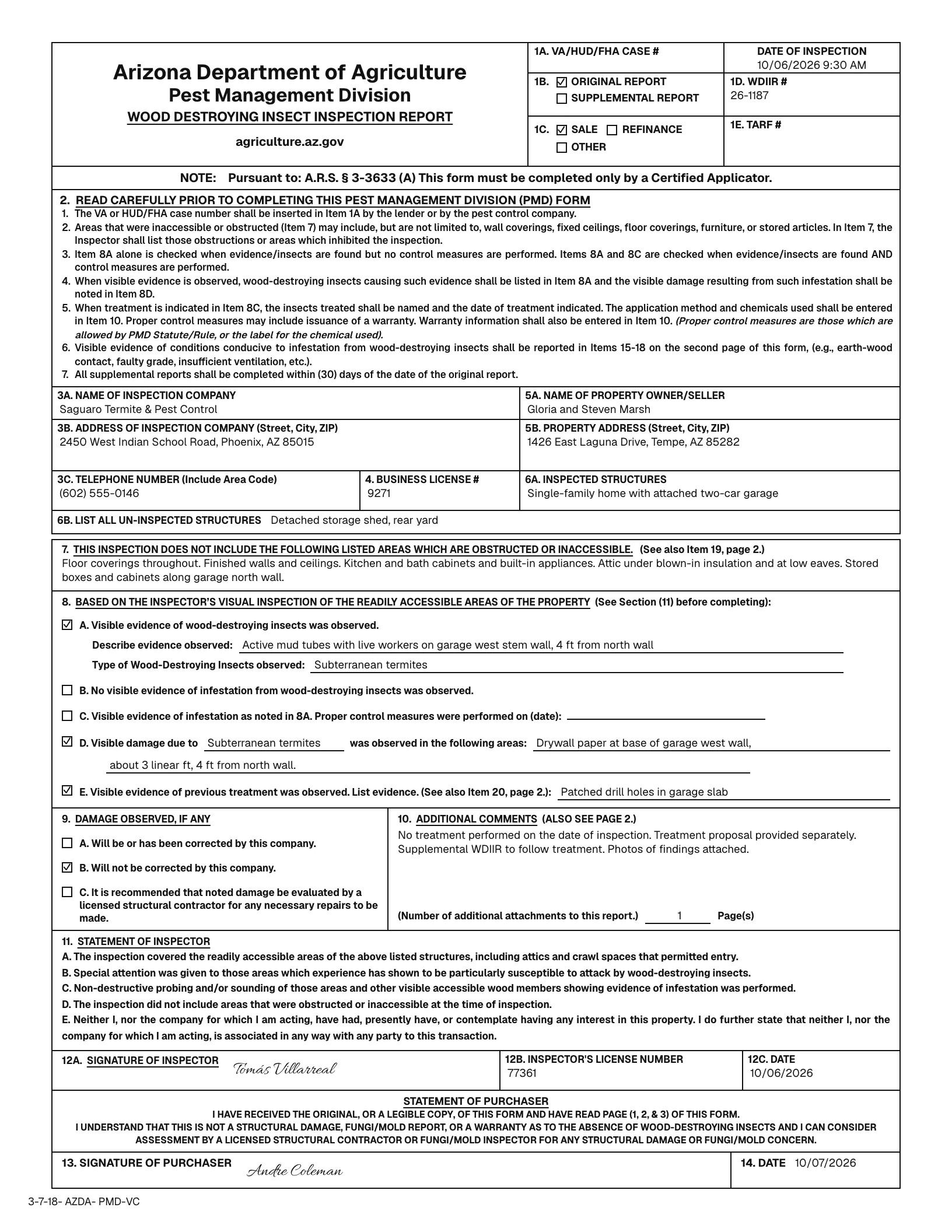
Wood Destroying Insect Inspection Report
Record the termite findings from an inspection. - California43M-41
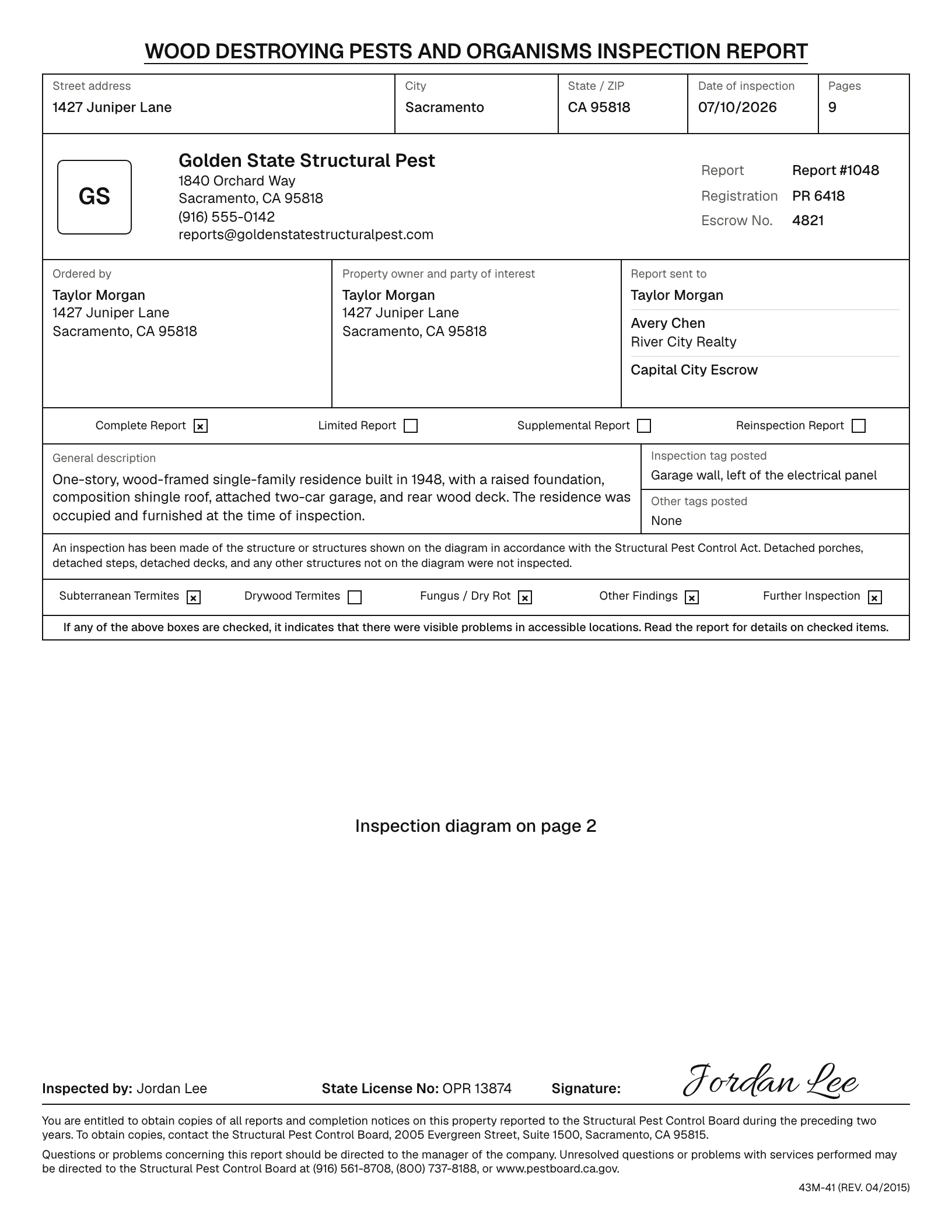
Wood Destroying Pests and Organisms Inspection Report
Record the termite findings from an inspection. - FloridaFDACS-13645
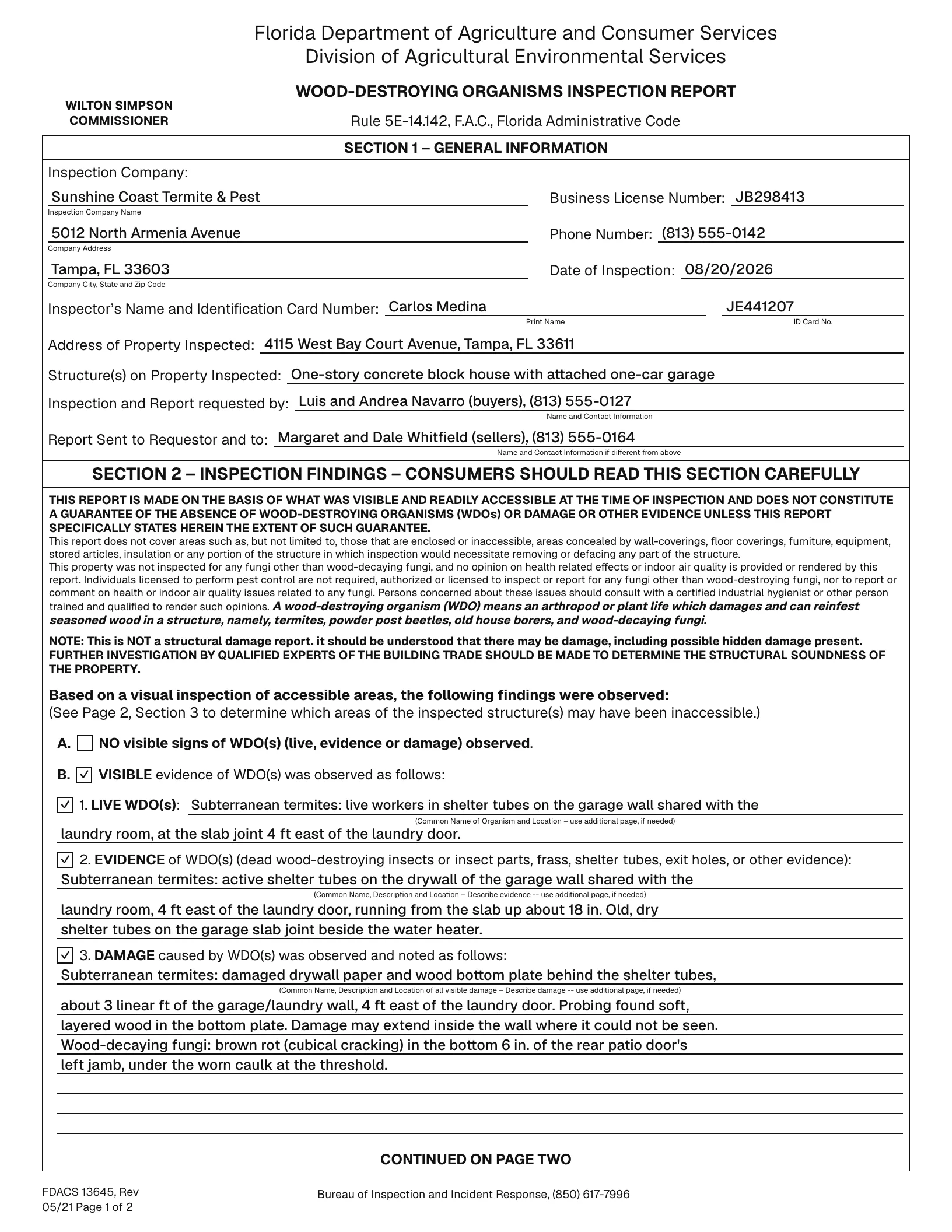
Wood-Destroying Organisms Inspection Report
Record the termite findings from an inspection. - North CarolinaWDIR 100
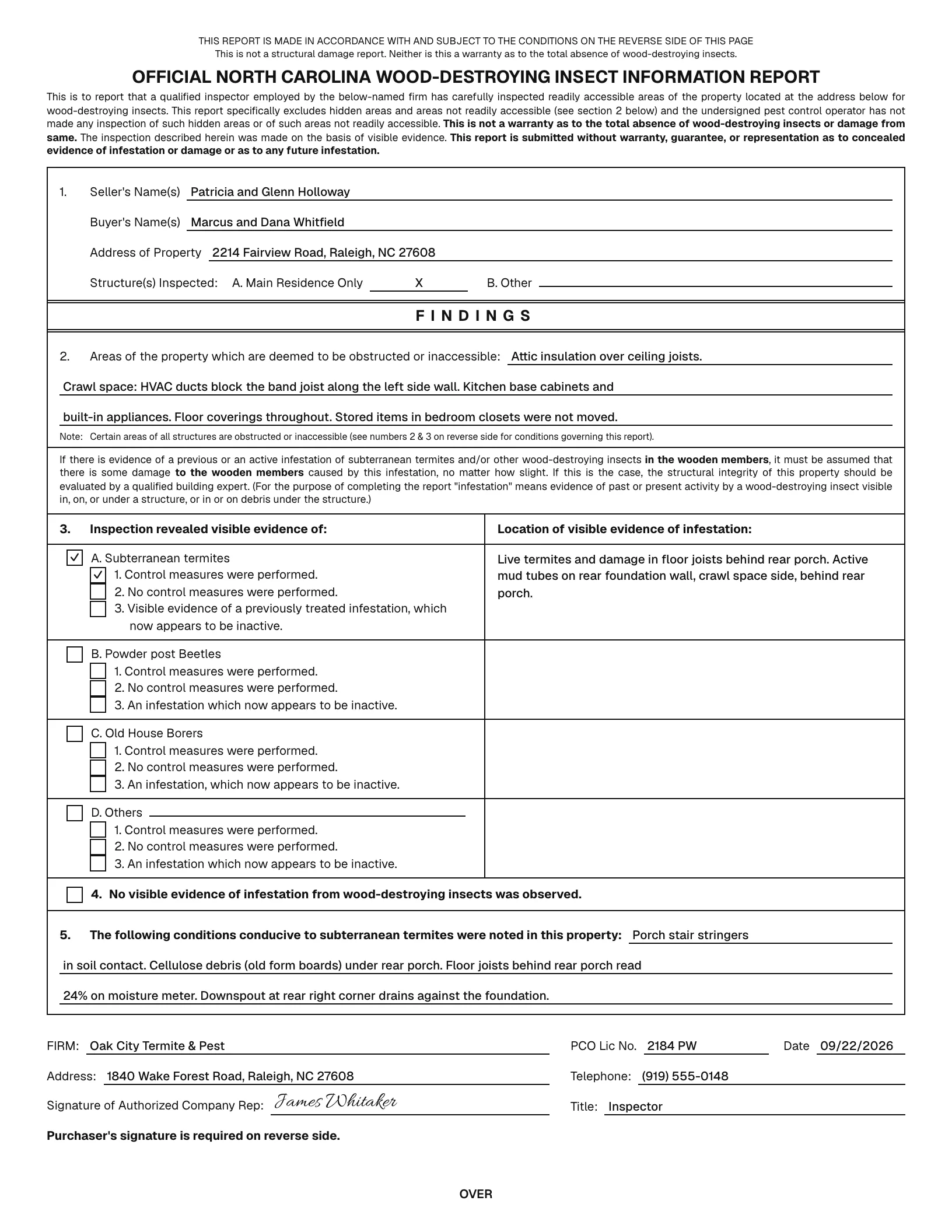
Official North Carolina Wood-Destroying Insect Information Report
Record the termite findings from an inspection. - South CarolinaCL-100
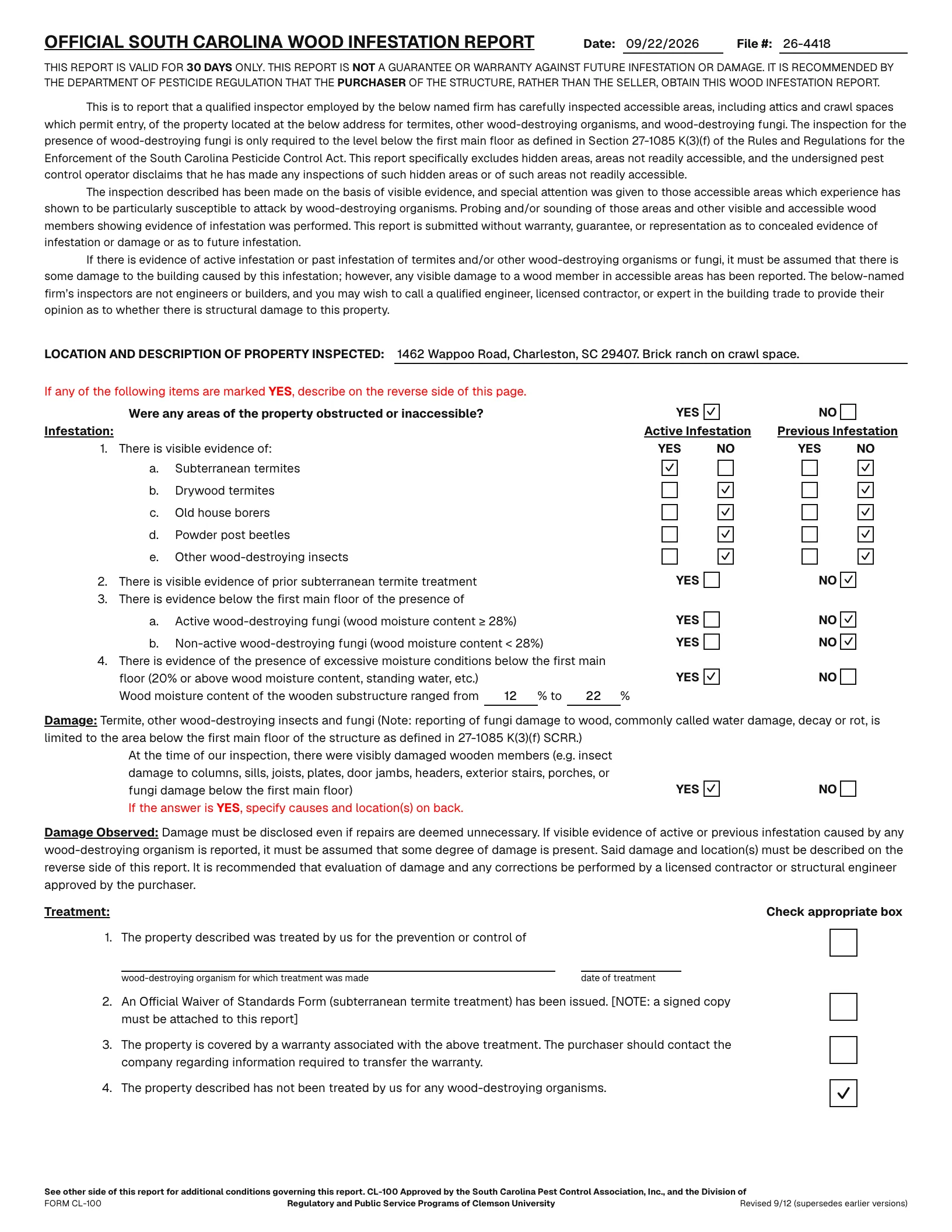
Official South Carolina Wood Infestation Report
Record the termite findings from an inspection. - TexasSPCS/T-5
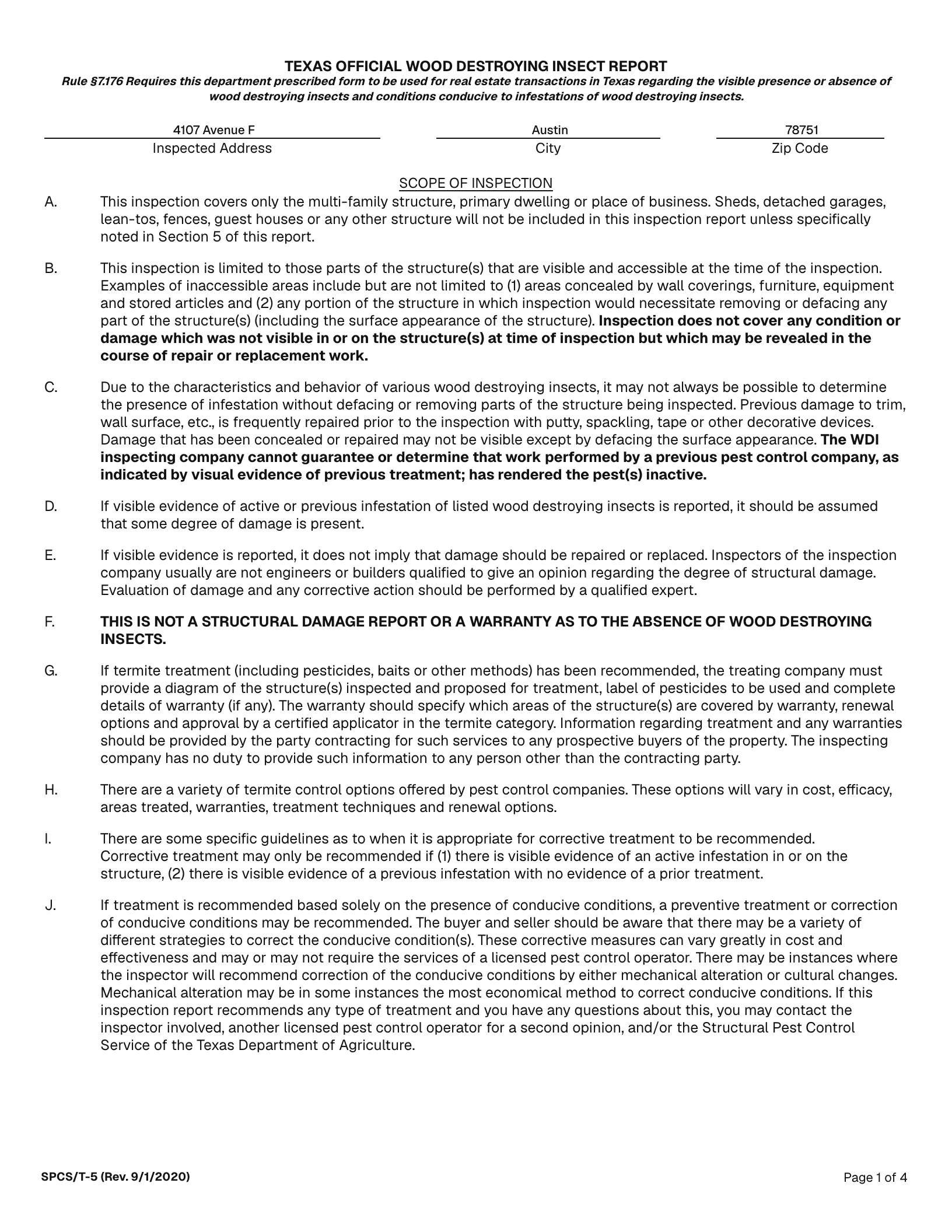
Texas Official Wood Destroying Insect Report
Record the termite findings from an inspection. - Washington
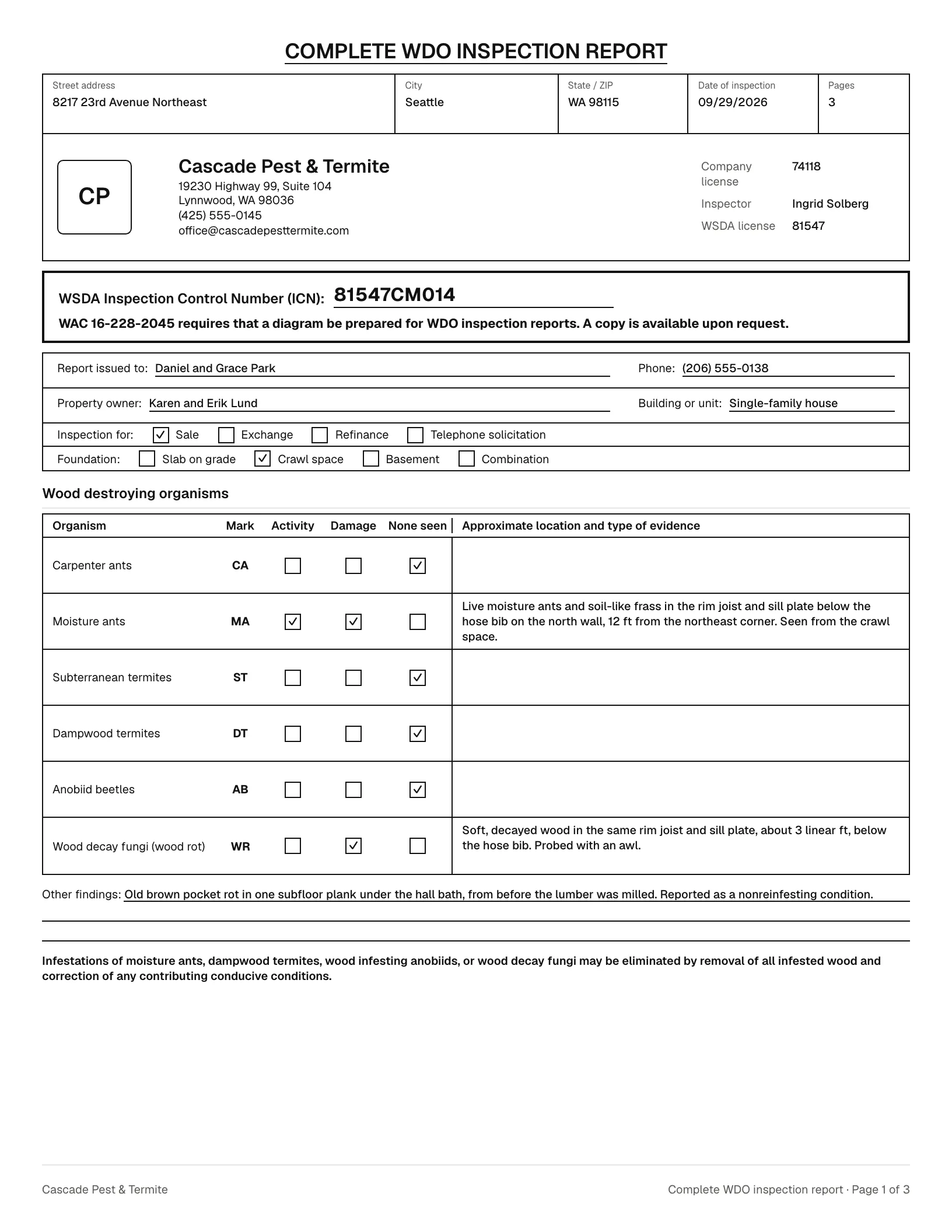
Complete WDO Inspection Report
Record the termite findings from an inspection.