Wood Destroying Organism Control Contract
Georgia’s Wood Destroying Organism Control contract, the “termite bond,” is the written contract an owner signs before any termite work, with the boxed sentences Rule 620-6-.02 requires.
At a glance
- Required by
- Rule 620-6-.02
- Filled out by
- The licensee
- Signed by
- Owner or owner’s agent
- Due
- Before any control measure
Completed example
Download PDFWhat is a Georgia termite bond?
It’s the written contract for a termite job, which Georgia’s rules call a Wood Destroying Organism Control contract. Owners and agents call it a termite bond. It covers the treatment, the price, and the yearly renewal, and it often follows a termite letter that found termites at a sale.
Georgia doesn’t print a form. Instead, Rule 620-6-.02 lists what the contract must say and sets sentences it must print word for word, in letters at least 1/8 inch tall inside a heavy black line. One more catch: in the rule, an “approved bond” is a surety bond your company carries, not the customer’s contract.
When do you need one?
On every termite job. The rule says every licensee issues a written contract for each job of wood destroying organism control, and the owner or the owner’s agent signs it before any control measure. On a new home, GDA asks the contract to note that the treatment is pre-construction.
The owner also gets three days to cancel under the Fair Business Practices Act and the FTC’s Cooling-Off Rule. Saturdays count as business days there. If part of the house can’t be treated to the state’s standards, the owner signs the Official Waiver too.
How to fill it out
Pick the boxed sentence first. Any contract with a guaranty or warranty starts page 1 with one of two sentences: retreatment only, or retreatment and repair. A warranty-only bond, with no first treatment, uses its own sentence. A bait job adds one more, about removing the bait. The blank prints them all with boxes, so check the ones that apply.
Name the control measure the rule’s way. GDA’s contract fact sheet lists comprehensive, defined, or alternate technique soil treatment, a baiting system, or wood treatment. Then add the effective date and the contract period.
Draw the house and mark the termites. The diagram has to show where any visible active or previous infestation is. If coverage depends on the house staying as drawn, the contract has to say so, so the owner knows to tell you about a new deck or slab.
Spell out the money. Give the price, with any repairs or digging you’ll do, the renewal fee, how many years it stays fixed, and how often you’ll reinspect. Keep the insurance sentence from O.C.G.A. 43-45-9 in the same size type as the other terms. Each yearly visit then gets its own reinspection report.
Can owners sign it before the crew shows up?
The rule says no control measure before the owner signs. When the contract lives on paper, the crew waits in the driveway for a seller who’s at work, or the job slides a day.
Noma specializes in the Wood Destroying Organism Control Contract (Rule 620-6-.02). Upload your own contract once, and turn on “Send document when booked” so the owner gets it to e-sign the moment the job is booked. See how Noma sends contracts for signature.
Frequentlyaskedquestions
Send this document in minutes, not an afternoon.
Other states
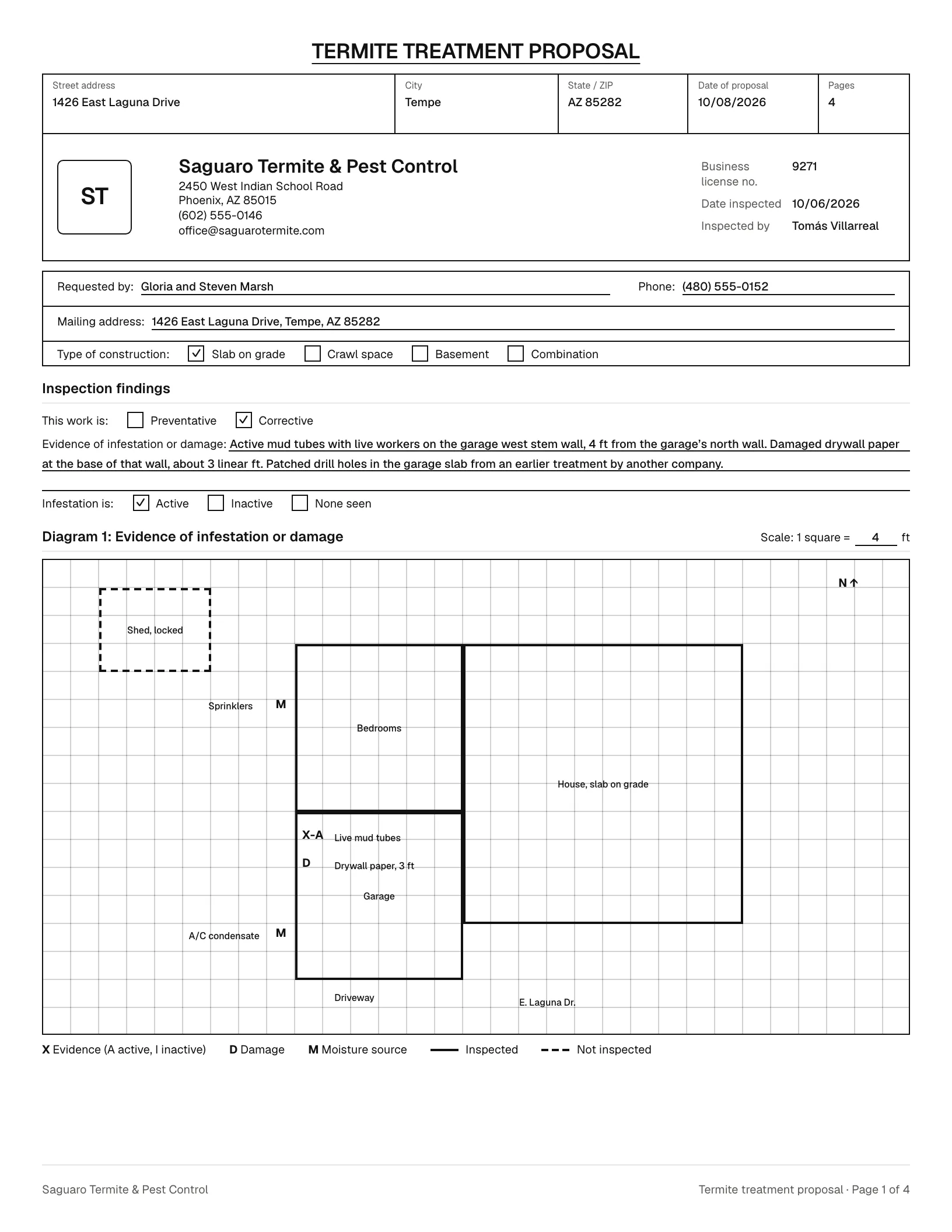
- Arizona
Termite Treatment Proposal
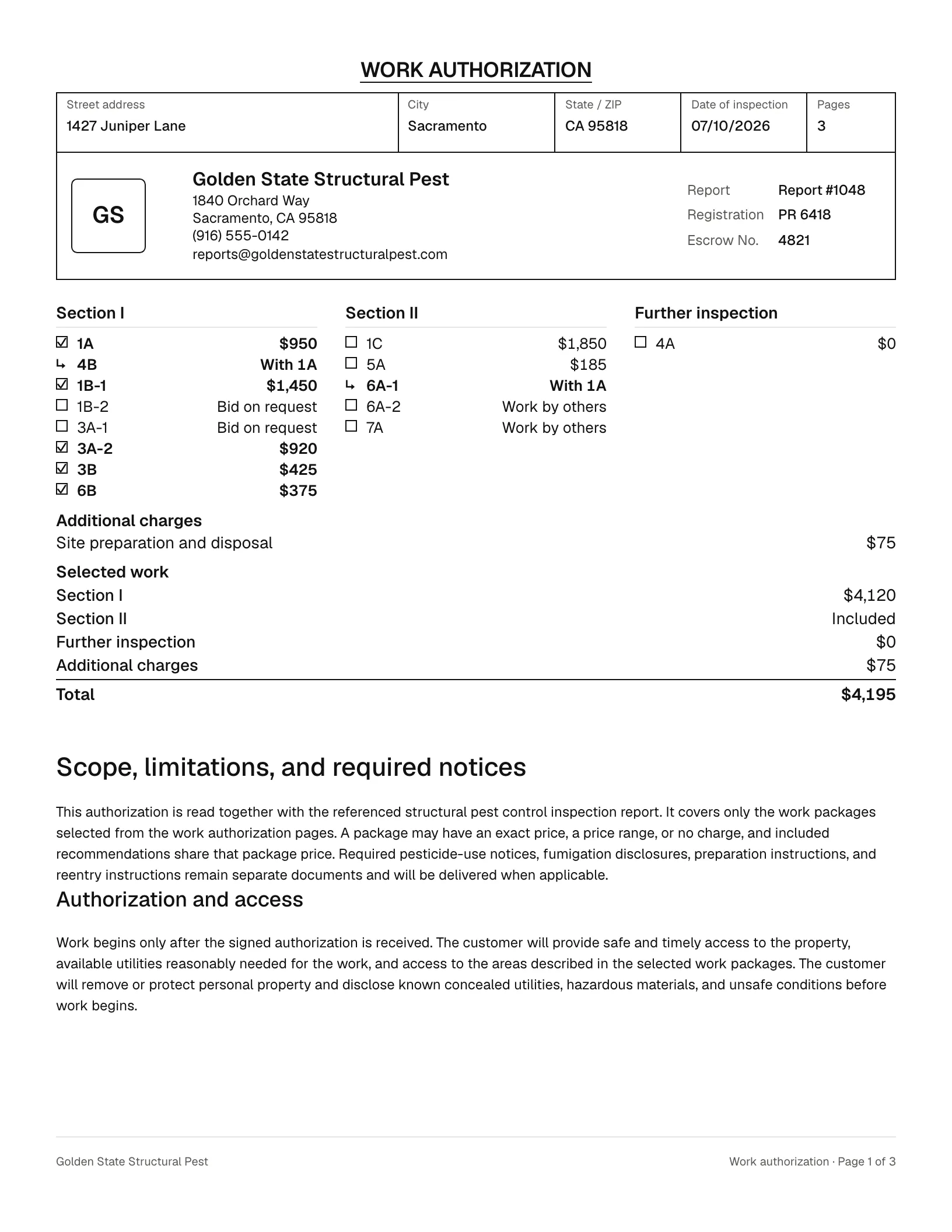
The priced contract owners sign to approve the work. - California
Work Authorization
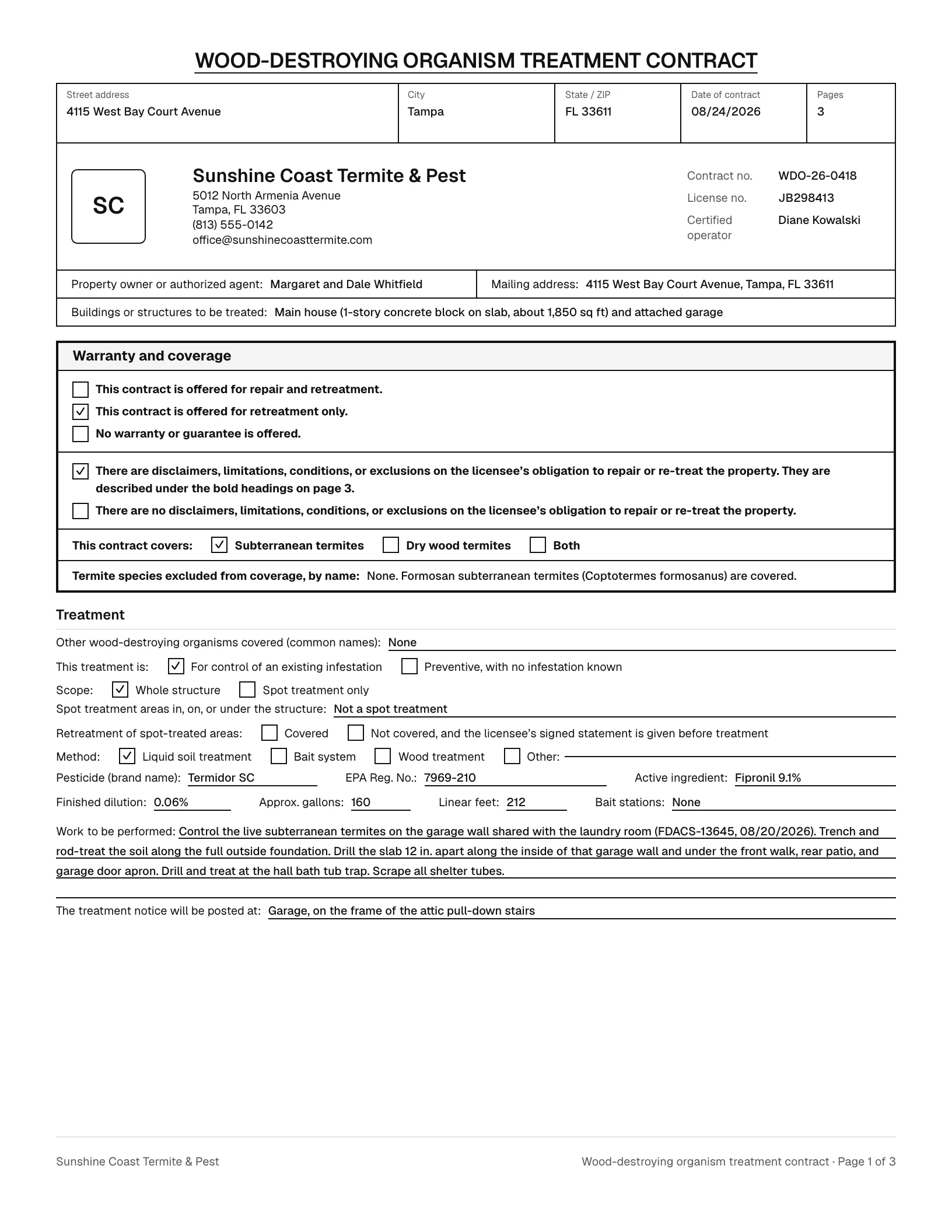
The priced contract owners sign to approve the work. - Florida
Wood-Destroying Organism Treatment Contract
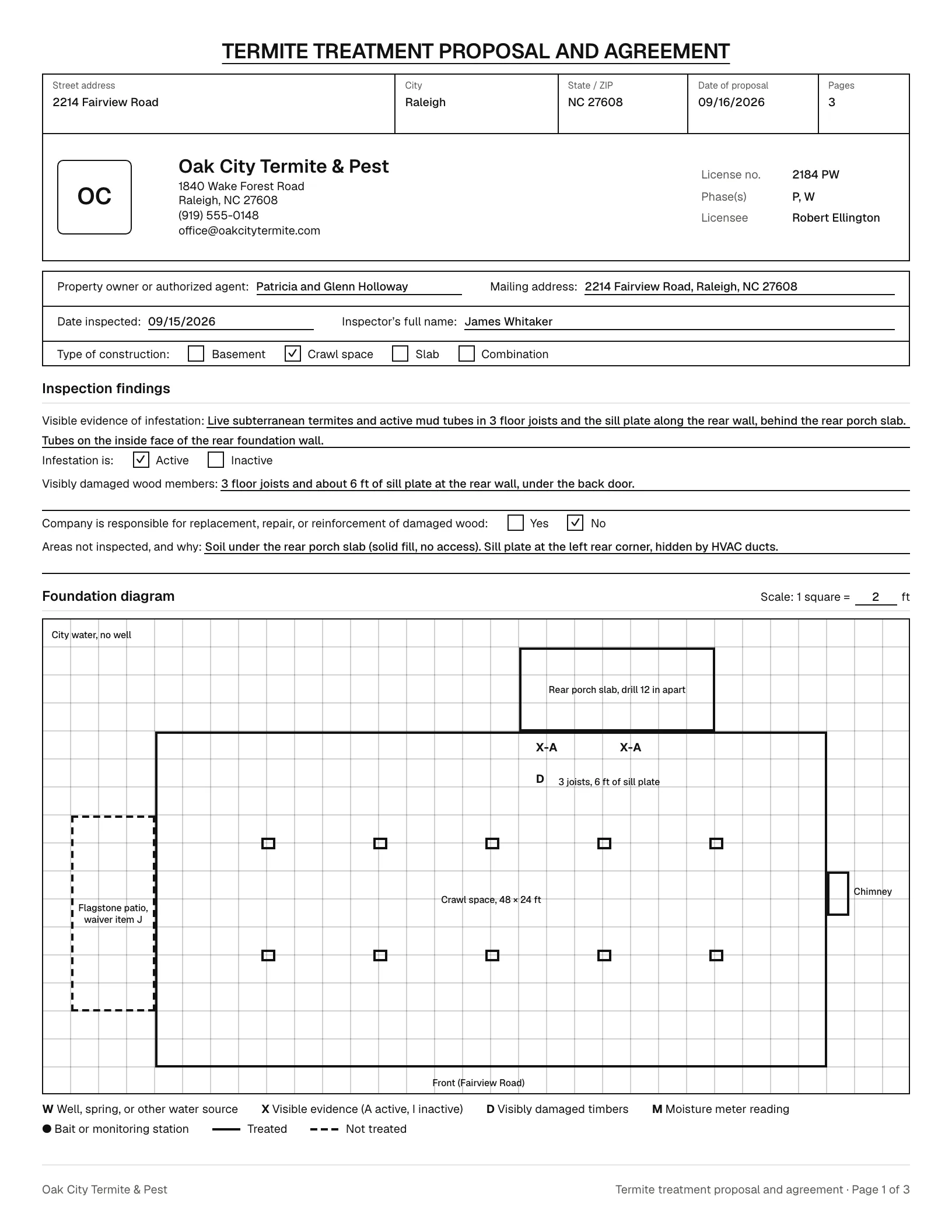
The priced contract owners sign to approve the work. - North Carolina
Termite Treatment Proposal and Agreement
The priced contract owners sign to approve the work. - South Carolina
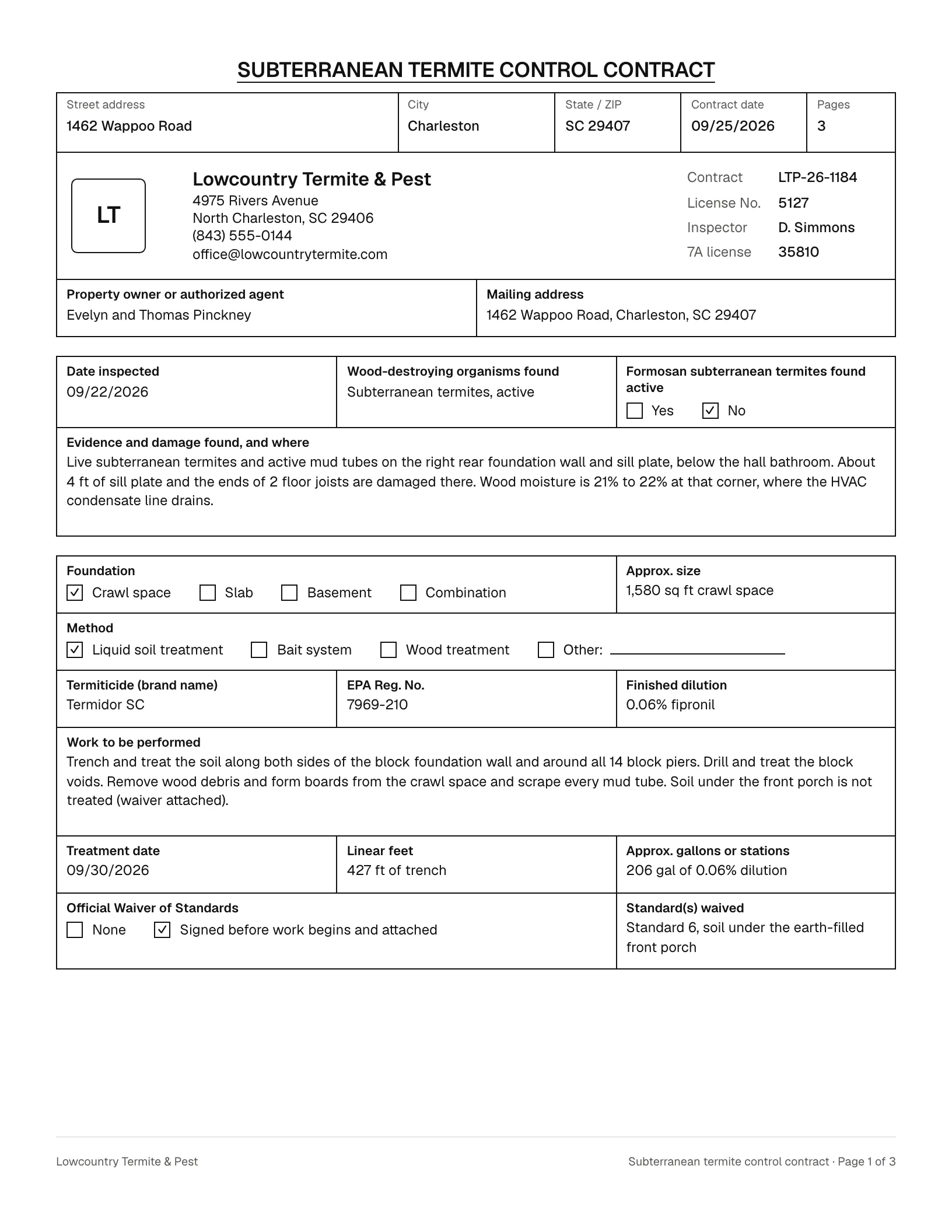
Subterranean Termite Control Contract
The priced contract owners sign to approve the work. - Texas
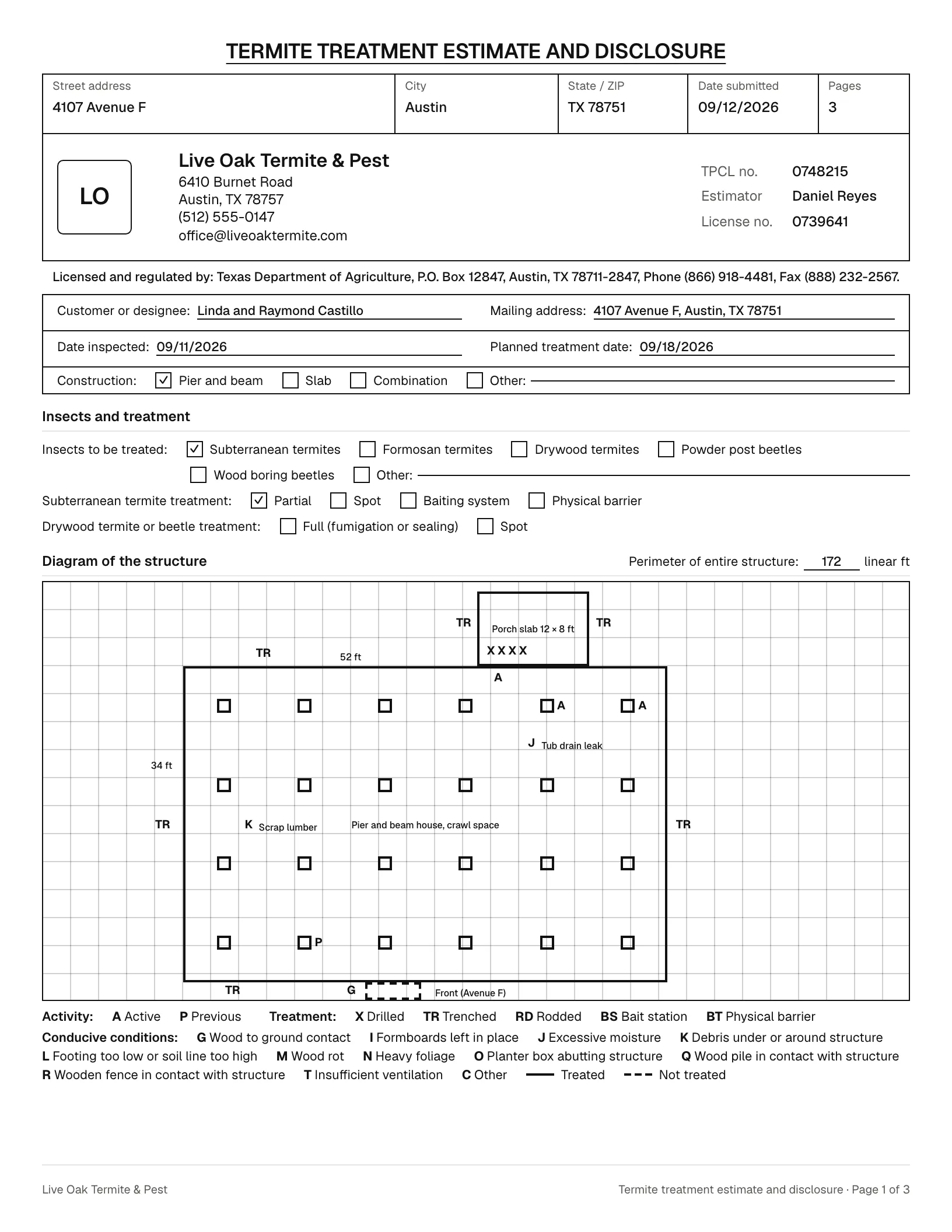
Termite Treatment Estimate and Disclosure
The priced contract owners sign to approve the work. - Washington
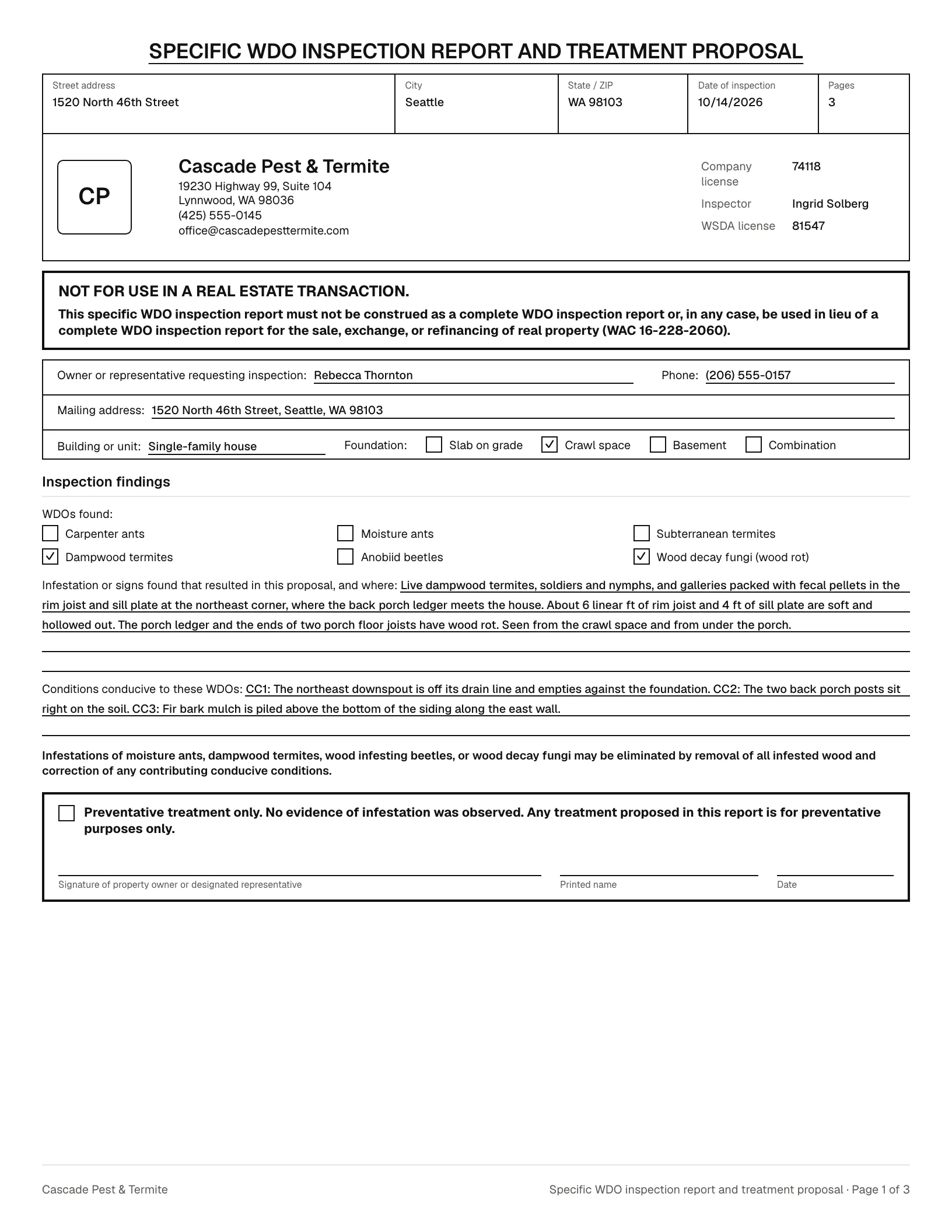
Specific WDO Inspection Report and Treatment Proposal
The priced contract owners sign to approve the work.