Termite Treatment Estimate and Disclosure
In Texas, the termite treatment estimate is the written estimate and disclosure a pest control company must give the customer before it treats a home for termites or other wood destroying insects, under 4 TAC §7.174.
At a glance
- Required by
- 4 TAC §7.174
- Filled out by
- Termite licensee
- Signed by
- Certified applicator or technician
- Due
- Before any treatment starts
Completed example
Download PDFWhat is the termite treatment estimate?
It’s the written estimate you hand the customer before you treat a home for subterranean termites, drywood termites, powder post beetles, or other wood destroying insects. Carpenter ants don’t count. It’s often the next step after a T-5 report finds termites.
TDA posts sample disclosures but no official form. Instead, 4 TAC §7.174 lists what every estimate must carry and fixes the exact words of three statements. Those have to print in at least 8-point type, word for word.
When is it due?
Before any treatment starts. You can quote a rough range over the phone, but the written estimate has to come first. Only a licensed technician or certified applicator in the termite category can write it, and one of them signs to approve it.
Once it’s signed, you treat exactly what it says. Under 4 TAC §7.172, a surprise on the job means a written addendum when you finish. A house that isn’t built yet gets the pretreatment disclosure instead.
How to fill it out
Measure and draw the house. The diagram needs the perimeter in feet, as close as you can get it. Mark active and old termite activity, the areas you’ll treat, any other wood destroying insects, conducive conditions, and the construction details that shape the job.
Name the product and the dose. Attach the label for every pesticide you’ll use. Write the concentration, or the minimum number of bait stations for a baiting job. A physical barrier needs its square footage and a drawing of the install.
Spell out the warranty. The rule wants the complete details, if you give one. Say what’s covered, for how long, what renewal costs, what happens if termites come back, and what voids it. If there’s no warranty, check that box.
Add the sheets and sign. Give the customer TDA’s consumer information sheet, which 4 TAC §7.147 says you can’t swap for your own. 4 TAC §7.145 puts your license number and the jurisdiction statement on the face. Then the applicator signs and the customer accepts.
What happens after the treatment?
Leave a durable sticker by the water heater or breaker box, or under the kitchen sink, with your company, the applicator, the product, and the date. Then keep a copy of the estimate for 2 years. A paper copy in a truck is hard to find when TDA asks for it.
Noma specializes in the Termite Treatment Estimate and Disclosure (4 TAC §7.174). Upload your own estimate once as a reusable contract, then send it to each customer for e-signature before the first trench is dug. See how Noma sends estimates for signature.
Frequentlyaskedquestions
Send this document in minutes, not an afternoon.
Other states
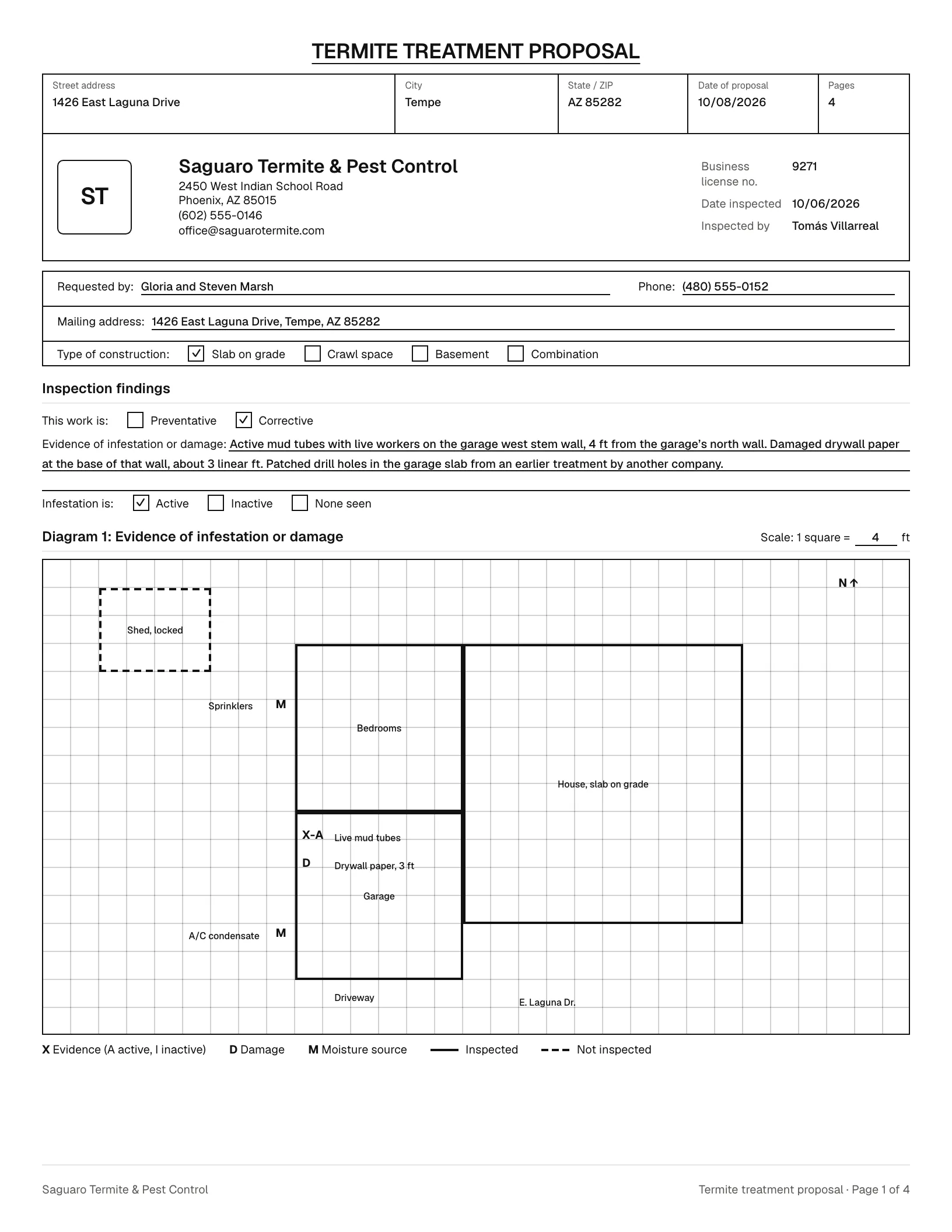
- Arizona
Termite Treatment Proposal
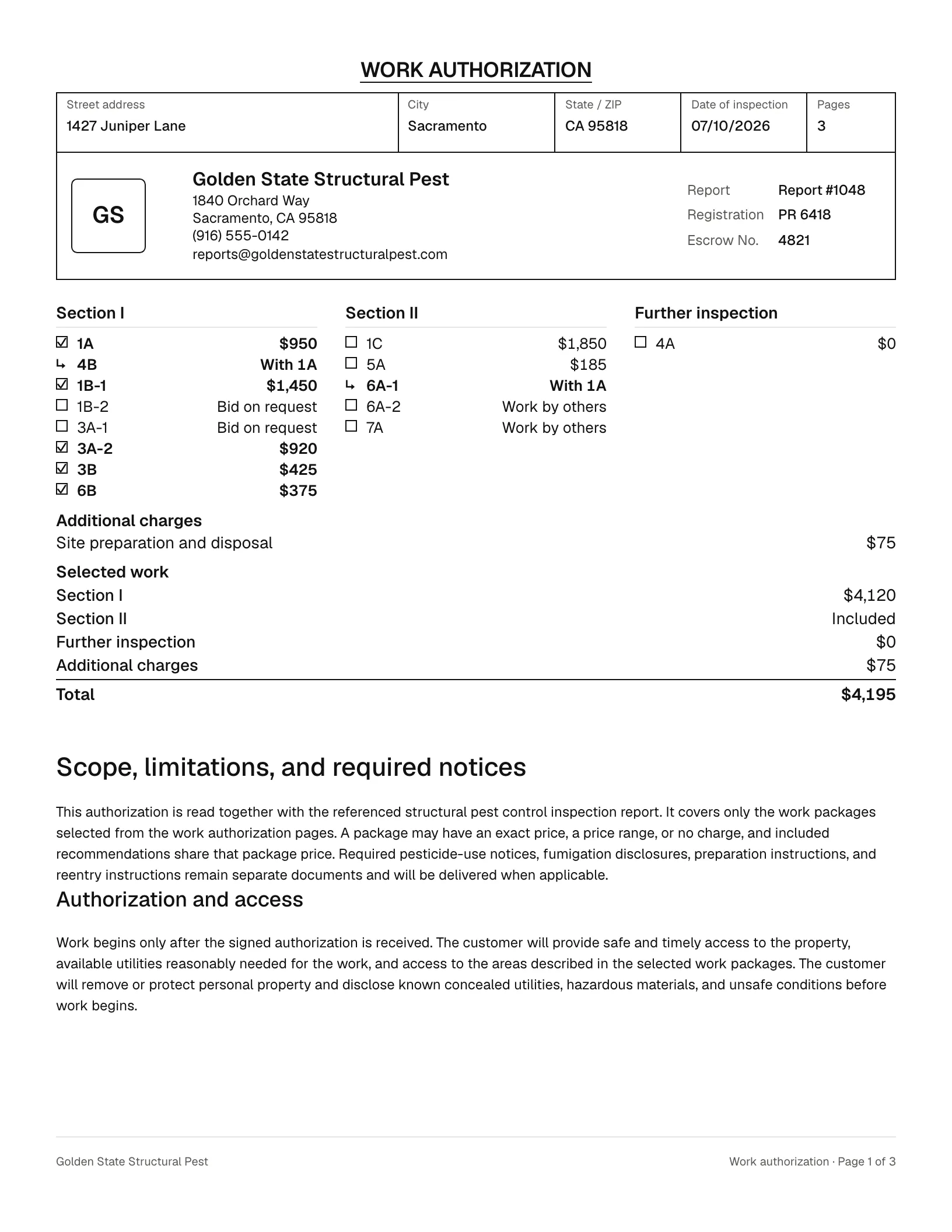
The priced contract owners sign to approve the work. - California
Work Authorization
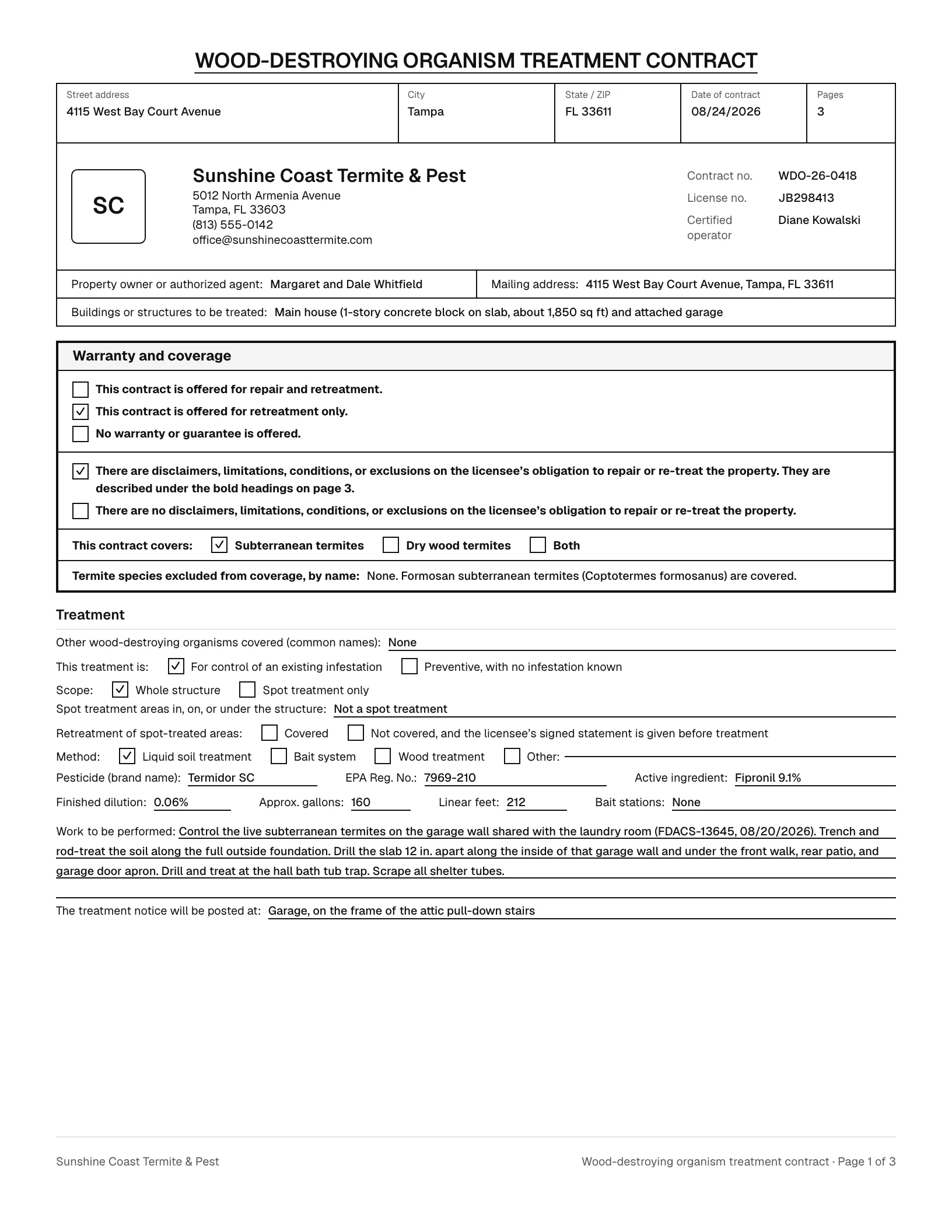
The priced contract owners sign to approve the work. - Florida
Wood-Destroying Organism Treatment Contract
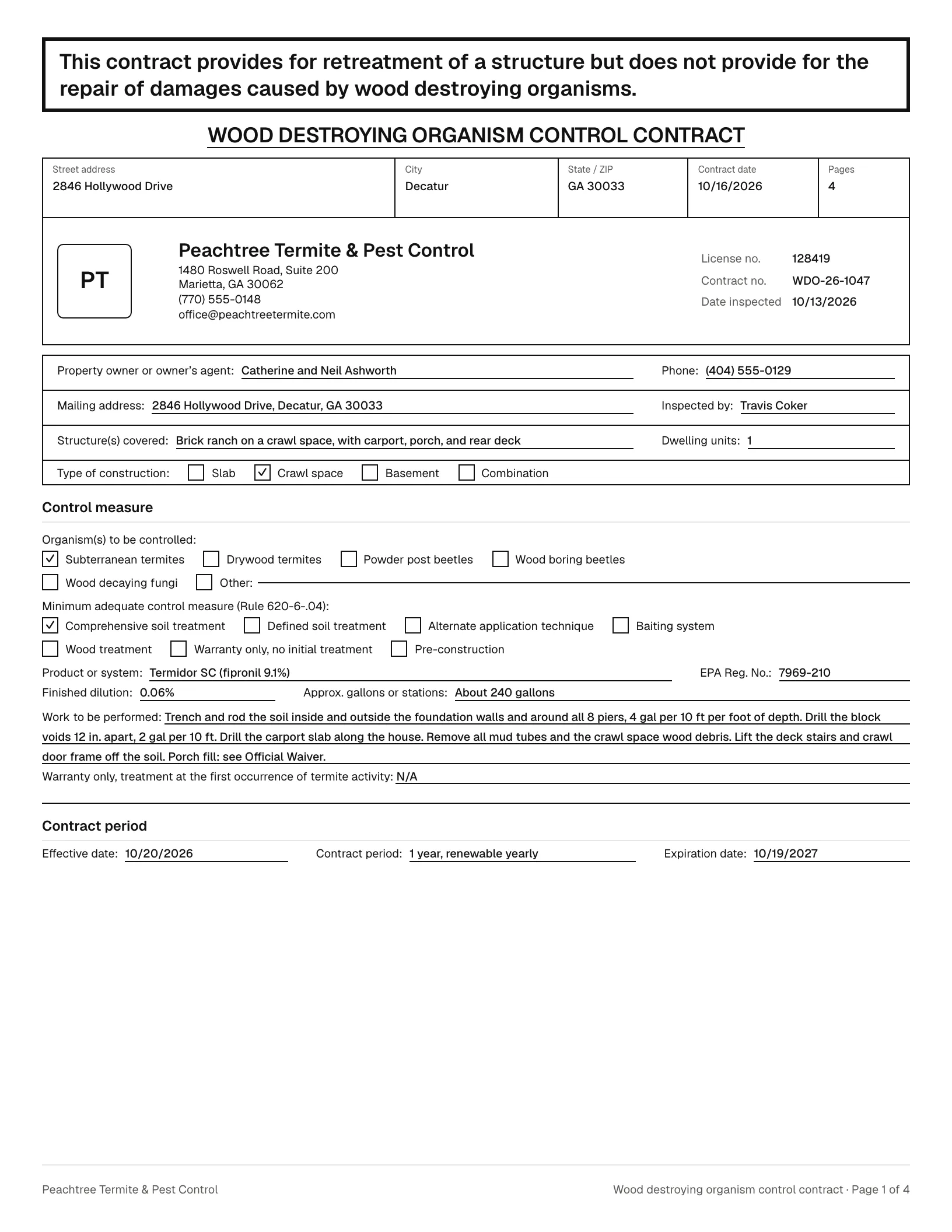
The priced contract owners sign to approve the work. - Georgia
Wood Destroying Organism Control Contract
The priced contract owners sign to approve the work. - North Carolina
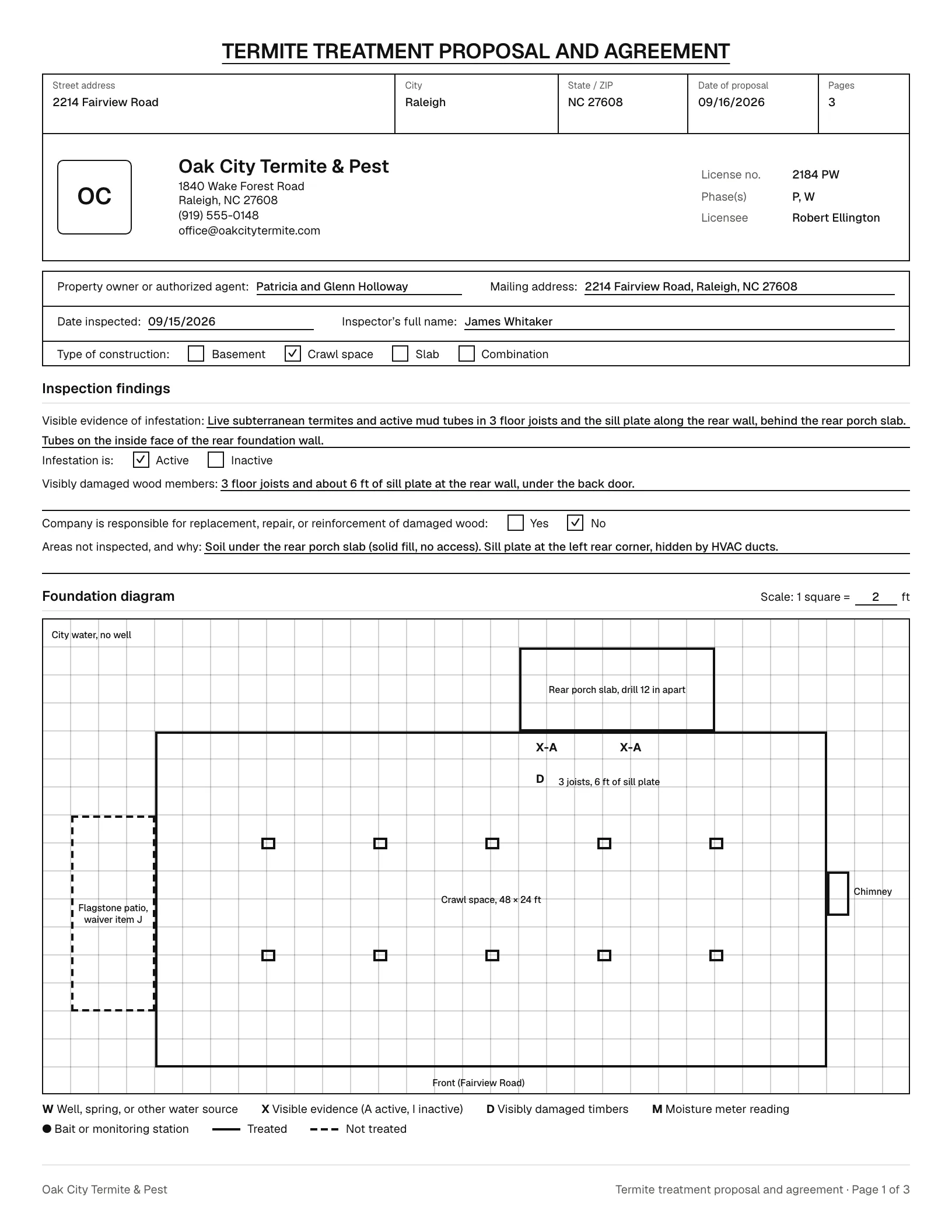
Termite Treatment Proposal and Agreement
The priced contract owners sign to approve the work. - South Carolina
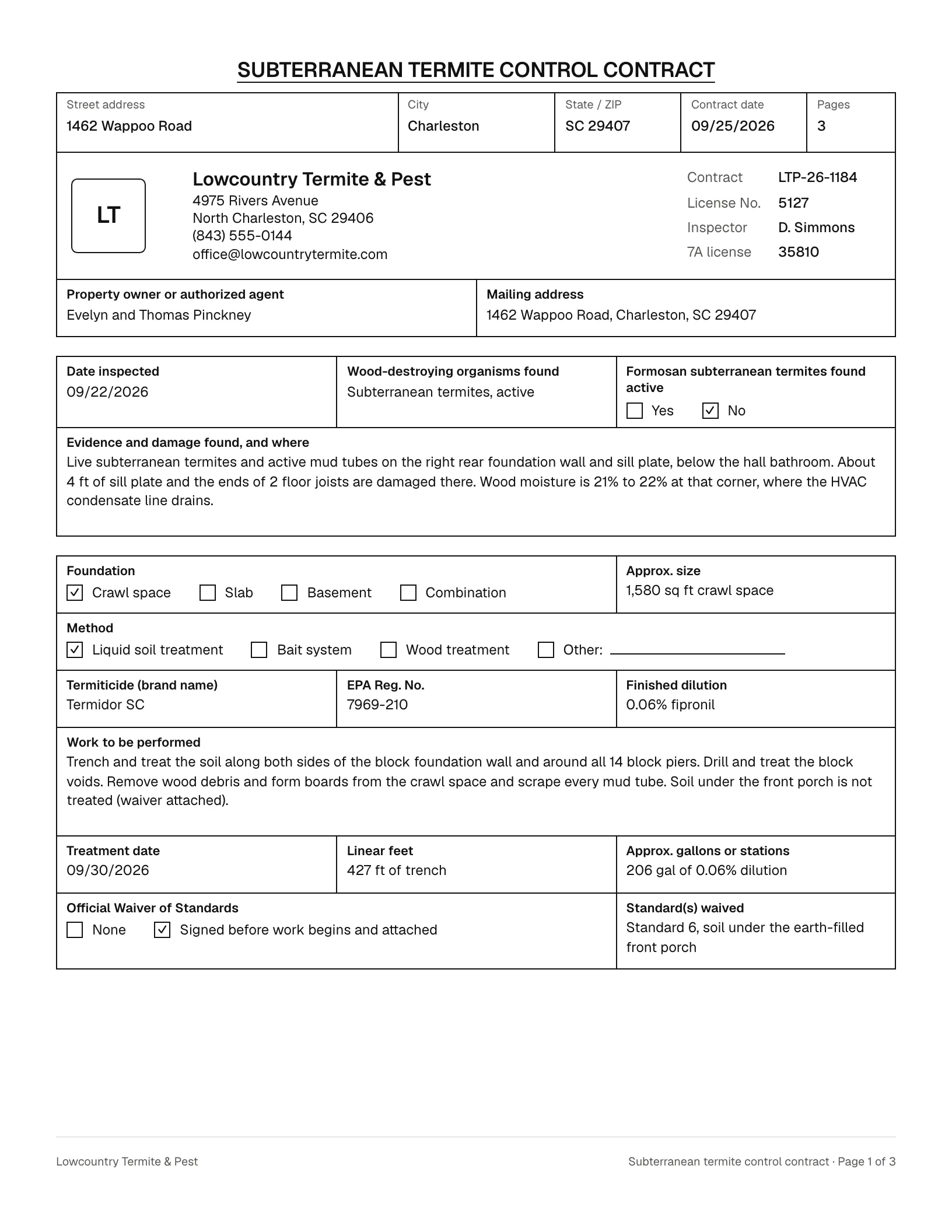
Subterranean Termite Control Contract
The priced contract owners sign to approve the work. - Washington
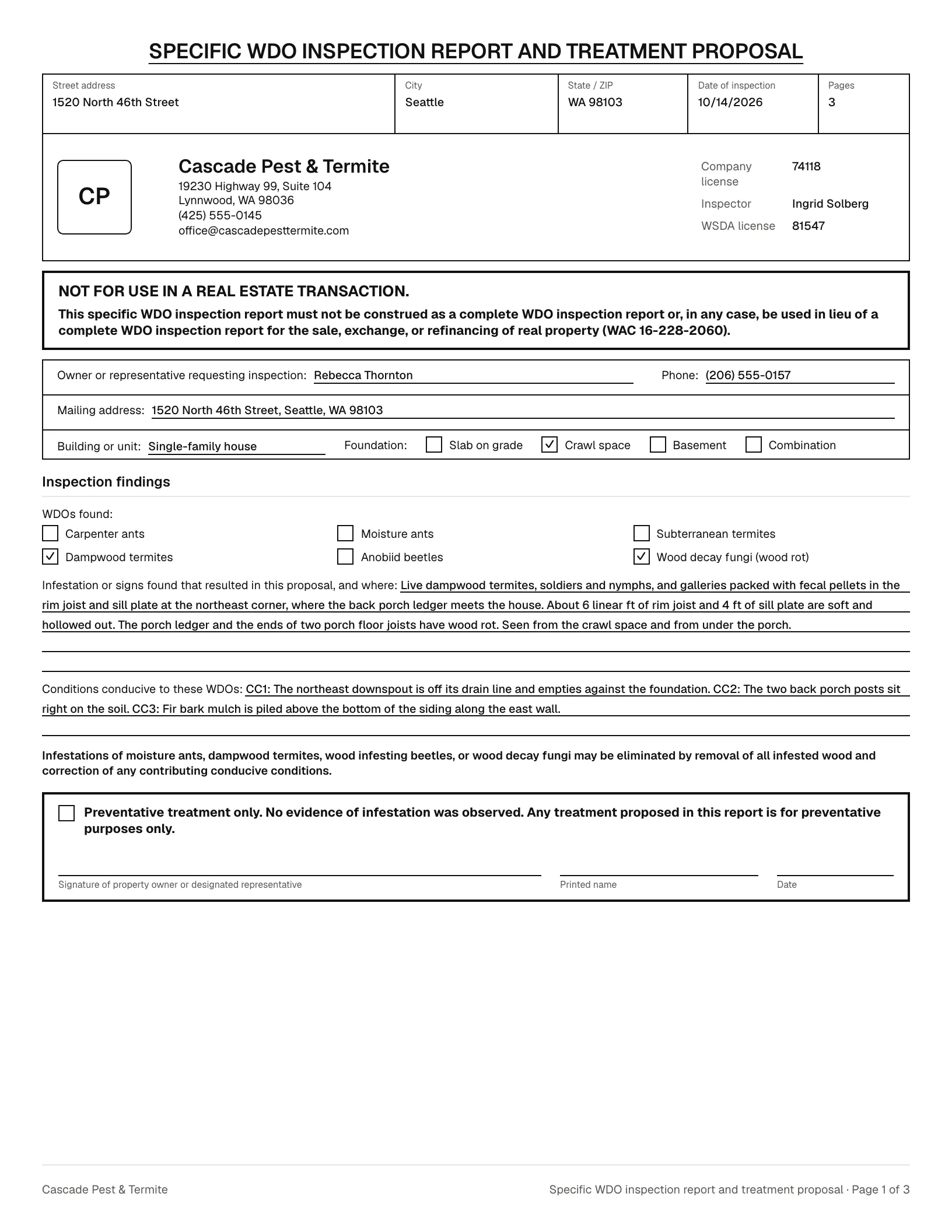
Specific WDO Inspection Report and Treatment Proposal
The priced contract owners sign to approve the work.