Subterranean Termite Control Contract
In South Carolina, the subterranean termite control contract, or termite bond, is the agreement an owner signs before treatment, and S.C. Code Regs. 27-1085 makes it say whether Formosan termites are covered.
At a glance
- Required by
- S.C. Code Regs. 27-1085
- Filled out by
- The pest control company
- Signed by
- Company and property owner
- Due
- Before the work begins
Completed example
Download PDFWhat is a South Carolina termite contract?
It’s the written agreement to treat a house for subterranean termites and keep it covered after. Most people in South Carolina call it a termite bond. It says what you found, how you’ll treat, what the coverage includes, and what renewal costs. It usually follows a CL-100 that found termites.
The state doesn’t print one, but S.C. Code Regs. 27-1085 sets what it has to say. The big one is Formosan termites. Under (B)(4), every contract or warranty states whether they’re covered, and whether that means retreatment only or repair of their damage too.
When is it signed?
Before the work begins. Any standard you won’t meet goes on DPR’s Official Waiver, and rule (C) wants the owner’s signature on it before work begins. The same goes for the disclosure on page 3. After that, (B)(2) says treatment and inspections follow the contract for as long as it’s valid.
A lapse doesn’t end every duty. Under rule (F), if DPR finds a problem with the treatment, you fix it as long as the people who signed, their heirs, or their estate own the house, under contract or not. The rule was last reprinted in full in State Register Doc. No. 5263, in effect June 28, 2024.
How to fill it out
Write down what you found. Give the inspection date, the organisms, and where the evidence and damage are. Then check whether Formosans were active. DPR’s Bulletin 18 says the soldier’s head tells you: oval or pear-shaped on a Formosan, long and rectangular on an eastern subterranean.
Describe the treatment. Check the foundation and method, and copy the product’s EPA Reg. No. and dilution off the label. List the work in plain words: trenching, rodding, drilled voids, debris out, tubes scraped. If a standard won’t be met, check the waiver box and name the item.
Spell out the coverage. Check retreatment only or retreatment and repair, then do it again for Formosans. DPR’s Bulletin 12 says it always recommends a warranty that covers repair, though some companies only retreat. Set inspections at least as often as the label asks, as (G)(2)(j) requires.
Attach the disclosure, then sign. Adding preventive work for beetles or decay where nothing’s active? Page 3 is the written notice (B)(1) asks for. Both sides sign before the crew starts. Then log the job on the Record of Termiticide Use, which (D)(6) requires for every termiticide application.
Can owners sign it before the crew shows up?
On a sale, the contract, the waiver, and the disclosure all need the owner’s signature before work starts. Sellers have often moved out by then. One missing page can push back the treatment, and the closing with it.
Noma specializes in the Subterranean Termite Control Contract (S.C. Code Regs. 27-1085). Upload your own contract once as a reusable document and send it for e-signature, or turn on “Send document when booked” so it goes out the moment the job is booked. See how Noma sends contracts for signature.
Frequentlyaskedquestions
Send this document in minutes, not an afternoon.
Other states
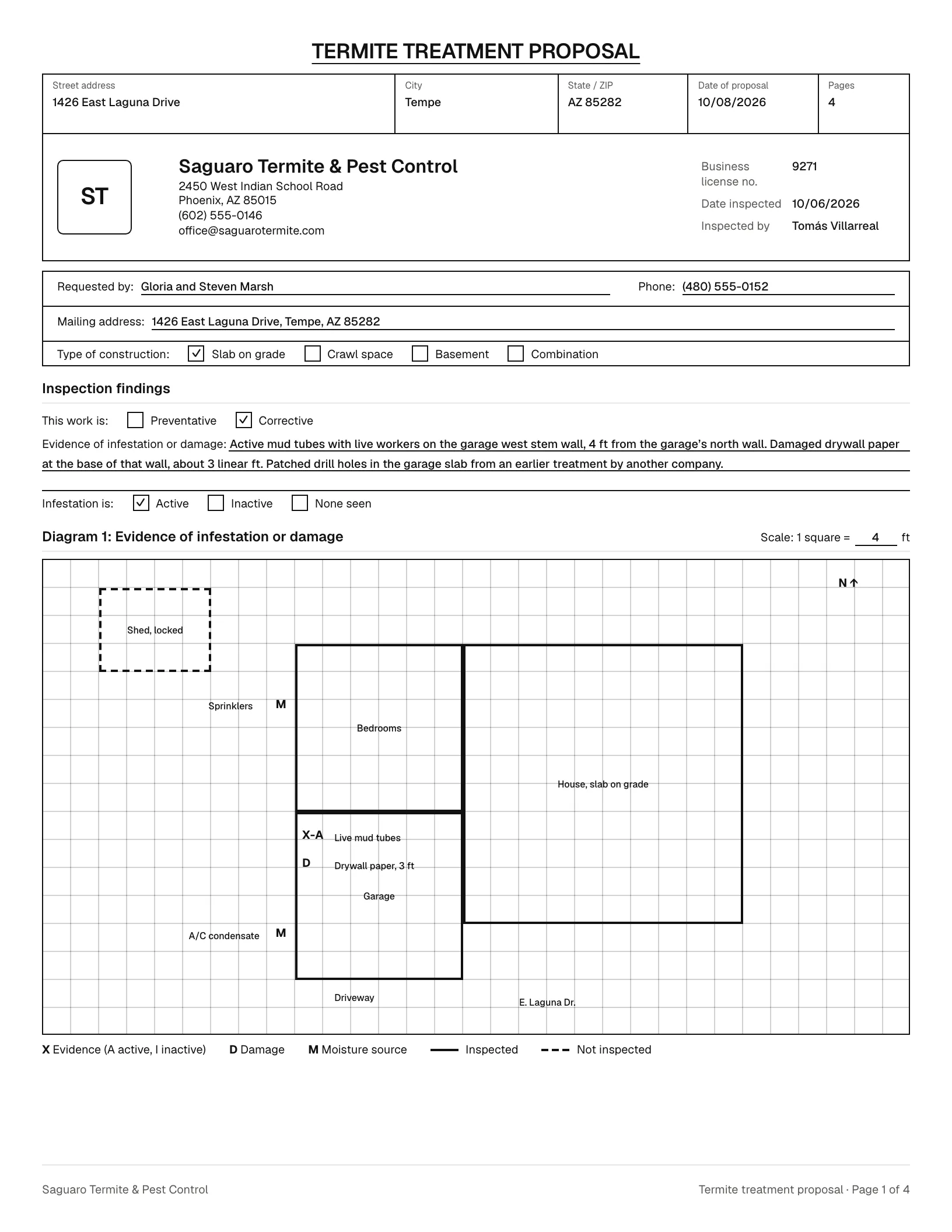
- Arizona
Termite Treatment Proposal
The priced contract owners sign to approve the work. - California
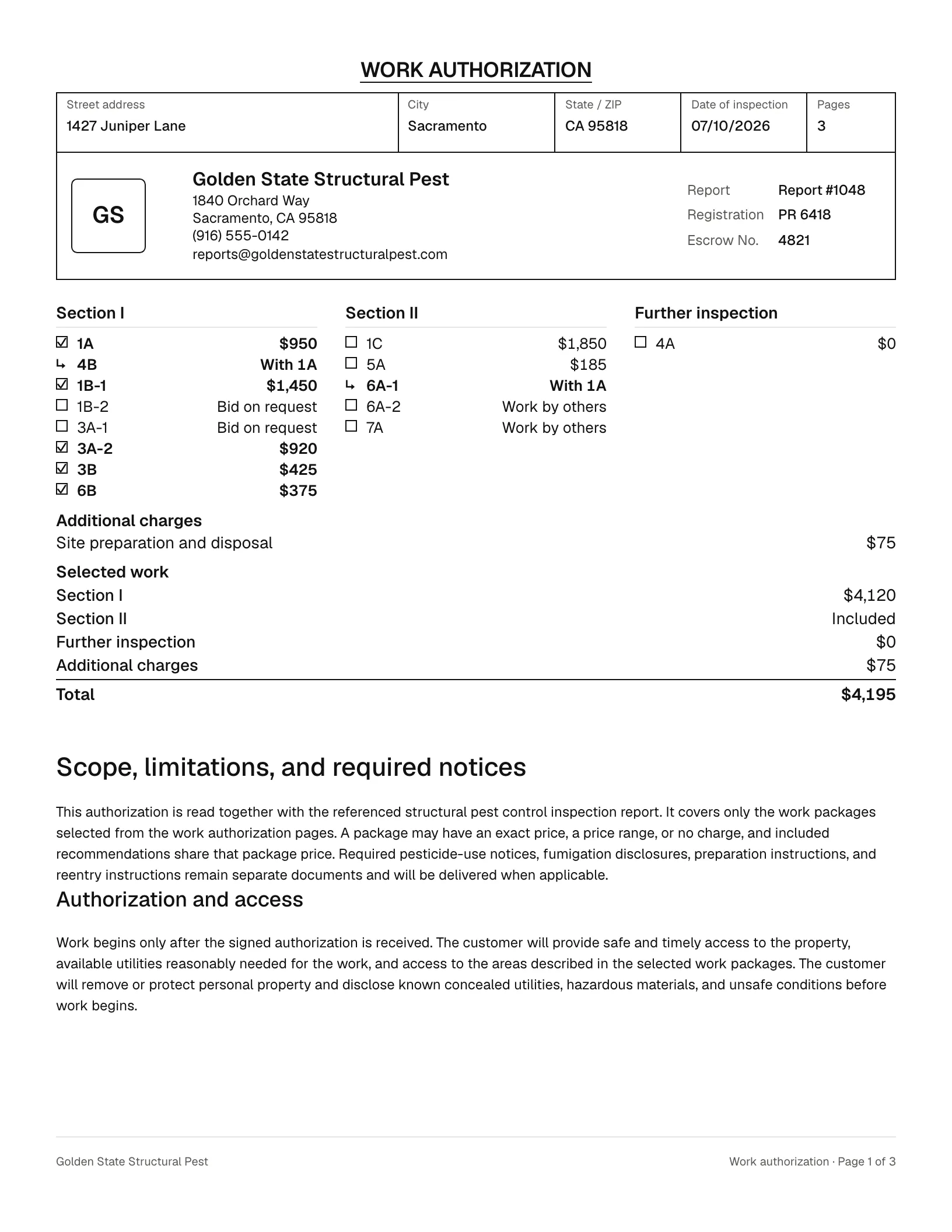
Work Authorization
The priced contract owners sign to approve the work. - Florida
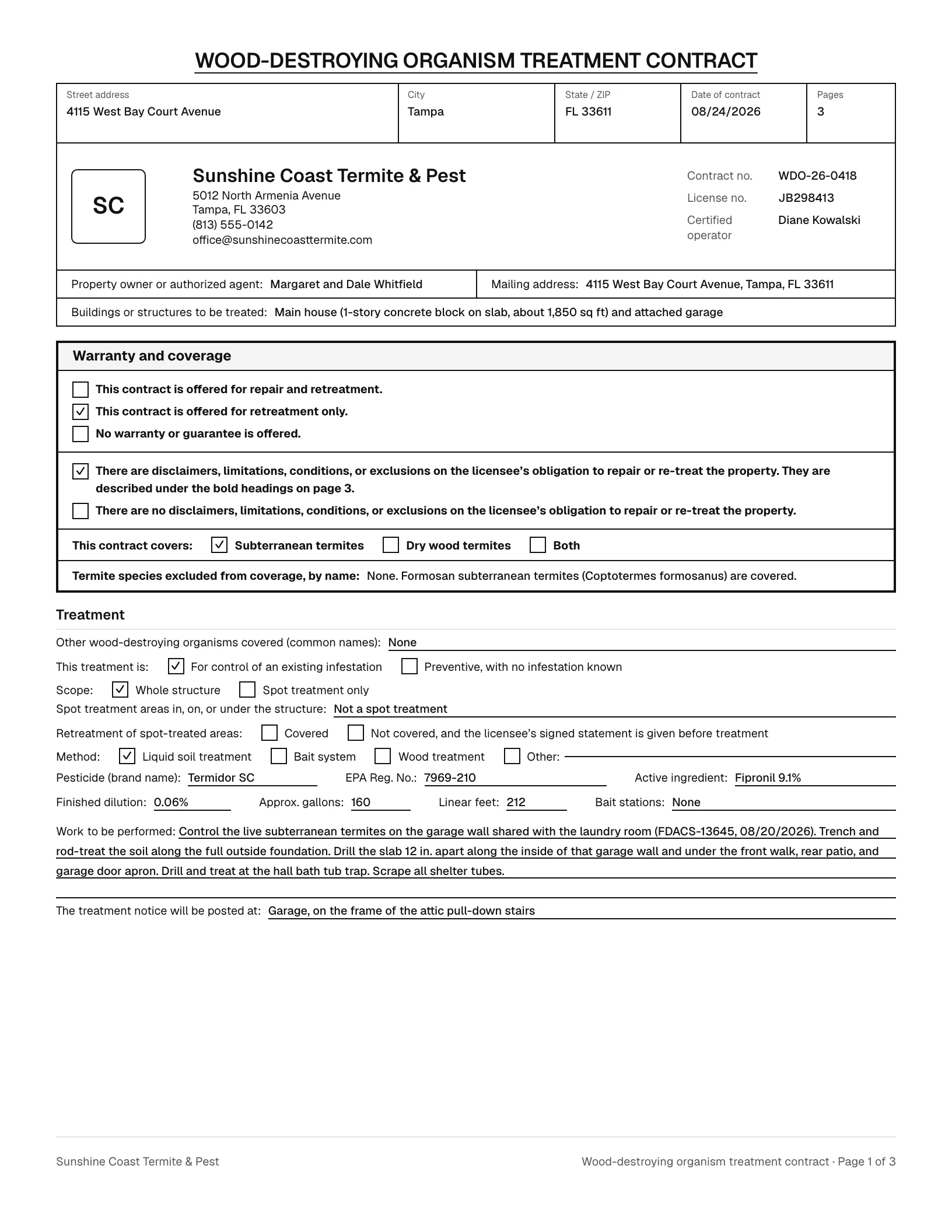
Wood-Destroying Organism Treatment Contract
The priced contract owners sign to approve the work. - Georgia
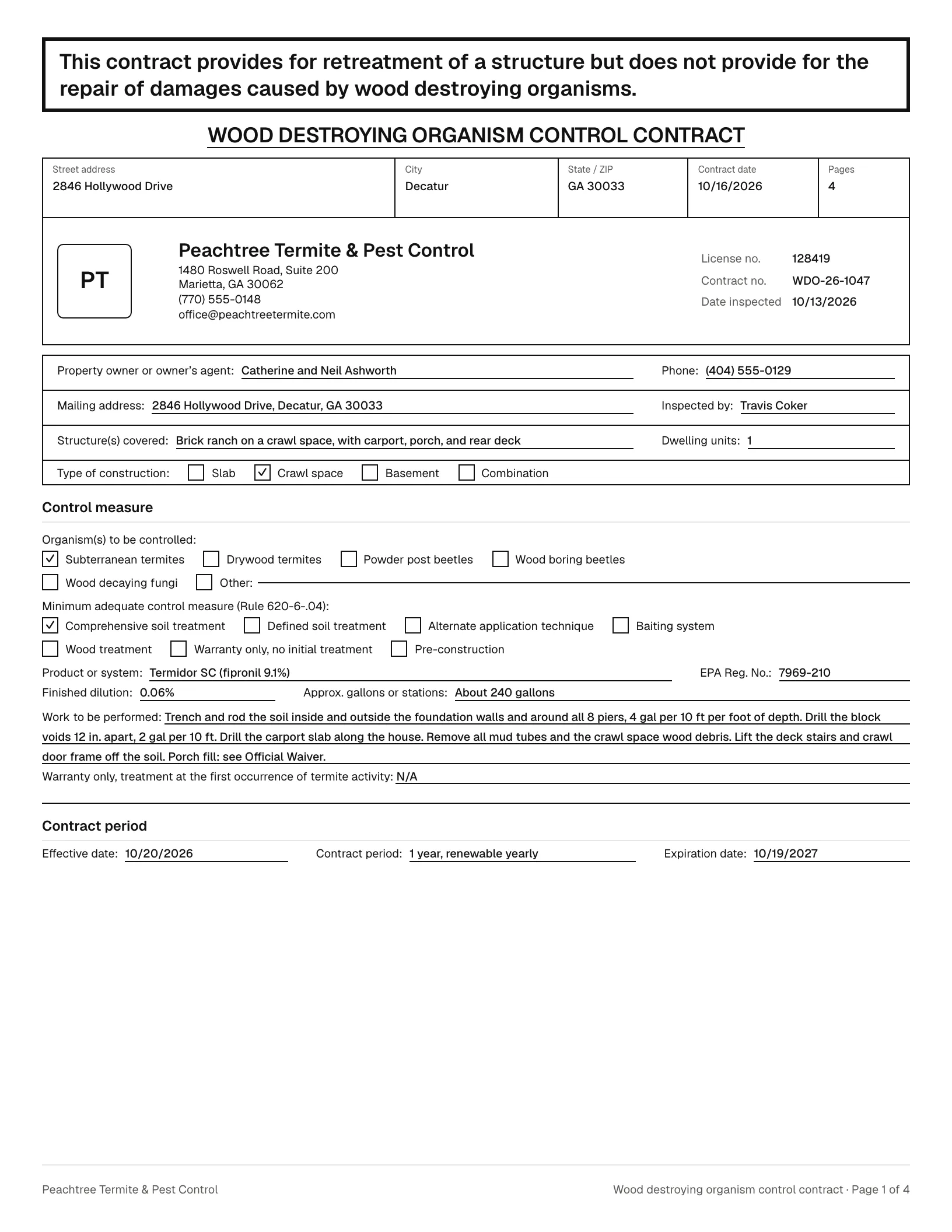
Wood Destroying Organism Control Contract
The priced contract owners sign to approve the work. - North Carolina
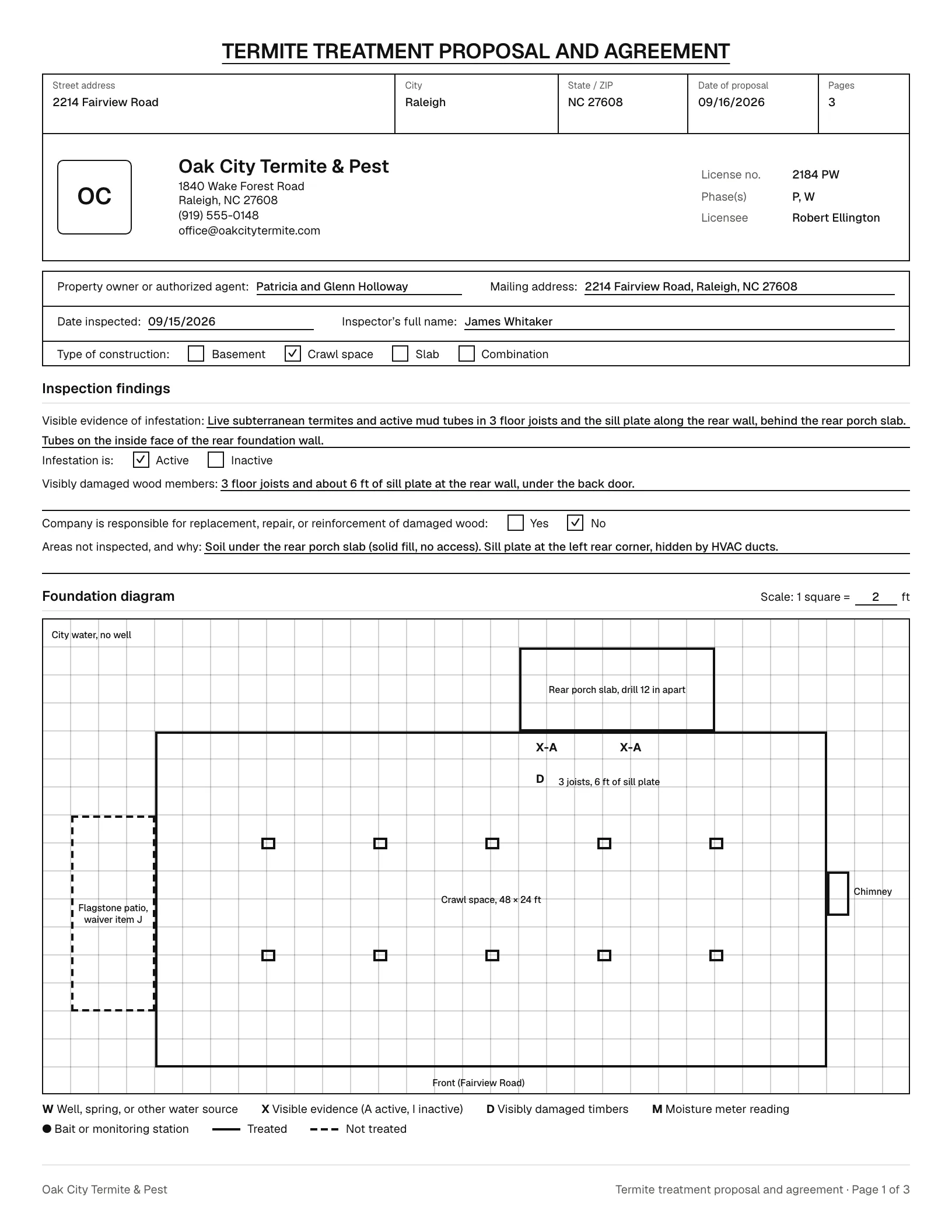
Termite Treatment Proposal and Agreement
The priced contract owners sign to approve the work. - Texas
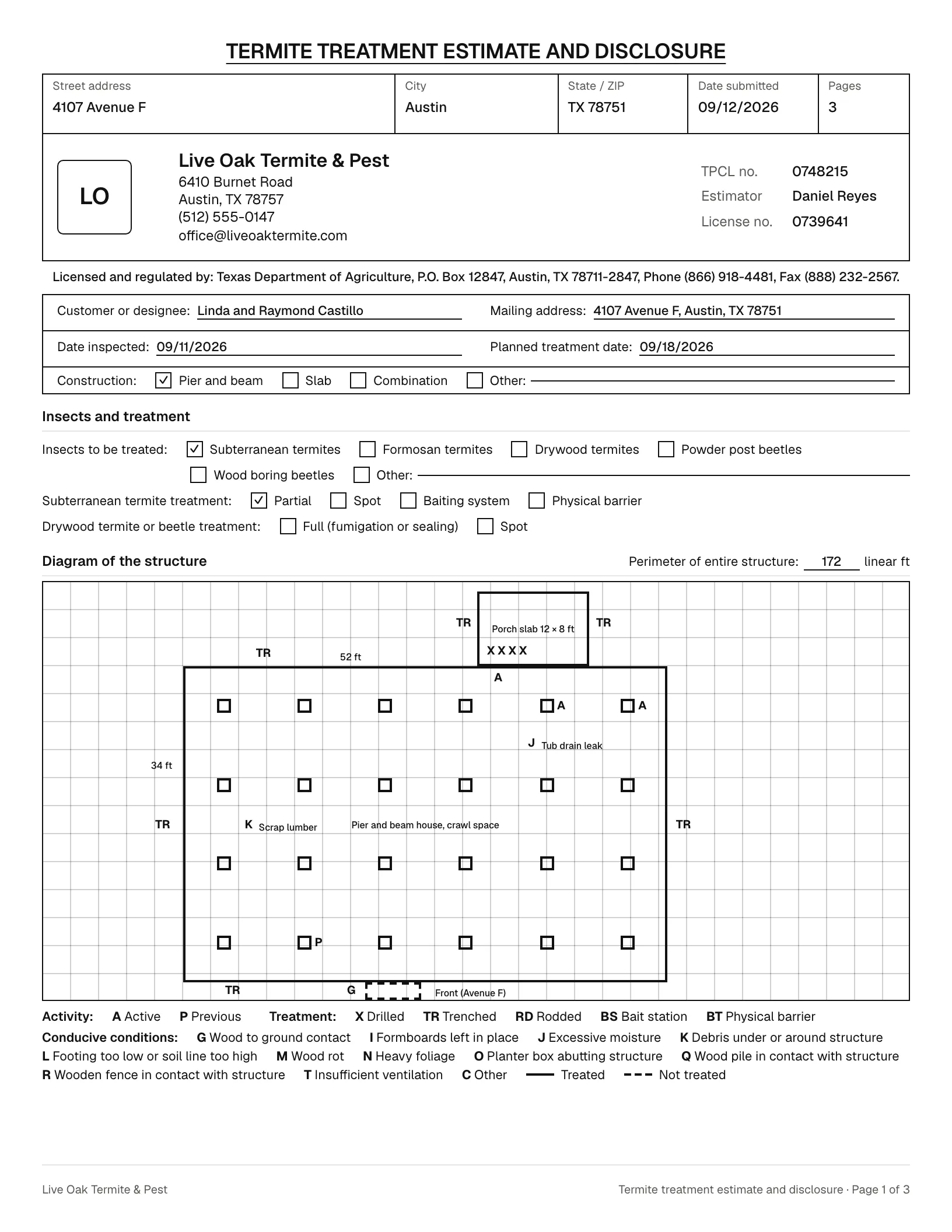
Termite Treatment Estimate and Disclosure
The priced contract owners sign to approve the work. - Washington
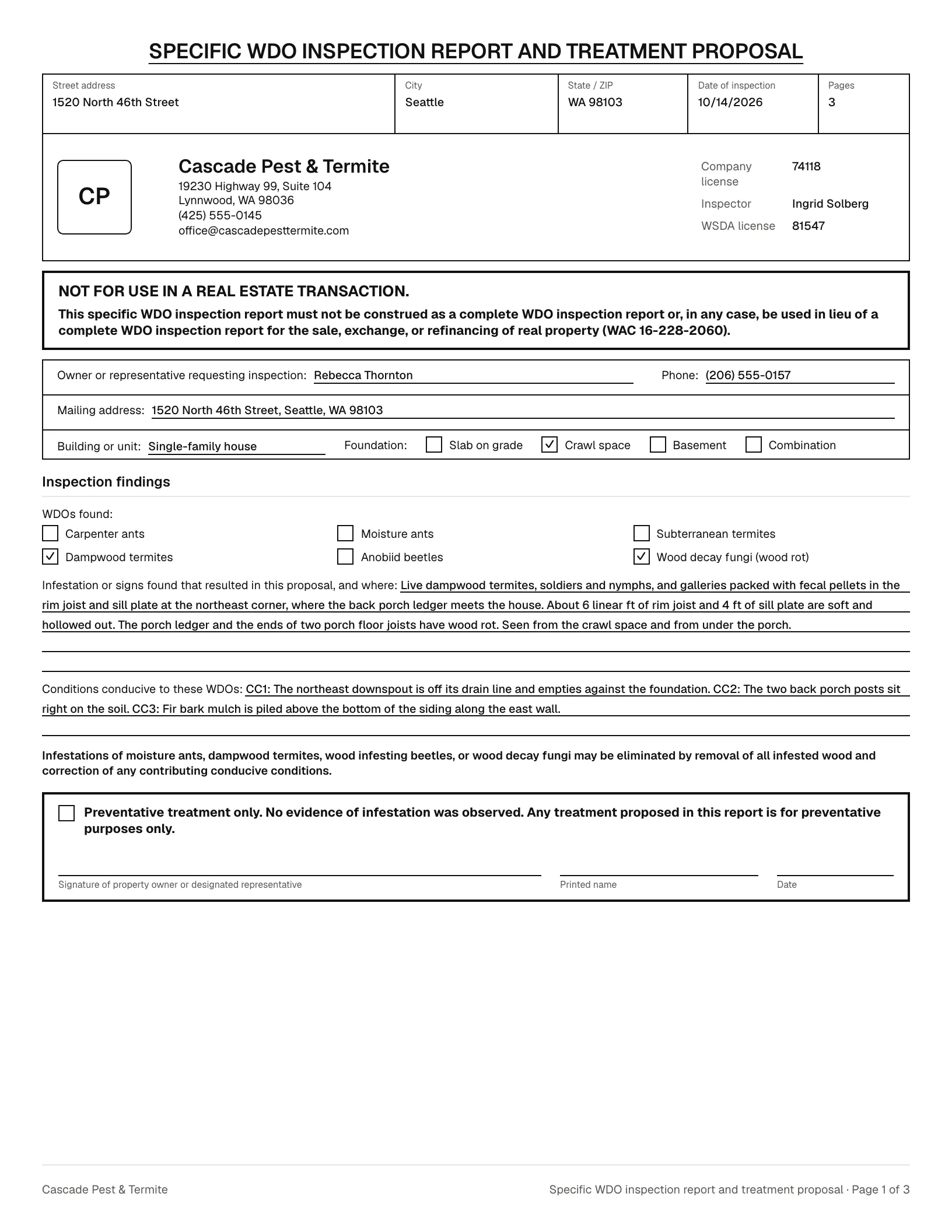
Specific WDO Inspection Report and Treatment Proposal
The priced contract owners sign to approve the work.