Wood Destroying Pests and Organisms Inspection Report
California Form 43M-41, the “termite report,” records termites, fungus damage, and the conditions that invite them, with a fix for each finding.
At a glance
- Required by
- Bus. & Prof. Code § 8516
- Filled out by
- Licensed Branch 3 inspector
- Sent to
- Whoever ordered it, and the owner
- Due
- Within 10 business days
Completed example
Download PDFWhat is this report?
A licensed inspector checks under the house, in the attic, and along every wall they can reach. This report is what they found: termites, fungus, the damage left behind, and anything that invites them back, like soil against the siding. Each finding gets a code, a mark on the diagram, and a priced fix.
It’s usually read during a home sale, so the state is picky about what goes in it. Business and Professions Code § 8516 lists every required part, and 16 CCR § 1990 defines Section I, Section II, and further inspection.
When is it due?
Within 10 business days of the start of the inspection. The report goes to the person who ordered it and to the owner or the owner’s agent, and always before any work starts. That’s true even when the inspection was free.
In the same 10 business days, the company reports the property address to the Structural Pest Control Board and pays a $5 fee. The report itself stays with the company, along with the inspector’s notes, for at least three years.
How to fill it out
Start with the facts. Write the inspection date, the inspector’s name and license number, who ordered the report, the owners, the address, and a short description of the building.
Draw the diagram. Sketch the foundation and every part you inspected, then mark where each finding is. Note where you posted the inspection tag.
Sort each finding. Say what you saw and where, place it in Section I, Section II, or further inspection, and give it a code such as 1A. Print the Board’s section definitions before the first finding.
Recommend and price a fix. Give every finding one standard fix. If you also offer a cheaper one, label it as a secondary recommendation.
Add the required notices. State whether the roof surface was inspected, list the areas you couldn’t reach, and include the bold notice about the owner’s right to a second opinion.
Is there a faster way to write these?
The inspection is rarely the slow part. The write-up is. Matching photos to findings and retyping the Board’s wording can take the whole evening.
Noma specializes in the Wood Destroying Pests and Organisms Inspection Report (Form 43M-41). You draw the diagram on site, mark each finding, and add photos as you go. Noma numbers the findings and adds the required wording. Owners open a link, tap any photo, and sign the work authorization. See how Noma writes WDO reports.
Frequentlyaskedquestions
Send this document in minutes, not an afternoon.
Other states
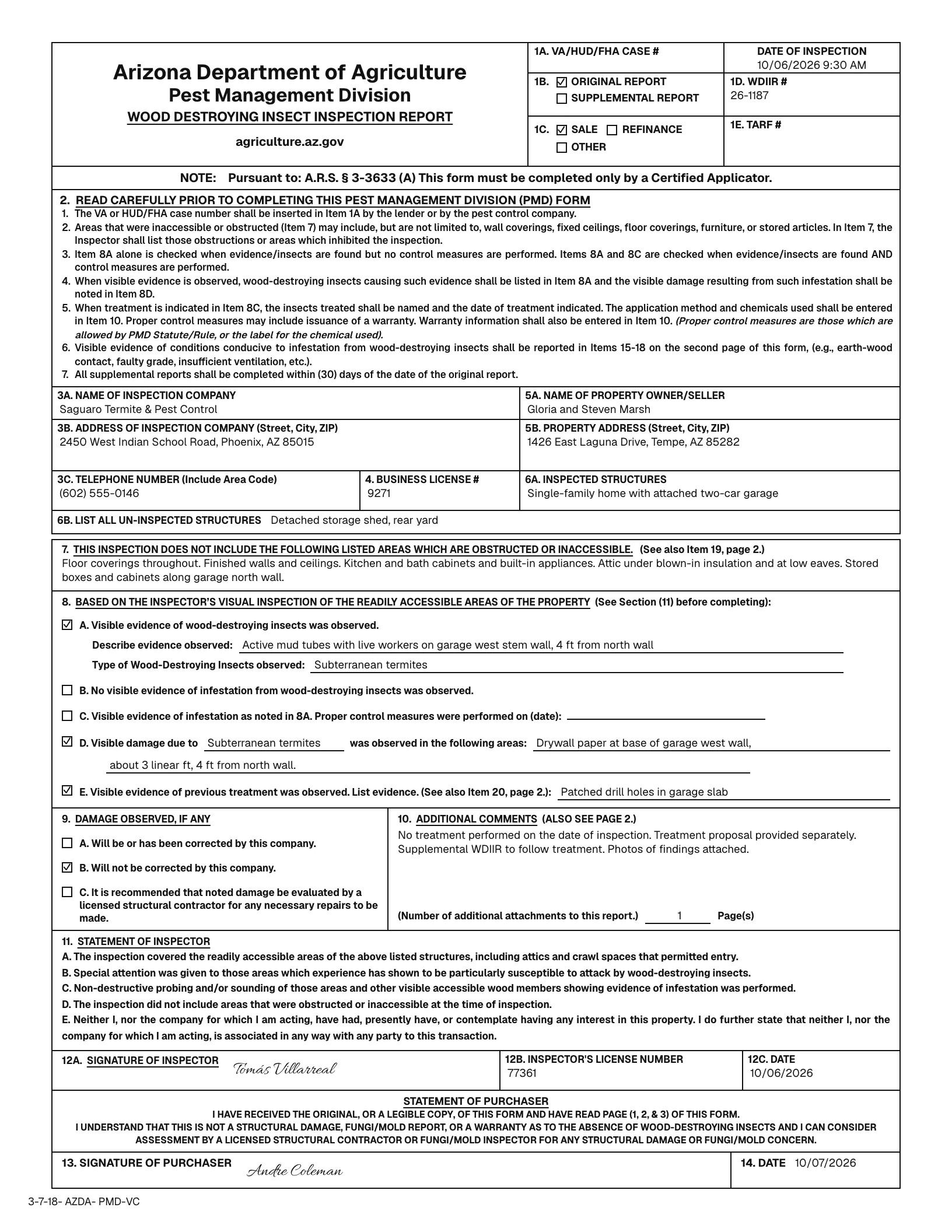
- Arizona
Wood Destroying Insect Inspection Report
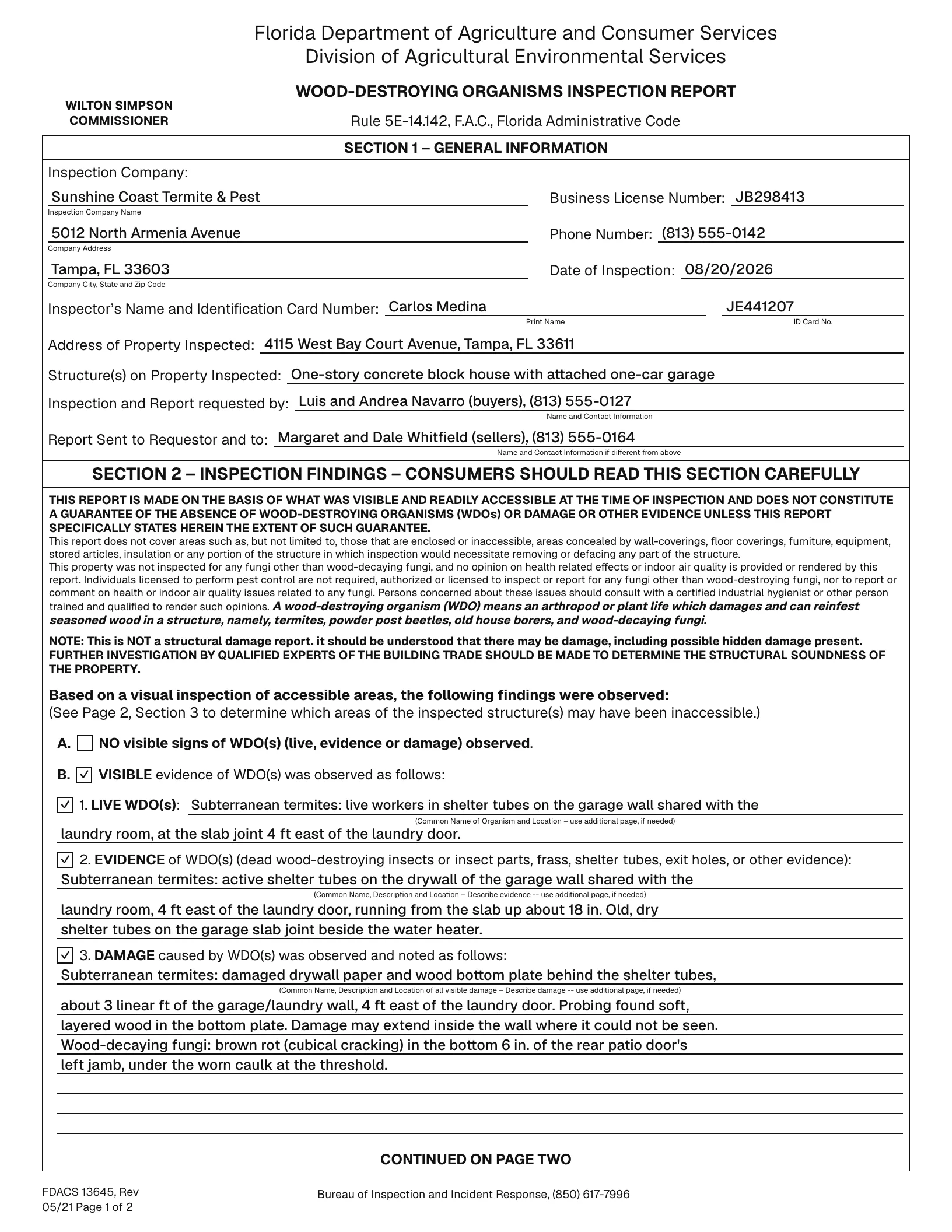
Record the termite findings from an inspection. - FloridaFDACS-13645
Wood-Destroying Organisms Inspection Report
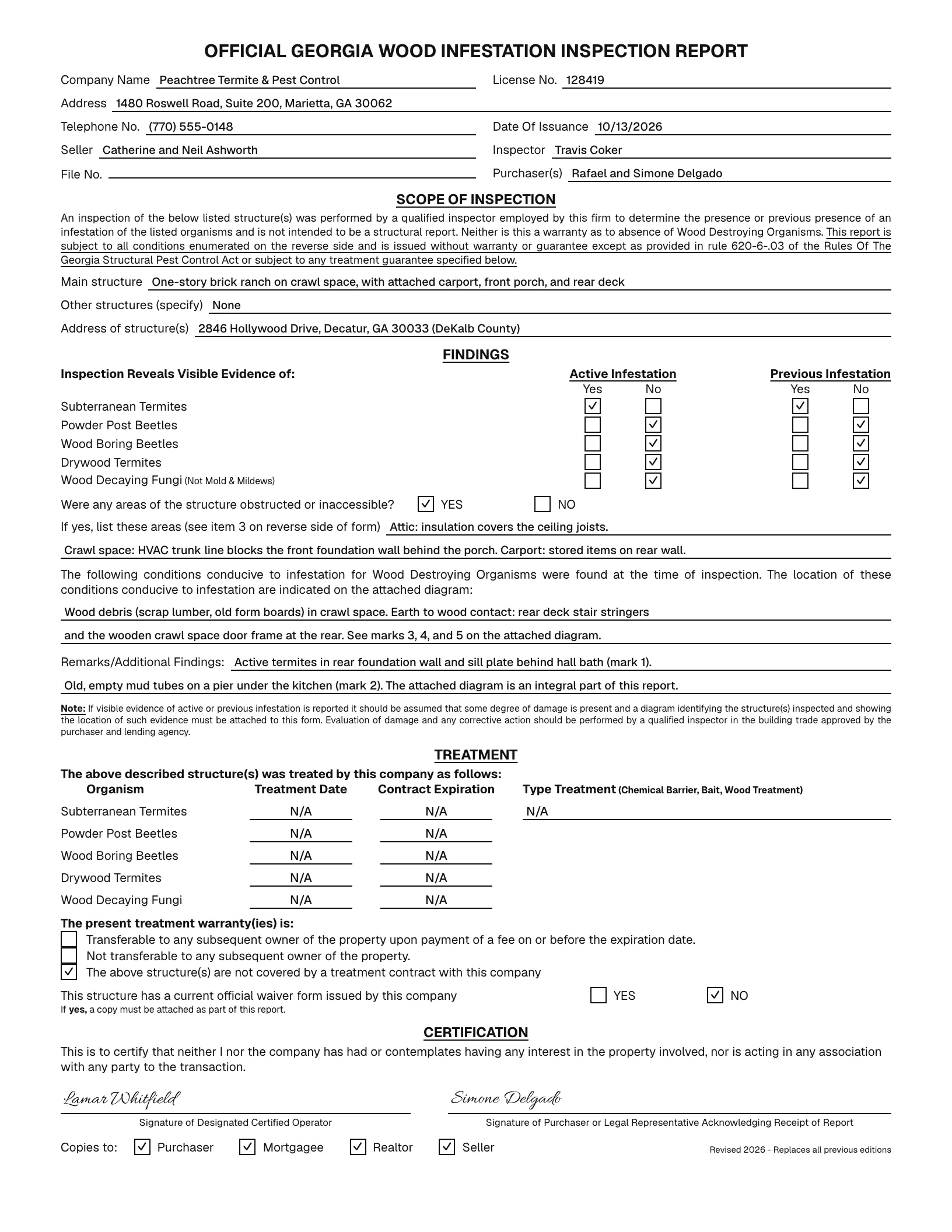
Record the termite findings from an inspection. - Georgia
Official Georgia Wood Infestation Inspection Report
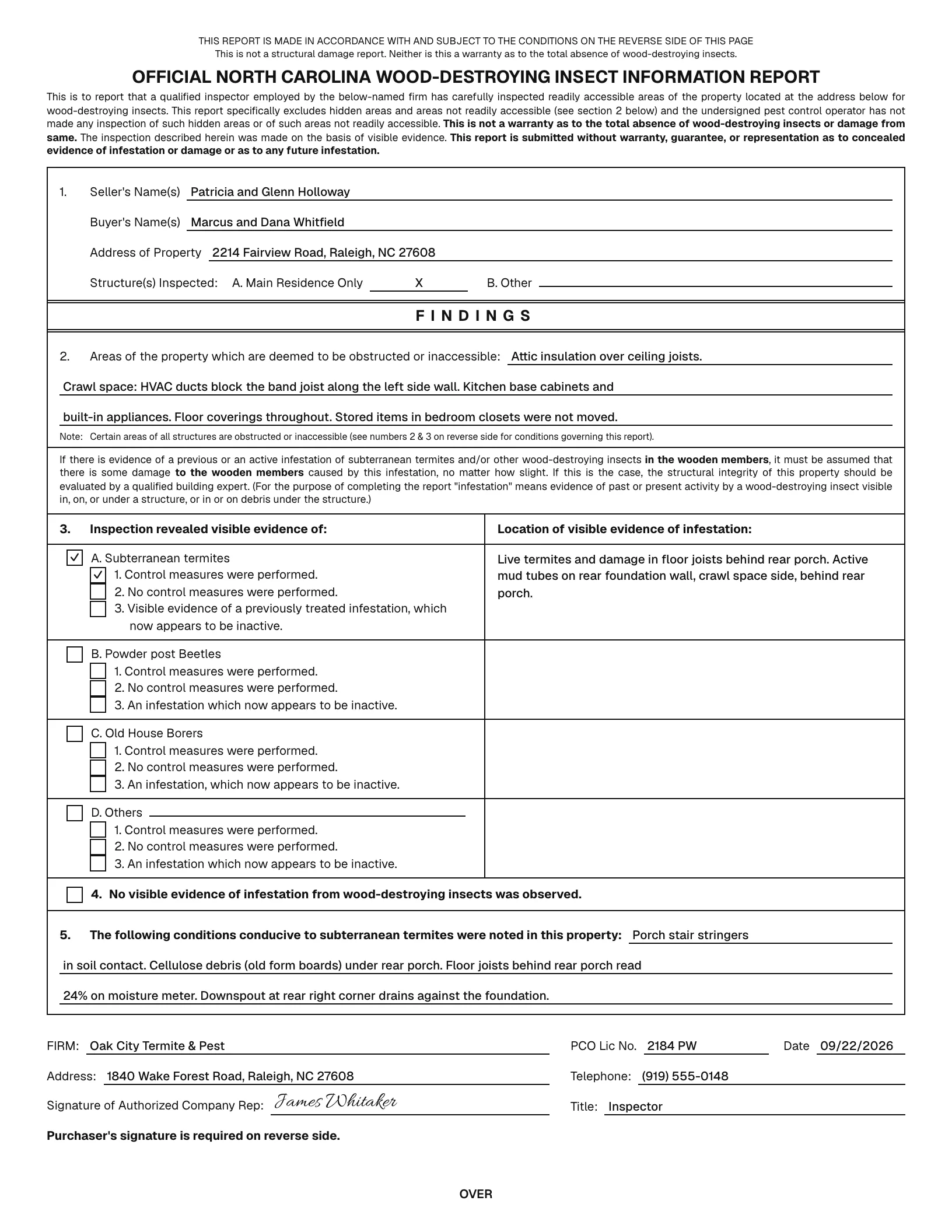
Record the termite findings from an inspection. - North CarolinaWDIR 100
Official North Carolina Wood-Destroying Insect Information Report
Record the termite findings from an inspection. - South CarolinaCL-100
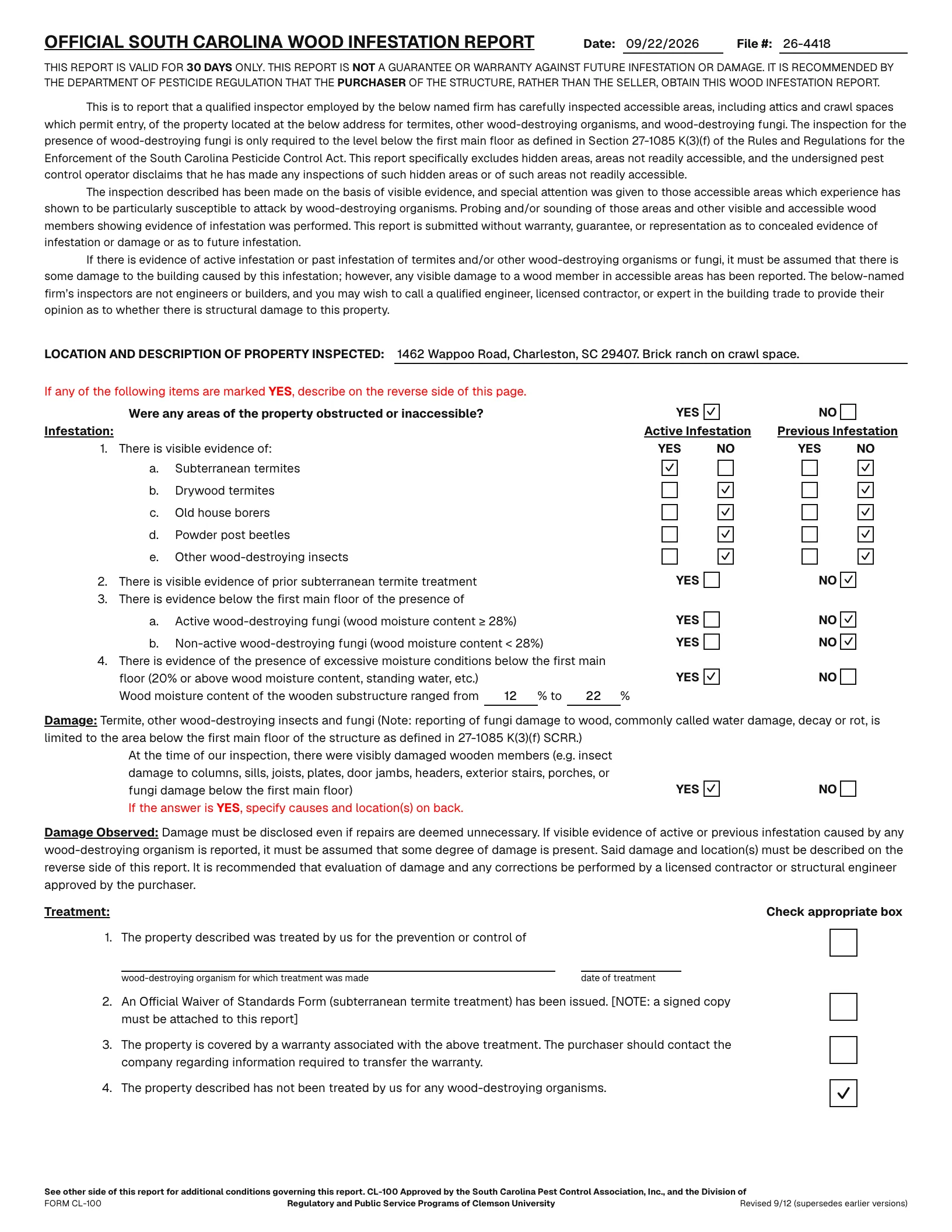
Official South Carolina Wood Infestation Report
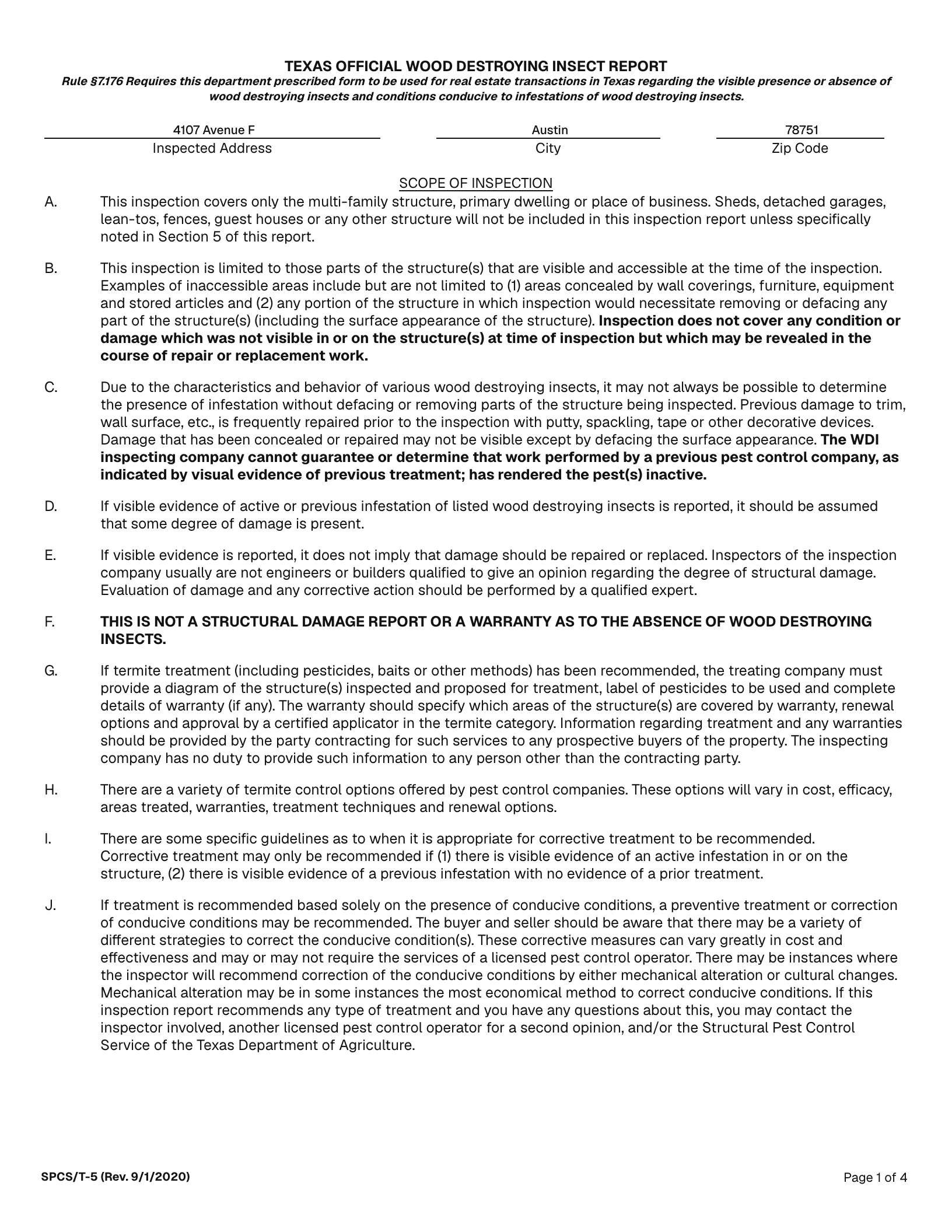
Record the termite findings from an inspection. - TexasSPCS/T-5
Texas Official Wood Destroying Insect Report
Record the termite findings from an inspection. - Washington
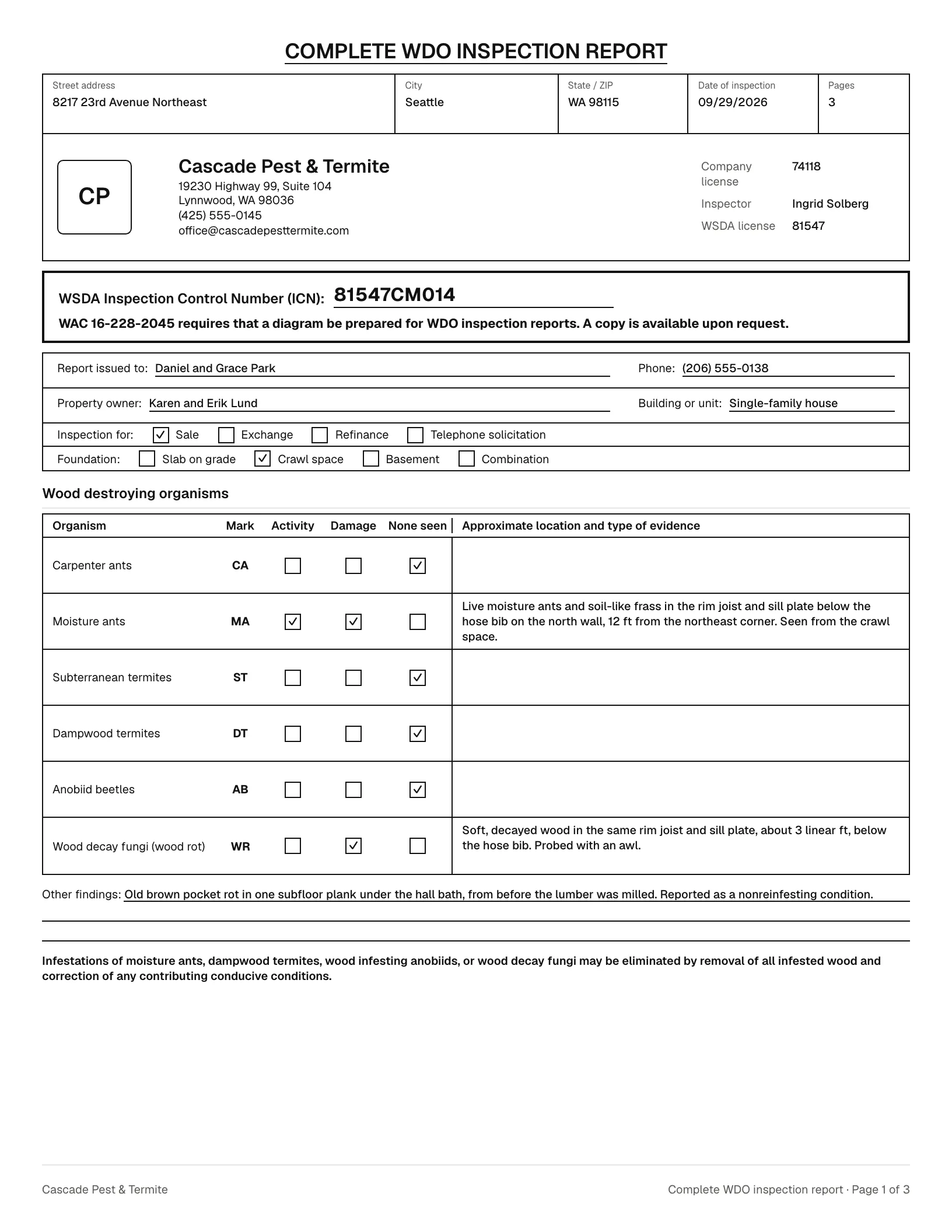
Complete WDO Inspection Report
Record the termite findings from an inspection.