Customer Notice and Service Record
In Arizona, every pesticide application ends with a written notice to the customer that lists each product and amount and prints the warning sentence from rule R3-8-306 word for word.
At a glance
- Required by
- A.A.C. R3-8-306
- Filled out by
- Applicator who applied it
- Due
- Right after the application
- Kept for
- 3 years by the business
Completed example
Download PDFWhat is this notice?
It’s the ticket an Arizona applicator leaves after every pesticide application. It tells the customer what went down, where, how much, and who applied it. It covers every job, from a quarterly scorpion service to a one-time roach cleanout.
Arizona’s version has two quirks. It ends with a warning sentence the rule writes for you, and the applicator also owes the office a service record with the same facts plus the time. One sheet can do both jobs, which is how this form is built.
When is it due?
Immediately after the application. That’s the word A.A.C. R3-8-306 uses. Hand it over, leave it at the door, or send it electronically, which subsection (B) allows. The applicator’s copy goes to the office within five business days under A.A.C. R3-8-501.
Schools and child care facilities get a heads-up first. The business licensee or certified applicator sends a notice of pesticide application at least 72 hours ahead under A.R.S. 3-3606. The customer notice still goes out after the work.
How to fill it out
Start with the customer and the place. Write the customer’s name and address, the property you treated, the date, and the time. Put your business name and PMD license number at the top, since A.A.C. R3-8-310 wants both on every service record.
Name the pest or the purpose. Write what the visit was for, like a quarterly general pest service, and the pests it targets, such as bark scorpions and crickets.
Give each product its own row. Use the trade name from the label and the specific site it went on. For the amount, write the percent active ingredient and the volume of diluted mix, or the total amount of concentrate, ready-to-use product, granules, or bait stations. The EPA Reg. No. is required for restricted use pesticides and worth writing for everything.
Sign it and finish the warning. Print the applicator’s name and certification number. If they’re uncertified, add the certified applicator supervising them. Then fill the warning’s two spaces with your business name, license number, and phone, and keep the sentence at 8 point type or larger.
Do you write the same ticket every visit?
Mostly, yes. A quarterly account makes four tickets a year per house, with the same customer, the same products, and the same warning. The office still has to pull any one of them for three years.
Noma specializes in the Customer Notice and Service Record (A.A.C. R3-8-306). It runs the rest of the account: the jobs, the schedule, the invoices, and online payments, all in one place. See how Noma runs pest control jobs.
Frequentlyaskedquestions
Send this document in minutes, not an afternoon.
Other states
- California
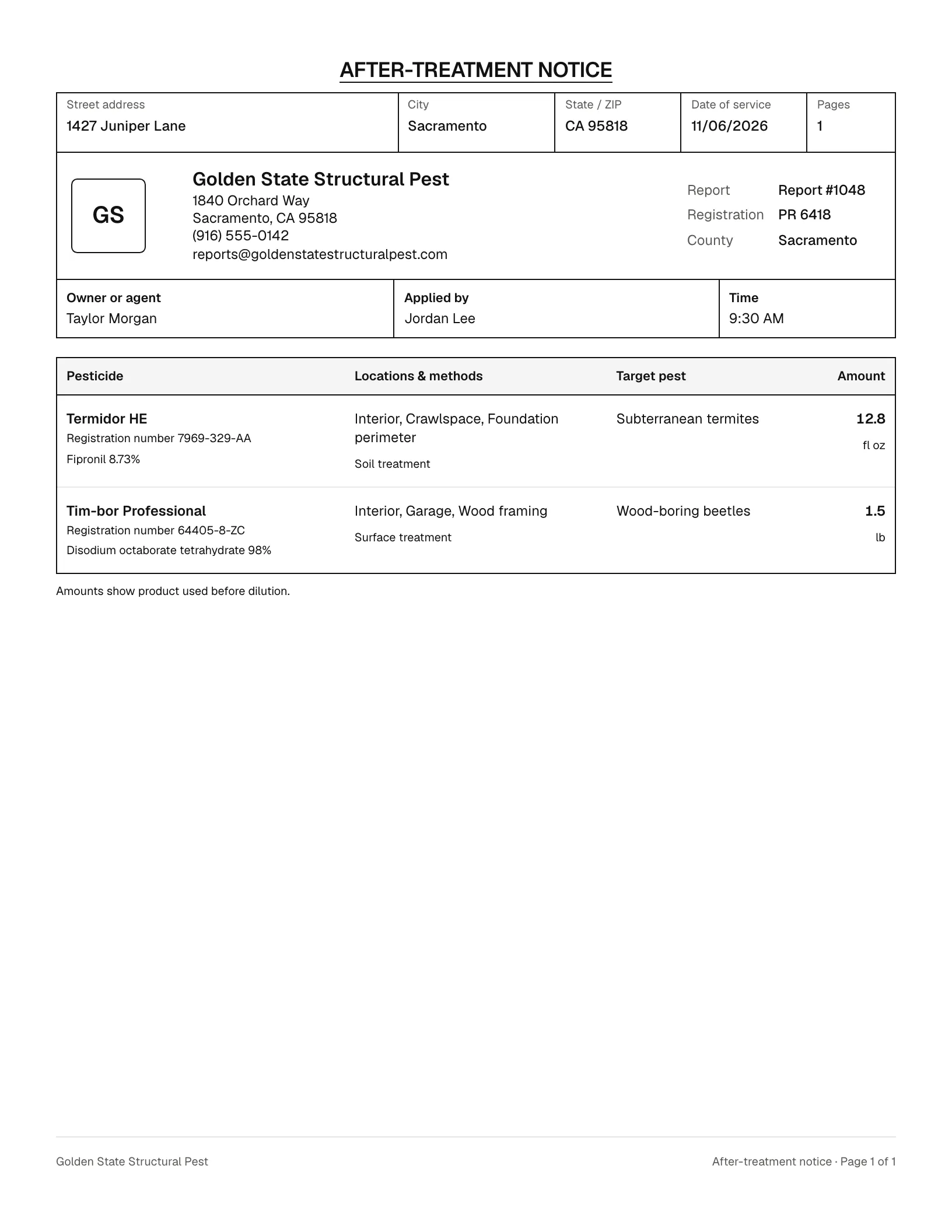
After-Treatment Notice
Record each pesticide applied at a service visit. - Georgia
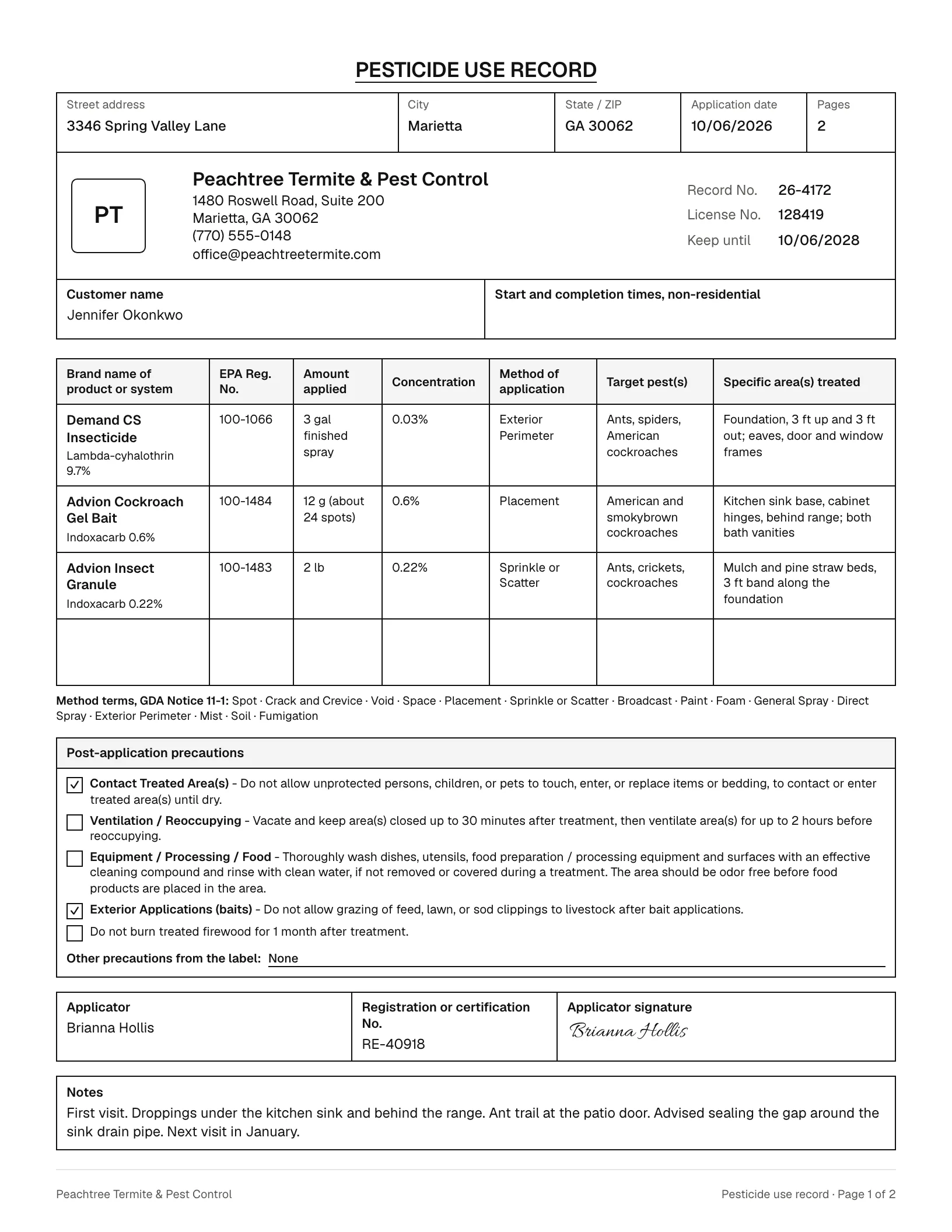
Pesticide Use Record
Record each pesticide applied at a service visit. - North Carolina
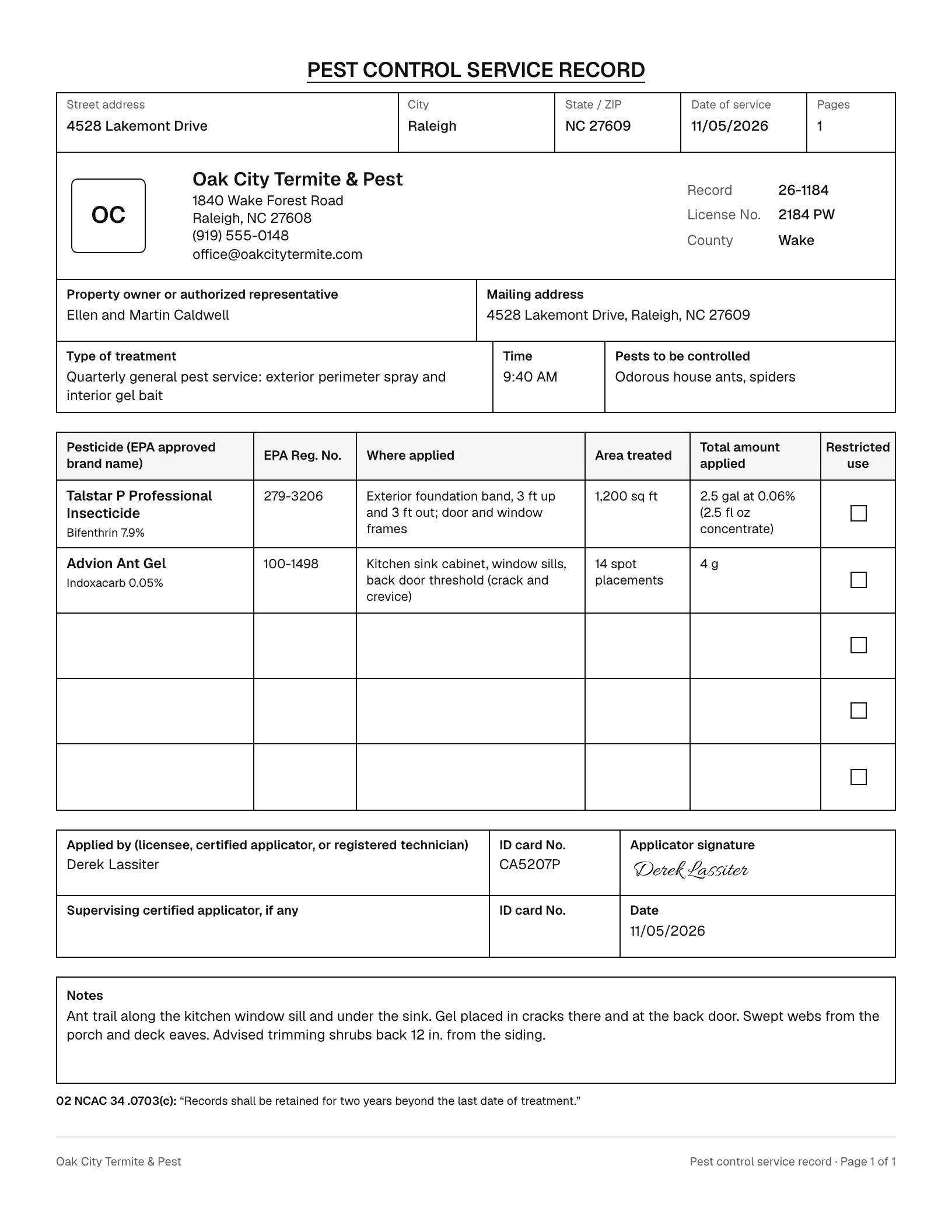
Pest Control Service Record
Record each pesticide applied at a service visit. - South Carolina
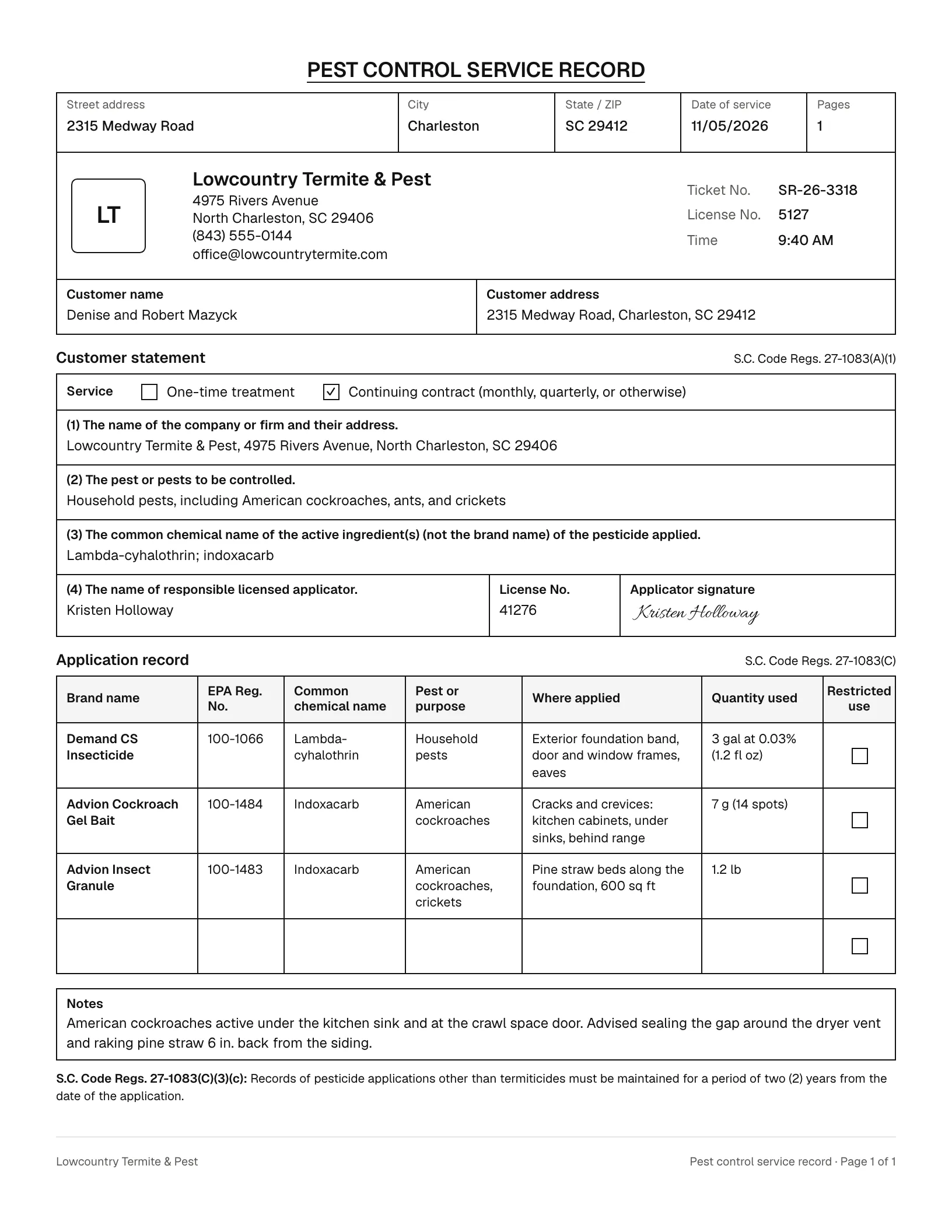
Pest Control Service Record
Record each pesticide applied at a service visit. - Texas
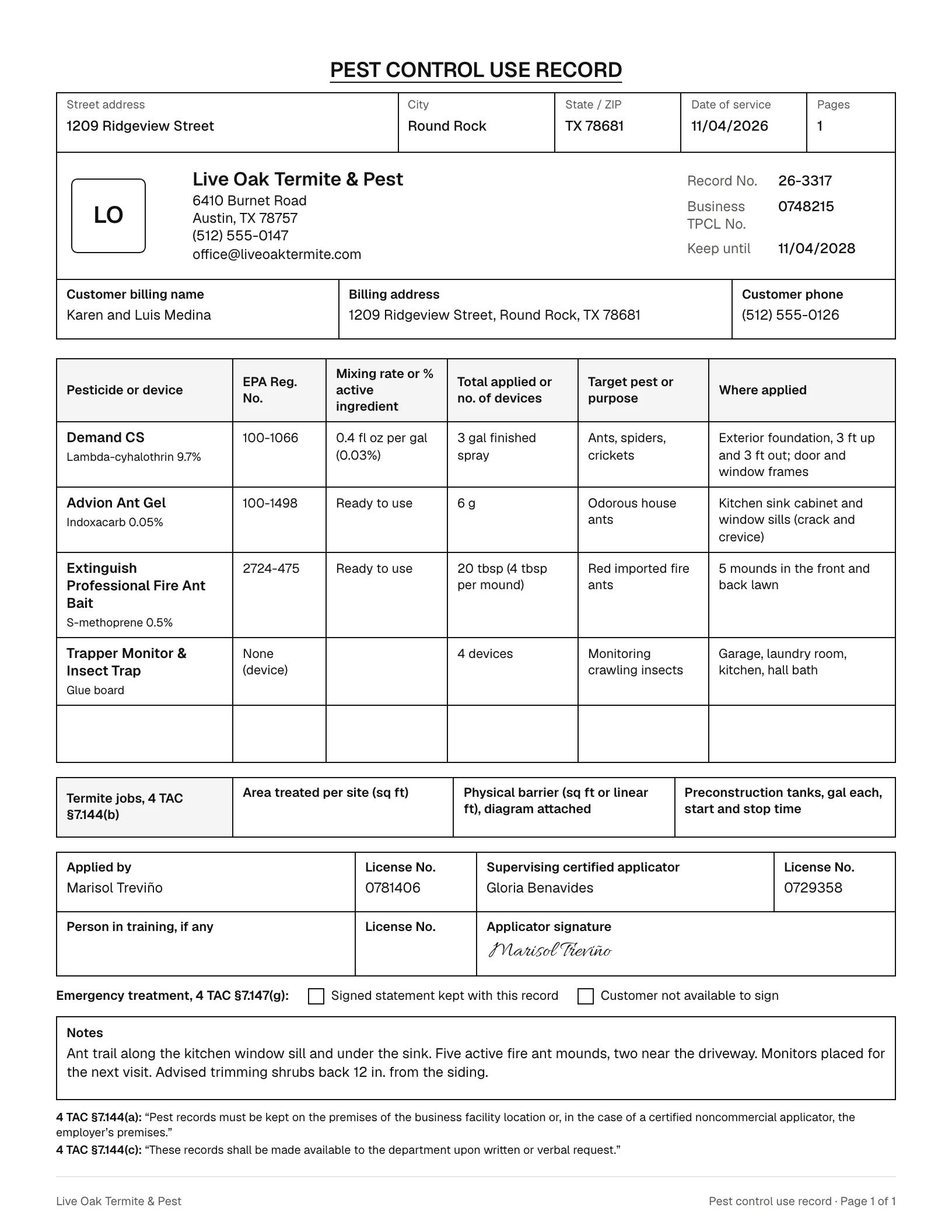
Pest Control Use Record
Record each pesticide applied at a service visit. - Washington
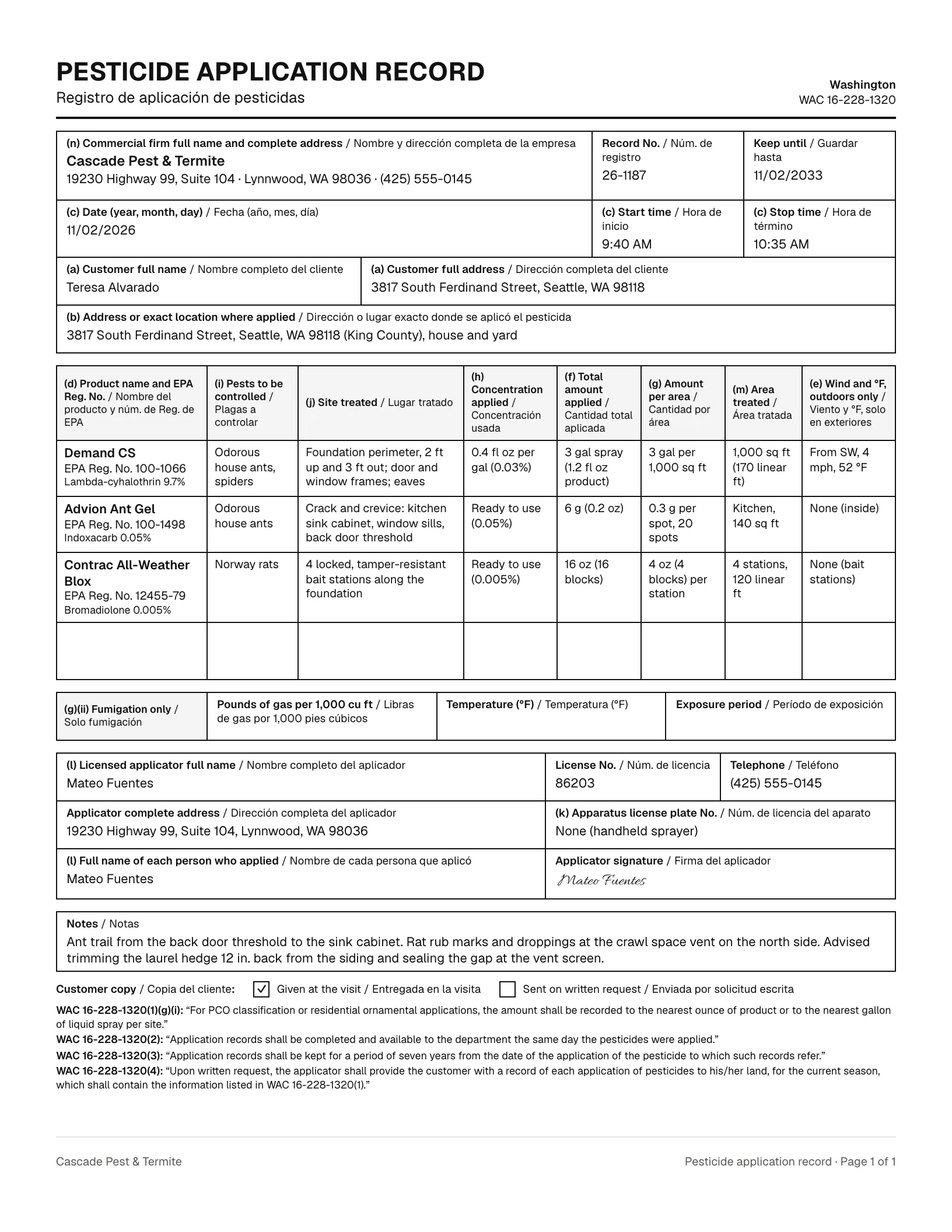
Pesticide Application Record
Record each pesticide applied at a service visit.