Pest Control Service Record
In North Carolina, every household pest treatment needs a written record of who it was for, each pesticide by brand name, and who applied it, kept for two years under rule .0703.
At a glance
- Required by
- 02 NCAC 34 .0703
- Filled out by
- Technician who applied it
- Kept for
- 2 years past the last treatment
- Shown to
- The Division, on request
Completed example
Download PDFWhat is this record?
It’s the written record of a household pest treatment: who it was for, what you applied, and who applied it. It covers every household pest job, from a one-time roach cleanout to a quarterly ant and spider service.
North Carolina doesn’t print a form for it, and for most products no rule says the customer gets a copy. The record is mainly for your office and the state’s inspectors. Termite work has its own paperwork, starting with the written termite proposal and agreement.
When do you fill it out?
At the visit. The rule, 02 NCAC 34 .0703, sets no deadline, but the records have to be ready for the Structural Pest Control and Pesticides Division at any time during regular business hours. Keep them for two years beyond the last date of treatment.
Restricted use pesticides add a step. Their brand name, the record items in 40 CFR 171.303, and the applicator’s name go on the customer’s copy too. And under 02 NCAC 34 .0404, the client, owner, occupants, or a doctor can ask what you applied, down to its EPA Registration No.
How to fill it out
Start with the people and the place. Write the owner’s or their representative’s name and address, the address you treated, the date, and the time. Add your company’s name and address and the license number of the licensee responsible.
Name the treatment and the pests. Write the type of treatment, like a quarterly general pest service. List the common names of the pests the agreement covers, not just the ones you saw that day.
Give each product its own row. Use the EPA approved brand name and the EPA Reg. No. from the label. Add where it went, the size of the area, and the total amount. Those last three are required for restricted use pesticides and worth writing for everything else.
Name who applied it. Print the name and card number of the licensee, certified applicator, or registered technician who made the application. If they worked under a certified applicator’s supervision, add that person too.
Where does it fit in the job?
A quarterly account makes four records a year per house, and each one stays on file for two years. The same houses often carry termite contracts with a yearly reinspection report, so the paper adds up.
Noma specializes in the Pest Control Service Record (02 NCAC 34 .0703). It runs the rest of the account: the jobs, the schedule, the invoices, and online payments, all in one place. See how Noma runs pest control jobs.
Frequentlyaskedquestions
Send this document in minutes, not an afternoon.
Other states
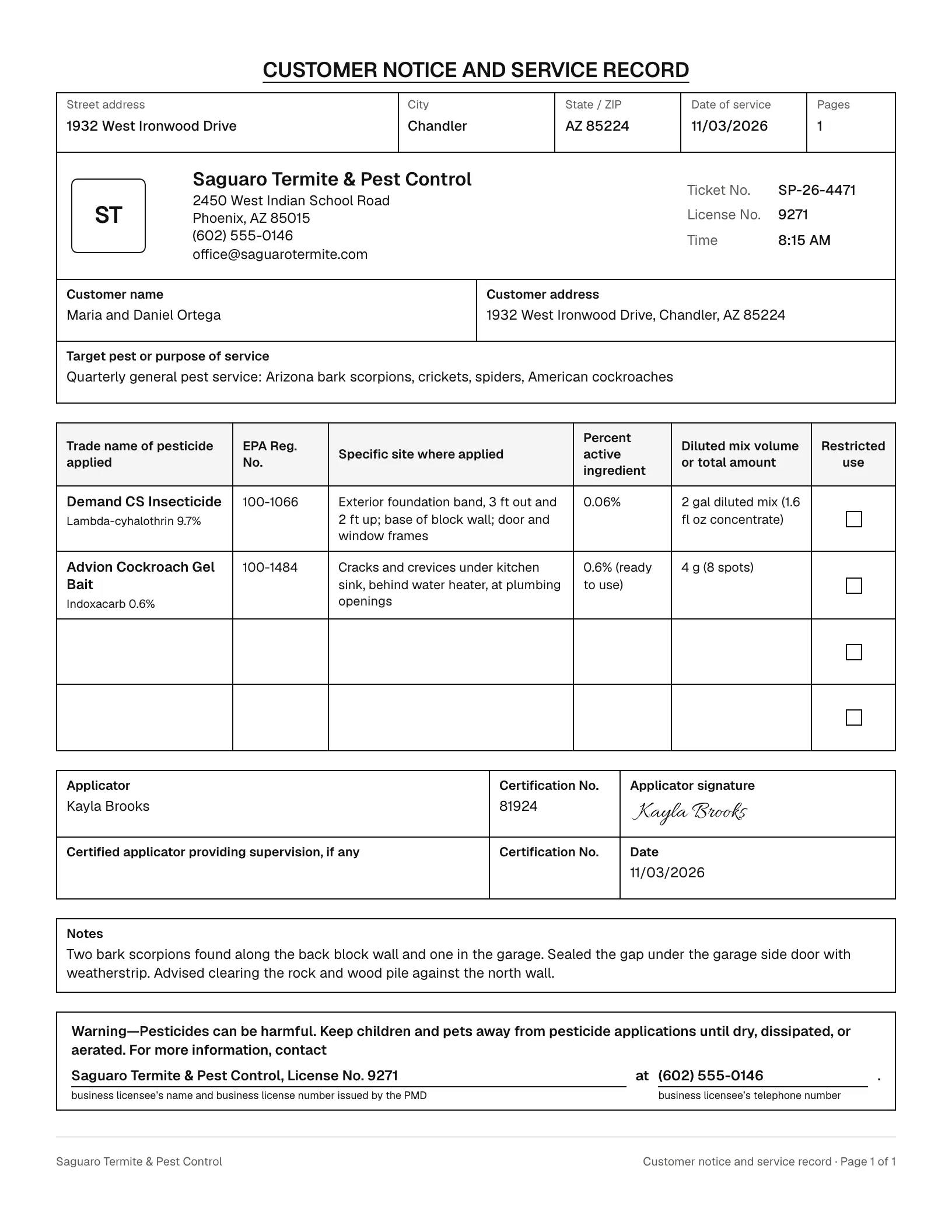
- Arizona
Customer Notice and Service Record
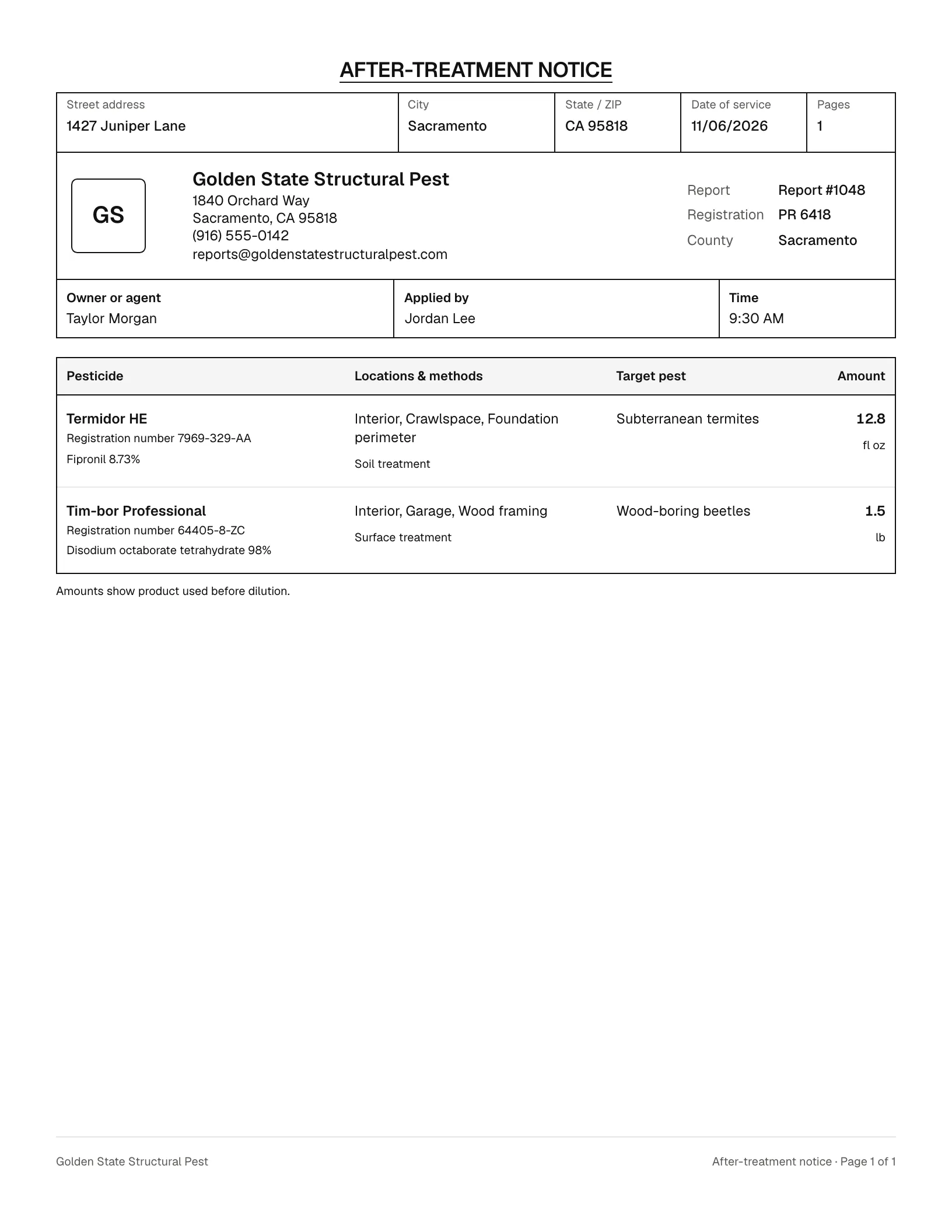
Record each pesticide applied at a service visit. - California
After-Treatment Notice
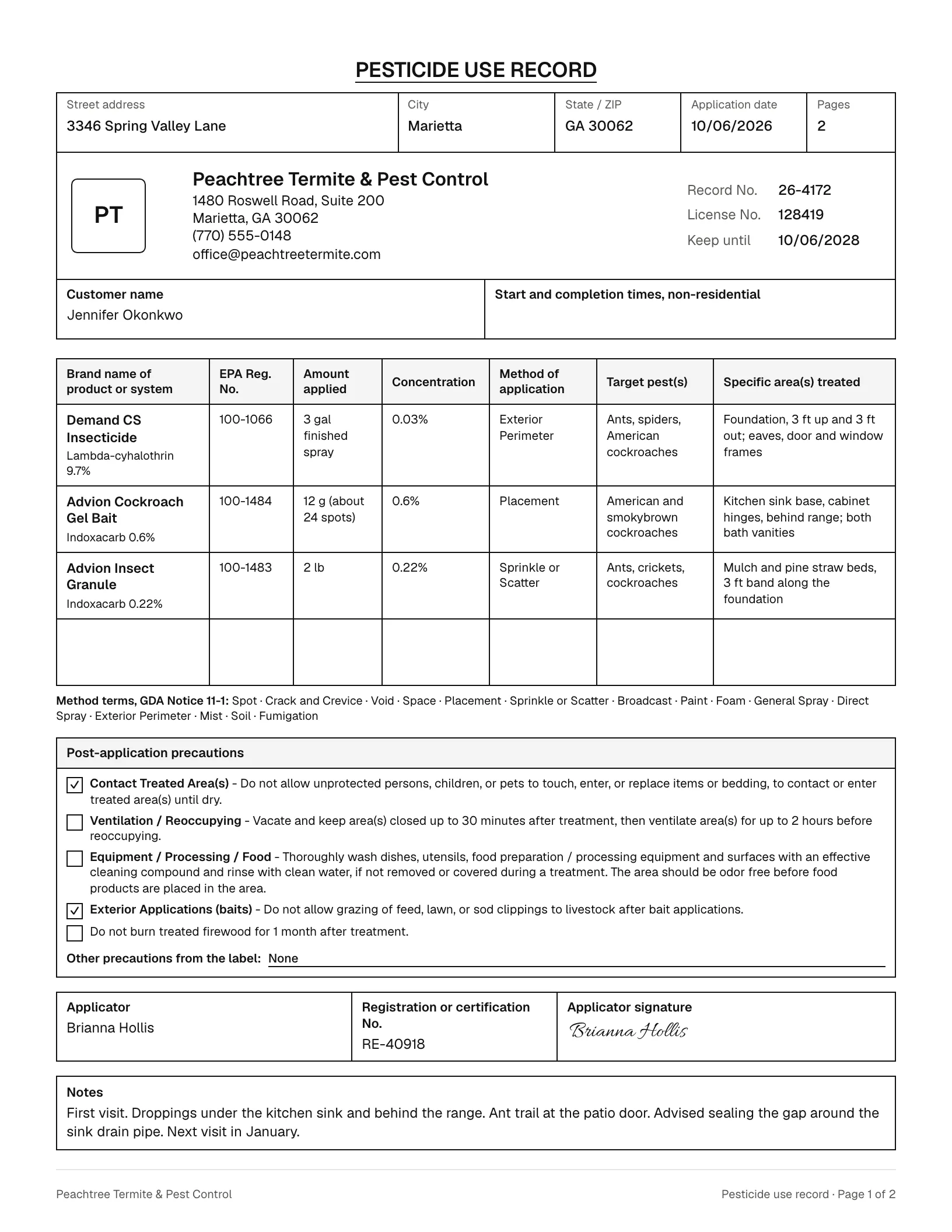
Record each pesticide applied at a service visit. - Georgia
Pesticide Use Record
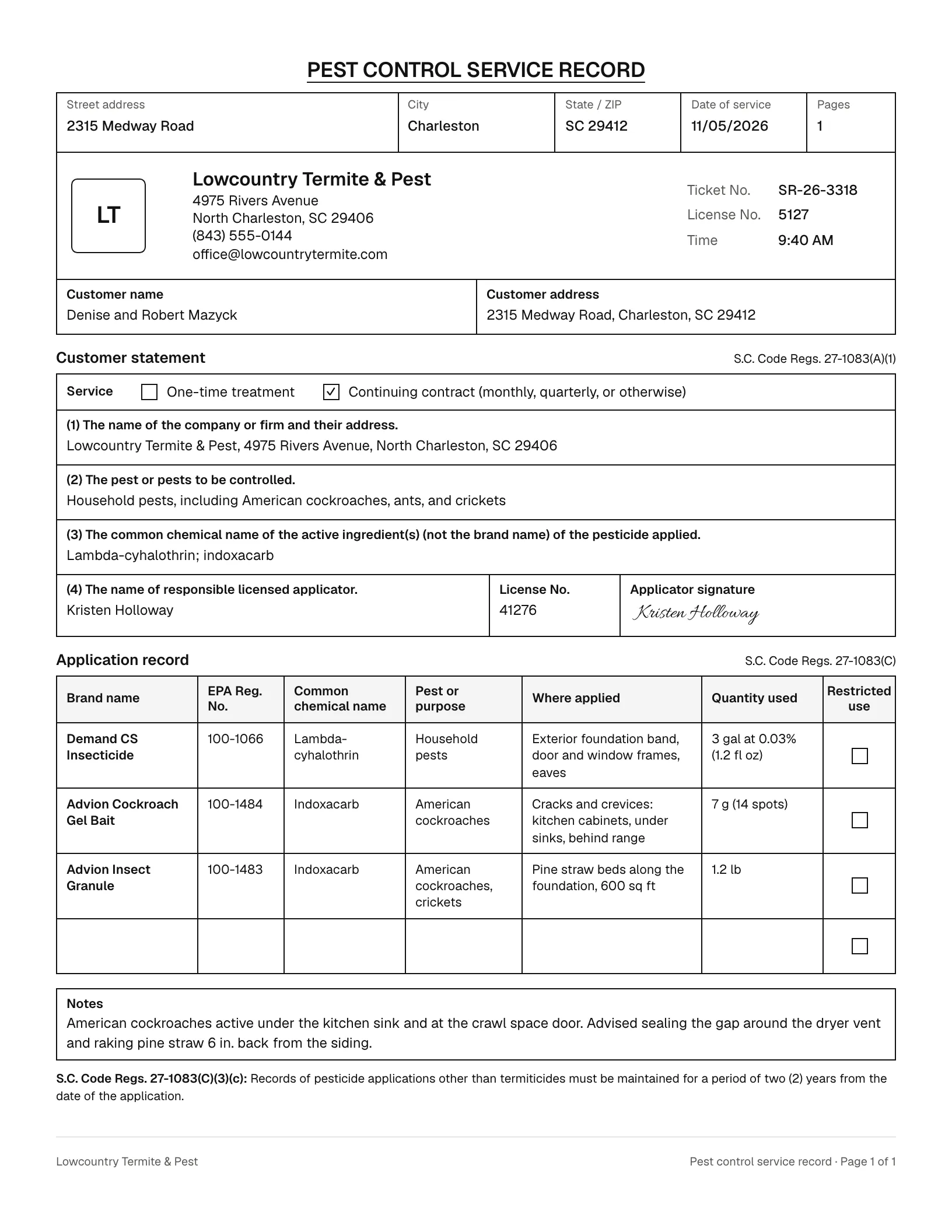
Record each pesticide applied at a service visit. - South Carolina
Pest Control Service Record
Record each pesticide applied at a service visit. - Texas
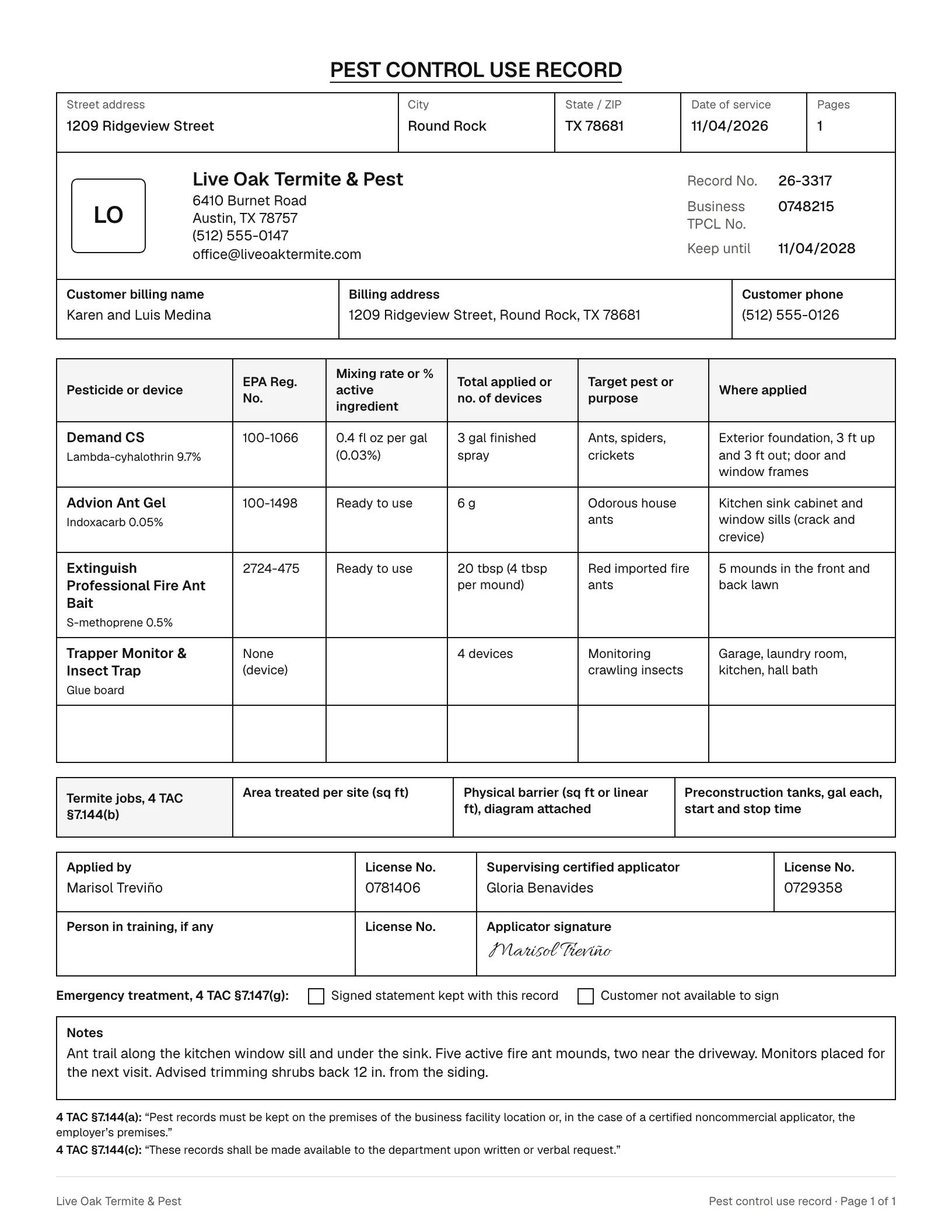
Pest Control Use Record
Record each pesticide applied at a service visit. - Washington
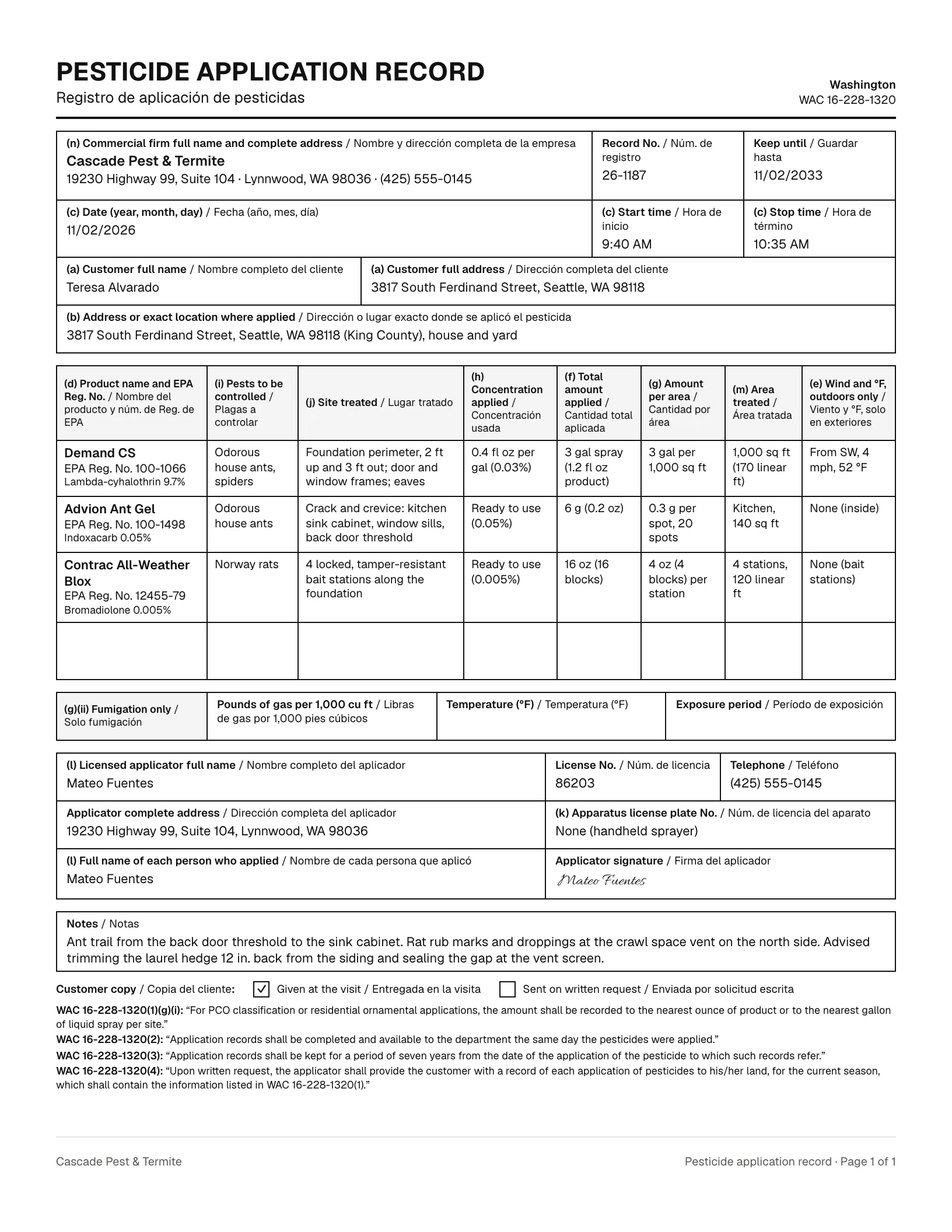
Pesticide Application Record
Record each pesticide applied at a service visit.