Pesticide Application Record
In Washington, a certified applicator records every pesticide application the same day, with the 14 items in WAC 16-228-1320, and keeps the record seven years.
At a glance
- Required by
- WAC 16-228-1320
- Filled out by
- Certified applicator
- Due
- The same day
- Kept for
- 7 years
Completed example
Download PDFWhat is this record?
It’s the record a Washington certified applicator writes for every pesticide application: who it was for, where, when, what went down, how much, and who applied it. For a pest control company, that’s every visit, from a quarterly perimeter spray to a few rat stations along a fence.
It’s a record, not a notice. No Washington rule makes you leave a ticket after a house job, and the customer gets a copy only if they ask in writing. Schools are the exception: the school sends its own Notice: Pesticide Application 48 hours ahead, using facts you give it.
When do you fill it out?
The same day. RCW 17.21.100 says the facts “shall be recorded on the same day that a pesticide is applied.” WAC 16-228-1320 adds that the record is available to WSDA that day and kept seven years. WSDA gets a copy immediately when it asks in writing.
The form is up to you. WSDA prints AGR-4237 for pest control companies, but since WSR 25-22-065 took effect on January 1, 2026, the rule lets WSDA accept any paper or electronic record with every item. This one has them all, with Spanish beside the English, since WSDA has no Spanish Version 5.
How to fill it out
Start with the firm, the customer, and the place. Write the firm’s full name and complete address, the customer’s full name and full address, and the address or exact location you treated. Add the date and the start and stop time.
Give each product its own row. Copy the product name and EPA Reg. No. from the label. Add the pests, the site, like crack and crevice or foundation perimeter, and the concentration, like 0.4 fl oz per gallon.
Write the amounts the rule’s way. Each row needs the total applied, the amount per area, and the area treated. For pest control work, round to the nearest ounce of product or the nearest gallon of spray per site. A fumigation adds pounds of gas per 1,000 cubic feet, the temperature, and the exposure period.
Add the weather only outdoors, then sign. Wind direction, mph, and °F go on outdoor sprays, not on bait stations or work inside the house. Then print the licensed applicator’s name, license number, address, and phone, everyone who applied, and the apparatus plate if a truck rig was used.
Who finds the record when someone asks?
A quarterly account makes 28 records per house before the first one can go. Most sit untouched. But when a doctor treating a possible poisoning calls, the record is due immediately, and anyone else under RCW 17.21.100 gets it within 72 hours.
Noma specializes in the Pesticide Application Record (WAC 16-228-1320). It runs the rest of the account: the jobs, the schedule, the invoices, and online payments, all in one place. See how Noma runs pest control jobs.
Frequentlyaskedquestions
Send this document in minutes, not an afternoon.
Other states
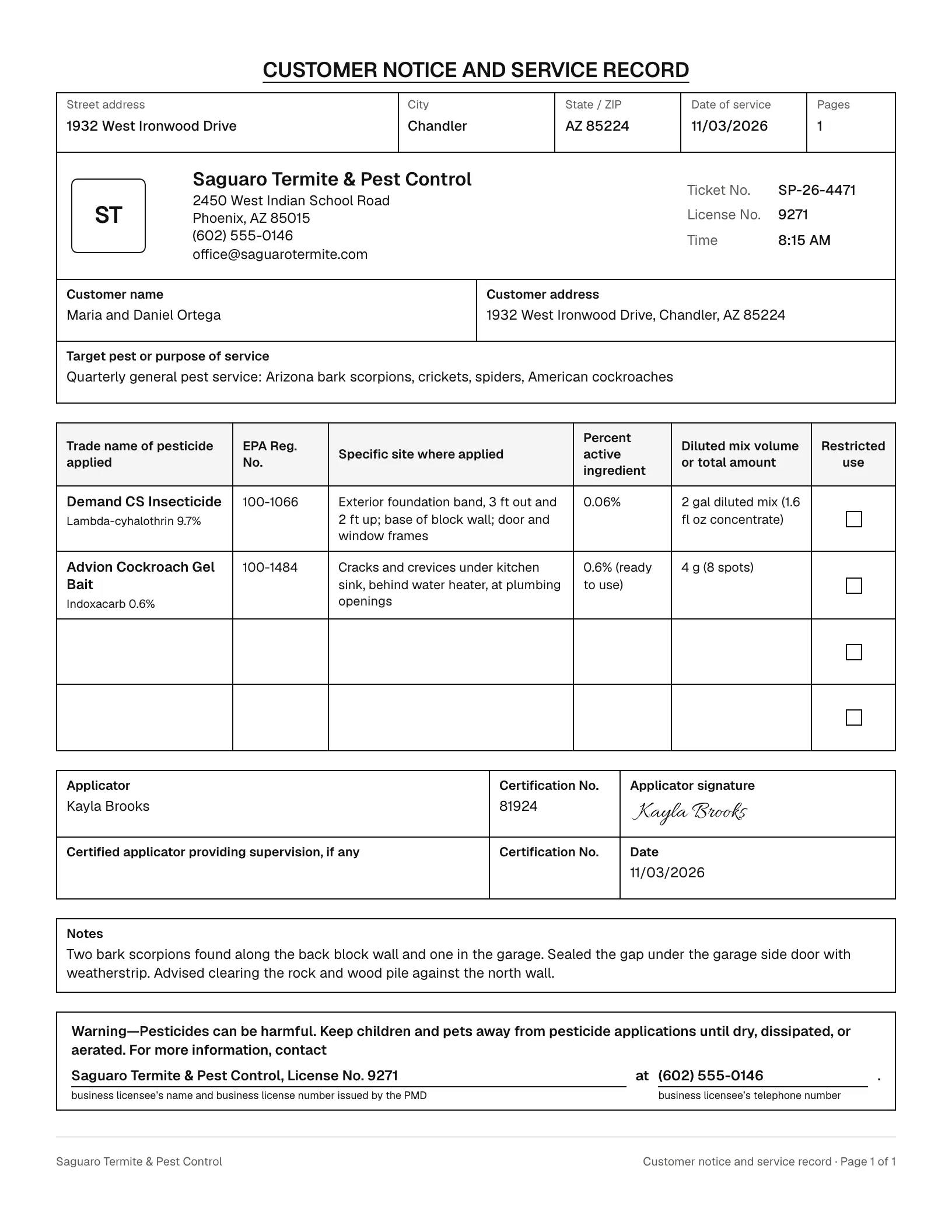
- Arizona
Customer Notice and Service Record
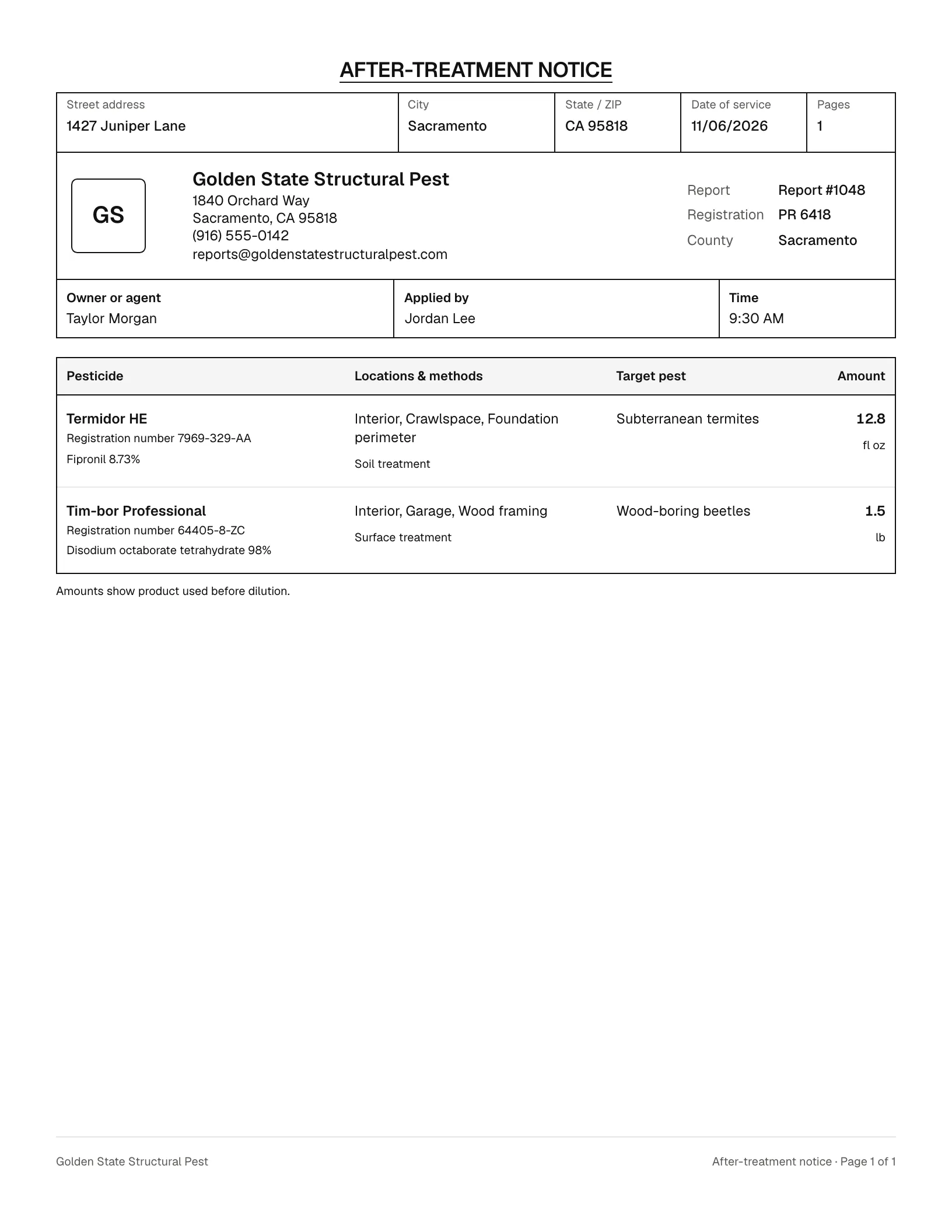
Record each pesticide applied at a service visit. - California
After-Treatment Notice
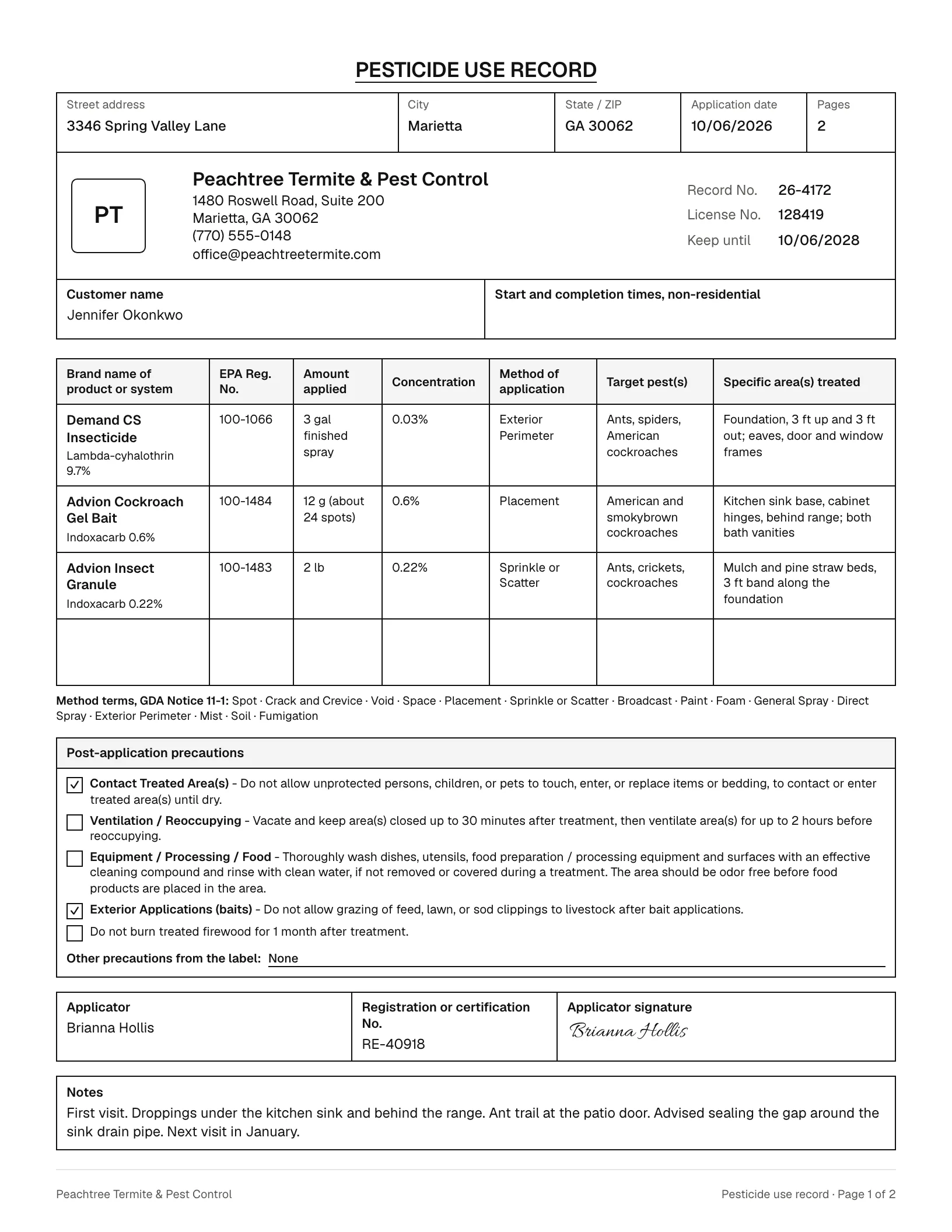
Record each pesticide applied at a service visit. - Georgia
Pesticide Use Record
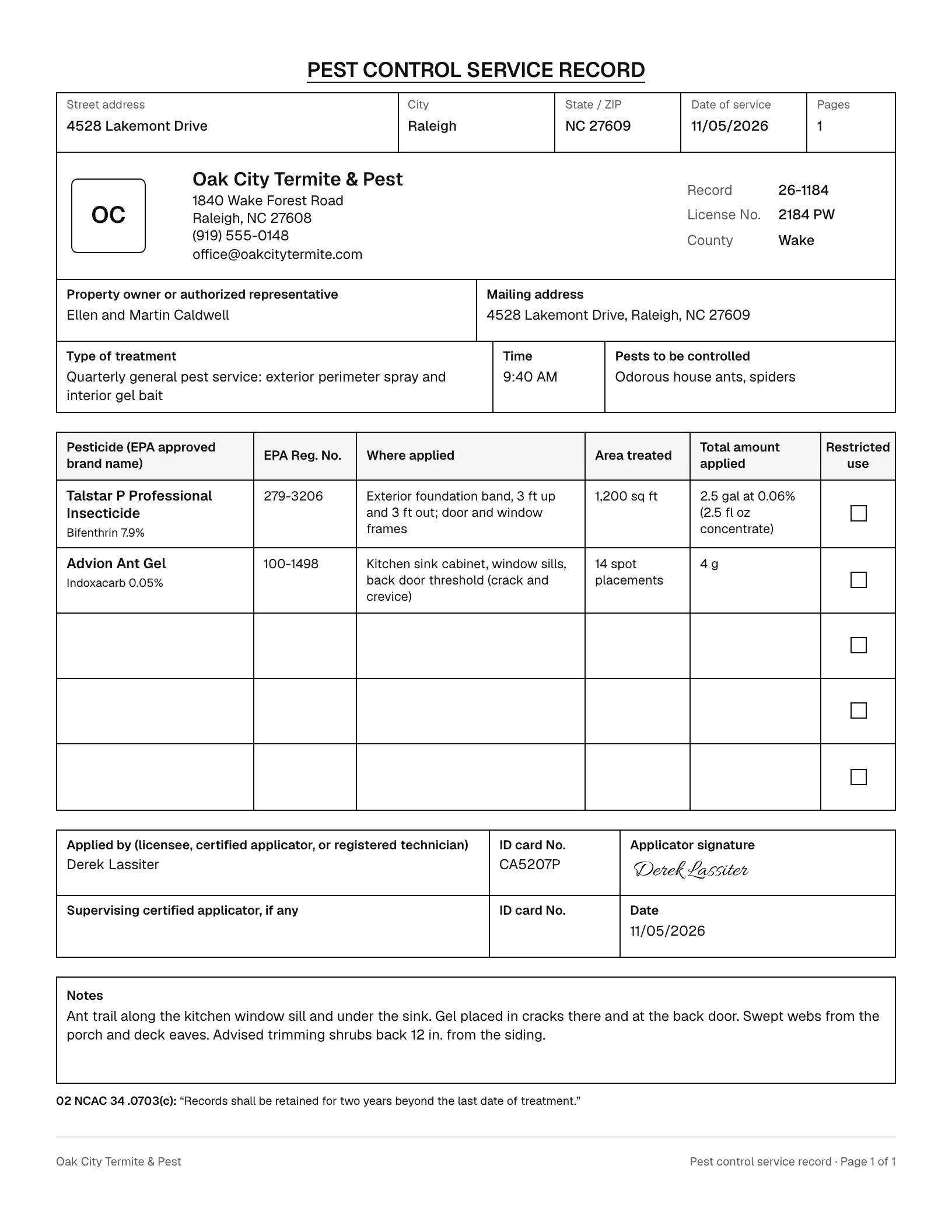
Record each pesticide applied at a service visit. - North Carolina
Pest Control Service Record
Record each pesticide applied at a service visit. - South Carolina
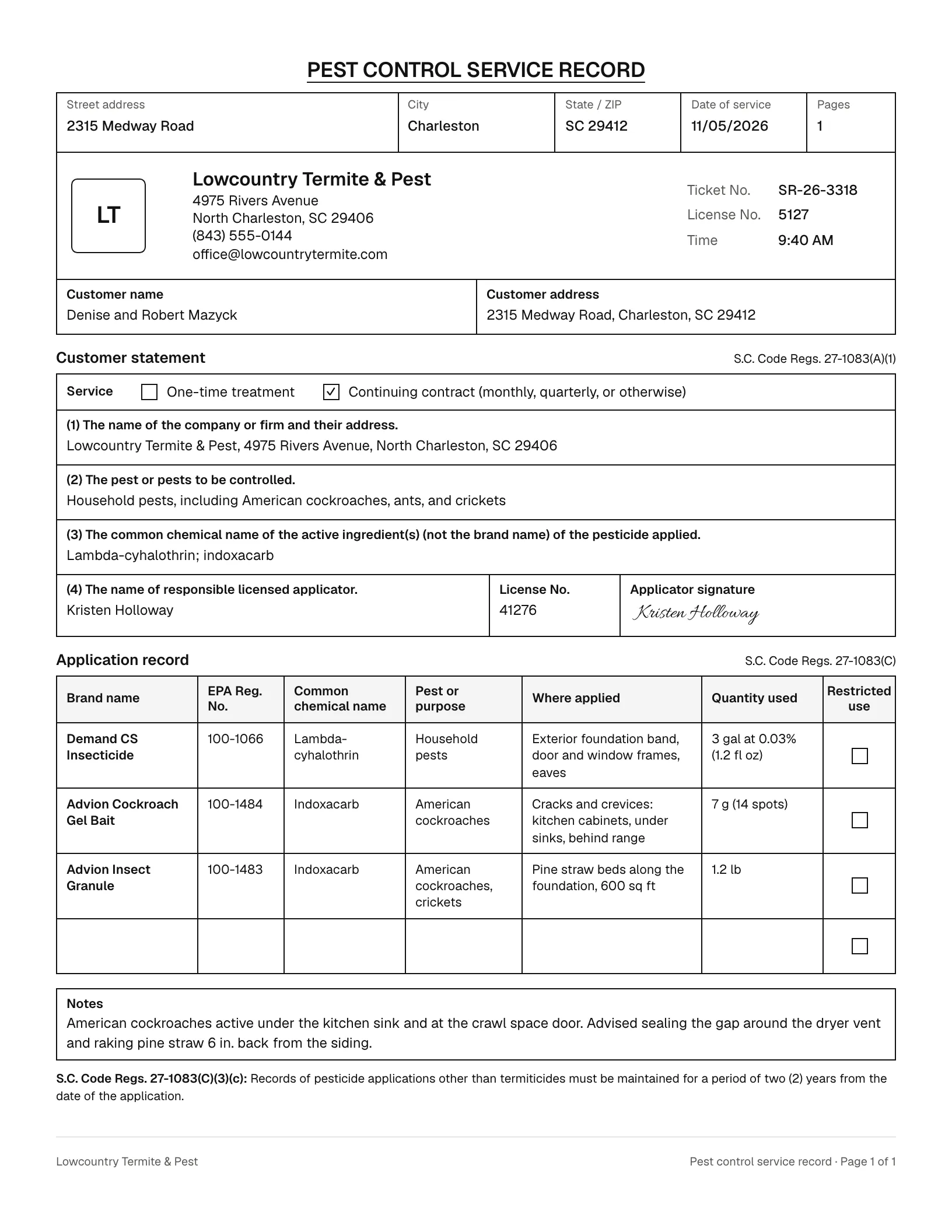
Pest Control Service Record
Record each pesticide applied at a service visit. - Texas
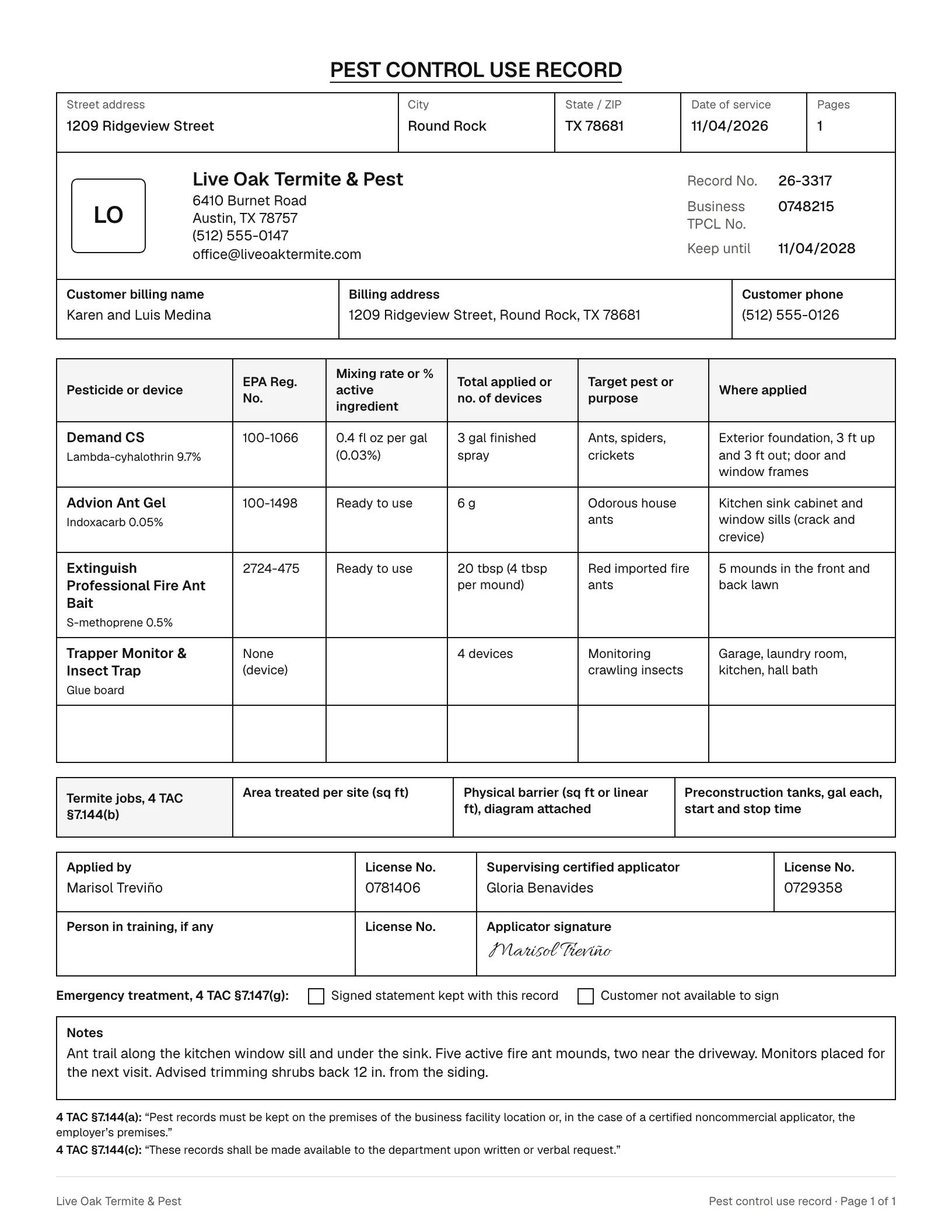
Pest Control Use Record
Record each pesticide applied at a service visit.