Septic System Inspection Report
A private Georgia septic inspection for a home sale, done by a certified pumper or installer, with the records, the tank, and the drainfield on two pages.
At a glance
- Required by
- Not required at sale
- Filled out by
- Certified pumper or installer
- Given to
- The buyer
- County version
- DPH Form 14.L
Completed example
Download PDFWhat is a septic inspection report?
It’s a written record of a septic system on one day: the paperwork, the tank and its baffles, how full it was, and whether the drainfield shows signs of failing. Georgia buyers usually order one during the due diligence period for any house that isn’t on sewer.
Georgia doesn’t require one at sale. Rule 511-3-1-.17(4) only says that if someone evaluates an existing system, it must follow the state manual. The manual’s own form, DPH Form 14.L, is filled out by County Board of Health staff, so a private contractor uses a report like this one instead.
When do you need one?
When the contract or the lender asks. No law triggers it. Some lenders want the county’s letter itself, which buyers request on a county form like the Coastal Health District septic application. Jackson County, for one, charges $125 for a home.
A private inspection comes first when buyers want to see inside the tank. Book it next to the home inspection report, since a home inspector’s agreement leaves the septic system out.
How to fill it out
Start with the records. Ask the county environmental health office for the permit before you go. Section 1 checks what Form 14.L checks first: is there a record, was the system approved, and was it pumped in the last 5 years. Write the approved bedrooms next to the bedrooms in the house.
Measure, then pump. Take the sludge and scum depths before the truck pulls the tank down, then note the gallons removed. Your septage removal permit number goes in the facts box, since Rule 511-3-1-.11 requires one from the county to pump at all.
Mark every part. OK, Defect, or NI for each component, with a note. Baffles matter most, since a missing outlet baffle sends solids to the drainfield. Then answer the drainfield questions, including backflow while pumping.
List the adverse conditions, then sign. Section 7 is for anything that shows failure or will cause it, like a broken baffle or more bedrooms than the permit allows. The statement limits the report to the date and time you were there, the same idea as Form 14.L’s disclaimer, in its own words.
Do findings have to be copied by hand?
Not if each one is marked by how serious it is. Copying a broken baffle from the tank table to the findings by hand is how it drops off the version the buyer’s agent reads.
Noma specializes in the Septic System Inspection Report. Noma’s property inspection reports let you set your own sections and titles, so they can follow the nine sections here. Mark how serious each defect is, and the summary lists the most serious ones, plus the next level down if you turn it on. See how Noma builds septic reports.
Frequentlyaskedquestions
Send this document in minutes, not an afternoon.
Other states
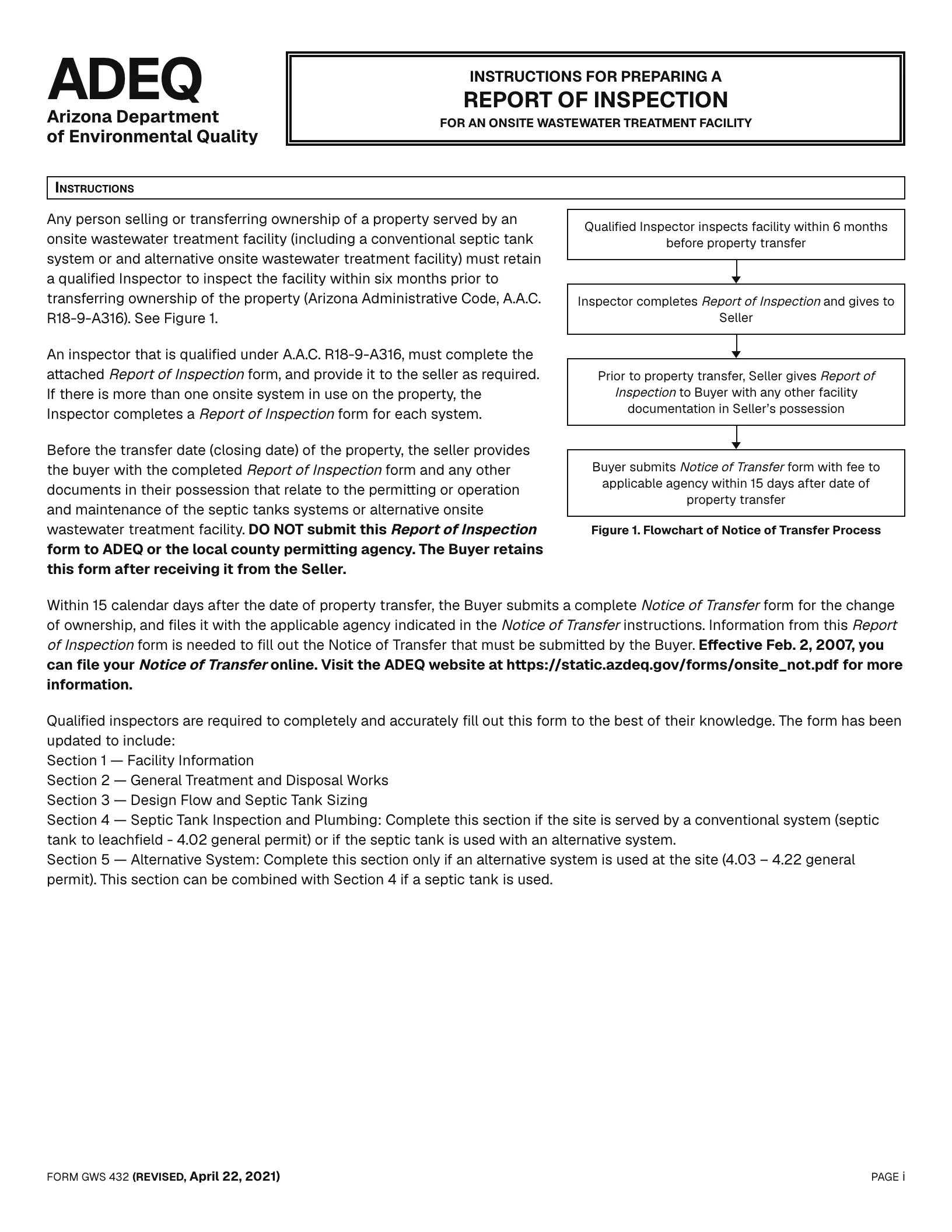
- ArizonaGWS 432
Report of Inspection for an Onsite Wastewater Treatment Facility
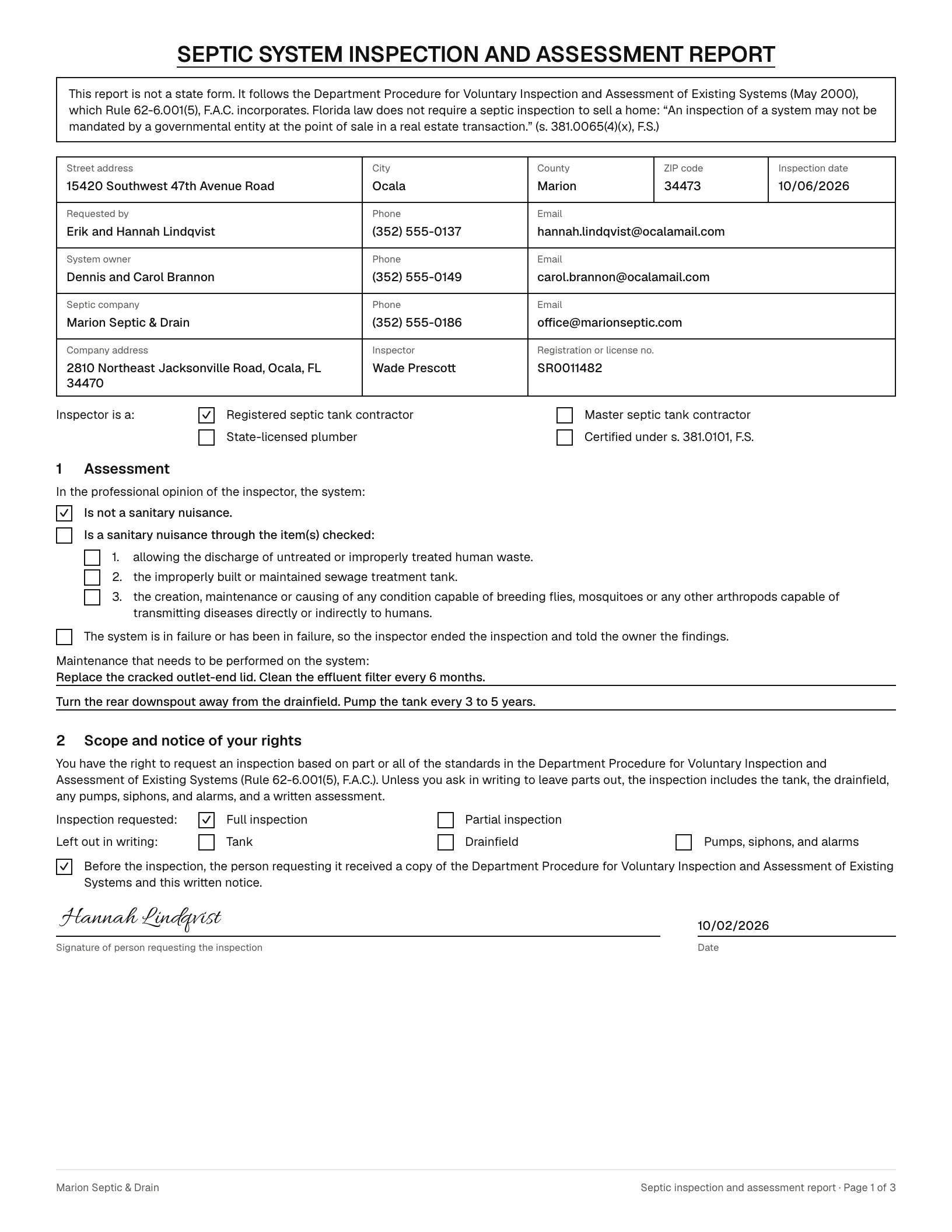
Record the tank, the drainfield, and what was checked. - Florida
Septic System Inspection and Assessment Report
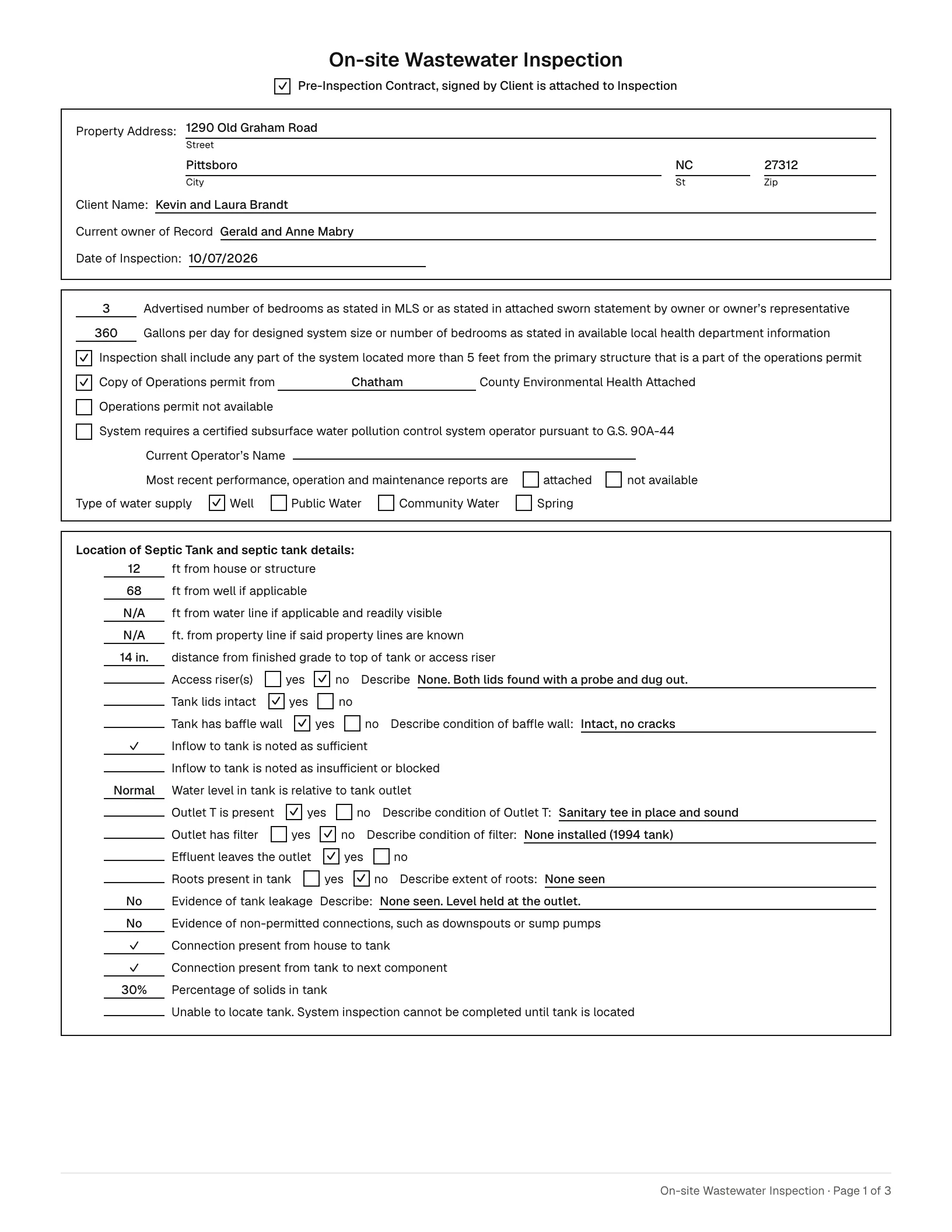
Record the tank, the drainfield, and what was checked. - North Carolina
On-site Wastewater Inspection
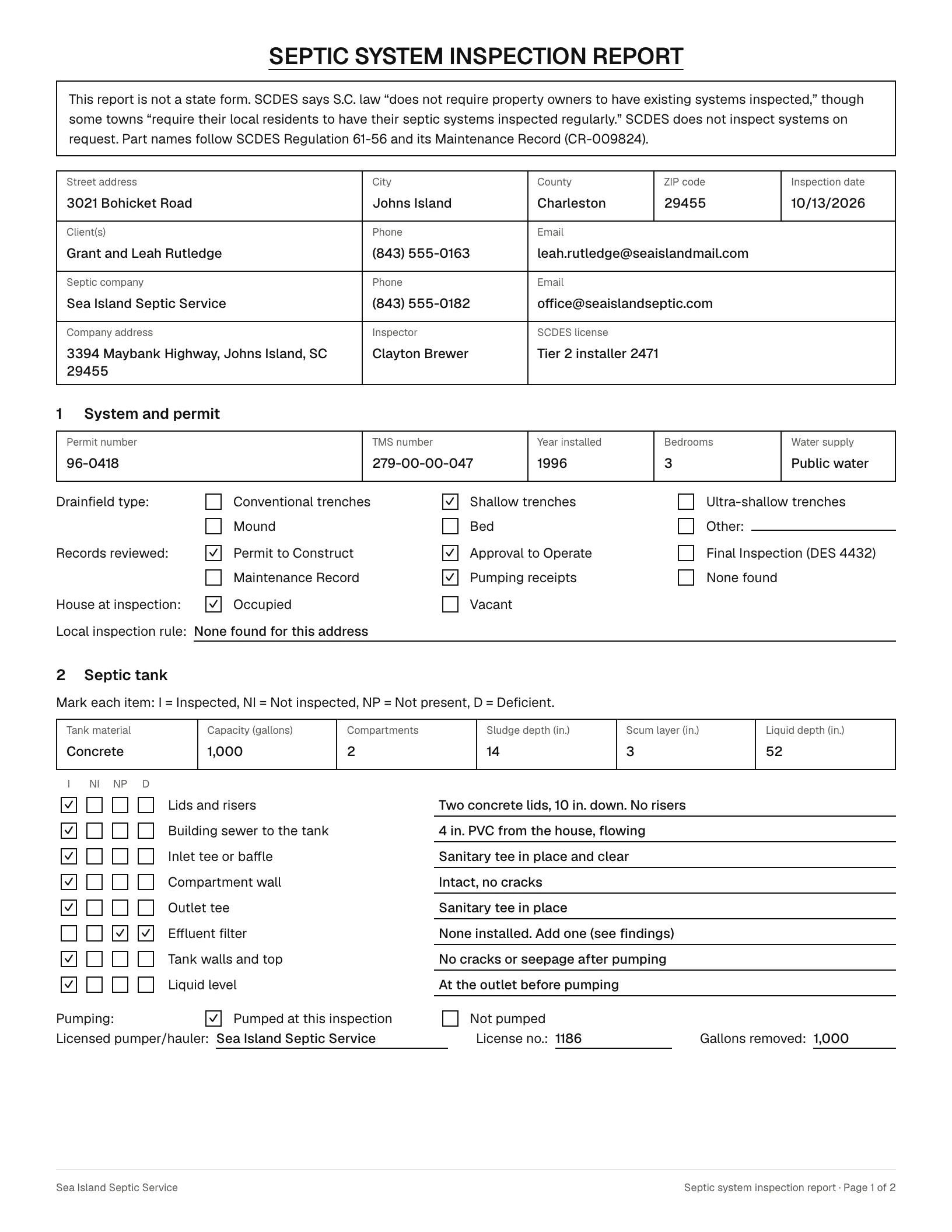
Record the tank, the drainfield, and what was checked. - South Carolina
Septic System Inspection Report
Record the tank, the drainfield, and what was checked. - Texas
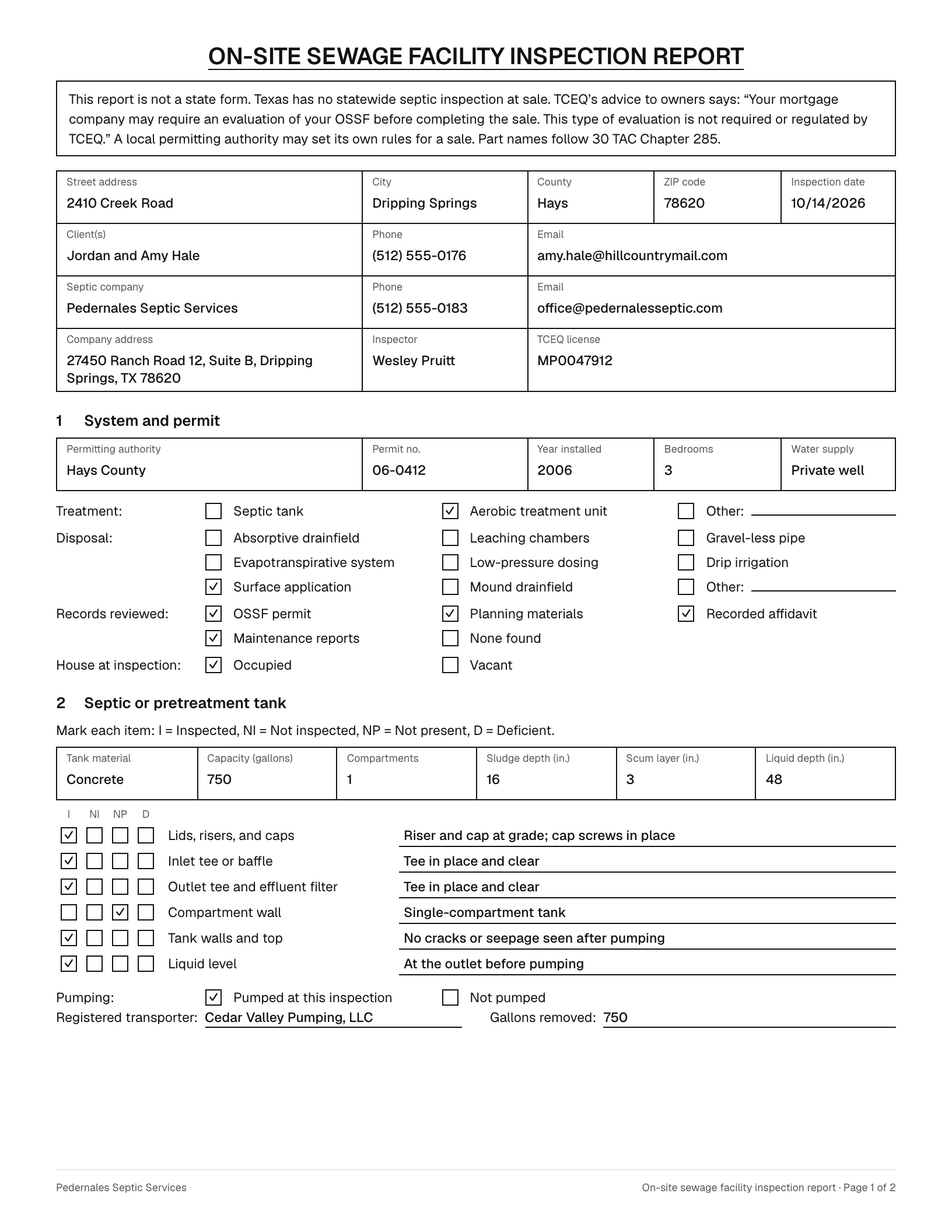
On-Site Sewage Facility Inspection Report
Record the tank, the drainfield, and what was checked. - Washington
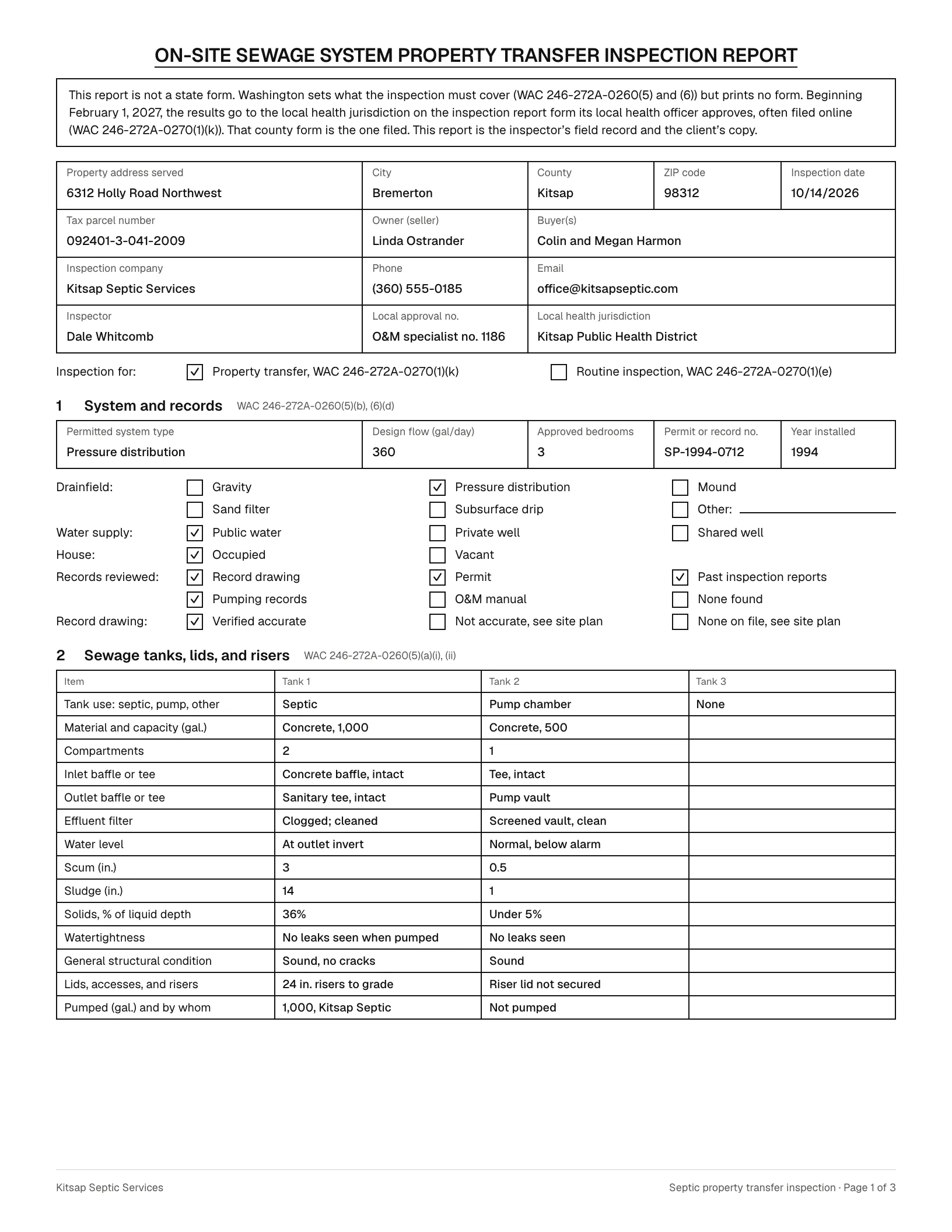
On-Site Sewage System Property Transfer Inspection Report
Record the tank, the drainfield, and what was checked.