Home Inspection Report
The written notice of defects a Georgia home inspector gives the client, system by system, with the expert to call for each one.
At a glance
- Required by
- O.C.G.A. § 8-3-331(3)
- Filled out by
- Home inspector
- Given to
- The client
- Due
- No state deadline
Completed example
Download PDFWhat is a home inspection report?
It’s what the client paid for: a written record of each system you looked at, the condition you found it in, and what to do about the defects. In Georgia it’s also the written notice the law says you’ll give.
Georgia has no license, no standard of practice, and no state form. O.C.G.A. § 8-3-331(3) asks for one thing: notice in writing of any defects noted, with any recommendation that experts be retained to work out the extent and the fix. Most inspectors fill in the rest with the InterNACHI Standards of Practice or ASHI’s, and the report should say which.
When is it delivered?
Inside the due diligence period. No statute sets a deadline, but most Georgia buyers sign the GAR Purchase and Sale Agreement (F201) with a due diligence period. Until it ends, they can walk away for any reason or ask for repairs. Put a delivery date in your home inspection agreement and beat it.
The buyer’s agent turns your report into an Amendment to Address Concerns with Property (F704). GAR’s forms are copyrighted and licensed to its members, so name them, but don’t copy them into your report. GAR’s 2026 form changes show how often they move.
How to fill it out
Fill in the facts box and sign. Property, dates, clients, and your company, then your name, trade group number, and signature. Write the standards of practice you followed on the line under the box, since Georgia doesn’t pick one for you.
Describe every component. Write the type or material on each row and mark one condition column. The terms are defined once on page 1: satisfactory, defect, safety hazard, not inspected, and not present. Fill in “Not inspected, and why” for anything you couldn’t reach.
Name the expert on every defect. That’s the § 8-3-331(3) part, so write “licensed electrician,” not “further evaluation.” Termite tubes go to the termite letter, which only a licensed pest company can issue. Point to theirs instead of recommending treatment.
Build the summary last. Copy every SH and D item to page 1, safety hazards first, under its body number. The agent can then list “2.1, 4.1, 5.1” on the repair amendment without retyping your findings.
Can the summary build itself?
It can, once each item is marked by how serious it is. Copying a dozen defects to page 1 by hand is where a safety hazard slips off the list, a day before the repair amendment is due.
Noma specializes in the Home Inspection Report (O.C.G.A. § 8-3-331(3)). Noma’s property inspection reports let you set your own sections and titles, so they can follow the nine systems here. Mark how serious each defect is, and the summary lists the most serious ones, plus the next level down if you turn it on. You can rename the levels to match your terms. See how Noma builds the summary.
Frequentlyaskedquestions
Send this document in minutes, not an afternoon.
Other states
- Arizona
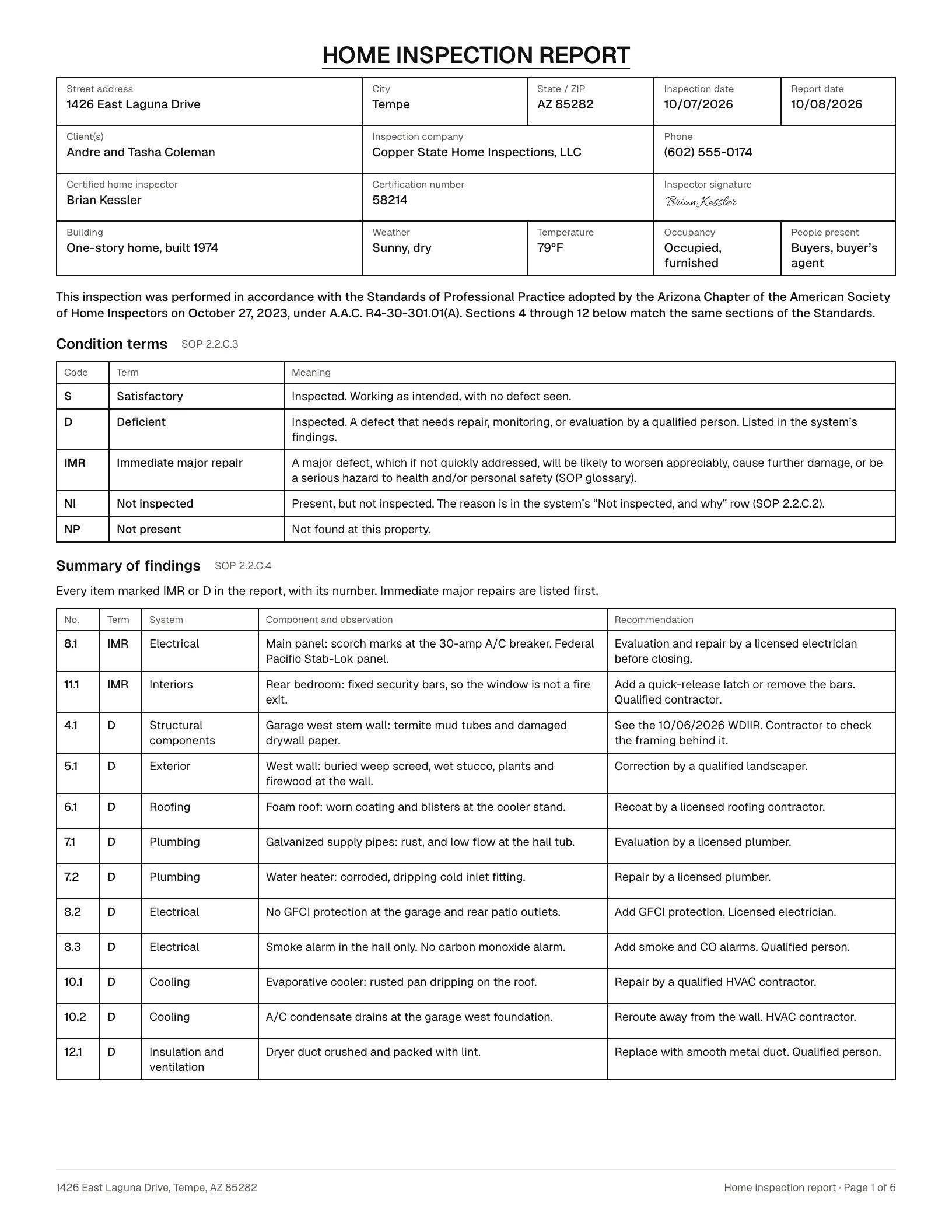
Home Inspection Report
Findings by system, with each defect noted. - Florida
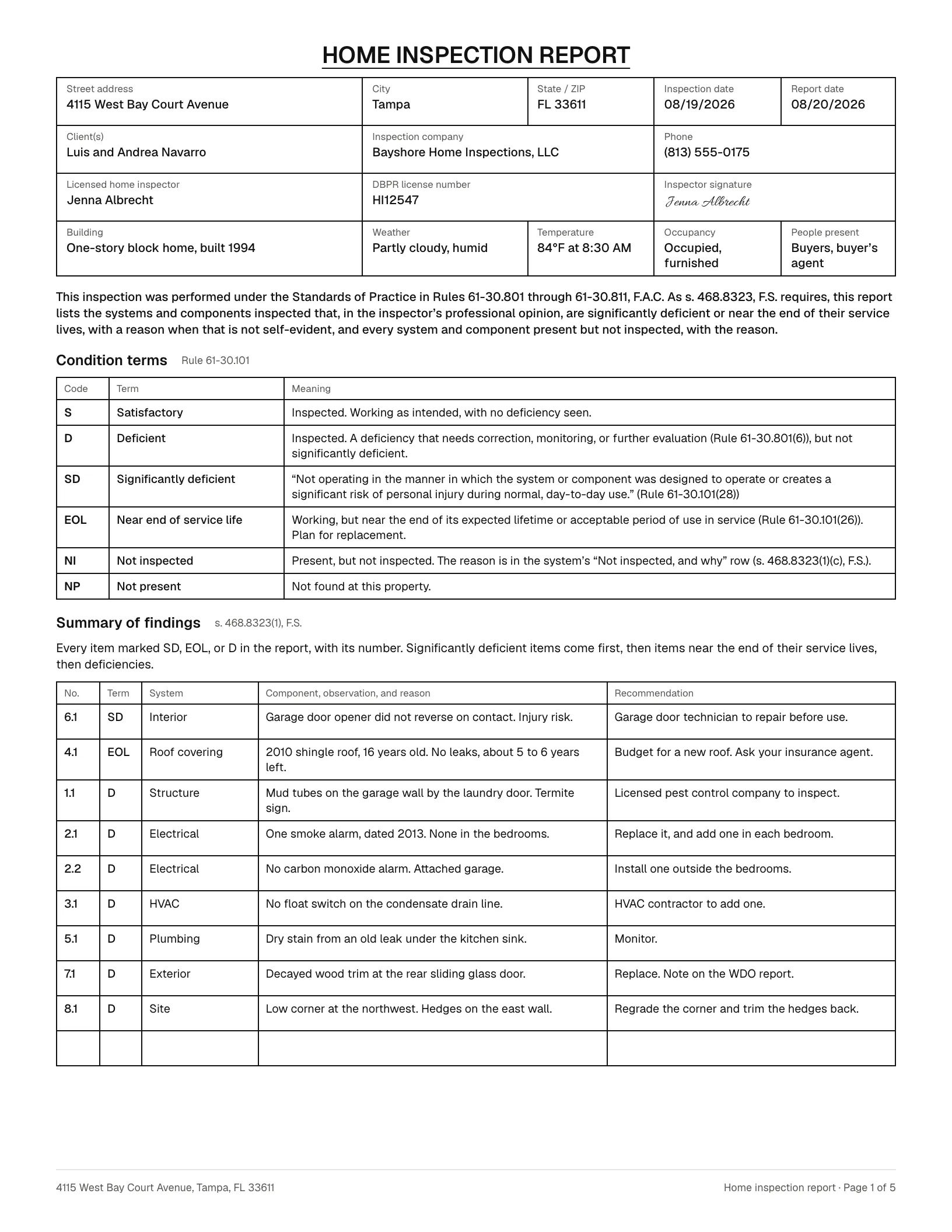
Home Inspection Report
Findings by system, with each defect noted. - North Carolina
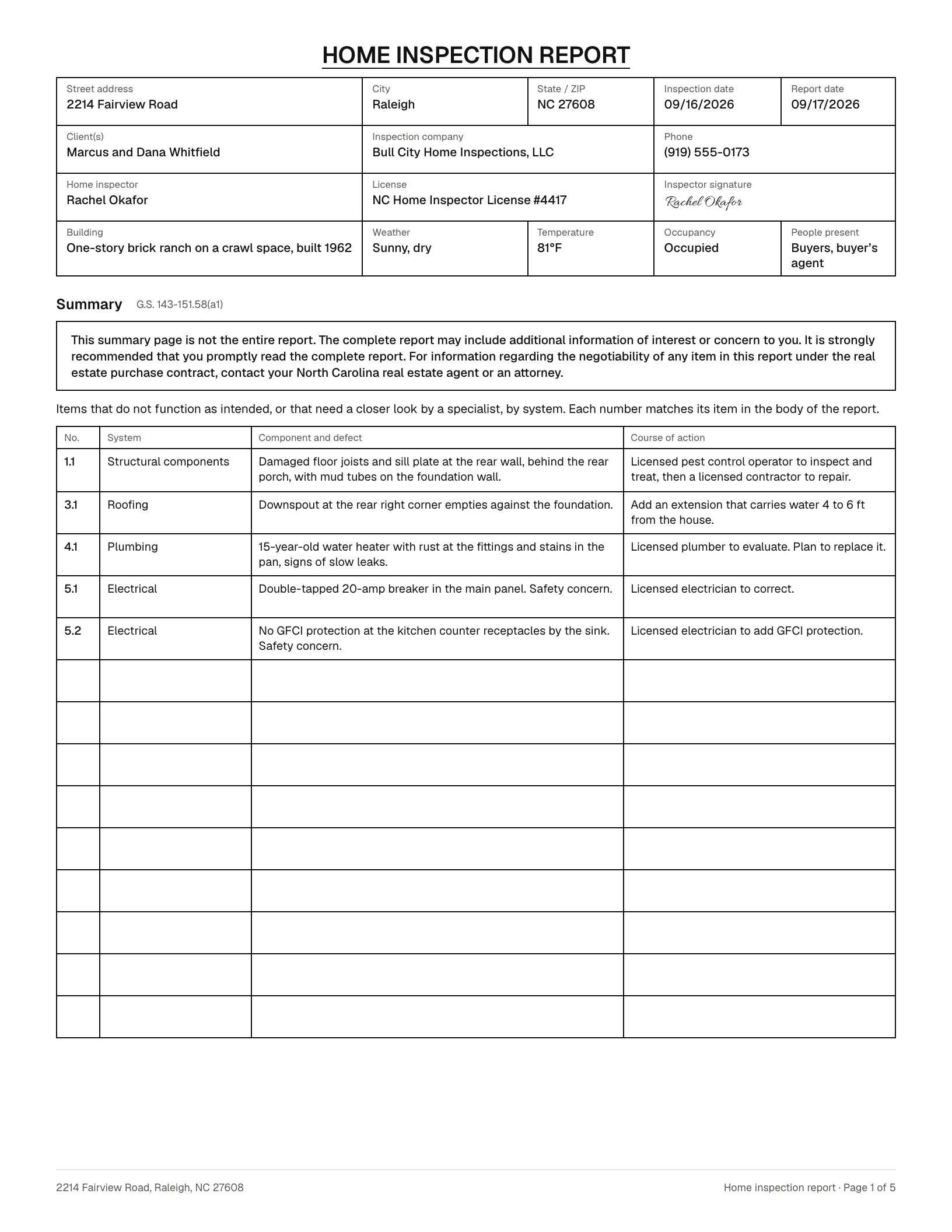
Home Inspection Report
Findings by system, with each defect noted. - South Carolina
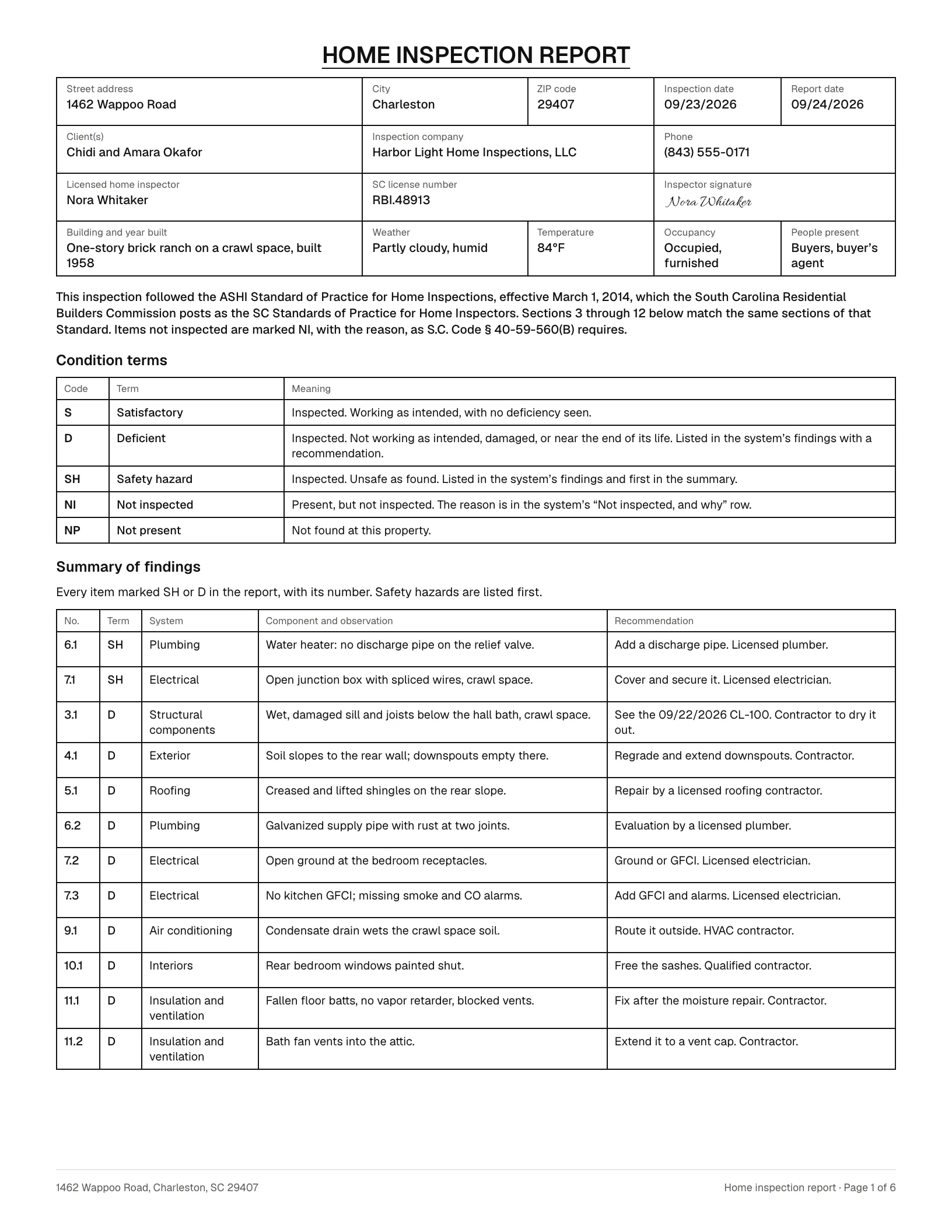
Home Inspection Report
Findings by system, with each defect noted. - TexasREI 7-6
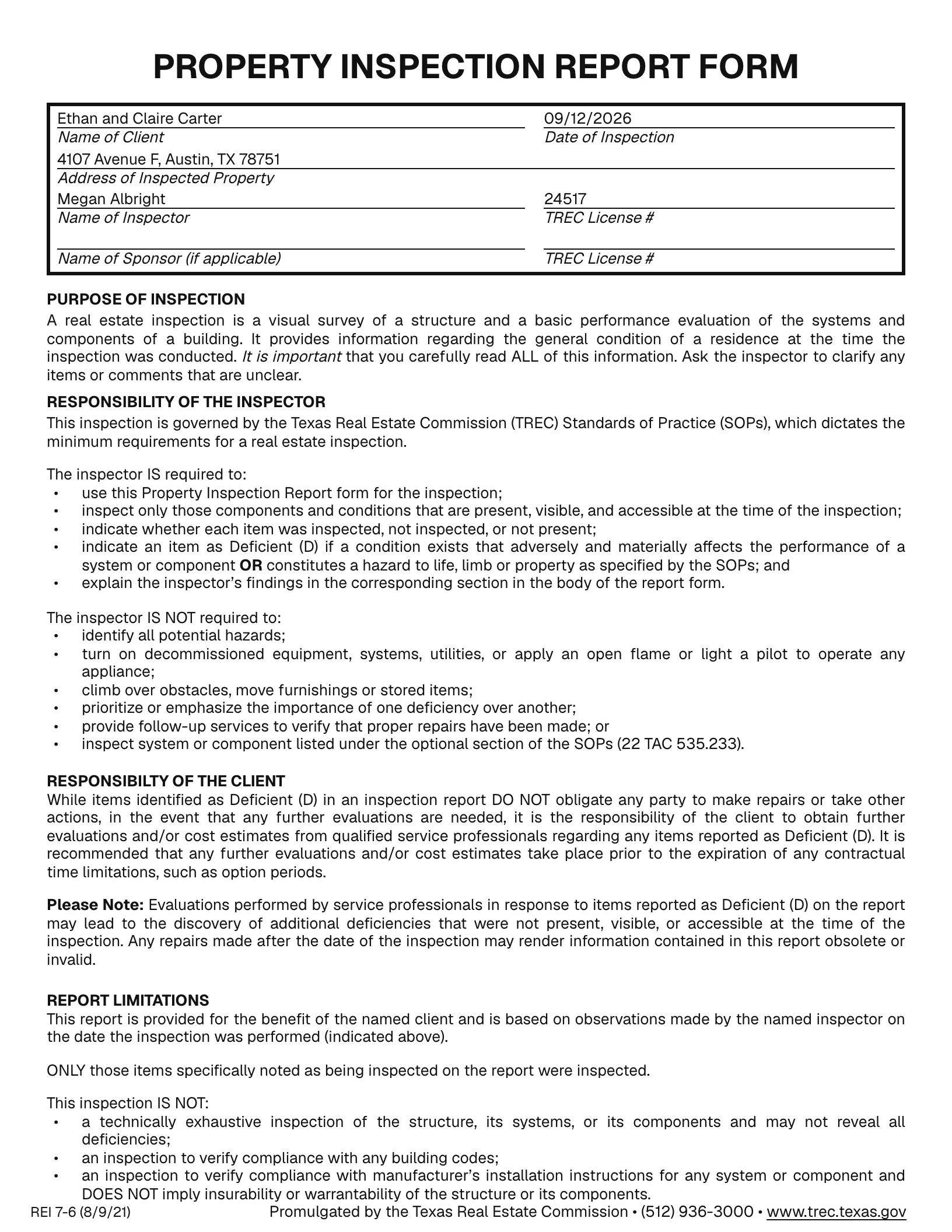
Property Inspection Report Form
Findings by system, with each defect noted. - Washington
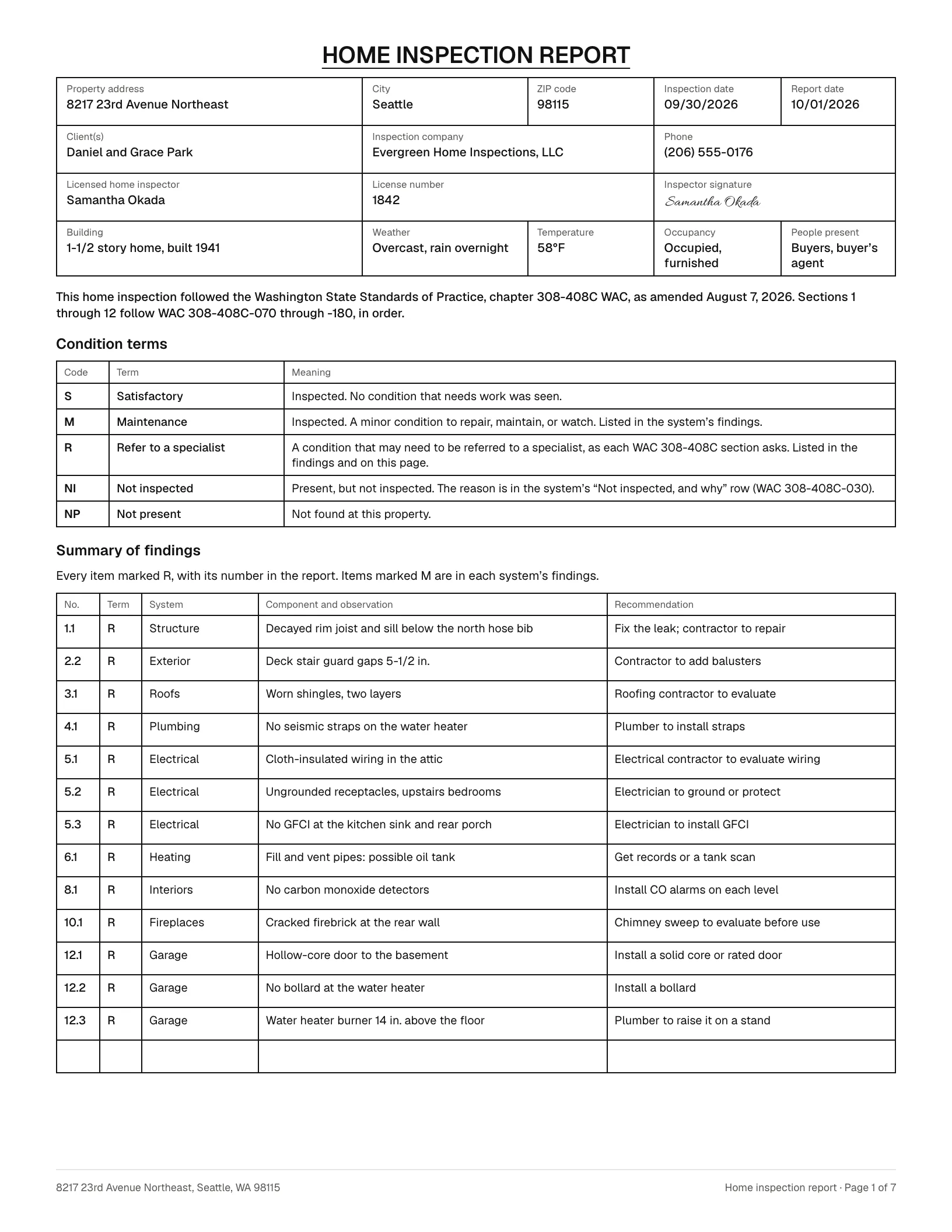
Home Inspection Report
Findings by system, with each defect noted.