Septic System Inspection and Assessment Report
A Florida septic report for a home sale that follows DEP’s voluntary inspection procedure, from the pumped tank and the drainfield to the front-cover assessment.
At a glance
- Required by
- Not required at sale
- Filled out by
- Septic contractor or plumber
- Signed by
- The inspector
- Due
- No state deadline
Completed example
Download PDFWhat is a Florida septic inspection report?
It’s the septic part of a Florida home sale. A home inspection skips it, because Rule 61-30.806 leaves out private waste disposal systems. So the buyer hires a septic contractor or plumber to pump the tank, probe the drainfield, and write up what they find.
DEP doesn’t print a report form, but Rule 62-6.001, F.A.C. makes every voluntary inspection follow DEP’s Procedure for Voluntary Inspection and Assessment of Existing Systems (May 2000). It sets the tank, drainfield, and pump checks, seven disclosure statements, and a front cover that says whether the system is a sanitary nuisance. This report holds all of it, in the Procedure’s own words.
When do you need one?
Whenever a buyer or lender asks for one. No one can require it: s. 381.0065, F.S.(4)(x) says an inspection “may not be mandated by a governmental entity at the point of sale in a real estate transaction.” Most buyers order it during the inspection period, next to the home inspection report.
Before you start, give the customer a copy of the Procedure and written notice that they can ask for part or all of the standards. Page 1 holds that notice and a line for them to sign. If they leave the drainfield out, it has to be in writing.
How to fill it out
Pump the tank, then look inside. The Procedure says to pump it to find the capacity, unless a record from the last three years states it. Check the empty tank for cracks and leaks, the baffles or tees, the outlet device and filter, and the lid fit.
Probe and auger the drainfield. Find its location and size, note trench or bed and what it’s made of, and look for seepage, lush strips, ponding, and downspouts aimed at it. Then auger to estimate the seasonal high water table.
Run the pumps and alarms. Items (a) through (j) cover the dosing tank, the pump, the purge hole, and the high water alarm. Aerobic and performance-based units go to their maintenance entity instead, under the same rule.
Check the disclosures, then fill in the front cover. Say whether the system is a sanitary nuisance, list its maintenance, sign, and send a copy to the buyer and the owner. Don’t attach DEP 4015 (June 2026): that’s DEP’s permit application for repairs and changes of use.
Can the agent see the problems first?
A septic report is three pages of boxes and depths. The buyer’s agent only wants two answers: is it a sanitary nuisance, and what needs fixing before closing.
Noma specializes in the Septic System Inspection and Assessment Report. Set up a property inspection report with your own sections, like Tank and Drainfield, and its summary always lists the most serious defects you marked, so the buyer’s agent sees them first. See how Noma builds inspection reports.
Frequentlyaskedquestions
Send this document in minutes, not an afternoon.
Other states
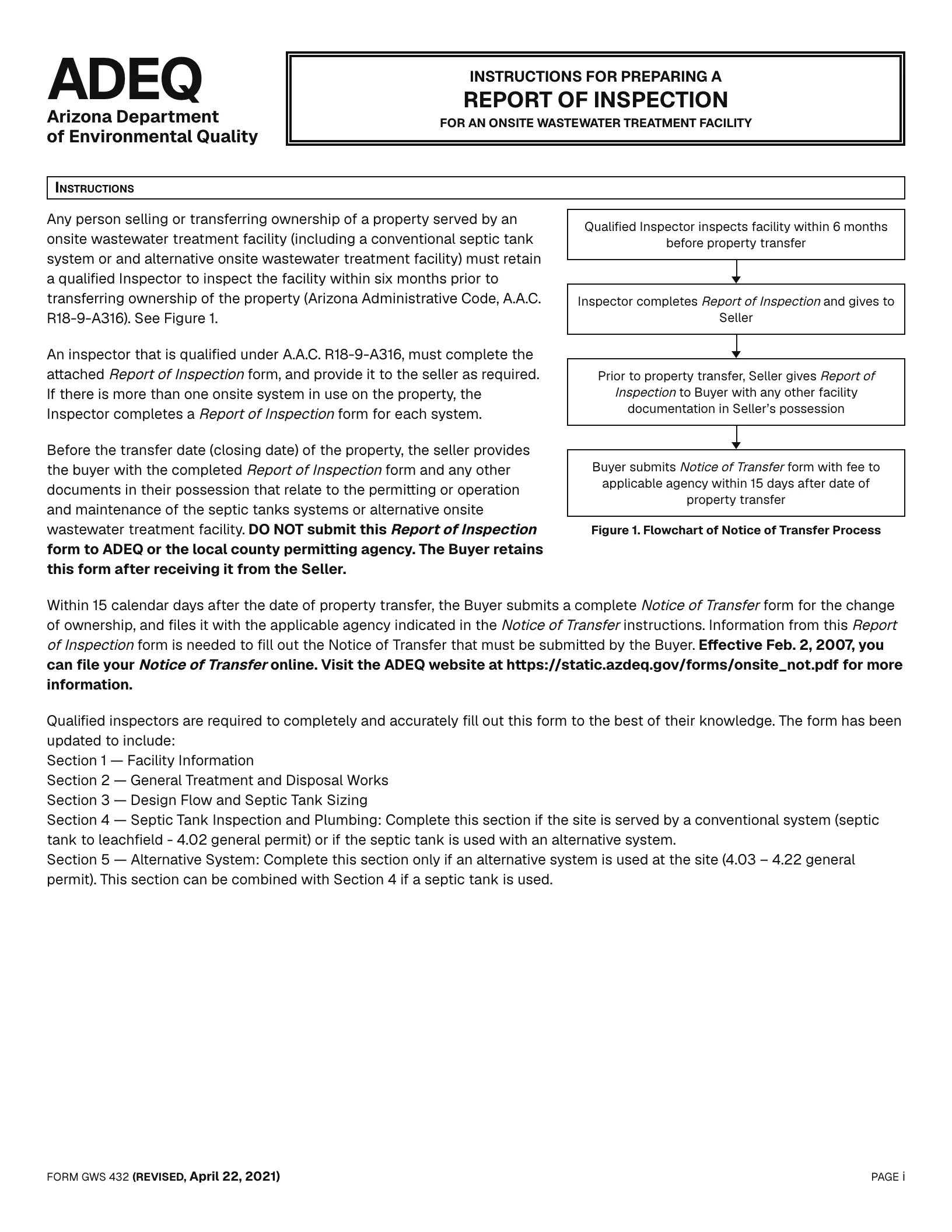
- ArizonaGWS 432
Report of Inspection for an Onsite Wastewater Treatment Facility
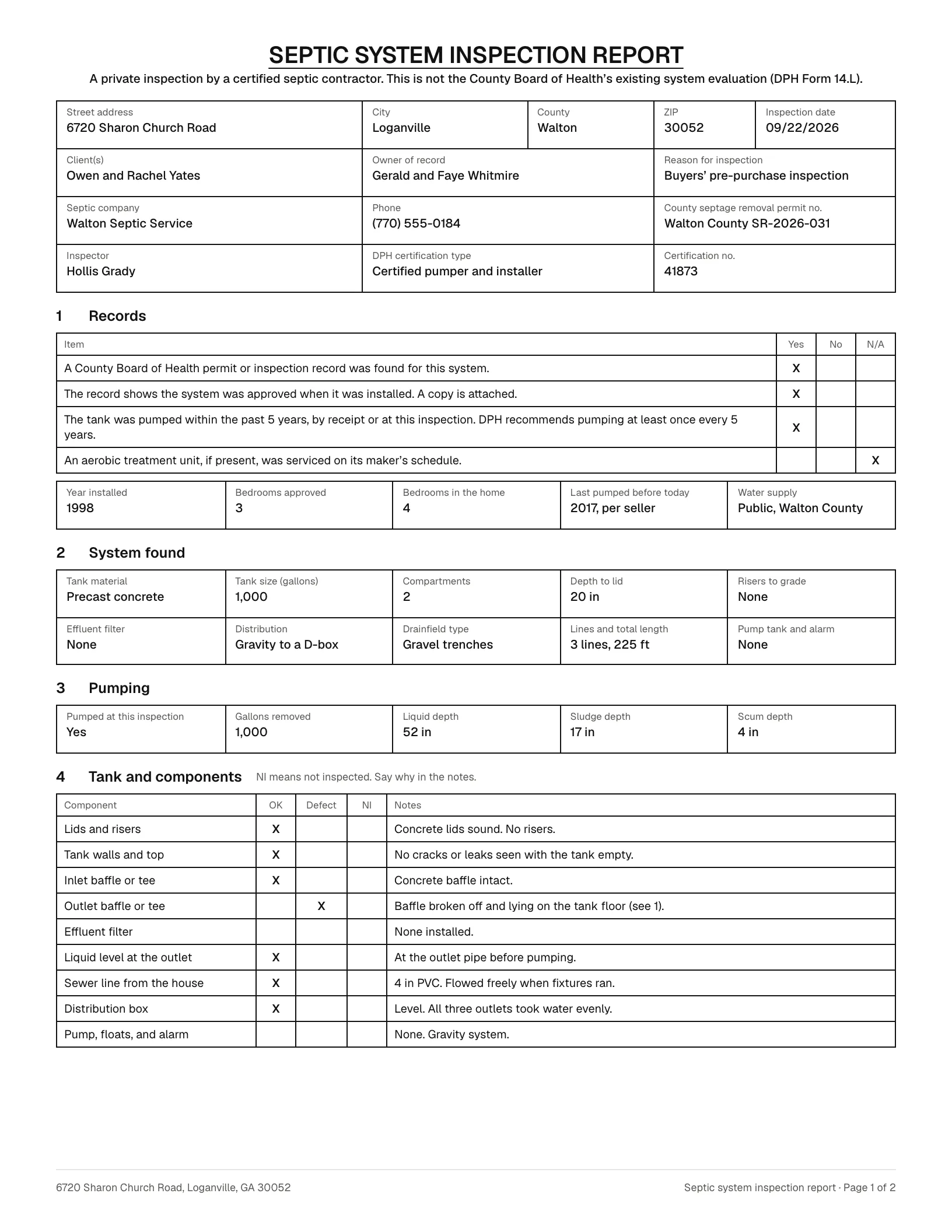
Record the tank, the drainfield, and what was checked. - Georgia
Septic System Inspection Report
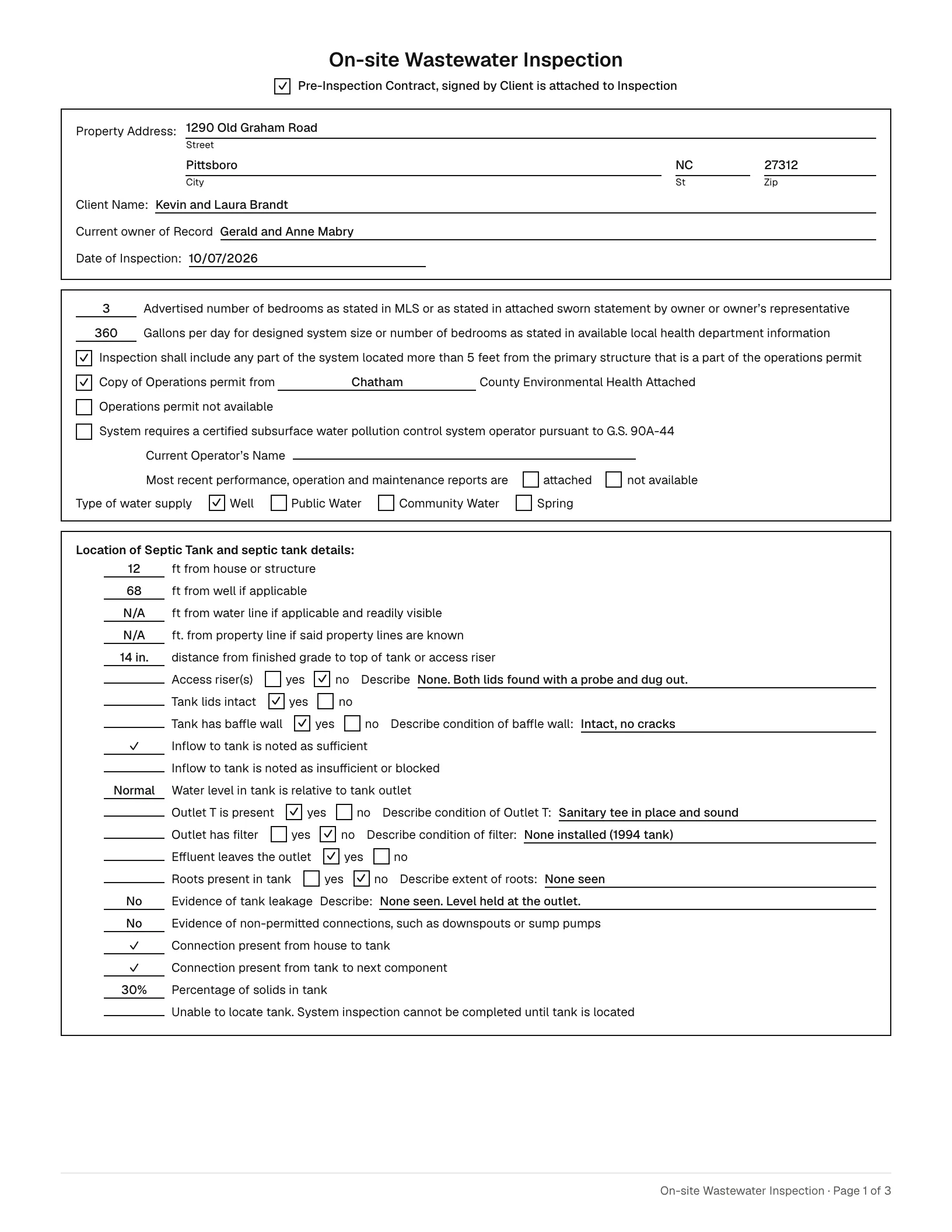
Record the tank, the drainfield, and what was checked. - North Carolina
On-site Wastewater Inspection
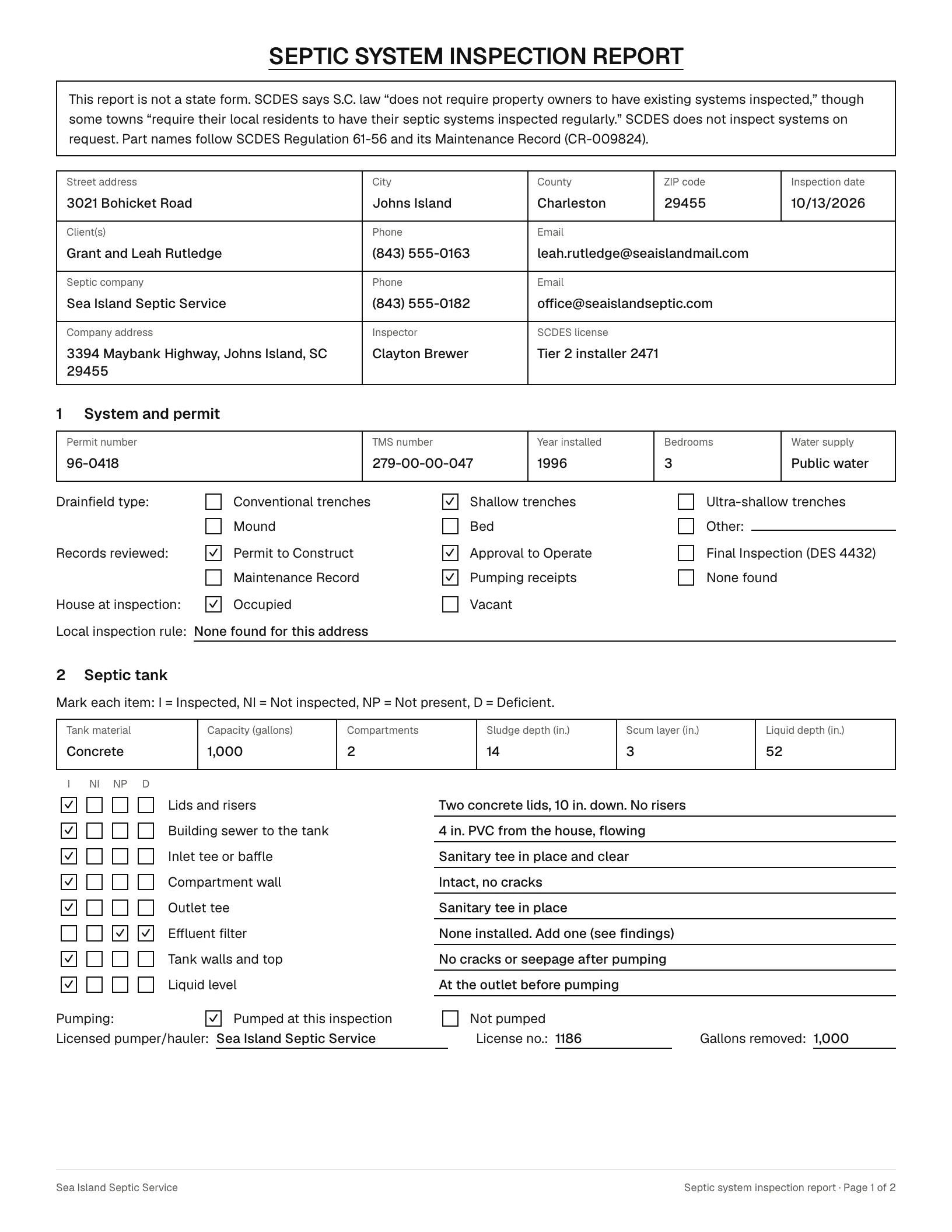
Record the tank, the drainfield, and what was checked. - South Carolina
Septic System Inspection Report
Record the tank, the drainfield, and what was checked. - Texas
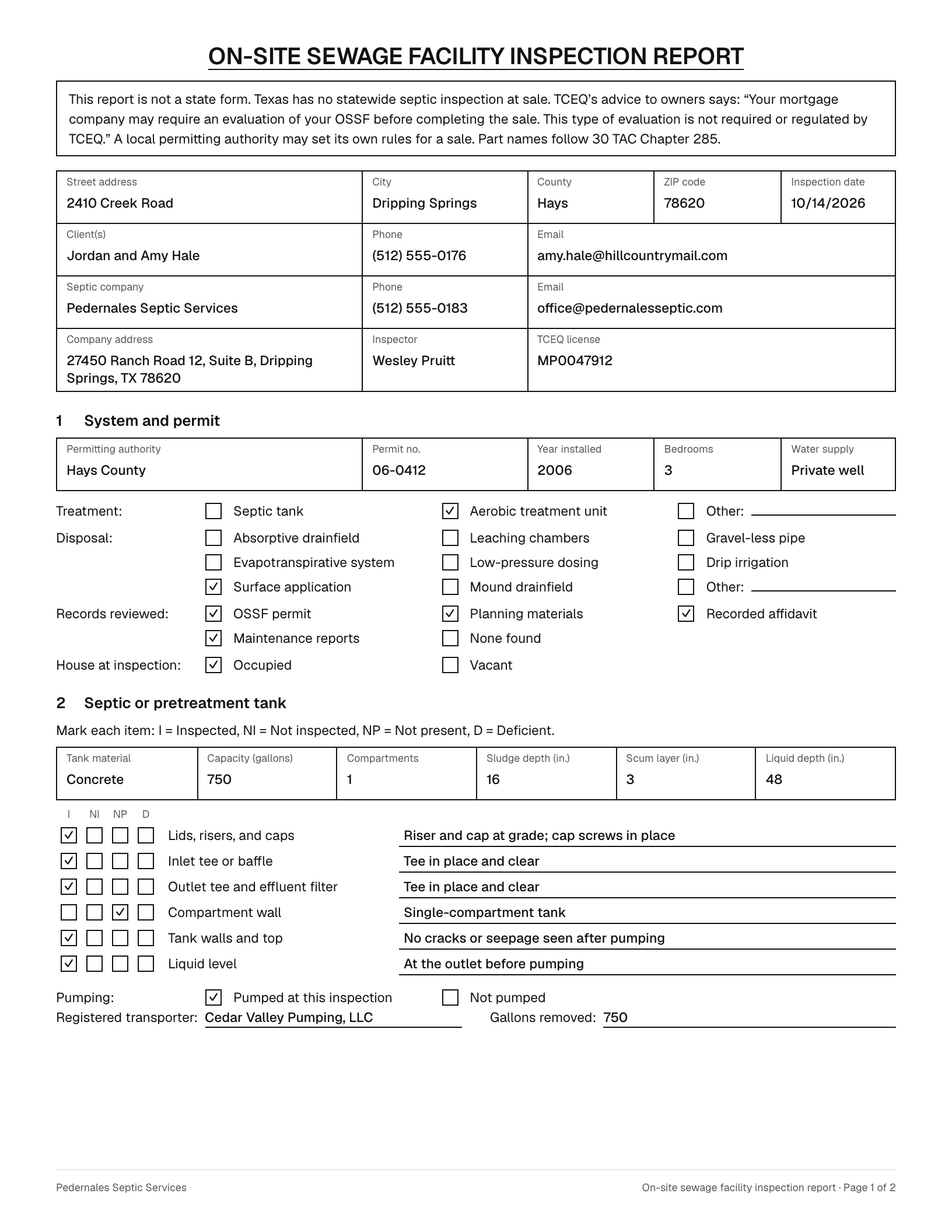
On-Site Sewage Facility Inspection Report
Record the tank, the drainfield, and what was checked. - Washington
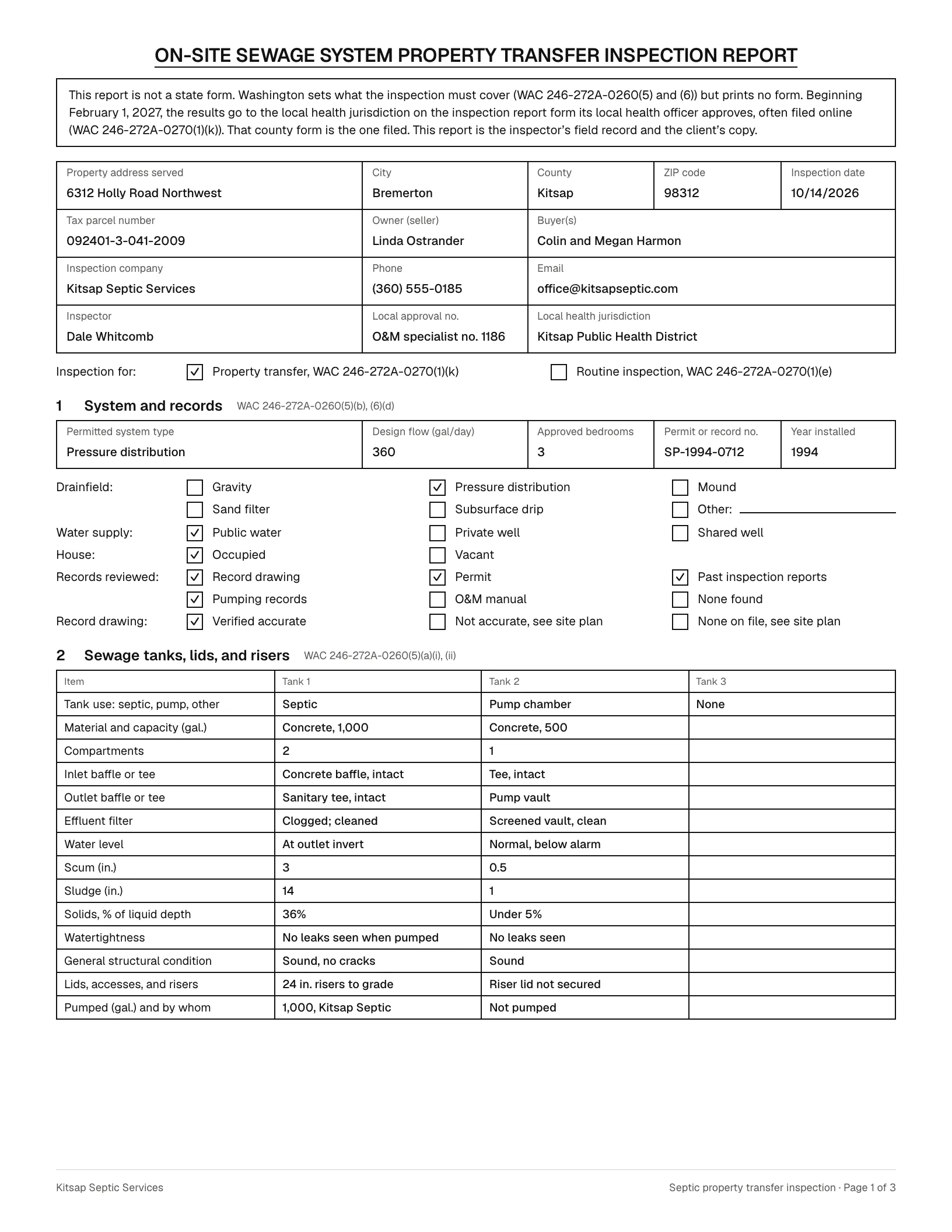
On-Site Sewage System Property Transfer Inspection Report
Record the tank, the drainfield, and what was checked.