On-Site Sewage System Property Transfer Inspection Report
The septic inspection every Washington home sale needs from February 1, 2027, with every item the state rule lists.
At a glance
- Required by
- WAC 246-272A-0270(1)(k)
- Filled out by
- Inspector the county approves
- Filed with
- Local health jurisdiction
- Due
- Before closing, from Feb. 1, 2027
Completed example
Download PDFWhat is a septic transfer inspection?
It’s a full check of a home’s septic system when the home sells. Starting February 1, 2027, WAC 246-272A-0270 makes every Washington seller with a septic system get one, from a third-party inspector the local health officer authorizes.
The state lists what it covers in WAC 246-272A-0260, but prints no form. Each county files the results on its own approved form, often online through OnlineRME. This report holds every item the rule lists, so it works as your field record and the client’s copy. The county’s form is still the one you file.
When is it due?
Before closing, statewide from February 1, 2027. Ten counties already require one: King, Pierce, Thurston, Kitsap, Island, Mason, Jefferson, Skagit, Clark, and Clallam. Each names it its own way. King says time of sale, Pierce and Clark say Report of System Status, Thurston says Time of Transfer, and Kitsap says Property Conveyance Inspection.
The health officer can skip the sale inspection when the system is current on its routine checks, and can set a repair schedule when it finds a failure. The seller also hands the buyer every maintenance record with the seller disclosure statement under RCW 64.06.020, the statute behind the Form 17 agents use.
How to fill it out
Fill in the facts and the system. Address, date, parcel, and your local approval number, which WAC 246-272A-0340 says you need before you inspect. Pull the permitted type and design flow from the county file. A house is sized at 120 gallons per bedroom per day at least, under WAC 246-272A-0230.
Open and measure every tank. One column per tank: baffles, effluent filter, water level, scum, sludge, solids, watertightness, structure, and the lids and risers. If you pumped it, write the gallons. A pump chamber gets its own column.
Walk the drainfield and reserve area. Look for surfacing, ponding in the ports, roof drains, and traffic. Then check the other parts, like the pump and alarm, and any proprietary product by its O&M manual. Write every deficiency on its own line in section 7.
Check the drawing, sign, and file. Mark the record drawing accurate, or sketch a site plan on page 3. Sign, file on the county’s form, and note the date and record number. The buyer’s home inspection report skips the septic system, so this is the only look it gets.
Do you have to write it up twice?
Often, yes. Measurements go on a clipboard at the riser, then get typed into the county’s online form that night, and the client wants their own copy too.
Noma specializes in the On-Site Sewage System Property Transfer Inspection Report (WAC 246-272A-0260). Noma’s property inspection reports let you set your own sections and titles, so yours can follow the rule item by item, and the summary always lists the problems you mark most serious. Booking, invoices, and online payment come with it. See how Noma handles inspection reports.
Frequentlyaskedquestions
Send this document in minutes, not an afternoon.
Other states
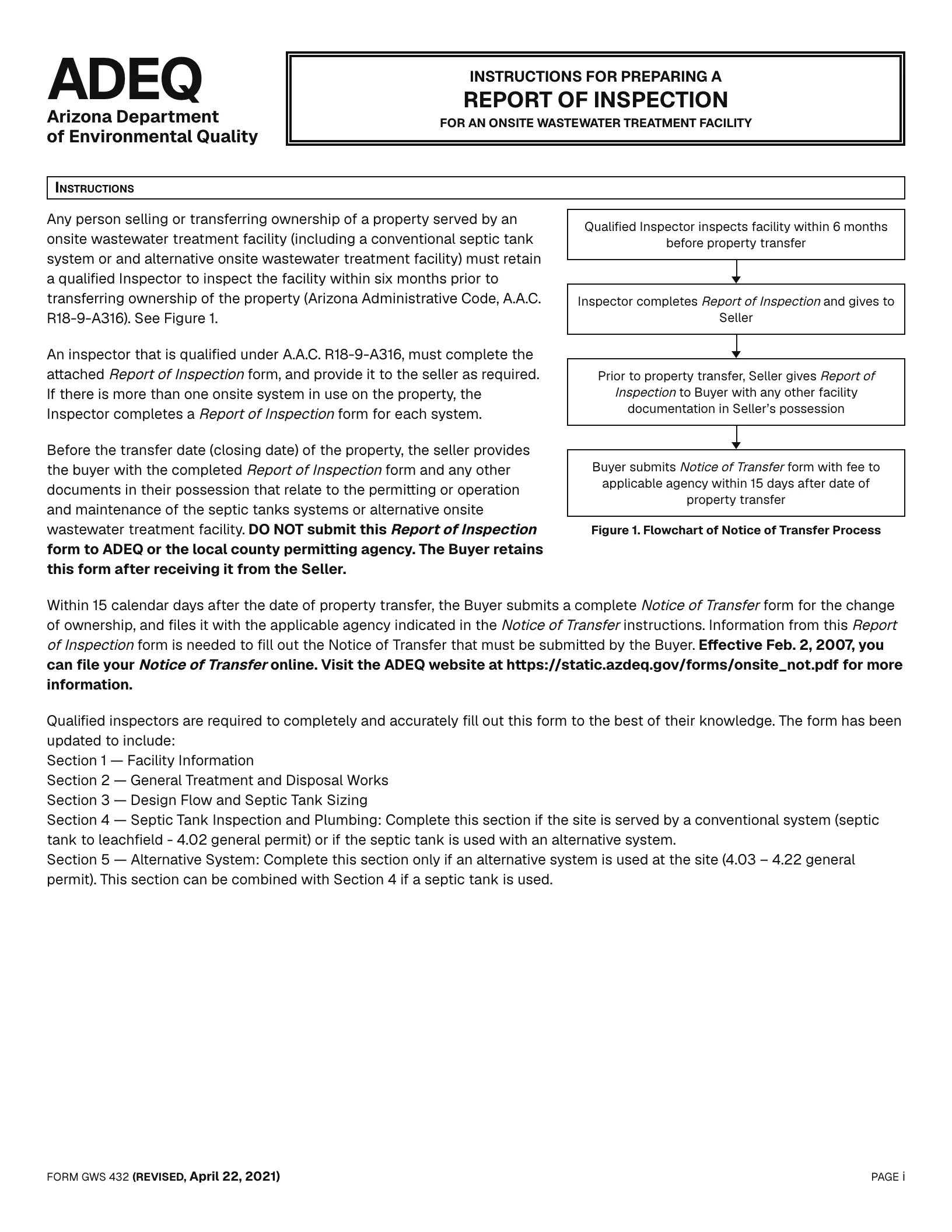
- ArizonaGWS 432
Report of Inspection for an Onsite Wastewater Treatment Facility
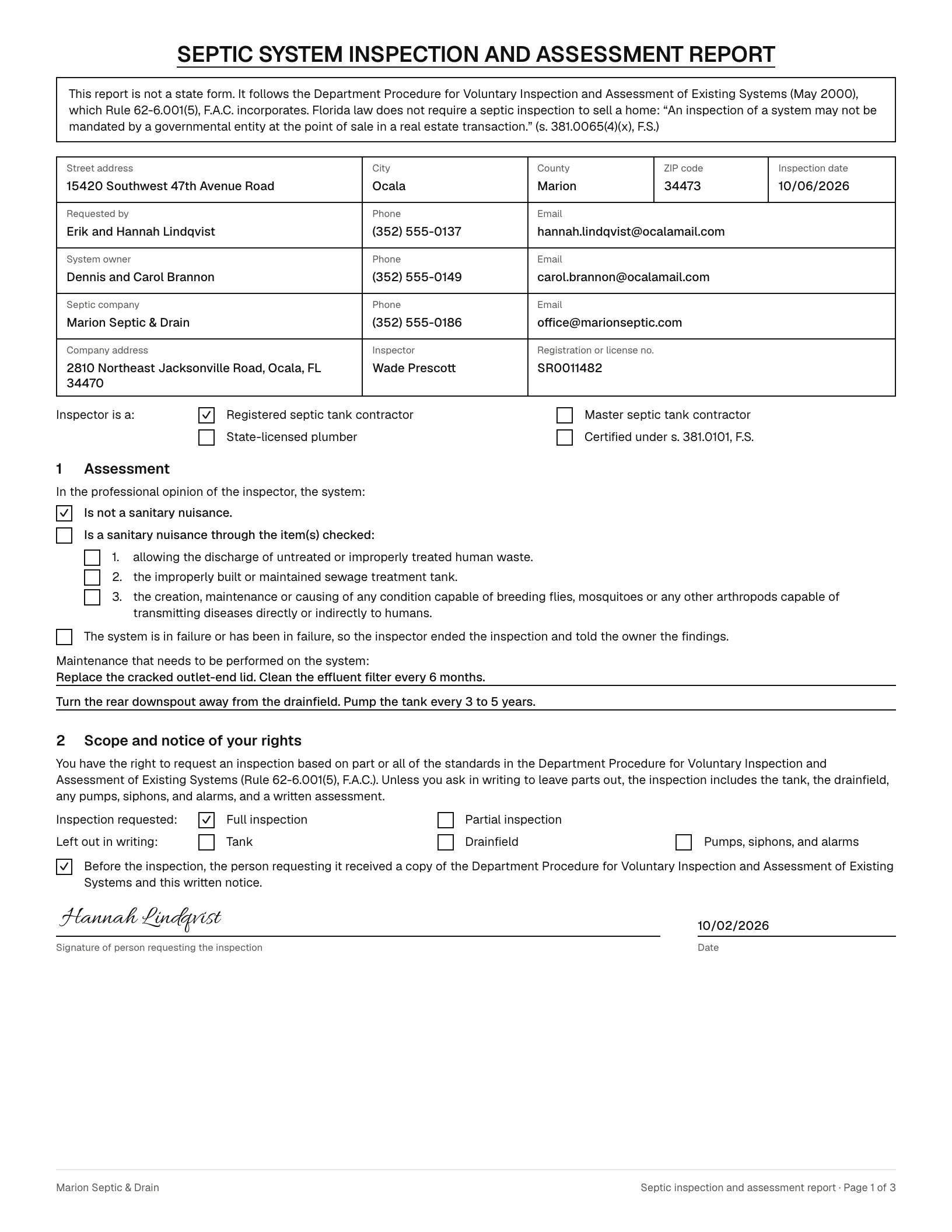
Record the tank, the drainfield, and what was checked. - Florida
Septic System Inspection and Assessment Report
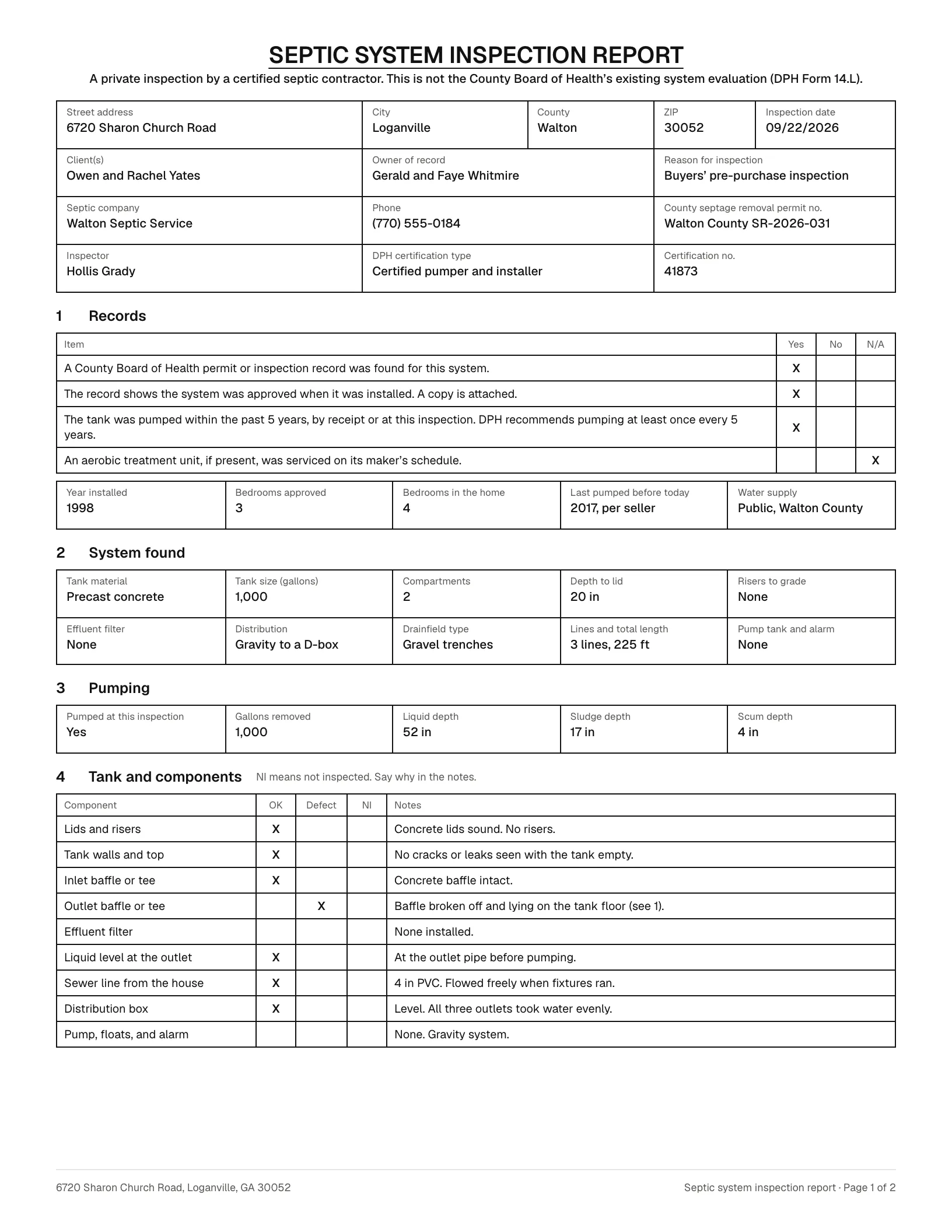
Record the tank, the drainfield, and what was checked. - Georgia
Septic System Inspection Report
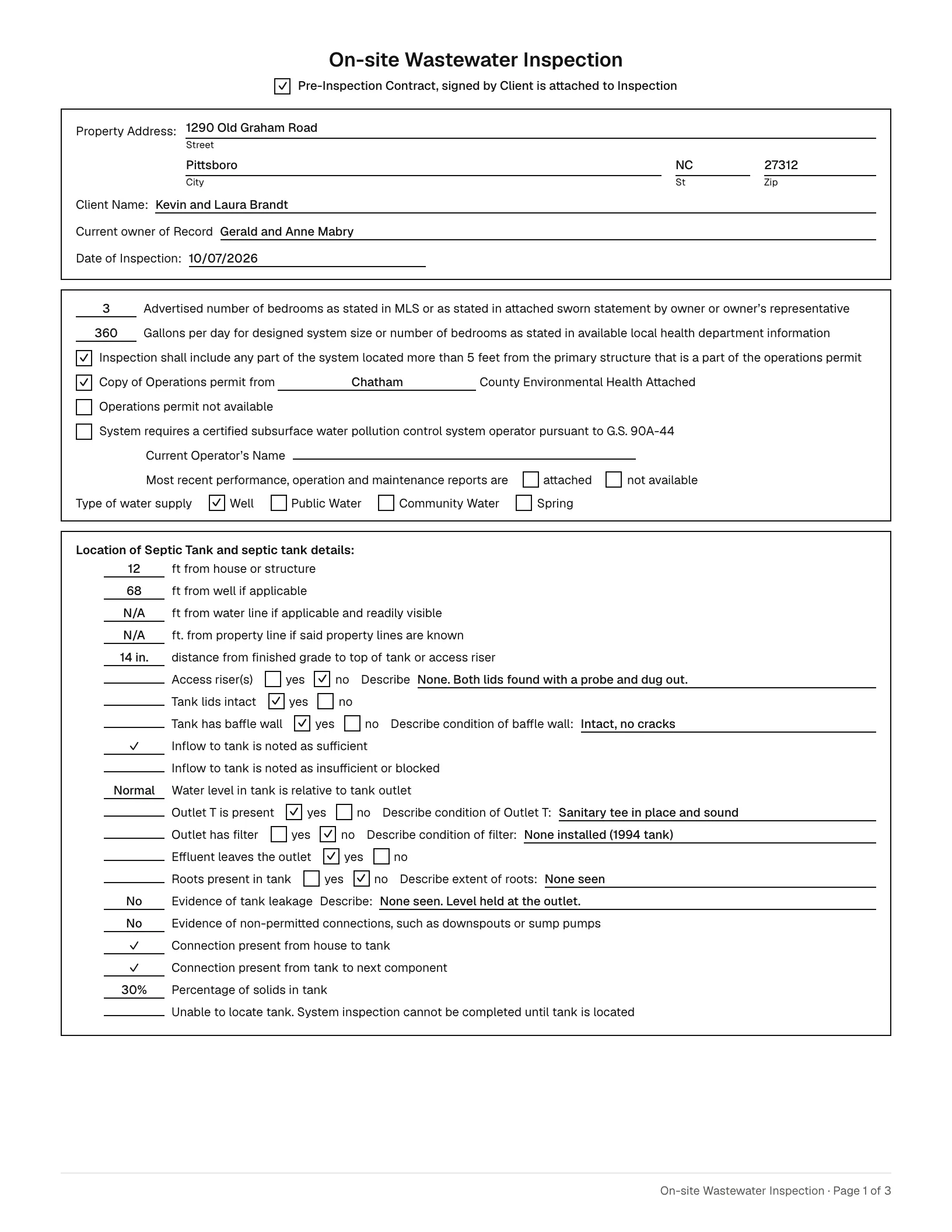
Record the tank, the drainfield, and what was checked. - North Carolina
On-site Wastewater Inspection
Record the tank, the drainfield, and what was checked. - South Carolina
Septic System Inspection Report
Record the tank, the drainfield, and what was checked. - Texas
On-Site Sewage Facility Inspection Report
Record the tank, the drainfield, and what was checked.