Septic System Inspection Report
A plain septic report for a South Carolina home sale that covers the tank, the pump tank, the drainfield, and the setbacks, using the part names in SCDES’s Regulation 61-56.
At a glance
- Required by
- Not required statewide
- Filled out by
- Licensed septic professional
- Signed by
- The inspector
- Due
- No state deadline
Completed example
Download PDFWhat is a septic inspection report?
It’s the septic part of a South Carolina home sale. The buyer gets a home inspection report for the house, but the ASHI standard leaves septic out. This report covers the tank, the pump tank, the drainfield, and how far they sit from wells, water, and lot lines.
It isn’t a state form. SCDES’s septic FAQ says S.C. law “does not require property owners to have existing systems inspected,” and SCDES won’t inspect one on request. So the fields follow SCDES Regulation 61-56 and SCDES’s own Maintenance Record (CR-009824), the form SCDES gives owners to track their system.
When do you need one?
Whenever a buyer, a lender, or a town asks for one. No state rule sets a deadline. Most buyers order it during their inspection window, so there’s still time to get a repair quote.
Some towns make it a rule. Folly Beach requires an inspection, with the tank pumped, no earlier than 60 days before the sale of any property with a septic system (City Code §§ 55.03 and 55.06). Write any rule like that on the local rule line.
How to fill it out
Pull the permit file first. The Permit to Construct and the Approval to Operate give you the year, bedrooms, tank size, and drainfield type. Ask the seller, then the local SCDES office. A newer system may also have its installer’s Final Inspection form (DES 4432).
Open and pump the tank. Measure the sludge and scum, then check the tees and the effluent filter. Pumping takes a pumper/hauler licensed by SCDES under R.61-56 § 600.1, so write down who pumped it and their license number.
Walk the drainfield. Find the D-box, probe each trench, and look for wet spots, surfacing, and downspouts that dump on the field. Pace off the setbacks and compare them with R.61-56 § 200.6, keeping in mind an older system was permitted under older rules.
Say who can fix it. Among licensed installers, only Tier 2 and Tier 3 may repair an existing system. R.61-56 § 101 says Tier 1 “is not authorized to conduct repairs on existing onsite wastewater systems.” Check D on anything that needs work, list it, and sign.
Can the agent see the problems first?
A septic report is two pages of checkboxes and distances. The buyer’s agent only wants to know what needs fixing before the inspection window closes.
Noma specializes in the Septic System Inspection Report. Set up a property inspection report with your own sections, like Septic tank and Drainfield, and its summary always lists the most serious defects you marked, so the buyer’s agent sees them first. See how Noma builds inspection reports.
Frequentlyaskedquestions
Send this document in minutes, not an afternoon.
Other states
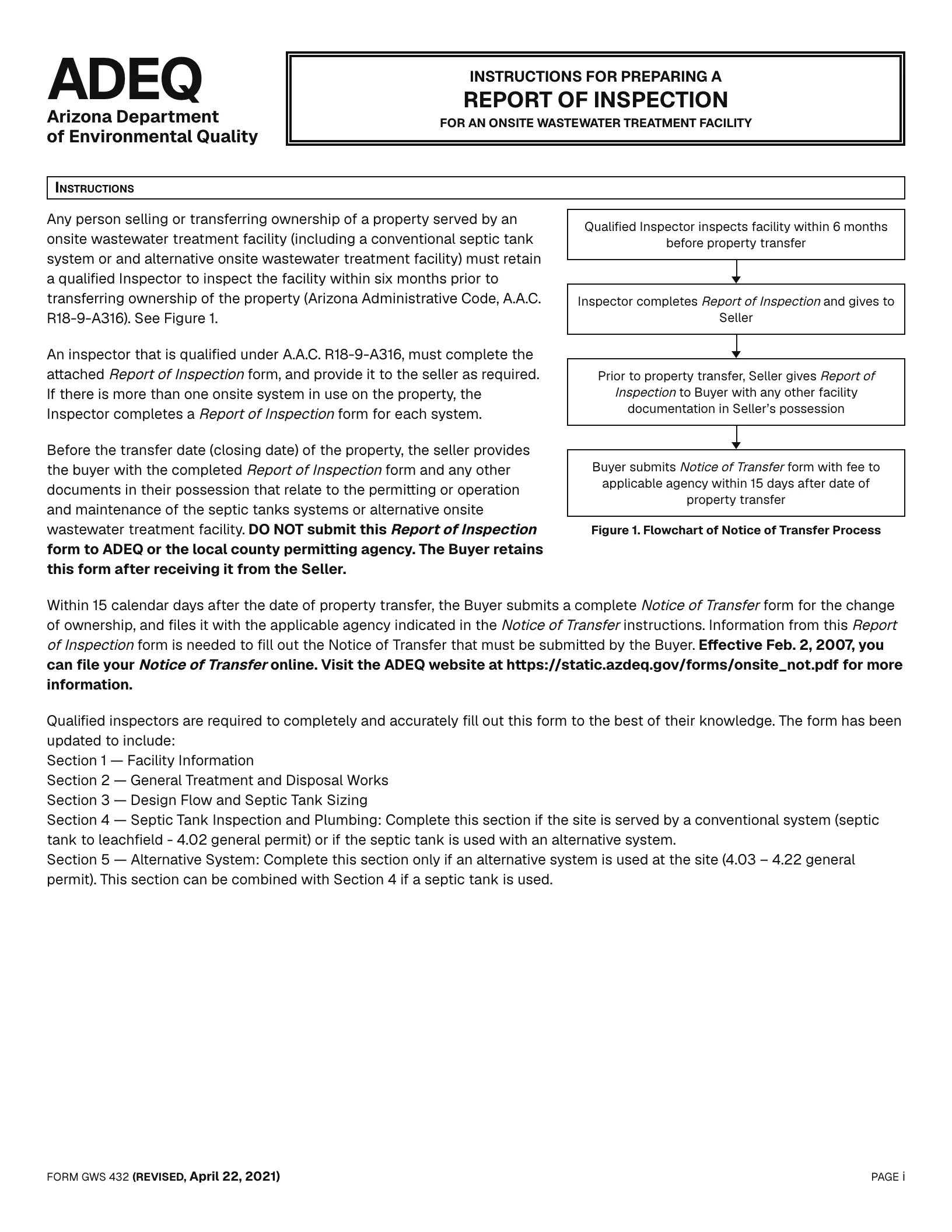
- ArizonaGWS 432
Report of Inspection for an Onsite Wastewater Treatment Facility
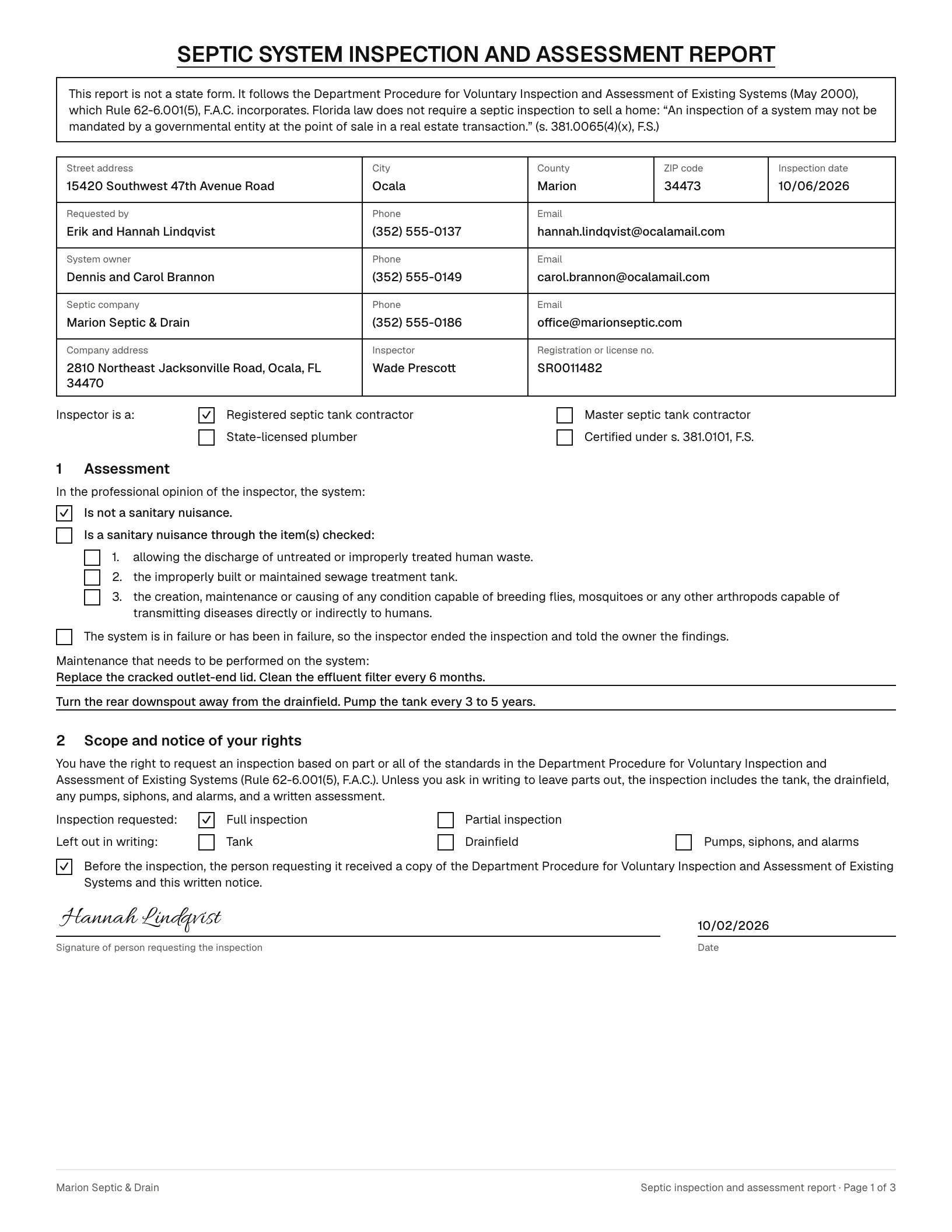
Record the tank, the drainfield, and what was checked. - Florida
Septic System Inspection and Assessment Report
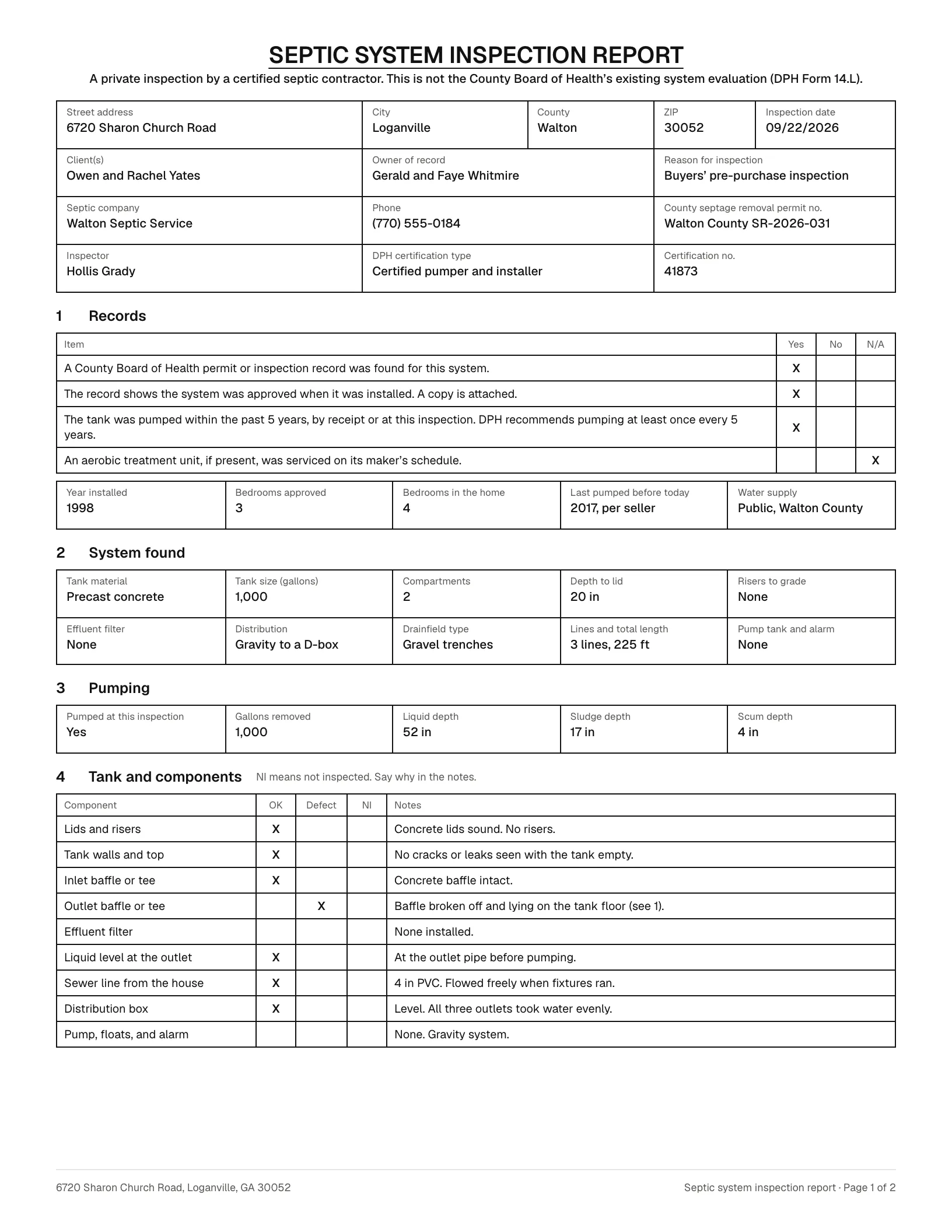
Record the tank, the drainfield, and what was checked. - Georgia
Septic System Inspection Report
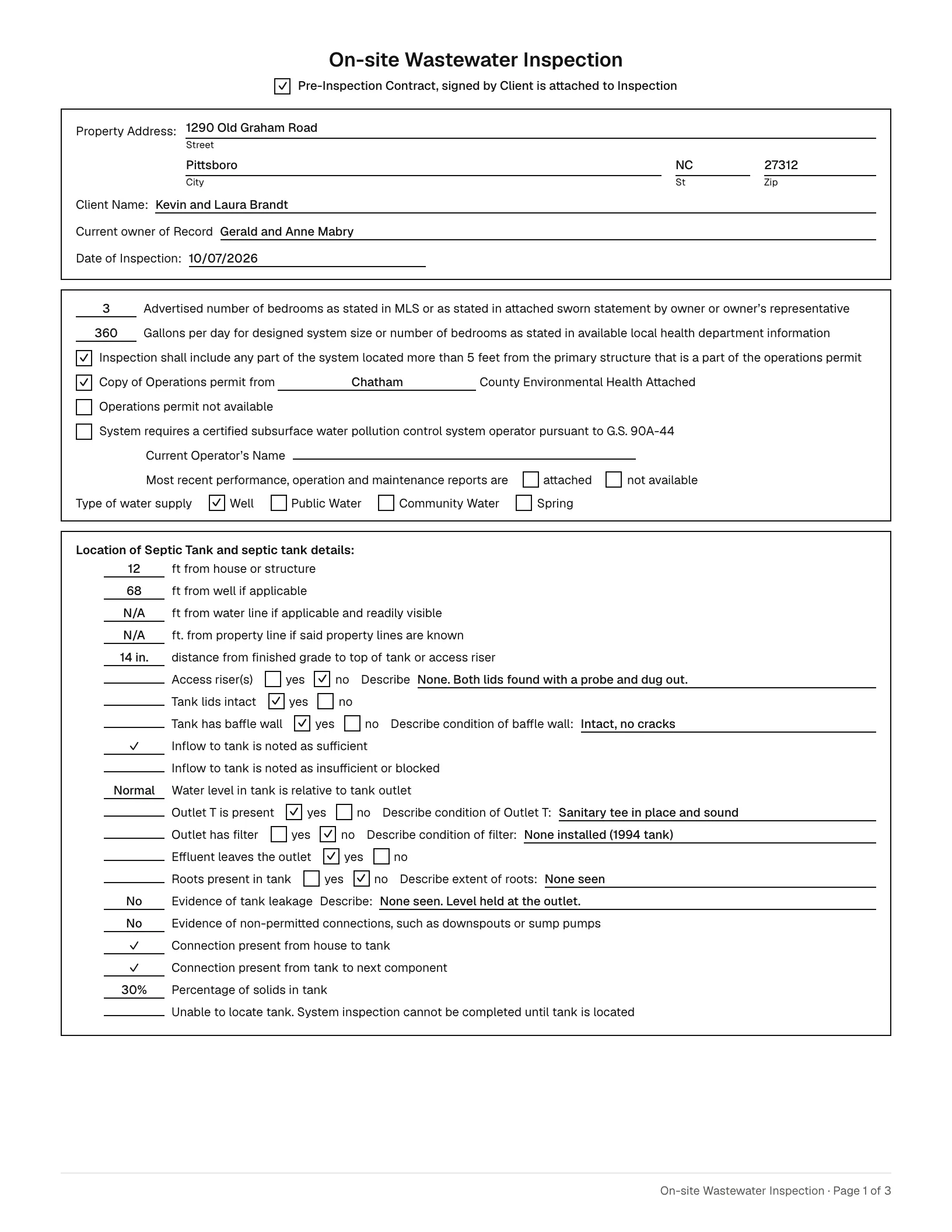
Record the tank, the drainfield, and what was checked. - North Carolina
On-site Wastewater Inspection
Record the tank, the drainfield, and what was checked. - Texas
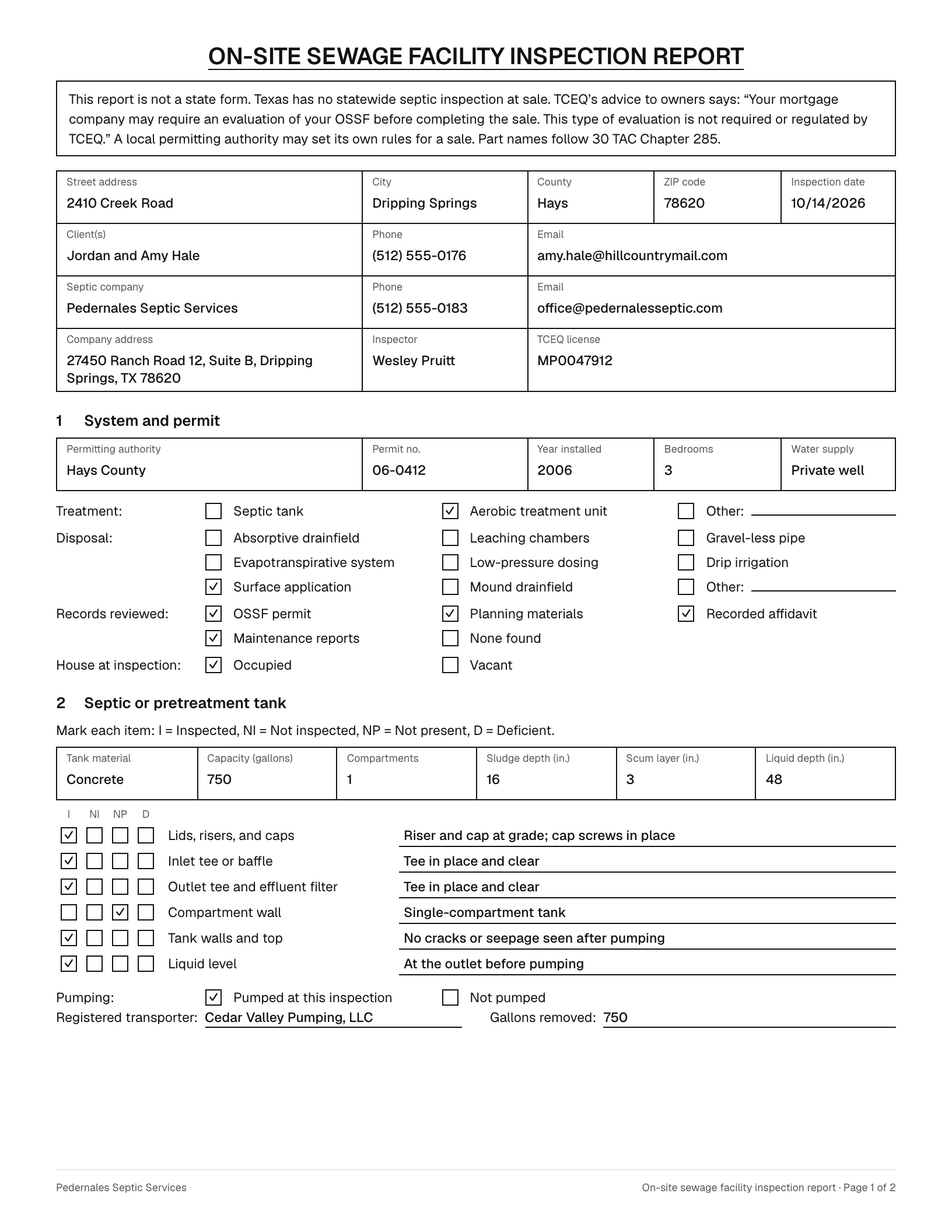
On-Site Sewage Facility Inspection Report
Record the tank, the drainfield, and what was checked. - Washington
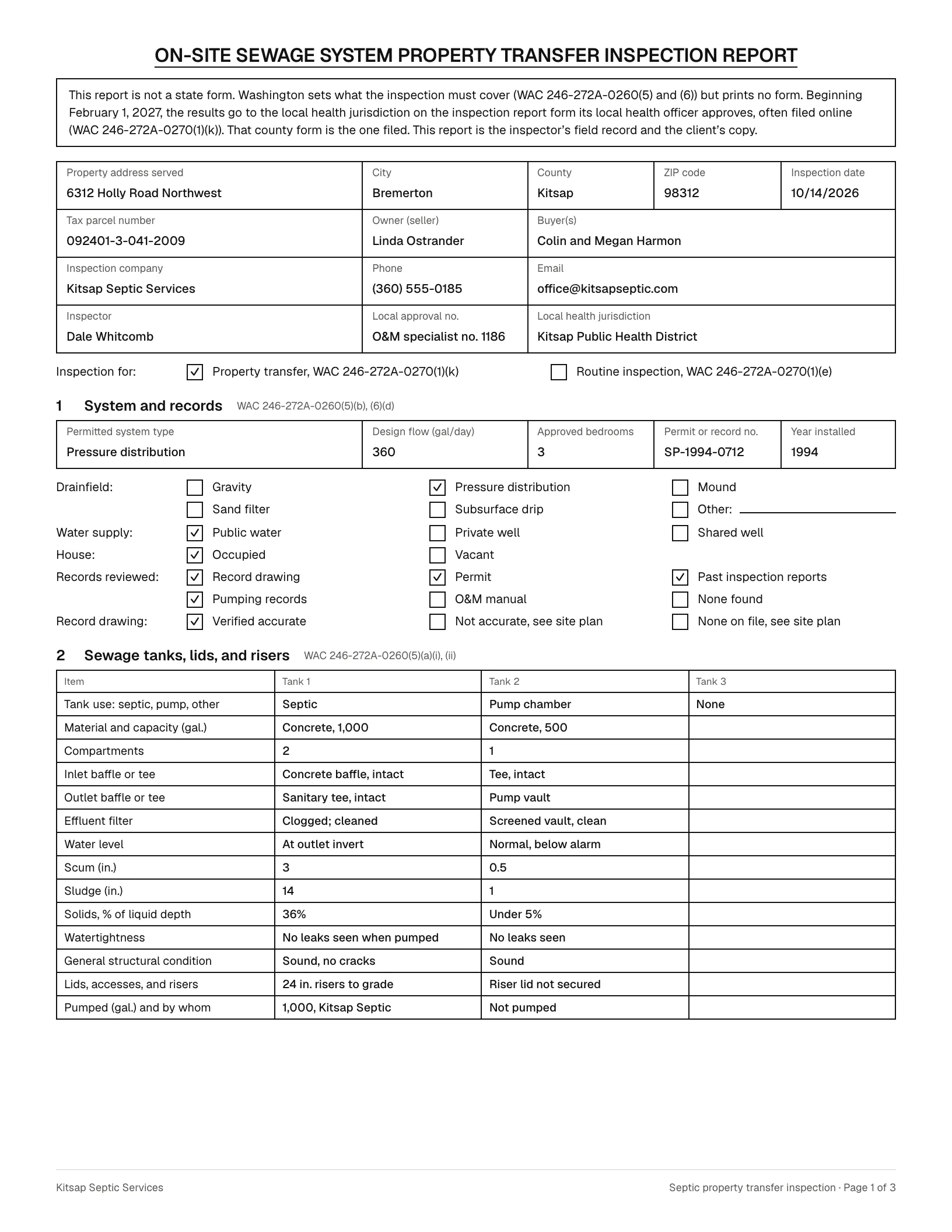
On-Site Sewage System Property Transfer Inspection Report
Record the tank, the drainfield, and what was checked.