Site-Specific Structural Fumigation Log
Arizona’s site-specific structural fumigation log is the record the Vikane label says to keep for every tent job, from the dose math to the final clearance test.
At a glance
- Required by
- Fumigant label (R3-8-301)
- Filled out by
- Certified applicator in charge
- Due
- (B) items before the start
- Official form
- None from EPA or Arizona
Completed example
Download PDFWhat is this log?
It’s the record of one structural fumigation, from the dose math to the final clearance test. Arizona doesn’t print one. Its rules point you to the fumigant’s label, and the Vikane label lists what every log has to hold.
The certified applicator in charge makes sure it’s complete. The DANGER/PELIGRO sign for the same job is on the fumigation warning sign page.
When do you fill it out?
Start it before the gas goes in. Under R3-8-301, using a pesticide in a way that doesn’t match its label is misuse. The Vikane label marks five items “(B)”: the company, site address, structure type, target pests, and volume. Those go down before the fumigation starts.
The rest goes in as the job runs, through release, aeration, and the final clearance test. EPA’s site log page lists the same items, plus the number of fans and the nearest hospital. The label also has you hand an adult occupant the Fact Sheet for Vikane after the contract, so note that date in the comments.
How to fill it out
Do the (B) items first. Fill in section 1 and the volume at the office or on the walk-through, before the tarps go up. The label lets contracts and dose calculation reports count as documentation, so attach those too.
Log the release. Write who put in the chloropicrin and gas, their license number, and who helped. Add the cylinder serial numbers, the pounds, and the date and time the gas went in.
Log aeration. Note who opened the seal, when, and which aeration procedure you used. A dose of 16 oz/MCF or less can use procedure 1, which keeps everyone out for at least 12 hours from the first opening.
Clear it room by room. Test the breathing zone of each room with a device on EPA’s clearance device list, and write down every reading. Re-entry waits until each room reads 1 ppm or less.
Where does it fit in the job?
A tent job runs two or three days, and the log passes through a lot of hands. When it lives on a clipboard in the truck, the clearance readings are the first thing to go missing.
Noma specializes in the Site-Specific Structural Fumigation Log (Vikane label, R3-8-301). Upload your fumigation contract once, send it for e-signature on each job, and schedule and invoice the fumigation in the same place. See how Noma runs fumigation jobs.
Frequentlyaskedquestions
Send this document in minutes, not an afternoon.
Other states
- Florida
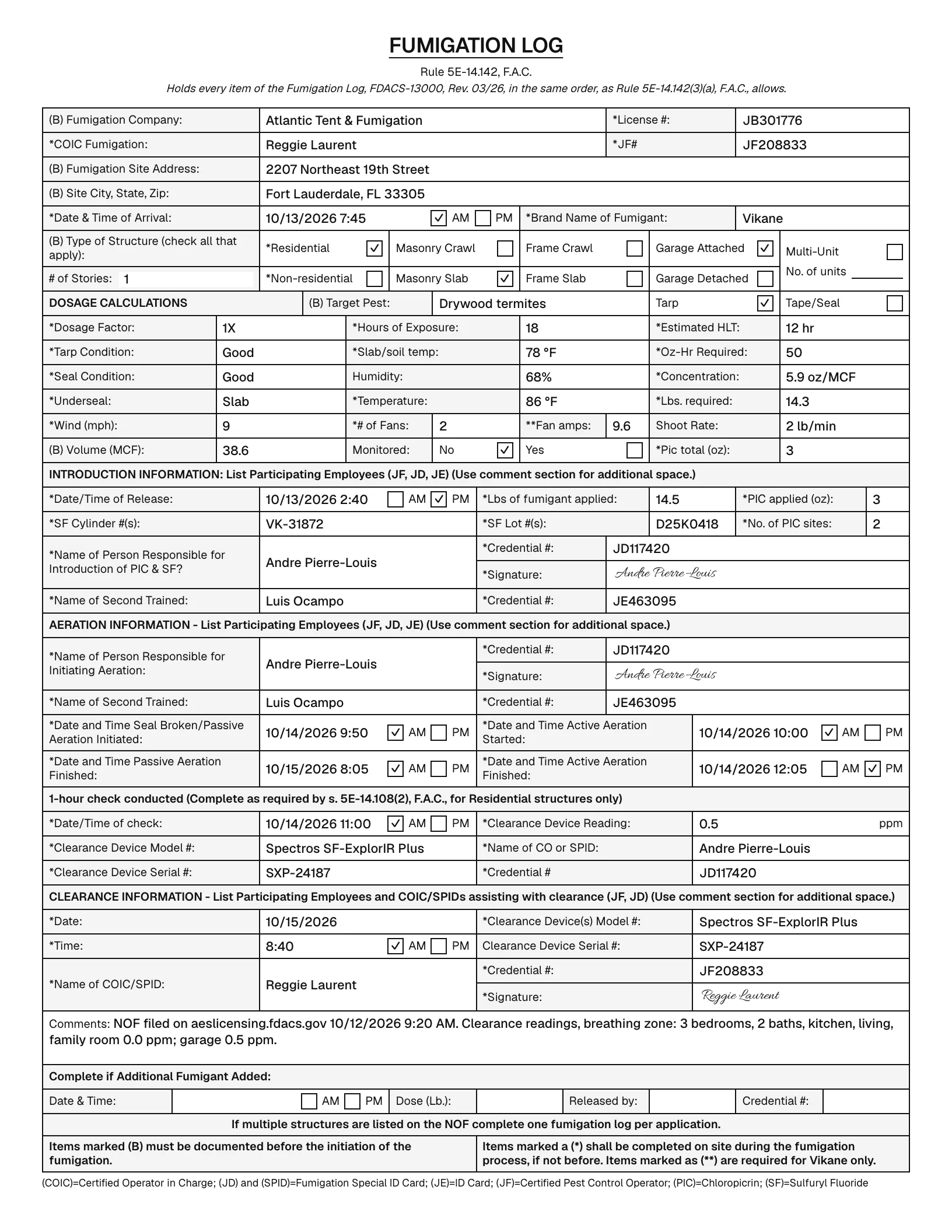
Fumigation Log
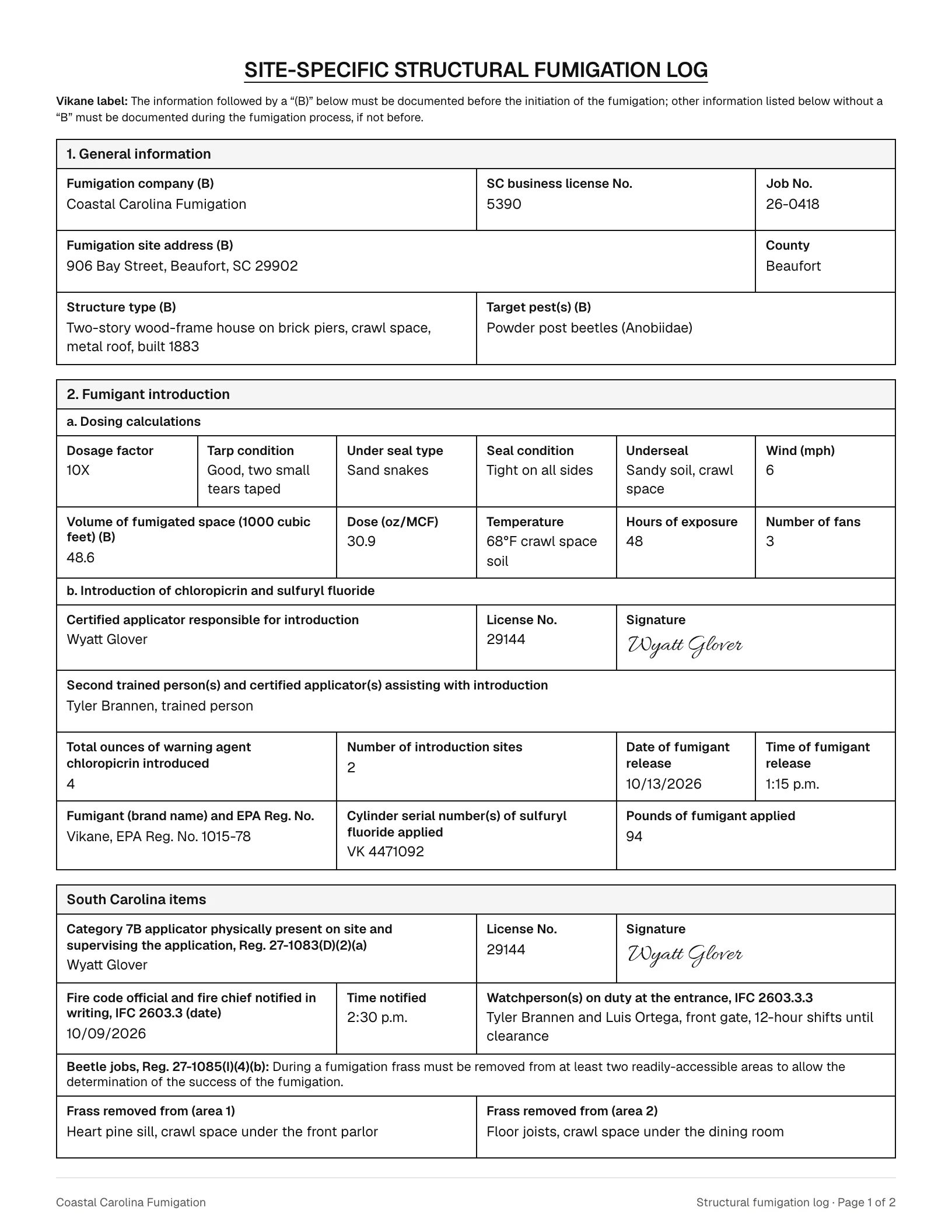
Record the gas, the dose, and the clearance for each fumigation. - South Carolina
Site-Specific Structural Fumigation Log
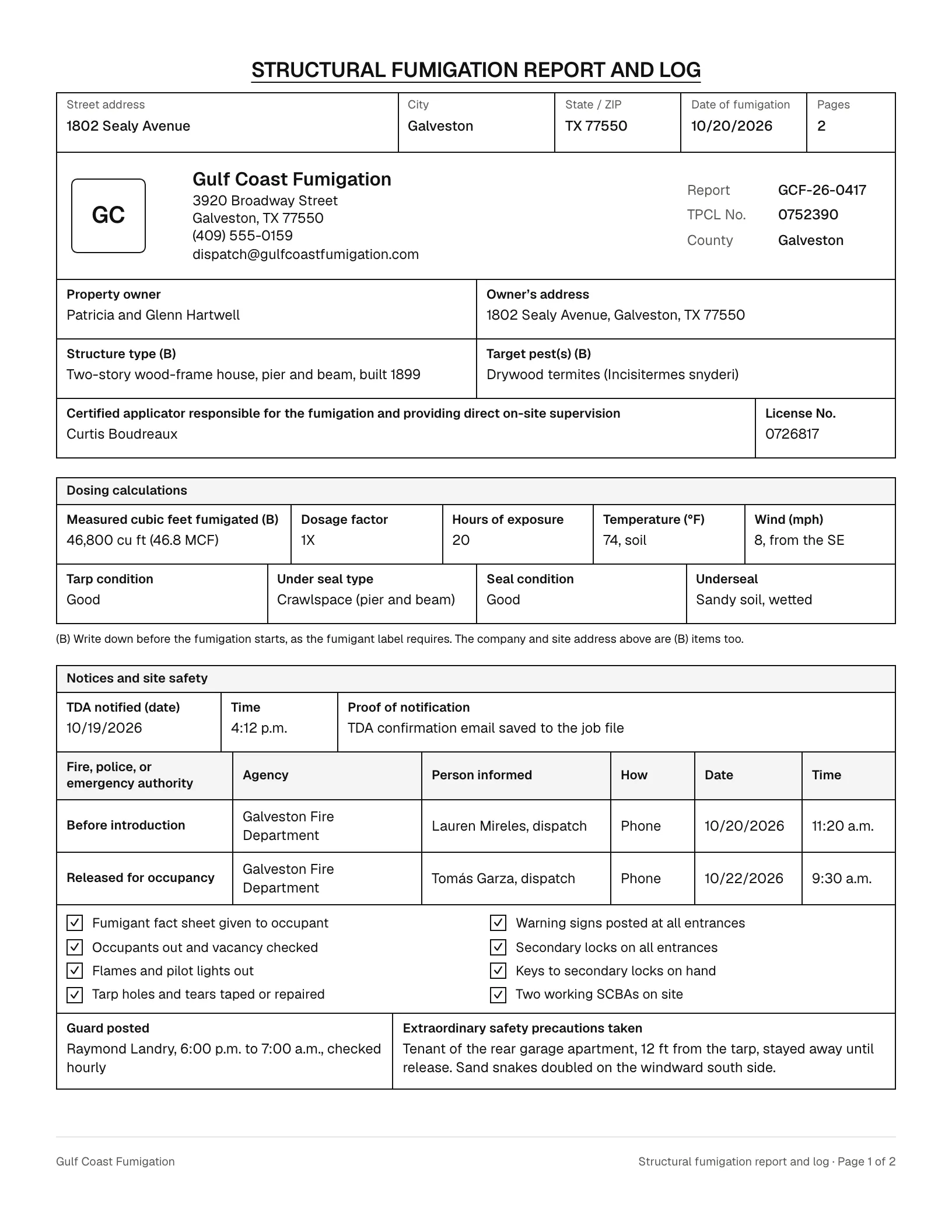
Record the gas, the dose, and the clearance for each fumigation. - Texas
Structural Fumigation Report and Log
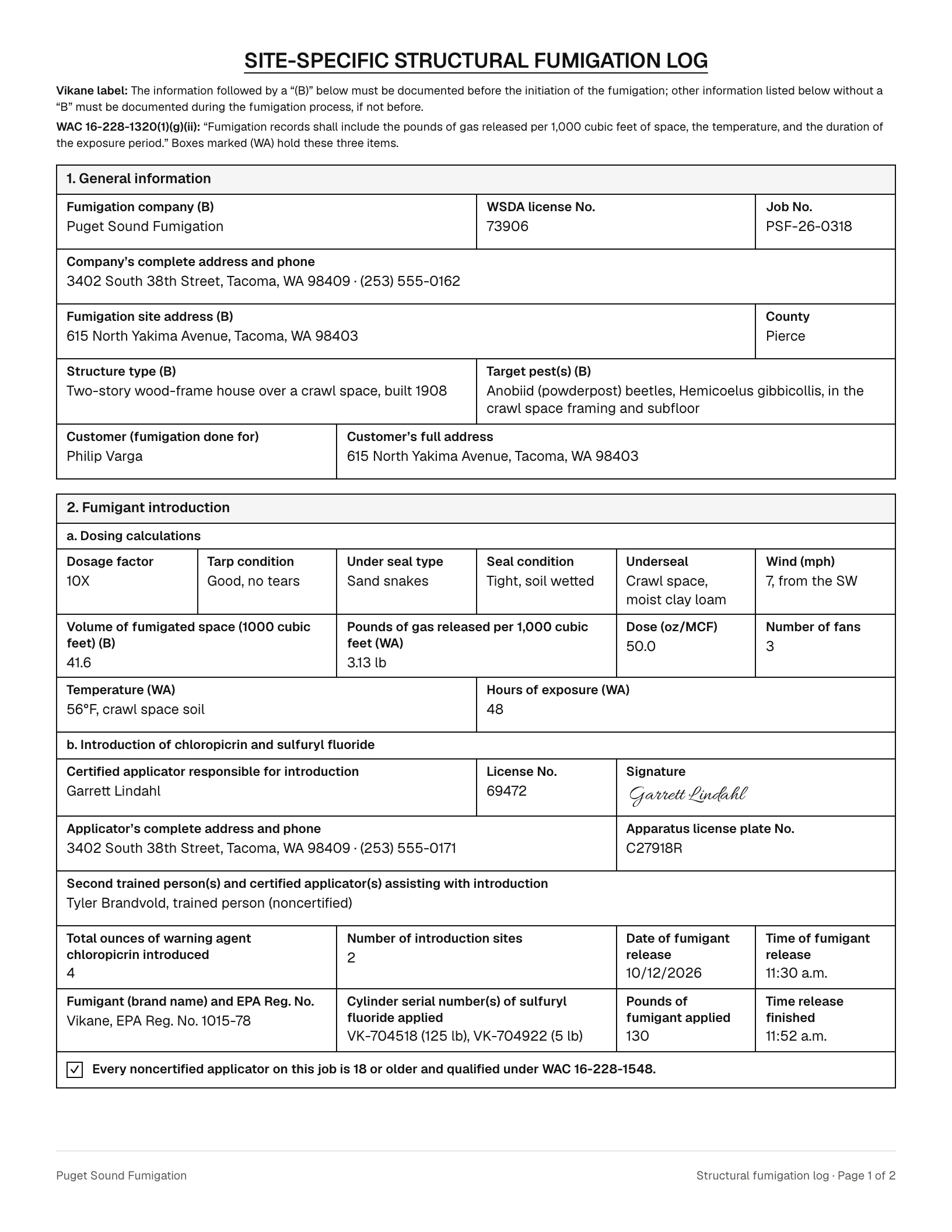
Record the gas, the dose, and the clearance for each fumigation. - Washington
Site-Specific Structural Fumigation Log
Record the gas, the dose, and the clearance for each fumigation.